
Plot Summary
Mountain Roads, Broken Memories
Detective Molly Masters, still reeling from her brother's death, drives a mountain road in the rain, her mind a storm of grief and anger. When a reckless biker crashes in front of her, she's forced to confront not only her own trauma but the enigmatic stranger who demands her help. Their collision is more than physical; it's the start of a tangled fate. Molly's memories are fractured, her sense of self uncertain, and the biker—Lincoln Wade—seems to know more about her than he should. As she helps him, a strange familiarity stirs, hinting at a shared past neither can fully recall. The mountain, the rain, and the broken bike become symbols of the unresolved pain and secrets that will soon unravel both their lives.
The Cave Beneath the City
Lincoln leads Molly to his hidden lair—a high-tech cave beneath Cathedral City, bristling with weapons, computers, and a sentient AI named Sheila. Molly's instincts as a cop and survivor clash with her curiosity and the undeniable pull she feels toward Lincoln. Their banter is sharp, laced with both threat and attraction. When Molly's attempt to escape is thwarted, Lincoln drugs her, erasing her memory of the cave. The violation is both literal and symbolic: trust is shattered, and the boundaries between captor and protector blur. The cave is more than a hideout; it's a crucible where Molly's identity and Lincoln's purpose are forged anew, setting the stage for a battle between past and present.
Unlikely Allies, Unwanted Truths
Molly awakens in her own bed, disoriented and haunted by gaps in her memory. As she returns to her job at the Cathedral City Police Department, she's thrust into a series of mysterious suicides at Blue Corp, the city's dominant tech conglomerate. Her investigation brings her into contact with Atticus Montgomery, the enigmatic heir to Blue Corp, and Thomas Brooks, a rival tech mogul with his own secrets. Meanwhile, Lincoln and his allies—Case and Thomas—navigate their own uneasy alliance, bound by a shared, violent history. The city's elite are not what they seem, and as Molly digs deeper, she senses that the answers to the suicides, her lost memories, and Lincoln's true nature are all connected.
The Anarchist's Kiss
The chemistry between Molly and Lincoln ignites, culminating in a charged, forbidden encounter. Their physical connection is fraught with power struggles, vulnerability, and the shadow of past trauma. Lincoln's darkness both attracts and repels Molly; she senses the violence simmering beneath his surface, yet she cannot deny her own longing. Their kiss is a declaration and a warning: they are drawn together by forces beyond their control, and their union will either save or destroy them. The city's corruption, the unsolved deaths, and the secrets of their shared past all converge in this moment, making intimacy both a weapon and a refuge.
Cathedral City's Dark Heart
Cathedral City is a place where wealth and decay coexist, ruled by corporations and compromised officials. Molly's investigation into the suicides reveals a web of influence stretching from Blue Corp to the police department itself. Atticus Montgomery's charm masks a ruthless ambition, while his father, Alastair, exerts a chilling control over the city's fate. Lincoln, Case, and Thomas operate in the shadows, their own vendetta against the city's elite fueled by old wounds. The city is a character in its own right—gothic, rain-soaked, and haunted by the ghosts of failed experiments and lost children. Every clue Molly uncovers brings her closer to a truth that could upend the fragile balance of power.
Suicides and Corporate Shadows
The string of suicides at Blue Corp is no coincidence. Molly's interviews with grieving families and evasive executives reveal a pattern: all the victims were connected to a secret project fifteen years ago. The deeper she digs, the more resistance she faces—from her own department, from Blue Corp, and from unseen forces manipulating events behind the scenes. Lincoln, meanwhile, is revealed to be orchestrating a campaign of vengeance, using advanced biotech to drive his targets to self-destruction. The line between justice and revenge blurs, and Molly must decide whether to pursue the truth at any cost, even as her own safety—and sanity—are threatened.
The Maze of the Past
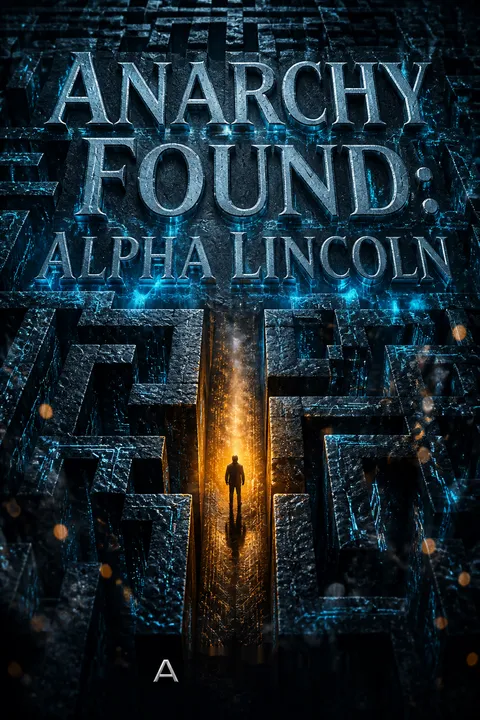
A lavish party at the restored Thirteenth Cathedral becomes the stage for a psychological showdown. Molly, assigned to security, is drawn into a literal and metaphorical maze—one designed by Lincoln and haunted by memories she cannot fully access. As she navigates its twists and dead ends, she encounters Lincoln, who forces her to confront the truth about their shared history. The maze is a crucible of memory and identity, where the boundaries between hunter and hunted, victim and perpetrator, are tested. Their encounter is both violent and intimate, culminating in a moment of raw vulnerability that leaves both changed.
The Alpha's Origin
Flashbacks reveal the origins of Lincoln, Molly, and their cohort at the Prodigy School—a secretive institution dedicated to creating superhuman "Alphas" and their "Omegas." Subjected to genetic manipulation, behavioral conditioning, and brutal tests, the children are forged into weapons for a shadowy agenda. Lincoln's bond with Molly, his designated Omega, is both his strength and his curse: he is programmed to protect her, but also to be destroyed by her if he ever goes rogue. Their eventual escape is marked by violence and loss, and the trauma of those years shapes everything they have become. The past is not dead; it is the engine driving the present conflict.
The Omega's Awakening
As Molly's memories resurface, so do the abilities and compulsions implanted in her at Prodigy. She realizes she is not just a survivor, but a weapon—one designed to control or destroy Lincoln if necessary. The revelation is both liberating and terrifying. Her sense of agency is tested as she grapples with the knowledge that her love, her rage, and her very identity may not be her own. Meanwhile, Lincoln faces his own reckoning, torn between his desire for vengeance and his need for connection. Their reunion is fraught with danger, as old programming and new emotions collide in a struggle for dominance and survival.
The Blue Boar's Game
Alastair Montgomery, the "Blue Boar," emerges as the architect of both the Prodigy experiments and the current wave of violence. His manipulation extends to every corner of Cathedral City, and his plans for Molly and Lincoln are both personal and apocalyptic. He captures Molly, intent on reactivating her Omega programming and using her to control or destroy Lincoln and the other Alphas. The final phase of his plan is set in motion, and the city itself becomes a battleground. The true nature of power, control, and sacrifice is laid bare, and the cost of freedom becomes painfully clear.
Inhibition and Betrayal
The Prodigy experiments included a failsafe: "inhibition sickness," a biological compulsion that prevents the Alphas from harming their creators or each other. This control is exploited by the Blue Boar, who pits Molly and Lincoln against one another in a deadly game. Betrayals—both real and programmed—test the limits of their loyalty and love. Allies become enemies, and the line between free will and manipulation blurs. The only way forward is to break the cycle of control, but doing so may require the ultimate sacrifice.
The Hero We Need
Molly and Lincoln, battered and broken, must decide what kind of people they want to be. The city clamors for a champion, but neither feels worthy of the title. Their journey is not about perfection, but about choosing to fight for something better—even when the odds are impossible and the cost is high. Heroism is redefined as the willingness to confront one's own darkness, to protect the vulnerable, and to love fiercely in the face of despair. The world does not need a flawless savior; it needs someone willing to stand up, again and again, for what is right.
The Final Transformation
Lincoln undergoes a final transformation, merging his body with advanced biotech and weaponry. He becomes the ultimate Alpha, capable of feats beyond human limits—but at the risk of losing his soul. Molly, too, is changed, her Omega programming reactivated and weaponized by the Blue Boar. Their final confrontation is not just physical, but existential: can they remain themselves, or will they become the monsters they were designed to be? The answer lies in their connection to each other, and in their willingness to choose love over hate, freedom over control.
Showdown in the Spire
The final battle takes place in the glass spire of Blue Corp, high above the city. Lincoln, Case, and Thomas storm the fortress in a desperate bid to save Molly and end the Blue Boar's reign. The fight is brutal, chaotic, and costly. Inhibition sickness, betrayal, and the threat of total annihilation hang over every move. Molly, caught between her programming and her love for Lincoln, must make an impossible choice. The Blue Boar's arrogance is his undoing, as the very weapons he created are turned against him. The spire falls, and with it, the old order.
Collared by the Past
With the Blue Boar dead and the spire in ruins, Molly and Lincoln are free—but not unscathed. The trauma of their past, the violence they have committed, and the uncertainty of their future weigh heavily. The city is changed, but not saved; new powers rise to fill the vacuum, and the cycle of corruption threatens to begin anew. Molly and Lincoln must confront the reality that freedom is not the absence of pain, but the ability to choose one's own path. Their love is both a wound and a balm, a reminder that healing is possible, but never complete.
The End of Prodigy
The truth about the Prodigy School and its experiments comes to light. The surviving Alphas—Lincoln, Case, and Thomas—must decide what to do with their power and knowledge. The city, reeling from the destruction of Blue Corp and the asylum, looks for new leaders. Thomas seizes control, promising a new era, but the shadow of Prodigy lingers. Molly and Lincoln, changed by their ordeal, choose to step back from the fight, seeking solace in each other and the hope of a quieter life. The end of Prodigy is not the end of struggle, but the beginning of a new chapter.
Aftermath and New Beginnings
In the aftermath, Molly and Lincoln attempt to build a life together, haunted by what they have done and what they have lost. The city is scarred but alive, its future uncertain. Molly grapples with guilt and the fear that she is still a weapon, while Lincoln struggles to reconcile his power with his humanity. Their love endures, imperfect and hard-won. The story ends not with triumph, but with the quiet determination to keep going, to keep choosing each other, and to believe that even in a broken world, new beginnings are possible.
Analysis
Anarchy Found is a dark, kinetic reimagining of the superhero origin story, blending elements of noir, science fiction, and erotic romance. At its core, the novel interrogates the nature of power—who wields it, who is broken by it, and whether it can ever be used for good. Molly and Lincoln are both products and victims of a system that seeks to weaponize trauma, turning love into a tool of control. Their journey is one of reclamation: of memory, agency, and the right to define themselves outside the roles imposed upon them. The book challenges the binary of hero and villain, suggesting that true heroism lies not in perfection, but in the willingness to confront one's own darkness and fight for something better. The use of memory manipulation, biological control, and systemic corruption resonates with contemporary anxieties about autonomy, surveillance, and the commodification of the self. Ultimately, Anarchy Found is a story about survival—not just of the body, but of hope, love, and the possibility of new beginnings in a world determined to break you.
Review Summary
People Also Read
Characters
Molly Masters
Molly is a woman forged by trauma and resilience. Orphaned by violence, raised in a circus, and later recruited into the military and police, she is both fiercely independent and deeply wounded. Her obsessive need for order masks a chaos within—memories of the Prodigy School, where she was engineered as an Omega to control or destroy her Alpha counterpart, Lincoln. Molly's journey is one of reclaiming agency: she is both victim and weapon, lover and killer. Her relationship with Lincoln is fraught with power struggles, desire, and the ever-present threat of betrayal. As her memories return, she must confront the possibility that her love, her rage, and even her sense of self have been manipulated. Ultimately, Molly's strength lies in her refusal to be defined by her past, choosing instead to fight for her own future.
Lincoln Wade
Lincoln is the product of a secret experiment—an Alpha designed for power, violence, and control. His childhood at the Prodigy School was marked by brutality, loss, and the forging of an unbreakable bond with Molly, his Omega. As an adult, he is a jaded genius, obscenely wealthy, and driven by a thirst for revenge against those who made him a monster. Lincoln's exterior is hard, but beneath lies a deep capacity for love and guilt. His relationship with Molly is both his salvation and his undoing: she is the only one who can truly hurt him, and the only one who can save him from himself. Lincoln's arc is one of transformation—not just into a superhuman weapon, but into a man willing to choose love over vengeance, even at great personal cost.
Case Reider
Case is Lincoln's oldest ally, bound by shared trauma and a sense of duty. Less driven by revenge than by the need for answers, Case is the emotional anchor of the group. His own experiences at Prodigy left him scarred but not broken; he seeks meaning in loyalty and brotherhood. Case's relationship with Lincoln is complex—part camaraderie, part rivalry, always tinged with the knowledge that they are both products of the same cruel system. He is the conscience of the group, often questioning the morality of their actions, and his presence is a reminder that survival sometimes means compromise.
Thomas Brooks
Thomas is the cold, calculating architect of the group's long game. Immune to the emotional bonds that tie the others, he is both a product and a manipulator of the Prodigy system. Thomas's indifference is his greatest strength and his greatest weakness: he can make the hard choices, but at the cost of genuine connection. As the story unfolds, Thomas emerges as both ally and potential adversary, his true motives always in question. He is the one most willing to sacrifice others for the greater good—or for his own gain.
Sheila (AI)
Sheila is more than a computer program; she is the heart of Lincoln's cave, a surrogate mother, and a voice of reason. Programmed with advanced intelligence and emotional nuance, Sheila both enables and restrains Lincoln's darker impulses. She is fiercely protective, sometimes manipulative, and always invested in the well-being of her "family." Sheila's presence blurs the line between human and machine, raising questions about agency, loyalty, and the nature of love.
Atticus Montgomery
Atticus is the charming, troubled son of Alastair Montgomery, caught between loyalty to his family and the weight of inherited sin. His connection to Molly is both literal and symbolic: they share a father, a legacy of manipulation, and a longing for freedom. Atticus's arc is one of tragedy—used as a pawn in his father's schemes, he ultimately becomes both victim and catalyst for the story's climax.
Alastair Montgomery (The Blue Boar)
Alastair is the true antagonist—a man whose ambition and cruelty know no bounds. As the mastermind behind the Prodigy experiments and the current wave of violence, he is both creator and destroyer. Alastair's need for control extends to every aspect of his world, and his manipulation of Molly and Lincoln is both personal and systemic. He is the embodiment of the dangers of unchecked power, and his downfall is both inevitable and hard-won.
Will (Wild Will)
Will is Molly's adoptive brother, a fellow survivor of Prodigy, and a symbol of lost innocence. His death is the catalyst for Molly's journey, and his presence lingers as both inspiration and wound. Will's role is that of the protector who could not save himself, a reminder that even the strongest can be broken by the past.
Chief O'Neil
The police chief is emblematic of Cathedral City's rot—compromised, misogynistic, and beholden to corporate interests. His interactions with Molly highlight the challenges faced by those who seek justice in a system rigged against them. O'Neil is both a minor antagonist and a symbol of the broader forces Molly and Lincoln must confront.
Valentine Veti (Val)
Val is the polished, enigmatic assistant at Blue Corp, a woman who navigates the corridors of power with grace and calculation. Her role is to facilitate—and sometimes obstruct—Molly's investigation, serving as a reminder that in Cathedral City, nothing is ever as it seems.
Plot Devices
Dual Narrative and Memory Manipulation
The story unfolds through alternating points of view—primarily Molly and Lincoln—allowing readers to experience both the external action and the internal struggles of the protagonists. Memory manipulation is a central device: both characters are haunted by gaps, flashbacks, and programmed compulsions. This creates a sense of uncertainty and suspense, as neither the characters nor the reader can fully trust what is real. The gradual revelation of their shared past at Prodigy School is achieved through flashbacks, dreams, and triggered memories, building tension and deepening emotional stakes.
Inhibition Sickness and Biological Control
A key plot device is the "inhibition sickness"—a biological failsafe that prevents the Alphas from harming their creators or each other. This mechanism is both a literal and metaphorical representation of control, forcing characters to confront the limits of their agency. It raises the stakes in every confrontation, as violence comes at a personal cost, and betrayal is both inevitable and tragic.
The Maze as Metaphor
The recurring motif of the maze—both literal (the hedge maze at the cathedral) and figurative (the labyrinth of memory and trauma)—serves as a crucible for character development. Navigating the maze becomes a test of will, identity, and the ability to confront the past. It is in the maze that Molly and Lincoln face their deepest fears and make choices that define their future.
Superhuman Transformation and Weaponization
The use of advanced biotech, genetic engineering, and weaponized bodies is both a source of power and a curse. Lincoln's transformation into a superhuman Alpha is mirrored by Molly's reactivation as Omega. The story explores the costs and consequences of becoming more than human, and the danger of losing one's soul in the pursuit of strength.
Corruption and Power Structures
Cathedral City is depicted as a microcosm of systemic corruption, where corporations, police, and politicians are entangled in a web of self-interest. The protagonists' struggle is not just against individual villains, but against a system designed to perpetuate control and exploitation. The narrative structure uses foreshadowing, parallel arcs, and mirrored confrontations to highlight the cyclical nature of power and the difficulty of true change.
Download PDF
Download EPUB
.epub digital book format is ideal for reading ebooks on phones, tablets, and e-readers.








































