
Plot Summary
Strange Car, Stranger World
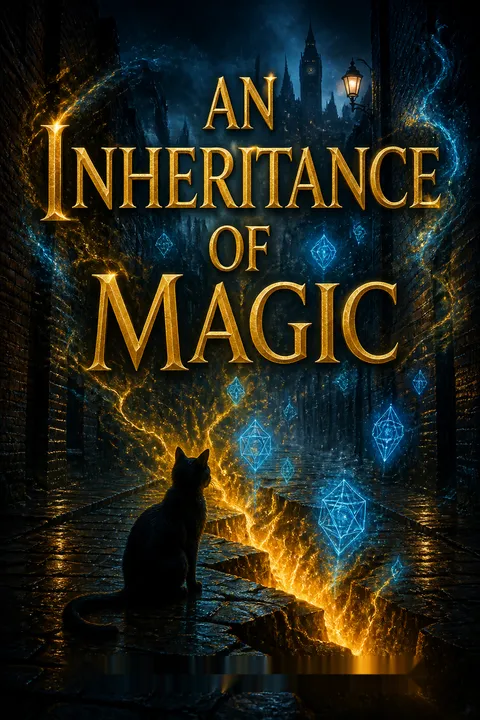
Stephen Oakwood, a young Londoner, notices a mysterious black minivan watching his house, stirring memories of his father's disappearance and the years of struggle that followed. Living alone, working a dead-end job, and practicing the secret art of drucraft—magic based on manipulating essentia—Stephen is torn between the mundane and the magical. His only solace is his cat, Hobbes, and the secret Well of magical energy near his home. The world feels both familiar and alien, as Stephen's sense of being watched grows, hinting at dangers lurking just beyond the ordinary. The chapter sets a tone of unease, isolation, and longing for purpose, as Stephen's two worlds threaten to collide.
Drucraft's Lonely Apprentice
Haunted by his father's cryptic advice and absence, Stephen juggles menial work, friendships, and the hidden discipline of drucraft. His friends are moving on, but Stephen is stuck, practicing magic in secret, shaping sigls—magical gems—while feeling left behind. The Well near his home is his anchor, but also a reminder of his limitations: his magic is real, but its uses are humble, and the world offers no place for it. The tension between following a "normal" path and honoring his father's legacy grows, as does Stephen's sense of being an outsider, both in the magical and mundane worlds.
Lucella's Unwelcome Invitation
Lucella Ashford, a confident, enigmatic girl, confronts Stephen, claiming kinship through his absent mother and offering him a place in the powerful House Ashford. Her world is one of privilege, drucraft schools, and political games. Stephen is both tempted and wary, especially as Lucella's interest seems transactional and her knowledge of his magic unsettling. When he reveals he can shape sigls himself, Lucella's attitude shifts from condescension to alarm, and she abruptly abandons him. The encounter leaves Stephen with more questions than answers, and a sense that he's stumbled into a dangerous game.
Kidnapped and On the Run
Stephen is ambushed by Lucella's hired muscle, Scar and Diesel, and forcibly taken from his home. The abduction is brutal, and Stephen's attempts to fight back are futile against magically enhanced strength. As he's driven away, Stephen's quick thinking and use of his light sigl allow him to blind his captor and escape into the night, dodging pursuit through traffic and a supermarket. The ordeal is terrifying and humiliating, but also galvanizing—Stephen realizes how vulnerable he is, and how little he understands about the forces now arrayed against him.
The Ashford Connection
After seeking refuge with his friend Colin, Stephen learns from Tobias Ashford—another cousin—that his ability to shape sigls makes him a threat in the Ashford family's succession struggle. Tobias explains the ruthless politics of the House, the value placed on magical talent, and the dangers of being seen as a rival. Stephen is offered a chance to meet the family patriarch, Charles Ashford, to clear his name and gain protection. The encounter with Tobias is fraught with manipulation and half-truths, but it opens Stephen's eyes to the broader world of Houses, Wells, and drucraft power.
The Exchange and the Well
Tobias takes Stephen to the Exchange, a secretive marketplace for sigls, where Stephen is awed by the variety and cost of magical artifacts. The experience is both inspiring and alienating—he sees what's possible, but also how far he is from the power and privilege of the Houses. Later, at the Ashford mansion, Stephen navigates a world of political intrigue, meeting potential heirs, allies, and rivals. He learns that his mother is alive but absent by choice, and that the doors to drucraft education and advancement are closed to outsiders like him. The visit is a bitter lesson in the realities of class, power, and exclusion.
Family, Power, and Betrayal
Stephen's hopes for belonging are dashed as Charles Ashford coldly dismisses him, offering only a token payment for Lucella's attack and making clear that family is a matter of utility, not affection. The Ashfords' internal politics are brutal, with succession hinging on magical prowess and loyalty. Stephen is left with a sense of betrayal—not just by his mother and the family, but by the very system that rewards power and punishes vulnerability. The encounter cements his resolve to rely on himself, and to seek strength on his own terms.
Catastrophe and Desperation
Stephen returns home to find his beloved cat, Hobbes, nearly killed and left as a warning. The attack, almost certainly orchestrated by Lucella, pushes Stephen to the brink. Desperate to save Hobbes, he exhausts every magical and mundane option, learning the limits of his knowledge and the scarcity of healing magic. The ordeal is a crucible, forcing Stephen to confront the cost of weakness and the ruthlessness of his enemies. His love for Hobbes becomes a lifeline, driving him to new heights of determination and magical skill.
The Search for Strength
Stephen embarks on a relentless search for a Life Well, the only hope for healing Hobbes. Days blur into nights as he scours London, driven by fear and fury. The quest is grueling, marked by hunger, exhaustion, and hallucination, but also by breakthroughs in his magical abilities—he learns to see essentia, the raw energy of drucraft, with unprecedented clarity. In a moment of near-mystical insight, he finally finds a Well and shapes a healing sigl, saving Hobbes and emerging transformed. The experience is both harrowing and empowering, marking a turning point in Stephen's journey.
Allies, Enemies, and Truths
Recovering from his ordeal, Stephen reassesses his priorities and resources. He seeks out mentors, like Father Hawke and Maria Noronha, to deepen his understanding of drucraft and the world's hidden rules. He learns about the economics of Wells, the limitations of magical talent, and the exploitative nature of drucraft corporations. Encounters with other locators and practitioners reveal both camaraderie and competition, as well as the precariousness of life on the margins. Stephen's resolve hardens: he will become stronger, not for the approval of the Houses, but for his own survival and freedom.
The Locator's Path
Stephen embraces the life of a locator, hunting for Wells to sell to corporations like Linford's. The work is grueling and often thankless, but it offers a measure of independence and the chance to hone his skills. He learns the tricks of the trade, the pitfalls of corporate exploitation, and the value of solidarity with other locators. The job is a microcosm of the drucraft world: opportunity and danger, promise and disappointment, all shaped by the relentless pursuit of power. Stephen's magical abilities give him an edge, but also mark him as a target.
Wells, Work, and Warnings
Stephen's work as a locator brings him into conflict with raiders, rival locators, and the ever-present threat of the Houses. He forms a wary alliance with Ivy, a fellow locator, and together they fend off a gang of raiders in a dramatic battle. The experience is both exhilarating and sobering, highlighting the dangers of the magical underworld and the limits of trust. Stephen's growing arsenal of sigls and skills is hard-won, and every victory is shadowed by the knowledge that more powerful enemies are always watching.
Fights, Failures, and New Tricks
Determined to close the gap with his enemies, Stephen experiments with new sigls—enhancements, defenses, and, eventually, invisibility. Each success is tempered by failure and injury, as the limits of his knowledge and capacity become clear. Encounters with other practitioners, both friendly and hostile, teach him the value of cunning over brute force. The process is iterative and often painful, but Stephen's persistence pays off, culminating in the creation of an invisibility sigl that opens new possibilities for action and espionage.
The Ashford Heir's Game
The Ashford family's internal struggle reaches a boiling point as Lucella and Tobias plot to undermine Calhoun, the favored heir. Stephen is drawn into their schemes, both as a pawn and as a potential threat. The politics of the House are ruthless, with alliances shifting and betrayals commonplace. Stephen's growing power makes him both a target and a wildcard, and his encounters with the Ashfords reveal the emptiness at the heart of their world: power pursued for its own sake, at the cost of trust and belonging.
The Tyr Raid
A high-stakes raid on a powerful Well in Chancery Lane brings together the Ashfords, the US corporation Tyr, and Stephen, who is framed as the scapegoat. The ensuing battle is a showcase of magical technology and raw power, with Calhoun displaying formidable combat skills. Stephen's quick thinking and unique sigls allow him to survive and even turn the tables on his enemies, but the experience is a stark reminder of the scale of the forces at play. The raid's aftermath reshapes the balance of power within the House and the broader drucraft world.
Byron's Temptation
In the chaos following the raid, Stephen encounters Byron, a mysterious figure with powers beyond conventional drucraft. Byron offers Stephen knowledge about his missing father in exchange for allegiance, framing his cause as one of freedom and revolution against the old order. The offer is seductive, promising both power and answers, but Stephen's hard-won skepticism prevails. He rejects Byron's utopian rhetoric, recognizing the dangers of trading one form of domination for another. The encounter leaves Stephen with new questions and a sense of being watched by forces beyond his understanding.
Revelations and Resolutions
Piecing together clues from the Ashfords and his own research, Stephen discovers that he is not just a distant relative, but the grandson of Charles Ashford and half-brother to Tobias and Bridget. The revelation is both a vindication and a wound, exposing the depth of his family's neglect and the emptiness of their power. Stephen's anger is tempered by a renewed sense of purpose: he will not be defined by the Ashfords' games, but will chart his own path. The chapter ends with Stephen preparing to confront his mother, the final link to his past and the key to his future.
Into Autumn: A New Beginning
As autumn arrives, Stephen finds himself stronger, wiser, and more independent than ever before. The threats of the Ashfords and their rivals remain, but Stephen is no longer a pawn—he is a player in his own right, with allies, skills, and a vision for his future. The chapter closes with a meeting at the airport, as Stephen prepares to face his mother and the unresolved mysteries of his family. The story's emotional arc comes full circle: from isolation and vulnerability to agency and hope, with the promise of new adventures ahead.
Analysis
An Inheritance of Magic is a coming-of-age fantasy that uses the conventions of urban magic to explore themes of power, belonging, and self-determination. At its heart, the novel is about the struggle to define oneself in a world that is both indifferent and hostile—a world where family, class, and talent can be both blessings and burdens. Stephen's journey is emblematic of the modern search for meaning: he is caught between the expectations of others and the demands of survival, forced to navigate systems that reward conformity and punish vulnerability. The novel critiques the commodification of talent, the emptiness of inherited privilege, and the dangers of utopian promises, while also celebrating resilience, friendship, and the hard-won joy of agency. The lessons are clear: true power comes not from birth or acquisition, but from the courage to choose one's own path, to learn from failure, and to build connections that transcend the boundaries of blood and tradition. In a world where magic is both a metaphor and a reality, the greatest inheritance is the freedom to become oneself.
Characters
Stephen Oakwood
Stephen is a young man marked by loss, resilience, and a restless search for belonging. Raised by his father after his mother's disappearance, Stephen is shaped by abandonment and the burden of a secret magical inheritance. His psychological landscape is defined by isolation, self-doubt, and a fierce loyalty to those he loves—especially his cat, Hobbes. Stephen's journey is one of self-discovery and hard-won empowerment: he moves from passive victim to active agent, learning to trust his own judgment and abilities. His relationships—with friends, enemies, and family—are fraught with ambiguity, as he navigates a world where power is both a shield and a trap. Stephen's development is driven by necessity, love, and a stubborn refusal to be defined by others' expectations.
Lucella Ashford
Lucella is Stephen's cousin and a scion of House Ashford, embodying both the privileges and pathologies of her lineage. She is charismatic, manipulative, and driven by a desperate need to prove herself in a world that values power above all. Lucella's relationship with Stephen is complex: she sees him as both a tool and a threat, oscillating between condescension, envy, and hostility. Her psychological makeup is shaped by family pressure, rivalry, and a deep-seated insecurity masked by bravado. Lucella's actions—ranging from recruitment to betrayal—reveal a capacity for both cruelty and vulnerability, making her a formidable but ultimately tragic figure.
Tobias Ashford
Tobias is Stephen's half-brother and a fellow outsider within the Ashford hierarchy. Intelligent, resourceful, and perpetually plotting, Tobias is caught between ambition and impotence. His relationship with Stephen is transactional but tinged with genuine empathy; he recognizes a kindred spirit in Stephen's marginalization. Tobias's psychological profile is marked by frustration, envy, and a longing for recognition. He is both a manipulator and a victim of the family's ruthless dynamics, and his shifting loyalties reflect the instability of his position. Tobias's development is a cautionary tale about the costs of playing the game without the power to win.
Charles Ashford
Charles is the head of House Ashford and the architect of its internal power struggles. He is a study in control: emotionally distant, intellectually formidable, and utterly pragmatic. Charles views family as an instrument of legacy, not affection, and his interactions with Stephen are marked by a chilling indifference. His psychological core is defined by a belief in meritocracy—albeit one rigged in favor of the powerful—and a willingness to sacrifice individuals for the greater good of the House. Charles's development is static but influential: he is the immovable object against which Stephen and the other heirs define themselves.
Calhoun Ashford
Calhoun is the golden child of House Ashford, a magical prodigy groomed for leadership. He is distant, disciplined, and supremely confident, embodying the House's ideals of strength and competence. Calhoun's relationship to Stephen is largely impersonal—he sees him as a potential rival, but not a serious threat. Psychologically, Calhoun is shaped by expectation and the burden of being the chosen one; his actions are calculated, his emotions tightly controlled. Calhoun's development is less about change than about the revelation of his limits and the costs of perfection.
Bridget Ashford ("Bridge Girl")
Bridget is Stephen's half-sister and the mysterious girl who first warns him to "get stronger." She operates on the margins of the Ashford power structure, observing more than she intervenes. Bridget's psychological profile is marked by curiosity, detachment, and a subtle empathy for Stephen's plight. She serves as both a guide and a mirror, reflecting Stephen's own journey from ignorance to agency. Bridget's development is understated but significant: she represents the possibility of connection and understanding in a world defined by rivalry and suspicion.
Scar and Diesel
Scar and Diesel are Lucella's hired muscle, magically enhanced and emotionally stunted. They are both victims and perpetrators, caught in the machinery of House politics. Their relationship to Stephen is adversarial but impersonal—they are instruments of others' will, not independent actors. Psychologically, they are defined by loyalty, fear, and a limited sense of agency. Their development is minimal, serving as a reminder of the expendability of those without power or privilege.
Ivy
Ivy is a fellow locator, wary and self-reliant, shaped by the dangers of the magical underworld. Her relationship with Stephen is initially adversarial, then evolves into a tentative partnership based on mutual respect and necessity. Ivy's psychological landscape is defined by vigilance, pragmatism, and a guarded hope for connection. She represents the possibility of solidarity among outsiders, and her development parallels Stephen's own journey toward trust and collaboration.
Father Hawke
Father Hawke is a priest and secret drucrafter who becomes Stephen's reluctant mentor. He is wise, patient, and insistent on the importance of ethical reflection, often guiding Stephen through parables and philosophical challenges. Psychologically, Father Hawke is marked by a blend of compassion and detachment, serving as both a guide and a test. His development is subtle, revealing layers of knowledge and purpose that hint at deeper mysteries within the drucraft world.
Byron
Byron is a mysterious figure with powers beyond conventional drucraft, offering Stephen both knowledge and temptation. He is charismatic, persuasive, and deeply ambiguous—his rhetoric is utopian, but his methods and motives are suspect. Byron's relationship to Stephen is that of a tempter and potential mentor, challenging him to question the structures of power and the nature of freedom. Psychologically, Byron is a study in ambiguity: is he a liberator or a manipulator, a visionary or a villain? His development is ongoing, leaving both Stephen and the reader uncertain of his true intentions.
Plot Devices
Dual Worlds and Hidden Power
The narrative structure alternates between Stephen's ordinary struggles—work, friendship, survival—and the secret world of drucraft, where power is both a gift and a curse. The Well near his home serves as both a literal and symbolic anchor, representing potential, isolation, and the possibility of transformation. The plot is driven by the collision of these worlds, as Stephen is forced to choose between conformity and self-actualization.
Succession Struggles and Family Politics
Succession is determined by magical talent, loyalty, and ruthlessness, with each heir maneuvering for advantage. Stephen's outsider status makes him both a pawn and a threat, and the shifting alliances and betrayals within the House provide both obstacles and opportunities. Foreshadowing is used to hint at deeper secrets—Stephen's true parentage, the nature of his mother's absence, and the hidden agendas of characters like Byron.
Magical Economics and Social Critique
Wells are the source of all magical power, and their control is the basis of both wealth and status. The Exchange, Linford's, and other corporations represent the commodification of magic, while the plight of locators and the expendability of muscle like Scar and Diesel highlight the costs of a system built on hierarchy and exclusion. The plot uses these structures to critique both magical and mundane forms of power.
Psychological Growth and Moral Testing
The story is structured as a series of tests—physical, magical, and moral—that force Stephen to confront his fears, limitations, and desires. Encounters with mentors like Father Hawke and tempters like Byron serve as crucibles, challenging Stephen to define his own values and purpose. The use of foreshadowing, especially in the form of dreams, warnings, and philosophical debates, deepens the psychological realism and stakes of the narrative.
Revelation and Transformation
Stephen's discovery of his true parentage, the nature of his magical abilities, and the hidden agendas of the Houses and corporations are all foreshadowed through subtle clues and misdirection. The structure is cyclical: each revelation leads to a new challenge, forcing Stephen to adapt, innovate, and ultimately transcend the limitations imposed by others. The final chapters bring these threads together, offering both closure and the promise of new beginnings.
Download PDF
Download EPUB
.epub digital book format is ideal for reading ebooks on phones, tablets, and e-readers.








































