
Plot Summary
Homecoming and Hidden Tensions
Dr. Thomas Stockmann, a physician, has returned to his hometown in southern Norway, where his brother Peter is the mayor. The town is thriving thanks to its new Baths, a project both brothers claim credit for. The Stockmann household is lively and loving, but beneath the surface, tensions simmer—especially between the idealistic Thomas and the pragmatic, status-conscious Peter. The town's prosperity is fragile, built on the Baths' reputation, and everyone's fortunes seem tied to this communal project. The stage is set for a collision between personal conviction and public interest, as the brothers' differing values threaten to erupt into open conflict.
The Baths: Town's Lifeblood
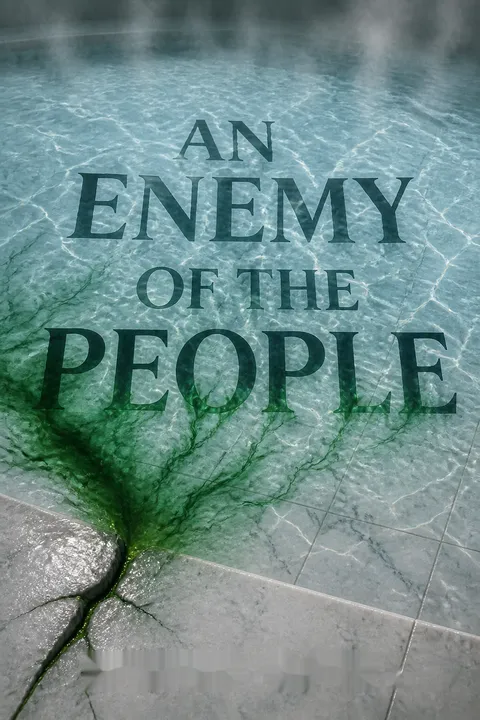
The municipal Baths are the pride of the town, promising economic growth, health, and unity. Peter, as mayor, sees them as his crowning achievement, while Thomas, the medical officer, is proud of their supposed health benefits. The Baths attract visitors, create jobs, and foster a sense of shared purpose. Yet, the Baths also represent the town's vulnerability: their success is precarious, dependent on public trust and the illusion of safety. The Baths become a symbol of both communal aspiration and the dangers of collective denial, foreshadowing the crisis to come.
A Shocking Discovery
Thomas receives scientific confirmation that the Baths' water is dangerously contaminated, likely causing illness among visitors. His discovery is both a professional triumph and a personal burden. He is elated at first, believing the town will thank him for his vigilance. But he quickly realizes the implications: fixing the problem will be costly, require shutting down the Baths, and threaten the town's economic future. Thomas's sense of duty compels him to act, but he is unprepared for the resistance he will face from those who fear the truth more than the danger itself.
The Price of Truth
Thomas prepares to share his findings, expecting gratitude. Instead, he encounters skepticism and hostility, especially from Peter, who fears the financial and reputational fallout. The townspeople, including Thomas's friends and colleagues, are torn between supporting the truth and protecting their livelihoods. The press, initially eager to champion Thomas, begins to waver as the economic consequences become clear. Thomas's family worries about their future, sensing the storm that is about to break. The cost of honesty becomes painfully clear: to speak out is to risk everything.
Brewing Storms
As Thomas tries to rally support, he finds himself increasingly isolated. The local newspaper, led by Hovstad and Billing, initially promises to publish his report, but their commitment is shallow. Aslaksen, the cautious printer, represents the "compact majority"—the moderate, self-interested townsfolk who value stability over truth. Peter maneuvers behind the scenes, warning Thomas of the consequences for his family and urging him to recant. The town's leaders close ranks, and even Thomas's father-in-law, Morten Kiil, treats the crisis as a joke or a bargaining chip. The lines are drawn for a public showdown.
The Press and the People
The press, once eager to expose the truth, now fears the backlash. Hovstad and Billing, motivated by political ambition and self-preservation, begin to distance themselves from Thomas. They realize that supporting him could alienate their readers and ruin their paper. Aslaksen, representing the small tradesmen, insists on "moderation," prioritizing economic interests over principle. The press's betrayal is a turning point for Thomas, who sees that public opinion is fickle and easily manipulated. The supposed guardians of truth become instruments of suppression, and Thomas is left to fight alone.
Family and Fear
Thomas's wife, Katherine, and daughter, Petra, struggle with the consequences of his stand. Katherine fears for their security and urges caution, while Petra admires her father's integrity but suffers professionally for her association with him. The children are bewildered by the hostility directed at their family. The Stockmanns become pariahs, their home vandalized, their livelihoods threatened. The family's unity is tested, but Katherine ultimately chooses to stand by Thomas, even as the world turns against them. The personal cost of principle becomes heartbreakingly real.
The Mayor's Ultimatum
Peter confronts Thomas, demanding that he retract his claims and publicly support the Baths. He frames the issue as one of loyalty to the community and accuses Thomas of endangering the town's future. Peter offers veiled threats: loss of position, social ostracism, and financial ruin. He insists that the individual must submit to the majority and that dissent is a betrayal. Thomas refuses, insisting that truth and conscience cannot be compromised. The brothers' conflict becomes a microcosm of the larger struggle between integrity and expediency, individual and collective.
Betrayal in the Printing Office
Thomas's last hope—the independent press—crumbles as Hovstad, Billing, and Aslaksen refuse to publish his report. They justify their decision by appealing to public opinion and the town's welfare, but their true motives are self-interest and fear. Thomas is accused of being an enemy of the people, and his words are twisted to serve the majority's narrative. The betrayal is devastating, revealing the cowardice and hypocrisy of those who claim to serve the public good. Thomas realizes that the truth has no allies when it threatens the status quo.
Public Meeting, Private Fury
Denied access to the press, Thomas calls a public meeting to present his findings. The event descends into chaos as the townspeople, whipped into a frenzy by their leaders, refuse to listen. Thomas's attempts to speak are drowned out by jeers and accusations. He is branded an enemy of the people, and a formal vote cements his ostracism. The meeting exposes the dangers of mob rule and the ease with which truth can be suppressed by collective fear and self-interest. Thomas's isolation is complete, but his resolve hardens.
Enemy of the People
The town turns on Thomas and his family, vandalizing their home and cutting off their livelihoods. Even those who once respected him now shun him, fearing association with a pariah. Thomas's children are expelled from school, and Petra loses her teaching job. The Stockmanns face eviction and social ruin. Yet, in the midst of despair, Thomas finds a grim satisfaction: he has remained true to his conscience, even as the world calls him its enemy. The label "enemy of the people" becomes a badge of honor, marking his refusal to submit to lies.
Stones and Broken Windows
The aftermath of the public meeting is marked by violence and intimidation. Stones are thrown through the Stockmanns' windows, and threats abound. The town's leaders justify their actions as necessary for the common good, but their true motive is fear of change. Thomas's family suffers, but their loyalty to him deepens. The physical destruction of their home mirrors the moral decay of the community. In the face of persecution, Thomas's defiance grows, and he vows to continue his fight, even if it means standing alone.
The Cost of Integrity
As the Stockmanns prepare to leave town, Thomas is offered a way out: if he recants, he may regain his position and security. His father-in-law, Morten Kiil, tries to manipulate him by investing the family's inheritance in the Baths, hoping Thomas will protect his interests. Hovstad and Aslaksen, sensing an opportunity, offer to support Thomas if he will use his influence for their benefit. Thomas rejects all such bargains, refusing to compromise his principles for personal gain. The cost of integrity is total isolation, but Thomas embraces it as the price of self-respect.
Temptations and Traps
The town's leaders and former allies reveal their true colors, seeking to exploit the crisis for their own advantage. Morten Kiil's investment is a trap, designed to force Thomas to retract his claims and protect the family's wealth. Hovstad and Aslaksen's sudden willingness to support Thomas is motivated by financial desperation, not principle. Thomas sees through their schemes and drives them from his home. The episode exposes the pervasive corruption and cowardice of those who claim to serve the public, and Thomas's isolation becomes a form of moral victory.
Alone Against the Majority
With his family's support, Thomas decides to stay and fight rather than flee. He resolves to educate his children himself, vowing to raise a new generation of independent thinkers. The Stockmanns find refuge with Captain Horster, who alone among the townspeople remains loyal. Thomas's sense of purpose is renewed: he will stand alone against the "compact majority," confident that truth and integrity are worth any sacrifice. The play ends with Thomas declaring that "the strongest man in the world is he who stands most alone," embracing his role as a solitary champion of conscience.
The Strongest Man
In the final moments, Thomas gathers his family and proclaims his discovery: true strength lies in standing alone for what is right, even when the world is against you. The Stockmanns, battered but unbroken, prepare to rebuild their lives on their own terms. Thomas's defiance is both tragic and heroic, a testament to the power of individual conscience in the face of collective cowardice. The play closes on a note of hope and resilience, suggesting that real progress depends on those willing to endure isolation for the sake of truth.
Analysis
Henrik Ibsen's An Enemy of the People remains a searing exploration of the conflict between individual conscience and collective self-interest. The play's central lesson is that truth is often unwelcome when it threatens comfort, profit, or social cohesion. Ibsen exposes the fragility of democratic ideals, showing how the "compact majority" can become a force for repression rather than progress. The tragedy of Dr. Stockmann is not just his isolation, but the community's willingness to sacrifice integrity for expediency. In a world where whistleblowers are still vilified and inconvenient truths suppressed, the play's relevance endures. Ibsen challenges us to consider the cost of integrity and the courage required to stand alone. Ultimately, the play is both a warning and a call to arms: real progress depends on those willing to endure exile for the sake of truth, and the strongest among us are those who refuse to be silenced by the crowd.
Review Summary
An Enemy of the People by Henrik Ibsen is a powerful political drama about Dr. Stockmann, who discovers the town's profitable baths are contaminated. When he attempts to expose this truth, he faces opposition from authorities, press, and citizens who prioritize economic interests over public health. Reviewers praise the play's timeless relevance to contemporary issues like climate change, corruption, and whistleblowing. The work critiques democracy, majority rule, and mob mentality while exploring conflicts between individual integrity and collective interests. Though some note its one-sided arguments and polarizing views on aristocracy versus democracy, most find it a masterful, thought-provoking examination of truth versus power.
People Also Read




Characters
Dr. Thomas Stockmann
Thomas is the play's protagonist, a doctor whose discovery of the Baths' contamination sets the plot in motion. Driven by a fierce commitment to truth and public health, he is naïve about the costs of honesty in a self-interested society. His optimism and faith in reason are gradually eroded by betrayal and hostility, but his integrity never wavers. Psychologically, Thomas is both stubborn and visionary, unable to compromise even when it means sacrificing his career, reputation, and family's security. His journey is one from communal belonging to heroic isolation, embodying the tragic cost—and necessity—of dissent.
Peter Stockmann
Peter, the mayor and Thomas's elder brother, represents the voice of authority, order, and self-preservation. He is deeply invested in the town's prosperity and his own reputation, viewing dissent as a threat to both. Peter's psychological rigidity and fear of scandal drive him to suppress the truth, even at the expense of public health. His relationship with Thomas is fraught with rivalry, resentment, and a fundamental clash of values. Peter's development is a descent into moral compromise, revealing the dangers of conflating the public good with personal and political interests.
Katherine Stockmann
Katherine is Thomas's steadfast partner, torn between supporting her husband's principles and protecting her family. She is practical, nurturing, and emotionally intelligent, often serving as a moderating influence on Thomas's impulsiveness. Katherine's fears for her children's future and her husband's safety are genuine, but her loyalty ultimately prevails. Her character highlights the personal costs of public conflict and the quiet heroism required to stand by one's convictions in the face of overwhelming adversity.
Petra Stockmann
Petra, Thomas's daughter, is a teacher and a symbol of the next generation's potential. She shares her father's commitment to truth and independence, refusing to compromise her principles even when it costs her job. Petra's relationship with her parents is affectionate and supportive, and she becomes a partner in Thomas's quest for integrity. Psychologically, Petra is courageous, intelligent, and unafraid to challenge authority, embodying hope for a more enlightened future.
Hovstad
Hovstad is the editor of the "People's Messenger," initially eager to support Thomas's cause. However, his commitment to truth is shallow, easily overridden by political calculation and fear of public backlash. Hovstad's psychological makeup is marked by ambition, adaptability, and a willingness to betray ideals for personal gain. His relationship with Thomas shifts from ally to adversary, illustrating the dangers of self-serving leadership and the fragility of journalistic integrity.
Aslaksen
Aslaksen represents the "compact majority"—the cautious, self-interested townsfolk who value moderation above all. He is a small tradesman, chairman of the Householders' Association, and a master of compromise. Psychologically, Aslaksen is risk-averse, pragmatic, and deeply invested in social stability. His support is always conditional, and he abandons Thomas when the cost becomes too high. Aslaksen's character exposes the tyranny of the majority and the moral dangers of prioritizing consensus over conscience.
Morten Kiil
Morten Kiil, Katherine's adoptive father, is a tanner whose business is implicated in the Baths' pollution. He treats the crisis as a joke or a bargaining chip, investing the family's inheritance in the Baths to force Thomas's hand. Psychologically, Kiil is shrewd, self-interested, and emotionally detached, using familial ties for leverage. His actions test Thomas's resolve and highlight the corrosive effects of self-interest on both family and community.
Billing
Billing is Hovstad's assistant at the newspaper, eager for advancement and quick to shift allegiances. He is witty, cynical, and opportunistic, embodying the superficiality of political engagement in the town. Billing's psychological profile is marked by insecurity and a desire for approval, making him easily swayed by those in power. His betrayal of Thomas is emblematic of the broader collapse of solidarity in the face of risk.
Captain Horster
Horster is a ship captain who offers his home as a venue for Thomas's public meeting and later provides refuge for the Stockmann family. He is quiet, principled, and largely uninvolved in local politics, making his loyalty all the more significant. Psychologically, Horster is steady, compassionate, and immune to the pressures of public opinion. His support provides a lifeline for the Stockmanns and a glimmer of hope for human decency.
Ejlif and Morten Stockmann
The Stockmann boys are caught in the crossfire of their father's conflict with the town. Their innocence and confusion underscore the personal costs of public controversy. As the family's future becomes uncertain, their loyalty to Thomas is unwavering, and their education becomes a symbol of hope for a new, more principled generation.
Plot Devices
The Baths as Symbol
The municipal Baths are both the literal source of the town's wealth and a metaphor for the community's moral health. Their contamination represents the hidden rot beneath the surface of civic pride, and the town's refusal to address the problem mirrors its unwillingness to confront uncomfortable truths. The Baths serve as a focal point for the conflict between individual conscience and collective self-interest.
The "Compact Majority"
The concept of the "compact majority" is central to the play's critique of democracy's dark side. Ibsen uses the majority as a plot device to show how public opinion can become tyrannical, suppressing dissent and enforcing conformity. The majority's power is depicted as both irresistible and morally suspect, raising questions about the relationship between truth, justice, and popular will.
Public Meeting as Crucible
The public meeting scene is a dramatic turning point, using the device of collective action to expose the dangers of mob rule. The meeting devolves into chaos, with reasoned debate replaced by shouting, violence, and scapegoating. This device allows Ibsen to dramatize the isolation of the truth-teller and the ease with which a community can turn on its own.
Foreshadowing and Irony
Ibsen employs foreshadowing through the initial optimism surrounding the Baths and the early support Thomas receives. The irony of Thomas being called an "enemy of the people" for trying to protect the public is a powerful device, highlighting the inversion of values that occurs when self-interest trumps integrity.
Family as Microcosm
The Stockmann family's struggles serve as a microcosm of the larger societal conflict. Their loyalty, fear, and suffering personalize the abstract themes of truth, power, and conformity, making the stakes of the public debate immediate and emotionally resonant.


Download PDF
Download EPUB
.epub digital book format is ideal for reading ebooks on phones, tablets, and e-readers.








































