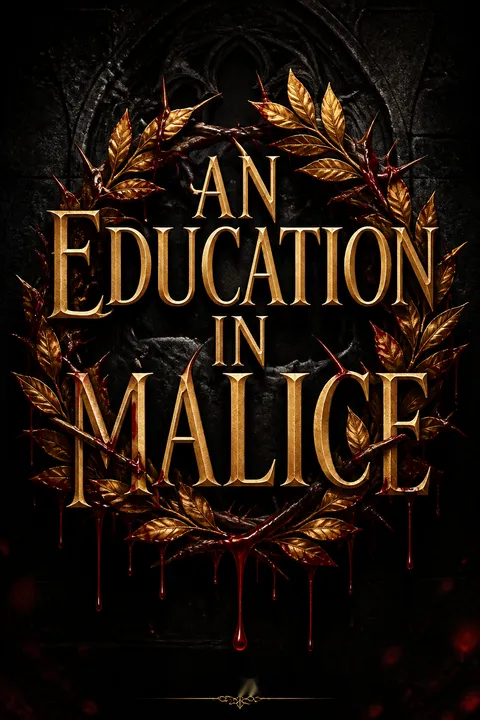

Plot Summary
Arrival at Saint Perpetua's
Laura, a shy, bookish girl, arrives at Saint Perpetua's Women's College, carrying the weight of her Southern upbringing and her father's hopes for her future. The campus, vibrant with autumn color and bustling with young women, is both intimidating and exhilarating. Laura is quickly introduced to Maisy, her assigned senior mentor, and Elenore, a sharp, stylish peer. The school's traditions and rituals, including the infamous Bonfire Night, promise both belonging and the threat of exclusion. Laura's longing for connection and her anxiety about fitting in set the stage for her journey, as she steps into a world where intellect, ambition, and desire collide beneath the surface of collegiate life.
Bonfire and First Encounters
The annual Bonfire Night is a rite of passage, where freshmen are crowned and welcomed by seniors in white robes. Amidst the revelry, Laura is singled out by Carmilla Karnstein, a striking, enigmatic upperclassman who crowns her with laurels. Their brief, electric encounter leaves Laura both infatuated and unsettled, sensing a dangerous allure beneath Carmilla's beauty. The night cements the social hierarchies and rivalries that will define Laura's experience at Saint Perpetua's. Carmilla's attention marks Laura as someone to watch, igniting a fascination that will soon spiral into obsession, rivalry, and something darker.
Rivalry Ignites in Seminar
Laura's academic ambitions lead her to the coveted poetry seminar taught by the legendary Ms. De Lafontaine. Despite being a freshman, Laura's talent earns her a place among upperclassmen, including Carmilla. The seminar is a crucible of intellect and ego, with De Lafontaine's approval the ultimate prize. Carmilla, previously the undisputed star, is threatened by Laura's raw, authentic voice. Their rivalry is immediate and intense, fueled by biting critiques and veiled barbs. Yet beneath the antagonism simmers a mutual fascination, as each recognizes in the other a worthy adversary—and perhaps something more.
De Lafontaine's Shadow
Ms. De Lafontaine is both muse and tyrant, her charisma and cruelty binding her students in a web of ambition and desire. She cultivates competition, favoring Carmilla but drawn to Laura's promise. Her teaching style is immersive and demanding, blurring the lines between mentorship and manipulation. Outside the classroom, De Lafontaine's relationship with Carmilla is tinged with secrecy and inappropriate intimacy, hinting at a power dynamic that is both seductive and predatory. Laura, desperate for approval, is drawn deeper into De Lafontaine's orbit, even as she senses the dangers lurking beneath the surface.
Library Confessions and Tensions
The library becomes a battleground for Laura and Carmilla, where intellectual rivalry gives way to personal exposure. Carmilla discovers Laura's taste for erotic literature, using it to taunt and embarrass her. Yet the encounter is charged with mutual curiosity and longing, as both girls reveal vulnerabilities they strive to hide. Their exchanges oscillate between cruelty and intimacy, each testing the other's boundaries. The library scene crystallizes the complex interplay of shame, desire, and power that defines their relationship, setting the stage for deeper entanglements.
Poisonous Pedagogy
De Lafontaine's seminar becomes a theater of psychological warfare, with Laura and Carmilla locked in a battle for supremacy. The professor's praise and criticism are wielded as weapons, stoking jealousy and insecurity. Carmilla's privileged position is threatened by Laura's rising star, while Laura is both repelled and attracted by Carmilla's brilliance and volatility. The toxic academic environment amplifies their personal struggles, as ambition, sexuality, and self-worth become hopelessly intertwined. The boundaries between learning and suffering blur, and the cost of excellence grows ever steeper.
Intimacies and Power Plays
Outside the classroom, Laura and Carmilla's antagonism gives way to moments of unexpected tenderness and vulnerability. Shared confidences, drunken confessions, and charged physical encounters reveal the depth of their connection. De Lafontaine's private gatherings further complicate matters, as the professor orchestrates situations that force Laura and Carmilla into ever-closer proximity. The trio's dynamic becomes increasingly fraught, with shifting alliances and betrayals. Desire, jealousy, and the longing for approval drive each woman to test the limits of her own power—and her willingness to submit.
Blood, Secrets, and Seduction
The gothic undercurrents of Saint Perpetua's come to the fore as Laura uncovers hints of De Lafontaine's true nature. Strange rituals, nocturnal wanderings, and whispered rumors point to something monstrous beneath the veneer of academia. Carmilla's relationship with De Lafontaine is revealed to be both sexual and predatory, involving blood and submission. Laura, drawn into their secret world, must confront her own desires and fears. The boundaries between victim and accomplice blur, as seduction becomes both literal and metaphorical, and the cost of intimacy is measured in blood.
Catacombs and Revelations
Laura and Carmilla's curiosity leads them into the catacombs beneath the school, where they witness a clandestine ritual involving De Lafontaine and her ancient sire, Isis. The revelation that De Lafontaine is a vampire—and that Carmilla is her chosen companion—shatters Laura's understanding of reality. The catacombs become a site of both horror and initiation, as Laura is forced to confront the true nature of the power dynamics at play. Secrets long buried come to light, and the trio's fates become inextricably linked.
The Vampire's Bargain
With the truth exposed, De Lafontaine offers Laura a place in her inner circle, binding her to secrecy and to the dangerous world of the undead. Laura, torn between fear and fascination, must decide whether to accept the bargain and the risks it entails. Carmilla, newly transformed and struggling with her own monstrous hunger, becomes both a rival and a lover. The three women are bound by blood, desire, and the knowledge that betrayal could mean death. The stakes are higher than ever, and trust is a fragile, precious commodity.
House of Desire
De Lafontaine introduces Laura and Carmilla to the wider vampire society at a lavish house party hosted by Magdalena. The gathering is a tableau of sensuality, power, and transgression, where human companions and vampires mingle in a haze of pleasure and danger. Laura and Carmilla's relationship is tested as they navigate jealousy, exhibitionism, and the allure of new experiences. The party becomes a crucible for their desires and insecurities, forcing them to confront what they truly want from each other—and what they are willing to risk to have it.
Betrayal and Resurrection
The fragile equilibrium is shattered when Isis, De Lafontaine's sire, demands a sacrifice to prove her loyalty. In a moment of betrayal, Carmilla is mortally wounded, and De Lafontaine is forced to turn her into a vampire to save her life. The transformation is agonizing, both physically and emotionally, as Carmilla grapples with her new identity and the hunger that comes with it. Laura, now both lover and prey, must decide whether to trust Carmilla or fear her. The cycle of violence and resurrection binds the trio ever tighter, even as it threatens to destroy them.
Death in the Quad
The consequences of the supernatural intrusions become impossible to ignore as students begin to die in gruesome, inexplicable ways. Fear and paranoia grip Saint Perpetua's, and the administration's attempts to maintain order only heighten the sense of impending doom. Laura, Carmilla, and De Lafontaine are implicated by their knowledge and their secrets, forced to navigate suspicion from both within and without. The murders are a grim reminder that the world they inhabit is one of predation and sacrifice, where innocence offers no protection.
The Monster Unleashed
Isis, awakened and insatiable, becomes a force of chaos, killing indiscriminately and threatening to expose the hidden world of vampires. De Lafontaine is torn between her lingering love for her sire and her responsibility to her students and companions. Carmilla and Laura, desperate to stop the bloodshed, must confront the reality that the only way to end the violence may be through betrayal and murder. The monster unleashed is not just Isis, but the darkness within each of them, as love, loyalty, and survival come into fatal conflict.
Love, Loyalty, and Lies
As the body count rises, the relationships between Laura, Carmilla, and De Lafontaine reach a breaking point. Lies and half-truths corrode trust, and each woman must reckon with the consequences of her choices. De Lafontaine's inability to let go of the past endangers everyone, while Carmilla's hunger and Laura's longing for agency threaten to tear them apart. The question of who can be trusted—and what one is willing to sacrifice for love—becomes central, as the trio hurtles toward an inevitable reckoning.
The Final Confrontation
In a climactic showdown in the greenhouse, De Lafontaine is forced to choose between her love for Isis and her loyalty to Carmilla and Laura. The confrontation is brutal and cathartic, as De Lafontaine kills Isis to save Carmilla, finally breaking free from her sire's hold. The act is both liberation and trauma, leaving all three women changed and haunted. The cycle of violence is ended, but at a terrible cost, and the survivors must reckon with what they have done—and what they have become.
Aftermath and Departures
In the wake of Isis's death, De Lafontaine resigns from Saint Perpetua's, recognizing that her presence endangers those she loves. Carmilla and Laura, now bound by love and blood, are offered a place in Magdalena's household, a chance to forge a new life together. The story ends with Laura facing a choice: to remain human or embrace the darkness alongside Carmilla. The future is uncertain, but the lessons of love, power, and survival linger, as each woman steps into the unknown, forever changed by their education in malice.
Analysis
An Education in Malice is a lush, darkly sensual exploration of power, desire, and the costs of ambition within the cloistered world of a women's college. S.T. Gibson reimagines the gothic vampire tradition through a modern, queer, and feminist lens, interrogating the ways in which mentorship, rivalry, and love can become sites of both liberation and exploitation. The novel's central triangle—Laura, Carmilla, and De Lafontaine—embodies the complexities of longing for approval, the dangers of idolizing authority, and the seductive pull of transgression. Through its dual narrative, the book exposes the psychological toll of toxic academic environments and the ways in which young women are shaped, wounded, and remade by the institutions and relationships that claim to nurture them. The supernatural elements serve as both metaphor and reality, amplifying the stakes of intimacy and betrayal. Ultimately, the novel asks what it means to claim one's own power in a world that punishes difference, and whether love can survive the violence required to break free from the past. The final choice—whether to embrace immortality or remain human—encapsulates the novel's central tension: the longing for transcendence, and the price of survival.
Review Summary
Reviews for An Education in Malice are mixed, averaging 3.48/5. Praise centers on Gibson's lush, atmospheric prose, gothic dark academia setting, and compelling sapphic vampire premise rooted in the classic Carmilla. Many readers adored the rivals-to-lovers dynamic between Laura and Carmilla. Common criticisms include slow pacing, shallow characterization, excessive telling rather than showing, and an underdeveloped plot. Readers familiar with Gibson's A Dowry of Blood frequently expressed disappointment, having expected similar emotional depth. The professor-student power dynamic received divided reactions regarding its thematic execution.
People Also Read





Characters
Laura Sheridan
Laura is the novel's protagonist, a sensitive, introspective young woman from Mississippi who arrives at Saint Perpetua's hoping to find her place in the world. Haunted by her father's expectations and her own insecurities, Laura is both deeply moral and quietly rebellious. Her passion for poetry and her longing for connection make her vulnerable to the toxic dynamics of the college and the seductive power of her peers and professors. Laura's journey is one of awakening—to desire, to agency, and to the darkness within herself. Her relationship with Carmilla is fraught with rivalry, attraction, and mutual transformation, while her interactions with De Lafontaine force her to confront the complexities of power, mentorship, and complicity. Laura's arc is one of self-discovery, as she learns to claim her own desires and make impossible choices in a world where innocence is both a liability and a weapon.
Carmilla Karnstein
Carmilla is Laura's foil and obsession—a beautiful, mercurial upperclassman with a privileged background and a talent for poetry. Initially the star pupil and favorite of De Lafontaine, Carmilla is threatened by Laura's arrival and responds with cruelty and seduction in equal measure. Beneath her bravado lies deep insecurity, abandonment issues, and a desperate need for approval. Her relationship with De Lafontaine is both erotic and exploitative, marked by uneven power dynamics and a hunger for love that borders on self-destruction. Carmilla's transformation into a vampire is both literal and symbolic, amplifying her appetites and her alienation. Her bond with Laura evolves from rivalry to intimacy, as they become each other's salvation and undoing. Carmilla's arc is one of reckoning—with her own monstrosity, her capacity for love, and her longing for freedom from the cycles of abuse that have shaped her.
Ms. Evelyn De Lafontaine
De Lafontaine is the enigmatic poetry professor whose brilliance and cruelty shape the destinies of her students. A vampire of nearly two centuries, she is both muse and monster, wielding her power with seductive authority. Her relationships with Carmilla and Laura are fraught with boundary violations, favoritism, and emotional manipulation. De Lafontaine's own history is marked by abandonment and longing, particularly for her sire, Isis, whose return threatens to unravel everything she has built. Torn between love, guilt, and the need for control, De Lafontaine is both victim and perpetrator, her actions driven by a fear of loneliness and a hunger for connection. Her ultimate act—killing Isis to save Carmilla—reveals both her capacity for love and the destructive consequences of her inability to let go of the past.
Isis
Isis is De Lafontaine's maker and the novel's primary antagonist—a vampire who embodies the seductive and destructive power of the undead. Awakened from decades of slumber, Isis is driven by hunger, nostalgia, and a desire to reclaim her lost love. Her demands for proof of loyalty set the novel's central conflict in motion, as she manipulates De Lafontaine and threatens Carmilla's life. Isis is both a symbol of the past's hold on the present and a literal monster, her violence escalating as she refuses to relinquish control. Her death at De Lafontaine's hands is both a liberation and a tragedy, marking the end of an era and the beginning of a new, uncertain future.
Elenore Robinson
Elenore is Laura's friend and occasional anchor, offering perspective and support amid the chaos of Saint Perpetua's. Stylish, sharp-tongued, and politically aware, Elenore provides a counterpoint to the insular, toxic world of the poetry cohort. Her own experiences with marginalization and her pragmatic approach to relationships make her both a confidante and a mirror for Laura's struggles. Elenore's presence grounds the narrative, reminding Laura—and the reader—of the possibility of friendship, solidarity, and survival outside the cycles of obsession and violence.
Maisy Cohen
Maisy is Laura's assigned senior "sister," embodying the supportive, communal ideals of Saint Perpetua's. Athletic, outgoing, and genuinely kind, Maisy offers Laura a glimpse of what college life could be without the corrosive influence of rivalry and predation. Her mentorship is a source of comfort and stability, even as Laura is drawn into darker circles. Maisy's role highlights the contrast between healthy and toxic forms of belonging, and her presence serves as a reminder of the choices Laura might have made.
Magdalena
Magdalena is the host of the decadent vampire salon and a figure of power and possibility. Older, sophisticated, and politically astute, she offers Laura and Carmilla a vision of vampire society that is both liberating and fraught with its own dangers. Magdalena's household is a space of sensuality, consent, and chosen family, contrasting with the coercive dynamics of De Lafontaine and Isis. Her offer to Laura and Carmilla at the novel's end represents the possibility of self-determination and a new kind of community, even as it raises questions about the costs of immortality.
Fabrizio
Fabrizio is Magdalena's human companion and household manager, embodying the role of the willing, cherished thrall. His presence illustrates the complexities of power, consent, and affection in vampire-human relationships. Fabrizio's loyalty and pragmatism provide a model for Laura as she contemplates her own future, and his interactions with Magdalena reveal the nuances of love and service in a world where the boundaries between predator and prey are constantly negotiated.
Miranda
Miranda is a fellow student whose discovery of Edith's body and subsequent trauma underscore the real, human cost of the supernatural conflicts at Saint Perpetua's. Her withdrawal from school and emotional collapse serve as a stark reminder of the collateral damage wrought by the central trio's struggles. Miranda's fate galvanizes Laura and Carmilla to take action, forcing them to confront the consequences of their complicity and the urgency of ending the cycle of violence.
Edith
Edith is a talented dancer and one of the novel's most poignant victims. Her murder by Isis is both a turning point in the narrative and a symbol of the vulnerability of those caught in the crossfire of others' obsessions. Edith's death haunts Laura and Carmilla, fueling their determination to stop Isis and serving as a reminder of the stakes of their choices.
Plot Devices
Dual Narrative Perspective
The novel employs a dual narrative structure, alternating between Laura and Carmilla's points of view. This device allows readers to experience the same events through contrasting lenses—Laura's introspective, anxious longing and Carmilla's bravado masking deep wounds. The shifting perspectives heighten the tension, reveal misunderstandings, and create dramatic irony, as each character's secrets and motivations are gradually unveiled. The dual narrative also underscores the theme of mirroring—each woman is both the other's rival and reflection, their fates intertwined by desire and circumstance.
Gothic Setting and Atmosphere
Saint Perpetua's is more than a backdrop; it is a living, breathing entity that shapes and reflects the characters' inner lives. The gothic architecture, hidden catacombs, and ritualized traditions create an atmosphere of claustrophobia, secrecy, and impending doom. The setting amplifies the novel's themes of repression, transgression, and the thin line between civilization and savagery. The college's insular world becomes a crucible for transformation, where innocence is lost and monsters are made.
Power Dynamics and Seduction
The novel's central relationships are defined by uneven power dynamics—professor and student, rival and lover, sire and fledgling. Seduction is both literal and metaphorical, as characters vie for approval, dominance, and submission. The interplay of cruelty and tenderness, punishment and reward, creates a charged atmosphere where boundaries are constantly tested and transgressed. The eroticization of power is both a source of pleasure and a mechanism of control, raising questions about consent, agency, and the costs of desire.
Foreshadowing and Symbolism
The narrative is rich with foreshadowing—rituals like Bonfire Night, the recurring imagery of blood and laurel crowns, and allusions to classic literature (Faust, Marlowe, Sappho) signal the unfolding of fate and the inevitability of violence. The use of poetry as both subject and structure mirrors the characters' struggles to give voice to their experiences and to shape their own destinies. The catacombs, greenhouse, and vampire salons serve as symbolic spaces where transformation, revelation, and confrontation occur.
Transformation and Resurrection
The motif of transformation—both literal (vampirism) and metaphorical (sexual and psychological awakening)—runs throughout the novel. Carmilla's death and resurrection mark a turning point, forcing all three central characters to confront the consequences of their choices and the limits of their power. The cycle of violence and rebirth is both a curse and a possibility, offering the chance for new beginnings even as it threatens to repeat the sins of the past.
Download PDF
Download EPUB
.epub digital book format is ideal for reading ebooks on phones, tablets, and e-readers.








































