
Plot Summary
Silver Vaults, Silent Death
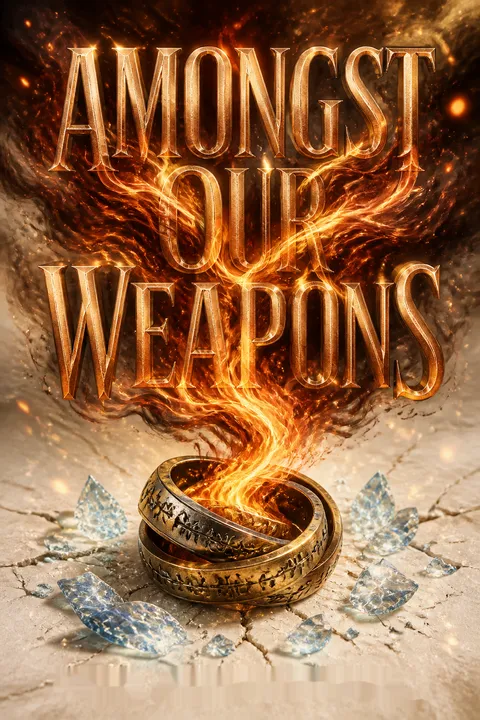
Detective Constable Peter Grant and his trainee, Danni Wickford, are summoned to the London Silver Vaults, where a man has been killed in a manner both violent and inexplicable. The crime scene is a study in contradictions: a body with a gaping, cauterized hole in the chest, but no sign of a conventional weapon. Electronics are fried, hinting at a magical event. The victim, David Moore, was searching for a mysterious ring, and his death is the first ripple in a case that will draw Peter into a web of supernatural intrigue, old grudges, and ancient magic. The emotional weight of the scene is heavy—Peter feels the pressure of responsibility, the skepticism of his colleagues, and the first stirrings of dread that this is only the beginning.
Heartless in the Morgue
The autopsy reveals the victim's heart has been removed with surgical precision, the wound cauterized as if by a supernatural force. A fragment of lightning glass—fulgurite—is found in the chest, carrying a faint, otherworldly vestigium. Peter and Nightingale, his mentor, are baffled: such direct magical violence against a human body is nearly impossible. The investigation pivots from the physical to the arcane, as the team realizes they are dealing with a killer—or a weapon—unlike any they've faced. The emotional tone is one of mounting anxiety, as the boundaries of what is possible are stretched, and the cost of failure becomes chillingly clear.
Rings, Ex-Wives, and Lies
Peter and DS Guleed track down David Moore's ex-wife, Althea, who reveals that Moore was desperate to recover a ring he once gave her—a heavy, ornate puzzle ring with mysterious symbols. Althea's attachment to the ring is irrational, almost compulsive, and she is soon the victim of a magical burglary. The ring is stolen while she sleeps, and the theft is executed with magical skill. The investigation uncovers a pattern: the ring is not just a sentimental token, but an enchanted object, one of several that link the victims and the killer. The emotional undercurrent is one of suspicion and unease, as trust erodes and the past refuses to stay buried.
Lightning Glass and Lost Love
Another victim, Preston Carmichael, is found dead in his flat, killed in the same manner as Moore—heart excised, lightning glass left behind, electronics destroyed. The connection between the victims becomes clearer: both were part of a group in Manchester decades ago, and both possessed similar rings. The investigation is haunted by the specter of Lesley May, Peter's former friend turned adversary, who sends a cryptic warning. The emotional arc is one of loss and betrayal, as Peter grapples with the possibility that someone he once loved is now complicit in murder.
The Angel's First Strike
A young girl claims to have seen an "alien" near the scene of the second murder—an entity with wings of fire and a burning spear. The description matches neither fae nor ghost, but something new: an avenging angel, or a weaponized spirit. The police are forced to confront the reality that they are hunting something not just magical, but mythic. The emotional tone is one of awe and terror, as the boundaries between folklore and reality blur, and the threat becomes existential.
Cults, Charisma, and Consequence
Peter and Guleed interview Jocasta Hamilton, a successful entrepreneur and another member of the Manchester group. Through her, they reconstruct the group's past: a charismatic prayer circle led by Carmichael, obsessed with the Holy Spirit and the acquisition of spiritual gifts. The rings were distributed as tokens, and the group's rituals may have unleashed forces they could not control. The emotional resonance is one of regret and nostalgia, as the survivors realize that their youthful search for meaning has become a curse.
The Manchester Seven
The investigation uncovers the full roster of the Manchester group—seven members, seven rings. Each is now a potential target for the killer, who seems to be following a ritualistic pattern. The rings are revealed to be enchanted, possibly as a defense against a supernatural threat. The emotional arc is one of dread and urgency, as Peter and his team race to warn the remaining members before the killer strikes again.
The Archive and the Angel
The trail leads to the Sons of Wayland, a secretive order of magical smiths, and their hidden archive in the north. There, Peter learns that the rings and a mysterious lamp were stored together during the war. The lamp, recently stolen, was a containment device for a "Class A malignancy"—a weaponized spirit or entity. The emotional tone is one of revelation and foreboding, as the pieces of the puzzle fall into place and the true nature of the threat emerges.
Ghosts on the Moors
In the north, Peter performs a ritual to lay the ghosts of wartime airmen to rest, and is visited by Lesley's astral projection. She confesses to stealing the lamp, but claims the entity inside—now loose—is responsible for the murders. The emotional resonance is one of sorrow and longing, as Peter confronts the loss of his friend and the impossibility of turning back time.
The Lamp's Dark Secret
Research reveals the lamp was created during the Spanish Inquisition to contain a weaponized woman—Francisca—transformed into an angel of death by a magician named Romano. The rings were crafted as a defense, binding the fates of their bearers to the entity in the lamp. The emotional tone is one of horror and empathy, as the team realizes Francisca is both victim and executioner, compelled by ancient magic to hunt the descendants of her creators' enemies.
The Inquisition's Weapon
Francisca, the angelic killer, is revealed to be acting under compulsion, targeting the ring-bearers as "blasphemers" marked by the Inquisition's sigil. Each murder is both a fulfillment of her mission and a step toward her own release—or destruction. The emotional arc is one of pity and fear, as Peter seeks a way to break the cycle without becoming a killer himself.
The Rings' Deadly Bond
The rings are found to be not just enchanted, but linked in a gestalt—any ring in proximity to a marked victim enables Francisca's attack. Lesley, seeking the rings for her own purposes, becomes both adversary and reluctant ally. The emotional tension peaks as Peter must decide whether to destroy the rings, risk more lives, or find another way to end the killings.
Lesley's Return
Lesley infiltrates the Folly, seeking the rings, but is caught in a carefully laid trap. At the same moment, Francisca arrives in a blaze of supernatural fury. The confrontation is chaotic and violent, with Peter, Nightingale, and Guleed fighting to contain both threats. The emotional core is one of heartbreak and loyalty, as Peter pleads with Lesley to help save Francisca rather than destroy her.
Siphoning Power
Peter attempts a modified siphoning spell to drain the power animating Francisca, risking his own life in the process. The spell nearly fails, but with Lesley's reluctant assistance and Nightingale's support, he manages to sever the connection between Francisca and the allokosmos—the otherworldly source of her power. The emotional tone is one of exhaustion, relief, and the lingering ache of trauma.
The Final Confrontation
Peter is drawn into a vision of Francisca's imprisonment, where he confronts the spirit of her creator, Magister Romano. He persuades Francisca to let go of her compulsion, offering her the hope of freedom and love. The spell breaks, the atrium is destroyed, and Francisca is left dazed but alive. The emotional climax is one of catharsis and forgiveness, as the cycle of vengeance is finally broken.
Freedom and Forgiveness
Francisca is taken into custody, her actions judged as those of a mind under magical duress. The surviving ring-bearers are safe, the rings themselves neutralized. Lesley escapes, her fate unresolved, but the immediate threat is over. Peter is left to grapple with the moral cost of victory, the burden of command, and the hope that compassion can triumph over violence. The emotional tone is bittersweet, as justice is tempered by mercy and the scars of the past linger.
Birth and New Beginnings
As the case closes, Peter returns home to Beverley, who gives birth to their twin daughters in a magical, river-blessed ceremony. Surrounded by family, friends, and the supernatural community, Peter reflects on the cycles of violence and renewal, the power of love, and the responsibilities of fatherhood. The emotional arc resolves in hope and joy, as new life begins and the promise of a better future glimmers on the horizon.
Analysis
Amongst Our Weapons is a masterful fusion of urban fantasy and police procedural, using the conventions of both genres to explore themes of power, responsibility, and redemption. At its heart, the novel is a meditation on the consequences of violence—personal, historical, and systemic. The enchanted rings and the weaponized Francisca are not just plot devices, but metaphors for the ways in which trauma and ideology can bind individuals across generations. The story refuses easy answers: Peter's struggle to save rather than destroy, Lesley's ambiguous loyalty, and Francisca's tragic compulsion all underscore the complexity of justice in a world where magic amplifies both good and evil. The birth of Peter's twins at the end is not just a personal milestone, but a symbol of hope—the possibility that cycles of violence can be broken, and that love, in all its forms, is the most powerful weapon of all. In a modern context, the novel resonates as a call for empathy, critical thinking, and the courage to choose mercy over vengeance, even when the world demands otherwise.
Review Summary
Amongst Our Weapons, the ninth book in the Rivers of London series, receives mixed reviews averaging 4.32/5 stars. Readers praise the witty dialogue, pop culture references (especially Monty Python), excellent audiobook narration by Kobna Holdbrook-Smith, and Peter Grant's character development as he becomes a father to twins. Common criticisms include underutilization of fan-favorite Nightingale, a thin or convoluted plot, repetitive appearances by Lesley, and signs the series has become formulaic. Many appreciate the cozy familiarity and worldbuilding, while others feel the author has lost enthusiasm for the series.
People Also Read

Characters
Peter Grant
Peter is a detective constable and apprentice wizard, caught between the mundane and magical worlds. His role as investigator, mentor, and soon-to-be father forces him to balance skepticism with empathy, logic with intuition. Peter's relationships—with Nightingale, Lesley, Beverley, and his colleagues—are marked by loyalty, guilt, and a deep sense of responsibility. Psychologically, he is driven by a need to protect, to understand, and to atone for past failures. Over the course of the story, Peter evolves from a reactive investigator to a leader willing to make hard choices, but always searching for a path that preserves both justice and compassion.
Thomas Nightingale
Nightingale is the last of the old-school British wizards, Peter's teacher, and the head of the Folly. He is calm, authoritative, and deeply principled, but haunted by the traumas of war and the burden of command. Nightingale's relationship with Peter is paternal, blending pride with worry as he prepares his apprentice for greater responsibility. Psychologically, Nightingale is both a guardian of tradition and a pragmatist, willing to use lethal force if necessary but always preferring restraint. His arc is one of gradual relinquishment, as he prepares to pass the torch to a new generation.
Danni Wickford
Danni is Peter's trainee, chosen for her reliability and adaptability. She brings a fresh perspective to magical policing, unburdened by the traumas of the past but quick to learn from them. Danni's relationships—with Peter, Guleed, and the wider team—are marked by curiosity, skepticism, and a growing sense of belonging. Psychologically, she is grounded, practical, and quietly brave, providing a counterpoint to Peter's more emotional approach. Her development is one of increasing confidence and competence, as she proves herself in the crucible of crisis.
DS Sahra Guleed
Guleed is Peter's colleague and friend, a detective sergeant known for her calm, analytical mind and dry wit. She is a stabilizing force in the team, unflappable in the face of chaos and unafraid to challenge authority. Guleed's relationships are professional but warm, marked by mutual respect and a shared sense of mission. Psychologically, she is resilient, skeptical, and deeply ethical, often serving as Peter's conscience. Her arc is one of increasing leadership, as she steps up to cover for Peter and Nightingale when needed.
Lesley May
Lesley is Peter's former partner, now a rogue magician operating in the shadows. Her relationship with Peter is fraught with betrayal, regret, and lingering affection. Lesley is brilliant, resourceful, and ruthless, but not without conscience—her warnings and interventions suggest a desire for redemption. Psychologically, she is driven by anger, loss, and a need to prove herself, but also haunted by the consequences of her choices. Her arc is unresolved, a tragic figure caught between worlds, neither fully villain nor hero.
Beverley Brook
Beverley is both a supernatural being—the goddess of her eponymous river—and Peter's partner. She is sensual, pragmatic, and fiercely independent, balancing her divine responsibilities with the demands of impending motherhood. Beverley's relationship with Peter is playful, supportive, and deeply loving, but she insists on her own agency and boundaries. Psychologically, she is grounded in the physical and the present, providing Peter with stability and perspective. Her arc culminates in the birth of their twins, symbolizing renewal and hope.
Francisca (The Angel)
Francisca is the heart of the mystery—a woman transformed by the Spanish Inquisition into an angelic weapon, compelled to hunt and kill those marked as blasphemers. She is both victim and villain, her actions driven by ancient magic and the will of her creators. Francisca's relationship with her targets is impersonal, but her bond with Heather reveals a capacity for love and vulnerability. Psychologically, she is fractured, caught between compulsion and the desire for freedom. Her arc is one of release and forgiveness, as she is finally freed from her curse.
Heather Chalk
Heather is a former patient at a halfway house who befriends and falls in love with Francisca. Her relationship with Francisca is marked by devotion, protectiveness, and a willingness to risk everything for love. Psychologically, Heather is lonely, searching for meaning, and finds it in her bond with Francisca. Her arc is one of transformation, as she moves from passive observer to active participant in the story's resolution.
Alexander Seawoll
Seawoll is the senior investigating officer, a no-nonsense, old-school detective with a sharp mind and a sharper tongue. His relationship with his team is paternal, blending tough love with genuine care. Psychologically, Seawoll is pragmatic, skeptical of magic but quick to adapt, and deeply committed to his people. His arc is one of reluctant acceptance, as he navigates the intersection of the mundane and the magical.
Professor Harold Postmartin
Postmartin is the Folly's archivist, obsessed with the history and theory of magic. He is eccentric, brilliant, and endlessly curious, providing the intellectual backbone of the investigation. His relationship with Peter and Nightingale is collegial, marked by mutual respect and occasional exasperation. Psychologically, Postmartin is driven by a need to understand, to connect the past with the present, and to preserve knowledge for the future. His arc is one of discovery, as he unearths the secrets that make resolution possible.
Plot Devices
Magical Realism in Police Procedural
The novel's core device is the seamless integration of magical phenomena into the structure of a modern police procedural. The investigation unfolds through familiar methods—crime scenes, interviews, forensics—but each step is complicated by the unpredictable effects of magic. This device allows for both tension and humor, as the characters must adapt their training to a world where the impossible is possible. The narrative structure is linear but punctuated by flashbacks, research, and personal interludes, creating a tapestry of interconnected stories.
The Enchanted Object as MacGuffin
The seven enchanted rings and the magical lamp serve as both clues and catalysts, linking the victims, the killer, and the investigators. Their history is gradually revealed through research, interviews, and magical sensing, providing both motivation and vulnerability for the characters. The rings' gestalt enchantment is a key plot device, enabling the killer's attacks and forcing the protagonists to confront the consequences of past actions.
The Weaponized Victim
Francisca's transformation into an angelic weapon by the Inquisition is both the engine of the plot and its emotional core. Her compulsion to kill is not her own, and the investigation becomes a race to save her as much as to stop her. This device allows for exploration of themes of agency, trauma, and redemption, as the characters struggle to break the cycle of violence without becoming executioners themselves.
Foreshadowing and Parallelism
The narrative is rich in foreshadowing, with early hints of the rings' significance, the lamp's danger, and Lesley's involvement. The structure of the Manchester group's rituals parallels the unfolding investigation, and the historical research into the Inquisition mirrors the team's own moral dilemmas. The birth of Peter's twins at the end serves as a symbolic counterpoint to the story's violence, emphasizing renewal and hope.
Moral Ambiguity and Psychological Depth
The story is driven by the characters' internal conflicts—loyalty versus duty, justice versus mercy, love versus responsibility. The plot devices force the protagonists to confront the limits of their power and the cost of their decisions. The resolution is not a simple victory, but a hard-won compromise, leaving scars and questions that linger beyond the final page.
Rivers of London Series Series

Download PDF
Download EPUB
.epub digital book format is ideal for reading ebooks on phones, tablets, and e-readers.








































