
Key Takeaways
1. English Dreams of Freedom Clashed with Colonial Realities
What they thought of doing was to save themselves and the rest of mankind from the tyrannous Spaniard.
Noble aspirations. Early English colonizers, like Sir Walter Raleigh and the Hakluyts, envisioned America as a "Promised Land" where Protestant Britons would liberate oppressed New World peoples from Spanish tyranny and establish a benevolent, free society. This vision included:
- Rescuing Native Americans from Spanish cruelty, as documented by Las Casas.
- Offering a haven for England's "swarming" unemployed, saving them from poverty and the gallows.
- Creating a biracial community where English and natives would "conjoin their labors" under "gentle government."
Roanoke's failure. The first major attempt at Roanoke (1585) quickly exposed the gap between these ideals and reality. Despite initial friendly encounters, English actions, such as burning an Indian village over a stolen silver cup, demonstrated a lack of "godlike" benevolence. The colonists' inability to sustain themselves and their dependence on native supplies led to conflict, culminating in the abandonment of the "Lost Colony."
Clash of cultures. The English, accustomed to a structured, labor-intensive society, struggled to adapt to the Native American way of life, which prioritized leisure and required minimal toil, especially for men. This fundamental difference in expectations, coupled with English technological superiority and vulnerability to disease, set the stage for misunderstanding and eventual hostility, rather than the envisioned harmonious integration.
2. Early Virginia: A Crucible of Starvation and Exploitation
Had Smith been left in charge, it is not impossible that he would have achieved a society which, in one way or another, would have included the Indians.
Jamestown's early struggles. The Jamestown settlement (1607) quickly descended into chaos and starvation, despite abundant natural resources. The initial years were marked by:
- Incompetent leadership and internal bickering among gentlemen-settlers.
- A profound aversion to manual labor among many colonists, who preferred "bowling in the streets" to planting corn.
- Heavy reliance on Native American food supplies, often obtained through coercion or violence.
Smith's brutal pragmatism. Captain John Smith, though often at odds with the Virginia Company's "gentle government" ideals, was the only leader capable of imposing order. He believed kindness was wasted on "savages" and advocated for subjugating Indians to forced labor, much like the Spanish model. He also enforced a strict "he that will not worke shall not eate" policy among the English, preventing total collapse.
Company's failed reforms. The Virginia Company, disillusioned with Smith's methods but recognizing the need for firm control, implemented martial law under governors like Sir Thomas Dale. While these "Lawes Divine, Morall and Martiall" imposed harsh discipline and even death for minor offenses, they failed to solve the colony's fundamental problem of self-sufficiency. Atrocities against Native Americans escalated, and the vision of a biracial community gave way to segregation and violence.
3. Tobacco's Boom Fueled a Volatile, Profiteering Society
Because of the chances for such profits Virginia in the last years of the company, while a charnel house, was also the first American boom country.
Tobacco's transformative power. The introduction of West Indian tobacco by John Rolfe in 1617 dramatically reshaped Virginia's economy. Despite initial moral objections and low prices, tobacco became the colony's primary cash crop, driving a speculative boom. This led to:
- A shift from communal labor to private enterprise, with land grants and headrights incentivizing individual production.
- Intense focus on tobacco cultivation, often at the expense of food crops, perpetuating reliance on external supplies.
- A "get-rich-quick" mentality, attracting adventurers more interested in short-term gains than long-term settlement.
Social instability. The boom fostered a transient, male-dominated society characterized by:
- Excessive drinking and gambling, with ships serving as "moving taverns."
- A severe scarcity of women, leading to high prices for wives and an atmosphere of impermanence.
- Ramshackle housing, reflecting settlers' lack of commitment to building permanent homes.
Profiteering and exploitation. The pursuit of tobacco profits led to widespread exploitation. Officials and private traders engaged in:
- Engrossing goods and selling them at inflated prices, especially during food shortages.
- Buying and selling indentured servants, often at exorbitant rates, treating them as commodities.
- Appropriating company resources and labor for personal gain, contributing to the Virginia Company's eventual bankruptcy.
4. Pervasive Mortality Shaped Virginia's Unique Social Fabric
What is not generally known is that either the diseases involved in seasoning (probably typhoid fever) or other diseases continued to kill Virginians in large numbers long after 1625.
A deadly environment. Virginia remained a "death trap" for decades, with mortality rates comparable to severe epidemic years in England. New immigrants, especially men, faced a high risk of dying during their "seasoning" period. This constant loss of life meant:
- The colony's population growth relied heavily on continuous, massive immigration.
- Life expectancy for seasoned adults was significantly lower than in England or New England.
- "Old age" was often considered to begin in one's late forties or early fifties.
Women's elevated status. The scarcity of women, combined with their higher survival rates, gave them unusual economic and social advantages:
- Widowhood was common, and women often inherited substantial estates, becoming "economic matriarchs."
- Wealthy widows were highly sought after in the marriage market, leading to rapid accumulation of capital through successive marriages.
- Courts often protected widows' and orphans' interests, recognizing their vulnerability in a transient society.
Ephemeral property. The high death rate and transient nature of the population made all forms of property unstable:
- Land, though abundant, was a poor investment due to slow value appreciation and the practice of shifting cultivation.
- Tobacco was perishable, and its value fluctuated wildly, making long-term storage risky.
- Servants, while valuable, were a high-risk investment due to their susceptibility to disease and death.
5. Exploitation of Freedmen Ignited Widespread Discontent and Rebellion
But the burdens imposed on Virginia’s workers placed the colony continually on the brink of rebellion.
The problem of freedmen. As mortality rates declined, more indentured servants survived their terms, creating a growing class of "freedmen." These men, often without land or capital, posed a challenge to the established order:
- They competed with former masters in tobacco production, depressing prices.
- They often lapsed into idleness or vagrancy, avoiding taxes and engaging in petty crime.
- Their increasing numbers and armed status made them a potential threat to social stability.
Systematic exploitation. Virginia's ruling class responded by implementing policies designed to prolong servitude and control freedmen:
- Longer terms of service were imposed on unindentured immigrants, especially teenagers.
- Severe penalties, including extended service, were enacted for runaways and hog-stealing.
- Land engrossment by speculators made it difficult for freedmen to acquire their own plots, forcing many into tenancy or renewed servitude.
Rising grievances. The combination of economic hardship, limited opportunity, and perceived governmental corruption fueled widespread resentment:
- High taxes (poll taxes, export duties, fees) disproportionately burdened small planters and freedmen.
- Useless frontier forts were seen as schemes to enrich "great men" rather than provide protection.
- The ruling elite, often holding multiple lucrative offices, was accused of "fleecing the many."
Bacon's Rebellion (1676). These grievances culminated in a civil war led by Nathaniel Bacon. Initially a crusade against Native Americans, the rebellion quickly turned into an attack on Governor Berkeley and the "grandees" of Virginia, exposing deep class divisions and the volatile nature of the colony's social order.
6. Slavery Emerged as an Economic and Social Solution to Labor Control
But to establish slavery in Virginia it was not necessary to enslave anyone. Virginians had only to buy men who were already enslaved, after the initial risks of the transformation had been sustained by others elsewhere.
Economic rationale for slavery. While African slaves were present from early on, their widespread adoption in Virginia was delayed by high mortality rates, which made the lifetime investment in a slave less profitable than a short-term indentured servant. However, by the 1660s:
- Declining mortality rates increased the effective working lifespan of laborers, making slaves a more attractive long-term investment.
- The price of sugar in the West Indies declined, reducing the profitability of sugar plantations and making slaves more available for Virginia's tobacco economy.
- Virginia's ability to supply the West Indies with livestock provided capital for slave purchases.
Advantages of slave labor. Slavery offered significant benefits for maximizing productivity and social control:
- Unlimited labor: Masters could command work and time without the constraints of indentured terms.
- Reproducible labor: Slave women, unlike white indentured servants, were put to work in fields and produced children who became the master's property, ensuring a self-sustaining labor force.
- Reduced social unrest: Slaves, being without hope or arms, proved less dangerous than disgruntled freedmen, mitigating the threat of rebellion.
Codifying brutal discipline. To ensure compliance from an unwilling labor force, Virginia's assembly enacted laws that legalized extreme violence against slaves:
- The "casual killing" of a slave during "correction" was not considered felony, as it was "unpresumed that prepensed malice... should induce any man to destroy his own estate."
- Runaway slaves could be legally killed by anyone, and captured runaways could be dismembered by judicial order.
- These laws, though shocking by English standards, were justified by the perception of Africans as "a brutish sort of people."
7. Racism Was Deliberately Forged to Maintain Social Order
It was not necessary to extend the rights of Englishmen to Africans, because Africans were “a brutish sort of people.”
Contempt for the poor. English society in the 17th century already harbored deep contempt for its own poor, viewing them as "vicious, idle, dissolute" and "brutish." This class prejudice, often expressed in stereotypes similar to later racial ones, provided a psychological foundation for the treatment of enslaved Africans.
Racializing slavery. While slavery could have existed without racism, in Virginia, it became inextricably linked to race. The assembly actively codified racial distinctions to:
- Prevent alliances: Separate dangerous free whites from dangerous slave blacks.
- Justify exploitation: Dehumanize enslaved people, making their harsh treatment seem natural and necessary.
Legal distinctions: A series of laws systematically degraded non-whites and elevated whites:
- 1670: Free Negroes and Indians, even if baptized, were forbidden to own Christian (white) servants.
- 1680: Slaves were forbidden to "lift up his hand in opposition against any christian" (white), under penalty of 30 lashes.
- 1705: Masters were forbidden to whip "christian white servants naked" without a court order, implying nakedness was appropriate only for non-whites.
- 1705: Slaves were stripped of property rights; any livestock owned by a slave was to be seized and sold for the benefit of poor whites.
Miscegenation laws: The assembly aggressively legislated against interracial sexual relations and marriage:
- 1691: White individuals marrying Negroes, mulattoes, or Indians faced banishment.
- 1705: Penalties were stiffened to six months imprisonment and a £10 fine for whites, and a 10,000-pound tobacco fine for ministers officiating such marriages.
- Children of white women and black/mulatto men were subjected to long terms of servitude, ensuring they would not form an intermediate free class.
These deliberate legislative actions solidified a racial hierarchy, lumping all non-whites into a single pariah class and making race, rather than status, the primary determinant of freedom and social standing.
8. White Populism Rose as Elites Accommodated Lesser Freemen
As Virginians nourished an increasing contempt for blacks and Indians, they began to raise the status of lower-class whites.
Improved white prospects. The shift from white indentured servitude to African slavery, coupled with declining mortality and new land opportunities, gradually improved the economic and social standing of poor whites:
- Fewer white servants meant less competition for land and jobs.
- Vagrancy laws, while punitive, also offered a path to employment for the "idle."
- The responsibility for the unproductive poor (aged, disabled, young) shifted from parishes to slaveowners, reducing the burden on white society.
Economic uplift. By the 18th century, even small white farmers experienced greater prosperity:
- One-man households decreased, while larger households (often with slaves) increased.
- Average landholdings per owner decreased, but the number of landowners increased, indicating broader land ownership.
- Estate values for lower and middle-class testators rose significantly.
Political accommodation. The ruling elite, facing ongoing challenges from royal governors and needing to maintain social stability after Bacon's Rebellion, began to court the support of small white freeholders:
- Reduced poll taxes: A significant burden on poor whites, these were drastically cut, easing their financial strain.
- Freedom dues: White servants received more generous "freedom dues," including land and a musket, upon completing their terms.
- Voter influence: Elections became more competitive, with candidates "swilling the planters with bumbo" to win votes, indicating the growing importance of the common white voter.
The "Virginia Patriot." This era saw the emergence of a shared white identity, where large and small planters perceived common interests against external threats (royal authority, British merchants) and internal threats (enslaved blacks). This solidarity allowed the elite to maintain power while appearing to champion the interests of all white Virginians.
9. Republican Ideals Flourished Alongside Slavery's Paradox
Aristocrats could more safely preach equality in a slave society than in a free one.
Republican principles in Virginia. By the 18th century, Virginia's leading figures, including future founders like Jefferson and Washington, embraced republican ideals of liberty and equality. These ideas, drawn from English commonwealthmen like Harrington and Sydney, emphasized:
- Legislative supremacy: Limiting executive power to prevent tyranny.
- Widespread property ownership: A yeomanry of independent landowners as the bedrock of a free government.
- Armed populace: A well-regulated militia as the "natural strength" of a republic.
The paradox of freedom. This fervent devotion to liberty and equality coexisted, paradoxically, with the institution of slavery. The presence of a large enslaved population, isolated by race and racism, allowed white Virginians to:
- Preach equality safely: Their calls for equality were not addressed to the enslaved, who were excluded from the political and social equation.
- Experience freedom acutely: Daily exposure to the absolute power of masters over slaves provided a stark contrast, highlighting the value of their own liberty.
- Strengthen white solidarity: The shared status of "not being slaves" created a powerful common identity between large and small white planters, uniting them against perceived threats.
Slavery as a solution to poverty. Republican thought, particularly among British commonwealthmen, viewed the dependent poor as a threat to liberty, susceptible to demagoguery and undermining social stability. In Virginia, slavery offered a "solution" to this problem:
- The majority of the poor were enslaved, working productively for private masters.
- This removed a potentially volatile class from the political sphere, allowing white society to pursue ideals of liberty without internal class conflict.
- The Virginia assembly even rewarded soldiers fighting for freedom with land and a slave, explicitly linking the two.
The American legacy. This unique blend of republicanism and slavery, forged in Virginia, profoundly shaped the American republic. While disturbing to later generations, it enabled Virginians to lead the nation's fight for independence, demonstrating how a society could champion freedom for some by denying it to others, a paradox whose echoes continue to resonate in American history.
Review Summary
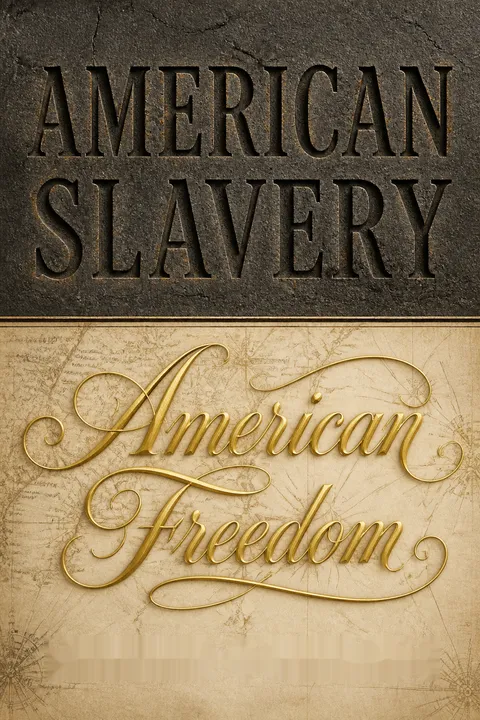
American Slavery, American Freedom by Edmund S. Morgan examines how Virginia's republican ideals of liberty developed alongside slavery. Reviewers praise Morgan's dense but brilliant thesis: white freedom depended on black enslavement. The book traces Virginia's evolution from indentured servitude to racial slavery, showing how planters solved labor shortages and class tensions by enslaving Africans while elevating poor whites. This created a unified white "master class" that could champion equality without threatening the social order. Most reviewers found it essential reading for understanding America's founding paradox, though some criticized its limited focus on slave experiences and Eurocentric perspective.
People Also Read

Download PDF
Download EPUB
.epub digital book format is ideal for reading ebooks on phones, tablets, and e-readers.








































