
Key Takeaways
1. Medicine's Deep-Seated Bias: Women as the "Other"
The women who apologize to me for being sick are part of a medical legacy, passed down over hundreds of years and still visible today.
A historical legacy. For centuries, Western medicine has viewed the male body as the default, the healthy standard, while women's bodies were considered deviations or "deformities." This foundational bias, rooted in ancient Greek philosophy and reinforced by patriarchal societal norms, led to a systemic incuriosity about female anatomy and physiology. Doctors, predominantly men, often filled knowledge gaps with assumptions fueled by their own social experiences and the expectations of society regarding women's roles.
Exclusion and objectification. This male-centric view resulted in women being systematically excluded from medical study and practice. Early anatomical texts often depicted only male skeletons, or caricatured female ones with tiny skulls and broad pelvises, reinforcing the idea that women were naturally less intelligent and solely destined for motherhood. Women's bodies became objects of aesthetic and moral scrutiny rather than subjects of scientific understanding, leading to a medical system built by men whose ideas about women were, at best, limited, and at worst, misogynistic and abusive.
The enduring impact. Even as women now matriculate in medical schools in greater numbers than men, the "masculine ethos" in medicine persists. Academic medicine still prioritizes scientific authorship over patient care, and women remain underrepresented in research, despite biological differences in how treatments affect them. This historical legacy manifests today as women apologizing for their symptoms, blaming themselves for illnesses, and facing a healthcare system that often fails to see them as whole, complex individuals.
2. The Body as a Battleground: Beauty, Shame, and Control
The practice of cosmetic medicine is one that walks the line between empowering women to control their bodies and trapping them in a gilded cage of punishing beauty standards.
Beauty as pathology. The integumentary system, encompassing skin, hair, and nails, became a unique battleground where doctors acted as arbiters of aesthetics. Cosmetic surgery, initially for male battlefield injuries, evolved to "correct" women's perceived imperfections. Figures like J. Howard Crum pathologized "ugliness," performing public surgeries to "rehabilitate" women, while Dr. Frank Gerow, driven by a preference for large breasts, coerced Timmie Jean Lindsey into the first silicone implants, later medicalizing small breasts as "micromastia."
External desires, internal shame. This focus on external appearance often stemmed from male desire, not women's self-determination. Labiaplasty, for instance, has seen a surge in popularity, driven by aesthetics influenced by pornography and a lack of education on normal anatomical diversity, leading women to seek "Barbie vaginas." The medical system, by validating these procedures, often reinforces punishing beauty standards, making women feel ashamed of their natural bodies.
A double-edged sword. While cosmetic interventions can offer a sense of control and improve quality of life, they also highlight a paradox: women are empowered to change their appearance, yet this often involves submission to a surgeon's scalpel and adherence to externally imposed ideals. The author's patient, Amrita, seeking Botox during cancer treatment, exemplifies the complex interplay between personal well-being and societal pressures, where cosmetic concerns are often dismissed as mere vanity, even when they are deeply tied to a woman's sense of self.
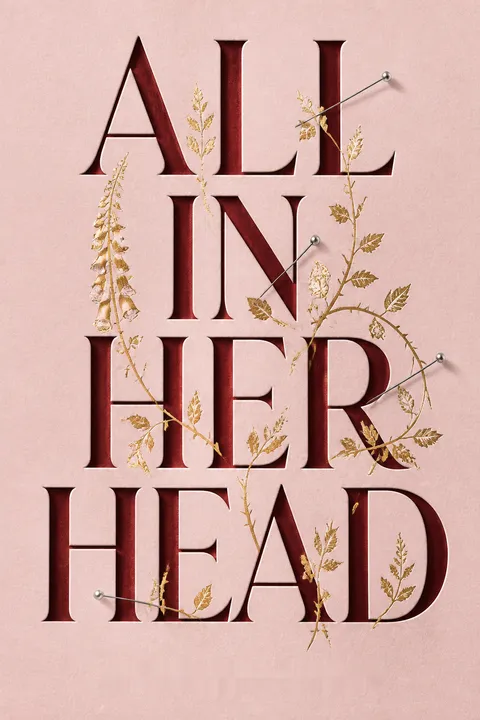
3. "All in Her Head": The Medical Dismissal of Women's Pain
The mistake doctors made, and continue to make, is imagining that a disease that’s in the patient’s head must therefore, in some sense, be a fabrication over which the patient has control.
Hysteria's enduring ghost. For millennia, female emotions and behaviors that were inconvenient or inexplicable to male doctors were categorized under "hysteria," a diagnosis rooted in the Greek word for "womb." This catch-all term, removed from the DSM in 1980, nevertheless casts a long shadow, leading to women's symptoms being dismissed as anxiety, neurosis, or psychosomatic, even in modern medical settings. The author's own mother's concussion symptoms were initially dismissed as PTSD or anxiety, highlighting this persistent bias.
The "wandering uterus" and its legacy. Ancient theories of a "wandering uterus" causing mental derangement evolved into the belief that women's reproductive organs fundamentally impacted their brains, making them inherently unstable. This led to barbaric treatments, from punching patients in the ovaries (Charcot) to the "rest cure" (Silas Weir Mitchell) that confined women to bed and deprived them of intellectual stimulation. The infamous Henry A. Cotton even removed teeth and organs, believing he was curing "focal infections" causing insanity, disproportionately brutalizing women.
Modern manifestations. Today, women with genuine neurological or chronic pain conditions are still routinely misdiagnosed or undertreated.
- Alzheimer's affects twice as many women, but research is underfunded.
- Multiple sclerosis symptoms are dismissed as tiredness or pinched nerves.
- Women's pain, especially for poor and minority women, is categorically undertreated.
- Conditions like Postural Orthostatic Tachycardia Syndrome (POTS) are misdiagnosed as eating disorders, depression, or panic attacks.
This systemic lack of trust in women's subjective experience of their bodies perpetuates suffering and delays appropriate care, echoing the historical belief that women's complaints are often exaggerated or fabricated.
4. The Silent Epidemic: Overlooked Diseases and Misdiagnoses
Heart disease is also a woman’s disease, not just a man’s disease in disguise.
The male default in research. Historically, medical research and diagnostic tools have been designed around the male body, leading to a profound lack of understanding and misdiagnosis of conditions that disproportionately affect women or manifest differently in them. Early cardiac trials, for example, included thousands of men but zero women, contributing to the dangerous myth that heart disease was primarily a male affliction. This meant women's unique symptoms, like fatigue or shortness of breath, were often overlooked until it was too late.
Invisible suffering. Many common conditions in women remain under-researched and undertreated:
- Heart disease: Women's heart attacks present differently, often in smaller vessels, and are less aggressively treated. Peripartum cardiomyopathy, a form of heart failure in new mothers, is frequently missed.
- Respiratory ailments: Lung cancer rates are rising in women, even non-smokers, yet their symptoms are often dismissed as anxiety or allergies. Serena Williams' near-fatal pulmonary embolism after childbirth highlights this.
- GI disorders: Conditions like IBS, constipation, and gastroparesis disproportionately affect women due to physiological differences and societal pressures to "hold it in," leading to chronic issues like megacolon.
- Urinary issues: Incontinence, UTIs, and interstitial cystitis are prevalent but underreported and underdiagnosed, often dismissed as "normal" or psychosomatic.
The cost of incuriosity. The lack of specific research and awareness means women often suffer for years before receiving a correct diagnosis, if at all. The average patient with endometriosis, a crippling condition, waits over seven years for diagnosis, often being told her pain is "normal" or "anxiety." This systemic neglect not only causes immense personal suffering but also leads to preventable deaths and a profound erosion of trust in the medical system.
5. Women as Vectors: Blame, Contagion, and Public Health Control
That wheedling charming sex, that draws us in / To ev’ry punishment and ev’ry sin.
The "foul woman" archetype. From ancient times, women have been scapegoated for the spread of disease, particularly sexually transmitted infections. Early medical texts warned men about "unclean" vaginas full of "poisonous matter," leading to the belief that women were inherently contaminators. Girolamo Fracastoro's poem on syphilis exemplifies this, blaming women for "every punishment and every sin."
Public health as social control. This deep-seated suspicion fueled punitive public health initiatives. The "septic skirt" panic blamed women's fashion for spreading germs, confining them to the home. Mary Mallon, "Typhoid Mary," was uniquely demonized and imprisoned as a public menace, despite other male carriers. The "American Plan" during WWI saw thousands of women, often poor or minority, kidnapped, imprisoned, and forcibly treated for STDs, often by doctors who themselves engaged in sexual misconduct with their "diseased" patients.
Enduring stigma. Even after germ theory advanced, the conflation of feminine hygiene, sexual purity, and good health persisted. Products like Lysol and talcum powder were marketed for douching, implying women's vaginas were inherently unhygienic and sexually repulsive. This legacy continues to manifest in medical settings:
- Doctors shaming patients for STDs, equating health with traditional monogamy.
- The HPV vaccine initially recommended only for women, despite men spreading the virus.
- Exclusion of women from clinical trials due to "messy" hormone cycles, even when their unique biology impacts drug efficacy.
This historical pattern of blaming and controlling women for disease, rather than understanding and treating them, has created a profound mistrust and a system that still struggles to see women as anything but potential sources of contagion.
6. Hormones as a Weapon: From "Mad Desire" to Medical Control
The belief in a sexual binary between men’s hormones and women’s further entrenched not only a sexist mindset in medicine but a state of ignorance when it came to the reality of how the endocrine system worked.
The "hormonal woman" stereotype. Despite all humans producing sex hormones, only women have been consistently dismissed as "hormonal," unpredictable, and unfit for certain roles due to their endocrine system. The Greek root of "estrogen," oistros, meaning "mad desire," reflects this ancient bias. Early endocrinologists like William Blair-Bell believed "ovarian secretions" caused "sexual insanity" or melancholia, leading to calls for early marriage to prevent masturbation.
Control over reproduction. The discovery of hormones, particularly estrogen, quickly shifted from scientific inquiry to a means of control over women's bodies. Gregory Pincus, with funding from eugenicists like Margaret Sanger, developed the birth control pill, testing it on psychiatric inmates and impoverished Puerto Rican women. He created an artificial "period" to make the pill seem natural, obscuring serious side effects and coercing women into trials. This established a precedent of manipulating women's bodies under the guise of liberation, often with disregard for their health.
Menopause as a disease. Robert Wilson's "Feminine Forever" in 1966 pathologized menopause as a "castrating" disease, advocating hormone replacement therapy (HRT) to restore women's "femininity" and make them "more pleasant to live with" for men. His flawed research led to widespread HRT use, only for later studies to reveal risks of heart attack, stroke, and cancer. Today, despite nuanced research, fear and misinformation persist, leaving many women to suffer preventable menopausal symptoms, while male hormonal issues (like erectile dysfunction) receive billions in research and treatment.
7. Reclaiming Agency: The Path to Patient-Centered Care
I believe there is room for a medical system that balances efficiency with humanity. That values doctors who nurture as much as it values the ones who discover.
The personal is medical. The author's own experience with a CSF leak, where a male surgeon dismissed her self-diagnosis, highlights how deeply ingrained medical bias remains, even for a female doctor writing a book on the subject. Her subsequent apology for not wearing deodorant in the ER underscores the pervasive shame women feel about their bodies and needs. This personal vulnerability mirrors the systemic disenfranchisement women face, where their confidence is undermined, and their voices are often unheard.
Beyond the numbers. While women's representation in medicine has increased, the underlying ideology that devalues "feminine" aspects of care—empathy, patient relationships, holistic approaches—persists. Doctors are rewarded for scientific breakthroughs, not for kindness or for seeing patients as whole people. This fragmented, profit-driven system often treats patients as "broken things" rather than individuals in need of comprehensive care, leading to misdiagnoses and a lack of support for complex, interconnected health issues.
A call to action. The book concludes with a powerful call for change, urging both the medical system and individual women to challenge these ingrained biases.
- For the system: Value nurturing and empathy as much as discovery; build systems that accommodate uncertainty and complexity; prioritize women's unique biology in research and treatment.
- For women: Demand the care they deserve; ask questions unapologetically; trust their own bodies and experiences; recognize that suffering is not "normal" or something to apologize for.
By fostering a medical culture that truly listens and values the patient's humanity, we can move towards a future where healthcare is equitable, effective, and empowering for all.
Review Summary
Reviews for All in Her Head are largely positive, averaging 4.31/5, with many readers praising its infuriating yet empowering exploration of medical misogyny throughout history. Numerous reviewers found it validating, informative, and essential reading for women and men alike. Common criticisms include a lack of intersectionality regarding race, disability, and LGBTQ+ experiences, as well as transphobic content near the book's end that prompted several readers to abandon it or lower their ratings. Some felt the book prioritized outrage over actionable solutions or new information.
People Also Read






Download PDF
Download EPUB
.epub digital book format is ideal for reading ebooks on phones, tablets, and e-readers.








































