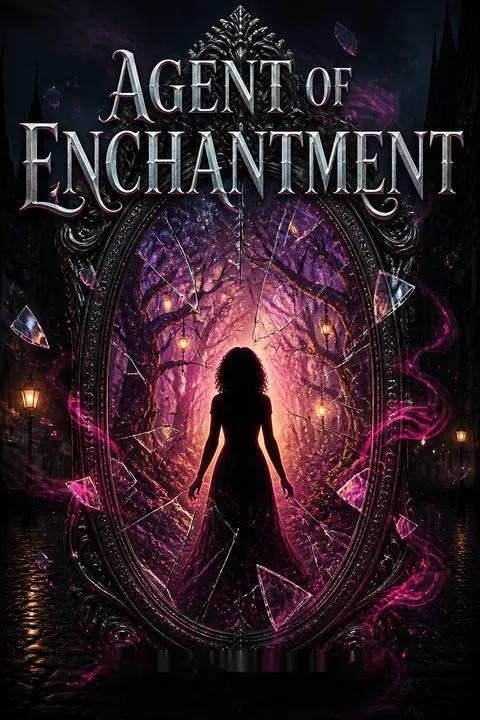

Plot Summary
Arrival in a Haunted City
FBI profiler Cassandra Liddell arrives in London, summoned to consult on a series of gruesome murders echoing Jack the Ripper. The city's ancient stones and shadowed alleys stir memories of her own trauma, and she's immediately thrust into a world where the line between reality and nightmare blurs. Cassandra's outsider status and sharp tongue set her apart from the British police, but her expertise is needed as fear grips the city. The sense of déjà vu and the city's palpable energy hint at something deeper than a simple serial killer case, foreshadowing the supernatural forces at play.
Ripper's Shadow Returns
Cassandra is called to a fresh crime scene: a young woman, Catherine, murdered and mutilated in a manner reminiscent of the original Ripper. The brutality is escalating, and the killer leaves a cryptic note referencing the "King of Hearts." Cassandra's profiling instincts are challenged by the killer's intelligence and theatricality. The city's fear is tangible, and Cassandra feels it in her bones—literally, as her strange sensitivity to emotion intensifies. The killer's ability to operate unseen in public, and the eerie familiarity of the crime, suggest something more than human at work.
Nightmares and Near Misses
After the crime scene, Cassandra is attacked in a dark alley by two men with inhuman strength and acid spit. She's saved by a mysterious, magnetic stranger—Roan—whose presence is both alluring and terrifying. Roan's otherworldly features and cryptic warnings unsettle Cassandra, who begins to question her sanity as she experiences hallucinations and heightened senses. The encounter leaves her physically battered and mentally shaken, but also awakens latent powers within her, hinting at a hidden heritage and the city's magical undercurrents.
The Fae in the Alley
Cassandra's attacker, Roan, is revealed to be fae—a being from a parallel magical realm. He accuses Cassandra of being a "terror leech," feeding off fear, and hints at her own fae ancestry. Their charged interaction is fraught with both danger and desire, blurring the line between enemy and ally. Cassandra's ability to sense and manipulate reflections begins to manifest, and she's drawn deeper into the world of the fae, even as she tries to cling to her rational, scientific training. The city's magic is awakening in her, and she can no longer deny the supernatural reality.
Profiling the Unnatural
Cassandra joins forces with Detective Gabriel Stewart, whose skepticism gives way to trust as the case grows stranger. Together, they interview witnesses, including a psychotic flatmate who speaks in riddles about gods, water, and sacrifice. The killer's signature evolves, and forensic evidence—strange DNA, unclassifiable fingerprints, and runic carvings—defies explanation. Cassandra's profile points to a killer who craves chaos and fear, and she suspects the murders are part of a larger, magical ritual. The investigation is hampered by xenophobia and bureaucratic infighting, but Cassandra's insights push the team forward.
The King of Hearts' Riddle
The killer sends a human heart and a nursery rhyme to the police, taunting them with a promise of another murder in three days. Cassandra and Gabriel decode the riddle, realizing it references constellations and ancient myths, and that the killer is orchestrating his crimes to maximize public terror. The pressure mounts as the city's fear reaches a fever pitch, and Cassandra's own powers grow stronger. She's haunted by visions and memories, and her connection to Roan deepens, complicating her loyalties and sense of self.
A Killer's Signature
The investigation uncovers more evidence of fae involvement: victims' bodies bear runes, and the killer's strength is superhuman. Cassandra's reflection magic allows her to glimpse other realms and possible futures, including a vision of a woman being burned alive. The killer's motives become clearer—he feeds on fear, sowing chaos for power. Cassandra's own heritage is called into question, and she's forced to confront the possibility that she, too, is part fae, with abilities that could tip the balance in the coming conflict.
The Mirror's Secret
Pursued by the police after being framed for evidence tampering, Cassandra uses an invisibility potion and her reflection magic to escape through mirrors. She discovers she can travel between realms and manipulate reality through reflective surfaces. This ability makes her both a target and a key player in the fae's machinations. As she navigates the mirror realm, she learns more about the fae courts, their politics, and the ancient enmity between different fae factions. Her journey is both a literal and metaphorical passage into her true identity.
Tangled Loyalties
Cassandra's alliance with Roan deepens as they break into a fae prison to rescue his friend Elrine, revealing the brutality of fae justice and the depth of Roan's own scars. Their relationship is fraught with mistrust—Cassandra discovers Roan has been stalking her for years, orchestrating events to bring her to London. The revelation shatters her trust, but necessity forces them to work together. The lines between hunter and hunted, victim and perpetrator, blur as Cassandra grapples with her own capacity for violence and the darkness within her.
The Fae Court Unveiled
Disguised and guided by Roan, Cassandra enters the fae court, witnessing its decadence, cruelty, and rigid hierarchies. She learns of the High King—the King of Hearts—whose court is marked by the symbol of skulls under water, and whose advisor, the Rix, is orchestrating terror in both realms. Cassandra's presence as a "three-born" (pixie) is both a threat and a temptation to the fae, and she narrowly escapes enslavement and assault. The court's politics and prejudices mirror the chaos in London, and Cassandra realizes the murders are part of a larger, interdimensional power struggle.
Blood and Betrayal
The investigation culminates in a confrontation with the Rix, revealed to be DCI Wood, the police chief. He is a fae terror leech, feeding on fear and orchestrating the murders to sow chaos and empower himself. Cassandra and Gabriel are captured, and Roan is gravely wounded. Using her reflection magic and the power of broken promises, Cassandra turns the tables, drawing strength from the Rix's oath-breaking and ultimately killing him with a corrupted iron knife. The victory is hard-won, and Cassandra is left physically and emotionally scarred.
The Prison Break
In the aftermath, Cassandra and Roan must escape the fae prison, pursued by vengeful guards and monstrous torturers. Their flight through the winter forest is harrowing, and Cassandra's powers are pushed to the limit. She is forced to confront her own capacity for violence, using iron and cunning to survive. The ordeal cements her bond with Roan and Elrine, but also deepens her sense of alienation from both the human and fae worlds. The cost of survival is high, and Cassandra is left questioning her own nature.
The Rix Revealed
The final confrontation with the Rix is a battle of wills, magic, and psychology. Cassandra uses every tool at her disposal—her FBI training, her fae abilities, and the power of broken promises—to defeat him. The Rix's obsession with fear is his undoing, as Cassandra manipulates his addiction and turns his own magic against him. The victory is bittersweet, as Cassandra is left to reckon with the darkness she has embraced and the consequences of her actions.
Terror Leech
In the aftermath, Cassandra is forced to accept her identity as a terror leech—a being who feeds on fear, both her own and others'. The revelation is both liberating and horrifying, as she realizes the source of her power and the danger it poses. Her relationship with Roan is forever changed, marked by betrayal, desire, and mutual dependence. The boundaries between good and evil, human and fae, blur as Cassandra embraces her role as both hunter and hunted.
The Final Confrontation
With the Rix dead and the fae court in turmoil, Cassandra and Roan must navigate the shifting alliances and threats in both worlds. Cassandra's powers make her a key player in the ongoing struggle, and her choices will shape the fate of both realms. The victory over the Rix is only the beginning, as new dangers and mysteries emerge. Cassandra's journey is far from over, and the battle between chaos and order, fear and hope, continues.
Reflections and Revelations
Cassandra uncovers the truth about her parents' deaths, her fae heritage, and her role as the "key" to defeating the High King. The past and present collide as she confronts the legacy of violence and betrayal that shaped her. Her powers, once a source of fear and confusion, become tools for agency and transformation. The lines between victim and hero, monster and savior, are redrawn as Cassandra claims her place in the new order.
The Key to Chaos
As Cassandra recovers from her wounds and the city begins to heal, she realizes her journey is only beginning. The fae threat remains, and her unique abilities make her both a target and a weapon. With Roan and Gabriel by her side, Cassandra prepares to face the next challenge, armed with hard-won knowledge and a deeper understanding of herself. The battle against chaos is ongoing, and Cassandra is ready to embrace her destiny as both agent and enchantment.
Analysis
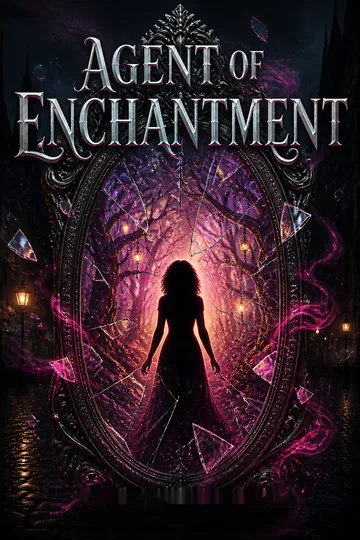
Agent of Enchantment is a genre-blending urban fantasy that uses the conventions of crime fiction and supernatural thriller to explore themes of identity, trauma, and the seductive power of fear. At its core, the novel is about a woman's journey to self-acceptance and agency in a world that seeks to define and control her. Cassandra's evolution from haunted profiler to empowered "terror leech" mirrors the reader's own confrontation with the darkness within and without. The book interrogates the nature of evil—not as an external force, but as something born of pain, addiction, and the desire for control. The fae, with their obsession with oaths, emotion, and hierarchy, serve as both literal and metaphorical reflections of human society's own flaws. The narrative's use of mirrors and reflection magic is a powerful metaphor for self-examination, the multiplicity of identity, and the possibility of transformation. Ultimately, Agent of Enchantment suggests that true power lies not in denying one's darkness, but in understanding and mastering it—turning fear into strength, and chaos into agency. The story's blend of psychological insight, mythic resonance, and visceral action makes it a compelling meditation on what it means to be both human and more than human in a world teetering on the edge of chaos.
Review Summary
Agent of Enchantment receives an overall positive reception, averaging 4.01 stars. Most readers enjoy the blend of urban fantasy, FBI procedural elements, and fae mythology set in London. Fans appreciate the strong female protagonist, Cassandra, and the mysterious love interest, Roan. Common criticisms include an underdeveloped murder investigation overshadowed by romance, repetitive tropes, and weak world-building. Several reviewers compare it favorably to TV shows like Criminal Minds, while detractors cite predictability and frustrating character decisions. The audio version receives mixed feedback regarding narration pacing.
People Also Read
Characters
Cassandra Liddell
Cassandra is a fiercely intelligent FBI profiler with a traumatic past and a sharp, self-deprecating wit. Her outsider status in London is compounded by her growing realization that she is not entirely human—she is a "three-born" (pixie), a hybrid of human and fae, with the rare ability to manipulate reflections and feed on fear. Cassandra's psychological insight is matched by her physical courage, but she is plagued by self-doubt, guilt, and a desperate need to understand the roots of evil. Her journey is one of self-discovery, as she confronts her own darkness and learns to wield her powers for good. Her relationships with Roan and Gabriel are complex, marked by attraction, mistrust, and mutual dependence. Cassandra's arc is one of transformation—from haunted victim to empowered agent of enchantment.
Roan Taranis
Roan is a powerful fae with a tragic past, marked by centuries of violence, betrayal, and exile. His initial interactions with Cassandra are fraught with danger and desire, as he oscillates between protector and manipulator. Roan's motives are ambiguous—he has been stalking Cassandra for years, orchestrating events to bring her to London, but his ultimate goal is to defeat the High King and prevent the fae from unleashing chaos on the human world. Roan is both drawn to and repelled by Cassandra's power, and their relationship is a dance of trust, betrayal, and longing. His scars, both physical and emotional, speak to a lifetime of suffering, and his willingness to sacrifice for others reveals a hidden nobility beneath his feral exterior.
Gabriel Stewart
Gabriel is a British detective with a sharp mind, a dry sense of humor, and a deep sense of justice. Initially wary of Cassandra's methods and the supernatural elements of the case, he becomes her staunchest ally as the truth emerges. Gabriel's own past is marked by loss and trauma, and his relationship with Cassandra is built on mutual respect and growing affection. He serves as a grounding force, helping Cassandra navigate the complexities of both the investigation and her own identity. Gabriel's willingness to risk his life for Cassandra and his open-mindedness in the face of the impossible make him an indispensable partner.
The Rix / DCI Wood
The Rix, disguised as DCI Wood, is the true antagonist—a fae who feeds on fear and orchestrates the murders to sow chaos and empower himself. His ability to glamour himself as a police chief allows him to manipulate the investigation and evade suspicion. The Rix's addiction to terror makes him both powerful and vulnerable, and his obsession with Cassandra's fear is his undoing. He embodies the theme of chaos versus order, and his downfall is a testament to the power of broken promises and the resilience of the human (and pixie) spirit.
Elrine
Elrine is Roan's childhood friend, imprisoned and tortured by the fae court for treason. Her rescue is a turning point in the story, revealing the brutality of fae justice and the depth of Roan's loyalty. Elrine's strength and resilience inspire Cassandra, and her presence highlights the complexities of fae politics and the cost of resistance. She serves as a mirror to Cassandra's own struggles, and their alliance is one of mutual support and shared trauma.
Alvin
Alvin is a streetwise, drug-addled fae with a penchant for rhyming slang and magical potions. He serves as both comic relief and a source of crucial information, guiding Cassandra through the intricacies of fae magic and politics. Alvin's debts and favors are a running motif, and his ambiguous morality reflects the shifting alliances of the fae world. His interactions with Cassandra are marked by wit, mischief, and a surprising depth of insight.
The Callach
The Callach is an ancient fae seer whose cryptic prophecies and unsettling presence foreshadow key events. Her interactions with Cassandra and Roan are both warnings and catalysts, pushing them toward their destinies. The Callach embodies the theme of fate versus free will, and her pronouncements shape the course of the narrative.
Gemma Roberts
Gemma is Catherine's flatmate, whose psychosis and cryptic ramblings provide vital clues to the killer's motives and the fae's rituals. Her tragic fate underscores the collateral damage of the fae's machinations and the vulnerability of those caught in the crossfire. Gemma's visions and tattoos link her to the larger mythos of the fae, and her death is a catalyst for Cassandra's determination to solve the case.
The Torturer
The torturer is a faceless, eyeless fae who inflicts unimaginable pain on prisoners in the fae dungeon. Her presence is a test of Cassandra's resolve and ingenuity, forcing her to confront her own capacity for violence. The torturer's defeat is a moment of catharsis, but also a reminder of the darkness that pervades both the fae and human worlds.
The High King
The High King, though rarely seen, is the ultimate antagonist—a being whose desire for chaos and domination threatens both realms. His court, marked by the symbol of skulls under water, is the epicenter of fae power and corruption. The King's influence looms over every event, and his defeat is the ultimate goal of Cassandra and Roan's alliance.
Plot Devices
Reflection Magic
Reflection magic is the central narrative device, allowing Cassandra to travel between realms, manipulate reality, and glimpse possible futures. Mirrors and reflective surfaces serve as both literal and metaphorical gateways, symbolizing self-discovery, hidden truths, and the duality of human and fae nature. The ability to use reflections is tied to Cassandra's heritage and emotional state, and mastering it is key to her transformation from victim to agent of change.
Broken Promises
The fae's obsession with promises and oaths is a recurring motif, with broken promises granting power over the oathbreaker. This device is used to turn the tables on the Rix, as Cassandra exploits his failure to repay a trivial debt, gaining the upper hand in their final confrontation. The theme of trust, betrayal, and the consequences of broken vows runs throughout the narrative, shaping relationships and driving the plot.
Feeding on Emotion
The fae's ability to feed on human emotions—especially fear and lust—serves as both a plot device and a metaphor for power, addiction, and the dangers of unchecked desire. The killer's need for terror drives the murders, while Cassandra's own powers force her to confront the darkness within herself. The interplay of emotion and magic blurs the line between victim and predator, highlighting the complexity of human (and fae) nature.
Glamour and Disguise
The use of glamour—magical disguise—allows fae characters to infiltrate human society, evade detection, and manipulate events. The Rix's masquerade as DCI Wood is a central twist, and the theme of hidden identities underscores the narrative's exploration of truth, perception, and the masks we wear.
Prophecy and Fate
Prophecies, visions, and cryptic warnings from characters like the Callach foreshadow key events and shape the characters' choices. The tension between fate and free will is a driving force, as Cassandra struggles to claim agency in a world where her role as "the key" seems predestined.
Dark Fae FBI Series Series
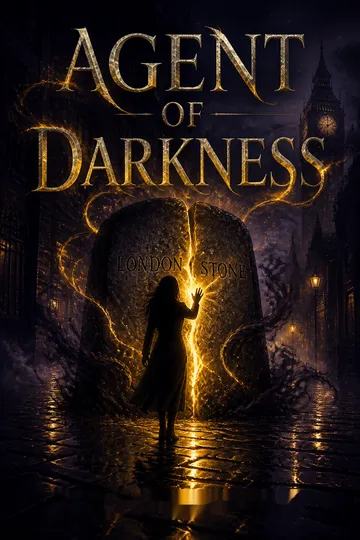
About the Author
Other books by C.N. Crawford


Download PDF
Download EPUB
.epub digital book format is ideal for reading ebooks on phones, tablets, and e-readers.








































