
Plot Summary
Funeral Shadows and Questions
At the grand and somber Enderby Hall, the Abernethie family gathers for Richard's funeral. The occasion is steeped in melancholy and nostalgia, as family and old servants like Lanscombe recall happier times and lost loved ones. Underneath the formal mourning lies a sense of detachment: Richard's loss is more about the passing of an age and a fortune than deep familial grief. During the subdued lunch, family members size each other up, old alliances and grievances flickering beneath the surface. This somber reunion sets the stage for unease—especially once Richard's peculiar will is revealed.
Cora's Dangerous Truth
The family's fragile decorum shatters when Richard's eccentric sister Cora blurts out, "But he was murdered, wasn't he?" Her tone—a mixture of naïve certainty and childlike candor—stuns the room. The moment quickly dissolves into awkward denials and deflections, but the damage is done: her question plants a seed of suspicion in several hearts. As conversation resumes, beneath the surface, minds begin to churn: Cora, always considered simple and foolish, has spoken an unspoken anxiety the others dare not voice. That night, the family departs with a new, secret unease shadowing them.
The Will and Suspicion
Mr. Entwhistle, the Abernethies' lawyer, details the will: substantial legacies split among the remaining siblings, nieces, and nephews, with further trusts for Helen (Richard's sister-in-law) and Cora. However, the knowledge that each could benefit more from another's death hangs heavy. The younger generation—Greg and Susan, Rosamund and Michael, George—all have pressing financial or social needs. That same need, paired with Cora's accusation, sours the mood. Greed, desperation, and resentment become palpable, coloring every glance and conversation, each wondering if another would kill for a greater share.
Cora's Second Death
Before Mr. Entwhistle can act on Cora's remarks, devastating news: Cora herself has been murdered, violently hacked to death in her cottage the very next day. The clumsy staging hints at robbery, but little is taken, and rumors swirl—did her loose tongue seal her fate? Cora's death jolts the family and makes her "murder" claim seem prescient, not foolish. Now, her legacy—such as it is—passes to niece Susan. Inspector Morton investigates, but with no clear suspect, fear and suspicion grow within the fracture lines of the family.
The Family Fractures
As the investigation unfolds, old family histories entwine with present fears. Timothy, the hypochondriac surviving brother, is both furious and cowed by his limited inheritance, and his wife Maude's maternal fussing masks her own ambitions. Helen, dignified and solitary, reflects on the ghosts of her past. Among the younger generation, marriage, money troubles, and jealousy stoke the flames of doubt. Each cousin and spouse bears a secret or a grudge; the pressure of potential accusation magnifies their flaws and suspicions. The murder seems at once impossible and inevitable, and no one is safe from suspicion.
Poirot Inquires the Past
Called in by Mr. Entwhistle, Hercule Poirot discreetly inserts himself, probing each relative's memories and movements. Posing as a house-buyer for a refugee charity, Poirot quietly collects stories and studies alibis, noticing inconsistencies and irritations. He recognizes the family's collective ability to dissemble—and the profound loneliness and desperation beneath their surface politeness. Poirot's genius lies not just in what people say, but in what they omit, the small cracks in their stories, and in their eyes. The stage is subtly set for uncovering not only the mechanics, but also the motives of murder.
A Web of Alibis
Poirot systematically tests each family member's claim. George says he was at the races, but his story is suspiciously convenient and unverifiable. Rosamund and Michael's accounts—full of vague auditions and meetings—reveal cracks, especially under Poirot's scrutiny. Susan and Greg's account is tidy, but Poirot, and soon others, wonder if their perfect story hides carefully protected secrets. Meanwhile, Timothy and Maude's world of ailments and servant troubles offers its own gaps for scrutiny. Poirot senses each alibi is a thread in a web that might snap under pressure.
Secrets, Lies, and Cake
Tensions spike when Cora's old companion, Miss Gilchrist, is nearly killed by poisoned wedding cake—delivered anonymously. The postman's memory is unreliable, and clever hands could have mimicked postmarks and handwriting. Is the murderer within the family, trying to silence someone who "knows too much"? Poirot sees that whoever tried to poison Miss Gilchrist is also deeply familiar with every detail of the Abernethies' world—and adds the motif of a nun, a disguise reported at several key moments, to his growing list of oddities. The boundaries between victim and culprit blur.
The Madness of Grief
The Abernethie family, shaken by the succession of deaths and attacks, begins to break under the weight of suspicion and guilt. Greg displays anxious, guilty outbursts, confessing to murder in a kind of psychological breakdown, but Poirot doubts his confession aligns with physical evidence. Timothy's supposed invalidism is revealed as partly hypochondria, but his bitterness is genuine. Efforts to offer family charity to Miss Gilchrist reveal more about the family's own insecurities than about her innocence. All seem to teeter on the edge of reason, questioning their own impulses and memories.
The Art of Murder
The crux of Cora's life—and her death—turns out to be art. Poirot uncovers a subtle deception involving a painting found among Cora's "daubs"—a disguised, valuable Vermeer, likely identified only by someone with both skill and motive. Through patient interviews and clever deduction, he traces the pattern: Cora's companion, Miss Gilchrist, had the knowledge and desire, and manipulated Cora with sedatives during the funeral, impersonating her and planting the "murder" idea among the heirs. When Cora awoke, she was eliminated, and the art switched.
Wax Flowers and Mirrors
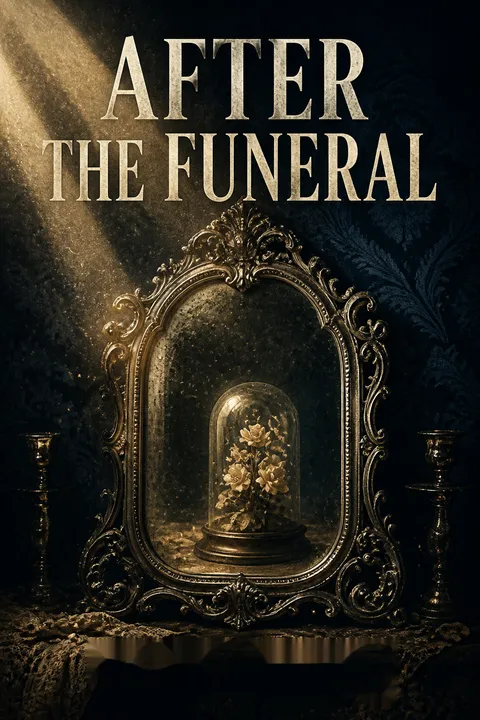
The motif of wax flowers—a mundane yet meaningful detail—catches Poirot's attention. Miss Gilchrist, in two guises, describes the arrangement in ways she could not have known—unless she'd been at Enderby as "Cora." Meanwhile, Helen's shattered memory crystallizes: the "Cora" at the funeral had performed her head tilt, but mirrored, betraying the impostor. This key, combined with the art evidence and the poisoned cake, cracks the case open: Miss Gilchrist, desperate to fund her dream teashop, donned a false personality long enough to unleash murder.
The Broken Circle
Poirot gathers the family and lays bare the intricate sequence of crimes: Cora, murdered not for money but for the Vermeer she didn't recognize; alibis, confessions, and red herrings—each exposed as distraction or delusion. Greg's breakdown proves psychological, not criminal. The younger Abernethies, relieved and horrified, struggle to comprehend that a genteel, overlooked companion could be a murderer. The wax flowers and mirrored gestures prove vital. The house, family, and past are irreparably splintered, but the web of lies is at last untangled.
Shadows Revealed
In the aftermath, Poirot and Mr. Entwhistle reflect: murder comes in "ordinary," even genteel guises, and the desire for a simple dream—or a vanished way of life—can spawn monstrous acts. Helen's secret is disclosed quietly, and the surviving Abernethies pursue their own futures—Susan her business, Rosamund her child, the others back to their patterns. Enderby Hall, stripped of secrets, is slated for new purpose. Poirot, ever philosophical, muses on the play between the mundane and the monstrous in human nature, and the sorrowful necessity of leaving the past behind.
Analysis
A chilling meditation on ordinary evil and the cost of nostalgiaAfter the Funeral stands as one of Christie's most psychologically textured and subtly subversive works. Beyond the superficial puzzle—a family murder at an inheritance-fueled funeral—it examines how longing for lost privilege, beauty, or security can foster monstrous choices. The Abernethies' postwar malaise and familial dysfunctions reveal a society in transition, riddled with envy, despair, and fading gentility. Almost every character is haunted—by what's lost, by failed ambition, by unbearable affection—and Christie turns that psychic ache into the engine of both crime and confession. Most radical of all is her killer: Miss Gilchrist, the quiet woman at the margins, who commits murder not out of greed but for something as desperately banal as a tea-shop. The book's narrative devices—mirrors, switched identities, poisoned cake—reflect the pervasive instability of appearances in family and society. In the end, Poirot's restoration of the truth offers only cold comfort: the house will be sold, the circle cannot be restored, and innocence, once lost, is forever elusive. Christie's lesson is that evil, more often than not, creeps in through the unnoticed door, wearing the mask of the familiar, the forgotten, or the longed-for comfort of the past.
Review Summary
After the Funeral receives mostly positive reviews, averaging 3.92/5. Readers praise Christie's masterful misdirection, memorable characters, and economic yet precise writing style. Many note Poirot's delayed appearance, with solicitor Entwhistle conducting much of the investigation. The large cast of suspects initially overwhelms some readers, but most find the mystery satisfying. The clever twist consistently fools readers, though some find the ending's confession unrealistic. Hugh Fraser's audiobook narration receives particular praise. Generally considered a strong, if not top-tier, Christie mystery.
Characters
Hercule Poirot
Poirot is the celebrated Belgian detective, a guest in disguise at Enderby Hall, whose true genius is his ability to read people's psychology, not just their words. He observes, listens, and prods subtly, careful not to tip his hand until he is certain of the pattern beneath the facts. Poirot's methods combine acute observation, emotional intelligence, and a rigourous logic that never strays into sentimentality, making him the ideal outsider to sort the Abernethie family's tangled grievances and self-deceptions. He unravels the lies not by brute force, but by seeing the humanity—and frailty—in every suspect.
Mr. Entwhistle
The Abernethie family solicitor and executor, Entwhistle is driven by a deep-seated sense of obligation to the late Richard and by unease over Cora's accusations. Cautious yet determined, he partners with Poirot primarily to reassure himself and the family—but also to exorcise his own guilt over "letting things go." His legal mind helps organize suspects and events, but he is ultimately at the mercy of the family's volatile dynamics. Entwhistle represents a generation for whom duty and respectability are paramount, but who are forced to acknowledge, painfully, the existence of evil within the familiar.
Susan Banks
Richard's niece by his late son Gordon, Susan is fiercely smart, energetic, and intent on clawing her way up the social and financial ladder. Her marriage to Greg, a former chemist with emotional troubles, hints at a powerful, almost self-destructive loyalty; she will do anything to protect or enable him. Susan's cool intelligence and drive make her both admirable and suspect, especially as she maneuvers through alibis and inheritance. Susan is emblematic of postwar Britain: impatient with convention, alive to opportunity, and sometimes heedless of the emotional cost.
Gregory Banks
Susan's husband, Greg, embodies postwar masculinity in crisis—erudite but broken by nerves, dogged by a ambiguous history of dispensing errors and guilt. His confession to murder is less an act of evil than a manifestation of a deep-seated punishment complex and a need for escape from an overwhelming marriage to Susan. Greg's trajectory reflects the psychological damage latent in the family, and his character oscillates between suspect, victim, and metaphorical casualty of the Abernethie legacy.
George Crossfield
The only male heir of his generation, George is primarily defined by his financial instability and penchant for risk. He is charming but unreliable, flashing signs of moral fatigue beneath his banter. George's alibi is weak, and his financial difficulties give him motive, but his lack of conviction ultimately betrays him as more desperate than diabolical. Still, he is a reminder of the ways that money—especially lost money—warps the soul.
Rosamund Shane
Rosamund, Geraldine's daughter and an actress, is stunningly lovely and superficially shallow, a romantic ideal who thinks in stagey terms. Her marriage to Michael is as much about drama as love; she's capable of calculation, occasional insight, and a peculiar lack of affect that borders on coldness. Rosamund's relationship to the truth is slippery—her empty gaze masks a capacity for both shrewd observation and monumental self-delusion.
Michael Shane
The actor husband of Rosamund, Michael embodies the postwar artist's hunger for success and self-validation. He is superficially charming, a natural flirt both with women and with opportunity. Ambitious to a fault but lacking the substance to anchor his impulses, Michael is dangerous only in the way narcissists can be: a potential for betrayal, not violence. His motives are always wrapped up in the next big part, and his truth is whatever serves his needs.
Helen Abernethie
Helen, Richard's sister-in-law, is poised, gracious, and unobtrusively insightful. She is the emotional heart and ethical center of the narrative, the only Abernethie who seems untainted by greed or desperation. Her existential sadness, grounded in real losses and a hidden love, makes her both a reliable observer and an unwitting victim. Helen's memories and quiet intelligence are the keys for Poirot's final deductions; her arc is about reconciliation—with the past, with herself, and with truth.
Maude and Timothy Abernethie
Timothy, Richard's only surviving brother, is a hypochondriac tyrant, obsessed with his own suffering and loss of status, and burdened by jealousy. Maude, his wife, has sublimated her maternal instincts into caring for him with relentless, sometimes suffocating devotion. Their dynamic is at once comic and pitiable. Timothy's bitterness over inheritance masks a life defined by frustration, while Maude's resilience and practicality are the products of thwarted affections.
Miss Gilchrist
Once a genteel tea-shop owner, reduced to "companion help" after business failure, Miss Gilchrist appears mild-mannered, dutiful, and somewhat pitiable—overlooked by all, even when living with Cora. Her longing for security and beauty curdles into the book's greatest revelation: to fund her fantasy tea-shop, she orchestrates deception and murder, donning Cora's persona and eliminating her at the critical moment for the sake of a valuable painting. Miss Gilchrist's transformation demonstrates Agatha Christie's unique gift for making evil seem ordinary—and the ordinary, lethal.
Plot Devices
Misdirection and the Red Herring
Christie's signature device saturates the novel: the overtly suspicious (financial motives, missed alibis, victim's odd behavior) distract from the true murderer, who manipulates the narrative by exploiting assumptions. Cora's outburst is both a clue and a calculated distraction, a "red herring" engineered by her killer. Multiple confessions, carefully contrived alibis, and poisoned cake all serve to muddy the reader's sense of who should be considered dangerous.
The Unreliable Witness
Nearly every key character is deceived or deceiving. The story of the will, the day of Cora's murder, and the sequence of events at the funeral all rely on selective memories, willful misunderstandings, and errors in identification (the "mirror image" mistake, most notably). Christie interrogates the limits of what we see and how we interpret gestures, words, and faces, leading both characters and readers constantly astray.
Psychological Motives and Dissociated Guilt
Far more than a simple "whodunnit," the structure hinges on psychological need—obsession, desperation, or longing—driving characters to confession, breakdown, and finally to murder. Greg's psychological disintegration, Susan's justification of her ambition, and Miss Gilchrist's descent into criminality all hinge on unmet need more than malice. Poirot's investigation is thus as much an exercise in psychoanalysis as in puzzle-solving.
The Substitution and Secret Identity
The central murder is elaborately delayed and disguised by a switch of identity; Miss Gilchrist, masquerading as Cora, uses performance and careful knowledge to deflect suspicion and plant seeds of doubt. This device—identity switch, mirrored gestures, "nun in disguise"—runs through the plot, culminating in the unraveling of both Miss Gilchrist's motives and her methodology.
Foreshadowing through Symbolism
Key evidence is always domesticated: wax flowers, wedding cake, an oil painting. These benign details—tossed off in conversation, or recalled by accident—become vital. Wax flowers, when remembered by the wrong person, are the tiny fissure that collapses the impersonator's scheme. Paintings switch places, reflections become clues, and even the mechanical gestures of life (making tea, wiping dust) disguise or reveal the monstrous intent of the seemingly harmless.
Download PDF
Download EPUB
.epub digital book format is ideal for reading ebooks on phones, tablets, and e-readers.








































