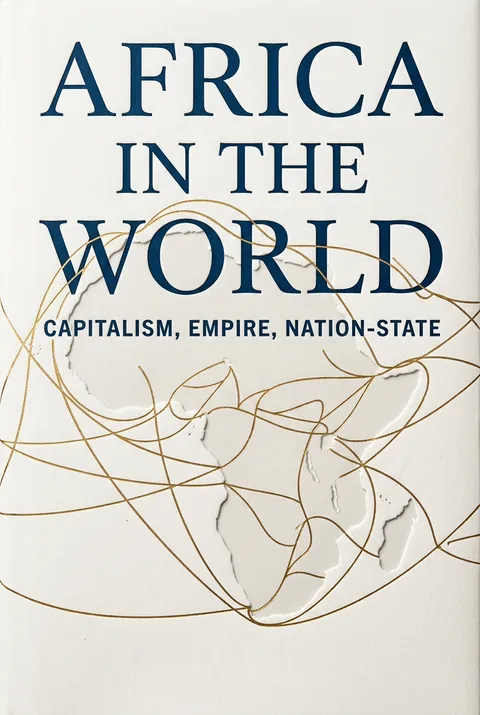

Key Takeaways
1. Africa's Global Interconnectedness is a Long-Term Historical Reality
One can no more write world economic and political history properly without considering Africa than one can write African history as a pristinely indigenous story.
Challenging isolation. Africa has never been an isolated continent, but rather deeply intertwined with global economic and political systems for centuries. This book, inspired by W.E.B. Du Bois's 1946 work, argues against viewing Africa as a mere victim or an entity separate from world history. Instead, it emphasizes that Africa's trajectory is a co-creation, shaped by complex, often asymmetrical, interactions with other regions.
Beyond Eurocentrism. Traditional narratives often explain Europe's rise by its inherent characteristics, using Africa as a foil. This perspective is flawed, as the economic "divergence" of Europe, particularly Britain, around 1800 was heavily dependent on its overseas empire and the exploitation of African slave labor in the New World. African resources and labor were critical components in the development of global capitalism.
Mutual shaping. The book posits that Africa and Europe mutually shaped each other, though not through symmetrical processes. Understanding this long history of uneven connections is crucial for comprehending Africa's past, present, and future. It moves beyond simplistic comparisons to analyze the mechanisms and limitations of interaction among continents and peoples.
2. African Societies Shaped Global Capitalism, Not Just Responded to It
Much of what Africa is up against today—not least the denigrating terms in which its future is debated—is not a consequence of “failure” so much as of the partial success of a large number of its people in responding to—or staving off—efforts at economic domination, from within and abroad.
Internal dynamics. African societies possessed unique characteristics that influenced their engagement with external forces. A relatively low population density and flexible kinship networks often provided an "exit option," making it difficult for internal elites to systematically exploit their own populations. This meant that bringing in outsiders, such as slaves, became a more attractive option for would-be rulers.
Adapting to demand. The participation of African elites in the slave trade, for instance, was a complex response to what they could and could not control. They acted as would-be kings or merchants, leveraging trade connections to acquire goods like cloth, iron, and guns, which enhanced their political power and military capacity. This was not a simple act of victimhood but a strategic adaptation within a volatile, interconnected system.
Colonial economies. Even during the colonial era, African initiative was crucial for economic growth. The success of cash crops like cocoa and palm oil was largely driven by African farmers who developed flexible production relations, mobilizing kinfolk and clients. Colonial regimes, often mediocre and under-resourced, struggled to systematically remake African economies, instead often profiting from existing African adaptations.
3. African Empires Were Diverse and Adaptable Political Forms
African empires, like many others, grew up knowing about other empires and seeing themselves in relation to them.
Beyond the nation-state. Empire, as a political form, has a long and varied history in Africa, predating European colonization. African empires, such as Ghana, Mali, Songhay, Asante, and Ethiopia, were large, expansionist units that governed diverse populations by preserving and reproducing differences, rather than enforcing homogeneity. They balanced coercion with incentives, provincial autonomy with centralized authority.
Strategic control. These empires often thrived by controlling key nodal points in long-distance trade routes, such as those across the Sahara for gold and slaves. This allowed rulers to accumulate wealth and military power, attracting followers and incorporating captives into their societies. The ability to manage these external connections was often more crucial than intensive exploitation of local populations.
Cultural and political fluidity. African empires demonstrated remarkable adaptability to diverse landscapes and social structures. They fostered cosmopolitan communities, spread religions like Islam, and developed sophisticated administrative systems, sometimes even employing slaves in positions of authority. Their rise and fall were part of a dynamic process of political formation, not a sign of inherent backwardness.
4. European Colonialism Was Neither Total Remaking Nor a Mere Episode
But colonial rule was neither a mere episode nor a total remaking.
Limited reach. European colonization of Africa, primarily in the late 19th and early 20th centuries, was often a "preemptive scramble" driven by inter-imperial competition. Despite technological dominance and racial arrogance, colonial administrations were often thin, under-resourced, and unable to systematically remake African societies. Bureaucratic rationality often existed more on paper than in practice.
Reliance on intermediaries. Colonial regimes frequently relied on existing African elites, often termed "chiefs," for revenue collection, labor mobilization, and maintaining order. This dependence meant that African intermediaries retained a degree of legitimacy and leverage, using their positions to defend communities or advance their own interests, leading to fragmented and volatile power relations.
Economic mediocrity. For the first half-century, colonial economies were largely mediocre, with little capital investment outside of mining zones or white settler areas. African wage labor remained a tiny percentage of the population. The most successful export crops, like cocoa, were often driven by African initiative, not colonial direction, highlighting the limits of colonial power to transform production systems.
5. Colonial Racism Was Vicious but Continuously Contested
The problem of the twentieth century is the problem of the color line.
Naturalization of hierarchy. Racism was a fundamental, insidious aspect of European colonial rule, seeking to naturalize racial distinctions and hierarchies. From daily humiliations to "scientific" theories of African inferiority, it justified conquest and exploitation. However, the book argues that "scientific racism" was never truly coherent, with scientists often disagreeing on the nature and significance of race.
African counter-discourses. African and African American intellectuals continuously contested these racialized narratives. Figures like J.E. Casely Hayford in the Gold Coast patiently explained the sophistication of African institutions, advocating for self-governance within a broader British imperial framework. W.E.B. Du Bois's famous dictum highlighted the "problem" of the color line, actively combating its naturalization.
Shifting justifications. European powers, particularly after World War II, formally repudiated overt racial justifications for colonial rule, partly due to Hitler's actions and the need for renewed legitimacy. However, racial discrimination persisted in practice, often reconfigured to target "unmodern" or "atavistic" Africans who resisted colonial visions of progress, as seen in events like the Mau Mau Emergency.
6. Post-WWII Decolonization Offered Multiple Pathways Beyond the Nation-State
What was imaginable in 1946 but not in 1966 was that there were multiple alternatives to empire that did not presume that the end point was the nation- state.
A moment of flux. The end of World War II marked a critical juncture, weakening European powers and fueling anti-colonial movements globally. This period opened up a wide range of political imaginations for Africa's future, extending beyond the eventual triumph of the nation-state. Pan-Africanism, federalism, and confederation were actively debated alternatives.
Layered sovereignty. Leaders in French West Africa, such as Mamadou Dia and Léopold Sédar Senghor, explicitly feared the "balkanization" of Africa into small, weak, and impoverished nation-states. They advocated for a layered approach to sovereignty, envisioning an African federation that would then be part of a larger French confederation, combining horizontal solidarity among Africans with vertical ties to France.
Beyond territorialism. These leaders, often dismissed as "colonial myths," were not simply delaying the inevitable. They sought "real independence" through transforming empire into an egalitarian, multinational polity, rather than accepting "nominal independence" within territorially bounded states. Their vision aimed to leverage the resources and experience of France while asserting African identity and autonomy.
7. The Nation-State Emerged as a Contingent, Not Inevitable, Outcome in Africa
That is how, in 1960, the former colonies of French Africa ended up as a series of nation- states, a goal that neither African nor French leaders had sought in 1945 and that all but Guinea had rejected in 1958.
Unforeseen trajectory. The path to the nation-state in French West Africa was not a predetermined outcome but a result of complex political struggles and compromises. French policies, particularly the 1956 loi-cadre which devolved power to individual territories, inadvertently strengthened territorial political parties and undermined the vision of a larger African federation.
Internal divisions. African leaders themselves were divided. While Senghor and Mamadou Dia championed a West African federation, Félix Houphouët-Boigny of Côte d'Ivoire opposed it, fearing that his wealthier territory would subsidize poorer ones. These internal disagreements, combined with France's shifting strategies, ultimately led to bilateral negotiations for independence, fragmenting the region.
"Balkanization" realized. The breakup of the Mali Federation (Senegal and French Sudan) in 1960, followed by the individual independences of other French West African territories, solidified the nation-state model. This outcome, which Senghor had warned against, meant that the primary asset for new governing elites became control over the mechanisms of a territorially bounded state, often leading to authoritarianism and conflict.
8. Citizenship Was a Powerful, Contested Concept in Decolonization
In principle, the new French Union would be multicultural as well as egalitarian.
Platform for claims. The concept of French citizenship, extended to African subjects after World War II, became a crucial platform for demanding rights and equality. African deputies like Senghor and Lamine Guèye successfully argued for citizenship that allowed for cultural and religious difference, challenging the traditional Jacobin ideal of absolute homogeneity.
Social and economic rights. This expanded citizenship fueled demands for social and economic equality, including "equal pay for equal work" for African laborers and access to welfare state benefits comparable to those in metropolitan France. These claims, articulated through labor unions and political parties, put significant pressure on the French government, which feared the high costs of an empire of equal citizens.
Shifting definitions. The French government's initial embrace of a more inclusive empire (the French Union) was an attempt to legitimize its rule and secure resources. However, the escalating demands of African citizens, coupled with the costs of maintaining the empire, eventually led France to devolve power to individual territories, effectively diminishing the scope of French citizenship for Africans.
9. The "Gatekeeper State" Model Defined Post-Independence African Economies
What this history has produced are “gatekeeper states.”
Controlling the node. Post-independence African states, inheriting the narrow colonial infrastructure, often became "gatekeeper states." These states are strong at the interface where local society meets the external economy, deriving revenue and patronage from controlling foreign aid, commercial deals, and access to global markets. This model made them vulnerable to challenges over control of these vital "gates."
Vulnerability and patronage. The gatekeeper model fostered a politics of patronage, where rulers distributed resources to clients and regional power brokers to maintain control, rather than building broad-based economic development. This made states susceptible to coups and internal conflicts, as various groups vied for control of the state's external connections and the resources they provided.
Structural adjustment's impact. The world recession of the 1970s and the subsequent imposition of "structural adjustment" policies by international financial institutions exacerbated these vulnerabilities. By forcing states to cut budgets and privatize services, these policies often undermined public services like education and health, while failing to curb the "rent-seeking" behavior of elites, further entrenching the gatekeeper dynamic.
10. Global Structures and Asymmetrical Power Relations Persist
Africa’s economic present is a co-creation, emerging out of long-term interactions among nonequivalent political and economic structures.
Beyond intrinsic poverty. Africa's economic problems and vulnerabilities are not intrinsic characteristics of the continent but consequences of a long, intertwined Afro-European history. Solutions cannot be found without questioning global structures of economic power and the assumption that Africa deviates from a "normal" path of development.
Contingent order. The current global order of sovereign nation-states is a recent and contingent historical product, not a natural or inevitable one. The book highlights how the shift from empire to nation-state transformed concepts like foreign aid (from citizen entitlement to supplication) and immigration (from free circulation within empire to restricted entry).
Rethinking the future. The historical analysis encourages a rethinking of present-day dichotomies: "Africa" vs. "the world economy," "market" vs. "state," "aid" vs. "local development," and "sovereign state" vs. "foreign interference." These concepts are products of history, and their meanings may not be durable. Recognizing the multiple pathways that were once open can help us imagine more creative and equitable alternatives for the future.
Review Summary
Africa in the World receives mixed reviews (3.53/5) but is praised as essential reading on African studies. Reviewers highlight Cooper's argument that Africans had agency in shaping their history, including introducing capitalism and building empires before colonization. A key theme is how African intellectuals envisioned alternative political models beyond the nation-state, preferring neo-imperial federations that accommodated diversity. The book challenges narratives of African economic backwardness and examines concepts of capitalism, empire, and nation through African perspectives. Some readers remain unconvinced about colonialism's transformative impact, while others criticize the book's perceived moderation.
People Also Read

About the Author
Other books by Frederick Cooper
Download PDF
Download EPUB
.epub digital book format is ideal for reading ebooks on phones, tablets, and e-readers.








































