
Key Takeaways
1. The Adriatic: A "Globe in Miniature" for Europe's Evolving Soul
The Adriatic was an obvious place to look for answers: though overlooked by journalists and professional strategists, the Adriatic defines Central and Eastern Europe as much as the Baltic and Black Seas do.
Travel's true nature. The author posits that the real adventure of travel is intellectual and interior, leading to a deeper understanding of history, culture, and oneself. This journey through the Adriatic is not merely a physical traverse but a mental excavation, compiling a vast bibliography of poetry, history, philosophy, and geopolitics. It is a rebuke to academic specialization, revealing how diverse fields flow together to illuminate a single region.
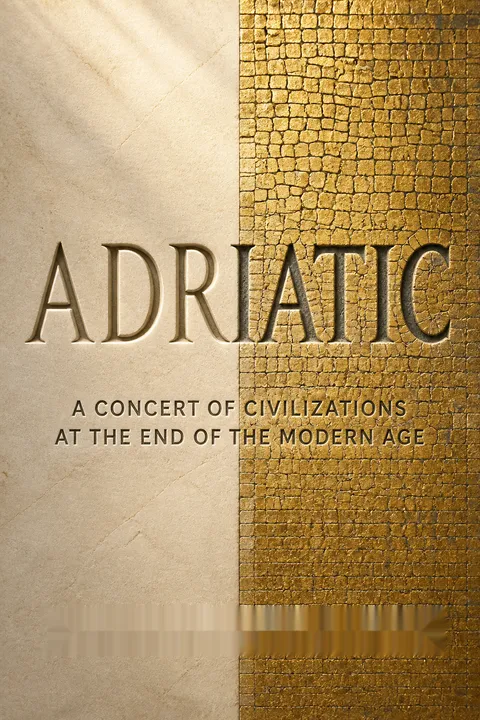
A concert of civilizations. The Adriatic, often overlooked, serves as a condensed version of Europe, where the traditional dichotomy between Occident and Orient blurs into a "stirring fusion." Catholicism, Orthodoxy, Islam, Western Rome, Eastern Rome, the Mediterranean, and the Balkans all converge here, making it a "globe in miniature." This region, therefore, offers a unique lens to understand the broader civilizational subtleties now encompassing the world, challenging the notion of a "clash" and suggesting a "concert."
Anticipating the future. The journey is undertaken at a precipice, as the Adriatic is poised to become a planetary choke point, linking with the South China Sea and Indian Ocean as the western maritime terminus of China's Belt and Road. By delving into the historical and aesthetic peculiarities of each place, the author aims to grasp what is passing—the modern age in Europe—to better analyze what is to come. This granular approach provides the necessary base for a macro geopolitical view, revealing the Adriatic's new global significance.
2. Rimini & Ravenna: Where Pagan Antiquity Forged Christian Europe
Here in this semi-darkness is Europe, where the Greek and Roman world gave birth to Christendom.
Rimini's layered past. The journey begins in Rimini, a city whose Tempio Malatestiano, a Franciscan Gothic church transformed into a Renaissance temple, embodies Europe's complex evolution. It showcases a fusion of pagan gods, zodiac signs, and Christian elements, reflecting a path back to antiquity through late medieval city-states. This site, where the Neoplatonist philosopher Georgios Gemistos Plethon's remains were reburied, highlights the enduring influence of classical thought on the Italian Renaissance.
Ravenna's Byzantine heart. Moving to Ravenna, the author encounters an "ideogram of Late Antiquity," a city that transitioned from Roman to Ostrogothic to Byzantine rule. Its barrel-vaulted brick churches and mausoleums, like San Vitale and the Arian Baptistery, are "Byzantine jewels" that demonstrate the profound influence of the East on Western Europe. The mosaics, depicting imperial and religious figures, illustrate the seamless fusion of heaven and worldly power, where empire derived unquestioned moral legitimacy from the Church.
Dante's timeless journey. Ravenna also holds Dante Alighieri's tomb, whose Divine Comedy serves as a guide through personal and historical crises. Dante's work, rich with classical allusions and a profound sense of moral accountability, bridges pagan and Christian worlds, making him arguably the "most European of poets." His journey from the "dark wood" to "see once more the stars" symbolizes humanity's struggle against fate, emphasizing free will and the pursuit of truth, a message that resonates across centuries and cultures.
3. Venice: A Republic of Pragmatism, Empire, and Enduring Art
A wholly materialist city is nothing but a dream incarnate.
Globalization's apotheosis. Venice, once a "delicious put-down" for the young traveler, now appears as the "apotheosis of globalization," a blend of amusement park and archaeological site. Its timeless beauty, from the "time-battered buildings" to the "vast and limitless horizontality" of its lagoon, is increasingly shared by a global middle class. This transformation, however, challenges the city's unique identity, making the traveler work harder to find its mystery amidst the throngs.
Realpolitik and aesthetic splendor. Medieval Venice was a paradox: a city-state built on ruthless pragmatism, extreme secrecy, and a singular focus on business and trade, yet it produced overwhelming architectural and artistic beauty. Its foreign policy, driven by "Departure. Risk. Profit. Glory," allowed it to navigate complex relations with Christian and Muslim powers, even sacking Constantinople for commercial gain. This "amoral geopolitics" fostered a unique aesthetic, appealing more to taste than intellect, exemplified by Monteverdi's music and Titian's art.
A bridge to modern thought. Venice's unique history, characterized by a separation of powers and a "humaneness of feeling," made Venetians "the first really modern people in Europe." The city's enduring allure for artists and writers, from Ruskin to James to Brodsky, highlights its capacity to inspire profound reflection. Joseph Brodsky's Watermark captures Venice's austere, mathematical beauty, contrasting with Ezra Pound's ideological fervor, and presenting two divergent paths for Europe: one of universalism and individual life, the other of strongmen and nationalism.
4. Trieste: Europe's Cosmopolitan Fault Line and a Mirror to Modernism
Trieste is Central European intimacy with an Italian-global spin.
Italy's fragmented identity. The journey eastward from Venice reveals Italy's complex geographic identity, bisected by the Apennines and divided by economic disparities. Trieste, a city that Metternich called a "geographical expression," embodies this fragmentation, having been a crossroads for Romans, Byzantines, Goths, Venetians, Habsburgs, and more. Its history of shifting borders and allegiances underscores that Italy's "natural" unity is a modern construct, constantly challenged by regional and imperial legacies.
Habsburg's enduring spirit. Trieste, a "fault zone" between Latin, Slavic, and German worlds, retains a distinct Habsburg character, flourishing under Vienna's imperial project. This cosmopolitanism, born from the Habsburgs' policy of welcoming diverse ethnic and religious groups, contrasts sharply with the "false passion of the nation-state" that followed its collapse. The city's current role as a gateway for China's Silk Road suggests a return to a multinational imperial system, where Trieste once again prospers under a "big project."
Literary reflections on modernity. Trieste served as a crucible for literary modernism, hosting James Joyce, who found in its polyglot neutrality the objective distance to write about Ireland with mythic depth. Italo Svevo, inspired by Joyce, captured the anxiety-ridden interiority of the modern individual in Confessions of Zeno, foreseeing a world where technology leads to "ever more viciousness and cunning." These writers, alongside Claudio Magris, whose Danube explores Central Europe's lost Jewish culture, reveal Trieste as a place where the ghosts of modernity and the complexities of identity converge.
5. Early Modernism: A Blueprint for Postmodern Fluidity
The early modern period is often popularly defined as beginning with the Renaissance and ending with the Industrial Revolution, or, similarly, from the end of the Middle Ages to the defeat of Napoleon.
Beyond fixed identities. The early modern period (roughly Renaissance to Industrial Revolution) offers a crucial insight into the future of identity. Unlike the rigid, monoethnic demands of modern nationalism, early modernism fostered "multiple and elastic" identities, where individuals could be Muslim, Jew, or Christian within the same city and multinational empire. This historical fluidity, explored in Noel Malcolm's Agents of Empire, suggests that despite contemporary populist nationalism, identities may be moving towards something more flexible, akin to a "neo-medievalism."
Trans-imperial connections. Malcolm's microhistory of the Bruni and Bruti families in the Venetian-Ottoman borderland of Ulcinj reveals a "trans-imperial" world where loyalties were complex and cross-cutting. These "linguistic and cultural amphibians" navigated a landscape where clan conflicts often outweighed religious ones, and empires like the Ottomans were cosmopolitan "confections of different cultures." This historical reality challenges the "mythic representation" of civilizations as feared and hated Others, highlighting the pragmatic cooperation that often transcended religious divides.
Dubrovnik's strategic ambiguity. Dubrovnik, a semi-independent city-state, epitomized this early modern fluidity. It balanced Western Catholic powers with Eastern Orthodox and Muslim empires, serving as an intelligence hub and trade conduit. Its survival depended on a "cold, aristocratic realism" and a willingness to play rivals against each other, demonstrating how "amoral geopolitics" could foster peace. This historical model of transactional city-states, like modern Singapore or Dubai, offers a parallel to a postmodern world where loyalty is often to business and trade, and geopolitical interests increasingly transcend religious divides.
6. Croatia: A Nation Forged in War, Seeking a Mediterranean Future
Nations are not inscribed into the nature of things.
The burden of history. Croatia, a state that emerged from the ashes of the 1990s war, struggles with an identity shaped by being both "victim and victor." The public conversation remains dominated by the Roman Catholic Church and unresolved issues of war guilt, particularly concerning the Ustashe regime and the Jasenovac concentration camp. This "revisionism," fueled by the internet, perpetuates old feuds between Croats and Serbs, hindering the country's social and economic development and its full integration into liberal democratic values.
Shifting center of gravity. Despite the depressing politics in Zagreb, Croatia's "center of gravity" has been shifting from its interior to the Adriatic seaboard, driven by mass tourism and new infrastructure. This geographical reorientation, from a more ethnically obsessed Balkan identity to a more cosmopolitan Mediterranean one, offers a potential escape from the past. The Adriatic, with its "thick deposit of charms and climates," allows for a fusion of Latinity and Greek Byzantine East, exemplified by the Glagolitic chant, suggesting a future of renewed cultural sympathy.
Korčula's enduring spirit. The island of Korčula, a fortified medieval masterpiece, embodies this Adriatic identity. Its Venetian Gothic architecture, Italianate dialect, and Greek Byzantine icons reflect centuries of diverse influences. It was here that Marco Polo, a Venetian, dictated his travels, connecting this small island to the vast Eurasian Silk Road. Korčula's beauty and deep-rooted pride offer hope for the future, suggesting that even amidst population loss and political divisions, the intensity of local culture can foster resilience and a unique sense of belonging.
7. Montenegro & Albania: Europe's Vulnerable Eastern Flank
Russian influence in the Balkans was the knife in the stomach of the Ottoman Empire. Now Russian influence in the Balkans is the knife in the stomach of the West.
Montenegro's fragile balance. Crossing into Montenegro reveals a drop in living standards and a country deeply marked by the Ottoman Empire and Eastern Orthodoxy. Despite NATO membership and euro circulation, corruption and weak institutions are rampant, with criminal networks flourishing alongside new resorts. Montenegro's split personality is evident in its political divisions over NATO, with pro-Russian sentiment fueled by historical ties and economic investments. This small, mountainous nation remains a manifestation of strategic East-West rivalry, coveted by both Russia and the West for its Adriatic perch.
Albania's post-Communist struggle. Albania, once a symbol of Stalinist autarky, has undergone a "disorienting" transformation since 1990, marked by rapid construction and global consumerism. However, this material progress is often underpinned by "dirty money" from organized crime and endemic corruption, a legacy of its brutal Communist past and weak state institutions. Despite joining NATO and aspiring to EU membership, Albania struggles with a political culture where loyalty to family and clan often supersedes the rule of law, making it a "wellspring of contraband and corruption" for Western Europe.
Europe's borderlands dilemma. Both Montenegro and Albania represent Europe's borderlands, geographically part of the continent but historically and culturally shaped by Ottoman influence and mountainous isolation. Their challenges—from criminality to political incoherence—underscore that Europe cannot disown these troubled states. The Adriatic, a "nervous geography," becomes a sensitive barometer of East-West political strengths, where the disorder of Eurasia looms uncomfortably close to Italy. Europe's claim to universal values necessitates finding a way to spiritually incorporate these far-flung outposts.
8. Corfu & Greece: The Archetypal Refugee Experience and Europe's Enduring Burden
Wherever I travel Greece wounds me.
Corfu: A historical crucible. Corfu, the "Gibraltar of the Adriatic," is a microcosm of European history, conquered and raided by numerous imperial powers due to its strategic location. It was the starting point of the Peloponnesian War and the ill-fated Sicilian Expedition, demonstrating how small conflicts can escalate into major tragedies. Venetian rule, lasting centuries, shaped its luxuriant, cosmopolitan character, while the Battle of Lepanto underscored its importance in the struggle against the Ottoman Empire.
Greece's modern tragedy. Modern Greece, born from centuries of Ottoman rule and a complex struggle for independence, has endured a "harrowing and strife-torn recent history." The 1922 Asia Minor Catastrophe, which saw 1.2 million ethnic-Greeks become refugees, profoundly destabilized the nation, leading to decades of political polarization and civil war. Despite joining NATO and the EU, Greece's Byzantine and Ottoman legacies of underdevelopment contributed to its recent economic collapse, highlighting the enduring impact of history on national destiny.
Seferis and the refugee's lament. Nobel laureate George Seferis, an exile from Smyrna, powerfully connects the ancient suffering of Odysseus to the modern plight of refugees. His poetry, a "tragic and sumptuous fusion" of ancient, Byzantine, and modern Greece, captures the "appalling suffering and sheer disappointment" of his time, a demonstrable forerunner to the horrors of World War II and contemporary crises in Syria and Libya. Seferis's work reveals the "archetypal patterns of experience" that unite humanity across time, making Greece a poignant final image of Europe's enduring burdens and universal truths.
9. Europe's Destiny: A Return to Cosmopolitanism Amidst Global Shifts
Can one imagine a universal civilization that is at the same time richly rooted in tradition?
The erosion of the modern state. The modern state, with its emphasis on singular national identity, is inexorably eroding. People are becoming more like Noel Malcolm's "Brunis and Brutis"—cosmopolitan, complex in their identities, and comfortable with contradictions. This shift, driven by technology and globalization, makes it harder to pass on distinct national histories, leading to a "gnawing away at national histories and cultures" and a dissolution of historical memory.
A new imperial landscape. Europe's future may lie in a "neo-medievalism," a dynamic overlapping of identities and sovereignties where cities and regions vie with the European Union for loyalty. This vision suggests a return to older political formations: vibrant, multicultural city-states and "benign imperial constructions" like the EU, which, despite their flaws, offer a framework for peace and cosmopolitanism. This is not to justify imperialism, but to acknowledge the ambiguities of history and the need for structures that transcend narrow nationalism.
The challenge of universalism. Europe's present-day secularism and universalism, born from the desire to escape the traumas of two world wars, leave it vulnerable to civilizational upheaval, particularly from African migration and China's growing influence. The key challenge is to forge a universal civilization that is "richly rooted in tradition," balancing tolerance and the rule of law with local beliefs and cultures. The Adriatic, with its complex blend of identities, serves as an iconic example of this struggle, demonstrating that a nuanced understanding of the past is essential for navigating the unpredictable future.
Review Summary
Adriatic receives mixed reviews (3.61/5). Many praise Kaplan's blend of history, geopolitics, and travel writing, appreciating his literary depth and extensive bibliography. Readers value his insights into the region's complex cultural intersections—Roman, Byzantine, Venetian, Ottoman influences. However, critics cite excessive intellectualism, self-absorption, and stylistic issues. Some find the writing pedantic or pretentious, particularly early sections on Ezra Pound. The book defies easy categorization, functioning as travelogue, memoir, and geopolitical analysis. Fans appreciate Kaplan's mature, reflective voice and cosmopolitan perspective, while detractors find it unfocused and overly ambitious, lacking sufficient engagement with local voices.
People Also Read


About the Author
Other books by Robert D. Kaplan


Download PDF
Download EPUB
.epub digital book format is ideal for reading ebooks on phones, tablets, and e-readers.








































