
Plot Summary
Arrival at Roseborne's Gates
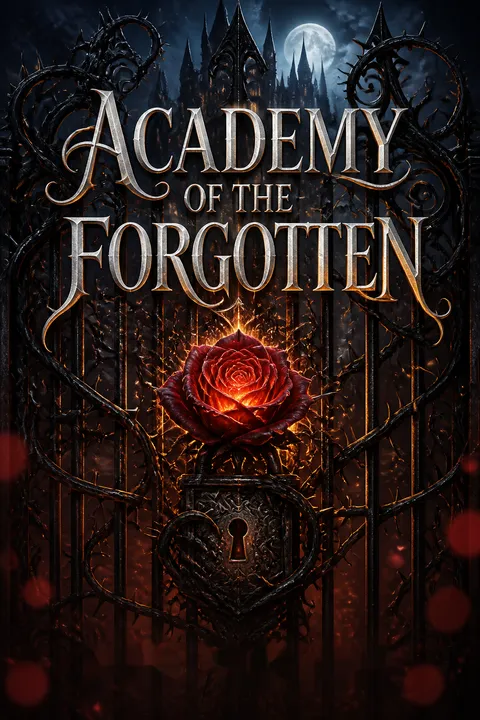
Trix Corbyn arrives at the isolated, gothic Roseborne College, driven by the desperate need to find her missing foster brother, Cade. The school's foreboding atmosphere and the eerie, ever-present scent of roses set the tone for her quest. Trix's memories of Cade are vivid, but everyone else seems to have forgotten he ever existed. Even her foster parents and mutual friends deny his presence in their lives. Despite the school's attempts to turn her away, Trix's resolve is unshakable. She is haunted by guilt and the sense that she is the only one who remembers Cade, fueling her determination to uncover the truth behind his disappearance and the secrets lurking within Roseborne's walls.
The Vanished Brother
Trix's investigation is met with blank stares and denials. The Dean, Wainhouse, claims Cade was never a student, and the school's records are suspiciously empty. Trix's memories are challenged by the absence of evidence, and she begins to question her own sanity. Yet, a secret symbol—Cade's starburst—on a student portrait offers her a glimmer of hope. The world's collective amnesia about Cade intensifies Trix's isolation, but the symbol proves he was real and present at Roseborne. Trix's mission becomes not just about finding Cade, but about proving to herself and the world that he existed, and that something sinister is at work.
Portraits and Proof
Trix discovers a painted portrait in the school's hallway, marked with Cade's secret starburst signature. The painting's energy and style are unmistakably his, confirming her memories. This tangible proof reignites her determination, even as the school's students and staff remain hostile or indifferent. The portrait is a lifeline, anchoring Trix's sense of reality and purpose. It also hints at a deeper connection between the students and the school's strange magic, as each portrait seems to represent a student who has been marked or claimed by Roseborne. Trix realizes that finding more such clues may be the key to unraveling the school's mysteries.
Unwelcome Among the Damned
Trix's outsider status makes her a target for ridicule and suspicion. The students are divided between the privileged and the scholarship kids, but all seem weighed down by a sense of doom. Trix meets Ryo, a friendly but guarded student who offers to help her navigate the school. She also encounters Jenson, whose antagonism masks deeper wounds, and Elias, a teacher with a mysterious connection to the students. The school's routines are oppressive, with students forced to perform menial chores and endure bizarre, punishing classes. Trix's presence disrupts the fragile balance, and she senses that everyone is hiding secrets—about themselves, about Cade, and about the true nature of Roseborne.
The School's Cruel Curriculum
Roseborne's classes are designed to break the students down. In Composition, students are forced to confess their deepest shames, reliving their worst moments for the professors' approval. In Tolerance, they ingest mysterious substances that induce pain, illness, or hallucinations. Archery class escalates to students shooting arrows at each other, testing their willingness to harm or be harmed. The staff's indifference to suffering is chilling, and defiance is met with supernatural punishments—blinding headaches, agony, or worse. Trix is horrified by the cruelty, but also recognizes that the classes are tailored to each student's guilt and trauma, binding them ever tighter to the school's curse.
Allies and Adversaries
Despite the hostility, Trix forges connections with Ryo, whose melancholy hides a longing for redemption, and with Violet, a scarred girl whose pain is both physical and emotional. Jenson's antagonism gives way to reluctant respect, and Elias's aloofness masks a desire to help. These relationships are fraught with mistrust, attraction, and the shared burden of guilt. Trix's presence forces each of them to confront their own reasons for being at Roseborne, and to question whether escape is possible. The bonds they form become both a source of strength and a vulnerability, as the school's magic feeds on their emotions and secrets.
The Rules of Survival
Trix learns that defiance is punished swiftly and brutally. The staff wield supernatural power, inflicting pain or erasing memories at will. The students are trapped by invisible barriers—no one can leave, and attempts to escape are met with agony or unconsciousness. The only way to survive is to submit, to play along with the school's twisted games. Yet, Trix's stubbornness and her outsider status give her a sliver of freedom. The staff offer her a chance to leave, but she refuses, unwilling to abandon Cade or the friends she's made. The illusion of choice is a weapon, and Trix must decide how much she is willing to risk for the truth.
Secrets Behind Locked Doors
Trix's investigations lead her to the school's forbidden places: the dean's office, the professors' quarters, and a locked basement door. She discovers a puzzle box that may hold the key to the school's power, and a secret basement chamber filled with bloodstains, photographs, and a monstrous rosebush. Each clue reveals more about the school's history and the fate of its students. The roses that bloom along the school's walls are linked to the students' lives, their health reflecting the students' suffering. The basement bush is the heart of the curse, feeding on the students' pain and guilt. Trix realizes that the only way to break the cycle is to confront the source directly.
The Roses and the Cursed
Each student at Roseborne is bound to a rose on the school's wall. As the students suffer, their roses wither; when a rose dies, so does the student. Delta's decline and death are mirrored by her rose's decay, a stark warning to Trix and her friends. The roses are both a symbol and a mechanism of the curse, feeding on guilt, shame, and unresolved trauma. Trix's discovery of Cade's rose, marked by a brown vein, confirms that he is still alive but in grave danger. The roses are a map of the school's victims, and Trix's own fate becomes entwined with theirs as she delves deeper into the curse.
The Monster in the Woods
The school's curse has transformed Cade into a monstrous beast, exiled to the woods and stripped of his humanity. Trix's encounter with the creature is both terrifying and heartbreaking, as she recognizes her brother's eyes and birthmark in the monster's form. Ryo reveals that Cade's transformation was gradual, a punishment for his supposed crimes. The staff's power is absolute, and even the students' bodies are not their own. Trix is forced to confront the possibility that she is responsible for Cade's fate, and that her own guilt may be the key to breaking the curse—or succumbing to it.
Cycles of Guilt and Punishment
The students' stories are revealed through forced confessions and private conversations. Each is haunted by a crime or a moment of weakness—Violet's failed bombing, Delta's cruel prank, Ryo's betrayals, Jenson's compulsive lying, Elias's ambition and neglect. The school exploits their guilt, turning it into suffering and binding them to the curse. Trix's own secret—her role in the accident that led to Cade's punishment—becomes a central thread. The cycle of guilt and punishment is relentless, and the only escape seems to be through confession, sacrifice, or death. Trix must decide whether to reveal her own guilt, and what price she is willing to pay for redemption.
The Breaking Point
Trix's refusal to participate in the school's cruelties—refusing to shoot Jenson in Archery, confronting the staff about Delta's decline, and breaking into the forbidden basement—pushes her to the edge. The staff respond with escalating punishments, and the students' resentment grows. Trix's relationships with Ryo, Jenson, and Elias deepen, each offering her a different path: comfort, challenge, or guidance. The breaking point comes when Trix is forced to choose between her own safety and the chance to save Cade. Her willingness to sacrifice herself becomes both her greatest strength and her greatest vulnerability.
The Truth About Cade
In a midnight meeting, Trix finally confesses to Cade her role in the tragedy that led to his punishment. The revelation is both cathartic and devastating, triggering Cade's transformation and forcing Trix to confront the full weight of her guilt. The moment is a turning point, as Trix realizes that the only way to break the curse is to accept responsibility and offer herself in Cade's place. The cycle of suffering is exposed as a mechanism for control, and Trix's willingness to sacrifice herself becomes an act of defiance against the school's power.
Sacrifice and Repetition
Trix's final act is to hurl herself into the heart of the curse—the monstrous rosebush in the basement—offering herself in exchange for Cade's freedom. The staff reveal that she has been through this cycle before, her memories erased each time she fails. The school's power is rooted in repetition, in the endless reenactment of guilt and punishment. Trix's sacrifice is both an ending and a beginning, as she is cast out of the school with her memories wiped once more. Yet, a cryptic message—"They wanted me safe"—remains scratched into her palm, a seed of hope that this time, things might be different.
Remembering the Curse
As Trix stands outside the gates, her memories begin to return. The pain in her palm is a reminder of the connections she forged and the sacrifices she made. The cycle of the curse is not unbreakable; memory and love are weapons against it. Trix's determination is renewed, and she resolves to fight for herself, for Cade, and for the other students. The power of connection—friendship, love, and shared suffering—becomes the key to resisting the school's magic. The story ends with Trix re-entering the cycle, but this time armed with knowledge and resolve.
The Choice to Fight
Trix's journey is one of reclaiming agency in a world designed to strip it away. Each act of defiance, each confession, and each connection with another student chips away at the school's power. The choice to fight, even in the face of overwhelming odds, is an act of hope. Trix's willingness to sacrifice herself is not just an acceptance of guilt, but a refusal to let the curse define her. The story's emotional arc is one of despair transformed into determination, as Trix chooses to fight for a future beyond Roseborne's walls.
The Power of Connection
The relationships Trix forms—with Ryo, Jenson, Elias, Violet, and Cade—are the heart of the story. Each character's struggle is both personal and collective, as the curse feeds on isolation and shame. The power of connection is both a source of vulnerability and the only hope for escape. Trix's journey is a testament to the strength found in loyalty, love, and the willingness to face the truth. The story's resolution is not a final victory, but the promise that together, the students may one day break the cycle for good.
The Cycle Begins Again
The novel closes with Trix once again at the gates of Roseborne, but this time she remembers. The curse's power is not absolute; memory and will can resist it. The cycle may repeat, but each iteration brings the possibility of change. Trix's story is one of endurance, of refusing to be broken, and of the hope that one day, the curse will be shattered. The emotional arc is complete: from isolation and despair, through guilt and sacrifice, to the rekindling of hope and the determination to fight on.
Analysis
Academy of the Forgotten is a dark, emotionally charged exploration of guilt, trauma, and the search for redemption, set within the claustrophobic confines of a cursed academy. The novel uses the supernatural as a metaphor for the psychological prisons we build from our own regrets and self-loathing. Each character is both victim and perpetrator, trapped by their past and the school's relentless demand for confession and suffering. The cyclical narrative structure—where Trix is forced to relive her quest, her memories wiped each time she fails—mirrors the real-world struggle to break free from destructive patterns. Yet, the story is ultimately one of hope: the power of memory, love, and connection to resist even the most insidious forms of control. Trix's journey from isolation to agency, from guilt to self-acceptance, is a testament to the resilience of the human spirit. The novel challenges readers to consider the cost of redemption, the possibility of forgiveness, and the strength required to fight for oneself and others, even when the odds seem insurmountable. In a world that punishes vulnerability, Academy of the Forgotten insists that true freedom lies in the courage to remember, to confess, and to connect.
Review Summary
People Also Read



Characters
Trix Corbyn
Trix is the fierce, stubborn protagonist whose life has been shaped by abandonment, trauma, and the fierce loyalty she shares with her foster brother, Cade. Her psychological landscape is defined by guilt—over her role in Cade's fate and her inability to save those she loves. Trix's outsider status at Roseborne makes her both vulnerable and uniquely resistant to the school's curse. Her relationships with Ryo, Jenson, and Elias reveal her capacity for trust, love, and sacrifice, even as she struggles with self-doubt. Trix's journey is one of reclaiming agency, confronting her past, and choosing to fight for a future beyond the cycle of punishment.
Cade Harrison
Cade is Trix's foster brother and the catalyst for her quest. Once a protective, rebellious presence in her life, he becomes the school's ultimate victim—transformed into a monstrous beast and exiled to the woods. Cade's fate is a manifestation of the curse's power, turning guilt and love into suffering. His relationship with Trix is complex, marked by shared trauma, unspoken secrets, and a bond that endures even through monstrous transformation. Cade's story is one of loss, both of self and of hope, but also of the enduring power of connection.
Ryo Shibata
Ryo is a scholarship student whose punk aesthetic masks a deep melancholy and a longing for redemption. He becomes Trix's first true ally, offering friendship, comfort, and eventually love. Ryo's guilt stems from betrayals in his past, and his coping mechanism is to find beauty in discarded things—mirroring his hope for his own redemption. His relationship with Trix is tender and supportive, but also fraught with the fear of dragging her down. Ryo's arc is one of learning to accept help and to believe in the possibility of change, both for himself and for those he cares about.
Jenson Wynter
Jenson is the school's resident provocateur, using sarcasm and antagonism to mask his own pain. His curse is the inability to speak the truth, a punishment for a life of manipulation and self-serving choices. Jenson's relationship with Trix evolves from hostility to reluctant respect, and finally to a deep, unspoken affection. His struggle is one of self-acceptance and the desire to do right by others, even when he cannot express it directly. Jenson's arc is a testament to the power of actions over words, and the possibility of redemption through sacrifice.
Elias DeLeon
Elias is a former student turned teacher, forced to instruct a class he can never master. His curse is to relive his failures, both as a leader and as a friend. Elias's aloofness is a shield against the pain of caring, but Trix's presence forces him to confront his own guilt and the limits of his power. His relationship with Trix is marked by mutual respect, unspoken attraction, and the shared burden of responsibility. Elias's arc is one of learning to try, even in the face of inevitable failure, and to find meaning in the attempt.
Violet
Violet's physical scars are a visible manifestation of her inner torment. Her past crime—a failed bombing—haunts her, and the school's curse ensures her wounds never fully heal. Violet's relationship with Trix is wary but ultimately supportive, as both recognize the pain and strength in each other. Violet's arc is one of endurance, the struggle to find meaning in suffering, and the hope that even the most damaged can find connection and redemption.
Delta Savas
Delta is a student whose health and spirit are visibly eroded by the curse. Her crime—a cruel prank that nearly killed a classmate—defines her existence at Roseborne. Delta's decline and death are a stark warning to Trix and the others, illustrating the curse's power to destroy. Her arc is one of resignation, but also of the small acts of kindness and honesty that persist even in the face of despair.
Dean Wainhouse
The Dean is the embodiment of Roseborne's power—cold, unyielding, and inhuman. His role is to enforce the rules, punish defiance, and maintain the cycle of suffering. Wainhouse's interactions with Trix are marked by a chilling indifference, but also a recognition of her unique threat to the school's order. He is both jailer and judge, a symbol of the system that feeds on guilt and pain.
Professor Marsden
Marsden oversees the Tolerance class, subjecting students to physical and psychological torment. Her demeanor is bright and sharp, masking a sadistic delight in the students' pain. Marsden represents the school's philosophy: that suffering is both punishment and education. Her interactions with Trix are a battle of wills, each testing the other's limits.
Professor Hubert
Hubert's Composition class is a crucible for confession and self-destruction. She demands honesty, not for healing, but for control. Hubert's power lies in her ability to force students to confront their worst selves, and to use that knowledge as a weapon. Her relationship with Trix is adversarial, each recognizing the other's strength and vulnerability.
Plot Devices
The Cursed Academy
Roseborne College is both setting and antagonist—a gothic institution that feeds on the guilt, shame, and suffering of its students. The school's supernatural power is enforced through invisible barriers, memory manipulation, and the binding of each student's life to a rose. The curriculum is designed to break spirits and reinforce the cycle of punishment. The staff are both jailers and tormentors, their inhuman nature revealed through their indifference and cruelty. The school's true purpose is to perpetuate suffering, trapping its victims in endless cycles of guilt and retribution.
The Roses
Each student's existence is tied to a rose on the school's wall. The health of the rose mirrors the student's physical and emotional state; when a rose dies, so does the student. The roses are both a map of the school's victims and a mechanism of control, feeding on guilt and pain. The monstrous rosebush in the basement is the heart of the curse, absorbing the students' suffering and binding them to the cycle. The roses serve as both foreshadowing and a constant reminder of the stakes.
Cyclical Narrative and Memory Loss
The story is structured around cycles—of guilt, punishment, and attempted escape. Each time Trix fails to break the curse, her memories are wiped and she is cast out, only to return and begin again. The staff's power lies in their ability to erase and rewrite reality, trapping the students in endless repetition. The cyclical structure is both a source of despair and a glimmer of hope, as each iteration brings the possibility of change. The final twist—Trix's memory returning—suggests that the cycle can be broken.
Confession and Redemption
The school's classes force students to confess their worst deeds, turning truth into a tool of control. Yet, confession also offers the possibility of redemption—of breaking the curse through acceptance and sacrifice. Trix's journey is one of moving from denial and self-protection to honesty and self-sacrifice. The power of confession is double-edged, capable of both destroying and saving.
The Power of Connection
The curse feeds on isolation, shame, and secrecy. The relationships Trix forms—with Cade, Ryo, Jenson, Elias, and others—are acts of resistance, forging bonds that the school's magic cannot easily sever. Love, loyalty, and friendship become weapons against the curse, offering hope in the face of despair. The story's emotional arc is driven by the tension between connection and isolation, and the possibility that together, the students can break free.
About the Author








Download PDF
Download EPUB
.epub digital book format is ideal for reading ebooks on phones, tablets, and e-readers.








































