
Key Takeaways
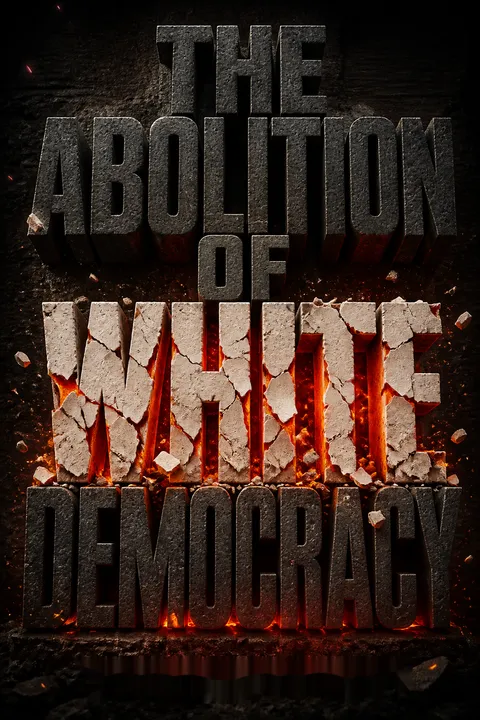
1. American Democracy is a "White Democracy."
American democracy is a white democracy, a polity ruled in the interests of a white citizenry and characterized by simultaneous relations of equality and privilege: equality among whites, who are privileged in relation to those who are not white.
Mutually constitutive. Contrary to popular belief, racial oppression and American democracy are not contradictory but have been mutually constitutive throughout history. The "ideals/practices" dichotomy, which suggests that racism is merely a deviation from democratic ideals, fails to recognize how racial subordination actively shaped and enabled these ideals. For instance, the rise of liberty and equality in the United States was directly accompanied by the rise of slavery, with the former often depending on the economic base of the latter.
Beyond contradiction. The notion that racial discrimination is a "dilemma" for white Americans, or that liberal citizenship merely coexists with exclusionary traditions, misses a crucial point. The very structure of American citizenship has historically been white, meaning that for much of the nation's history, to be a citizen was to be white, and vice versa. This framework allowed for equality among white citizens while simultaneously privileging them over non-white individuals, making racial oppression a functional part of American democracy.
Political problem. This perspective reframes democracy not as an unsullied ideal to strive for, but as a political problem itself, deeply intertwined with power, struggle, and conflict. By understanding race and democracy as mutually constitutive, we can critically analyze how democratic ideals can foster both equality and privilege, freedom and slavery. This approach opens new avenues for imagining what democracy is and what it could truly become, free from the taint of racial oppression.
2. Race is a Political System, Not Biology or Culture.
Race functions by organizing people into particular groups. One group or “race” receives preferential treatment through the social order while the other race or races are subordinated to a status below that of the members of the dominant race.
Beyond social construction. While widely acknowledged as a "social construction," understanding race merely as a product of social forces is insufficient. A truly political theory of race identifies it as a relatively autonomous political system with its own norms, ideology, power relations, and logic. This system actively organizes people into hierarchical groups, where one "race" (the dominant) receives preferential treatment, and others are subordinated.
Whiteness as a political project. "White" or "Caucasian" is not a neutral physical description but a political project aimed at securing and protecting privileges in a society whose ideals might otherwise forbid them. Whiteness is not something one is due to genetics or ancestry; it is something one does through moral and political choices that deny the presence and justify the subjugation of non-white groups. This makes whiteness a decision that can, theoretically, be undone.
Bipolarity and power. The American racial order has historically been bipolar, structured around "white" and "not-white" categories, rather than a complex multiracial mosaic. This dualism, rooted in the maintenance of slavery, defines who belongs to the dominant group and who is relegated to a subordinate status. This framework emphasizes social relations and the role of power and conflict in producing differentiation, rather than simply acknowledging diverse identities.
3. The "Wages of Whiteness" Cemented a Cross-Class Alliance.
It must be remembered that the white group of laborers, while they received a low wage, were compensated in part by a sort of public and psychological wage.
Cross-class alliance. The foundation of the American racial order lies in a peculiar collusion between the capitalist class and a segment of the working class. This "cross-class alliance" binds these otherwise antagonistic groups through explicit and implicit agreements, offering "public and psychological wages" to white workers. In exchange, these workers ensure social stability and order, primarily by terrorizing and subordinating the rest of the working class.
Benefits of whiteness. These "wages" for white workers were both tangible and intangible. They included:
- Higher wages and two-tiered wage scales
- Exclusive access to certain jobs and informal unemployment insurance
- Access to land, capital, and markets
- Elevated social status and public deference
- Legal equality with other whites, regardless of wealth
- The right to elect leaders, join political parties, assemble, speak freely, and bear arms
Docility-utility. This system created a unique form of "docility-utility," maximizing the political obedience and economic usefulness of all workers. White workers, by policing and repressing the Black community, inadvertently maintained a system that exploited them too, but offered them a privileged status—not quite rich, but not quite powerless—that diverted their political energy from challenging elite rule. This dynamic, as Du Bois argued, was not merely false consciousness but a deliberate choice by white labor to maintain a lower proletariat.
4. White Citizenship: Status, Privilege, and the "American Blindspot."
The value of American citizenship, Shklar argues, is that it confers dignity and standing upon members of the polity over and against noncitizens.
Citizenship as standing. In the Jacksonian era, as mass democracy expanded, American citizenship became primarily a matter of social status or "standing," rather than political power. This standing was profoundly racialized, with its value derived from its denial to slaves and, to a lesser extent, white women. To be a citizen was to be white, and Black people were not merely noncitizens but "anticitizens," against whom the very concept of civil society was defined.
The Irish example. Immigrants, like the Irish, learned that whiteness was not an inherent biological trait but a status to be earned. They actively assimilated into the white race by:
- Aligning with the Democratic Party
- Forming the backbone of the police force
- Fighting to join labor organizations
- Zealously participating in anti-Black discrimination and riots
This process demonstrated that becoming white was a strategic choice to secure advantages in a competitive society, often at the expense of Black Americans.
Stunted imagination. White citizenship, while offering privileges, also deformed the white political imagination. It fostered a narrow understanding of:
- Equality: Restricted to formal political rights and equal opportunity, rejecting "social equality" as illegitimate.
- Freedom: Conceived as negative liberty (absence of interference) rather than active participation.
- Participation: Viewed as possessing status rather than exercising power to challenge structural inequalities.
This "American Blindspot" prevented white workers from recognizing common interests with Black workers, perpetuating a system that exploited them both.
5. Whiteness Persists as a "Norm" in the Post-Civil Rights Era.
Rather than a form of public standing, whiteness in the color-blind state functions as a norm in which racial privilege is sedimented into the background of social life as the “natural outcome” of ordinary practices and individual choices, making it difWcult to discern any systematic explanation for the advantages whites continue to enjoy after the civil rights movement.
Beyond explicit discrimination. The Civil Rights and Voting Rights Acts formally abolished white standing, but whiteness did not disappear. Instead, it metamorphosed into a less visible but equally potent form: a "norm." This normalization means that racial privilege is now embedded in the ordinary operations of society, appearing as the "natural" result of individual effort and choice, rather than systemic advantage.
Prepolitical race. The "color-blind" democracy, by emancipating race from state sanction, casts it into the private realm. Race becomes a prepolitical category, understood as a "natural" attribute (biology, ancestry, culture, personal choice) that should be politically irrelevant. This shift, however, does not eliminate race's political influence; it merely removes the cross-class alliance and its benefits from public scrutiny, making white advantage seem incidental or even deserved.
Property and filter. Whiteness as a norm functions in two key ways:
- Property interest: It acts as a background against which legal disputes and rights claims are framed, legally legitimizing expectations of power and control that maintain the status quo. Courts protect accumulated white wealth and resources, even while outlawing explicit discrimination.
- Filter: It provides whites with an edge in an "equal opportunity" society, acting as an invisible mechanism that reduces the likelihood of whites falling victim to the "arbitrary triage" of competitive merit-based systems. This translates into statistical advantages in areas like education, employment, and wealth.
6. The "Participation-Inclusion Dilemma" Thwarts Deeper Democracy.
In a white-controlled polity, a strategy of inclusion may undermine explicit racial discrimination but does little to undermine whiteness as a norm. Nor does it increase participation. Yet simply expanding participation is also insufWcient because in a racial polity, the quest for greater participation may actually serve to strengthen the tyranny of the dominant race.
Shklar's challenge. Judith Shklar argued that Americans primarily seek "standing" (inclusion and recognition) rather than active political participation. This creates a dilemma: a politics of inclusion, while addressing explicit discrimination, often leads to passive citizenship and fails to dismantle whiteness as a norm. Conversely, simply expanding participation without addressing racial privilege risks reinforcing the "tyranny of the white majority," as white interests would continue to dominate the agenda.
Limits of inclusion. Strategies focused solely on inclusion, such as Shklar's call for a state-guaranteed job, may eliminate overt white standing but do not abolish whiteness as a norm. They fail to address the subtle, sedimented advantages whites continue to enjoy, nor do they inherently foster greater citizen engagement. The goal of inclusion, in this context, often remains the possession of status rather than the exercise of power.
Abolishing whiteness as the solution. The key to resolving this dilemma lies in the dissolution of whiteness as a significant social-political category. This means:
- Eliminating overt and normalized systems of white privilege (e.g., redlining, racial profiling).
- Supporting policies that undermine white advantage (e.g., affirmative action, reparations).
- Opposing attempts to reconstitute whiteness as a "progressive" identity.
By dismantling the cross-class alliance that constitutes whiteness, new opportunities for radical democratic participation and social relations can emerge, transcending the limitations of liberal democracy.
7. Color-Blindness Naturalizes White Advantage.
In the same paragraph Harlan defends a color-blind Constitution and sanctions the social superiority of the white race.
Harlan's paradox. Justice John Marshall Harlan's famous "our constitution is color-blind" dissent in Plessy v. Ferguson (1896) is often cited as the origin of the color-blind ideal. However, Harlan simultaneously affirmed the social superiority of the white race, arguing that its dominance in "prestige, achievements, education, in wealth, and in power" would continue. This reveals a fundamental flaw: the color-blind ideal, while condemning segregation, implicitly protects white advantage by deeming inequalities in wealth and education as "natural" and outside the public realm.
Blaming the victim. Contemporary color-blind arguments, such as those by Stephan and Abigail Thernstrom, further naturalize white advantage by shifting the blame for persistent racial disparities onto African Americans. They argue that Black progress is due to market forces and waning white prejudice, not civil rights or affirmative action. They attribute ongoing Black poverty to factors like out-of-wedlock births, declining marriage rates, and residential preferences, effectively excusing whites from responsibility for systemic inequalities.
Depoliticizing race. The color-blind ideal perpetuates white citizenship by:
- Redefining racism from a social system of oppression to a set of individual prejudices.
- Ignoring systematic yet nondeliberate patterns of privilege.
- Making whiteness a politically neutral identity, removing it from public consideration.
This approach, while appearing to promote equality, ultimately allows white privilege to continue unabated in the private realm, masking its political significance and hindering genuine democratic progress.
8. Multiculturalism Depoliticizes Race and Sustains Whiteness.
A theory of the equal recognition of cultures cannot make sense of the American experience, in which the organizing principle of group formation has been race, not the uneasy coexistence of two language-based cultures.
Culture over power. The multicultural ideal, particularly as influenced by Charles Taylor's "politics of recognition," often misapplies a cultural framework to the American racial context. While valuable for understanding cultural identity, it tends to equate race with culture, assuming that racial conflict is primarily a problem of "misrecognition" of diverse cultures. This overlooks the fundamental reality of American race relations, which are rooted in power, inequality, and the historical construction of white supremacy.
Whiteness as culture. This cultural lens leads to the problematic notion that whiteness is simply one culture among others, deserving of "recognition" and even "reconstruction" into a progressive identity. Efforts within "whiteness studies" to find a "usable white history" or create an "antiracist white identity" often fall into white narcissism, demanding support for aggrieved whites rather than challenging the systemic nature of white privilege. This approach fails to define white culture apart from its historical function as a form of privileged standing.
Redistribution-recognition dilemma. Nancy Fraser's attempt to bridge economic redistribution and cultural recognition, while valuable, still struggles with race. By analytically separating culture and socioeconomics, it underplays the political nature of race and how struggles for "recognition" (like civil rights) can profoundly impact economic redistribution. This framework can inadvertently accommodate white citizenship by prioritizing "transformative remedies" that benefit the majority, potentially overlooking the need to directly challenge white privilege through "affirmative remedies" like affirmative action.
9. Black Radical Thought Offers a Utopian Vision for Democracy.
We who are dark can see America in a way that white Americans cannot. And seeing our country thus, are we satisWed with its present goals and ideals? . . . [P]ushed aside as we have been in America, there has come to us . . . a vision of what the world could be if it were really a beautiful world . . . a world where men know, where men create, where they realize themselves and where they enjoy life.
Beyond liberal limits. Contemporary democratic theory often operates within a "chastened conception" of democracy, resigned to modest proposals that supplement rather than challenge liberal institutions. Black radical political thought, however, offers a vital utopian element, consistently pushing beyond the boundaries of liberalism. It reinterprets American democracy not as a white creation that people of color sought to join, but as something white citizens compromised and anticitizens advanced.
Du Bois's vision. W. E. B. Du Bois, a central figure in this tradition, emphasized Black self-activity as the driving force of American freedom and culture. His call to abolish the color line was not merely for assimilation or separation, but to transcend the "white and dark worlds" into a new, more just polity. He argued that the dark world, in its struggle for freedom, held the key to political possibilities unimaginable to those confined by the white world.
Freedom dreams. This tradition, from abolitionism to nationalism, consistently challenges common notions of American democracy, exposes the limitations of the white political imagination, and enables new political visions. It posits that the battle to abolish the white world is not just about inclusion, but about human emancipation itself, envisioning a "beautiful world" where all can realize themselves and enjoy life, a vision born from the unique perspective of those who have been oppressed.
10. The "Abolition-Democracy" Demands the Dissolution of Whiteness.
The political challenge Malcolm raises with his handshake is how to turn “white people” into human beings. The process of becoming human, he implies, involves unbecoming white.
Unbecoming white. Drawing inspiration from Malcolm X's later reflections, the "abolition-democracy" is a political theory aimed at dissolving white citizenship. It posits that for "white people" to become "human beings," they must shed their racial privileges. This is not ethnic cleansing, but the elimination of a political category that has historically defined itself through dominance and exclusion. Just as the abolition of feudalism ended the lord and serf, the dissolution of whiteness would abolish the categories "white" and "not-white."
Beyond liberal democracy. The abolition-democracy, a term borrowed from Du Bois's analysis of Reconstruction, seeks to expand freedom through the dissolution of whiteness. It recognizes that white citizenship has perpetuated a stunted conception of democracy, characterized by:
- Exclusivity: Resistance to new members in the polity.
- Negative liberty: Freedom as non-interference, not active participation.
- Status over power: Emphasis on holding status rather than exercising political power.
- Miserliness: Suspicion of social programs and unquestioning acceptance of wealth inequality.
- Individualism: Prioritizing individual success over class solidarity.
New political ideals. By directly challenging the status and privileges of whiteness, the abolition-democracy aims to undermine racial discrimination and expand democratic participation. This creates space for new forms of identity—for both those who were "white" and those who were "not-white"—within a reinvigorated public sphere. It is a politics that seeks to restore the radical-utopian and action-oriented dimensions of democratic theory, envisioning a world where no one needs to be white.
11. Agitation and Radical Action are Essential for True Freedom.
We have facts for those who think, arguments for those who reason; but he who cannot be reasoned out of his prejudices must be laughed out of them.
Agitators, not reformers. The abolition-democracy draws lessons from the 19th-century abolitionists, who acted as agitators rather than reformers. They understood that the political system was inherently compromised by slavery and racial power, necessitating a strategy of building a constituency through conscience-awakening, free speech, and unwavering adherence to principle. This approach prioritized radicalness over respectability, militancy over discipline, and volume over toned-down discourse, recognizing that "agitation, not reasoning, gets results."
Freedom as participation. The core goal of the abolition-democracy is freedom, understood as the substantive ability to participate in public affairs, not merely formal equality or inclusion. This reassertion of freedom as the basic ideal challenges the narrow, passive conception of liberty fostered by white citizenship. It insists that true freedom requires active engagement in political debates and decision-making, going beyond mere rights and entitlements.
Radical implications. An abolitionist politics embraces "ruthless criticism of everything existing," unafraid of its own radical conclusions or conflict with established powers. By attacking racial subordination, it aims to shake the foundations of class rule and the entire political and economic order. This involves:
- Creating new institutions: Beyond traditional voting, fostering mass meetings, freedom schools, and self-defense organizations.
- Challenging existing structures: Confronting policies that sustain white advantage (e.g., busing, affirmative action, reparations) and institutions that perpetuate racial discrimination (e.g., neighborhood associations, unions, police).
The abolition-democracy seeks to restore the radical-utopian and action dimensions of democratic theory, envisioning a world without whiteness that overflows the containers of liberalism.
People Also Read

Download PDF
Download EPUB
.epub digital book format is ideal for reading ebooks on phones, tablets, and e-readers.








































