
Plot Summary
Kingdom of Night
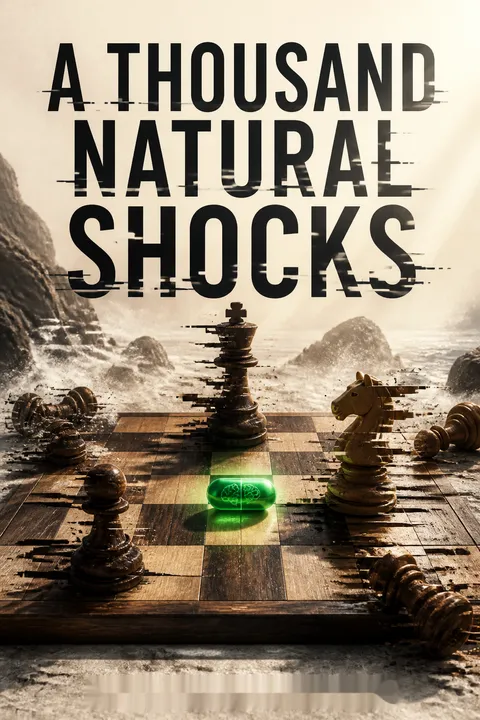
Dash, a tormented journalist in Monterey, California, drifts through faiths and sleepless nights, haunted by trauma and guilt. He's desperate to forget a past that gnaws at him, self-medicating with a cocktail of prescription drugs and insomnia. His only anchor is a chessboard, a relic of childhood comfort and his father's love. Dash's world is a fog of exhaustion, paranoia, and longing for erasure. He's drawn to the Liberty Subterraneans, a rumored cult promising not forgiveness, but the obliteration of memory. As Dash is initiated, he's both seduced and wary, sensing the danger in their charismatic leader, Rocket, and the promise of a new self. The night is his kingdom, but it's also his prison.
The Cult of Forgetting
Dash's entry into the Liberty Subterraneans is both ritual and test. Sponsored by Enzo, a war-haunted veteran, Dash is tasked with missions that blur morality—breaking into homes, stealing identities, all in pursuit of Rocket's ultimate reward: the Lobotomy Pills, which promise to erase the past. The cult's philosophy is seductive: the past is a bomb, and only by detonating it can one be reborn. Dash's skepticism battles his yearning for release. The group's hierarchy is marked by colored trench coats, each signifying progress toward forgetting. As Dash delves deeper, the line between healing and self-destruction blurs, and the cult's true nature—control through erasure—emerges.
The Man with the Gun
Dash's insomnia and drug-fueled paranoia manifest in a series of encounters with a mysterious man—first at a car dealership, then outside Dash's apartment, gun in hand. The man's presence is accompanied by a strange hum, a signal of impending trauma or memory glitch. Dash survives a terrifying blackout, convinced he's been shot, only to awaken unharmed but shaken. The police are skeptical, and Dash's grip on reality frays. The man becomes a symbol: is he a real threat, a hallucination, or the embodiment of Dash's unresolved guilt? The boundaries between memory, fear, and reality begin to dissolve.
Missions in the Dark
Dash and Enzo embark on a series of nocturnal missions for the Subterraneans, breaking into homes, installing surveillance, and stealing personal documents. Each act is justified as a step toward freedom from the past, but Dash's conscience erodes. The victims are ordinary, vulnerable people—an old woman, a struggling couple—mirroring Dash's own fragility. The missions are both penance and further damnation. Dash's insomnia worsens, his memory falters, and the cult's grip tightens. The promise of the Lobotomy Pills becomes both a beacon and a threat, as Dash wonders what will remain of him when the past is gone.
The Lobotomy Pills
Rocket unveils the Lobotomy Pills: four emerald tablets, each designed to erase a quarter of one's memories, culminating in total amnesia and a "rebirth" orchestrated by the cult. Dash is both horrified and tempted. The process is clinical, ritualized, and irreversible. The cult's true purpose emerges: not healing, but the creation of blank slates, perfect for manipulation and exploitation. Dash is shown case files of "success stories," but the reality is darker—endless cycles of erasure and control. The Emergency Pill, a red tablet, offers a last chance to reverse the process, but only before the final dose. Dash's desperation outweighs his fear, and he commits to the path.
The Cost of Memory
As Dash's supply of drugs runs out, he spirals into withdrawal, both physical and existential. He seeks refuge with Fuji, an elderly woman he once victimized, who becomes his unlikely confessor and caretaker. Through fever, hallucinations, and guided therapy, Dash confronts the truth of his addiction—not just to chemicals, but to forgetting. Fuji's compassion and insistence on honesty force Dash to reckon with his actions, his guilt, and the possibility of redemption. The process is agonizing, but it plants the seed that memory, however painful, is essential to selfhood.
The Coast Killer Returns
Dash's fabricated story about the Coast Killer—a notorious murderer thought to be dormant—unwittingly summons the real killer back into action. The killer taunts Dash with letters, threats, and eventually, the murder of Dash's neighbors, Emily and Veronica. The police close in, suspecting Dash, while the killer's game becomes personal, targeting Dash's beloved dog, Glitch. The boundaries between Dash's lies, the cult's manipulations, and the killer's reality collapse. Dash is forced to confront the consequences of his actions, both as a journalist and as a man desperate to escape himself.
The Truth in Chess
Throughout his ordeal, Dash's memories of his father and their chess games become both anchor and cipher. The chessboard is a map of memory, each move a trigger for recollection. Guided by Fuji and the loci method, Dash learns that his father's love and teachings are the core of his identity, the "superpower" that survives even as memories fade. The glitches—moments of static and lost time—are revealed as his mind's defense, preserving essential truths against the cult's erasure. The final lesson: to be good, one must remember, and to remember is to endure pain and joy alike.
Withdrawal and Confession
Dash's journey through withdrawal becomes a metaphor for his struggle with memory and guilt. Fuji's therapy forces him to recount his crimes, his trauma, and the pivotal night on the farm when his father died. The narrative fractures, looping through confession, denial, and acceptance. Dash realizes that forgetting is not healing; only by confronting the full truth—however unbearable—can he hope for peace. The act of telling his story, again and again, becomes both punishment and absolution.
The Warehouse's Secret
Dash discovers the true purpose of the Subterraneans: a network of data farms, surveillance, and endless cycles of memory erasure. The cult is not a path to freedom, but a factory for blank, obedient workers—each "reborn" to serve the organization's needs. Dash's friend Enzo is revealed to be a victim of multiple cycles, his identity rewritten again and again. The files Dash uncovers show that no one is ever truly freed; the promise of a new life is a lie. The machinery of forgetting is a prison, not a sanctuary.
The Final Countdown
With Glitch's life in the balance and the killer's final game underway, Dash must navigate a deadly maze—both literal and psychological. The killer, revealed as the Death Professor, orchestrates a series of rooms, each a test of memory and will. Dash's only hope is the Emergency Pill, a last-minute reversal of the Lobotomy process. Guided by the memory of his father and the lessons of chess, Dash fights to save Glitch, himself, and the remnants of his soul. The countdown is both a bomb and a metaphor: time is running out for memory, identity, and redemption.
The Death Professor
Dash enters the killer's compound, a maze of rooms designed to disorient and destroy. Each chamber is a puzzle, a memory, a trauma. The killer's voice taunts him, forcing Dash to confront the darkest corners of his past. The Emergency Pill restores Dash's memories at the last moment, allowing him to outwit the maze and rescue Glitch. The final confrontation is both physical and existential—a battle for the right to remember, to suffer, and to love. The killer is unmasked as a fellow victim of the cult, a product of endless cycles of erasure and violence.
The Farm and the Father
In a climactic return to the farm, Dash relives the night of his father's death. The narrative fractures between memory and dream, confession and denial. Dash is given a choice: to see the truth of what happened, or to let it go. His father's spirit urges him to choose life, to accept the pain and move forward. The farm is both grave and garden—a place of loss and the seed of renewal. Dash's final act is not to forget, but to forgive himself and honor his father's love.
The Emergency Pill
The Emergency Pill undoes the erasure, flooding Dash with memories—painful, joyful, mundane. The restoration is overwhelming, but it grants him the clarity to escape the killer's trap and save Glitch. The cost is high: Dash must live with the full weight of his past, his crimes, and his losses. But in remembering, he reclaims agency, identity, and the possibility of healing. The pill is not a miracle, but a second chance.
The Maze of Remembrance
Dash's escape from the killer's maze is mirrored by his journey through memory. Each room is a lesson, a loss, a fragment of self. The path is mapped by his father's teachings, the loci of chess, and the love of those he's hurt and been hurt by. The maze is both external and internal—a test of whether Dash can hold onto himself when everything else is stripped away. The answer is hard-won: to be whole is to remember, to suffer, and to love.
The Last Move
In the aftermath, Dash is forced to recount his story, again and again, in therapy with Fuji. The act of telling becomes an act of survival. He reconnects with friends, mourns the lost, and contemplates the future. The chessboard remains, a symbol of his father's enduring presence and the lessons that cannot be erased. Dash chooses not to pursue further forgetting, but to live with the scars and the hope of new tomorrows. The final move is acceptance.
For Now
Dash returns home, Glitch by his side, uncertain but alive. The cult is scattered, the killer dead, but the wounds remain. Dash's memories are imperfect, his future unwritten. He is his father's son, shaped by pain and love, haunted but not destroyed. The story ends not with certainty, but with the possibility of healing—a fragile peace, for now.
Analysis
A Thousand Natural Shocks is a harrowing meditation on trauma, memory, and the perilous allure of oblivion. Omar Hussain crafts a narrative that is both psychological thriller and existential inquiry, using the machinery of cults, serial killers, and noir to probe the deepest wounds of the self. The novel's central lesson is that forgetting is not healing; to erase the past is to erase the self, leaving only a hollow vessel for others to fill. True redemption, Hussain argues, comes from the painful work of remembering—of facing one's sins, losses, and loves with honesty and courage. The chessboard, the father's lessons, and the dog's loyalty are not just symbols, but lifelines: they anchor Dash to a core of goodness that survives even the worst shocks. In an age obsessed with self-reinvention and escape, the novel is a powerful reminder that to be human is to endure pain, to seek connection, and to choose, again and again, to remember.
Review Summary
A Thousand Natural Shocks receives overwhelmingly positive reviews (3.59/5 from 877 readers), praised for its lyrical prose, emotional depth, and genre-blending approach combining literary fiction with speculative thriller elements. Readers highlight the exploration of memory, trauma, and identity through protagonist Dash Hassan's involvement with a memory-erasing cult while investigating a serial killer. The debut novel features compelling characters, dual timelines, and a Black Mirror-esque premise. Common praise includes the atmospheric writing and gut-wrenching father-son relationship. Criticisms include slow pacing, confusing third act, gimmicky chapter endings, and occasionally overwrought prose. Most readers found it thought-provoking and unputdownable.
Characters
Dash Hassan (Amir)
Dash is a journalist tormented by trauma, guilt, and the relentless grip of memory. His psyche is fractured by insomnia, addiction, and the unresolved death of his father. Dash's journey is a desperate quest to forget—a pursuit that leads him into the arms of a cult, the Liberty Subterraneans, and into the crosshairs of a serial killer. His relationships are marked by longing and self-sabotage; he both craves connection and fears the pain it brings. Dash's psychological arc is one of oscillation between self-destruction and the stubborn will to survive. His father's love, embodied in chess and memory, is the core of his identity, the "superpower" that endures even as everything else is stripped away. Ultimately, Dash's development is a hard-won acceptance: to be whole is to remember, to suffer, and to love.
Rocket
Rocket is the enigmatic leader of the Liberty Subterraneans, a cult that promises freedom from the past through the ritualized destruction of memory. He is both seducer and manipulator, wielding charisma and menace in equal measure. Rocket's philosophy is nihilistic: the past is a bomb, and only by detonating it can one be reborn. He orchestrates cycles of control, using the Lobotomy Pills to create blank slates for exploitation. Rocket's relationship to Dash is that of tempter and jailer, offering the illusion of healing while tightening the chains of dependency. Psychologically, Rocket is a void—his own history erased, his identity constructed from power and the suffering of others.
Enzo
Enzo is a war veteran, Dash's sponsor in the Subterraneans, and a man haunted by his own traumas. He seeks forgetting as a form of salvation, believing Rocket's promises. Enzo's relationship with Dash is complex: mentor, friend, and ultimately, another casualty of the cult's machinery. His identity is revealed to be a construct, rewritten through multiple cycles of memory erasure. Enzo's arc is tragic—he is both perpetrator and victim, complicit in Dash's descent but also a mirror of his suffering. His fate underscores the novel's central warning: the cost of forgetting is the loss of self.
Fuji Nakamura
Fuji is an elderly woman whom Dash once victimized during a cult mission, but who becomes his caretaker and therapist during withdrawal. Her own life is marked by loss and the struggle to let go—her husband's death, her hoarding, her search for meaning. Fuji's relationship with Dash is maternal, guiding him through confession, therapy, and the painful work of remembering. She embodies the novel's counter-philosophy: that healing comes not from erasure, but from facing the past with honesty and compassion. Fuji's wisdom and resilience are a lifeline for Dash, and her presence is a testament to the power of forgiveness.
Glitch
Glitch, the golden retriever Dash rescues, is both literal and symbolic—a creature wounded by cruelty, yet capable of trust and love. Glitch's presence grounds Dash, offering unconditional affection and a reason to fight for survival. The dog's peril at the hands of the killer becomes the catalyst for Dash's final confrontation with his own trauma. Psychologically, Glitch represents the part of Dash that is still capable of love, loyalty, and redemption.
The Death Professor (Coast Killer / Rick)
The Death Professor is the serial killer who haunts Dash's nightmares and reality, orchestrating games of memory, violence, and psychological torture. He is revealed to be both a product and tool of the Subterraneans, a victim of endless cycles of erasure and manipulation. His relationship to Dash is that of nemesis and dark mirror—both are shaped by trauma, both seek escape, but only one chooses to remember. The Death Professor's arc is a warning: the denial of self breeds monstrosity.
Laura Poole
Laura is the only known survivor of the Coast Killer, living in seclusion and marked by profound trauma. Her memories are fragmented, her trust hard-won. Laura's relationship with Dash is fraught—she is both a source of crucial information and a reminder of the cost of survival. Her arc is one of endurance: she refuses to forget, even as the pain threatens to consume her. Laura's presence challenges Dash to confront the truth, not just for himself, but for all the victims.
Cal
Cal is Dash's colleague and closest friend, embodying steadiness, optimism, and decency. He is the "Clark Kent" to Dash's chaos, offering support without judgment. Cal's role is that of rescuer—literally saving Dash from danger, and figuratively reminding him of his better self. Psychologically, Cal represents the possibility of goodness and the importance of connection, even in the face of overwhelming darkness.
Joan
Joan is the paper's general counsel, a figure of intellect, empathy, and understated attraction. Her relationship with Dash is marked by mutual respect, unspoken longing, and the possibility of healing through connection. Joan's presence is a reminder that life, and love, can continue after trauma. She is both a witness to Dash's suffering and a symbol of hope for the future.
Caris
Caris is Rocket's right hand, a zealot who polices the boundaries of the cult and enforces its rituals. He is both gatekeeper and jailer, embodying the dangers of blind faith and the seduction of belonging. Caris's relationship to Dash is adversarial, a constant threat to his autonomy and survival. Psychologically, Caris is a warning: the loss of self in service to a cause is another form of erasure.
Plot Devices
Memory as Battlefield
The novel's central device is the struggle over memory—its preservation, destruction, and manipulation. The Lobotomy Pills literalize the desire to forget, while the glitches, chessboard, and loci method symbolize the fight to hold onto selfhood. The narrative structure mirrors this battle: fractured timelines, unreliable narration, and recursive confessions create a sense of disorientation and urgency. Foreshadowing is achieved through recurring motifs—the hum, the chess moves, the farm—each signaling a deeper layer of trauma or revelation. The cult's rituals, the killer's games, and the therapy sessions all serve as arenas where memory is contested, and the stakes are nothing less than identity and survival.
Download PDF
Download EPUB
.epub digital book format is ideal for reading ebooks on phones, tablets, and e-readers.








































