


Plot Summary
Prologue
The call about Leonard4 came last night. Now an elderly woman climbs Donkey Shit Lane on Hydra, a heart-shaped stone in her pocket — a talisman pressed into her palm at the ferry dock decades ago, a parting gift. The island is unchanged: whitewashed streets, marble steps worn smooth by centuries. But the crowd of those who remember has thinned to almost nothing.
At Leonard's4 shuttered door she kneels among offerings left by strangers — carnations, teabags, oranges. She nearly pockets the stone again, then sets it down. It was never really hers. It belonged to a summer in 1960 when they were all young and heedless, when this island was a theatre for dreamers and the nightmares had not yet found them on this rock.
A Parcel from Hydra
Erica1 is seventeen, motherless, imprisoned. Her father runs the Bayswater flat like a barracks — his whisky on the silver tray, his dinner on time, his daughter replacing the wife who served him. Connie died after months of Erica1 nursing her bedside, leaving two sealed packages: for Bobby,8 keys to a car nobody knew existed; for Erica,1 a thousand pounds in a post-office savings account.
Then a parcel arrives from Greece — a memoir by Charmian Clift, once their upstairs neighbor, about life on a sun-drenched island called Hydra. Tucked inside, a note urging Connie to visit, promising warmth and the belief that she still has a chance. Erica1 writes to Charmian2 instead. Could she find a house to rent? And how much would it cost?
The Fight at Palace Court
Her father holds the passport. He forbids her boyfriend Jimmy Jones7 over the threshold, wanting only to keep Erica1 as his dead wife's domestic replacement. Bobby8 comes to wrench it free. The confrontation erupts — accusations, scissors, Bobby's8 kick sending the old soldier crashing down. The broken man shoves the passport at them and orders both children never to return.
Three weeks late, Erica,1 Bobby,8 and Jimmy7 pile into their dead mother's green convertible and tear through France and Italy toward Greece, Bobby8 seething the whole way, punishing his sister with silence and Chinese burns, certain he'll lose his girlfriend Edie,11 who waits in Piraeus. By the time they board the ferry, Erica1 has been demoted from sister to burden.
George at the Harbour Table
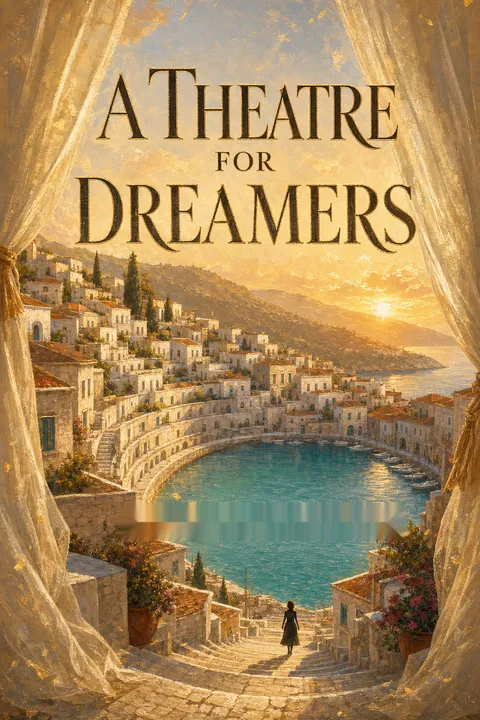
Hydra materializes like a stage trick — white houses tiered around a turquoise horseshoe harbor, boats rocking in the orchestra pit. Erica1 leaps from the gangplank first, but Charmian2 isn't at the port. She forgot the date.
Instead, George Johnston3 unfolds himself from a table outside Katsikas grocery, raw-boned and ragged, nails gnawed to the quick. He is Charmian's2 husband, a former war correspondent ravaged by tuberculosis, and his greeting combines generosity with contempt — branding the arriving foreigners bludgers and pissant painters before ordering Erica1 a drink.
When Charmian2 finally appears — barefoot, panther-like in a faded cotton skirt — she embraces Erica1 with the warmth of a lost mother and promises a house after the Easter festivities pass.
Flour Dust and Secrets
Charmian2 becomes the mother Erica1 has lost. She teaches her to mince lamb and roll dolmades, lends her de Beauvoir, warns her fiercely against wasting her life as any man's servant. But she is keeping something back. While admiring a Rembrandt etching identical to one Erica's1 mother owned, Charmian2 lets slip a name — Joel — claiming he bought prints for them both.
She corrects herself instantly, too late. The name lodges in Erica1 like a splinter. Each time she presses, Charmian2 deflects or bolts upstairs to where George's3 typewriter is waiting. The mystery of Joel, the hidden car, the unexplained savings — Erica1 grows certain Charmian2 knows who her mother really was beneath the lipstick and ironed collars of a Bayswater housewife.
The Canadian with the Guitar
He disembarks unhurried, smiling at everything like a man returning home — green Olivetti in one hand, guitar strapped to his back, sixpenny cap removed to reveal thick dark hair. Leonard4 is twenty-five, already a published poet, and possessed of a charisma that pulls every woman at the port into his orbit.
Charmian2 offers him a divan on her terrace. His grander option — the forty-room mansion of the painter Ghikas above Kamini — ends when the housekeeper slams the door, saying they don't want any more Jews.
George3 fires off an outraged letter. Leonard4 says he put a curse on the place. Soon he is installed at a workbench facing the sea, blackening pages faster than either George3 or Charmian,2 amber worry beads pinning his manuscript against the breeze.
Marianne Sails In
Axel Jensen's6 little sloop cuts into the harbor on May Day, and Marianne5 adjusts a white shawl over the baby as the port watches. Leonard4 murmurs that they look like a beautiful holy trinity. The holiness is a mirage. For weeks the community has known Axel6 is sleeping with Patricia,14 an American painter — a neighbor caught him with his hands inside her shirt at the boatyard.
Marianne5 is sphinx-like, golden, impossibly pretty, possessed of a stillness that conceals deep anxiety. She and Erica1 bond at the swimming rocks. Marianne5 confides that Axel's6 novels use her as material; his latest nearly murders her fictional counterpart in a jealous rage. She touches her wedding ring as though confirming it hasn't dissolved.
Bleeding Feet at Midnight
Patricia14 has left the island, but peace doesn't hold. One night Marianne5 appears at Charmian's2 door, ashen-faced, her white blouse spattered with the dinner Axel6 hurled at her. The baby screams in her arms.
She says Axel6 discovered a letter she wrote Patricia14 and went berserk — smashing windows, furniture, everything. Her bare feet are sliced with glass. Charmian2 kneels with disinfectant and tweezers, extracting splinters, while George3 paces upstairs with the wailing infant. Then Axel6 himself comes hammering.
George3 shoulders him so hard he tumbles down the stone steps and tells him to go home, treat his own bleeding hands, and consider his bloody idiocy. Upstairs the baby cries again. Marianne5 insists a family should be simple, but her voice is shaking.
Leonard Finds Marianne Crying
At a birthday party in the old painting school, Marianne5 stands alone at the marble balustrade, drinking fast. Axel6 has shoved her during a public argument and now she's crouched among stacked easels in the dark. Leonard4 pulls a handkerchief from his pocket, coaxes her from the shadows, dabs her face until tears become laughter. He sets his jacket across her shoulders and walks her into the night.
In the weeks that follow, he invites her to join them at the port — a deliberate, unhurried courtship over coffee and the baby's bottle. He moves into her house. Charmian2 observes that Marianne5 creates for Leonard4 exactly what she created for Axel:6 a gardenia on the desk each morning, a little sandwich, perfect domestic silence for his work.
George's Poisoned Novel
On George's3 birthday at the clifftop bar, the writer turns forty-eight and turns vicious — attacking Charmian2 before the whole community until she flees and dives from cave rocks into obsidian water. Erica1 follows and finds her below, exhilarated and swigging brandy. Between swallows, Charmian2 tells the full story.
George's3 impotence from TB treatment drove him to insane jealousy. After he nearly strangled her, she retaliated with venom. He marched her to the typewriter and commanded her to write out a fantasy of making love to Jean-Claude Maurice,12 the seductive French painter.
She wrote it in white-hot rage — and George3 inserted every word into his forthcoming novel. They cannot retract it: the publisher's advance paid for his hospital treatment. Earlier that summer, George3 publicly hinted at an even deeper secret connecting Charmian2 to Erica1 — a threat she silenced with a raised hand.
Jimmy Runs for the Boat
Erica1 is watching Sophia Loren emerge from the sea at the outdoor cinema when Bobby8 crashes through the door. Jimmy7 has been discovered with the wife of a local fisherman in the sailmaker's loft and beaten up. The fisherman's uncle is coming from the tavern, and worse may follow. Bobby8 drags Erica1 through the lanes to the harbor. Her legs keep running though her mind screams to stop.
She sees Jimmy7 at the dock, wailing that he's sorry, as he leaps onto a friend's boat. The vessel pulls into darkness. Bobby8 gives her a sedative. Edie11 and Janey stroke her arms while she slides toward dreamless sleep. The typewriter Jimmy7 abandons becomes hers — a bitter inheritance from the boy who promised there would never be anyone else.
The Island Empties
Bobby8 leaves first, sailing for Boston with Trudy,13 an American art student he nursed through a dangerous medical crisis. Making her well has been his private redemption, replacing his failure to save their dying mother.
Bobby8 has also found healing through friendship with Dinos,15 a Greek potter who lets him use his kiln high on Episkopi. Then comes the Johnstons' farewell. George3 and Charmian2 have accepted Didy Cameron's9 offer to swap houses — a Cotswolds farmhouse with proper medical care and schools for the children.
At the ferry dock, Charmian2 hugs Erica1 for the longest time and tells her to keep writing. Leonard4 bids Charmian2 to hold on to his silences rather than his words. She leans over the rail and throws a fistful of drachmas glittering into the harbor — coins for luck, for return.
The Lover Connie Couldn't Keep
Years later, Erica1 spots Charmian2 stepping off a bus outside Paddington Station in a suede coat the color of milky coffee. Over cognac at a nearby pub, Charmian2 finally surrenders the truth. Joel was Joe Leitz — a doctor introduced at a cocktail party.
He bought Connie the secret green convertible so she could drive to their meetings. Connie stayed with her tyrannical husband because she believed he would declare her unfit and take the children. The savings she left Erica1 were skimmed week by week from the housekeeping — small coins of quiet rebellion that bought her daughter's freedom.
Charmian2 kept silent out of loyalty to her dead friend. As she catches her train, rain speckling the lovely coat, she observes that surrendering a child causes a devastation most women cannot survive.
George Dead, Charmian Gone
Ten years later, Erica1 boards the ferry alone, her marriage failing. The island appears exactly as remembered — white houses, turquoise harbor, the magic trick from bare rock. She spots Marianne5 at the port in a pineapple-print sundress, surrounded by cats.
They embrace. Then Marianne5 tells her: George3 is dead. Tuberculosis finally won. Erica1 absorbs this and asks about Charmian.2 Marianne's5 face changes. She tells Erica1 to drink first. Charmian2 killed herself the previous summer — an entire prescription of sleeping pills, on the eve of yet another novel that shamed her.
She had written out Keats and promised in her note she would cease by midnight. Erica1 stumbles to a hotel room. She had seen Charmian2 barely a year before, speaking of children and the unendurable ache of losing them.
Dinos at the Valley's Crest
On the same return visit, Erica1 climbs to the valley between rocky hills where she always went to think. She sits on the familiar ridge, emptied of tears, watching beetles in the dust. Then she sees a figure at the prow of the hill, strolling with his dog. Dinos15 — Bobby's8 potter friend, who once sheltered her on her last night before leaving the island a decade earlier.
He hasn't aged. They fall into each other's arms, laughing with astonishment. He tells her the black cat they rescued from a rubbish heap still reigns at his house on Episkopi. He offers water from his flask and his hand when she says she'd like to come and visit. The island returns to her what it took, as it always does. She will build her life here.
Epilogue
Decades later, a magazine article stops Erica1 cold. A dark-haired Australian woman with Charmian's2 cheekbones stares from the page — a writer, born the same year as Erica.1 She was Charmian's2 firstborn, given up at three weeks old, told her mother died in childbirth.
The baby's name was Jennifer — the name Charmian2 called Erica1 when they first met on the staircase at Palace Court, the secret George3 once threatened to reveal. Charmian2 was nineteen, unmarried, and without resources.
Erica1 understands at last why Charmian2 mothered her with such ferocity, and why the pain of relinquishment haunted everything that followed. On this island, Erica1 has ended up living the life Charmian2 dreamt for herself. She keeps her still — in the tea towel at her shoulder, and on every page she fights to blacken.
Analysis
Polly Samson constructs Hydra 1960 not as pastoral bohemia but as a controlled experiment in who pays for the artist's life. The novel's central insight is architectural: creative freedom is a structure built on invisible labor, almost always performed by women. Charmian Clift,2 the most gifted writer in the community, barely produces a page because she is too occupied administering George's3 injections, feeding twenty guests, and extracting prose from his traumatized memory. Meanwhile, Leonard4 discovers his muse in Marianne's5 domestic perfection — the gardenia and sandwich on his desk — and the community romanticizes this service as artistry rather than recognizing it as unpaid work.
Erica's1 coming-of-age is defined by watching women pour themselves into vessels shaped by male ambition. Her mother chose imprisonment over losing her children. Charmian's2 talent is consumed by George's3 ego and tuberculosis. Marianne5 refashions herself into a living altar to male genius. The novel asks whether any of these sacrifices was recognized, reciprocated, or even seen. Charmian's2 urgent advice to Erica1 — not to let anyone clip her wings — gains devastating weight from the fact that Charmian2 could never follow her own counsel.
Samson also examines how bohemian communities replicate the patriarchal structures they claim to reject. The foreign colony gossips, polices, and judges with all the venom of any English village. George's3 novels weaponize intimate knowledge; Patrick's10 gossip performs its own quiet violence. Freedom, the novel demonstrates, is available primarily to those who can afford it — and within that subset, primarily to the men.
The framing device transforms nostalgia into elegy. The dreamers' theatre was also an arena. The golden summer produced significant art but consumed the women who made it possible. That Erica1 survives — finding her partner, building her own house, writing her own pages — is the novel's quiet triumph. She breaks the cycle of women whose words were stolen, suppressed, or never set down. The tea towel at her shoulder, the shoelace in her hair: Charmian2 persists in these inherited gestures, haunting the life she helped to create.
Review Summary
A Theatre for Dreamers receives mixed reviews averaging 3.4/5 stars. Readers praise Samson's evocative descriptions of 1960s Hydra and the bohemian artistic community featuring Leonard Cohen, Marianne Ihlen, and writers Charmian Clift and George Johnston. Many appreciate the atmospheric setting and feminist themes exploring gender dynamics among artists. However, critics cite weak plot development, underdeveloped characters, excessive purple prose, and too many names without depth. Several reviewers note discovering the real historical figures late enhanced their experience, while others found the fictional narrator Erica irritating and the pacing slow, with some abandoning the book entirely.
People Also Read
Characters
Erica
Motherless narrator seeking homeErica is the narrator, a motherless seventeen-year-old who flees her controlling father in Bayswater for the Greek island of Hydra in 1960. She carries her dead mother's savings and a hunger for belonging that borders on desperation. Psychologically, she is an anxious attachment figure—a child trained by an abusive household to make herself useful in exchange for safety. She cooks, cleans, and fetches water while others paint and write, unconsciously replicating her mother's domestic imprisonment while believing herself free. Her persistent investigation into her mother's secrets reveals an intelligence she hasn't yet learned to apply to her own life. She attaches intensely—to Jimmy7, to Charmian2, to the island itself—seeking in each the mother she lost.
Charmian Clift
Writer and surrogate motherCharmian is an Australian writer living on Hydra with her husband George3 and their three children, running a household that doubles as a literary salon. She is brilliant, warm, and self-destructive—a woman whose considerable talent is consumed by propping up George's3 writing career, feeding guests, and managing life without electricity. She mothers Erica1 with protective intensity that hints at deeper reasons. She is painfully honest about the constraints placed on women, urging Erica1 to read de Beauvoir and resist becoming any man's servant, while unable to free herself. Her relationships with other men stem from the loveless prison her marriage has become. She carries secrets—about Erica's1 mother, about her own past—that she guards with fierce loyalty.
George Johnston
Jealous, dying war novelistGeorge is an Australian novelist and former war correspondent who covered sixty-four countries before tuberculosis marooned him on Hydra. He is tall, raw-boned, caustic, and devastatingly witty—a man whose body is failing while his mind burns with jealousy. He needs Charmian2 beside him to write but resents needing her. His cruelty springs from a childhood of savage beatings by his father, a pattern he cannot stop repeating. He bites his nails, gnaws hangnails, shreds matchsticks—always tearing at himself. His relationship with Charmian2 oscillates between profound tenderness and public humiliation. He weaponizes his fiction, using novels to punish what he cannot control, especially Charmian's2 sexuality and independence.
Leonard Cohen
Magnetic poet on the islandLeonard arrives on Hydra at twenty-five—a published Canadian poet with a green typewriter, a guitar, and a sixpenny cap he lifts with old-world courtesy. He possesses a charisma that operates below conscious detection: women gravitate to him, men want his approval, even the surly fish seller softens. He writes with monk-like discipline, consuming stimulants to fuel marathon sessions on his novel. He quotes Talmudic wisdom, lights Shabbat candles, and treats every conversation as potential revelation. His tenderness with Marianne5 and her baby is genuine, though he carries the restless hunger of a man who may always need to move on. He tells people that whenever he hears someone writes poetry, he feels close to them—he understands the folly.
Marianne Ihlen
Devoted muse, abandoned wifeMarianne is a young Norwegian woman of startling blonde beauty and disarming stillness—a sphinx who smiles reflexively and speaks with breathy intimacy suggesting confessions to come. She arrives on Hydra with her baby and a husband6 who has already betrayed her, yet maintains an architectural composure, arranging flowers and cooking his favorite dishes as though domestic perfection might repair what's broken. Her psychology reveals deep attachment anxiety rooted in her grandmother Momo's teachings about fate and golden-voiced men. She serves the men in her life with devotion that borders on ritual—placing gardenias on desks and slicing salami into Japanese flowers. Whether this constitutes artistry or self-erasure is the question the novel refuses to resolve.
Axel Jensen
Volatile Norwegian husbandAxel is a Norwegian novelist of explosive talent and equally explosive temper—a spoilt, spry man-boy who bought himself a boat and sports car to celebrate his son's birth. He bears self-inflicted knife scars on his hand from drunken stabbing games. He treats women as fuel for his writing, discarding Marianne5 with the conviction that artistic genius exempts him from basic decency. His charm operates like weather—brilliant sunshine followed by destructive storms that leave broken windows and bleeding feet.
Jimmy Jones
Erica's beautiful first loveJimmy is Erica's1 first love, four years older—a law-school dropout with a poet's face and an acrobat's body who can walk on his hands and dive from high rocks without a splash. He writes poems, paints, and possesses the infuriating charm of someone who excels at everything. His wandering eye is established early, tracking other women even in Erica's1 presence. He loves her, but perhaps not with the singular devotion she requires.
Bobby
Erica's volatile older brotherBobby is Erica's1 brother, a painter built like a rugby forward—broad-shouldered, powerful, emotionally volatile. He inherited their father's explosive temper and their mother's unexpressed grief. His depression on Hydra manifests as cruelty toward Erica1, whom he blames for delays and inconveniences that mask deeper anguish. Beneath his hostility lies fierce protectiveness. He cannot speak about their mother without flinching, yet the need to care for someone vulnerable ultimately becomes his path out of darkness.
Didy Cameron
Practical elegant newcomerDidy is an elegant half-Greek Englishwoman who arrives on Hydra wearing safari suits and rattling charm bracelets. She is practical where the bohemians are dreamy, direct where they are evasive. She offers the Johnston family3 a lifeline—a house swap to England—and becomes Erica's1 steadying friend during the wreckage of heartbreak, dispensing emotional first aid with brisk efficiency and genuine warmth.
Patrick Greer
Unpublished Irish gossipPatrick is an unpublished Irish writer with a brandied voice, a schoolmaster's wagging finger, and a beard concealing the wet pink mouth of a gossip. Hopelessly in love with Charmian2, he channels unrequited desire into relentless intelligence-gathering about her private life. His rejection slips grow into a collection that mirrors the accumulating disappointments of his romantic and literary ambitions.
Edie Carson
Bobby's provocative girlfriendBobby's8 girlfriend, a dramatically beautiful art student who dresses like an off-duty ballet dancer. She is provocative and sexually liberated, increasingly entangled with her best friend Janey, and a source of both fascination and torment for Bobby8.
Jean-Claude Maurice
Seductive French troublemakerA seductive French painter with gold hair, a paisley loincloth, and porcelain screw-in teeth. He sleeps on a goatskin rug, eats raw eggs, and leaves a trail of pregnancies and resentment across the island. George3 despises him for reasons that prove catastrophically personal.
Trudy
American art student abroadAn American art student with copper-red hair whose lost luggage becomes a running joke. She arrives luminous and leaves diminished, Jean-Claude's12 carelessness extracting a physical toll that Bobby's8 devotion attempts to repair.
Patricia
Axel's American mistressA small, intense American painter with dark hair and large eyes who becomes Axel's6 obsession. She resists initially but is drawn into an affair that costs her far more than a broken marriage could.
Dinos
Greek potter on the mountainA handsome Greek potter from a sponge-merchant family who fires clay at his kiln high on Episkopi. Bobby's8 quiet confidant during the summer, he later proves to be the steady presence Erica1 never knew she needed.
Plot Devices
Charmian's Book, Peel Me a Lotus
Catalyst that draws Erica to HydraSent to Erica's1 dead mother, the memoir arrives like an invitation from another world—a portrait of sun-drenched island life that promises adventure, warmth, and a woman who believes Erica1 still has a chance. The book functions as both literal map and emotional compass, pulling her from grey Bayswater to the dazzling port. It also reveals itself over time as an unreliable prophecy: Charmian's2 breezy descriptions concealed an existential angst Erica1 only recognizes years later, rereading alone on a terrace, when she discovers passages about loneliness beyond loneliness that now read less like memoir and more like distress signals hidden in plain prose.
George's Novel, Closer to the Sun
Weaponized intimacy as ticking bombA roman à clef set on a Greek island, George's3 forthcoming novel contains characters transparently based on the foreign colony and, most devastatingly, a sex scene between figures resembling Charmian2 and Jean-Claude12—text that Charmian2 herself wrote at George's3 typewriter in a fury, never imagining he'd publish it verbatim. The novel's impending publication drives community gossip, marital warfare, and Charmian's2 mounting dread. The advance has already been spent on George's3 life-saving TB treatment, making withdrawal impossible. It represents fiction as revenge—the transformation of private rage into public humiliation, with real consequences for children, reputations, and a marriage already fracturing under the weight of illness and betrayal.
The Joel Mystery
Engine of Erica's mother-questThe name slips from Charmian's2 mouth while discussing a Rembrandt etching, then is hastily retracted. It becomes Erica's1 obsession—proof that her mother had a secret life beyond the prim Bayswater kitchen. The mystery drives Erica's1 attachment to Charmian2, her dogged questioning that earns her the label of annoying mosquito, and her growing intuition that women of her mother's generation led double lives out of survival rather than deceit. Each deflection deepens the compulsion. The eventual revelation reframes everything—the savings, the secret car, the quiet desperation of Connie's domestic imprisonment—and illuminates why Charmian2 guarded another woman's privacy with such fierce, costly loyalty.
Leonard's Inscribed Mirror
Thematic refrain of identityIn his hallway Leonard4 painted in gold ink around the mirror frame a repeating incantation: I change, I am the same. He once stood Erica1 before it by candlelight and told her to keep looking until she knew who she was. The phrase becomes the novel's thematic spine—identity persists through transformation, the eighteen-year-old girl still inhabits the elderly woman climbing the steps. It captures both the consolation and cruelty of time: the self endures while the bodies and circumstances around it shift beyond recognition. The mirror's dual nature—showing you as you are while insisting nothing essential changes—mirrors the novel's own oscillation between nostalgia and clear-eyed reckoning with the damage wrought by that golden summer.
The Heart-Shaped Stone
Bookending talisman of memoryLeonard4 gave the meat-colored, white-marbled stone to Marianne5 when her heart had been shattered by Axel6—a playful replacement, he said. Marianne5 pressed it into Erica's1 palm at the ferry dock as a parting gift, calling it Orpheus's petrified heart. The stone circulates through the story like love itself—given, received, passed on, ultimately returned to its origin. In the opening frame, elderly Erica1 carries it back to Leonard's4 door after his death, placing it among strangers' offerings. Its journey across decades and hands embodies the novel's meditation on how affection outlasts the people who create it, surviving in objects that remember what the living begin to forget.
Download PDF
Download EPUB
.epub digital book format is ideal for reading ebooks on phones, tablets, and e-readers.








































