
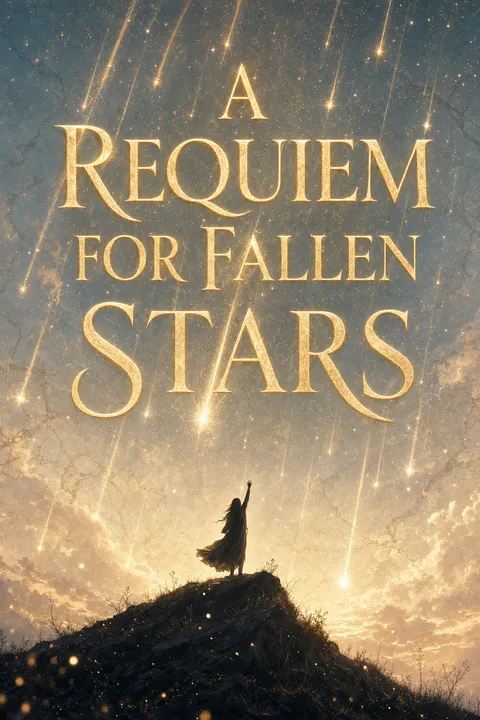


Plot Summary
Prologue
Beneath a hazy twilight, a man8 watches a king7 oversee a woman's execution, burned at a stake while her small daughter beats the ground and screams. The man aches to comfort the child1 but knows the king would only make things worse. As the girl's grief peaks, magic stirs the air, pulled from his own veins as easily as plucking a red lily from a field of white.
He understands then that the warning the child's mother once gave him was true: the Cycle has chosen this girl. To protect her, he reaches into her and seals her newborn power deep away, erasing every trace of it, a mercy that will bless and haunt him for years.
The prologue seeds the novel's central mechanism, the sealed self, before the reader can name it. Wilkes frames trauma as literal erasure: a child's power buried alongside her grief, leaving her hollow without knowing why. The imagery of beauty accompanying horror (flames against twilight, red lily among white gardenias) establishes the book's governing aesthetic, that monstrous things wear beautiful masks. The unnamed man's paralysis, watching cruelty he cannot stop, introduces the theme of complicity and protective deception that will define Lyra's guardians. Crucially, the prophecy language of the Cycle choosing her positions personal tragedy as cosmic design, priming a story where private wounds and world-shaping destiny are inseparable.
The Caged Jewel of Rivara
Lyra1 glides through King Alastair's7 Founding celebration in sheer gold, pouring wine and enduring the hungry stares of visiting nobles. When Eri, a general from Erandor, demands she strip and dance for the three kings, Alastair7 commands her to obey, and she complies because she is blood-sworn and powerless.
Just as she reaches for her clasp, an unauthorized burst of darkness extinguishes every flame in the hall. In the chaos a red-haired stranger catches her eye, and a phantom touch grazes her cheek.
King Yarum of Anatole quietly claims her for the rest of the evening, sparing her further humiliation, then dismisses her without explanation. Lyra1 returns to her crumbling chamber unsettled, sensing that something in her gilded cage has begun, inexplicably, to shift.
The opening weaponizes objectification: Lyra is literally a decorative jewel, valued for resembling the amethyst on her brow. Wilkes establishes agency through micro-defiance, the ambiguous look that could mean desire or contempt, showing a woman rationing rebellion under total surveillance. The mysterious magic and unexplained kindnesses (Yarum, the phantom touch) plant narrative hooks while dramatizing her hypervigilant reading of others' eyes, a survivor's skill. The scene's core tension, bodily autonomy denied by rank and gender, frames the entire novel: a world where magic determines value and blood determines worth, and Lyra possesses neither, forcing her to survive on wit and herbcraft alone.
Two Days Until Goodbye
Gray Nightenjoy,2 the boy raised beside Lyra1 and the closest thing she has to family, arrives with a soft tunic and quiet comfort. His news splinters her: his illusion magic has been judged worthy of Bathara Academy, the training ground for Jurafen, the realm's elite wielder-soldiers, and he leaves in two days. Lyra,1 magicless and orphaned, masks her heartbreak and insists he cannot squander such an honor.
They spend their remaining hours together, riding to eroded temple ruins and slipping into a hidden underground sanctuary, pretending for one stolen day that the world belongs to them. Beneath the colored stars, Gray2 promises he will return for her, whether in one year or five, and she promises to count the days.
This section defines the novel's emotional baseline, the bond that anchors Lyra's humanity. Wilkes portrays their love as ambiguous and profound: familial, devotional, un-romantic yet total. Gray embodies uncomplicated goodness and mobility, everything the hierarchy grants him and denies her, which sharpens the class critique without villainizing him. Their farewell ritual, one last adventure, foreshadows the recurring motif of stolen paradise crushed by the world's cruelty. Lyra's insistence that good things must end because the world is not paradise reveals her defensive pessimism, a philosophy the narrative will systematically dismantle. The impending separation manufactures the vulnerability that makes the next catastrophe possible.
Fifteen Lashes and a Buried Power
Klytis, the king's portal-wielder, interrupts their idyll: Alastair7 summoned Lyra1 to entertain and her absence has enraged him. Gray2 insists on coming. In the throne room the king sentences Lyra1 to fifteen lashes with a glass-laced whip while Gray2 and his advisor father Sterling8 are forced to watch. Invoking his honor, Gray2 begs to receive the punishment in her place, and the king agrees, savoring his agony.
As the whip flays Gray's2 back and he screams, a sealed power finally tears free from Lyra.1 Vines, thorns, and venomous black flowers erupt from her palms, swallowing the throne room whole, and Sterling8 collapses. The king demands to know how his magicless servant became a wielder overnight, and dazed, she has no answer.
The eruption fuses trauma and power, the book's signature equation. Lyra's magic surfaces not through training but through witnessing love brutalized, literalizing how suppressed emotion detonates. Wilkes stages a grotesque theater of power: the king's sadism dressed as discipline, Gray's self-sacrifice weaponizing his own honor. The scene reframes shame, Lyra's dread that Gray will think less of her seeing her degraded, as the true wound, deeper than the whip. Sterling's collapse, unexplained here, seeds the mystery of his connection to her power. This is the inciting detonation: her hidden self, forced into daylight, cannot be re-caged, and everything downstream follows from a body finally refusing silence.
A Wager Sealed in Blood
Cornered and accused, Lyra1 exploits the king's7 love of gambling. She wagers that she can pass Bathara's lethal entrance exams and win admittance; if she succeeds, Alastair7 must release her from her blood-oath. If she fails, she must return and give him the heir he cannot naturally sire, promising a fertility elixir from her late mother's journal that does not exist.
Certain she will fail, the king agrees, and Sterling8 seals the bargain in blood, so that whoever breaks it forfeits their life. A crimson droplet marks both their fingers. In a single reckless breath, Lyra1 buys a chance at freedom with a lie, tethering her survival to an academy that kills people who train their entire lives for it.
The wager is the engine of the plot and a study in asymmetrical power. Lyra cannot win freedom by right, only by gaming a tyrant's vanity, turning his appetite for domination into leverage. Wilkes underscores that the oppressed must manipulate to survive, echoing the sleeping-tonic scheme: cunning as the weapon of the powerless. The blood seal converts hope into mortal stakes, guaranteeing narrative tension. The lie about the elixir also foreshadows a truth she does not yet grasp, that her real value is something the king would kill to possess. The scene crystallizes Lyra's defining choice: risk death for autonomy rather than accept a life as property.
The Sealed Magic and the Journal
That night Sterling8 confesses the secret he has carried for years. When Lyra's1 magic first woke on the night her mother died, he sealed it deep inside her to hide her from Alastair,7 which is why she has always felt hollow. Her mother, secretly a Veilreader, had foreseen that Lyra's1 power would be extraordinary.
Sterling8 gives her a fragile, centuries-old journal belonging to Casimir Vivaldri,6 the first Crown Prince of Rivara, and insists she read every page. He warns her to avoid Erandor's ruthless Supreme Commander9 at all costs. Before departing, Lyra1 tends the wounds of Delroy,16 the kind stablemaster, and receives an ice-stone necklace for luck from Thestis,15 an errand boy who begs her to prove that lowborns matter.
This section reframes Lyra's lifelong emptiness as an act of protective love rather than personal defect, a poignant inversion of the trauma-erasure from the prologue. Sterling embodies the guardian who wounds to save, and Lyra's choice of acceptance over rage marks early emotional maturity. The journal is planted as the novel's slow-release mystery box, promising that hidden history bears directly on her identity. Thestis and Delroy anchor the class stakes in tender specifics: Lyra now carries the hopes of the invisible, transforming a personal gambit into representative struggle. The necklace becomes a talisman of solidarity, recurring whenever she must summon resolve against those who deem her worthless.
The Cursed Valley's Whisper
Alastair7 forces the pair to cross Foreigner's Valley, a lovely, cursed maze where paths loop endlessly and travelers vanish. Gray2 drills Lyra1 in combat and teaches her to sink into her magic. An ancient disembodied voice, sent by a northern Diviner, taunts them, calling Lyra1 Threadweaver and hinting at a prophecy of a child born from great love who could raise or ruin kingdoms.
When they abandon the looping trail to cut across the valley, a Wynn, a lightless wolf-beast that feeds on forbidden magic, hunts them by night. Gray2 is thrown unconscious. Unable to summon her power, Lyra1 improvises, loading a paralytic potion into a hollow honeysuckle branch and blowing it down the beast's throat, dropping it before collapsing beside Gray.2
The valley externalizes disorientation, a landscape that lies the way memory and history lie, preparing the reader for later revelations that recorded truth is fiction. The prophetic voice introduces the mythic scaffolding while the epithet Threadweaver plants a puzzle piece the reader will only decode much later. Crucially, Lyra defeats the Wynn not with magic she cannot control but with Gardner ingenuity, reaffirming that her intellect, not raw power, is her truest weapon. Wilkes uses the creature, born of forbidden magic, to foreshadow the Abdites and the corruption theme. The sequence tests whether Lyra can protect rather than only endure, shifting her from victim toward agent.
The Scouts and the Abdites
Hooded riders find them: Draven,3 a brooding dark-haired swordsman, and Kiran,4 a smirking redhead, traveling with the healer Meiji13 and the aether-wielder Griff.12 They offer escort to Bathara. As they camp, Abdites, corrupted wielders lost to forbidden magic, attack, hunting Lyra1 as their Master's6 promised key.
Draven3 and Kiran4 wield staggering power, but a corrupted healer siphons the life from Meiji,13 withering him to bone. Griff12 beheads her too late. Honoring Jurafen custom, Lyra1 drives a blade through Meiji's13 heart to end his agony, then keeps the ring he meant for his beloved Nuha.11 They burn him on a pyre while Gray2 plays a mournful flute lament, and amid the grief, Lyra1 begins to thaw.
The ambush escalates the external threat from myth to bodily horror, introducing the Abdites' grotesque inversion of magic (a healer who unmakes life). Meiji's death and Lyra's mercy killing force her into intimacy with mortality, and her chilling composure signals how thoroughly trauma has anesthetized her. Yet carrying his ring and message reveals persistent tenderness beneath the numbness. Wilkes uses communal ritual, the pyre and lament, to model healthy grief against Lyra's suppression, foreshadowing her later breakdown. The scouts' effortless lethality quietly seeds their true identities. The repeated designation key deepens the mystery of why beings would slaughter to claim a supposedly worthless servant girl.
The Academy of Hidden Captains
At Bathara's gates the disguises fall: Draven3 and Kiran4 are captains of the academy's aggregates, and kindly white-haired Josiah,17 a friend of Sterling's,8 is the Keeper who governs it all. Kiran4 and Draven3 are Archblood heirs of Great Houses, wielding fire and dark magic. Lyra1 registers as a magicless late-bloomer with no wielder's mark and is scorned by nobles from her first breath.
She meets Marcella,5 a copper-haired lowborn who snaps an entitled noble's arm and instantly becomes her first true friend. Josiah17 warns the assembled examinees that Jurafen answer to no king and that any unwilling to risk death should leave now. Nobody does. Lyra1 realizes the men who mocked her in the valley now hold her future in their hands.
The reveal recontextualizes every prior interaction, especially Draven's harshness, as the guardedness of the powerful. Wilkes contrasts two hierarchies: the kings' inherited tyranny and Bathara's supposed meritocracy, immediately exposed as riddled with the same class prejudice. Marcella's arrival gives Lyra chosen kinship outside Gray, expanding her emotional world and modeling unashamed lowborn defiance. The captains-as-judges structure raises the stakes of the romance-to-come, entangling desire with power over her fate. Josiah's warning frames the trials as ordeals of self rather than skill, previewing the psychological turn. The section pivots the novel from journey to institution, from survival on the road to a gauntlet where identity itself is interrogated.
The Flower That Has No Name
The first test sends examinees into the Whispering Grove to retrieve an essence flower that blooms only for its magical match. Gray's2 blooms as the King's Reflection, a flower reserved for those worthy of a throne, stunning the captains. Marcella's5 is Resilia, marking a true daughter of earth. Lyra1 and Gray2 are dropped into the Bog, where poison-clawed Mirefiends nearly kill her.
Delirious, she slips into the Veil, where a familiar voice6 offers to reveal her true power. She wakes healed among charred creatures she does not remember burning. Her own flower matches nothing on record: black threads that flare green and gold at her touch. At judgment, Finlay10 demands she be failed, but Draven3 offers to train and observe her, and she advances.
The essence flowers externalize each character's soul, and Gray's King's Reflection plants a major dormant subplot (his hidden claim to a throne). Lyra's anomalous bloom stages her as an unclassifiable exception, literally off the record, reinforcing that she predates the sanctioned order. The Bog's near-death and mysterious healing tighten the Veil mystery, suggesting an entity both saving and stalking her. Draven's intervention is a chess move disguised as mercy, foreshadowing his manipulative brilliance and his growing investment in her. Wilkes uses institutional judgment to dramatize prejudice as procedure: Finlay would erase what he cannot categorize, embodying the reactionary fear of the anomalous that the whole narrative critiques.
The Captain's Secret Training
Bound by a captain's exception, Draven3 trains Lyra1 in secret among the hills. His methods are maddening: crossing a mossy log blindfolded, hauling water, moving through slow forms while he pelts her with pebbles. For every task she completes he must answer three of her questions, and for every one she fails she answers his.
Slowly the brooding Dalmar3 and the guarded servant1 learn each other, and he teaches her that pretending to be whole is not the same as being whole. Meanwhile she keeps reading Casimir's6 journal, disturbed to learn that recorded history is a fabrication, that a hidden war and rebels called Restorationists were erased from the record, and that an old prophecy of coming war still looms over the realm.
The training montage doubles as a courtship of vulnerability: Draven's blindfold philosophy, that sight lies and one must learn to feel, mirrors his emotional project of teaching Lyra to sense rather than armor. The question-wager structure literalizes intimacy as negotiated disclosure, apt for two people who weaponize control. Draven's distinction between pretending and being whole becomes the novel's therapeutic thesis. Parallel to the romance, the journal subplot destabilizes the reader's trust in the world's official truths, converting a personal diary into an epistemological threat. Wilkes braids the private and political: as Lyra learns to feel, she also learns the foundations of her society are a curated lie.
The Blue-Horned Adder
The second test pairs the four lowborns to hunt and behead a Blue-Horned Adder, a colossal serpent with venomous fangs and armor-like scales. Recognizing its mating season, Lyra1 concocts an aphrodisiac powder to drive it into a frenzy. The plan nearly collapses: Marcella5 is flung and bloodied, the healer Nuri14 is knocked away, and Lyra1 is bitten, her body convulsing with lethal venom.
She slips again into the Veil, where the Master6 confirms he sent the Abdites hunting her. Nuri14 drags her back and purges the poison. With Gray's2 illusions freezing the beast, Marcella's5 roots binding it, and Lyra1 plunging a sword through its horn from inside its very mouth, they slay it, becoming the first team to complete the test.
This set piece proves Lyra's genius under pressure while nearly killing her, sustaining the pattern where her body pays for triumph. The Veil intrusion escalates the antagonist from rumor to interlocutor, personalizing the threat. Wilkes stages collaborative magic as thematic argument: the scorned lowborns succeed precisely through pooled, unglamorous ingenuity, rebuking the nobility's contempt. Lyra's willingness to be swallowed by the creature dramatizes a recurring self-endangering impulse, her sense that her life is more expendable than others', which Draven will later confront. The recurring near-death-into-Veil structure conditions the reader to associate mortal thresholds with revelation, priming the climactic collapse where the boundary finally shatters.
The Dalmar Heir Unmasked
In a quiet garden Eri, the general who once humiliated Lyra,1 corners and assaults her. Draven3 appears in a fury, pins him, and carves open his cheek. Their confrontation summons an elegant, sea-eyed man who calls Draven3 his son: Tynan Dalmar,9 Erandor's dreaded Supreme Commander and head of an Archblood house.
Lyra1 realizes the captain she is falling for is the Dalmar heir,3 shadowed by rumors of an abusive father and a murdered mother. Sterling's8 warning about the master strategist9 rings in her ears as she trades careful words with Tynan,9 refusing to be intimidated. The revelation reframes Draven's3 secrecy: he hid his name because Lyra1 was the first person to see him rather than his titles, and to feel worthy of being simply himself.
The assault reasserts the omnipresent threat of male entitlement, while Draven's retaliatory violence complicates him as protector and predator both. Tynan's entrance introduces the novel's most chilling antagonist, a man who treats human nature as an experiment, and casts Draven's coldness as trauma rather than temperament. Wilkes deploys the confrontation as a duel of wits (Sterling's warning made literal), positioning Lyra as a worthy strategist. The revelation of Draven's identity reframes the romance around mutual recognition beyond status: his deepest wish was to be seen as a self, not a weapon or bloodline, aligning him with Lyra's own longing to matter apart from her utility to others.
Salt in Old Wounds
Klytis arrives with a taunting missive from Alastair7 and worse news: after the king discovered someone was slipping sleeping tonics to his attendants, gentle Delroy16 confessed to Lyra's1 crime and was hanged in her place. The guilt cracks her open. She flees to the greenhouse and collapses into the first true panic attack she has allowed herself, drowning in grief for her mother, Meiji,13 and Delroy.16
Draven3 finds her, holds her, and talks her through it, teaching her that feeling pain is not surrender. They trade stories of their dead mothers beneath the stars, and Lyra1 finally kisses him. Later, in a hidden waterfall cave lit by glowing caterpillars, the two become intimate, and Draven3 vows he will burn only by her flame.
Delroy's death is the sacrificial cost of Lyra's earlier compassion, tightening the novel's cruel arithmetic where kindness invites punishment. The greenhouse breakdown is the emotional climax of her inner arc: the numbness engineered in the prologue finally cracks, and grief, long denied, floods in. Draven's grounding of her panic attack, drawn from tending his own mother, binds the lovers through shared woundedness, and their intimacy becomes an act of chosen vulnerability rather than obligation, a redemptive counter to her exploited past. Wilkes contrasts water imagery (Draven as steady tide) with the fire of her trauma, coding their love as safety rather than consumption, though the flame vow ominously foreshadows the cost of loving her.
Heir to a Dead Prince
The truth assembles piece by piece. Kiran4 reveals that he, Draven,3 and Finlay10 were raised together like brothers, and that Draven's3 tender heart was forged into a weapon after his mother's murder. Nuha,11 hunting records of Lyra's1 flower, finds it in a suppressed book: it is Threadweaver, belonging to a figure called Prince, the Wielder of All.
Then Lyra1 reads Casimir Vivaldri's6 final journal entry, which names her directly. She is a Binder, second of her kind, heir to his power to wield every magic, foretold by a prophecy of a raven and a Chosen One who will decide the fate of kingdoms. Testing it with Gray2 and Marcella,5 she discovers her lakti binds to the magic of those she loves, letting her wield theirs.
The convergence of journal, suppressed book, and experiment transforms Lyra from anomaly to prophesied inheritor, retroactively explaining the Abdites, the Veil voice, and Sterling's protective sealing. Wilkes makes power relational: Lyra binds to the magic of those she loves, literalizing how her strength and her vulnerability are one, since intimacy is her conduit. The revelation weaponizes the class inversion, the discarded servant now potentially the most powerful wielder alive, while raising the moral stakes of the prophecy's warning that two Wielders cannot share the same sky. Kiran's disclosure of Draven's history deepens the brothers' bond and the pattern of loved ones forged in cruelty, mirroring Lyra herself.
Through the Feargate
The final test forces each examinee to drink a tonic and enter a Feargate, a labyrinth built from their darkest memories and watched by all. Lyra1 confronts the truth she has fled her whole life: as a child she bludgeoned the man assaulting her mother, not knowing he was King Alastair.7
Her mother invoked Samsara, an ancient rite letting a parent die for a child's crime, and was burned alive by the wick placed in Lyra's1 own small hand. Reliving it, Lyra1 finally grieves fully yet refuses to break. But an Abdite invades her vision, presses a mark to her skin, and prematurely awakens her wielder's mark in searing agony. As she emerges, Bathara's alarms scream that the wards are breached.
The Feargate delivers the novel's foundational trauma, resolving the prologue's mystery: the sealed magic, the guilt, the hollowness all stem from a child's violence and a mother's chosen immolation. Samsara literalizes survivor's guilt as ritual, Lyra owes her existence to a death she caused, which explains her lifelong self-erasure. Facing rather than fleeing the memory is her decisive act of healing, the culmination of Draven's teaching. Yet Wilkes twists catharsis into ambush: the Abdite exploits her raw emotional opening to awaken her mark corruptly, fusing the psychological and external climaxes. The message is double-edged, that confronting pain frees you, but exposure also makes you a target for those who would use your power.
The Master Comes for His Key
Bathara becomes a slaughterhouse as Abdites pour through the shattered arena. The captains cut them down until a horn sounds and every corrupted wielder kneels. Their Master6 strides in crowned with raven feathers, and Lyra1 recognizes his voice from the Veil: he is Casimir Vivaldri,6 the prince from her journal, alive after four hundred years and sharing her exact magic.
He wants to take her home and teach her, claiming they are the only two who could ever understand each other. To prove she is like him and to shatter her will, he casts an illusion in which a blade meant for Marcella5 instead takes Griff,12 then he appears to behead Gray2 before her eyes. Believing her whole world dead, something inside Lyra1 snaps completely.
The antagonist's embodiment collapses the journal subplot into present danger: the idealist who once dreamed of peace has become the nihilist who orchestrates massacre, a cautionary mirror of what unhealed betrayal makes of a heart. Wilkes stages Casimir as Lyra's dark double, the first Binder, arguing through him that humanity is desperation rather than devotion, a philosophy the whole novel resists. His cruelty is pedagogical: he manufactures loss to prove love is only pain, deliberately targeting her attachments. Griff's real death amid the illusion (a genuine sacrifice hidden inside a fabricated one) is a devastating structural trick, ensuring the grief that unravels her is both false and horribly true.
Taken Through the Portal
Lyra1 erupts, pulling fire, ice, wind, water, and light at once, a hurricane of every magic that scorches Abdites and students alike as grief and power consume her. Draven3 fights through the inferno to reach her, holding her though it burns his flesh from bone, and calls in the price she owes him for her training: that she live, or he will follow her into death.
His words pull her back, but her body collapses, charred and ruined. Tynan9 then forces an impossible choice by threatening another person Draven3 loves, and Finlay10 knocks his brother3 unconscious to end the standoff. Casimir6 drains every healer to stabilize Lyra1 and carries her through a portal as Gray2 vows to find her. Draven3 wakes to an empty world and begins planning her rescue.
The climax fulfills the prophecy's warning that Lyra's power could raze kingdoms, and her indiscriminate destruction, killing innocents alongside enemies, refuses the clean heroism of most chosen-one narratives. Draven's bargain reframes their romance as radical devotion: he names her survival as the debt, offering to die rather than outlive her, love as mutual anchor against self-annihilation. Wilkes ends on structural cruelty: the villain wins not by force but by exploiting love's obligations, Tynan leveraging Draven's hidden attachment, Finlay betraying his brother out of protective grief. The resolution inverts rescue tropes, leaving the heroine captured, the hero broken, and the reader suspended between despair and the fierce promise of pursuit.
Epilogue
Lyra1 wakes to piercing, unfamiliar sunlight in a sprawling garden oasis so beautiful she briefly believes she has reached the paradise of the dead. Then Casimir Vivaldri6 steps into view, kneels before her, and offers her a strange white and lilac-speckled flower she does not recognize. When she asks where she is, he smiles with unnerving sincerity and tells her she is exactly where she should be.
The epilogue seals the reversal: the caged servant who gambled everything for freedom ends imprisoned again, this time by a captor who frames captivity as homecoming. Wilkes returns to the garden and flower imagery of the prologue and greenhouse, but now warped, beauty as the mask of the most horrifying thing, exactly as the prologue warned. Casimir's gentle certainty is more menacing than any threat, positioning the sequel's central tension as psychological: he intends to seduce Lyra into becoming him. The unrecognized flower signals a new, uncharted magic and self awaiting her. The ending withholds resolution deliberately, converting the reader's hope into the same suspended pursuit that now drives Draven and Gray.
Analysis
Wilkes builds a romantasy that is fundamentally about the psychology of suppression: what it costs to seal away pain, and what erupts when the seal breaks. From the prologue's literal burial of a child's magic to Lyra's1 engineered numbness, power and trauma are inseparable, her gift wakes only through witnessed suffering, and her healing arc (culminating in the greenhouse breakdown and the Feargate) argues that feeling grief is not surrender but the precondition of wholeness. Draven's3 mantra, that pretending to be whole is not being whole, is the book's therapeutic thesis, dramatized through two guarded people who fall in love by daring to be seen. The novel is also a sustained class critique. In a world where magic determines value and blood determines worth, Lyra,1 Marcella,5 Griff,12 and Thestis15 embody the discarded, and the plot delights in inverting the hierarchy: the servant girl may hold the greatest power alive, the lowborn team wins the trials through pooled ingenuity, and the nobility's contempt is repeatedly exposed as fear of the anomalous. History itself is revealed as propaganda, the journal dismantling official truth, suggesting that those who write the story decide who is hero and villain, a question Casimir6 poses and the narrative refuses to answer cleanly. Wilkes resists tidy heroism: Lyra's1 climactic power kills innocents, and the villain triumphs not by force but by weaponizing love's obligations. The recurring image of fallen stars, souls returning to the sky, frames grief as continuity rather than erasure, echoed in Nuha's11 counsel that we carry our dead forward. Ultimately the book asks whether humanity is devotion or desperation, whether love is worth its inevitable cost, and stakes its heart on the answer Draven3 gives: that some people are worth burning for. The unresolved capture ending converts that conviction into pursuit, and the reader's hope into suspense.
Review Summary
A Requiem for Fallen Stars holds an overall rating of 4.21/5, with readers praising its academy setting, found family dynamics, unique magic system, and broody MMC Draven. Many highlight the emotionally charged ending as a standout. Common criticisms include a romance that escalates too quickly, underdeveloped worldbuilding, and familiar romantasy tropes. Lyra is generally well-received as a resilient protagonist, though some find her passivity frustrating. Despite mixed feelings on pacing and originality, most readers express excitement for the sequel.
Characters
Lyra Izacalli
Caged servant turned wielderDaughter of a deceased Gardner and blood-sworn night attendant to a cruel king7, Lyra survives on herbcraft, wit, and a razor tongue kept on a tight leash. Believing herself magicless and worthless, she armors her heart in numbness, disassociating from degradation to endure it. Her guiding mantra, that she will not cower, yield, or falter, masks a crushing guilt and a terror of feeling. Fiercely loyal to those few she loves, she risks herself recklessly, valuing her own life as expendable. Across the story she moves from frozen self-erasure toward the frightening work of grieving, hoping, and being truly seen. Pragmatic, cunning, and defiant, she instinctively distrusts fairytales while secretly aching for the freedom and belonging the world has denied her kind.
Gray Nightenjoy
Devoted lifelong friendRaised alongside Lyra1 as the closest thing to family she has, Gray is an illusion-wielder and son of the king's7 shrewd advisor8. He inherited his mother's warmth and his father's incisive mind, and though gifted with rare persuasive talent, he refuses to manipulate because it offends his conscience. Honorable to a fault, he sees the world in moral absolutes of right and wrong, a clarity that makes him both noble and, at times, blind to the gray spaces Lyra1 navigates. His love for her is total and difficult to name, protective and selfless. Chosen for the elite academy, he carries a quiet grief at leaving her and an unshakable vow to return, forever willing to bleed in her place.
Draven
Brooding dark-magic captainA towering, jaded swordsman with mismatched sea-glass eyes and tattoos that hide a secret, Draven wields the most feared magic on the continent. Cold, clipped, and relentlessly controlled, he presents as an arrogant tyrant who claims never to lose. Beneath the armor lies a deeply breakable heart shaped by profound loss and a childhood weaponized against his will. He is drawn to Lyra1 because she sees the man rather than the title or the power, letting him feel worthy of his own skin. Perceptive to the point of unnerving, he reads her expressive eyes like open pages. His devotion, once given, is absolute and self-annihilating: he would burn the world, or himself, to keep her safe, and offers his steadiness as her anchor against drowning.
Kiran
Smirking fire-wielding captainA ruby-haired Archblood heir and captain, Kiran hides fierce loyalty and old pain behind a perpetual smirk and flippant charm. Raised as a brother to Draven3 and Finlay10, he plays the role of protective eldest, manipulating rules with a grin and defending those he loves. His easy warmth belies immense power and a strategist's mind, and he watches over Draven's3 fragile heart with quiet, unwavering care.
Marcella
Fierce lowborn flora-wielderA copper-haired, sharp-tongued daughter of a spice-farming family, Marcella hides a powerful flora wielder's mark and refuses to grovel before nobility. Bawdy, brave, and instantly loyal, she becomes Lyra's1 first true friend, recognizing a fellow fighter. Beneath the swagger lies deep tenderness for her family and those she claims. She teaches Lyra1 that those stitched from the same threads always recognize each other.
Casimir Vivaldri
The prince in the journalThe first Crown Prince of Rivara, whose centuries-old personal journal comes into Lyra's1 hands. Once an idealist who championed diplomacy, peace, and the fragile worth of ordinary lives, he wrestled in his writings with the morality of war, revenge, and whether humanity is worth saving. Betrayed and denied the love and civility he craved, he curdled into something bitter and philosophical about desperation as the root of all human striving. He shares Lyra's1 exact rare magic and believes the two of them are uniquely able to understand each other. Elegant, articulate, and eerily sincere, he frames cruelty as inevitability and considers himself both cursed and uniquely burdened by the power he carries.
King Alastair
Cruel king of RivaraThe sadistic ruler who keeps Lyra1 caged as his prized night attendant. He masks his appetite for inflicting pain as discipline and order, delights in wagers and forcing others to beg, and is rumored barren, obsessed with securing an heir. Vain, capricious, and bloodthirsty, he treats human beings as toys and punishes any perceived disrespect with brutal creativity.
Sterling Nightenjoy
The king's cunning advisorGray's2 father, the king's7 most trusted advisor and Lyra's1 former guardian, nicknamed the wielder of cunning words. Wise, measured, and fiercely protective, he keeps devastating secrets to shield those he loves, believing the moment you lose your temper you lose the battle. A Sealer by magic, he has quietly steered Lyra's1 fate for years, carrying guilt for choices made in her name.
Tynan Dalmar
Erandor's master strategistDraven's3 father and Erandor's dreaded Supreme Commander, head of an Archblood house. Elegant and sea-eyed, he treats every conversation as a game of wits and human nature as an experiment to dissect. Rumored to have forged his son3 into an emotionless weapon, he is a manipulator who leverages love as a weakness and cloaks menace in courtesy and diplomacy.
Finlay Fjolla
Rigid ice-wielding captainA white-haired Archblood heir and captain obsessed with tradition, hierarchy, and winning back his father's approval. Cold and rule-bound, he segregates nobles from commoners and scorns Lyra1, yet he was not always so severe. Raised as a brother to Draven3 and Kiran4, his rigidity masks old wounds and a sensitivity he buries beneath icy control.
Nuha
Grieving scholar captainCaptain of the knowledge-loving aggregate and keeper of Bathara's vast library, Nuha is composed, wise, and generous. Mourning a beloved lost to violence13, she models graceful survival of grief, teaching that healing is not forgetting and that we carry our dead forward rather than bury ourselves beside them. She quietly aids Lyra1 out of gratitude.
Griff
Cheerful aether-wielderA freckled, unruly-haired portal-wielder and shameless flirt with a bright, disarming spirit. Skilled enough to throw portals at objects, he masks depth beneath goofy charm. He grows close to Marcella5 through competitive banter, hiding genuine tenderness behind teasing bravado, and proves braver and more loyal than his easy jokes suggest.
Meiji Himari
Kind scholar-healerA gentle healer and academy instructor engaged to Nuha11, devoted to a future of marriage and family. He believes people paint their own futures and treats Lyra1 with immediate warmth and dignity.
Nuri
Secretive healer teammateA strikingly beautiful, green-eyed healer from Anatole who joins Lyra's1 exam team. Calm and skilled, she carries an air of familiarity and quiet mystery, offering steady competence in crisis.
Thestis
Hopeful errand boyA freckled stable errand boy trained secretly in ice magic by Gray2. He gifts Lyra1 a luck necklace and begs her to prove that lowborns matter, becoming the emotional stakes of her fight for the overlooked.
Delroy
Gentle stablemasterThe proud, aging stablemaster who loves his horses and treats Lyra1 with rare kindness. She tends his whipped back, and his fate becomes a devastating measure of the king's7 cruelty and her guilt.
Josiah Hartley
Keeper of BatharaThe white-haired governor of the academy and Sterling's8 old friend, who answers to the highest magical authority. Warm yet unreadable, he oversees the lethal trials and speaks kindly of Lyra1.
Plot Devices
The Blood Wager
Life-or-death stakes engineSealed by Sterling8 in mingled blood, Lyra's1 bargain with King Alastair7 binds her survival to passing Bathara's deadly entrance exams: win admittance and go free, fail and return to give him an heir, break the terms and forfeit her life. The crimson droplet marked on both their fingers makes the stakes literal and irreversible. This device propels the entire academy arc, converting Lyra's1 desperate improvisation into a mortal countdown and justifying her willingness to risk everything. It also frames the class conflict, a servant staking her freedom against a king's7 certainty of her failure, and recurs through taunting missives that keep the king's7 shadow present even as Lyra1 builds a new life far from his court.
Casimir's Journal
Buried-truth revelation vesselA fragile, centuries-old diary belonging to the first Crown Prince of Rivara6, given to Lyra1 by Sterling8 with instructions to read every page in order. Its entries, doled out across the novel, gradually expose that recorded history is a lie: a hidden war, erased rebels, a prophecy, and a personal descent into despair. The journal functions as a slow-release mystery box and unreliable-history device, destabilizing the reader's trust in the world's official truths. Each entry deepens Lyra's1 sense that she is connected to its author6, culminating in revelations about who and what she truly is. Wilkes uses it to braid intimate confession with world-scale conspiracy, making a private artifact the key to a continent's secret past.
Essence Flowers
Soul-revealing bloom testMagical flowers that bloom only in the hands of the wielder whose essence they match, used as Bathara's first trial. Each bloom externalizes its bearer's soul and relationship to magic: Gray's2 marks worthiness of a throne, Marcella's5 marks a true daughter of earth. Lyra's1 flower matches nothing on record, its black threads flaring green and gold at her touch, marking her as an unclassifiable anomaly. The device visually literalizes identity and destiny, and its research trail through suppressed books connects her to a long-erased history. As a plot mechanism it drives the judgment conflict, exposes institutional prejudice against the unknown, and plants clues that pay off in the revelation of Lyra's1 true nature.
Binder Magic
Bind and wield all magicLyra's1 true power, revealed late: her lakti binds to the lakti of others, letting her wield the magic of those around her, especially those she loves, making her potentially the strongest wielder alive. It explains her early inability to conjure alone, her unconscious use of Gray's2 illusions, and why beings hunt her as a key. The device makes power radically relational, fusing her strength with her emotional attachments so that intimacy is both her conduit and her vulnerability. Its prophesied ceiling, that two such wielders cannot share the same sky without breaking the world, raises the moral and cosmic stakes and drives the catastrophic climax when unchecked grief unleashes it indiscriminately.
The Veil and Feargate
Threshold of mind and prophecyTwo linked mechanisms of interior confrontation. The Veil is a foggy realm Lyra1 enters near death or under mind-altering substances, where a mysterious voice speaks to her, revealing her inherited gift as a reader of possibilities like her mother. The Feargate is the academy's final trial: a labyrinth conjured from an examinee's darkest memories, watched by all, testing whether they can face themselves without breaking. Together they externalize psychology as landscape, forcing Lyra1 to relive her foundational trauma and grieve what she has buried. Wilkes uses these thresholds to merge the personal and mythic, and to let the antagonist breach her mind, turning the act of confronting pain into the moment of greatest exposure and danger.
Download PDF
Download EPUB
.epub digital book format is ideal for reading ebooks on phones, tablets, and e-readers.








































