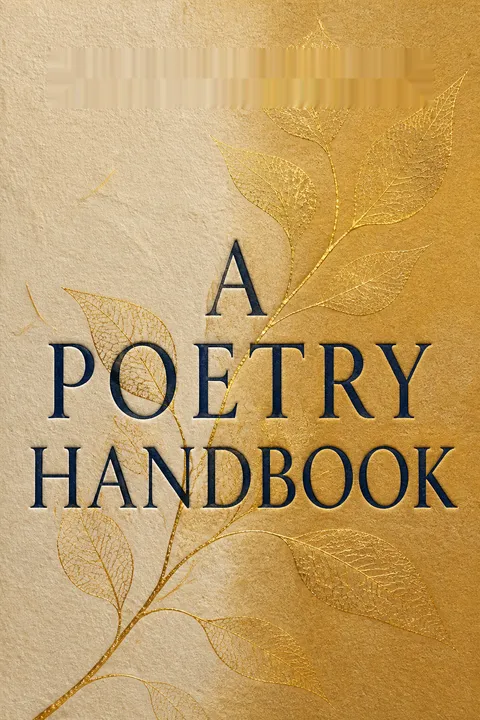

Key Takeaways
1. Poetry's Dual Nature: Talent Born, Craft Learned
Whatever can't be taught, there is a great deal that can, and must, be learned.
Innate gift, learned skill. Mary Oliver asserts that while poets are "born and not made," possessing an essential, mysterious gift, this innate talent is insufficient on its own. Like painters or musicians, poets must also acquire a deep understanding of their field's history, theories, and techniques. The mystical aspect of poetry is complemented by its tangible, written form, which requires diligent study.
Craft as empowerment. Unlike other arts where step-by-step learning is accepted, poetry instruction often encourages immediate creation without foundational exercises. This leads writers into ruts, lacking the technical skills to adapt their style or execute complex maneuvers when their material demands it. Craft, Oliver emphasizes, is the "power" that opens doors to process, enabling an individual's ideas to reach their full potential and avoid frustration.
Exercises for mastery. To counter this, Oliver advocates for craft-focused exercises in workshops, temporarily removing the pressure of writing "bona fide acts of creation." These exercises, dealing with specific techniques and subject matter, allow students to investigate and try various styles, building a repertoire of technical skills and options. This structured learning empowers the beginning writer to bridge the gap between an experience or idea and its best possible expression in words.
2. Cultivating the Poetic Self: Seriousness and Solitude
It doesn't matter if risk is somewhere close by—risk is always hovering somewhere. But it won't involve itself with anything less than a perfect seriousness.
Commitment is paramount. Writing a poem is likened to a love affair between the heart's emotion and the conscious mind's learned skills. This delicate partnership requires unwavering commitment; if appointments are missed or attention is fleeting, the mysterious, "wild, silky part of ourselves without which no poem can live" will not appear. It demands "perfect seriousness" from the writer, a consistent presence at the desk.
Beyond easy goals. While ambitions like publication or praise can be incentives, they threaten the poet's true aspiration: to write as memorably as the masters. The contemporary landscape offers numerous public opportunities for poets, but Oliver cautions that these rarely lead to the "real, unimaginably difficult goal of writing memorably." That profound work is achieved slowly, in solitude, and is as improbable as "carrying water in a sieve."
The enduring need. The act of making a poem, and the world's enduring need for it, transcends individual accomplishment. Poetry is a continuous river of voices, each contributing to a larger, timeless current. A poet's sensibility should encompass a gratitude apart from authorship, a fervor that seeks to glimpse a "greater paradise" through the art itself, rather than merely personal recognition or fleeting public acclaim.
3. The Indispensable Teacher: Reading Widely and Deeply
Good poems are the best teachers. Perhaps they are the only teachers.
Read, don't just write. Many aspiring poets prioritize writing over reading, a mistake Oliver strongly corrects. To write well, one must read "widely and deeply," considering good poems as the most effective, perhaps sole, instructors. If a choice must be made between reading and attending a workshop, reading should always take precedence, as it provides invaluable lessons directly from the masters.
Timeless connection. When seeking poetic mentors, time and cultural boundaries are largely irrelevant. The subjects that stir the heart remain constant across centuries and cultures. Poets from ancient Latin to modern American traditions offer abiding interest, and readers should expect to feel an intimate connection with distant voices, recognizing that stylistic and historical differences are interesting, but not profound barriers to understanding.
Build from the past. Don't be swayed by the sheer volume of current publications or the desire to be solely "contemporary." True contemporary creative force is built from the past, rising through its accumulated wisdom like fire through a mountain. Imitating only what is currently admired often leads to unoriginal work; genuine innovation stems from a deep, intelligent understanding and inheritance of poetic history, allowing a new idea to truly "carry into the air."
4. Mastering Craft: Imitation, Sound, and Rhythm
Before we can be poets, we must practice; imitation is a very good way of investigating the real thing.
Imitation as learning. Oliver champions imitation as a vital learning tool, contrary to the common emphasis on originality in writing. Just as children learn by copying, poets can gain "solid grounding in the skill" by imitating established styles. This practice allows writers to explore different techniques and voices, gradually developing their own unique style, which is "the poet's own determined goals set out in the technical apparatus that will best achieve those goals."
The challenge of metrics. Acquaintance with the main body of English poetry, much of which is metrical, is "absolutely essential." However, modern students, lacking early exposure to meter and rhyme, often find prosody challenging. While not advocating a return to strict metrical verse, Oliver stresses the importance of developing a "felt sensitivity" to a poem's structure, rhythmic energy, and repetitive sound, as free verse evolved from these foundations.
Sound's inherent meaning. Beyond structure, the very sounds of words carry meaning and feeling. Oliver explores how different letter categories—vowels, consonants, mutes, liquids—contribute to a word's "felt quality." For instance, the abruptness of "Shut up!" versus the softness of "Hush!" demonstrates a correlation between a word's sound and its connotation, a subtle yet powerful tool for poets to select words for their sound as well as their meaning.
5. Shaping Meaning: The Power of the Line and Form
Every turning is a meaningful decision, the effect of which is sure to be felt by the reader.
The line's fundamental role. The most obvious distinction between prose and poetry lies in the line. Poets consciously decide where to "turn" a line, a decision that profoundly impacts the reader's experience. This applies to both metrical and free verse, as each line break is a deliberate choice that shapes meaning, pace, and emotional resonance, making the poem a "written document" as well as a "mystical document."
Line length and rhythm. Different line lengths evoke distinct physiological and psychological responses.
- Pentameter (five feet): Matches natural breath capacity, feels neutral, full.
- Tetrameter (four feet): Creates quickness, spareness, agitation.
- Trimeter (three feet): Intensifies agitation, celerity.
- Hexameter (six feet): Suggests greater-than-human power, grandeur, abundance.
These choices are not arbitrary; they convey specific messages and moods, influencing the reader's "physiological mood."
Variation and constancy. While a prevailing rhythmic pattern is crucial for reader pleasure, variation prevents monotony. Irregularities, like the caesura (a structural pause within a line) or spondees (two equal stresses), can highlight important moments or accommodate natural speech patterns. The end of the line is the most important point, followed by the beginning, influencing cohesion, order, and emphasis through devices like rhyme and enjambment, which can either strengthen a pause or speed up the line.
6. The Art of Specificity: Imagery and Figurative Language
The language of the poem is the language of particulars.
Detail creates experience. Poetry thrives on "particulars"—detailed, sensory language that incorporates images. Without this, poetry risks being wise but "pallid and thin." Imagery, or figurative language, represents one thing by another, transforming mere description into an experience. It provides the "texture" vital for the reader's immersion into the poem's imagined world, making it "an experience, something much more than mere statement."
Figurative devices. Figurative language uses specific devices to create these representations:
- Simile: Explicit comparison using "like" or "as" (e.g., "love like a burning city").
- Metaphor: Implicit comparison, often surprising and enlightening (e.g., "delicate little boxes of dust" for boys).
- Personification: Giving inanimate objects human characteristics (e.g., "the sea far off / Washing its hands").
- Allusion: Reference to external historical or cultural contexts to deepen meaning.
These figures act like "a beam of light," helping us understand the unknown in the light of the known.
Universal and responsible use. Our shared human experience and senses create a "universal fund of perceptions," making archetypal images (ocean as mother, sun as hope) resonate deeply. While imagery enlivens and deepens a poem, it must be used responsibly. Excessive or inappropriate imagery can overwhelm the reader, turning the poem into a "carnival ride" rather than a meaningful journey, and can be "offensive" if self-indulgent.
7. Diction, Tone, and Voice: Crafting the Poem's Persona
The poem is not a discussion, not a lecture, but an instance—an instance of attention, of noticing something in the world.
Word choice shapes perception. Diction, or word choice, is fundamental to a poem's overall effect, contributing to its tone and the "voice" of its speaker (persona). Contemporary poetry often favors a natural, friendly, and intimate diction, making poems accessible and feeling like personal communications rather than formal lectures. This shift reflects a desire for intimacy between writer and reader, moving from "professor" to "fellow-citizen."
"Negative Capability" and empathy. Keats's concept of "Negative Capability" suggests that a poet should be "empty" or "negative" to fully inhabit and empathize with the subject of the poem. This allows the poet to "take part" in the life of a sparrow or even a billiard ball, transferring a "real feeling" from the page to the reader. This empathetic stance is crucial for poetry to transcend mere words and become a profound, experienced statement.
Avoiding pitfalls. Poets must avoid "poetic diction"—stale, clichéd language that lacks freshness and credibility. Similarly, clichés and bad inversions (unnatural word order for the sake of rhyme) kill a poem's vitality. Informational language, which is cold and purely functional, is also unsuitable. Instead, poets should strive for correct grammar, forceful syntax, and variety, remembering that "Every adjective and adverb is worth five cents. Every verb is worth fifty cents."
8. The Unseen Architect: Design in Free Verse
The free-verse poem sets up, in terms of sound and line, a premise or an expectation, and then, before the poem finishes, it makes a good response to this premise.
Freedom with design. Despite its name, "free verse" is not truly free; it is liberated from formal metrical design but still demands a distinct internal structure. This design is unique to each poem, often relying on patterns of sound, line length, rhythm, and stress that, while not strict, create a "felt integrity" from beginning to end. It's an "iceberg" of poetry, with much of its design subtly submerged, still in its "developmental stages."
A new tone for a new era. Free verse emerged from a desire to change the poem's tone, moving from formal speech to conversational intimacy. This shift, influenced by democratic ideals and widespread book availability, brought the poet "down from the lectern" into the reader's home. The music of free verse became the music of conversation, allowing for a more spontaneous and accessible exploration of "common" experiences and diverse voices, particularly for marginalized writers.
Williams's "Red Wheelbarrow" as a model. William Carlos Williams's "The Red Wheelbarrow" exemplifies free verse design. Its careful visual pattern, lack of punctuation, and focus on ordinary objects demonstrate how intense focus and art can elevate the mundane. The poem's enjambment, breaking phrases across lines, creates a dynamic pace, unwrapping the scene "little by little" and engaging the reader's curiosity, making the poem "happen before our eyes" and celebrating the "deftness and power of the imagination."
9. The Relentless Pursuit of Perfection: The Art of Revision
Loyalty to the actual experience—whatever got the poem started—is not necessarily helpful; often it is a hindrance.
Revision is essential. The initial draft of a poem is rarely finished; it requires conscious, patient appraisal. A crucial step in revision is detaching oneself from personal connections to the poem's origins. The poet must recognize that a poem is an "imaginative construct," not a literal reportage of experience, aiming for a "more significant truth" than mere factual accuracy, as John Cheever said, "I lie, in order to tell a more significant truth."
A complete, self-sufficient poem. Oliver advises writing for a "stranger who will be born in some distant country hundreds of years from now." This perspective forces the poet to ensure "everything necessary must be on the page," creating a "deeply breathing, bounding, self-sufficient poem" that carries all it needs without excess weight. Cutting, therefore, becomes an important and often ruthless part of the revision process, ensuring the poem's "forward flow."
Patience and cutting. While some lines may arrive "nearly perfect," revision is typically an "almost endless task," often requiring "forty or fifty drafts." Poets must resist the temptation to pack poems with too much "glitter"—metaphors upon metaphors—which can weigh down the poem and disrupt its flow and integrity. Sometimes, despite diligent effort, it is simply best to "throw a poem away," acknowledging that some things are unfixable.
10. Balancing Growth: Workshops for Craft, Solitude for Creation
But, for good reason, the poem requires of the writer not society or instruction, but a patch of profound and unbroken solitude.
Workshops for craft and feedback. Workshops offer significant benefits: they teach the necessary language of craft, enabling specific and efficient discussion. By scrutinizing work collectively, members gain insights into their aptitude and skills far more quickly than working alone. Exercises focused on specific techniques or imitating known poets provide choices and help writers break rigid habits, moving them "out of their already rigid habits."
Workshop perils and responsibilities. The social nature of workshops can pose risks, such as writers toning down ambitious but rough work to gain approval. Instructors must ensure students don't "bank their fires" for easy praise. Criticism should remain focused on technical matters, fostering an atmosphere of "enthusiasm, not disappointment," to provide actionable options rather than just opinions, and to be "endlessly loyal to each writer's intention."
Solitude for creation. While workshops nurture growth, the actual writing of a poem demands "profound and unbroken solitude." The creative process, an intricate interweaving of craft, thought, and feeling, is fragile and easily disrupted. Interrupting a writer is like waking a dreamer; the "line of feeling" is lost. As a writer gains skill, a natural movement away from the group towards self-communing and solitary application becomes necessary for the "real work."
11. Poetry as a Confession of Faith: Patience, Will, and Observation
The poem is a confession of faith.
Finding your unique process. There's no single formula for making poetry happen; each poet must discover their own method, whether it's short naps, walking, or another activity that invites the "inner, 'poetic' voice." The emphasis, especially for beginners, should be equally on the process of writing as on the written product, ensuring a continuous flow of creativity and avoiding "writer's block."
Talent is cultivated. Flaubert's wisdom—"Talent is long patience, and originality an effort of will and of intense observation"—offers a hopeful perspective. These are not elusive gifts but cultivable skills. By consciously developing patience, strengthening one's will, and honing "intense observation," a writer can continuously improve, finding "the sweet taste of improvement" through diligent effort, rather than being astonished by their own written poems.
Nourishing the poetic sensibility. Poetry is more than "wordplay" or an exercise; it's a "life-cherishing force" with a purpose beyond itself, reflecting the writer's entire sensibility. Just as athletes care for their bodies, writers must nourish their minds with books, art, history, philosophy, and engagement with the "green world"—people, animals, and nature. A lively, curious, compassionate mind, full of feeling and music, is a mind "full of possible poetry," providing "fires for the cold, ropes let down to the lost."
Review Summary
A Poetry Handbook is widely praised as an accessible, concise guide to poetry for both readers and writers, earning an overall rating of 4.23/5. Readers appreciate Oliver's clear explanations of poetic elements like meter, sound, imagery, and form, and her compelling argument that even free verse requires deliberate craft. Many wish the book were longer or deeper, and some experienced poets find it too basic. Her chapters on revision and the creative process are frequently highlighted as standouts, with her closing quote about poems being "fires for the cold" resonating deeply with many readers.
People Also Read
Download PDF
Download EPUB
.epub digital book format is ideal for reading ebooks on phones, tablets, and e-readers.








































