
Plot Summary
Shadows Before Sunrise
In the predawn hours of September 18, 1983, the Eberle family's routine is upended when thirteen-year-old Danny Joe Eberle leaves for his paper route in Bellevue, Nebraska. The town, nestled near Offutt Air Force Base, is a place where children are trusted to roam freely, and parents believe in the safety of their community. But as Danny Joe pedals away, a sense of unease lingers with his mother, Judy, who shrugs off her intuition. Unbeknownst to the family, a predator is awake and hunting. Airman John Joubert, driven by dark compulsions, stalks the streets, his mind rehearsing fantasies that have haunted him since childhood. The innocence of the morning is about to be shattered, setting in motion a chain of events that will haunt the town for years.
The First Vanishing
When Danny Joe fails to return home, panic quickly spreads through the Eberle household. His abandoned bicycle and undelivered newspapers are found, but there is no sign of the boy. The police, initially suspecting a runaway, soon realize the gravity of the situation. The community mobilizes, and a massive search is launched, combing fields and forests. The FBI joins the investigation, haunted by the recent, unsolved disappearance of another paperboy, Johnny Gosch, in Iowa. As hours turn to days, hope fades. The discovery of Danny Joe's body, bound and stabbed, confirms the community's worst fears. The brutality of the crime—its randomness and savagery—marks the beginning of a nightmare for Bellevue.
A Town in Terror
The murder of Danny Joe Eberle sends shockwaves through Bellevue and the surrounding region. Parents become hyper-vigilant, children are kept indoors, and the sense of safety that once defined the town evaporates. Law enforcement forms a multi-agency task force, but leads are scarce. The killer's methods—binding, stabbing, and biting—suggest a sadistic, organized predator. The media amplifies the fear, and rumors swirl. The community's grief is compounded by frustration as the investigation stalls. The specter of a serial killer looms, and the town's collective innocence is lost, replaced by suspicion and dread.
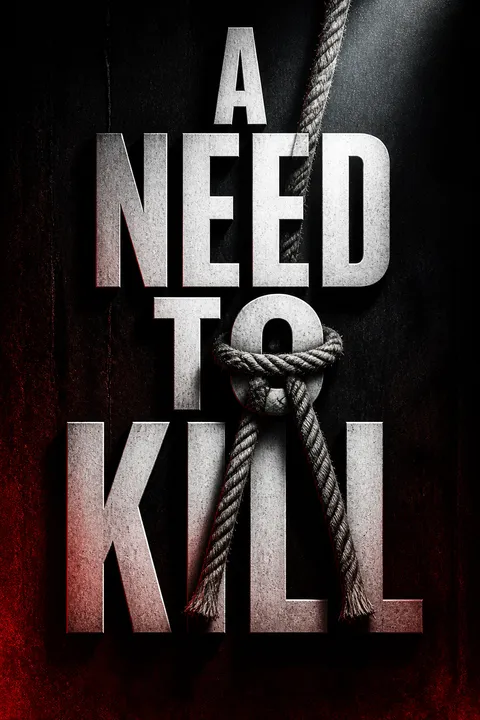
The Need to Kill
John Joubert, a young airman with a boyish face and unremarkable demeanor, is consumed by violent fantasies. From childhood, he has felt an uncontrollable urge to dominate and destroy, a "need to kill" that grows with each passing year. His early life is marked by isolation, bullying, and a fractured family. Joubert's fantasies escalate from thoughts of revenge against those who wronged him to elaborate scenarios of torture and murder. He learns to mask his desires, presenting a façade of normalcy while secretly nurturing his compulsions. The murder of Danny Joe is not an aberration but the culmination of years of internal torment and rehearsal.
Broken Homes, Broken Boys
Joubert's upbringing is a tapestry of neglect, emotional abuse, and alienation. His parents' bitter divorce leaves him adrift, shuttled between homes and denied stability. He is bullied at school, ostracized by peers, and misunderstood by adults. His mother, strict and emotionally distant, fails to recognize the warning signs. Joubert's loneliness festers, and he turns inward, developing elaborate fantasies of power and control. Early acts of violence—attacks on other children, animal cruelty—go unnoticed or unaddressed. The seeds of his later crimes are sown in these formative years, as the line between fantasy and reality blurs.
Early Signs Ignored
As Joubert grows older, his behavior becomes increasingly erratic. He attacks children in his Maine neighborhood, stabbing and slashing with knives, yet escapes detection. His intelligence and ability to mimic normalcy allow him to evade suspicion. Teachers and authority figures note his social withdrawal and oddness but fail to intervene meaningfully. Even after a series of violent incidents, Joubert is never held accountable or given psychological help. The system's inability to recognize and address his pathology enables his escalation. By the time he joins the Air Force and is stationed in Nebraska, his fantasies are fully formed, and his capacity for violence is unchecked.
The Predator's Pattern
Joubert's crimes are not impulsive; they are meticulously planned and ritualized. He stalks his victims, selects those who are vulnerable and alone, and uses deception to gain their trust. His methods—binding, gagging, stabbing, and biting—reflect a need for control and a desire to fulfill specific fantasies. The signature elements of his crimes, such as the unique rope and the bite marks, become crucial clues for investigators. Joubert's ability to blend into his environment, to appear harmless and even helpful, allows him to operate undetected. Each successful attack emboldens him, and his need for violence intensifies.
The Second Child Lost
Months after Danny Joe's murder, twelve-year-old Christopher Walden disappears on his way to school. The circumstances are eerily similar: a bright, trusting boy vanishes in broad daylight, and his body is later found, bound and stabbed, in a remote area. The community's terror deepens, and the pressure on law enforcement mounts. Investigators recognize the pattern and are certain they are dealing with a serial killer. The brutality of the crime, the calculated nature of the abduction, and the lack of physical evidence frustrate the search for the perpetrator. The killer's confidence grows, and the town's sense of helplessness becomes overwhelming.
The Hunt Intensifies
The task force, aided by FBI profilers, begins to piece together the killer's psychological profile. They focus on the unique rope used to bind the victims, tracing its origin to a specific type used in scouting. Witnesses come forward, recalling a suspicious car and a man seen with the victims. Hypnosis is used to recover details from traumatized observers. The investigation zeroes in on Offutt Air Force Base, where a young airman named John Joubert matches the emerging profile. A failed attack on a preschool teacher provides the break investigators need, leading them to Joubert's room, where incriminating evidence is found.
The Mask of Normalcy
Joubert is, by all outward appearances, an unremarkable young man. He is an Eagle Scout, a trusted assistant scoutmaster, and a reliable airman. He befriends children, mentors them, and is praised by adults for his dedication. His ability to compartmentalize his violent urges allows him to maintain this façade, even as he commits unspeakable acts. Those who know him are shocked by his arrest, unable to reconcile the friendly, helpful figure with the monster revealed by the investigation. Joubert's double life is a chilling reminder of the capacity for evil to hide behind a mask of normalcy.
The Final Attempt
Joubert's compulsion to kill nearly claims another victim when he attempts to abduct a preschool teacher, Barbara Weaver. Her quick thinking and courage allow her to escape, and she memorizes his license plate. This crucial detail leads investigators to Joubert, whose car and possessions link him to the earlier murders. The unique rope, the knife, and other evidence are found in his room. Under interrogation, Joubert initially denies involvement but eventually confesses, providing chillingly detailed accounts of his crimes. His arrest brings a measure of relief to the terrorized community, but the scars remain.
Unmasking the Monster
Joubert's confession is both matter-of-fact and deeply disturbing. He describes his crimes with clinical detachment, revealing a lack of empathy and an inability to comprehend the suffering he caused. Psychiatrists diagnose him with obsessive-compulsive and schizoid personality disorders, as well as sexual sadism. Despite his intelligence and apparent remorse, experts agree that he is incapable of change and poses a perpetual danger. The families of the victims confront the reality of his crimes, struggling to reconcile the loss of their children with the banality of the man responsible. The community grapples with the horror that such evil could exist among them.
Confessions and Consequences
Joubert pleads guilty to the murders of Danny Joe Eberle and Christopher Walden. The court proceedings are marked by emotional testimony from the victims' families, who express their grief, anger, and desire for justice. Joubert's own mother pleads for mercy, citing his mental illness and the pain he has caused. The sentencing panel weighs the mitigating and aggravating factors, ultimately concluding that the brutality and senselessness of the crimes warrant the death penalty. Joubert is sentenced to die in Nebraska's electric chair, and the community is left to reckon with the aftermath of his actions.
The Families' Grief
The Eberle and Walden families are forever changed by the loss of their sons. Their grief is raw and unending, marked by guilt, anger, and a longing for what might have been. They struggle to find meaning in the tragedy, seeking solace in faith, community, and the hope that their children's deaths will not be in vain. Their letters to the court and to the public are poignant reminders of the human cost of violence. The community rallies around them, offering support and solidarity, but the wounds remain deep and slow to heal.
The Mind of a Killer
Experts dissect Joubert's psyche, searching for answers to the question of why he killed. They find a complex interplay of childhood trauma, social isolation, and sexual deviance. Joubert's inability to empathize, his compulsive rituals, and his need for control are identified as key factors in his crimes. Despite extensive analysis, the ultimate origins of his evil remain elusive. The case becomes a touchstone for debates about the nature of criminal responsibility, the effectiveness of psychological intervention, and the possibility of rehabilitation for those driven by such dark compulsions.
Justice and Judgment
Joubert's trial and execution become a focal point for discussions about justice, punishment, and the death penalty. The community, once paralyzed by fear, demands accountability and closure. The legal system responds with deliberation and gravity, seeking to balance the rights of the accused with the need for public safety. The execution of Joubert is seen by many as a necessary act, a final assertion of society's refusal to tolerate such evil. Yet questions linger about the adequacy of the system in preventing such tragedies and the possibility of redemption for even the most lost souls.
The Aftermath and Legacy
The story of John Joubert leaves an indelible mark on Nebraska and the nation. The case prompts changes in law enforcement practices, greater awareness of child safety, and renewed attention to the warning signs of predatory behavior. For the families and the community, the pain endures, but so does the resolve to protect the vulnerable and to remember the lives lost. The legacy of the case is a sobering reminder of the darkness that can lurk beneath the surface of ordinary life—and the enduring need for vigilance, compassion, and justice.
Analysis
A Need to Kill is a chilling exploration of the intersection between personal trauma, societal failure, and the emergence of predatory violence
Mark Pettit's account is not merely a chronicle of crime, but a meditation on the fragility of innocence and the hidden dangers lurking beneath the surface of everyday life. The book's power lies in its unflinching portrayal of both the victims' humanity and the killer's pathology, refusing easy answers or reductive explanations. Through its detailed reconstruction of the investigation, the narrative highlights the importance of vigilance, community, and the evolving science of criminal detection. Yet, it also exposes the limitations of institutions and the tragic consequences of missed warnings. The emotional core of the story is found in the voices of the families, whose grief and resilience offer a counterpoint to the senselessness of the crimes. Ultimately, the book serves as both a cautionary tale and a call to empathy, urging readers to recognize the signs of danger, to protect the vulnerable, and to honor the memory of those lost to violence.
People Also Read




Characters
John Joubert
John Joubert is the central figure—a young man whose outward normalcy masks a deeply disturbed psyche. Raised in a broken home, marked by emotional neglect and bullying, Joubert develops violent fantasies early in life. His intelligence and ability to mimic social norms allow him to evade suspicion, even as his compulsions escalate. Joubert's crimes are driven by a need for control, power, and sadistic gratification. He is diagnosed with obsessive-compulsive and schizoid personality disorders, as well as sexual sadism. Despite moments of apparent remorse, he remains emotionally detached, unable to empathize with his victims. His development from a lonely, traumatized child to a calculating killer is a chilling study in the making of a predator.
Danny Joe Eberle
Danny Joe is the first known victim in Nebraska—a hardworking, responsible thirteen-year-old paperboy. Loved by his family and respected by his peers, Danny Joe embodies the innocence and trust of small-town America. His disappearance and murder shatter the community's sense of safety and become the catalyst for the investigation. Danny Joe's life and tragic death are central to the emotional arc of the story, representing both the vulnerability of children and the devastating impact of violence on families and communities.
Christopher Walden
Christopher, the second Nebraska victim, is a twelve-year-old boy recently relocated with his family. Intelligent, curious, and full of promise, Chris is navigating the challenges of adolescence and new beginnings. His abduction and murder echo the earlier crime, deepening the community's fear and grief. Chris's family's anguish and their search for meaning in the aftermath of his death highlight the enduring pain caused by such senseless acts. His story is a poignant reminder of the fragility of life and the randomness of evil.
Judy Eberle
Judy is Danny Joe's mother, whose intuition and protective instincts are tragically validated by her son's disappearance. Her journey through shock, despair, and mourning is marked by strength and vulnerability. Judy becomes a voice for victims' families, advocating for justice and child safety. Her reflections on loss, faith, and the search for meaning provide a deeply human perspective on the aftermath of tragedy. Judy's resilience in the face of unimaginable pain is both heartbreaking and inspiring.
Sue Walden
Sue is Christopher's mother, whose life is upended by the sudden, violent loss of her only child. Her grief is compounded by guilt and the relentless questioning of what might have been done differently. Sue's letters and public statements articulate the pain of losing a child and the struggle to find purpose in the wake of tragedy. Her advocacy for justice and her efforts to honor her son's memory reflect the enduring strength of parental love.
Pat Thomas
Pat Thomas, Sarpy County Sheriff, is thrust into the center of the investigation. A seasoned lawman with a deep sense of duty, Thomas is both a leader and a symbol of the community's determination to find the killer. The pressure of the case takes a personal toll, testing his resolve and resilience. Thomas's empathy for the victims' families and his commitment to justice are central to the narrative, highlighting the burdens carried by those tasked with protecting the public.
Jim Sanderson
Lieutenant Jim Sanderson leads the task force investigating the murders. Methodical, compassionate, and deeply affected by the case, Sanderson embodies the emotional toll of confronting evil. His sleepless nights, self-doubt, and moments of despair reveal the human cost of law enforcement. Sanderson's persistence and empathy are crucial to the eventual capture of Joubert, and his reflections on the case underscore the complexities of justice and the limits of understanding.
Jeremy Culver
Jeremy is a young boy in Joubert's scout troop, befriended and mentored by the killer. His innocence and curiosity nearly place him in harm's way, but he is ultimately spared. Jeremy's relationship with Joubert highlights the predator's ability to manipulate and deceive, as well as the vulnerability of children to those who appear trustworthy. Jeremy's survival is a testament to the randomness of fate and the importance of vigilance.
Don Shipman
Don Shipman is the scoutmaster who welcomes Joubert as an assistant, trusting him with the care and guidance of young boys. Shipman's shock and disbelief at Joubert's arrest reflect the difficulty of reconciling outward appearances with hidden evil. His cooperation with investigators and his efforts to support the victims' families demonstrate the challenges faced by those who unwittingly enable predators.
Beverly Joubert
Beverly is John Joubert's mother, whose strictness and emotional distance contribute to her son's alienation. In the aftermath of his arrest, she struggles with guilt, denial, and the realization that she failed to recognize the signs of his pathology. Beverly's pleas for mercy and her reflections on her son's life add complexity to the narrative, reminding readers of the collateral damage inflicted on families of perpetrators.
Plot Devices
Dual Narrative Structure
The book employs a dual narrative, alternating between the experiences of the victims, their families, and the community, and the inner world of John Joubert. This structure creates a sense of immediacy and tension, allowing readers to empathize with the victims while gaining insight into the mind of the predator. The juxtaposition of innocence and evil heightens the emotional impact and underscores the randomness of violence.
Psychological Profiling and Forensic Detail
The investigation is shaped by the emerging field of criminal profiling, with FBI experts constructing a psychological portrait of the killer based on crime scene evidence and behavioral patterns. The use of forensic detail—unique rope, bite marks, and witness hypnosis—serves both as plot devices and as symbols of the evolving science of detection. These elements drive the narrative forward and reflect the broader societal shift toward understanding and preventing serial crimes.
Foreshadowing and Irony
The narrative is rich with foreshadowing, from Judy Eberle's unease on the morning of her son's disappearance to the overlooked warning signs in Joubert's childhood. The irony of Joubert's role as a trusted mentor and protector of children, even as he preys upon them, adds a layer of tragic inevitability. The failure of adults and institutions to recognize and act upon early signs of danger is a recurring motif, reinforcing the theme of missed opportunities for intervention.
Confessional and Epistolary Elements
The inclusion of letters from victims' families, Joubert's own confessions, and psychiatric reports provides intimate access to the thoughts and feelings of those most affected. These documents serve as both evidence and testimony, grounding the narrative in lived experience and amplifying its emotional power. The confessional tone invites readers to grapple with questions of guilt, responsibility, and forgiveness.
Symbolism of Innocence and Corruption
The recurring imagery of children—paperboys, scouts, students—serves as a symbol of innocence and the potential for both good and evil. The corruption of this innocence by Joubert's actions is a central theme, reflecting broader anxieties about the safety of children and the capacity for darkness within ordinary life. The community's response, from fear to resilience, embodies the struggle to reclaim hope in the aftermath of tragedy.
Download PDF
Download EPUB
.epub digital book format is ideal for reading ebooks on phones, tablets, and e-readers.








































