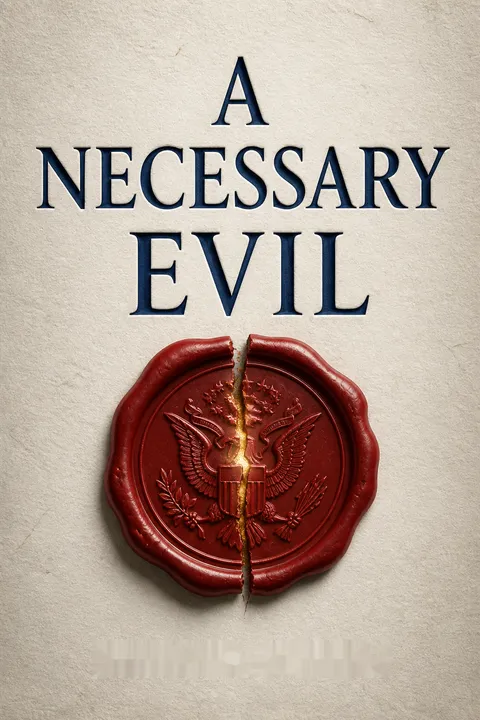

Key Takeaways
1. American Distrust of Government is Rooted in Pervasive Myths
Our whole history is read and invoked in this light.
Deep-seated skepticism. Americans harbor a unique and pervasive distrust of their government, often viewing it as a "necessary evil" that inherently curtails liberty. This attitude is not merely a normal resistance to authority but stems from a deeply ingrained cultural belief that the U.S. Constitution itself was designed to be anti-governmental, deliberately inefficient, and self-hampering. This perspective leads to a "zero-sum game" mentality where any power granted to the government is seen as a direct subtraction from individual freedom.
Mythical history. This distrust is perpetuated by a heavily distorted version of American history and jurisprudence, particularly regarding the Founding Fathers and the Constitution. Modern controversies frequently invoke these historical figures to argue against government action, effectively summoning the founders to testify against what they founded. This selective interpretation allows for piety towards history while fostering cynicism towards contemporary governance.
Clustered values. The anti-governmental stance is often accompanied by a cluster of interconnected values, regardless of political alignment. These values, such as a preference for the provincial, amateur, authentic, spontaneous, traditional, popular, organic, rights-oriented, religious, voluntary, participatory, and rotational, are perceived as being under siege by governmental qualities like cosmopolitanism, expertise, efficiency, regulation, and delegation. This perceived conflict fuels the opposition to any increase in governmental power, often leading to illogical or perverse outcomes.
2. Revolutionary Myths Distort the Militia's True Role
Here I expect we shall be told that the militia of the country is its natural bulwark and would be, at all times, equal to the national defense. This doctrine in substance had like to have lost us our independence.
Romanticized militias. The image of the Minuteman—a self-armed citizen soldier spontaneously defending liberty—is a powerful but largely mythical cornerstone of American anti-governmentalism. This romanticized view suggests that the Revolution was won by guerrilla tactics and citizen virtue, obviating the need for a professional standing army. However, historical evidence reveals a far more complex and often less glorious reality.
Militia's limitations. During the Revolution, militias were often poorly equipped, lacked discipline, and suffered from high desertion rates.
- Many contingents arrived unarmed, and a drastic shortage of usable guns was common.
- Their training was modest, and they performed poorly in open combat against regular armies.
- Universal service was rarely achieved, with exemptions and paid substitutes common.
- Their short enlistment times and local loyalties made them unreliable for sustained campaigns.
Crucial internal police. Despite their battlefield shortcomings, militias played a vital role in maintaining internal order, guarding against slave rebellions, repelling Indian raids, and scrutinizing Loyalists. This "home-front" importance, rather than their combat prowess, contributed to their positive memory post-war. The myth of the Minuteman, therefore, serves to uphold anti-governmental values like amateurism and localism, even when historical facts contradict the narrative.
3. The Constitution Was Designed for Efficiency, Not Deliberate Inefficiency
We the people, in order to form a more perfect union . . .
Curing feebleness. Contrary to popular belief, the U.S. Constitution was not designed to be deliberately inefficient or to hamper itself. Its primary aim was to rectify the crippling inefficiencies of the Articles of Confederation, which had left the young nation weak and disorganized. The phrase "to form a more perfect union" explicitly meant to create a more complete and functional government, capable of effective action both domestically and internationally.
Functional separation. The separation of powers into legislative, executive, and judicial branches was intended to promote efficiency through a division of labor, not to create mutual checks for the sake of inefficiency.
- The executive was designed for "energy," "secrecy and dispatch" in implementing laws.
- The legislature was to provide deliberation and set the rules.
- The judiciary was to offer stable and expert adjudication.
This functional distinction aimed to prevent the chaotic overlap of responsibilities that plagued the Continental Congress.
Legislative predominance. James Madison, a key architect, explicitly stated that "in republican government, the legislative authority necessarily predominates." This hierarchical view contradicts the modern myth of "co-equal branches." While departments might "check" each other to prevent encroachment on their assigned functions, this was for the sake of maintaining proper operation, not for creating perpetual gridlock. The Constitution's structure, from Article I (legislative) to Article III (judicial), reflects this intended order of priority.
4. Founders Sought to "Refine" Public Views, Not Just Multiply Factions
To recur to the illustrations borrowed from the planetary system, this prerogative of the general government is the great pervading principle that must control the centrifugal tendency of the states, which without it will continually fly out of their proper orbits and destroy the whole harmony of the political system.
Beyond local passions. Madison's famous argument in Federalist No. 10 is often misunderstood as simply advocating for a multiplication of factions to prevent any single one from dominating. However, his true intent was to create an extended republic where a larger sphere of representation would "refine and enlarge the public views." This meant moving beyond the narrow, often inflamed, passions of local majorities to a national forum where representatives, less immersed in immediate strife, could achieve a more disinterested and just perspective.
Curbing factious majorities. Madison defined a "faction" as a group united by a common impulse "adverse to the rights of other citizens or to the permanent and aggregate interests of the community." His system aimed to make it difficult for such factious majorities to "discover their own strength" and act in unison, not by preventing all majorities, but by forcing them to articulate their positions before a broader, less biased audience. This process would inhibit the naked aggression of local prejudices.
Cosmopolitan perspective. The national government, particularly the Senate, was envisioned as a body whose members would be educated by exposure to diverse views and international concerns, fostering a cosmopolitan outlook. This contrasts sharply with the provincialism often celebrated by anti-governmentalists. Madison believed that a virtuous populace would choose representatives capable of weighing different interests, thereby protecting the long-term good of both their states and the Union, rather than succumbing to temporary or partial considerations.
5. The Bill of Rights Did Not Grant States Sovereignty or a Right to Insurrection
The right of the people to keep and bear arms shall not be infringed, a well armed and well regulated militia being the best security of a free country; but no person religiously scrupulous of bearing arms shall be compelled to render military service in person.
Misunderstood intent. The Bill of Rights, particularly the Second Amendment, is frequently misinterpreted as a concession to Antifederalist demands for state sovereignty or a right to armed insurrection. However, Madison's primary aim in drafting these amendments was to address concerns about individual rights while simultaneously strengthening federal authority, not weakening it. His proposed (but rejected) Fourteenth item would have given the federal government power to prevent states from violating rights of conscience, press, and jury trial, demonstrating his consistent desire to curb state power.
Militia's federal role. The Second Amendment, in its original context, was about ensuring a "well-regulated militia" for the security of a free state, explicitly linking the right to "keep and bear arms" to military service. It did not eliminate, alter, or weaken the Constitution's provisions for a standing army or the federal government's power to arm, discipline, and call forth state militias for national service. The Antifederalists, who opposed a standing army, were not satisfied with the Second Amendment because it failed to achieve their primary goal.
No right to insurrection. The Constitution explicitly forbids armed insurrection in multiple clauses:
- Treason Clause (Article III, Section 3, Clause 1): Defines treason as "levying war against them" (the United States).
- Guarantee Clause (Article IV, Section 4): Mandates the U.S. to "protect each [state] against domestic violence."
- Militia Clauses (Article I, Section 8, Clauses 15 & 16): Empower Congress to "suppress insurrections" and prescribe militia discipline.
- Extradition Clause (Article IV, Section 2, Clause 2): Requires states to return those charged with treason or other crimes.
These provisions overwhelmingly demonstrate that the Constitution was designed to prevent and punish, not authorize, armed rebellion against the federal government.
6. Nullification is a Dangerous Doctrine, Not a Constitutional Right
This right of interposition, thus solemnly asserted by the State of Virginia, be it called what it may—state-right, veto, nullification, or by any other name—I conceive to be the fundamental principle of our system, resting on facts historically as certain as our Revolution itself, and deductions as simple and demonstrative as that of any political or moral truth whatever; and I firmly believe that on its recognition depend the stability and safety of our political institutions.
Lower law appeal. Nullification, the doctrine that states can declare federal laws void, represents an appeal to a "lower law"—a regional code or local tradition deemed more authentic than federal authority. This concept gained prominence with John Taylor of Caroline, who argued for the primacy of state legislatures as "annual conventions of the people," capable of judging federal laws. His anti-governmental philosophy, rooted in a natural (agrarian, slave-holding) social order, saw federal power as artificial and corrupting.
Jefferson's secret role. Thomas Jefferson, as Vice President, secretly drafted the Kentucky Resolutions in 1798, advocating nullification in response to the Alien and Sedition Acts. His extreme language, though later softened by the Kentucky legislature and Madison, laid the groundwork for future nullification movements. Ironically, Jefferson's own presidency saw him wield far more repressive powers during the embargo, demonstrating a stark contradiction in his stance on federal authority.
Madison's regret. James Madison, initially a strong centralizer, temporarily embraced the compact theory and "interposition" in the Virginia Resolutions of 1798. However, he spent the rest of his life trying to distance himself from these doctrines, recognizing their inherent danger to the Union. The nullification crisis of 1832, led by John C. Calhoun in South Carolina, explicitly invoked Madison's resolutions to justify voiding federal tariff laws, forcing Madison to vehemently denounce nullification as a "colossal heresy" that would lead to anarchy.
7. Secession Was a Flawed Argument Driven by Slavery, Not State Sovereignty
Secession, like any other revolutionary act, may be morally justified by the extremity of oppression; but to call it a constitutional right is confounding the meaning of terms, and can only be done through gross error or to deceive those who are willing to assert a right, but would pause before they make a revolution or incur the penalties consequent on a failure.
Compact theory's flaw. The Civil War was the ultimate test of the compact theory of government, which posited that states, as sovereign entities, could unilaterally withdraw from the Union. This argument, championed by figures like Jefferson Davis, held that the Union was a voluntary agreement from which states could secede at will. However, this view fundamentally contradicted the Constitution's design for a "more perfect union" and the principle that the nation preceded the states in both time and authority.
Lincoln's refutation. Abraham Lincoln, building on arguments from Andrew Jackson and Daniel Webster, forcefully refuted the right to secession.
- No constitution provides for its own destruction.
- The Union, established as perpetual, cannot be dissolved by a single party.
- The majority of the people, as the binding sovereign, must consent to any fundamental change.
- Secession would negate institutional commitments, treaties, and joint expenditures made by the nation as a whole.
Lincoln distinguished between a constitutional right to amend and a revolutionary right to overthrow, asserting that secession claimed neither.
Slavery's central role. While often framed as a defense of states' rights against federal "despotism," the Southern secession was fundamentally driven by the preservation of slavery. The South's desperate efforts to expand slavery, its "gag laws" suppressing anti-slavery speech, and its internal oppression of Unionists within its borders exposed the hypocrisy of its claims to liberty. The Confederacy's own governmental struggles, marked by a lack of a supreme court and a weak central authority, ironically mirrored the very inefficiencies the Constitution was designed to overcome, demonstrating the inherent contradiction of a nation built on the principle of its own dissolution.
8. Vigilantism Undermines Law and Order, Despite Claims of Moral Purity
They took the law into their own hands, and began to attempt by intimidation what they were not allowed to attempt by the ballot or by any ordered course of public action.
Self-appointed enforcers. Vigilantism involves individuals or groups taking the law into their own hands, often due to a perceived failure of government to enforce order or punish perceived wrongdoers. These actions, from the South Carolina Regulators to modern anti-abortion terrorists, are typically cloaked in claims of upholding community morality, tradition, or "natural" justice, but frequently devolve into arbitrary violence and oppression.
Historical examples:
- South Carolina Regulators (1760s): Imposed order in the backcountry against vagrants and criminals, but undermined provincial courts and led to internal feuds.
- San Francisco Vigilance Committee (1856): Lynched alleged criminals and expelled "undesirables" (often Irish immigrants), ultimately seizing control of municipal government for business interests.
- Ku Klux Klan (post-Civil War): Terrorized freed blacks and their allies, forcibly closing schools and suppressing voting rights, justified by claims of preserving white supremacy and southern honor.
- Wyoming Range War (late 1800s): Large cattle ranchers used hired gunmen and legal maneuvers to eliminate competition from small landowners, often through secret lynchings.
- McCarthyism (1940s-50s): Private groups, fueled by anti-communist fervor, blacklisted and harassed individuals beyond official government purges, out of distrust for the government's perceived leniency.
- Anti-abortion terrorism (1980s-90s): Bombed clinics and murdered doctors, believing they were enforcing God's law where the government failed to protect the unborn.
Undermining legitimacy. While vigilantes often claim to be restoring law and order, their actions inherently undermine the legitimacy of the very governmental institutions they purport to serve. By operating outside established legal frameworks, they replace due process with arbitrary judgment, often targeting marginalized groups or political opponents under the guise of moral purity.
9. Withdrawal from Government is Often a Self-Defeating Purist Ideal
It is not desirable to cultivate a respect for the law so much as for the right.
Principled abstention. Withdrawal from government, whether by individuals or groups, is a form of anti-governmentalism rooted in a belief that engagement with politics is inherently corrupting or beneath one's moral standards. Figures like Henry David Thoreau, Henry Adams, Albert Jay Nock, and H.L. Mencken exemplify this individual purism, often expressing disdain for "mass-man" and the perceived vulgarity of democratic politics. They sought personal purity or intellectual detachment, viewing themselves as a "saving Remnant" or a "majority of one."
Communal experiments. This ideal also manifested in utopian communities like Brook Farm and the 1960s hippie communes, which sought to create alternative societies based on spiritual discipline, shared labor, and novel social arrangements (e.g., complex marriage, communal child-rearing). These groups aimed for spontaneity, authenticity, and participatory governance, rejecting the mechanical, regulatory, and hierarchical aspects of conventional government.
Internal contradictions. Both individual and communal withdrawal often proved self-defeating. Thoreau's radical individualism led to isolation and a snobbish contempt for others, while his specific protests were inconsistent with his broader rejection of government. Communes, despite their anti-authoritarian ideals, frequently struggled with internal chaos or the emergence of charismatic, often authoritarian, leaders, betraying their founding principles. Their inability to sustain themselves often stemmed from internal contradictions rather than external governmental interference.
10. Constructive Civil Disobedience Seeks Reform, Not Government's Destruction
Dr. King said that actions so disciplined are “expressing the very highest respect for law,” whereas Thoreau meant all his acts to express a disrespect for government itself, arguing that people should be “no-government men.”
Disciplined defiance. Civil disobedience, as exemplified by Dr. Martin Luther King Jr., stands apart from other forms of anti-governmentalism because it aims to reform government, not destroy it. King's approach involved a disciplined, nonviolent strategy:
- Fact-finding: Documenting specific injustices.
- Negotiation: Attempting dialogue with authorities.
- Self-purification: Examining motives to ensure non-selfish aims.
- Direct action: Targeting specific wrongs openly and lovingly.
- Accepting penalties: Demonstrating respect for the legal system by accepting punishment.
This method seeks to provoke the government into upholding its own professed ideals, appealing to higher principles embedded within the nation's founding documents.
Thoreau's contrast. Henry David Thoreau, often cited as an inspiration for civil disobedience, actually embodied a more radical, anti-governmental stance. His refusal to pay a poll tax was less a protest against specific laws (though he later claimed it was against slavery and the Mexican War) and more a general withdrawal from a government he deemed inherently ignoble. His actions were often secretive, uncommunicated, and driven by a desire for personal purity rather than collective reform.
Anti-war movement's decline. The anti-Vietnam War movement, initially influenced by King's model, tragically illustrates the dangers of civil disobedience devolving into destructive anti-governmentalism. While early protests were disciplined, frustration and a loss of control led some factions, like the Weathermen, to embrace violence and terrorism. This shift alienated potential allies, hardened public opinion, and ultimately undermined the movement's effectiveness, demonstrating that attacking the government itself, rather than specific policies, can be self-destructive.
11. Government is a "Necessary Good," Essential for Liberty and Society
By means of these two advantages in the execution and decision of justice, men acquire a security against each other’s weakness and passion, as well as against their own, and, under the shelter of their governors, begin to taste at ease the sweets of society and mutual assistance.
Beyond "necessary evil." The pervasive American view of government as a "necessary evil" stems from a vulgarized Lockean social contract theory, which posits that individuals sacrifice inherent liberty for security. However, a more profound understanding reveals government as a "necessary good," essential for human flourishing and the enhancement of liberty. This perspective, rooted in thinkers like Plato, Aristotle, and Hume, sees individuals as incomplete without society and its governing structures.
Division of labor. Government arises from the fundamental human need for a division of labor, which allows for specialization, increased productivity, and the creation of a surplus beyond mere subsistence.
- Economic function: Government provides the framework for a free market by enforcing contracts and adjudicating disputes, making complex economic exchange possible.
- Intellectual function: Language and higher forms of communication, essential for intellectual and spiritual growth, require a stable society and shared rules facilitated by government.
- Social affection: Government fosters the conditions for human sympathy, love, and companionship by ensuring order and security, allowing benevolent instincts to thrive.
Liberating regulations. Even seemingly trivial regulations, like traffic laws, illustrate how governmental rules, far from being oppressive, are immensely liberating. They enable efficient movement, prevent chaos, facilitate communication through shared symbols, and foster a collective sense of safety and mutual consideration. These rules, though imposing disciplines, ultimately expand individual capabilities and access to societal benefits, demonstrating that government is not an invasion of freedom but a condition for its expansion.
12. Vigilance Against Government Abuse is Crucial, But Not Blanket Distrust
The necessary good is betrayed by those who work against its very nature as a representative system, who deny accountability.
Legitimate distrust. While government is a necessary good, it is also a human institution prone to failure, dysfunction, and abuse. There are ample, legitimate reasons to fear and distrust specific governmental actions, such as:
- Inefficiency and waste: Mismanagement of resources and bureaucratic inertia.
- Secrecy and deception: Withholding information, especially under the guise of "national security," which corrodes public trust and prevents informed debate.
- Oppression and arbitrariness: The imposition of unjust laws or the abuse of power by officials.
These abuses, from the Manhattan Project's secrecy to the lies of the Cold War, demonstrate how government can betray its own nature as a representative system.
Ineffective resistance. Historically, many forms of anti-governmental resistance have proven futile or counterproductive.
- Forceful opposition: Insurrections and vigilante actions often lead to greater violence and are ultimately suppressed by superior governmental force.
- Purist withdrawal: Abstention from politics or attempts to create alternative societies rarely impact the government and often collapse due to internal contradictions.
- Unfocused protest: Attacks on government itself, rather than specific abuses, tend to alienate the public and strengthen authoritarian tendencies.
Constructive engagement. The most effective way to address governmental flaws is not through blanket distrust or attempts to dismantle the state, but through constructive engagement and demands for accountability. Dr. King's civil disobedience, for instance, succeeded by appealing to the government's own ideals and exposing its contradictions, rather than rejecting its legitimacy entirely. The goal is to ensure that government, as a necessary good, remains accountable, transparent, and responsive to the people it serves, protecting the very values (authenticity, rights, participation) that anti-governmentalists often claim to champion.
Review Summary
A Necessary Evil receives mixed reviews (3.77/5), with readers divided along political lines. Supporters praise Wills' scholarly debunking of constitutional myths, particularly regarding state sovereignty, the Second Amendment, and government efficiency. They appreciate his argument that government is a "necessary good" rather than evil. Critics accuse him of pro-government bias and dismissing anti-government values. Multiple reviewers note the book's academic tone and detailed historical analysis. Many find it timely despite its 1999 publication, particularly its examination of American anti-government traditions and constitutional misinterpretations.
People Also Read

Download PDF
Download EPUB
.epub digital book format is ideal for reading ebooks on phones, tablets, and e-readers.








































