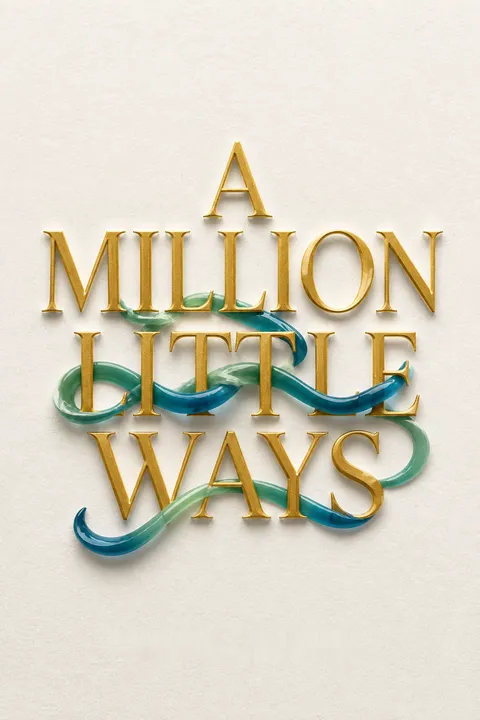
Key Takeaways
1. You Are God's Masterpiece, a Living Poem
For we are God’s masterpiece.
Divine design. The fundamental truth of your existence is that you are God's "poiema," a Greek word translated as "masterpiece" or "workmanship," from which our English word "poem" derives. This means you are not merely a creation, but an expressive work of art, designed by the Divine Artist to reflect His glory. This identity is foundational, preceding any work you do.
Image bearers. Just as God made art in the beginning by speaking the world into being, He made humanity in His own image, breathing life into us. This inherent image-bearing capacity means that creativity is not an afterthought or a hobby, but an intrinsic part of who you are. Your life itself is a walking poem, a unique expression of God's self.
Highest calling. Your ultimate purpose is not to find one great thing to do, but to glorify one great God in a "million little ways." Whether you are a cashier, a teacher, a parent, or a musician, you have the power to influence and touch souls by being fully awake to your Maker and aware of His making of you.
2. Uncover Your Art by Looking Within and Back
Uncovering your art is about uncovering what is really there within you, coming face-to-face with your profound capacity for beauty as well as sin, your deepest dreams and your longing for God.
Inner exploration. To uncover the art you were born to make, you must bravely look within, paying attention to your deepest desires—not just surface wants like comfort or happiness, but the profound longings for truth, love, and God. This requires quiet solitude to settle into what is most true, acknowledging both your capacity for beauty and for sin.
Childhood echoes. Your unique design often leaves hints in your past. Look back at your childhood dreams, passions, and even the things you ran away from. These early inclinations, like drawing elaborate floor plans or creating intricate Barbie narratives, are signposts to the "fingerprint of the Divine on your life."
- The author's dad, an alcoholic, unknowingly "preached" in his living room, foreshadowing his later career as a communicator.
- The author's sister, who meticulously arranged Barbie houses and dried flowers, now writes about creating beautiful homes on a budget.
Beyond the obvious. These aren't always grand, obvious aspirations. They can be subtle nudges, a mysterious connection to a foreign country, a desire to photograph every wedding, or a compulsion to write for free. These "first thoughts" or "wildest dreams" are worth exploring, as they reveal the unique ways God wants to declare His glory through you.
3. Sink into God's Presence to Find Your True Foundation
Sink and know that I am God.
Radical dependence. Once you begin to uncover your art, the natural inclination is to push for results or to rely on your own strength. However, true artistic living requires "sinking" into God, a radical act of surrender and humility. Like the sea, God is untamable and independent, and resisting His rhythm leads to exhaustion.
Embrace failure. The Hebrew word for "cease striving" in Psalm 46:10 can also mean "fail." This implies that true knowing of God often comes through acknowledging our inadequacy and inability to control outcomes.
- Peter's eagerness to be fully washed by Jesus, then his fear on the water, highlights the human tendency to rely on self-effort or succumb to doubt.
- Jesus's response, "You have so little faith... Why did you doubt me?" redirects focus from Peter's failure to his lack of trust in Christ.
Relief in smallness. Sinking into God brings the relief of not having what it takes. It's a prerequisite for true art, as it reminds us that our work is impossible without divine resources. This isn't a sinking into despair, but a sacred sinking into knowing God, which paradoxically buoys the soul and allows us to float on His grace.
4. See Critics as Gifts That Reveal Your Humanity
The critic carries gifts he never meant to bring, motivation he has no awareness of.
Unavoidable presence. As you uncover and release your art, critics will inevitably emerge, both external (hateful emails, dismissive colleagues, disapproving family) and internal (the voice in your head). These voices can be loud and paralyzing, but they are also integral to the artistic journey.
Hidden gifts. Critics, even harsh ones, offer a unique gift: they force you to confront your deepest fears and insecurities. Their words often echo your own self-doubt, reminding you of your humanity and your desire for approval. This confrontation, though painful, can lead to profound self-awareness.
- The author's fear of criticism stemmed from a desire to please man more than God, revealing a "glory hog" tendency.
- The sting of critique, even if well-intended, signifies that you are alive and human, not a failure.
Redemption through death. The Christian identity of having "died to this life" means that the critic's words cannot truly kill you. When you embrace this spiritual death, you are freed from the need for external validation. The critic's voice, by highlighting your weaknesses, ultimately pushes you to rely more on God and reaffirm your core beliefs in His power and love.
5. Listen Deeply to Your Tears, Questions, and Heartbreak
Our tears are tiny messengers, secret keepers of the most vulnerable kind, sent to deliver a most important message—Here is where your heart beats strong.
Emotional compass. Your tears are not signs of weakness, but powerful messengers revealing what truly moves your soul and hints at your unique design. Whether it's a painting, a song, a movie, or a friend's story, paying attention to what evokes deep emotion can uncover hidden desires and connections to your purpose.
- Melissa cried for a movie character's loss before she could grieve her own mother, showing how art can safely access deep pain.
- The author's tears for a father baptizing his son, or a man comforting a disabled woman, reveal a heart attuned to love and connection.
Questions as pathways. Don't fear your questions; they are often pathways to deeper understanding and self-discovery. The author's confusion about grace led to a lifelong journey and her first book. Questions, even unanswered ones, can lead to becoming "more fully yourself."
Heartbreak's revelation. What breaks your heart—injustice, personal loss, global suffering—is a profound indicator of what is deeply important to you. Embracing heartbreak, rather than numbing it, allows you to be fully human and reveals areas where your unique art can bring hope and light, as the author experienced in the Philippines.
6. Show Up Authentically, Embracing Your Limits
Show up human. Show up authentic. Show up right where you are, with two feet on your Tuesday.
Poetic presence. To release your art, you must "show up" as a poet in your everyday life, not just with your body, but with your soul. This means approaching ordinary moments—reading to a class, doing dishes, engaging in conversation—with intentionality and a sense of mystery, rather than as mere tasks on an agenda.
Limits as gifts. Your limitations, whether fatigue, disability, or life circumstances, are not obstacles but potential gifts. They force creativity and remind you of your dependence on divine resources. Just as a videographer finds "fun" in making do with missed shots, or an interior designer is motivated by an oddly shaped room, limits can inspire unique artistic solutions.
- God, limitless, chose to pour Himself into human form, embracing limits to fulfill His mission.
- Embrace your boundaries; they create space for your soul to breathe and prevent burnout.
Courage over readiness. Don't wait to feel courageous or perfectly ready to show up. Courage is not the absence of fear, but moving forward despite it. It's a gift that grows as you act, bleeding neediness and leaning on Jesus. Your "shaky, sweaty mess" is a reminder that you are desperate to depend on a source other than yourself, and that is where God delights to work.
7. Embrace Waiting as a Sacred Part of Creation
Much good happens in the space where nothing is happening.
The rhythm of rest. Waiting is a vital, often frustrating, part of the creative process. Like the rests in a musical piece or the slow growth of a seed, significant internal work happens during periods of apparent stillness. This "rest between two notes" shapes you for sacred work, even when external movement is imperceptible.
Invisible movement. Even in waiting, there is movement. The author and her husband, sensing a shift in their lives, committed to two minutes of prayer daily. This small, consistent act, like an archer's slight shift, led them to a vastly different place over time. Living things move, even if slowly and invisibly, like roots burrowing deep in winter.
Trust the unseen. Artists, like Michelangelo seeing David in marble or Steven Tyler hearing melodies as "hat racks," cultivate the ability to see the "not-yet" in the "now." This requires trusting that the work is already finished in an invisible realm, and your task is to uncover it. The "book is just the souvenir" of the deeper, invisible work happening within your soul.
8. Offer Your Art Generously, Weakness Included
Our gifts are not from God to us, but from God through us to the world.
Unconditional giving. Your art, whether a talent or a unique way of being, is meant to be offered generously, not hoarded or rationed based on perceived appreciation or outcome. The violinist playing for toddlers, or Jesus turning water into wine at a wedding, exemplify offering without demanding a grand stage or specific results.
- Jesus's first miracle was a "secret miracle" at a wedding, not a public spectacle.
- The boy's offering of five loaves and two fish, a meager livelihood, was transformed into abundance.
Authentic offering. Offer yourself as you are, including your weaknesses and imperfections. The author's struggle to live perfectly what she writes about doesn't disqualify her; it makes her offering humble and relatable. Your "ugliness" and "inadequacy" can be part of the art, as Christ works miracles even—or especially—in weakness.
Brave yes, strong no. Generous offering also involves discerning when to say a "brave yes" and a "strong no." Saying yes to God means showing up where you are, loving others, and committing to your convictions. Saying no, when necessary, protects your priorities and prevents obligation from stifling your true art.
9. Cultivate Wonder in the Ordinary and Mysterious
Wonder is the only adequate launching pad for exploring a spirituality of creation, keeping us open-eyed, expectant, alive to life that is always more than we can account for, that always exceeds our calculation, that is always beyond anything we can make.
Childlike perspective. Embrace wonder as a child does, seeing everything—a rock, a leaf, a violinist—as equally impressive. This perspective prevents you from categorizing art into "worth" and "waste," allowing you to find beauty and meaning in all things. The ease of releasing your art is directly tied to your willingness to embrace this childlike wonder.
Union with Christ. The greatest wonder is not just that God can show Himself through us, but that He prefers it. "Christ in you, as you" means He is clothed in your humanity, talents, and weaknesses, revealing His glory through your unique personality. This union makes your everyday actions, like serving lunch or making a meal, an expression of God's presence.
Time's tapestry. Wonder also extends to the boundaries of time—the "terrible, fantastic, mysterious wonder" of beginnings and endings. Unexpected gifts, like early snow or a surprise twin diagnosis, often become the happiest memories because they break routine. Even in the sadness of endings, like a loved one's death, there's a heightened awareness of grace and blessing, reminding us that "heaven touches earth every minute."
10. Create with Courage, Choosing to "Pick Yourself"
Pick Yourself.
Overcoming procrastination. The ultimate step in releasing your art is to stop procrastinating and "pick yourself." This means acknowledging that you have the tools, permission, and inherent value to contribute. Procrastination is often a manifestation of resistance, a fear of the risk involved in pursuing something meaningful.
Embrace your calling. Even if you "hate your calling" some days, or feel "not cut out for this," remember that God delights in working through your perceived inadequacies. Your unique blend of interests, desires, and quirks is not a coincidence; it's how God wants to display His glory.
- "No, you are not cut out. You have been placed in."
- "Someone else can do it better" is a lie; your voice may be the one someone finally hears.
Courage to create. Creating requires courage, not the absence of fear, but the willingness to act despite it. Like Henry Fonda, who still felt sick before performances at 75, fear is a constant companion for the artist. But the art is bigger than the fear. By choosing to create, you affirm your identity as God's beloved and release His art into the world, transforming your life into a powerful act of belief.
Review Summary
A Million Little Ways receives mostly positive reviews, with readers praising its inspiring and encouraging message about uncovering one's inner artist. Many find Freeman's writing poetic and thought-provoking, appreciating her perspective on creativity as a form of worship. Some readers note the book's repetitive nature and occasional lack of clarity. Overall, reviewers appreciate the book's emphasis on embracing one's unique gifts and living authentically as God's creation, though a few found the content less helpful or too abstract.
People Also Read



About the Author
Other books by Emily P. Freeman

Download PDF
Download EPUB
.epub digital book format is ideal for reading ebooks on phones, tablets, and e-readers.








































