
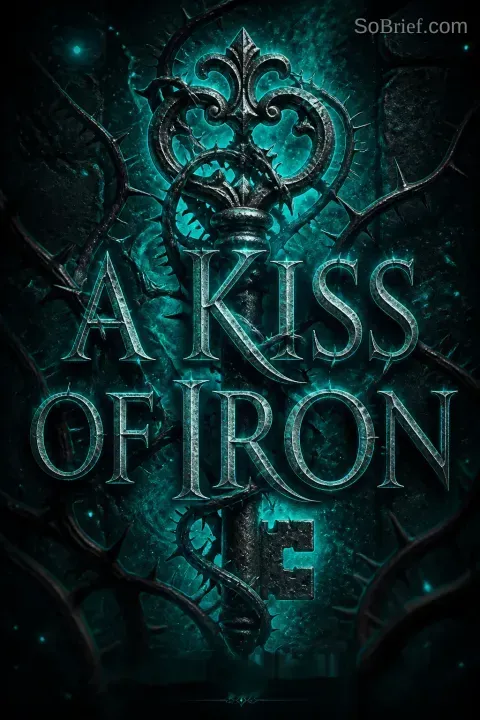


Plot Summary
The Bailiff's Warrant
Kat1 is digging in her vegetable beds when a bailiff arrives at Markyate Cell with a warrant. Her absent husband, Robin Fanshawe,7 has secured a five-thousand-pound debt against the property. The bailiff, unexpectedly sympathetic, explains the terms: pay five hundred pounds within a week, then the same each month, or lose everything.
Kat1 has been selling furniture and paintings for years, growing her own food, and occasionally robbing travelers as the masked highwaywoman the Wicked Lady.1 None of it has been enough. After the bailiff leaves, she vomits in the garden, then tears out her rose bushes with her bare hands, thorns shredding her palms. The roses are useless beauty. She needs vegetables. She needs money. Whatever it takes.
This opening crystallizes Kat's existential condition: she is legally powerless, managing a man's mess with her labor and her body, but owning nothing. The estate is his; even her name was his until she changed it back. Her destruction of the roses is self-punishment disguised as pragmatism. She destroys what she loves before someone else can take it. The bailiff's small kindness (explaining the payment plan) introduces the idea that systems can bend, but Kat's learned helplessness prevents her from fully registering it. Survival has narrowed her world to the brutal binary of useful or useless.
The Fae on the Road
Desperate after missing a carriage the night before, Kat1 rides out again in the rain. She stops a lone rider2 and demands his valuables, taking a pouch of coins and a small gold orb engraved with constellations. When his hood falls back, she sees pointed ears and silver eyes that glow in the darkness. A scar cuts through his lip to his chin.
He is fae, and his fury promises death. Kat1 flees on her sabrecat Vespera, hides in a tree as he searches below, and escapes home. The next morning, a royal carriage arrives. A courtier presents a summons: Queen Elizabeth V commands Lady Katherine Ferrers1 to appear at court as a lady-in-waiting. She has two weeks to prepare. She has no choice.
The highway robbery establishes the central dynamic in reverse: Kat is the predator, Bastian the prey. Her fae-worked pistol (a gift from her father to protect her honor) and his orrery (a memento of his dead father) become twin symbols of their respective traumas. The summons immediately after the robbery suggests fate, but is actually political machination already in motion. Kat's question (is this a trap for the Wicked Lady?) reveals her constant state of hypervigilance. She cannot imagine that anyone might want her for reasons other than punishment.
The Queen's Jester
Kat1 arrives at Riverton Palace in her shabbiest silk gown, cannibalized from moth-eaten dresses. At her presentation, the queen surveys her with cool amusement, calls her a jester in motley attire, and remarks on the entertainment value of her old name and old dress. The courtiers laugh. At the queen's side, Lord Thomas Cavendish, the spymaster,3 whispers in her ear.
The queen corrects Kat's1 name from Fanshawe back to Ferrers, wielding the knowledge like a blade. Kat1 stands frozen, her face burning, before managing a precise bow and withdrawing. Alone, she weeps against her door until a blond servant girl interrupts: Cavendish3 summons her immediately.
Public humiliation as power ritual. The queen's cruelty is performative, reinforcing hierarchy for the court's entertainment. The name correction is strategically vicious: it signals that Kat's estrangement from her husband is known, rendering her sexually available for court intrigue while also marking her as a failure at wifely duty. Cavendish's whisper demonstrates his omnipresence and influence. Kat's response (perfect composure in public, collapse in private) illustrates the emotional cost of survival under constant scrutiny, a pattern she learned in childhood.
A Thousand Pounds Monthly
Cavendish3 explains that fae courts have sent suitors for the queen's hand, and he suspects Dusk Court of plotting against Albion. He wants Kat1 to seduce Bastian Marwood, the Night Queen's Shadow,2 and extract information. Her red hair, he claims, is irresistible to fae. He will pay a thousand pounds per month, fund a new wardrobe, and be her only necessary ally.
He fastens a pearlwort necklace around her throat to block fae charm, his fingers lingering. He instructs her to pose as a widow and never approach him in public. Kat1 accepts: the money will save her estate. Ella4 arrives shortly after with creams, beauty lessons, and frank instruction in the arts of seduction.
The recruitment is coercive seduction disguised as opportunity. Cavendish offers Kat exactly what she lacks (money, protection, purpose) while establishing control through physical proximity and the intimate act of fastening the necklace. His instruction to conceal her marriage plants the seed for catastrophic rupture. Kat's acceptance is not really a choice; she is choosing between this and homelessness. Ella's introduction brings warmth and genuine connection into the manipulation, making the trap harder to detect. The two women are being used in parallel, but Ella wears her exploitation more lightly.
Dancing with the Serpent
At the first ball, dressed in daring midnight blue velvet, Kat1 meets Bastian.2 He is the fae she robbed.2 She braces for exposure, but he looks at her with indifference until she implies he cannot dance. He whirls her onto the floor, holding her scandalously close. As they waltz, he explains he recognized her by scent: narcissi, snowmelt, spring's promise.
He followed her home that night and heard the summons to court. He lists her possible executions (noose or axe) and offers silence in exchange for a favor to be named later. A fae bargain is unbreakable. Trapped, Kat1 seals the deal with the ritual words, feeling the magic take hold.
The dance is combat disguised as courtship. Bastian's revelation that he knew her identity from the first moment completely inverts the power dynamic. His description of her scent is unsettlingly intimate; she is legible to him in ways she cannot control or conceal. The bargain is the first of many between them, each one tightening a bond neither fully understands. Kat's agreement is strategic survival, but the fae bargain's unbreakability introduces stakes beyond anything she has faced before. She has traded a definable threat (execution) for an undefined one (a future favor).
Shadows Over the Picnic
At the queen's picnic, the Earl of Langdon sneers at Kat1 for eating cake, remarking that she cannot have it and still wear fae fashions. Bastian's2 wine glass shatters in his grip. Black tendrils of shadow pour from him, snaking across blankets, knocking over teacups, advancing on Langdon. The court watches in horror as Langdon babbles apologies, backing away from the sentient darkness.
Asher8 grips Bastian's2 shoulder, physically restraining him, until the shadows finally dissipate. Bastian2 growls that Kat1 is far above Langdon. Later, Kat1 seizes the opportunity and proposes a new bargain: she will keep quiet about Bastian2 breaking rules by leaving the palace in exchange for him pretending to be her lover and ally at court.
This is the first public demonstration of Bastian's power, and it is terrifying. The shadows externalize his emotional state; they reveal what his controlled face hides. His violence on Kat's behalf is the first time anyone has publicly defended her, which makes it seductive despite its danger. Kat's immediate pivot to bargaining is pure self-preservation instinct. The fake relationship proposal serves both their interests: she gains a protector, he gains cover for his activities. But calling it fake gives them permission to explore what is already becoming real.
Voyeur in the Maze
Cavendish3 sends Kat1 to the palace maze at night. She discovers Lara,9 Bastian's2 liaison, having ecstatic sex with Langdon on a stone table at the maze's center. Transfixed, Kat1 watches their raw pleasure, her own body responding urgently. Bastian2 materializes behind her, clamps a hand over her mouth, and pins her against the rose trellis.
He grinds against her, fingers her through her trousers, and commands her to imagine herself in Lara's9 place with him. When she moans, he covers her mouth. Footsteps approach; he withdraws and tells her to flee. Alone in her room, Kat1 touches herself thinking of him, coming twice, still aching and unsatisfied.
This scene operates on multiple registers simultaneously. For Kat, it is sexual awakening through witnessing: Lara's pleasure shows her what she has been denied. For Bastian, it is calculated seduction wrapped in genuine desire. The threat of discovery adds transgressive charge, but mirrors Kat's double life: always watching, never fully inhabiting her own experience. His withdrawal before her climax is both cruelty and restraint; he refuses to let her finish, but he also refuses to use her vulnerability for information. The interrupted pleasure becomes a promise that keeps her wanting more.
Lara's Final Breath
During a garden party, Kat1 enters a yellow parlour and finds Lara9 dead on the floor, strangled. A gold pendant shaped like a seven-pointed star with a tiger's eye gem is clutched in her rigid fingers. Bastian2 arrives moments later, also summoned by a forged note in Kat's1 handwriting. Someone tried to frame him.
Together they track wet footprints through the empty palace, but the trail fades. Bastian2 brings Kat1 to his magically secured suite for safety. While he searches the rest of the palace alone, Kat1 searches his desk and finds a coded note with a map to a drop point in the garden arbour. She copies it for Cavendish3 before Bastian2 returns.
The murder crystallizes the stakes of court intrigue. Lara was collateral damage, killed because she was inconvenient. The method (strangulation) is intimate, suggesting personal betrayal. The forged note and framing attempt reveal that Bastian himself is a target. Kat's dual response (genuine shock at the murder, but also completing her spy mission) illustrates her compartmentalization. She can mourn Lara and exploit her death simultaneously. The pendant links the killer to fae magic and power amplification, a clue that will take most of the novel for Kat to fully understand.
The Spymaster's Confession
Cavendish3 summons Kat1 to his office. While pinning her against the wall, he reveals that Lara's9 death was his work, a punishment for Kat's1 failure to remove the woman from her liaison post quickly enough. He controls the investigation; the Watch answers to him. Kat1 spots the repaired star pendant around his neck and realizes he is the killer.
He then orders her to undermine and destroy Lara's9 ally Ella4 if necessary. Kat1 walks the corridors afterward in shock, pressing her forehead to cold glass. She is trapped working for a murderer with unlimited power and zero accountability. Her only escape is the three-thousand-pound prize in the queen's upcoming sabrecat race.
This is the fulcrum where spy thriller overtakes romance. Cavendish's confession transforms him from manipulative boss to outright villain. His method (strangulation) echoes her uncle's violence, linking patriarchal control across different men in Kat's life. His invulnerability eliminates hope of justice through official channels. Kat's physical reaction (cold glass against skin) is sensory grounding against dissociation; she is beginning to recognize the mortal danger she occupies. The race becomes her lifeline, the one thing she can control.
Over the Waterfall
Kat1 secretly trains for the queen's ten-mile sabrecat race, hoping to win three thousand pounds and escape Cavendish.3 Bastian2 discovers her secret and insists on helping, timing her routes with his orrery. During the race, Eckington deliberately rams her, and the stepping stones she planned to shortcut have been sabotaged: one stone is missing. Vespera plunges into the rapids.
Kat1 clings to the saddle as the current drags them toward a fifty-foot waterfall. Just as Vespera's back legs slip over the edge, an androgynous red-haired fae topples a tree across the stream, giving them a bridge. Bastian2 finds her soaked and shaking, wraps her in his jacket, and later breaks Eckington's arm and nose. Disqualified, Kat1 is trapped.
The race represents Kat's attempt at agency: earning her own escape rather than depending on men. The sabotage (by Dawn Court, with Cavendish's knowledge, as he later reveals) demonstrates how systems conspire to keep her trapped. Her rescue by an unexpected ally (a Dawn Court fae who should be her enemy) hints that alliances are more complex than factional politics suggest. Bastian's retaliatory violence on her behalf is both protective and possessive; it is also a reminder that he, like her, operates outside official systems of justice.
Stripped of Protection
At a ball, a Dawn Court sister with rose-gold hair touches Kat's1 shoulder and secretly removes her pearlwort necklace. Stripped of its protection, fae charm overwhelms her. Kat1 becomes uninhibited, trying to strip for Bastian2 on the dance floor, begging him loudly to take her to bed. Ella4 and Bastian2 realize the necklace is missing.
Bastian2 carries Kat1 to his suite and, rather than exploit her state, gives her a sleeping draught. He retrieves her discarded necklace from the gardens while she sleeps. Kat1 wakes mortified, apologizing profusely. He dismisses her shame: she was under magical influence and not responsible. She has nothing to apologize for, he insists.
The charm incident forces Kat to confront what she wants without her usual defenses. The desires she voices are not false; they are her repressed truth amplified by magic. Bastian's refusal to touch her when she cannot meaningfully consent demonstrates a sexual ethics that complicates his reputation as a remorseless killer. The Dawn Court sister's sabotage reveals the gendered dimensions of fae politics: women weaponize each other's vulnerabilities. Kat's mortification afterward reflects how deeply shame has colonized her sexuality; even when blameless, she assumes fault.
Buried Alive
Uncle Rufus5 corners Kat1 and demands she spend the night with Lord Caelus10 of Dawn Court. When she refuses, he chokes her against the wall. The pressure on her throat shatters a fifteen-year-old mental block. She relives a buried memory: at fifteen, Uncle Rufus5 dragged her to the forest at night and showed her the grave of Dia, a stable hand he had murdered years earlier.
He choked her over the open grave, then pushed her in. She landed beside Dia's skeletal corpse. He made her lie there in the dark and cold, shoveling dirt onto her whenever she moved, threatening to bury her alive if she ever disobeyed again. She wet herself in terror.
The recovered memory is the novel's darkest revelation, the hidden root of Kat's entire personality. It explains her compulsive obedience, her self-denial, her conviction that wanting anything leads to annihilation. Rufus's method (using a real corpse, making the threat existential and protracted) is sadistic conditioning pushed to its extreme. The somatic details (dirt, cold, urine, bone) make the memory viscerally undeniable. The trauma also explains why Cavendish's wall-pinning triggered frozen compliance; Kat's body learned at fifteen that resistance means death. Her mind buried the memory to survive; her body never forgot.
The Safest Place
Bastian2 drives off Uncle Rufus5 with his shadow magic and double self. He takes Kat1 to his suite, runs a bath, and climbs in fully clothed to hold her without any sexual implication. He teaches her breathing exercises to ground herself when memories surface. Over several days, she cycles through nightmares, screaming, and exhausted sleep.
He stays by her side constantly, sleeping in a chair opposite the bed. Slowly, she begins eating again. They exchange vulnerabilities: she tells him about Fantôme's death and the grave; he describes his father's war trauma and PTSD episodes. She makes him promise not to kill Uncle Rufus.5 He agrees, enraged but bound by his word. She starts to heal.
This sequence subverts the caretaker dynamic. The feared Serpent becomes a gentle, patient nurse. His fully clothed bath entry is a striking image of nonsexual intimacy; he meets her in her vulnerability without demanding anything. The mutual confessions create genuine parity: both carry trauma, both understand the cost of survival. Kat extracting the promise not to kill Rufus is an assertion of agency; she chooses mercy, but on her own terms, not out of fear. The healing process is slow and nonlinear, which makes it feel earned rather than magical.
The Pirate Queen Returns
A new queen arrives from across the ocean: Queen Vice of Sanctuary,6 a pirate ruler. When Kat1 sees her during the formal presentation, she recognizes her sister Avice,6 presumed dead for four years. Avice6 has changed: taller, tanned, sea-blue eyes instead of brown. She is married to Knigh (Knighton Villiers), the man she was originally forced to wed but now loves.
The sisters embrace, weeping. Over several days, Avice6 tells her story of shipwrecks, battles, sea monsters, and finding a place where she could become herself. Kat1 sees what a loving partnership looks like. When Avice6 departs, Kat1 feels joy at her survival but sharper grief at her own trapped life.
Avice functions as both foil and promise. Where Kat internalized trauma into obedience, Avice fled and transformed utterly. Her new identity (Vice, a pirate queen) demonstrates that reinvention is possible, that the cage is not absolute. The Villiers marriage, once a prison, became a choice when rebuilt on mutual love rather than familial duty. Avice's presence momentarily cracks Kat's despair, but her departure deepens it; witnessing freedom makes the cage more unbearable. The reunion also retroactively reframes Kat's protective instincts: helping Avice escape years ago saved her sister even when Kat could not save herself.
The Husband Interrupts
Kat1 and Bastian2 attend a masked fae sex party and drink arianmêl, a substance that renders humans incapable of lying. Under its influence, Kat1 confesses she belongs to Bastian.2 He admits he has never wanted anything more. They nearly consummate their relationship when a voice cuts through the antechamber: Robin Fanshawe, Kat's husband,7 demands Bastian2 unhand his wife.
Bastian2 freezes. For fae, marriage contracts are sacred and adultery a profound taboo. He withdraws, his expression turning to ice. Kat1 chases him, trying to explain that she never chose the marriage, that she was sold into it, but he cannot hear her. The contract is absolute. She has unwittingly made him complicit in its violation.
The arianmêl scene strips away all pretense; both speak pure truth, and that truth is mutual, overwhelming desire. The interruption is devastatingly timed, but the real tragedy is cultural. To Bastian, a contract is sacred, unbreakable, the bedrock of fae identity. To Kat, the marriage contract was coercion wearing legal language, something imposed on her without consent. Neither is wrong; both are trapped by systems that cannot recognize each other's premises. The rupture is not about jealousy or betrayal but about incompatible worldviews colliding at the worst possible moment.
The Serpent's Confession
Kat1 confronts Bastian2 in his suite. He turns cruel. When she accuses him of hypocrisy, he tears open his shirt, revealing a scar across his torso and the scar through his lip. He killed his father deliberately, he says, hacking him apart during a coup attempt. His father was a traitor general who betrayed the Night Queen, and Bastian2 proved his loyalty by executing him.
Then he beheaded the treacherous princess. He tells Kat1 she wanted him to be a secret hero, but he has always been exactly what they call him: the Serpent, a remorseless killer.2 Kat1 returns to her room devastated. Robin7 is waiting. When she speaks defiantly, he backhands her across the face, splitting her lip.
This is the romantic rupture, but also a crisis of interpretation. Kat's understanding of Bastian collapses; the man she thought she knew seems not to exist. His confession is performative cruelty designed to push her away, but it is also truth he believes about himself. Robin's slap immediately after compounds the message: all men, ultimately, are dangerous. Yet the three violent men in Kat's life (Rufus, Robin, Bastian) represent different things: sadistic control, casual entitlement, and political necessity. Kat's despair comes from being unable to distinguish between them anymore, from the fear that love is just another trap.
The Poison Ultimatum
Ella4 visits Kat,1 and Kat1 sees finger-shaped bruises on her throat. Cavendish3 choked her too. Furious, Kat1 storms to his office to resign. The false Cavendish3 presents her with a vial of glowing purple aconite and an ultimatum: poison Bastian2 at the queen's wedding, or he will kill both Bastian2 and Ella4 himself. It is not a choice.
Kat1 agrees but dictates her own terms: a large bonus, Ella's4 absolute safety, and her freedom to return to her estate afterward. She takes the poison. Blaze, her dressmaker, sews a secret pocket into her ceremonial wedding robe, giving Kat1 a knowing, mournful look. The days blur into gray mechanical routine; Kat1 is already grieving.
The ultimatum crystallizes the book's central ethical question: what do you sacrifice to survive, and when does survival become its own kind of death? Kat's decision is utilitarian (one life versus two) but also strategic; she negotiates the best terms possible from absolute powerlessness. The bruises on Ella's neck, mirroring Lara's fatal ones, make the threat visceral and immediate. Blaze's knowing look as she sews the pocket suggests a quiet sorority among women who recognize each other's desperate bargains. Kat's acceptance of the mission is the inverse of her earlier refusal; something essential in her has been broken.
The Poisoned Chalice
At the wedding in the sacred grove, Kat1 is meant to pour poisoned mead for Bastian.2 As she holds the cup, she notices something wrong: the Cavendish3 before her wears no necklace and does not leer at her. This is not the man she worked for.
Realizing the real Cavendish3 has been replaced by a changeling3 working to incite war between Albion and Elfhame, Kat1 grabs the glass and drinks the aconite herself. She flees to his office, confronts the shapeshifting fae,3 and shoots him with her fae-worked pistol, wounding him.
Dying of poison, she collapses. Bastian2 arrives and kills the changeling3 with his double self. He and Asher8 attempt desperate blood transfusions, but the antidote will not hold in Kat's1 body. Bastian2 carries her through a shadow door to Elfhame to find stronger healers.
The climax recontextualizes the entire novel. Kat's sacrifice is not romantic suicide for love; it is a strategic choice to prevent a war that would kill thousands. Her discovery of the changeling validates her instincts; she was right to distrust Cavendish but wrong about the nature of the threat. Drinking the poison is the first fully free choice she has made in the book, an assertion of agency that costs her everything. The changeling's death does not resolve the conspiracy; he was working for someone else. The true villain remains at large, and Kat's survival is uncertain.
Epilogue
Bastian2 carries Kat's1 dying body through a shadow door into Elfhame. He rides a stag through the frozen night, pushing the creature to its death, desperate to reach the healers in Tenebris before the aconite claims her. Kat1 drifts in and out of consciousness, murmuring about thorns and serpents.2
At the House of Healing in what is now Luminis (Dawn Court's daylight domain), a healer initially refuses because Dusk's authority has waned with the sunrise. Bastian2 bargains desperately: anything she wants in exchange for Kat's1 life. He watches Kat1 lying pale and small on the marble bed and reflects that he has done terrible things he would do again without hesitation. But if Kat1 dies, part of him will follow.
Bastian's point of view finally reveals the depth of feeling he has concealed throughout the novel. His internal monologue confirms what Kat could never quite trust: his care is real, not tactical. The bargain with the healer mirrors every bargain he has made with Kat, but now he is the desperate supplicant. The stag ridden to death recalls Kat's own willingness to sacrifice what she loves for survival. His final reflection (that losing her would kill part of him) transforms their relationship from physical attraction into an existential bond. He needs saving as much as she does; he just does not know it yet.
Analysis
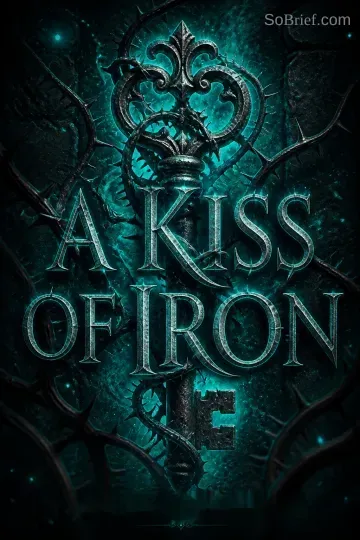
A Kiss of Iron is a fantasy romance that earns its darkness by grounding it in the real. Kat1 is not a warrior heroine; she is a woman who has survived by making herself small, by wanting nothing, by obeying the rules of a system designed to consume her. Her arc traces the reclamation of desire and anger as life forces rather than dangers. The novel understands that for women trapped in patriarchal structures, rage is not a flaw but a survival mechanism waiting to be unlocked. The fae elements serve as metaphor and amplification: the fae cannot lie, but humans must lie to survive. Bastian's2 sacred contracts mirror Albion's marriage laws, both binding people without their true consent. The changeling antagonist3 literalizes what Kat1 has always sensed: that powerful men are masks worn over predation. The romance between Kat1 and Bastian2 works because it is built on mutual recognition. He sees her hidden fire; she sees past his monster's reputation to the wounded man beneath. Their tragedy is not misunderstanding but incompatible worldviews colliding, fae absolutism meeting human compromise. The novel's most radical proposition is that a woman who has been taught all her life that she is expendable might, in the final moment, choose sacrifice not as submission but as the first fully free act of her life. That choice to drink the poison herself rather than kill the man she loves,2 while preventing a war, is not self-destruction. It is self-claiming, the final shattering of the cage of obedience.
Review Summary
A Kiss of Iron received mixed reviews, with many praising its steamy romance, complex characters, and intriguing plot twists. Readers enjoyed the chemistry between Kat and Bastian, the court intrigue, and the exploration of feminine rage. Some criticized the pacing and character development, while others found the world-building confusing. The spice level was frequently mentioned as a highlight. Overall, the book was described as an addictive and entertaining read, despite some flaws, with many readers eager for the sequel.
People Also Read


Characters
Kat (Lady Katherine Ferrers)
Desperate noblewoman turned spy and highwaywomanA financially ruined viscountess in her late twenties, secretly the masked highwaywoman the Wicked Lady. Red-haired and green-eyed, with a body shaped by manual labor rather than leisure. She survived a sadistic uncle5 who murdered her pet sabrecat and nearly buried her alive in a corpse-filled grave when she was fifteen. She copes through rigid self-control: obey rules, expect nothing, want nothing. Her pragmatism masks deep, frozen rage. She is sharp at reading people and fiercely loyal to her two aging servants. Her arc traces the painful reclamation of desire, anger, and the right to live rather than merely survive. She has been molded into a pawn by every man in her life and is only beginning to recognize her own power.
Bastian Marwood
The Night Queen's ruthless ShadowA powerful fae lord with command over shadows and the rare ability to split into two corporeal selves. Called the Serpent and the Bastard of Tenebris, he wears his terrifying reputation like armor, earned through genuinely terrible acts including executing his own traitor father. His scarred face and torso tell a story of violence survived. Beneath the cold, sardonic exterior is a man haunted by what he has witnessed and done, driven by fierce loyalty to his queen and a protective instinct he struggles to acknowledge. He is drawn to Kat's1 hidden fire and frustrated by her self-denial. His arc involves learning that vulnerability is not weakness and that some bonds transcend even sacred contracts.
Lord Thomas Cavendish (the changeling)
Impostor spymaster and hidden antagonistAppearing as the queen's sharp-featured spymaster, this fae changeling recruits Kat1 into a web of manipulation. He wears a tiger's eye star pendant against his skin to maintain his stolen human form. He uses a mixture of financial诱惑, physical intimidation (pinning Kat1 against walls, yanking her hair), and threats to everyone she cares about to control her. He treats people as chess pieces, disposable when inconvenient. His goal is to destabilize the alliance between Albion and Elfhame, presumably for Dawn Court's benefit. He murdered Lara9 with his bare hands when Kat1 failed to remove her quickly enough.
Ella (Lady Eloisa-Elizabetta-Belladonna Fortnum-Knightly-Chase)
Kat's fellow spy, tutor, and true friendA petite, caramel-curled courtier whose warmth and outrageous sexual candor mask her own entrapment in Cavendish's3 network. She teaches Kat1 the arts of seduction, self-care, and navigating court politics. She crafts her own cosmetics and potions. Beneath her breezy cheer, she carries her own bruises from Cavendish's3 violence. Her friendship becomes Kat's1 lifeline, and Kat's1 fierce protectiveness of Ella ultimately drives the climactic decision. She represents the possibility of finding genuine connection within corrupt systems.
Uncle Rufus (Ser Rufus Ferrers)
Kat's sadistic uncle and childhood tormentorA tall, cold-eyed man whose ambitions for the Ferrers name justify any cruelty. He murdered Kat's1 sabrecat cub Fantôme when she was fifteen as a lesson in obedience. He killed a stable hand named Dia years earlier and buried her body in the forest. When Kat1 was fifteen, he choked her over Dia's open grave and forced her to lie inside with the corpse for hours, threatening to bury her alive if she ever disobeyed again. He views women as tools for advancing family status. His presence at court triggers Kat's1 most devastating trauma recovery and nearly kills her.
Avice (Queen Vice of Sanctuary)
Kat's sister, a pirate queen presumed deadKat's1 younger sister, presumed lost at sea for four years. She survived, rebuilt herself, and now rules as a pirate queen. Half-fae through a bargain their mother made, she has sea-blue eyes and latent magical abilities. She fled an arranged marriage and found love with Knigh Villiers, the very man she was meant to wed. Where Kat1 responded to trauma with rigid self-control, Avice fled and transformed. Her reunion with Kat1 provides a glimpse of what freedom and a loving partnership look like, intensifying Kat's1 despair at her own trapped circumstances.
Robin Fanshawe
Kat's absent, spendthrift, abusive husbandTen years Kat's1 senior, with thinning hair and a weak chin. He has been gallivanting around Europa for years, spending money the estate does not have. He secured the crippling debt against Markyate Cell without informing Kat1. When he finally appears at court, alerted by Uncle Rufus5, it is to assert legal ownership, not affection. He slaps Kat1 hard enough to split her lip when she speaks defiantly. He represents the legal cage of marriage in Albion, where wives are property with no right to divorce without permission. His casual violence and neglect are the mundane face of patriarchal oppression.
Asher Mallory
Dusk Court healer and queen's suitorA dark-haired Dusk Court fae with the gift of healing. Calm, diplomatic, and often the restraining hand on Bastian's2 more violent impulses. He is chosen by Queen Elizabeth as her husband, securing the alliance between Albion and Elfhame. He works desperately alongside Bastian2 to save Kat1 after she drinks the aconite, performing blood transfusions when his magic alone cannot cure the poison. His steady presence provides a counterpoint to Bastian's2 intensity.
Lara Granville
Bastian's original human liaison, murder victimElegant, composed, and beautiful, she lip-reads to compensate for hearing loss from a childhood illness. She was assigned to help Bastian2 integrate at court and was having a secret, passionate affair with the Earl of Langdon. Her murder by strangulation is the novel's central mystery, committed by the false Cavendish3 when Kat1 failed to remove her from her post. Her death haunts Kat1, who found the body, and drives much of the plot's moral weight. She represents the collateral damage of political machination.
Lord Caelus
Dawn Court's arrogant suitorChestnut brown hair that glints with unnatural light. Arrogant and sexually forward, he views Kat1 as a prize to be taken from Bastian2. His request for Kat's1 company, channeled through Uncle Rufus5, precipitates the crisis in which Rufus5 tries to deliver Kat1 to him. He represents Dawn Court's predatory interest in destabilizing Dusk Court's position through any means available.
Winifred (Win)
Kat's opportunistic fence for stolen goodsFreckled, dark-haired, and theatrically emotional, she has handled Kat's1 stolen goods for a decade. She begins appearing at court to sell to aristocrats, blurring the line between legitimate commerce and fencing. Bastian2 finds her and uses her to locate the orrery. She is savvy, self-interested, but carries a strange, pragmatic loyalty to Kat1.
Seren
Kat's incompetent maid, actually Cavendish's spyA blond teenage girl with ringlets and an impish manner. Terrible at actual maid duties, she was planted by Cavendish3 to monitor Kat1 and report on her activities. Her presence means Kat1 has no true privacy. She represents the surveillance state Cavendish3 maintains.
Plot Devices
Bastian's Orrery
Celestial sphere with hidden message compartmentA gold orb about an inch across, engraved with stars and constellations. Its outer plates split apart to reveal tiny moving planets and a hidden compartment. It belonged to Bastian's2 dead father, making it deeply sentimental. Kat1 steals it in the highway robbery that begins their relationship. It functions as a timepiece and a night-light that projects moving stars onto walls. The hidden compartment contains a coded note that Kat1 removes before returning the orrery to Bastian2. The orrery symbolizes their tangled connection: theft, guilt, return, and the secrets still between them.
Pearlwort Necklace
Charm-warding protection against fae influenceA delicate silver chain with seed pearls formed into tiny five-petalled flowers, worn against the skin at all times. Given to Kat1 by Cavendish3 at her recruitment, it blocks fae charm, preventing magical manipulation. When a Dawn Court fae steals it during a ball, Kat1 becomes vulnerable and loses all inhibition, publicly trying to seduce Bastian2. The necklace must maintain skin contact to work. Its removal and recovery demonstrate both Kat's1 vulnerability and Bastian's2 protective instincts. It symbolizes the thin membrane between Kat's1 controlled self and her repressed desires.
The Aconite Poison
Undetectable fae-enhanced killing agentA vial of glowing purple liquid, magically treated to become colorless and tasteless when mixed into drinks. One of only two substances (along with iron) that can kill fae. Cavendish3 gives it to Kat1 with instructions to pour it into Bastian's2 mead at the queen's wedding. The poison requires a specific antidote that takes a week to brew. Kat1 ultimately drinks it herself to prevent war, setting up the life-threatening crisis. Its existence drives the climactic moral choice. It symbolizes the impossible decisions forced upon women with no good options.
Arianmêl
Truth serum that forbids human liesA clear, iridescent fae drink served at the masked sex party. It lowers inhibitions in fae but has a more dramatic effect on humans: it renders them incapable of lying. Under its influence, Kat1 confesses her true feelings for Bastian2, admitting she belongs to him. He, in turn, admits how much he wants her. The drink also makes humans more susceptible to fae charm. Its effects strip away the protective deceptions both characters have maintained, setting the stage for the catastrophic revelation of Kat's1 marriage when her husband7 appears. It forces uncomfortable honesty at the worst possible moment.
Tiger's Eye Star Pendant
Power-amplifying fae artifact worn against skinA gold pendant shaped like a seven-pointed star with a brassy-yellow tiger's eye gemstone at its center. It is a fae symbol for magical strength amplification, allowing the wearer to draw more power than they naturally possess. It must touch bare skin to function. Lara9 tore it from her killer's neck, making it the key clue in her murder. Kat1 later spots it on Cavendish3, where it is always worn under his clothes, and realizes he is the murderer. The repaired chain loop proves he retrieved it after the killing. Its need for skin contact becomes a critical detail in exposing the changeling's3 true nature.
Shadows of the Tenebris Court Series

About the Author
Other books by Clare Sager



Download PDF
Download EPUB
.epub digital book format is ideal for reading ebooks on phones, tablets, and e-readers.








































