
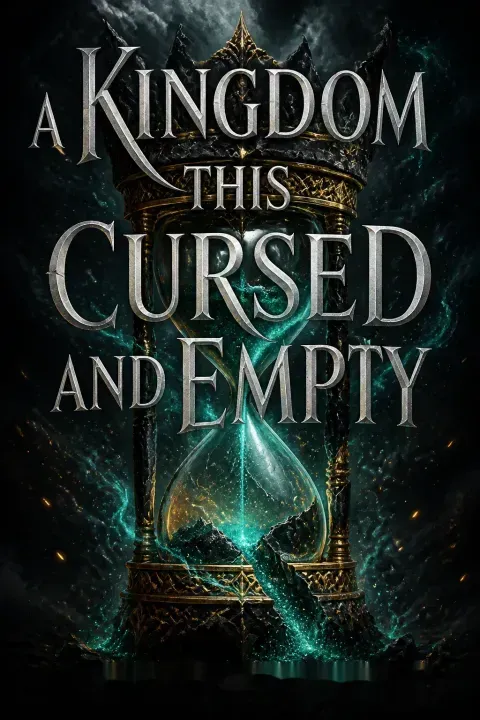


Plot Summary
The Ship of Broken Trust
Prisca1 grips the ship's railing, seasick and seething. The mercenary she trusted, the man she took to her bed, is the Bloodthirsty Prince,2 a fae legendary for destroying the hybrid sanctuary of Crawyth where her birth parents died. Now she is trapped on a merchant vessel with him, refusing food and conversation.
Below deck, wounded hybrids from Regner's4 dungeon huddle under a healer's care. Telean,9 her aunt, drills her on fae politics and her heritage as the hybrid heir.1 Then Lorian2 delivers devastating news: Regner's4 iron guards attacked a group of fleeing hybrids.
Four are dead. Rythos10 was wounded shielding one with his body. Madinia13 incinerated three guards. Prisca1 should have been there, could have frozen time and saved them. Lorian2 insists she is exactly where she needs to be: the biggest target, kept safe. The words feel like another cage.
Prisca's seasickness functions as physical manifestation of emotional betrayal: her body rejects her circumstances as violently as her heart rejects Lorian. The hybrid deaths establish the stakes and introduce a recurring motif: every moment she spends processing personal feelings costs lives. Lorian's insistence that she is 'where she needs to be' reveals his protective instinct while also exposing the power imbalance between them: he knows more, decides more, and she is left reacting to choices made in her name. This opening crystallizes the novel's central tension between personal desire and political necessity, trust and survival.
A Pirate's Blood Vow
A warship intercepts them, sleek and lethal. Daharak Rostamir,16 a pirate queen commanding eighty thousand men and two thousand ships, boards with the confidence of someone who has never been refused. She knows exactly who Prisca1 is, calls her Nelayra Valderyn,1 and proposes a deal: her fleet will escort them through Gromalian waters, preventing King Eryndan's forces from detaining or killing them.
In return, Prisca1 will owe her a favor of equal measure, bound by blood vow. Prisca1 counters: Daharak16 must guarantee Telean's9 safety aboard the continuing ship, provide an armed escort to Thobirea's western gates, and deliver them all without incident.
Daharak16 reveals a silver coin, a rare favor token from the Gromalian king, and agrees. They cut their palms. The magic seals. Lorian2 watches with quiet pride as Prisca1 handles the negotiation herself, though his eyes flicker warning: the favor will be significant.
The blood vow economy serves as both plot mechanism and moral commentary: every alliance costs something, and power is never freely given. Daharak functions as a mirror of what Prisca might become, a woman who has accumulated influence through force of will, her arms crisscrossed with the scars of countless bargains. Prisca's willingness to indebt herself demonstrates a growing political instinct. She's learning that sovereignty requires accruing obligations, that ruling means placing bets on future versions of herself. Lorian's restraint as she negotiates is deliberate: he is preparing her for the political arena by forcing her to swim in deep waters.
Three Arrows in the Dark
Riding through dense Gromalian forest toward Thobirea, Prisca1 and Lorian2 are ambushed by iron guards. A bolt of fae iron tears through her upper arm, severing her connection to time magic. Lorian2 is hit in the back, three arrows impaling him.
Prisca,1 desperate to save him, shoves him off the horse into the undergrowth and rides on as decoy. Hiding behind a tree, she snaps the arrow shaft and pushes the bolt through her own flesh, screaming into a branch. Blood streaming, she reaches for her power, freezes time, and slits one guard's throat.
But Lorian,2 despite his wounds, has already shifted into his towering fae form. He slaughters the remaining guards with terrifying speed. Afterward, bandaging his wounds, she asks directly: did he destroy Crawyth? He asks whether she would believe him if he said no. She cannot answer. He withdraws behind an expression of ice.
This sequence crystallizes the paradox at their core: they will die for each other but cannot trust each other. Prisca pushing the arrow through her own arm is visceral representation of her character, enduring agony to survive rather than waiting for rescue. Lorian fighting with three arrows in his back demonstrates his almost inhuman capacity for pain and his singular focus on her protection. His question about Crawyth, and her silence, exposes the wound that defined their dynamic throughout the book's first half: a lifetime of conditioning against the fae cannot be undone by a single act of heroism. Trust shattered requires more than valor to rebuild.
Sanctuary Among the Hybrids
Lorian2 whispers ancient fae words and a sprawling tent city materializes, hidden by wards for decades. Ten thousand hybrids live here, generations born in exile, protected by fae magic but never truly welcomed. Asinia7 sprints to embrace Prisca,1 her best friend and sister of the soul.
Tibris6 and Demos5 follow, the three siblings reunited. But the camp is deeply fractious. Hybrids mistrust the fae who abandoned them during the invasion; fae regard the hybrids as a potential security threat. Demos5 arranges a public fight: Prisca1 must face Roran, a loud-voiced hybrid who has been calling her a fraud.
She wields her time magic subtly, appearing impossibly fast, and holds a knife to his throat. He calls her 'Your Majesty.' The demonstration succeeds, but the weight of expectation settles on Prisca's1 shoulders like a second spine. Margie, a camp elder, warns her that fraternizing with Lorian2 publicly undermines hybrid trust.
The camp represents liminal existence: the hybrids are alive but homeless, protected but imprisoned. The wards that keep Regner out also confine them, a metaphor for the psychological cages trauma builds. Prisca's public fight marks her first deliberate performance of queenship rather than mere survival reaction. The shift from 'village girl' to 'Your Majesty' happens in the space between Roran's sneer and his surrender. But performing authority costs her: she's acutely aware she's pretending to be something she doesn't feel equipped to become. Margie's warning about Lorian introduces the central political tension: her heart and her crown may demand different allegiances.
The Fae King's Cold Bargain
The fae king3 arrives at the camp without warning, white-blond and cold-eyed. Conreth3 demands a private meeting with Prisca1 under a blood vow of honesty. He reveals the history she desperately needs: three fae amulets once allowed the fae to share and amplify their power. Regner4 stole them all.
The final theft was orchestrated through a sleeping spider, Conreth's3 own aunt Eirathia, kidnapped as a child and brainwashed. She married Conreth's3 uncle, bore his children, and then, years later, triggered by a phrase, helped steal the last amulet.
The betrayal annihilated the fae royal family: Conreth's3 parents died in a fae iron explosion, his uncle and aunt perished, and young Lorian2 witnessed it all. Conreth3 also reveals that Lorian2 did not destroy Crawyth; Regner4 sent an impostor with stolen lightning power. Conreth3 then announces he will send Lorian2 away, permanently separating them.
Conreth's blood vow gambit reveals the fundamental informational asymmetry between the fae and the hybrids. He has centuries of history and strategic knowledge; Prisca has weeks of training and raw determination. The sleeping spider revelation introduces the book's most insidious threat: anyone you love could be an unwitting weapon. It also contextualizes fae paranoia. Conreth's decision to separate Prisca and Lorian is both politically rational and emotionally cruel: he sees Prisca as a destabilizing force that makes his brother unpredictable. The scene demonstrates how Conreth weaponizes information, giving Prisca just enough truth to feel indebted while withholding the strategic advantages she actually needs.
Crawyth's True Destroyer
Prisca1 finds Lorian2 by the river. He finally tells the full truth: on the night Crawyth burned, Regner4 sent a human agent bloated with stolen lightning power. The impostor wore Lorian's2 face, rode a dark horse, and rained destruction. Lorian2 arrived too late.
He fought and killed the impostor, but during the battle he had to drop his protective ward to strike the killing blow. The impostor's dying power surge hit a nearby child, a boy Demos's5 age, killing him instantly. When survivors emerged, they saw only Lorian2 standing amid the ruins. He never denied it.
Conreth3 weaponized the reputation, turning Lorian2 into a feared enforcer whose name made enemies tremble. Regner4 repeated the strategy at Crawyth, ensuring the Bloodthirsty Prince2 would be blamed. Prisca1 weeps, not for her parents, but for the boy Lorian2 was, shaped into a monster by his brother's3 cold political calculus.
This confession transforms the novel's central relationship. Prisca's hatred was built on a lie manufactured by Regner and perpetuated by Conreth's strategic choices. Lorian's guilt is real but misdirected: he blames himself for the child's death, a burden that defined his self-conception as irredeemably monstrous. Prisca crying for him rather than condemning him signals a profound shift: she sees the wounded child beneath the killer. The scene also reveals the true architecture of Regner's villainy. He doesn't just kill people; he corrupts reputations, turns victims into villains, and ensures that even the innocent become complicit in his atrocities through the stories that outlive them.
Lorian Defies His Crown
Conreth3 sends Prisca1 toward the hybrid kingdom with his own guards, timing it while Lorian2 is away investigating wildkin. But Lorian2 returns, learns of her departure, and confronts his brother.3 Conreth3 forbids him to follow. Lorian2 tells him to go fuck himself and rides out with Rythos,10 Galon,11 Marth, and Cavis.12
They intercept Prisca's1 group in the forest, blocking the path. He is furious; she is defensive. Then he hands her letters. Letters he wrote to Conreth3 weeks before anyone knew she was the hybrid heir.1
In them, Lorian2 writes about her with unmistakable pride and possession, telling his brother3 he intends to take 'the wildcat' with him when they leave the castle. The letters prove what she could not trust: he wanted her for herself, not for her crown. She admits that when she is with him, she can breathe; without him, she has been holding her breath her whole life.
The letters function as incontrovertible evidence in a relationship starved of trust. In a world where everyone lies, where her adoptive mother manipulated her memories and her own brothers kept secrets, physical proof becomes the only reliable currency. Lorian keeping the letters suggests he anticipated this reckoning, that some part of him knew she would need tangible evidence. Her admission about breathing is the most vulnerable she has allowed herself to be. She is confessing that he has become essential to her survival. The scene also marks Lorian's definitive break from Conreth's control. He has now committed treason twice for her, and the cost will inevitably come due.
Beneath the Sleeping Sea
Rythos10 leads them to Quorith, the island of his people, where they steal a sleek black ship designed to travel underwater. Rythos's10 childhood friend Fendrel stows away, desperate for the adventure he was denied. Encased in a shimmering ward bubble, the ship descends, and for three days they glide through an alien realm of iridescent fish and shadowy sea creatures.
Prisca,1 who once nearly drowned and has feared water ever since, finds unexpected peace in the silence. They play King's Web, tell bawdy stories, and train on the deck. But when they surface near the hybrid kingdom's coastline, peace shatters.
A colossal sea dragon rises, studying Prisca1 with molten gold eyes before vanishing. Iron guards attack the beach. During the chaotic battle, Fendrel takes an arrow through the throat and dies. The ground then opens beneath Prisca's1 feet and she plummets into darkness.
The underwater journey serves as liminal interlude, a pause between the political machinations of the camp and the mythic trials awaiting Prisca. The sea dragon's appearance marks her as significant in ways even she does not understand; the natural world recognizes her claim even when human institutions do not. Fendrel's death is brutally random, the first loss from their immediate circle, and it introduces the harsh reality that not everyone will survive this war. The ground swallowing Prisca literalizes the feeling that has defined her journey: the world keeps pulling the rug out, and she is constantly falling into situations she did not choose and cannot control.
The Drakoryx's Judgment
Prisca1 lands in a tunnel beneath the hybrid kingdom. She climbs into a clearing where a massive creature with mottled fur, curved horns, and a bushy white tail waits: a Drakoryx, an ancient beast that once judged every would-be hybrid ruler. Her time magic has no effect on it.
Remembering her adoptive father's bedtime story about humility before such creatures, she makes an impossible choice: she drops her dagger, then her sword, and bows her head. The beast pads closer, hot breath on her face, then licks her cheek. An elder named Rivenlor appears, confirming she has passed the test.
He leads her to five elders who rule the kingdom's remnants. They show her visions: her grandmother, the previous queen, using the hourglass to curse the Cursed City as she died. Then they deliver their judgment: Prisca1 is not yet worthy. They will not send help until she proves herself.
The Drakoryx trial externalizes Prisca's internal arc: she must disarm her defenses, embrace vulnerability, and trust in something beyond her own power. Her time magic's uselessness is thematically significant. Her greatest weapon means nothing here; she must rely on instinct and inherited wisdom rather than force. The elders' rejection is paradoxically clarifying: they are not rejecting her permanently but demanding she become more. The vision of her grandmother's death provides both inspiration and warning. A queen's power is immense, but the price of wielding it is absolute self-sacrifice. The mythic resonance elevates Prisca's journey from political struggle to archetypal transformation, one that demands she be broken before she can be remade.
Forged in Grief
Prisca1 emerges from the tunnel to find Lorian2 half-mad with worry. Hours have passed above ground during what felt like minutes below. The Drakoryx, now named Vynthar, follows her, communicating telepathically that it offers protection.
But the price of her journey is visible: Fendrel's body lies on the beach, Rythos10 sitting vigil beside his childhood friend. Prisca1 processes the elders' refusal while staring across the sea toward the kingdom that rejected her. A realization crystallizes: she has been hoping someone else would take this burden. Her cousin Zathrian, the elders, anyone.
But Zathrian has been manipulating the elders against her. No one is coming to save the hybrids. On the rocky shore, she makes a vow: she may not be a worthy ruler yet, but she will become one. Not for the elders. For her grandmother, her parents, and every hybrid suffering under Regner's4 tyranny.
This is the novel's true midpoint, the moment Prisca stops being reactive and becomes self-directed. The vow is significant precisely because she does not suddenly feel ready; she accepts that readiness is not a prerequisite for action. Her decision to pursue the crown is born from exhaustion at waiting for someone else to step up. The Drakoryx following her suggests that worthiness is an ongoing process, not a fixed state; the creature will continue to judge her choices. Fendrel's death and Rythos's grief provide the emotional catalyst. People are dying for her cause, and refusing the crown now would render their sacrifices meaningless. The vow also represents independence from the elders' authority: she will become queen on her terms, not theirs.
Gromalia's Double Game
With Rythos10 gone to bury Fendrel, Prisca1 leads the group to Thobirea's royal court. She dresses in a green gown with fae armor sewn into the bodice and a diadem of emeralds on her brow, presenting as a queen. King Eryndan sneers at her, admitting he has sent countless hybrids back to Regner4 for execution.
His son Rekja17 seems kinder but is bound by filial loyalty. Prisca1 executes a two-pronged strategy: she lets the Eprothan ambassador observe her standing intimately close to Rekja,17 fueling rumors of an engagement. Simultaneously, she has arranged for Demos5 and Tibris,6 wearing stolen Gromalian uniforms, to attack Eprothan border guards.
Regner4 now believes Gromalia has allied with the hybrids. Eryndan is trapped. When his guards surround them, Lorian's2 power erupts in a new form: fae fire, blue at the center, impossible to extinguish, encircling Prisca1 in a ring of protection.
This sequence marks Prisca's emergence as a strategist willing to play dirty. The gown and diadem are armor as much as the fae material sewn into the bodice: she is learning that appearance is a weapon. Her manipulation of Rekja, threatening to expose his secret lover unless he cooperates, is morally compromised but politically necessary. Eryndan's admission about sending hybrids to their deaths clarifies the moral landscape. Gromalia is not neutral; it is complicit. Lorian's fae fire manifestation is a significant power escalation, triggered by terror at seeing Prisca threatened. It suggests his abilities are growing in ways tied to his emotional state and, implicitly, to his bond with her.
Village of Ashes
At the inn, Prisca's1 brothers arrive with Thol,15 a childhood friend who looks like a ghost occupying a body. Regner4 sent his iron guards to their village and killed everyone. Chista, Thol's15 sister, was cut down fleeing. Kreilor, their mutual friend, was tortured for sport.
The guards announced that this was punishment for Prisca's1 defiance, blaming her for the slaughter. Thol15 admits he tracked her down initially planning to kill her, but grief and the long journey shifted his rage toward Regner4 instead. Prisca1 collapses, unable to eat or speak for two days. Guilt devours her.
Asinia7 finally pulls her back: Regner4 did this, not Prisca.1 If she lets it break her, he wins. Prisca1 emerges from her room visibly harder, eyes carrying a new coldness. She sends Tibris6 alone to negotiate with the Gromalian rebels, accepting the risk. Then she prepares to hunt the hourglass.
The village massacre is Regner's signature move: collective punishment designed to isolate his enemies by making them toxic to anyone who might offer aid. The psychological violence is as calculated as the physical. Thol's trajectory from would-be avenger to reluctant ally illustrates how grief can be weaponized or transformed; he chooses transformation. Prisca's two-day collapse is not weakness but processing: she is learning to metabolize horror without being consumed. Asinia's reframing intervention shifts the narrative from self-blame to external accountability. Tibris being sent alone to the rebels is Prisca's first coldly strategic decision that knowingly risks a loved one. It marks her acceptance that leadership means sending people into danger, not just facing it herself.
The Labyrinth Beneath Crawyth
The caves near Crawyth form a labyrinth of ancient passages laced with fae iron that slowly drains the magic from Lorian,2 Cavis,12 and eventually the hybrids. They navigate by hovering light orbs, dodging magical glyphs and tripwire traps that Regner's4 men have seeded throughout.
Iron guards ambush them repeatedly, each attack designed to exhaust rather than overwhelm. Prisca's1 time magic becomes unreliable, her nose bleeding with each attempt. When a captain taunts Thol15 about the village massacre, grief overrides judgment. Thol15 charges recklessly, and Lorian2 throws himself into the path to save him, but a sword pierces Thol's15 chest.
He dies in Prisca's1 arms. Demos5 delivers a brutal lesson: emotion in battle gets you killed. Asinia7 is furious at his coldness. Prisca,1 drained and shaking, forces herself to her feet. They leave Thol's15 body and press deeper into the darkness.
The cave sequence literalizes the book's psychological journey: descent into darkness, progressive weakening, the stripping away of external power. Fae iron functions as a depressant, forcing characters to rely on skill and will rather than magic. Thol's death is devastating because it feels preventable; his rage, while understandable, made him reckless. Demos's harsh lesson about emotional control is true but brutal, and the friction with Asinia highlights the different ways people process grief: she needs feeling, he needs function. Prisca's ability to keep moving after this loss demonstrates her growing resilience. She is learning to absorb trauma without paralysis, a necessary capacity for the war to come. The cave becomes a forge.
The Spider Unmasked
They find the hourglass on a stone pedestal, glowing gold in the dim light, protected by a blood ward. Lorian2 slices his arm and flicks blood at the ward; it shimmers but holds. Prisca1 follows. Her blood, as the hybrid heir,1 is accepted. The ward shatters. But before she can claim her birthright, an arm locks around her throat from behind.
Cavis.12 A black and gold spider web glows beneath his skin: he is a sleeping spider, one of Regner's4 brainwashed agents, taken as a child and programmed decades ago. Cavis12 fights the control, his voice cracking as he begs Lorian2 to kill him.
Sybella, Piperia, his family, flash through Prisca's1 mind. Lorian's2 hand trembles on his dagger. Cavis12 drags Prisca1 sideways, giving Lorian2 a clear shot. The dagger flies. Cavis12 dodges. The ground crumbles beneath them. He and Prisca1 plummet together into the abyss as Lorian2 roars her name. The hourglass remains behind, unclaimed.
The sleeping spider reveal reframes the entire narrative retroactively. Every moment of camaraderie with Cavis, every laugh, his tenderness with his infant daughter, all of it existed alongside an invisible ticking bomb planted by Regner. Cavis is both victim and weapon, a good man trapped inside programming he cannot override. His begging Lorian for death is an act of profound love, trying to protect his found family even as his body betrays them. Lorian's hesitation, so unlike the Bloodthirsty Prince, reveals how deeply he loves his brother-in-arms. The cliffhanger is brutally effective: Prisca is physically removed from the narrative, the hourglass unclaimed, Lorian left with impossible grief. The fall literalizes what the whole book has built toward: the collapse of every safety net, every alliance, every hope.
Analysis
This novel is fundamentally about the cost of becoming someone you were never meant to be. Prisca's1 arc traces a transformation from a village girl who wanted nothing more than a quiet life into a queen who must learn to wield power, manipulate allies, and send people to their deaths. The book argues that leadership is not an innate quality but a forged one, created through repeated exposure to impossible choices. Every loss, from the four nameless hybrids killed early on, to Fendrel, to Thol,15 to the final devastating reveal of Cavis's12 programming, functions as a blow from the hammer that shapes her. The metaphor is made explicit by the hybrid elder who compares her to a sword: she must endure the fire and the hammer to become strong enough to serve her people. The novel also conducts a sustained interrogation of trust, asking how it can be rebuilt once shattered. Prisca's1 relationship with Lorian2 is the emotional engine that drives this exploration. He lied about being fae; she was raised to fear and hate his kind. Their slow, painful reconciliation, built on letters, confessions, and repeated acts of self-sacrifice, argues that trust can be reconstructed, but only through vulnerability and time. The sleeping spider twist at the climax is the ultimate violation of this hard-won lesson: the one person no one suspected, the gentle father with the infant daughter, was a weapon all along. Thematically, the novel suggests that the worst monsters are not the obvious tyrants like Regner4 but the systems of control that turn innocents into instruments of harm. Regner4 is evil, but he is also abstract, a distant force of malice. The real horror lives in the ways his evil has infiltrated the intimate spaces of love and family. Conreth3 weaponized his own brother's2 trauma. Kaliera8 was forced to play mother to a stolen child. Cavis's12 entire identity was built on a lie planted decades before he knew himself. The book asks whether choice is possible when the world has been rigged against you from birth, and answers with Prisca's1 determined vow: worthiness is not something you are given but something you build, one brutal decision at a time.
Review Summary
A Kingdom This Cursed and Empty receives mostly positive reviews, with readers praising its engaging plot, character development, and romance. Many find it a strong sequel, though some feel it's slower-paced than the first book. Prisca's character growth and Lorian's backstory are highlights. The world-building and expanding cast of characters are well-received. Some criticize Prisca's self-doubt and the book's length. The cliffhanger ending leaves readers eager for the next installment. Overall, fans of fantasy romance appreciate the series' blend of action, politics, and steamy romance.
Characters
Prisca (Nelayra Valderyn)
Hybrid heir with time magicRaised in a human village by adoptive parents who suppressed her powers and altered her memories through magical manipulation, Prisca only recently learned she is the heir to the hybrid kingdom. She can freeze time, though using the power drains her severely. Traumatized by a childhood spent terrified of discovery, she initially craves a quiet, ordinary life and resists her calling. But watching hybrids suffer under Regner's4 tyranny awakens a ferocious protective instinct. She is cunning, fiercely loyal to those she loves, and carries guilt like a second skin. Her relationship with Lorian2 terrifies her because choosing him means choosing the life of power she thought she was fleeing. By the novel's end, she has accepted her crown but not yet claimed her full power.
Lorian
Fae prince and legendary warriorKnown across the continent as the Bloodthirsty Prince, Lorian is the younger brother of the fae king Conreth3. As a child, he witnessed his uncle's betrayal, the theft of the final amulet, and the deaths of his parents. His brother3 shaped him into a feared enforcer, cultivating a monstrous reputation that Lorian came to believe was his true nature. He wields lightning, wind, and newly awakened fae fire with devastating power. Beneath the cold exterior, he is obsessively protective of those he considers his, craves genuine connection, and has never been chosen for who he is rather than what he can do. His love for Prisca1 is absolute, but he struggles to balance loyalty to his brother3 with his need to protect her.
Conreth
Fae king and Lorian's manipulative brotherThe icy ruler of the fae lands who inherited the throne after their parents were murdered. Conreth wields ice magic and political cunning with equal precision. He sent young Lorian2 away at nine winters to be trained by Galon11, maintaining control through periodic gifts and letters that kept his brother2 loyal. Conreth views everyone, including Lorian2, as assets to be deployed strategically. He deliberately cultivated the Bloodthirsty Prince2 reputation because a feared weapon is an effective deterrent. His cold pragmatism masks genuine trauma from the slaughter of his family, but he has allowed that trauma to calcify into a philosophy where personal attachments are dangerous liabilities. He sees Prisca1 as a threat to his control over Lorian2.
Regner (King Sabium)
Immortal tyrant who stole hybrid and fae powerFour hundred years old, Regner has been faking his own death and reclaiming the Eprothan throne for centuries by killing the stolen babies he raises as his sons. He used a magical mirror from the gods to spy on the fae and hybrids, learning their weaknesses. He stole three fae amulets and the hybrid hourglass, using their power to extend his life and enforce total control. He created the barrier around the continent, preventing outside aid. His signature tactic is collective punishment: slaughtering entire villages to isolate his enemies. He uses sleeping spiders, brainwashed agents, to infiltrate enemy courts. Despite his immense age and power, he is becoming increasingly paranoid and erratic as his enemies organize.
Demos
Hybrid prince and Prisca's fierce brotherPrisca's1 blood brother who was six winters old when she was kidnapped. He grew up among rebels, eventually spending two years in Regner's4 dungeon where he was starved and tortured. His hybrid power makes him nearly unkillable: he heals faster, moves quicker, builds muscle rapidly, and instinctively sees battle tactics others miss. Freed by Prisca's1 raid on the castle, he becomes her general and most demanding advocate. Demos is pragmatic to the point of harshness, believing that emotional vulnerability in battle gets people killed. He loves his sister1 fiercely but initially resents her reluctance to embrace the crown, interpreting it as rejection of their shared heritage. He eventually accepts that her path to queendom will be different from what he imagined.
Tibris
Human healer and Prisca's gentle brotherRaised alongside Prisca1 in the village, unaware for most of his life that she was not his blood sister. Tibris is a healer whose power allows him to mend wounds and cure sickness, a gift that made him a trusted confidant throughout the surrounding communities. He has deep emotional intelligence and an ability to talk to anyone in ways that make them feel understood. Unlike Demos's5 hard pragmatism, Tibris offers warmth, patience, and moral grounding. He left his quiet life behind the moment he learned the truth about Regner's4 tyranny, joining the rebellion without hesitation. His compassion makes him the ideal envoy when Prisca1 needs someone to negotiate with the Gromalian rebels, but his gentleness also makes sending him into danger particularly agonizing for her.
Asinia
Prisca's best friend and soul-sisterA hybrid who grew up in the same village as Prisca1, they made a childhood blood vow to be sisters of the soul, each keeping the other's secret. When Asinia was captured and imprisoned in Regner's4 dungeon, Prisca1 walked into the castle to save her, setting the entire plot in motion. Now free, Asinia trains relentlessly with a crossbow, determined never to be helpless again. She is sharp-witted, fiercely loyal, and serves as Prisca's1 emotional anchor. Where others push Prisca1 toward the crown, Asinia guards Prisca's1 humanity, reminding her who she is beneath the political mask. Her relationship with Demos5 is antagonistic but charged with unresolved chemistry.
Kaliera
Eprothan queen playing a dangerous long gameMarried to Regner4 as a naive young woman who dreamed of romance, Kaliera was forced to raise a stolen child as her son. Her hatred for Regner4 is absolute, but she has spent decades hiding it behind a mask of cold composure. She has cultivated a network of spies, including Pelysian, and makes terrible bargains to protect her son Jamic. Kaliera's arc explores the moral compromises of survival under tyranny: she has been complicit in atrocities while secretly working to undermine the king. When offered a choice between ever bearing a child of her own and saving Jamic's life, she sacrifices her potential daughter without hesitation. Her coldness masks a maternal love that surprises even her.
Telean
Prisca's aunt and political tutorThe sister of Prisca's1 birth mother, Telean served for years as a seamstress in Regner's4 castle, spying on the court while hiding her true identity. She escaped during the hybrid prison break and now dedicates herself to preparing Prisca1 for the throne. Telean is pragmatic, knowledgeable about the political landscape and the history of all three kingdoms, and relentless in pushing Prisca1 toward her destiny. She views Lorian2 with cautious approval because he makes Prisca1 stronger, but she is clear-eyed about the impossibility of their union lasting. Her body bears the cost of decades under Regner's4 rule: her power was repeatedly drained, leaving her physically fragile but mentally unbreakable.
Rythos
Fae charmer and Lorian's loyal friendA second-born son of the Arslan people, disowned by his father for leaving to join Lorian's2 mission. Rythos's power makes people instinctively like and trust him, a gift he uses sparingly because he knows the emptiness it leaves when withdrawn. He is warm, funny, and serves as the emotional heart of Lorian's2 found family. When Prisca1 flinched at his fae form at the city gates, it wounded him deeply, but he forgave her without hesitation. He is willing to steal a ship from his own people and risk his father's wrath because he believes in Prisca's1 cause. His grief over Fendrel's death is profound.
Galon
Ancient fae warrior and Lorian's mentorOnce a friend of Lorian's2 father, Galon led the elite Bazinith cadre before training the young prince. He took in a nine-year-old Lorian2 and forged him into a weapon through brutal, patient instruction. Galon is old enough that his perspective spans centuries, and he offers hard-won wisdom with minimal words. He treats Prisca1 the same way he treated Lorian2: pushing her past her limits while silently approving of her growth. He is the one who finally tells Prisca1 that Lorian2 did not destroy Crawyth, breaking a silence maintained for decades. His loyalty to Lorian2 is absolute, placing him in tension with Conreth's3 authority.
Cavis
Fae warrior, husband, and fatherThe sole survivor of a village massacre when he was six winters old, Cavis was found wandering barefoot in the forest by one of Galon's11 men. He grew up in the brutal fae training camps alongside Lorian2. Now married to Sybella and father to infant Piperia, Cavis represents the life Lorian2 might have wanted: domestic peace, a family built from love rather than obligation. He is quiet, steady, and deeply devoted to his found brothers. His arc in this book is tragic: he was taken as a child and programmed as a sleeping spider by Regner4, a truth that only emerges in the novel's final pages, making his warmth and loyalty throughout the story retrospectively devastating.
Madinia
Fire-wielding hybrid and former court ladyOne of the queen's ladies at Regner's4 court, Madinia initially appeared vain and sharp-tongued. In truth, she was a hybrid hiding in plain sight. Her father was beheaded the night the hybrids escaped, devastating her. Madinia wields exceptionally strong fire magic, the kind the fae believe descends from dragons. She is prickly, independent, and struggles to accept help, but her loyalty to Prisca1 is hard-won and absolute. She saved Prisca's1 life twice during the castle escape. Later, she sneaks away from camp to sell stolen jewels for coin, returning with a fortune. Prisca1 recruits her to find Prince Jamic, recognizing that Madinia's court experience makes her uniquely suited for espionage.
Vicer
Hybrid spymaster and rebel leaderA hybrid who has spent years coordinating the underground resistance in Eprotha, smuggling families to safety and gathering intelligence. He lost the woman he loved to Regner's4 regime and has been punishing himself ever since. Vicer is methodical, emotionally guarded, and possesses an unknown power he refuses to discuss. He provides the suicide disks to Prisca's1 inner circle, a grim practicality born of experience. After the hybrid prison break, he returns to Eprotha to convince an isolationist hybrid camp to relocate to the fae lands before Regner's4 iron guards find them.
Thol
Village tracker and grief-stricken survivorPrisca's1 childhood friend from the village, a handsome tracker whose power lets him locate people. He once cared for the poorest villagers, hunting food for those who were struggling, but he also admits to cowardice: he recognized Prisca1 at the castle in disguise and said nothing. When Regner4 slaughters their village, Thol initially tracks Prisca1 intending to kill her. Grief transforms his rage into purpose. He joins the mission to find the hourglass, but his emotional wounds leave him vulnerable.
Daharak Rostamir
Pirate queen with eighty thousand sailorsCommander of two thousand ships, Daharak operates with a strict code of conduct, treating prisoners humanely and distributing loot equally. Her arms are laddered with the scars of countless blood vows. Neither the Eprothan nor Gromalian king knows how to handle her. She offers Prisca1 safe passage in exchange for a favor of equal measure, recognizing the hybrid heir1 as a potential ally worth investing in.
Prince Rekja
Gromalian heir caught between duty and decencySon of King Eryndan, Rekja is kinder than his father but bound by filial loyalty. He is secretly in love with one of his father's female guards, a relationship that would endanger her life if discovered. Prisca1 exploits this secret to force his cooperation. Rekja finds himself reluctantly impressed by her cunning even as he resents being manipulated.
Plot Devices
The Hourglass
Amplifies hybrid time magicA palm-sized artifact crafted from gold, containing glittering sand that represents moments past and future. Gifted by Bretis, god of protection, to the hybrid kingdom, it was worn on a chain around the neck of the hybrid queen and allowed her to stretch time without the crippling drain that normally accompanies time magic. Regner4 stole it during the hybrid kingdom's invasion. It has been hidden in the labyrinth of caves near Crawyth, protected by a blood ward that accepts only Regner's4 blood or the blood of the hybrid heir1. Prisca's1 grandmother used it to curse the Cursed City as she died, sinking Regner's4 ships. The hourglass is the McGuffin that drives the novel's third act: finding and claiming it is essential to making Prisca1 powerful enough to challenge Regner4.
The Fae Amulets
Store and distribute fae powerThree identical amulets given to the fae by Tronin, god of strength. They allow the fae people to share power, bolster forces when necessary, heal the sick, and transfer energy from those with abundance to those in need. Regner4 stole all three over centuries, systematically weakening the fae. The first was taken through espionage and covered up by the shamed family responsible for its safekeeping. The second was stolen through similar means. The third was taken in the devastating betrayal involving Conreth's3 uncle and aunt. Lorian2 recovered one amulet in the previous book, restoring substantial power to the fae. The remaining two are still in Regner's4 possession, one of which he is using to breed monstrous creatures in the mines at Lyrishade.
Blood Vows
Magical contracts enforceable by deathA fae magical practice where two parties cut their palms and speak binding words, creating an unbreakable contract. If either party violates the terms, they die an excruciating death. The vow marks the skin with a thin white scar that fades when the contract is fulfilled. Characters use blood vows to guarantee honesty (as Conreth3 did with Prisca1), secure favors (as Daharak16 did), and ensure loyalty (as Prisca1 demanded of Thol15 and Lorian2). The vows reflect the world's brutal transactional nature: trust is so scarce that only magic backed by the threat of death can create it. Prisca's1 palms accumulate multiple vow marks over the course of the book, literalizing her growing network of obligations.
Sleeping Spiders
Brainwashed agents activated by a trigger phraseRegner's4 most insidious weapon. Using knowledge from an ancient text written by a dark god, Regner4 learned to break the minds of kidnapped children and implant them into enemy courts as sleeper agents. The spiders live normal lives, forming genuine relationships, until a specific phrase is spoken near them, awakening their programming. They then carry out their mission against their will. Conreth's3 aunt Eirathia was one such spider, programmed to marry his uncle and later help steal the final amulet. The spiders represent the ultimate violation of trust: anyone could be a weapon, unknowingly waiting to be triggered. This device provides the novel's climactic twist when a beloved character is revealed to have been a spider all along.
The Drakoryx
Mythical beast that judges royal worthinessA massive creature with mottled fur, curved horns, and a bushy white tail that once evaluated every hybrid ruler before they could claim the throne. The Drakoryx can see into the true heart of a person and is immune to time magic. Before ascending, potential rulers were given only a waterskin and a knife and sent into Drakoryx territory; those who survived were considered worthy. Prisca1 passes the test by disarming, bowing, and showing humility rather than fighting. The creature, named Vynthar, then chooses to follow her, communicating telepathically and offering protection. The Drakoryx represents the old magic of the hybrid kingdom, forces that recognize legitimate authority even when human institutions do not.
FAQ
Synopsis & Basic Details
What is A Kingdom This Cursed and Empty about?
- A Hybrid Heir's Journey: A Kingdom This Cursed and Empty follows Prisca, a young woman raised in a human village, who discovers she is Nelayra Valderyn, the hybrid heir to a lost kingdom. Thrust into a rebellion against the tyrannical King Regner (Sabium), she must navigate treacherous alliances, uncover hidden truths, and embrace a destiny she never sought.
- Forging Unlikely Alliances: The narrative centers on Prisca's efforts to free her people from Regner's dungeons and unite disparate factions—fae, pirates, and rebels—against a common, ancient enemy. Her uneasy, yet deeply compelling, relationship with Lorian, the enigmatic Bloodthirsty Prince, forms a core emotional and strategic axis of the story.
- Quest for Ancient Artifacts: The plot is driven by the search for powerful magical artifacts of power, particularly the hybrid hourglass, which holds the key to unlocking Prisca's full time-manipulating magic abilities and restoring her people's lost kingdom, all while facing Regner's relentless pursuit and insidious manipulations.
Why should I read A Kingdom This Cursed and Empty?
- Deeply Emotional Character Arcs: Readers will be drawn to Prisca's raw vulnerability and fierce determination as she grapples with trauma, self-doubt, and the immense burden of leadership. Lorian's complex journey from a feared monster to a fiercely protective, yet still dangerous, ally offers a compelling exploration of identity and redemption.
- Intricate World-Building & Magic: Stacia Stark crafts a world rich with distinct cultures—humans, fae, and hybrids—each with unique histories, powers, and political landscapes. The magic system, particularly Prisca's time manipulation and the fae's elemental abilities, is creatively integrated into both combat and plot, offering thrilling action sequences and strategic depth.
- High-Stakes Political Intrigue: Beyond the personal journeys, the novel weaves a complex web of political intrigue and shifting alliances, shifting loyalties, and ancient betrayals. The constant tension of who to trust, the strategic gambits against a centuries-old tyrant, and the moral ambiguities faced by the characters make for a gripping and unpredictable read.
What is the background of A Kingdom This Cursed and Empty?
- A Continent Divided by Ancient Wars: The story is set on a continent scarred by centuries of conflict between humans, fae, and hybrids, fueled by King Regner's insatiable lust for power and stolen magic. His reign is built on lies, faked deaths, and the systematic oppression of magical beings, particularly the hybrids.
- Mythological Origins of Power: The world's history is rooted in a divine intervention where gods gifted powerful artifacts—amulets to the fae, a mirror to humans, and an hourglass to hybrids—each shaping their respective kingdoms and powers. Regner's acquisition of these artifacts has disrupted the natural balance, leading to widespread suffering and the current state of war.
- Cultural Trauma and Distrust: The hybrid people, once rulers of a thriving kingdom, were decimated and scattered after Regner's invasion, leading to deep-seated distrust of both humans and fae. This historical trauma, coupled with the fae's past indifference, forms a crucial backdrop to Prisca's struggle to unite her people and forge new alliances.
What are the most memorable quotes in A Kingdom This Cursed and Empty?
- "And if our dreams get broken along the way, we have to make new ones from the pieces.": This opening epigraph, attributed to Derry Girls, immediately sets a poignant and resilient tone for Prisca's journey, foreshadowing the profound losses and the necessity of forging hope from despair that define the narrative.
- "You can tell yourself whatever makes it easiest for you to hate me, wildcat. But it was real. All of it.": Spoken by Lorian to Prisca, this quote encapsulates the raw, undeniable connection between them despite his deceptions. It highlights the central theme of trust, betrayal, and the enduring power of genuine emotion in a world of calculated lies.
- "A crown wasn't just a title or a symbol. It was a promise. A promise that I would do whatever was necessary to protect my people.": This internal monologue from Prisca near the end of the book marks her pivotal transformation. It signifies her acceptance of leadership, not as a burden of birthright, but as a fierce, personal commitment forged through suffering and sacrifice, defining her resolve as a queen.
What writing style, narrative choices, and literary techniques does Stacia Stark use?
- Dual Perspective & Intimate Third-Person: Stark primarily employs a close third-person perspective, alternating between Prisca and Lorian's viewpoints. This allows for deep dives into their individual psychological states, motivations, and internal conflicts, enriching the emotional landscape and building empathy for both protagonists.
- Foreshadowing & Thematic Echoes: The narrative is laced with subtle foreshadowing, from seemingly throwaway lines (e.g., Queen Kaliera's early musings on Sabium's arrogance) to recurring motifs (e.g., the "King's Web" game mirroring Regner's manipulations). This creates a sense of impending doom and thematic resonance, rewarding attentive readers.
- Sensory-Rich and Visceral Prose: Stark's writing is highly descriptive, immersing the reader through vivid sensory details, particularly in action sequences and emotional moments. The prose often leans into visceral descriptions of pain, fear, and desire, creating an intense and immediate reading experience that mirrors the characters' heightened realities.
Hidden Details & Subtle Connections
What are some minor details that add significant meaning in A Kingdom This Cursed and Empty?
- Queen Kaliera's Hidden Agency: Early in the novel, Kaliera's internal thoughts reveal her deep-seated hatred for Sabium and her quiet satisfaction at his misfortunes ("Sabium's fury was delicious."). This subtle detail foreshadows her later, more active role in undermining the king and her willingness to sacrifice for her own son, revealing a complex character beyond the courtly facade.
- The Drakoryx's Unconventional Judgment: The Drakoryx, a creature meant to judge a ruler's worthiness, is described as "preening" and later "bemused" by Prisca's actions, even following her. This subtle characterization of the beast suggests its judgment isn't based on traditional power or regal bearing, but on Prisca's raw authenticity, humility, and inherent protective nature, validating her unconventional path to leadership.
- Lorian's Suppressed Elemental Powers: Lorian's occasional "tiny sparks" and difficulty containing his lightning when agitated, even in human glamour, are minor details that hint at his immense, barely contained power. This foreshadows the raw, untamed elemental magic he unleashes later, particularly the fae fire, and underscores the constant internal struggle he faces to control his true nature.
What are some subtle foreshadowing and callbacks in A Kingdom This Cursed and Empty?
- The "King's Web" Game as a Metaphor: The children's game "King's Web," described as a myth about breaking minds and slipping agents into foreign courts, subtly foreshadows the horrifying reality of Regner's "sleeping spiders" and Cavis's tragic fate. This callback highlights the insidious nature of Regner's magic and the way ancient legends often hold dark truths.
- Rythos's Disownment and Fendrel's Fate: Rythos's casual mention of his father disowning him for leaving the Arslan, and Fendrel's choice to sneak onto the ship despite similar threats, subtly foreshadows Fendrel's death. It underscores the high stakes of defying family expectations and the personal cost of loyalty in a world where even seemingly minor choices can lead to fatal consequences.
- The Queen's Mirror and Pelysian's Mother: Queen Kaliera's possession of a mirror that is "not truly a mirror" and her connection to Pelysian's mother, a seer with "the knowing," subtly foreshadows her desperate attempt to locate Jamic and her willingness to make a profound sacrifice. This detail hints at a hidden magical network within the human court, operating beneath Regner's nose.
What are some unexpected character connections in A Kingdom This Cursed and Empty?
- Queen Kaliera and Madinia's Shared Experience: Kaliera's internal monologue reveals her understanding of Madinia's "sharp-tongued viper" persona as a coping mechanism for betrayal, stating, "Nothing hardened a woman like betrayal from a man she'd trusted." This unexpected connection highlights a shared, unspoken trauma between the queen and her lady, hinting at deeper layers of female resilience and anger in the court.
- Lorian's Unacknowledged Mentorship of Prisca: Beyond their romantic tension, Lorian consistently pushes Prisca to be stronger, more cunning, and to embrace her power, even when it means challenging her directly. His internal monologues reveal his deliberate efforts to "prepare her" and ensure she has "every scrap of information," establishing an unexpected mentor-mentee dynamic that transcends their fraught personal relationship.
- Thol's Unseen Loyalty to Prisca: Despite his initial rage and desire to kill Prisca, Thol's power as a tracker leads him directly to her brothers, seeking her out. This unexpected connection, driven by his desperate need for answers and a sense of belonging, reveals a deeper, almost familial bond that transcends his grief and initial blame, making his eventual sacrifice even more poignant.
Who are the most significant supporting characters in A Kingdom This Cursed and Empty?
- Queen Kaliera: The Silent Strategist: Kaliera, initially appearing as a passive, long-suffering queen, is revealed to be a cunning strategist who actively works against Sabium. Her subtle manipulations, such as allowing Prisca access to the palace and later seeking out Pelysian's mother, are pivotal in setting events in motion and directly influencing the war's trajectory, often without the main characters' full awareness.
- Pelysian: The Loyal Informant: Pelysian, Kaliera's trusted spy, is crucial for providing intelligence from within Regner's court. His unique ability to hear whispers and his unwavering loyalty to Kaliera enable her to make informed decisions, directly impacting the search for Jamic and the understanding of Regner's plans, acting as a vital, unseen hand in the rebellion.
- Fendrel: The Catalyst for Rythos's Resolve: Fendrel, Rythos's cousin, initially appears as a minor, somewhat frivolous character. However, his unexpected presence on the ship and his tragic death serve as a powerful catalyst for Rythos, solidifying his commitment to the cause and forcing him to confront his past, directly influencing his future actions and the Arslan's involvement.
Psychological, Emotional, & Relational Analysis
What are some unspoken motivations of the characters in A Kingdom This Cursed and Empty?
- Prisca's Fear of Power and Leadership: Beyond her stated desire for a "quiet life," Prisca's deep-seated trauma from Vuena's "lessons" creates an unspoken fear of wielding her power publicly and embracing leadership. Her reluctance stems from a subconscious belief that power leads to suffering and that being "seen" makes her a target, a motivation that influences her initial resistance to the crown.
- Lorian's Need for Prisca's Acceptance: While Lorian often projects arrogance and control, his internal monologues reveal an unspoken yearning for Prisca's genuine acceptance, particularly after his identity is revealed. His willingness to explain his past, his patience with her anger, and his desire for her to "choose" him stem from a deep-seated need to be seen as more than the "Bloodthirsty Prince" by the one person who truly matters to him.
- Demos's Protective Pragmatism: Demos's seemingly harsh pragmatism and insistence on Prisca embracing her role as queen are rooted in an unspoken, fierce protectiveness. Having endured Regner's dungeon and witnessed his people's suffering, his motivation is to ensure their survival at any cost, even if it means pushing his sister into a role she fears, believing it's the only way to secure their future.
What psychological complexities do the characters exhibit in A Kingdom This Cursed and Empty?
- Prisca's Trauma-Induced Self-Doubt: Prisca exhibits profound psychological complexity stemming from her childhood trauma. Her adoptive mother's "lessons" instilled a deep-seated fear of her own power and a desire for normalcy, leading to self-doubt and a struggle to reconcile "Prisca the village girl" with "Nelayra the hybrid heir." This internal conflict is a constant psychological battle, making her journey to leadership fraught with emotional vulnerability.
- Lorian's Mask of Indifference: Lorian's psychological complexity lies in the stark contrast between his public persona as the "Bloodthirsty Prince" and his deeply scarred, yet tender, inner self. His cold indifference is a defense mechanism, a mask forged by childhood trauma and betrayal, which he struggles to shed, particularly around Prisca, revealing a man who has deliberately suppressed his emotions to survive.
- Queen Kaliera's Calculated Cruelty: Kaliera's psychological state is a chilling study in adaptation and survival. Her initial naivety was shattered by Sabium's cruelty, leading her to develop a calculated, almost detached, ruthlessness. Her ability to feign concern while reveling in Sabium's fury, and her willingness to sacrifice for her son, reveal a complex character shaped by years of oppression into a formidable, morally ambiguous player.
What are the major emotional turning points in A Kingdom This Cursed and Empty?
- Prisca's Confrontation with Lorian's Identity: The moment Prisca realizes Lorian is the Bloodthirsty Prince and the alleged destroyer of Crawyth is a major emotional turning point. It shatters her trust, forcing her to reconcile her feelings for him with the monstrous reputation she's been taught to fear, leading to a period of intense emotional turmoil and distance.
- The Burning of Prisca's Village: The news of her childhood village's destruction and the slaughter of its inhabitants is a devastating emotional turning point for Prisca. This loss, directly attributed to Regner's retaliation, plunges her into deep grief and self-blame, but ultimately hardens her resolve and solidifies her commitment to vengeance and leadership.
- Cavis's "King's Web" Awakening: Cavis's transformation into a "sleeping spider" is a heartbreaking emotional turning point for the entire group, particularly Lorian. It represents the insidious reach of Regner's evil, turning a beloved friend into a weapon, and forces the characters to confront the ultimate cost of the war and the personal sacrifices required.
How do relationship dynamics evolve in A Kingdom This Cursed and Empty?
- Prisca and Lorian: From Distrust to Deep Connection: Their relationship evolves from a transactional alliance built on mutual distrust to a complex bond of fierce loyalty and undeniable attraction. Despite Lorian's initial deceptions and Prisca's anger, shared trauma, mutual protection, and Lorian's persistent vulnerability gradually deepen their connection, culminating in a love that transcends their individual duties and pasts.
- Prisca and Demos: From Estrangement to Shared Leadership: Initially, Demos harbors resentment towards Prisca for her sheltered upbringing and her perceived reluctance to embrace her heritage. Their dynamic evolves through shared experiences, Demos's growing understanding of her trauma, and Prisca's willingness to trust his judgment, transforming into a partnership of mutual respect and shared leadership for their people.
- The Fae and Hybrids: From Apathy to Tentative Alliance: The historical dynamic between the fae and hybrids is marked by fae indifference and hybrid distrust. Through Prisca's efforts and the shared threat of Regner, this relationship tentatively evolves. The forced cohabitation and training in the camp, though initially met with resistance, begin to foster a fragile sense of cooperation and shared purpose, laying groundwork for a future alliance.
Interpretation & Debate
Which parts of the story remain ambiguous or open-ended in A Kingdom This Cursed and Empty?
- The Elders' True Intentions: The hybrid elders' motivations remain ambiguous. While they claim to test Prisca's worthiness and reveal the kingdom's history, their withholding of information, their "power games," and their potential manipulation by Zathrian leave their true allegiance and long-term goals open to interpretation. Are they truly guiding Prisca, or are they simply playing a larger, self-serving game?
- The Nature of Lorian's "Fae Fire": The origin and full extent of Lorian's fae fire, distinct from his usual lightning, remain somewhat ambiguous. He mentions it comes from "somewhere else within me. Somewhere I'd never felt magic before. It was as if it had been lifted directly from my soul." This suggests a deeper, perhaps ancient or unique, source of power that is yet to be fully explored, hinting at untapped potential or a hidden lineage.
- The Drakoryx's Future Role: While the Drakoryx judges Prisca worthy and offers its protection, its continued presence and exact role in the unfolding war remain open-ended. Its ability to communicate telepathically and its immunity to fae power suggest a significant, yet undefined, part to play in the future, leaving readers to wonder how this ancient creature will influence the coming conflicts.
What are some debatable, controversial scenes or moments in A Kingdom This Cursed and Empty?
- Prisca's Manipulation of Prince Rekja: Prisca deliberately uses Rekja's secret relationship with his father's guard to blackmail him into inviting her to stay, thereby destabilizing Eryndan's alliance with Regner. This scene is debatable as it shows Prisca employing ruthless, morally ambiguous tactics, mirroring the very kings she opposes, raising questions about the cost of leadership and whether the ends justify the means.
- Demos's Harshness Towards Thol's Death: Demos's cold, pragmatic assessment of Thol's death ("He threw his life away") is a controversial moment. While intended to harden Asinia and Prisca for war, his apparent lack of empathy in the face of grief can be seen as callous, sparking debate about the psychological toll of war and whether leaders must sacrifice their humanity for strategic advantage.
- Lorian's Decision to Keep His Identity Secret: Lorian's prolonged deception about his fae identity and his past as the Bloodthirsty Prince is a controversial choice. While he justifies it as necessary to protect Prisca and ensure the hybrids' freedom, it leads to deep betrayal and mistrust, prompting readers to debate whether his actions were truly for her benefit or a self-serving attempt to control the narrative and their relationship.
A Kingdom This Cursed and Empty Ending Explained: How It Ends & What It Means
- The Hourglass Secured, But at a Devastating Cost: The novel culminates with Prisca and her allies finally reaching the hourglass, the symbol of hybrid power. However, this victory is immediately overshadowed by the tragic awakening of Cavis as a "sleeping spider" and his subsequent fall, orchestrated by Regner. This ending signifies that even hard-won successes come with immense personal sacrifice and that Regner's insidious reach extends far beyond direct combat.
- Prisca's Acceptance of the Crown: In a pivotal internal shift, Prisca fully embraces her role as queen, not out of desire for power, but as a solemn "promise" to her people and a vow to avenge their suffering. This marks her transformation from a reluctant heir to a determined leader, willing to make the difficult, morally complex choices necessary for war, even if it means losing parts of herself.
- A Looming, Complex War: The ending leaves the war far from over, with multiple unresolved conflicts and shifting alliances. Lorian is forced to leave Prisca to retrieve the second fae amulet, the elders' allegiance remains uncertain due to Zathrian's manipulation, and the Gromalian king is now caught between Regner and the hybrids. The final scene, with Prisca and Cavis falling into an unknown abyss, emphasizes the ongoing peril and the long, arduous fight ahead in the next book, "A Crown This Cold and Heavy."
Kingdom of Lies Series
About the Author
Other books by Stacia Stark


Download PDF
Download EPUB
.epub digital book format is ideal for reading ebooks on phones, tablets, and e-readers.








































