Plot Summary
The Comic's Descent Begins
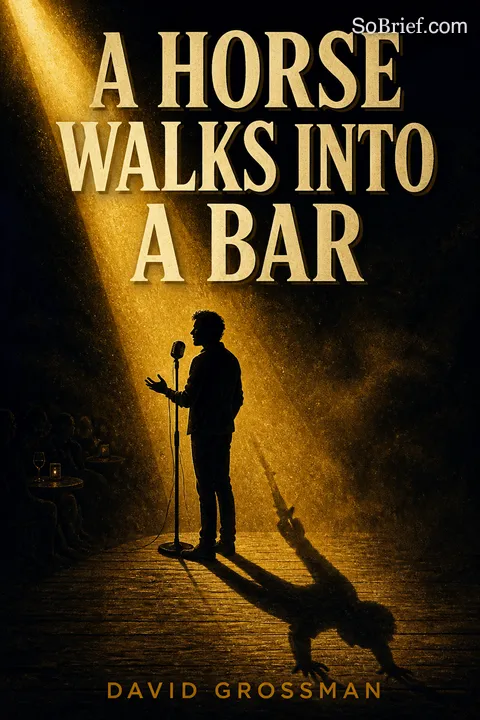
In a small Israeli comedy club, Dov Greenstein, a veteran stand-up comic, takes the stage on his birthday. The audience expects laughter, but Dov's performance quickly veers into something raw and unsettling. His jokes are laced with bitterness, self-mockery, and a desperate need for connection. The crowd is both amused and uncomfortable, sensing that beneath the humor lies a man on the verge of collapse. Dov's physicality—his awkward movements, his self-inflicted slaps—hint at deeper wounds. The laughter he elicits is uneasy, as if the audience is complicit in his unraveling. The stage becomes a confessional, and the boundaries between performance and personal agony blur. Dov's act is not just entertainment; it is an act of self-exposure, a plea for understanding, and a challenge to those who came seeking only amusement.
An Unwanted Witness Arrives
Among the audience sits Avishai Lazar, a retired district court judge whom Dov knew as a boy. Dov has specifically invited Avishai, though the judge is unsure why. Their shared past is distant, marked by brief friendship during math tutoring sessions decades ago. Avishai is uncomfortable, feeling both trapped and implicated by Dov's gaze. The comic's need for Avishai's presence is mysterious—he wants to be "seen," to have his essence witnessed and judged by someone who once knew him. Avishai, still grieving his own losses, is reluctant to engage but cannot look away. The dynamic between performer and observer becomes central: Dov's performance is as much for Avishai as for the crowd, and Avishai's silent judgment becomes a mirror for Dov's self-examination.
Laughter and Unease Collide
Dov's act oscillates between biting humor and moments of vulnerability. He targets audience members with jokes that sting, exposing their insecurities and his own. The laughter is often nervous, punctuated by silences when Dov's pain seeps through. He mocks his own body, his failed marriages, his children, and the city itself. The audience is drawn in, yet repelled, unsure whether to laugh or recoil. Dov's need for laughter is desperate—a way to stave off despair, to keep the darkness at bay. But the act is also a form of self-punishment, as if he is daring the audience to reject him. The club becomes a crucible where humor and suffering are inseparable, and the audience's complicity is laid bare.
Childhood Shadows Surface
As the night progresses, Dov's patter becomes increasingly autobiographical. He recalls his childhood: a beautiful, fragile mother haunted by the Holocaust, and a father who was both loving and harsh. Dov's memories are fragmented, colored by longing and resentment. He describes his mother's sadness, her scars, and her inability to cope with the world. His father, a barber and rag dealer, is depicted as both a provider and a source of pain. Dov's childhood was marked by loneliness, bullying, and a desperate need to make his mother smile. The act of walking on his hands—his signature childhood trick—becomes a symbol of his attempt to invert reality, to escape the violence and humiliation of his daily life.
The Boy Who Walked Upside Down
Dov recounts how, as a boy, he walked on his hands to avoid being beaten by bullies and to distract from his mother's oddness. This upside-down walking becomes a metaphor for his entire existence: a way to survive in a world that feels hostile and incomprehensible. It is both a performance and a shield, a means of controlling how others see him. The audience learns that Dov's need to entertain, to be noticed, and to deflect pain began early. His father's disapproval and his mother's fragility left him with no safe ground, so he learned to live in inversion, always performing, always on the edge of collapse.
The Medium's Disruption
A small, peculiar woman in the audience claims to have known Dov as a child. She remembers him as the boy who walked on his hands, and her presence unsettles Dov. She is a "medium," a manicurist who claims to communicate with the dead. Her memories contradict Dov's self-image as a perpetual outcast; she insists he was kind to her, that he was "the best one." Their exchange is awkward, exposing Dov's discomfort with being seen as good or innocent. The woman's insistence on his goodness disrupts his narrative of self-loathing and complicates his relationship with the audience, who witness a rare moment of tenderness and confusion.
The Gadna Camp Memory
Dov's story reaches its emotional core as he recalls a week at a military youth camp (Gadna) where both he and Avishai were present. Dov was bullied, humiliated, and isolated by his peers. Avishai, though once his friend, did nothing to intervene. The camp becomes a microcosm of Dov's life: a place of exclusion, cruelty, and silent witnesses. The memory is painful for both men—Dov for having lived it, Avishai for having failed to help. This shared trauma binds them, even as it exposes the limits of empathy and the enduring scars of childhood betrayal.
The Unbearable Reckoning
During the camp, Dov is suddenly summoned home for a funeral. The journey back is surreal, filled with confusion, dread, and a driver who tries to distract him with jokes. Dov does not know which parent has died; he is left in agonizing suspense, forced to imagine the loss of both mother and father. On the way, he performs a mental "accounting," weighing his love and resentment for each parent, as if his thoughts could determine who would be taken from him. This reckoning is unbearable, a child's attempt to make sense of senseless loss, and it becomes the central trauma of his life.
The Drive to the Funeral
The drive to Jerusalem is a feverish blur. The driver, sensing Dov's distress, tells endless jokes in a futile attempt to comfort him. Dov is numb, unable to cry, unable to process what is happening. He is joined by the driver's sister and her baby, who feed him and ask probing questions about his family. The journey is both literal and psychological—a passage through denial, fear, and the desperate hope that reality can be postponed. Dov's mind is flooded with memories, guilt, and the terror of not knowing which parent he will find at the cemetery.
The Joke Contest That Wasn't
The driver invents a story about a military joke contest, using humor to distract Dov from his dread. The jokes become a lifeline, a way to keep despair at bay. Dov laughs until he cries, but the laughter is hollow, a mask for the pain he cannot express. The absurdity of the joke contest mirrors the absurdity of Dov's situation: a child forced to confront mortality, guilt, and the randomness of fate. The jokes are both a comfort and a torment, highlighting the limits of humor in the face of real suffering.
The Choice No Child Should Make
Arriving at the cemetery, Dov is told to ask forgiveness from the body of his mother. He is overwhelmed by guilt, convinced that his thoughts during the drive—his mental accounting—somehow determined her fate. He cannot bring himself to approach his father, who is shattered by grief. Dov's sense of responsibility is crushing; he believes he has committed an unforgivable act by choosing, even in thought, between his parents. The moment is shattering, marking the end of his childhood and the beginning of a lifetime of self-reproach.
The Curse and the Aftermath
After the funeral, Dov's father curses him—whether literally or through a look, Dov feels marked for life. He runs away, unable to return home, convinced that he is contaminated by his own thoughts and actions. The curse becomes a defining feature of his identity, a source of endless self-punishment. Dov's subsequent life is shaped by this moment: his relationships, his career, his relentless need to perform and be punished. The trauma is radioactive, poisoning every connection and every attempt at happiness.
The Audience Walks Out
As Dov's story grows darker and more confessional, much of the audience leaves, unable or unwilling to bear the weight of his suffering. Only a handful remain—those who recognize something of themselves in his pain, or who are compelled by the spectacle of a man exposing his deepest wounds. The club is nearly empty, the performance stripped to its essence: a man, his witness, and the unbearable truth of his life. The exodus of the audience mirrors the abandonment Dov has experienced throughout his life, reinforcing his sense of isolation.
The Last Confessions
In the final moments, Dov confesses the full extent of his guilt, his self-loathing, and his longing for forgiveness. He acknowledges the impossibility of redemption, the persistence of trauma, and the futility of performance as a means of escape. The remaining audience members, including Avishai and the medium, offer what comfort they can—a nod, a touch, a silent witness. Dov's vulnerability is total; he has nothing left to hide, nothing left to give but his story.
The Judge's Silent Verdict
Avishai, the judge, is left to render a silent verdict—not of guilt or innocence, but of understanding. He recognizes his own failures, his complicity in Dov's suffering, and the limits of judgment itself. The act of witnessing becomes an act of compassion, a way to honor the pain that cannot be erased. Avishai's presence is both a comfort and a reminder that some wounds can never be healed, only acknowledged.
The Show Ends, The Pain Remains
As the club empties, Dov and Avishai share a final, quiet moment. The performance is over, but the pain remains. Dov expresses gratitude for being seen, for having his story heard, even as he doubts the possibility of true understanding or forgiveness. Avishai promises to write down what he has witnessed, to leave a record of Dov's suffering and resilience. The night ends not with resolution, but with the fragile hope that being seen—truly seen—might offer some measure of solace.
Analysis
A Horse Walks into a Baris a searing exploration of trauma, memory, and the human need for recognition. Through the device of a stand-up comedy act unraveling into confession, David Grossman exposes the raw nerves of grief, guilt, and the longing for forgiveness. The novel interrogates the limits of humor as a shield against pain, revealing how laughter can both connect and isolate, heal and harm. Dov's desperate need to be seen—by Avishai, by the audience, by himself—mirrors the universal yearning for understanding and absolution. The presence of witnesses, both willing and reluctant, underscores the importance of empathy, even as it acknowledges its limitations. The novel's structure, oscillating between past and present, performance and memory, reflects the fragmented nature of trauma and the difficulty of integrating loss into a coherent narrative. Ultimately, Grossman suggests that while some wounds may never heal, the act of bearing witness—of truly seeing and being seen—offers a fragile hope for connection and meaning. The story is a testament to the power of storytelling itself: to name pain, to share it, and, in doing so, to find a measure of solace in the company of others.
Review Summary
Reviews of A Horse Walks into a Bar are largely positive, with many praising Grossman's masterful portrayal of a comedian unraveling on stage. Readers highlight the emotional depth, originality, and the way the novel transforms from uncomfortable comedy into profound tragedy. The book won the 2017 Man Booker International Prize. Some readers struggled with its relentless tone and unfunny jokes, while others found it harrowing but impossible to put down. The consensus suggests patience is rewarded, as the novel's power builds gradually toward a deeply affecting conclusion.
Characters
Dov Greenstein
Dov is a stand-up comedian whose act is a thin veil over a lifetime of pain. Scarred by a traumatic childhood—an emotionally fragile mother, a harsh father, relentless bullying—Dov has learned to survive by performing, by turning his suffering into humor. His need for laughter is desperate, a way to stave off despair and connect with others, yet it is also self-destructive, exposing his wounds for public consumption. Dov's defining trauma is the loss of his mother and the impossible choice he felt forced to make between his parents. Haunted by guilt and convinced he is cursed, Dov's relationships are marked by self-sabotage and longing for forgiveness. His development is a tragic arc: from a boy seeking love and safety to a man who can only find meaning in the act of confession, even as he doubts the possibility of redemption.
Avishai Lazar
Avishai is a retired district court judge, summoned by Dov to witness his performance. Once a childhood friend, Avishai is now a man marked by his own losses and regrets. He is analytical, reserved, and uncomfortable with emotional exposure. Avishai's role is both observer and participant: he is asked to "see" Dov, to bear witness to his suffering, and to render a verdict—not of law, but of understanding. Avishai's presence forces him to confront his own failures, particularly his inaction during Dov's childhood torment. His psychological journey is one of reluctant empathy, moving from detachment to a painful recognition of shared vulnerability. In the end, Avishai's silent compassion offers a measure of grace, even as he acknowledges the limits of judgment and the persistence of pain.
The Medium (Pitz)
The small woman known as the medium is a former neighbor who remembers Dov as a kind boy. Her presence disrupts Dov's narrative of self-loathing, insisting on his goodness and innocence. She is both vulnerable and resilient, marked by her own marginalization but steadfast in her belief in Dov's essential decency. As a "medium," she claims to communicate with the dead, symbolizing the persistence of memory and the possibility of connection across time and trauma. Her interactions with Dov are awkward but deeply affecting, offering him a rare moment of tenderness and recognition. She serves as a counterpoint to Dov's self-punishment, embodying the possibility of forgiveness and the enduring impact of small acts of kindness.
Dov's Father
Dov's father is a barber, rag dealer, and a man of contradictions. He is both provider and punisher, loving and harsh, emotionally distant yet deeply affected by his wife's fragility. His relationship with Dov is fraught: he teaches, disciplines, and sometimes abuses, leaving Dov with a legacy of confusion and pain. The father's own traumas—immigration, survival, disappointment—are passed down to his son in the form of both practical skills and emotional wounds. His inability to express love directly, and his eventual curse of Dov after the mother's death, become central to Dov's lifelong sense of guilt and unworthiness.
Dov's Mother
Dov's mother is a Holocaust survivor, marked by profound sadness and emotional instability. She is described as beautiful, with striking blue eyes, but is haunted by memories and unable to fully engage with life. Her relationship with Dov is tender but fragile; he becomes her caretaker, her entertainer, and her emotional anchor. The mother's suffering shapes Dov's need to perform, to make her smile, and to protect her from the world. Her suicide (implied by the narrative) is the central trauma of Dov's life, leaving him with an unhealable wound and a sense of responsibility for her death.
The Driver
The military driver who takes Dov from the camp to the funeral is a minor but significant character. He senses Dov's distress and tries to comfort him with jokes, inventing a story about a military joke contest. His efforts are well-intentioned but ultimately futile; humor cannot shield Dov from the reality of his loss. The driver's own grief—he lost a brother as a child—creates a brief moment of connection between the two. He represents the limits of empathy and the ways in which adults often fail to protect or understand children in pain.
The Driver's Sister
The driver's sister joins the journey to Jerusalem, feeding Dov and asking questions about his family. She is practical, nurturing, and emotionally perceptive, sensing Dov's need for care even as she probes his vulnerabilities. Her presence is both comforting and unsettling, forcing Dov to confront the reality of his situation. She embodies the possibility of maternal care, but also the intrusion of adult concerns into a child's world.
The Audience
The audience in the comedy club is both participant and witness, reflecting the broader society's discomfort with pain and vulnerability. Their reactions—laughter, discomfort, anger, and eventual exodus—mirror the ways in which people respond to suffering in real life: with curiosity, empathy, avoidance, or rejection. The audience's complicity in Dov's self-exposure is central to the novel's exploration of performance, judgment, and the human need for connection.
The Waitress
The waitress serves as a background presence, providing food and drink, and occasionally offering a smile or a gesture of kindness. She represents the ordinary world that continues outside the drama onstage, a reminder of the everyday acts of care that persist even in the midst of suffering.
Tamara
Tamara, Avishai's deceased partner, appears only in memory but exerts a powerful influence on his psyche. Her death has left Avishai adrift, and her voice—sometimes imagined, sometimes recalled—serves as his conscience and his connection to lost intimacy. Tamara's presence underscores the novel's themes of grief, memory, and the longing for wholeness.
Plot Devices
Stand-Up Comedy as Confession
The novel's central device is the stand-up comedy act, which serves as both a literal performance and a metaphor for confession, self-punishment, and the search for absolution. Dov's act blurs the line between entertainment and personal agony, forcing the audience (and the reader) to confront the pain beneath the laughter. The structure of the performance allows for digression, repetition, and the gradual revelation of trauma, mirroring the way memory and grief operate. The presence of Avishai as a witness and judge adds a layer of meta-commentary, as Dov seeks not just laughter but understanding and, perhaps, forgiveness.
The Witness and the Judge
Dov's invitation to Avishai, and his repeated pleas to be "seen," highlight the human need for recognition and validation. Avishai's role as a judge—both literal and symbolic—underscores the novel's exploration of guilt, responsibility, and the limits of judgment. The act of witnessing becomes an act of compassion, even as it exposes the failures of empathy and the impossibility of true understanding.
The Medium and the Return of the Past
The appearance of the medium, a woman from Dov's childhood, serves as a plot device to disrupt his narrative of self-loathing and to reintroduce the possibility of innocence and goodness. Her memories challenge Dov's self-image and force him to confront the complexity of his past. The medium's role as a communicator with the dead symbolizes the persistence of memory and the ways in which the past continues to shape the present.
The Gadna Camp and the Funeral Journey
The week at Gadna camp and the subsequent journey to the funeral are the novel's emotional and structural fulcrum. These events are recounted in fragments, with increasing detail and intensity, culminating in the revelation of Dov's unbearable reckoning and the impossible choice he felt forced to make. The journey is both literal and psychological, a passage through denial, guilt, and the shattering of childhood innocence.
Humor as Defense and Destruction
Throughout the novel, humor functions as both a defense mechanism and a means of self-destruction. Dov uses jokes to deflect pain, to connect with others, and to punish himself. The limits of humor are exposed as the story grows darker; laughter becomes hollow, and the audience's complicity is laid bare. The joke contest invented by the driver, and the recurring jokes about death, loss, and humiliation, underscore the inadequacy of humor in the face of real suffering.
Audience as Mirror
The reactions of the audience—laughter, discomfort, anger, and abandonment—serve as a mirror for the broader society's response to pain and vulnerability. The exodus of the crowd as Dov's story grows darker reflects the human tendency to turn away from suffering, to seek comfort in distraction, and to reject those who expose uncomfortable truths.
Download PDF
Download EPUB
.epub digital book format is ideal for reading ebooks on phones, tablets, and e-readers.








































