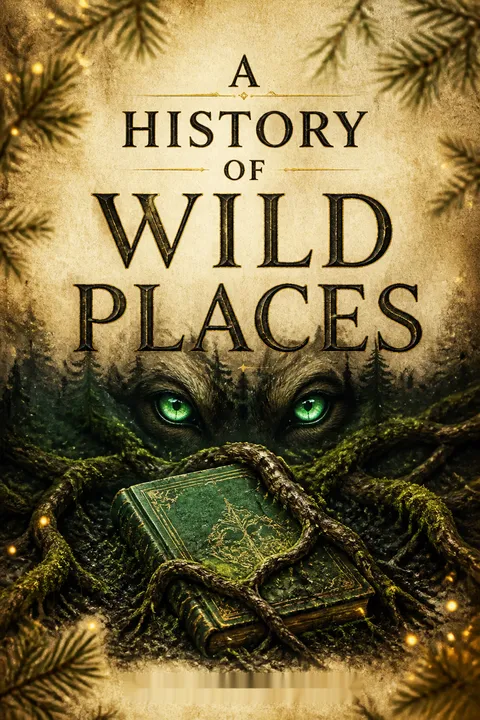

Plot Summary
Eyes in the Forest Shadows
In a world where dreams are scarce, Eloise is captivated by a fox with striking green eyes at her window. This encounter stirs memories of her childhood fort in the woods, blurring the lines between reality and imagination. The fox's presence hints at the mysteries hidden within the forest, setting the stage for a narrative where the boundaries of reality are constantly questioned.
The Vanishing of Maggie St. James
Travis Wren, gifted with the ability to see the past through objects, is tasked with finding Maggie St. James, a controversial children's author who has disappeared. His search leads him to a desolate town and an abandoned truck, where he finds a photograph of Maggie. The locals recall her disappearance, but Travis senses deeper secrets tied to a mysterious commune called Pastoral, hidden deep in the woods.
Secrets Buried in the Garden
In the secluded community of Pastoral, Calla discovers a book, "Eloise and the Foxtail," buried in her garden. Written by Maggie St. James, the book and a silver charm suggest a connection to the missing author. Calla's husband, Theo, secretly explores beyond the community's borders, driven by curiosity that threatens their safety. The book's dark illustrations and the message "Remember Maggie" hint at the community's hidden secrets.
The Forbidden Road's Allure
Theo, a guard at Pastoral's gate, is drawn to the road leading out of the community. Despite fears of the outside world and its diseases, Theo secretly ventures beyond the boundary. His discovery of an abandoned truck and a notebook belonging to Travis Wren fuels his obsession. Theo's actions put him at odds with his wife, Calla, and the community's leader, Levi, who warns of external dangers.
The Community's Fragile Balance
Levi, the leader of Pastoral, faces unrest as the community grapples with the threat of disease and the mystery of Maggie St. James. The community's rules of privacy, trust, and unity are tested as secrets surface. Levi's relationship with Bee, Calla's sister, is strained by his hidden affair and her pregnancy. As tensions rise, Levi must balance protecting the community with addressing individual desires.
A Child's Life at Stake
Colette gives birth to a premature baby with a weak heart, dividing the community on whether to seek outside help. Levi decides against leaving, prioritizing the community's safety over the child's life. This decision causes friction, particularly with Bee, who believes the baby needs medical attention. The situation highlights the community's isolation and the sacrifices required to maintain their way of life.
The Unraveling of Trust
As Theo and Calla uncover more about Maggie St. James and Travis Wren, the foundation of trust within Pastoral begins to crumble. Theo's secret excursions and the discovery of the buried book reveal a web of lies and hidden truths. Calla fears losing Theo to his curiosity and the outside world. Meanwhile, Bee's relationship with Levi deteriorates as she grapples with her pregnancy and Levi's betrayal. The community's future hangs in the balance as these secrets come to light.
Secrets Unravel in the Dark
Calla and Theo, once Maggie St. James and Travis Wren, realize their lives in Pastoral were built on lies. Their memories were manipulated by Levi, who used hypnosis to control the community, creating a false narrative of a disease to keep everyone isolated. As the truth emerges, Calla and Theo must confront the reality of their identities and the life they left behind.
The Truth Behind the Illusions
Bee, who believed she was blind, regains her sight and uncovers Levi's manipulation. She realizes the sickness in the trees was a fabrication used by Levi to maintain control. As Bee's memories resurface, she confronts Levi, who admits to his deceit. In a moment of desperation and self-defense, Bee kills Levi, freeing herself from his control and the lies that bound her.
A Desperate Escape from Pastoral
As the birthing hut burns, Calla, Theo, and Bee make a desperate escape from Pastoral. With Colette and her baby in tow, they navigate the treacherous woods, leaving behind the only life they knew. The fire, set by Levi to prevent their departure, becomes a catalyst for their liberation. As they flee, they confront the reality of their past and the uncertainty of their future.
Confronting the Past and Present
In the outside world, Calla and Theo grapple with their identities. Calla, once a missing author, and Theo, a seeker of lost souls, must reconcile their past with their present. As they reconnect with their families, they confront the choices that led them to Pastoral and the lives they left behind. The journey forces them to redefine who they are and what they want from life.
A New Beginning in the Woods
Calla and Theo decide to return to Pastoral, not as prisoners of Levi's lies, but as architects of a new community. With Bee as their leader, they aim to rebuild Pastoral on principles of truth and freedom. The road is open, and the fear of the outside world dissipates. Together, they create a place where the past is acknowledged, and the future is built on honesty and hope.
Analysis
A tale of identity and control"A History of Wild Places" by Shea Ernshaw explores themes of identity, control, and the power of memory. Through the mysterious community of Pastoral, the narrative delves into the human desire for safety and the lengths to which individuals will go to maintain it. The story examines the fragility of memory and the impact of manipulation, as characters grapple with their past and present identities. The book ultimately conveys a message of resilience and the importance of truth, as the characters seek to rebuild their lives on principles of honesty and freedom. The narrative challenges readers to consider the boundaries between reality and illusion, and the sacrifices required to forge a new path.
Review Summary
A History of Wild Places is a haunting, atmospheric mystery thriller that captivated many readers with its beautiful prose and intriguing plot. The story follows Travis, who searches for a missing author and disappears himself, and the inhabitants of a mysterious commune called Pastoral. While some found the book predictable and slow-paced, others praised its vivid imagery, complex characters, and surprising twists. The novel's exploration of isolation, power, and the human psyche resonated with many, though some readers struggled with the suspension of disbelief required for certain plot elements.
People Also Read





Characters
Travis Wren
Travis Wren, with his unique ability to see the past through objects, is on a mission to find Maggie St. James. His journey leads him to Pastoral, where he uncovers hidden dangers and secrets. Travis's determination to uncover the truth about Maggie's disappearance drives the narrative, revealing the complexities of memory and identity.
Maggie St. James
Maggie St. James, a controversial children's author, disappears, sparking Travis's investigation. Her books, filled with dark themes, leave a lasting impact. As Travis delves deeper, Maggie's connection to Pastoral and the secrets she left behind become central to the unfolding mystery, highlighting the power of storytelling and memory.
Calla (Maggie St. James)
Calla, once Maggie St. James, is a children's author who vanished into the woods. Her journey in Pastoral is one of forgetting and rediscovery. As she uncovers the truth about her past, she grapples with her identity and the life she left behind. Her transformation is marked by resilience and a desire to build a new life based on truth.
Theo (Travis Wren)
Theo, formerly Travis Wren, was a man with a unique ability to find missing people. His journey to Pastoral was driven by a mission to find Maggie. As he uncovers the lies that bound him, he must reconcile his past with his present. His love for Calla becomes a guiding force in their quest for freedom and truth.
Bee
Bee, once blind, regains her sight and uncovers the truth about Levi's manipulation. Her journey is one of empowerment and self-discovery. As she confronts Levi, she takes control of her life and the community. Her leadership becomes a beacon of hope for a new beginning in Pastoral.
Levi
Levi, the leader of Pastoral, used hypnosis to manipulate the community. His desire for control led to a web of lies that trapped the residents in fear. His downfall comes at the hands of Bee, who exposes his deceit and frees the community from his grasp.
Colette (Ellen Ballister)
Colette, revealed to be Ellen Ballister, is a woman who found herself in Pastoral with no memory of her past. Her journey is one of survival and hope for her child. As she escapes with Calla and Theo, she confronts her past and embraces a new future.
Parker
Parker works alongside Theo at the community's gate, preferring the quiet solitude of his position. He is unaware of the secrets Theo uncovers and remains loyal to the community's rules. Parker's character represents the younger generation of Pastoral, content with their way of life and unaware of the hidden dangers lurking beyond the boundary.
Birdie
Birdie is a member of Pastoral who fears for her son's safety after he accidentally crosses the boundary. Her desperation for reassurance and protection highlights the pervasive fear of the outside world within the community. Birdie's character underscores the tension between individual desires and communal safety.
Ash
Ash is Colette's husband and the father of their premature baby. He advocates for seeking outside help, willing to risk everything to save his child's life. Ash's character embodies the conflict between adhering to the community's rules and the instinct to protect one's family at all costs.
Plot Devices
The Mysterious Forest
The forest surrounding Pastoral serves as a physical and symbolic boundary, representing the community's isolation and fear of the outside world. It is both a protective barrier and a source of danger, with the threat of disease lurking within its depths. The forest's presence is a constant reminder of the sacrifices required to maintain the community's way of life.
The Buried Book
The discovery of Maggie St. James's book buried in Calla's garden serves as a catalyst for uncovering the community's hidden past. The book, with its dark illustrations and mysterious message, "Remember Maggie," connects the present to the events leading to Maggie's disappearance. It symbolizes the secrets buried within Pastoral and the unraveling of trust among its members.
The Road
The road leading out of Pastoral represents the allure of the unknown and the temptation to explore beyond the community's boundaries. Theo's secret excursions down the road highlight the tension between curiosity and safety, as well as the potential consequences of defying the community's rules. The road serves as a metaphor for the choices and sacrifices faced by those living in isolation.
The Sage Ritual
The ritual of burning sage along the community's boundary is a symbolic act of protection against the disease believed to reside in the forest. It represents the community's reliance on tradition and ritual to maintain safety and order. The sage ritual underscores the tension between fear and survival, as well as the lengths to which the community will go to preserve their way of life.
Hypnosis and Memory Manipulation
Levi's use of hypnosis to manipulate memories is central to the narrative. It serves as a means of control, creating a false reality for the residents of Pastoral. This device highlights themes of power, truth, and the fragility of memory.
The Burning of the Birthing Hut
The fire set by Levi becomes a turning point in the story. It symbolizes the destruction of the old order and the beginning of a new chapter. The fire forces the characters to confront their fears and take decisive action to escape and rebuild their lives.
FAQ
Synopsis & Basic Details
What is A History of Wild Places about?
- A Seeker's Quest: The story follows Travis Wren, a man with a unique psychic ability to see the past of objects, as he searches for missing children's author Maggie St. James, who vanished five years prior. His investigation leads him to Pastoral, a secluded, off-grid community deep in the California mountains.
- A Hidden Community's Secrets: Within Pastoral, a woman named Calla lives a seemingly idyllic life, unaware of her past. The community is governed by strict rules and a fear of an external "rot" that supposedly infects the surrounding forest, keeping its members isolated.
- Unraveling a Web of Lies: As Travis (now known as Theo) and Calla (now Maggie) slowly recover their true memories, they uncover a sinister truth: the community's leader, Levi, has been manipulating their minds and controlling their lives through hypnosis, fabricating the "rot" and erasing their pasts to maintain his power.
Why should I read A History of Wild Places?
- Intriguing Mystery & Suspense: The novel masterfully weaves a compelling mystery around missing persons and a secluded community, keeping readers guessing about the true nature of Pastoral and its inhabitants. The slow reveal of memory manipulation adds layers of psychological suspense.
- Deep Dive into Identity & Memory: It offers a profound exploration of how identity is shaped by memory, and what happens when those memories are stolen or altered. The characters' journeys of rediscovery are emotionally resonant and thought-provoking.
- Rich Symbolism & Atmosphere: Ernshaw's writing creates a vivid, atmospheric world, particularly the ominous yet beautiful forest, and uses recurring symbols like books, trees, and the concept of "wild places" to enrich the narrative and thematic depth.
What is the background of A History of Wild Places?
- Communal Living & Isolation: The novel is set against the backdrop of a remote, self-sufficient commune called Pastoral, founded in the 1970s by individuals seeking an alternative lifestyle away from societal norms. This historical context of counter-culture movements informs the community's initial ideals of shared living and self-reliance.
- Psychological Manipulation: A core element of the story's background is the use of hypnosis and memory alteration, drawing from psychological concepts of mind control and suggestibility. This technique is employed by the community's leader to maintain order and prevent members from leaving.
- Nature's Dual Role: The geographical setting of a dense, isolated forest plays a crucial role, initially perceived as a protective barrier against an external "rot," but later revealed to be a tool for psychological imprisonment. The wilderness itself becomes a character, reflecting the characters' internal states and the community's manufactured fears.
What are the most memorable quotes in A History of Wild Places?
- "There is always danger for those who are afraid.": This epigraph by George Bernard Shaw perfectly encapsulates the central theme of fear and control in Pastoral, foreshadowing how the community's manufactured anxieties are exploited by Levi to maintain power. It highlights the psychological vulnerability that allows manipulation to thrive.
- "Guilt is a beast. And it might just kill you, if you let it.": Travis Wren's internal monologue reveals his profound struggle with the guilt over his sister Ruth's death. This quote defines his initial motivation for taking Maggie's case, framing his quest for redemption as a battle against his own inner demons and the crushing weight of past failures.
- "This is how monsters are made: from innocent things.": From the "Eloise and the Foxtail" excerpt, this line chillingly reflects the transformation of Eloise into a "shadow" and parallels Levi's own descent into monstrous control, born from his desire to protect Pastoral. It underscores the novel's exploration of how good intentions can twist into tyranny.
What writing style, narrative choices, and literary techniques does Shea Ernshaw use?
- Dual Narrative Perspective: Ernshaw employs a shifting third-person perspective, primarily alternating between Travis/Theo and Calla/Maggie, with occasional insights from Bee. This allows for a gradual unveiling of the mystery, as readers piece together fragmented memories and experiences from different viewpoints, enhancing the suspense.
- Fragmented Memory & Foreshadowing: The narrative heavily relies on fragmented memories, dreams, and subtle foreshadowing. Travis's psychic ability, the recurring "Eloise and the Foxtail" excerpts, and the characters' vague recollections serve as literary devices to build tension and hint at the deeper truths of memory manipulation and hidden pasts.
- Atmospheric & Sensory Language: Ernshaw uses rich, evocative language to create a strong sense of place and mood. Descriptions of the forest, the farmhouse, and the sensory experiences of the characters (smells, sounds, tactile sensations) immerse the reader in Pastoral's isolated world, making the psychological elements feel tangible.
Hidden Details & Subtle Connections
What are some minor details that add significant meaning?
- The Cracked Mirror: The recurring image of cracked mirrors, particularly in Ruth's motel room and Levi's house, subtly symbolizes the fractured identities and distorted realities within the story. It reflects the brokenness of memory and the inability to see oneself or the truth clearly, a direct consequence of Levi's manipulation.
- The Daffodil Motif: Bee's pressed daffodil in the dictionary, and later her attempt to leave it in Levi's house, is a poignant symbol of lost innocence and betrayed love. The daffodil, often associated with new beginnings, here represents a past love that Levi deliberately crushed, highlighting his calculated cruelty and Bee's eventual awakening.
- The Number Three Charm: The silver book charm with the number "3" found by Travis, and later by Calla, is a crucial breadcrumb. It not only links Maggie to her "Eloise and the Foxtail" series but also subtly foreshadows the three main characters (Travis, Maggie, Bee) who ultimately unravel Levi's lies, suggesting a preordained connection among them.
What are some subtle foreshadowing and callbacks?
- Eloise's Transformation: The excerpts from "Eloise and the Foxtail" consistently foreshadow the characters' journeys. Eloise's transformation from an innocent girl to a "monster" who "belongs to the woods now" directly mirrors Maggie's (Calla's) initial loss of self and later, Bee's embrace of a darker, more decisive role in confronting Levi.
- The Gas Station Woman's Insight: The gas station attendant's comment to Travis, "Maybe she wanted to get herself lost, start a new life; no crime in that," subtly foreshadows Maggie's (Calla's) amnesia and her initial desire to escape her past. It also hints at the possibility that some disappearances are self-imposed, even if unknowingly.
- Levi's "Magic" Tricks: Bee's recollection of Levi practicing card tricks and making things "disappear" as a child is a chilling callback to his later use of hypnosis. This seemingly innocent childhood pastime evolves into a sinister tool for memory manipulation, revealing his long-standing inclination towards control and illusion.
What are some unexpected character connections?
- Maggie's Mother's Past in Pastoral: The most unexpected connection is the revelation that Maggie's biological mother (Travis's Mrs. St. James) was an "original" member of Pastoral and Maggie's biological father was Cooper, the community's founder. This deepens Maggie's inherent connection to Pastoral, explaining her subconscious draw to the place and why her mother knew how to guide Travis there.
- Travis's Sister and Maggie's Books: Travis's profound guilt over his sister Ruth's suicide, and his belief that finding Maggie could be "like rescuing my sister," creates an emotional parallel. This connection is subtly reinforced by Maggie's own guilt over Markus Sorenson's death, a boy who died searching for the "underground" from her books, linking their personal traumas to their shared quest for redemption.
- Bee's Unconscious Role in the "Rot": The shocking twist that Bee, under Levi's hypnotic suggestion, was the one carving the "wounds" into the border trees, rather than the trees being naturally sick, creates an unexpected connection between her and the community's central fear. This reveals her unwitting complicity in Levi's deception and her profound internal conflict.
Who are the most significant supporting characters?
- Henry Watson: As one of the original founders of Pastoral and a quiet observer, Henry represents the community's fading ideals and the wisdom of the past. His presence at the ritual and his quiet carving of wooden figures symbolize the enduring human need for creation and connection, even amidst Levi's tyranny. His crafting of Calla's wedding band also ties him directly to the manipulated reality.
- Faye: The community's midwife, Faye, embodies compassion and practical wisdom. Her struggle to save Colette's baby and her eventual decision to help Calla, Theo, and Bee escape highlights the moral dilemmas faced by those within Pastoral. She represents the inherent goodness and desire to help that persists despite Levi's control.
- Parker: The young guard at the gate, Parker, initially appears as a loyal, somewhat naive follower of Levi. His internal conflict when confronted with Theo's escape and the burning birthing hut reveals the cracks in Levi's control. His eventual decision to let them go, despite his fear, marks a significant shift in the community's collective consciousness and the beginning of its liberation.
Psychological, Emotional, & Relational Analysis
What are some unspoken motivations of the characters?
- Levi's Fear of Abandonment: Beyond his desire for control, Levi's deepest unspoken motivation is a profound fear of abandonment. Having been orphaned and raised by Cooper, he desperately clings to the community and its members, using hypnosis to prevent anyone from leaving, as he explicitly tells Bee: "I think someday you'll leave me. You'll try to leave Pastoral."
- Calla/Maggie's Self-Punishment: Maggie's initial decision to seek out Pastoral, even before her memory was wiped, was driven by a subconscious desire for self-punishment and escape from the guilt of Markus Sorenson's death. Her mother's revelation that Maggie was "so mad at me that day; you needed to understand" hints at a deeper psychological need to disappear and atone for her perceived sins.
- Theo/Travis's Need for Redemption: Travis's relentless pursuit of Maggie, even after his ability has faded, is fueled by an unspoken need for redemption for his failure to save his sister, Ruth. He explicitly states, "If I can find Maggie St. James, maybe it will be like rescuing my sister," revealing a deep-seated emotional wound driving his actions.
What psychological complexities do the characters exhibit?
- Dissociative Amnesia and Identity: Calla and Theo exhibit profound dissociative amnesia, a psychological defense mechanism where traumatic memories are blocked. Their struggle to reconcile their Pastoral identities with their former selves (Maggie and Travis) highlights the fragility of self and the deep psychological impact of memory manipulation, creating a complex interplay of past and present selves.
- Learned Helplessness and Stockholm Syndrome: The community members, including Calla and Theo, display elements of learned helplessness and a form of Stockholm Syndrome. They have been conditioned by Levi's hypnosis and fear-mongering to believe they cannot survive outside Pastoral, leading to a collective psychological paralysis and a distorted loyalty to their captor.
- Levi's Narcissistic Control: Levi exhibits traits of narcissistic personality disorder, characterized by a grandiose sense of self-importance, a need for admiration, and a lack of empathy. His elaborate scheme of hypnosis and fabricated disease stems from a deep-seated need for absolute control and validation as the community's indispensable leader, masking his own insecurities.
What are the major emotional turning points?
- Calla's Discovery of the Foxtail Book: The moment Calla unearths "Eloise and the Foxtail" and sees Maggie St. James's name, coupled with the handwritten "Remember Maggie," is a pivotal emotional turning point. It shatters her perceived reality and ignites a desperate quest for truth, marking the beginning of her emotional awakening and the unraveling of Levi's lies.
- Bee's Regained Sight and Betrayal: Bee's sudden return of sight, triggered by Levi's drunken confession and manipulation, is a powerful emotional climax. The visual clarity brings with it the emotional clarity of Levi's profound betrayal, transforming her love into a burning hatred and empowering her to act decisively against him.
- Theo's Memory of Ruth: Theo's nightmare, where he remembers his sister Ruth and his failure to save her, is a crucial emotional turning point for him. This painful recollection, after years of amnesia, re-establishes his core identity and purpose, fueling his determination to protect Calla and the others, and to make amends for his past.
How do relationship dynamics evolve?
- Calla and Theo: From Strangers to Partners in Truth: Their relationship evolves from a seemingly conventional marriage within Pastoral to a partnership forged in the shared trauma of memory loss and the quest for truth. Initially, Calla is wary of Theo's curiosity, but as they uncover their pasts as Maggie and Travis, their bond deepens into a profound connection based on mutual understanding and a shared mission to reclaim their lives.
- Bee and Levi: Love to Lethal Betrayal: The relationship between Bee and Levi undergoes the most dramatic and tragic evolution. What began as a deep, almost symbiotic love, where Levi "cared for" Bee's blindness, devolves into a brutal betrayal when Bee discovers his manipulation and the truth about her sight. Her love transforms into a fierce, protective rage, culminating in her killing him to protect herself and her unborn child.
- Community and Levi: Blind Trust to Disillusionment: The community's relationship with Levi shifts from one of unquestioning trust and dependence to a gradual disillusionment. His increasingly erratic behavior, the harsh ritual for Ash and Turk, and ultimately Bee's revelation of his lies, shatter their collective belief in him, leading to a new era of self-governance and freedom.
Interpretation & Debate
Which parts of the story remain ambiguous or open-ended?
- The Nature of Travis's "Gift": While Travis's ability to see the past through objects is central to the plot, its origin and exact mechanics remain somewhat ambiguous. It's described as a "disease, a thing suffered among generations," but the scientific or supernatural basis is never fully explained, leaving its true nature open to interpretation.
- The Extent of Levi's Hypnosis: The novel implies that Levi hypnotized many, if not all, of Pastoral's residents to forget their pasts and believe in the "rot." However, the exact number of people affected, and the depth of their forgotten memories, is not explicitly detailed, leaving readers to wonder about the true scope of his manipulation.
- The Outside World's Condition: Levi's claim that "There might not be anything left, Theo... There might not be anything out there" regarding the outside world is never fully confirmed or denied. While Calla and Theo encounter a functioning society, the long-term impact of the "flu" and other societal issues mentioned on the news remains an open question, suggesting that Pastoral's isolation might have had some basis in a perceived, if exaggerated, external threat.
What are some debatable, controversial scenes or moments in A History of Wild Places?
- The Ritual Burial of Ash and Turk: The scene where Ash and Turk are buried alive up to their necks and then executed by hanging is highly controversial. It sparks debate about the morality of collective punishment, the lengths a community will go to for perceived safety, and Levi's tyrannical abuse of power, forcing readers to confront the brutal consequences of fear and control.
- Bee's Decision to Kill Levi: Bee's act of killing Levi, while presented as self-defense and liberation, can be a debatable moment. Readers might question the justification of violence, even against a manipulator, and whether her actions align with the "new beginning" Pastoral seeks. It forces a discussion on justice, revenge, and the cycle of violence.
- Maggie's Mother's Complicity: The revelation that Maggie's mother knew where she was for seven years but chose not to intervene is a controversial aspect. It raises questions about parental responsibility, the ethics of protecting one's own secrets at the expense of a child's well-being, and the complex motivations behind her silence.
A History of Wild Places Ending Explained: How It Ends & What It Means
- The Return to Pastoral: The ending sees Calla (Maggie) and Theo (Travis) choosing to return to Pastoral, not to escape, but to rebuild it on principles of truth and freedom. This signifies their acceptance of their pasts and their commitment to creating a better future for the community, transforming a place of captivity into a home of conscious choice. This is a key element for "A History of Wild Places ending explained."
- Bee's Leadership and New Vision: Bee, having regained her sight and killed Levi, becomes the new leader of Pastoral. She reveals Levi's lies about the "rot" and the hypnosis, opening the community's borders and fostering a new era of transparency and collective decision-making. Her pregnancy symbolizes a new generation born into truth and freedom, embodying hope for Pastoral's future. This is crucial for understanding "A History of Wild Places ending explained."
- Reconciling Past and Present Identities: The characters embrace their dual identities, acknowledging both their lives in Pastoral and their former selves. Maggie's mother visits, and Maggie (Calla) accepts her complex history, recognizing Pastoral as her birthplace and a place of healing. The ending suggests that true identity is not about erasing the past, but integrating all its "wild places" into a cohesive whole, finding strength in a "history of wild places" both internal and external. This provides a comprehensive "A History of Wild Places ending explained."
Download PDF
Download EPUB
.epub digital book format is ideal for reading ebooks on phones, tablets, and e-readers.








































