
Plot Summary
Watershed Night, Alien Arrival
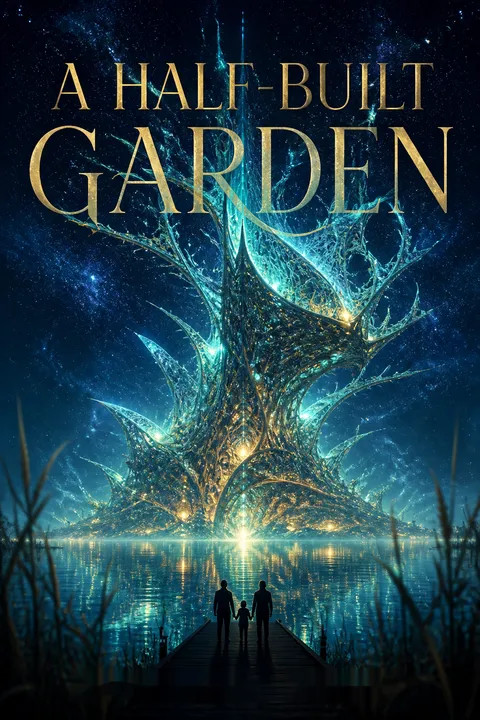
Judy Wallach-Stevens, a volunteer for the Chesapeake Bay Watershed Network, is called out by a sensor alert in the middle of the night. With her wife Carol and baby Dori, she discovers an alien ship—fractal, shifting, and alive—on Bear Island. The aliens, called Ringers, make contact through music and cultural references, signaling peaceful intentions. The world's first contact is not with governments or corporations, but with a local, decentralized network. Judy's family becomes the accidental face of humanity, and the story's emotional core is set: the collision of the intimate and the cosmic, the personal and the political.
First Contact, Family Ties
Judy and Carol, joined by other network volunteers, meet Cytosine, a Ringer mother, and her children. The Ringers' philosophy is clear: technological species must leave their birth worlds or perish. They offer humanity a place among the stars, but expect Earth to be abandoned. The encounter is intimate—children are present, and the act of nursing becomes a cross-species gesture of trust. The Ringers' assumptions about family, gender, and authority clash with human diversity. Judy's household, a polyamorous, queer, and trans-inclusive family, becomes a microcosm of the world's complexity, and the first cracks in the Ringers' expectations appear.
Networks, Negotiations, and Doubt
As news spreads, the decentralized watershed networks struggle to coordinate a response. Judy is thrust into a leadership role she never wanted, facing critique and doubt from all sides. The networks' consensus-driven, algorithmic democracy is both a strength and a vulnerability. Corporate and state actors circle, eager to claim the alien technology. The Ringers' insistence on speaking only to parents with children present exposes cultural rifts. Judy's exhaustion and imposter syndrome mirror humanity's uncertainty: are we ready for the future we've fought to build?
Alien Philosophy, Human Resistance
The Ringers' philosophy—that worlds are birthing grounds, not homes—meets fierce resistance from Judy and her peers. The aliens are shocked that humans want to stay and repair Earth rather than abandon it. The networks debate, corporations maneuver, and the U.S. government sends its own envoys. The Ringers' own history of symbiosis between two species is revealed, but their certainty is shaken by humanity's stubborn attachment to place, ecology, and the messy work of restoration. The emotional stakes rise as both sides realize that "help" can be a form of violence.
Symbiosis and Invasion
Judy tours the Ringer ship, discovering a living ecosystem engineered for stability and control. The Ringers' confidence in their technology is matched by their blindness to the risks of introducing alien species to Earth. The networks worry about invasive organisms, and the Ringers' waste begins to alter the local environment. The metaphor of symbiosis—between species, between humans and their planet—becomes central. The Ringers' offer of technological salvation is revealed as a potential invasion, not just of territory, but of values and ways of life.
Networks Crash, Power Shifts
A catastrophic malware attack cripples the dandelion networks, the backbone of post-corporate, post-state society. The crash is traced to corporate interests, eager to regain lost power. Judy's household becomes a hub for both technical repair and diplomatic negotiation. The crisis exposes the fragility of decentralized systems and the ever-present threat of old hierarchies. As the networks struggle to recover, the Ringers' patience wears thin, and the risk of losing control over first contact grows.
Households and Hospitality
Judy's household hosts the Ringers, NASA, and even corporate envoys, turning their home into a microcosm of planetary politics. The rituals of hospitality—food, pronoun badges, child care—become acts of resistance and negotiation. Gender and parenting are revealed as sites of both solidarity and misunderstanding. The Ringers' matriarchal, child-centered culture clashes with human diversity, but moments of connection emerge. The household's internal tensions—over gender, trauma, and trust—mirror the larger struggle to build a just, inclusive future.
Festival of Uncertainty
The neighborhood throws a festival to welcome the Ringers, blending joy with anxiety about the future. Art, music, and food become tools for cross-cultural understanding. The festival is both a celebration of resilience and a reminder of past traumas—refugees, floods, and the long work of restoration. Judy and NASA's St. Julien debate the meaning of progress: is humanity's destiny among the stars, or rooted in the soil? The festival's ephemeral beauty stands in contrast to the looming, permanent choices ahead.
Corporate Intrusions, Hidden Motives
Corporate representatives from Asterion arrive, bringing gifts and hidden agendas. The networks debate whether to include them in negotiations, wary of their history of exploitation. Malware sabotage is traced to corporate actors, who seek to leverage the crisis for renewed influence. Judy is pressured to use a counter-malware device, risking her own safety and the networks' legitimacy. The chapter explores the seductive power of hierarchy, the dangers of plausible deniability, and the difficulty of holding onto new ways of living in the face of old temptations.
Parenting, Gender, and Power
The household's internal dynamics come to the fore: Dinar's corporate gig work, Athëo's trans identity, and the scars of past oppression. The Ringers' obsession with motherhood and gender roles is both a mirror and a challenge. The debate over pronoun badges becomes a microcosm of the struggle for recognition and dignity. The cost of honesty—about identity, about risk, about power—is revealed. The chapter ends with a hard-won commitment to radical transparency and mutual support, even in the face of existential threats.
Malware, Sabotage, and Trust
A hurricane approaches as the networks race to repair the malware damage. Redbug and Elegy, key tech experts, are drawn into a plot to sabotage the Ringers' antenna, fearing further corporate subversion. Judy and her family risk their lives to stop the sabotage, navigating both physical danger and the emotional minefield of betrayal and trust. The storm becomes a crucible, revealing the limits of individual heroism and the necessity of collective action. The aftermath leaves the networks shaken, but also more aware of their own vulnerabilities and strengths.
Cross-Species Alliances
As the crisis abates, new alliances form. Judy, Carol, and Rhamnetin (a Ringer) explore the possibility of cross-species love and family, challenging both human and Ringer norms. The household's bonds deepen, and the idea of family expands beyond biology and species. The Ringers begin to see the value in human diversity and resilience, while the humans learn from the Ringers' commitment to care and connection. The chapter is a meditation on the power of chosen family, the necessity of adaptation, and the hope of building something new together.
Family, Betrayal, and Repair
Judy confesses her role in the malware counterattack to her family, leading to a painful but necessary reckoning. The household navigates anger, guilt, and the need for trust. The networks, still fragile, struggle to balance accountability with the urgency of repair. The Ringers, too, must confront their own history of forced symbiosis and the dangers of certainty. The chapter ends with a renewed commitment to transparency, mutual aid, and the slow, difficult work of healing.
Storms, Sabotage, and Sacrifice
A second, more dangerous sabotage attempt threatens the Ringers' antenna. Judy and Rhamnetin brave a hurricane to stop it, risking their lives and the fragile trust between species. The storm is both literal and metaphorical: a test of courage, solidarity, and the willingness to sacrifice for the greater good. The aftermath is bittersweet—success comes at a cost, and the networks' vulnerabilities are laid bare. The chapter is a meditation on the meaning of heroism, the limits of individual action, and the necessity of collective resilience.
Kidnapping, Judgment, and Justice
Upon arrival at the Ringers' home system, a faction attempts to kidnap Dori, Judy's child, as a political statement about humanity's fitness for symbiosis. The act triggers a public judgment by the Grasping Families, the Ringers' governing body. The hearing becomes a crucible for competing values: safety versus autonomy, care versus control, freedom versus security. Judy and her family must defend not only their right to parent, but humanity's right to choose its own path. The outcome is uncertain, but the process itself becomes a model for cross-species justice.
The Rings: Arrival and Dissonance
The humans experience the Ringers' habitats: engineered ecologies, complex social hierarchies, and the ever-present tension between control and freedom. The promise of abundance is shadowed by the loss of history, wildness, and the unknown. The humans' longing for Earth—its seasons, its unpredictability—becomes a quiet act of resistance. The Ringers, in turn, are forced to confront the limits of their own certainty. The chapter is a meditation on the meaning of home, the cost of safety, and the necessity of embracing the half-built, the unfinished, the wild.
Values, Networks, and Symbiosis
The Grasping Families convene to decide humanity's fate. Judy and her family introduce the Ringers to the dandelion network's values-based decision-making, running a live exercise in collective governance. The process is messy, emotional, and transformative. The Ringers are forced to confront their own biases, and the humans must articulate what they truly value. The possibility of genuine symbiosis—rooted in consent, mutual aid, and the acceptance of difference—emerges. The chapter ends with a fragile, hard-won agreement: humanity may stay on Earth, but the door to the stars remains open.
Family Beyond Species
Judy, Carol, Dinar, Athëo, and their children formally invite Cytosine, Rhamnetin, and their Ringer family to join them as kin. The act is both personal and political: a living model of cross-species symbiosis, chosen family, and the possibility of building something new. The Families accept this as a proof of concept, and the immediate crisis abates. The chapter is a celebration of love, resilience, and the courage to imagine a future beyond the binaries of past and present, human and alien, home and exile.
Return, Restoration, and Hope
The humans return to Earth, bringing with them new allies, new technologies, and new challenges. The networks, with the help of defected corporate techs, begin to repair the damage and build more resilient systems. The Ringers' technology is adapted to help restore Earth's ecosystems, and the work of symbiosis—messy, imperfect, ongoing—continues. The story ends with a vision of hope: a half-built garden, tended by many hands, open to the wild and the unknown, and rooted in the hard, joyful work of living together.
Analysis
A Half-Built Garden is a visionary, deeply humane work of climate fiction that reimagines first contact not as a clash of empires, but as a negotiation between networks, families, and ecologies. Ruthanna Emrys asks: What if the future is not about conquest or escape, but about the hard, joyful work of repair? The novel's central lesson is that survival—of species, of worlds, of values—depends not on abandoning what is broken, but on the willingness to stay, to tend, and to build anew. The story is a meditation on the limits of certainty, the dangers of purity, and the necessity of embracing the unfinished, the wild, and the half-built. It challenges the reader to imagine power not as domination, but as care; not as hierarchy, but as network; not as purity, but as resilience. In a world haunted by the failures of the past, A Half-Built Garden offers a radical, hopeful vision: that the future belongs to those who are willing to risk love, to build family across difference, and to tend the garden, together, even when it is only half-built.
People Also Read



Characters
Judy Wallach-Stevens
Judy is the accidental face of humanity's first contact: a queer, Jewish, polyamorous mother, scientist, and network volunteer. Her role as a parent and partner grounds her, but she is thrust into leadership by circumstance. Judy's psychological arc is one of imposter syndrome, exhaustion, and the slow, painful growth into a leader who can hold complexity, contradiction, and hope. Her relationships—with Carol, Dinar, Athëo, and the Ringers—are marked by vulnerability, honesty, and the willingness to risk everything for the possibility of a better world. She embodies the book's central tension: the desire to protect what is loved, and the courage to open to the unknown.
Carol Wallach-Stevens
Carol is Judy's wife and co-parent, a maker and engineer with a passion for communication and sensory technology. She is practical, emotionally intelligent, and fiercely protective of her family. Carol's trans identity and experience with chosen family inform her approach to both human and alien relationships. She is the household's anchor, providing stability and care even as the world shifts around them. Her arc is one of learning to trust, to let go, and to claim her own authority in the face of uncertainty.
Dinar Naftali
Dinar is a co-parent, gig worker, and the household's logistical genius. Her experience with corporate systems gives her a unique perspective on power, compromise, and the necessity of engaging with imperfect structures. Dinar's relationship with Athëo is marked by mutual support and shared trauma, and her arc is one of learning to balance pragmatism with principle, and to claim her place in the household and the world. She is a bridge between worlds, both within the family and in the larger negotiations.
Athëo
Athëo is a trans man, co-parent, and expert in language and mediation. His childhood in a technophobic, oppressive community leaves him with deep scars, but also a fierce commitment to justice, equity, and the creation of new forms of family. Athëo's arc is one of healing, learning to trust, and using his skills to build bridges—between people, between species, and between past and future. His relationship with Dinar and the rest of the household is a model of chosen family and the power of mutual care.
Cytosine
Cytosine is the first Ringer to make contact, a mother and leader shaped by her species' history of symbiosis and survival. She is both compassionate and rigid, certain of her own values but capable of change. Her arc is one of learning to see humanity as equals, to question her own assumptions, and to risk vulnerability for the sake of genuine connection. Her relationship with Judy's family becomes a model for cross-species kinship, and her willingness to change is both a strength and a source of conflict.
Rhamnetin
Rhamnetin is a tree-folk Ringer, a questioner by vocation and temperament. He is curious, playful, and open-minded, drawn to Judy and her family by both intellectual and emotional affinity. Rhamnetin's arc is one of learning to love across difference, to challenge his own society's norms, and to risk his place for the possibility of something new. His relationship with Judy and Carol is a living experiment in symbiosis, chosen family, and the power of awkward questions.
Redbug
Redbug is a key network technologist, fiercely protective of the dandelion protocols and deeply suspicious of corporate and state power. Their arc is one of learning to trust, to accept help, and to balance vigilance with openness. Redbug's relationship with Judy and the household is marked by both conflict and solidarity, and their role in the malware crisis is central to the story's exploration of vulnerability and resilience.
Elegy
Elegy is a network tech expert drawn into sabotage by fear and desperation. Their arc is one of guilt, confession, and the search for redemption. Elegy's actions force the household and the networks to confront the limits of trust, the dangers of purity, and the necessity of repair. Their relationship with Dinar is fraught, but ultimately becomes a site of mutual understanding and growth.
Tiffany
Tiffany is a corporate tech expert, complicit in the malware attack but ultimately driven by conscience to defect and help repair the damage. Their arc is one of guilt, adaptation, and the slow, difficult work of building trust in a new world. Tiffany's relationship with Brend and the networks is a model of the possibility of change, the cost of betrayal, and the hope of redemption.
Brend
Brend is a corporate designer, sibling to Adrien, and ultimately a defector to the networks. Their arc is one of learning to claim their own values, to challenge power, and to build new forms of connection. Brend's relationship with Tiffany and the household is a model of chosen family, and their work in adapting status signals and gender markers becomes a metaphor for the larger work of building a new, inclusive society.
Plot Devices
Decentralized Networks and Algorithmic Democracy
The dandelion networks are the backbone of post-corporate, post-state society: decentralized, consensus-driven, and algorithmically mediated. They enable collective action, resilience, and the inclusion of non-human voices (rivers, ecosystems) in decision-making. But they are also vulnerable to sabotage, manipulation, and the ever-present temptation to revert to hierarchy. The networks' crash and repair are both literal and metaphorical: a test of whether new forms of power can survive old threats.
Symbiosis as Metaphor and Structure
The Ringers' history of symbiosis—between two species, between technology and ecology—serves as both a model and a warning. The promise of mutual aid, chosen family, and cross-species kinship is shadowed by the dangers of forced assimilation, invasion, and the erasure of difference. The metaphor of the half-built garden—unfinished, open to the wild, and requiring ongoing care—captures the story's central tension: the work of building a future that is neither utopia nor dystopia, but something messier and more hopeful.
Parenting, Gender, and Chosen Family
Parenting, gender, and family are not just background, but central plot devices. The presence of children at every negotiation, the debates over pronouns and roles, and the formation of cross-species families are all ways the story explores power, vulnerability, and the possibility of change. The household's internal dynamics mirror the larger negotiations, and the willingness to risk family for the sake of justice becomes a model for the work of symbiosis.
Malware, Sabotage, and the Limits of Trust
The malware attack on the networks is both a plot engine and a metaphor for the fragility of new systems. It exposes the limits of trust, the dangers of purity, and the necessity of repair. The sabotage attempts—by both corporate and network actors—force the characters to confront the cost of heroism, the dangers of certainty, and the need for collective resilience.
Judgment, Justice, and the Art of Decision
The Ringers' public judgment of the kidnapping, the networks' collective decision-making, and the household's internal reckonings are all forms of justice. The story explores the limits of consensus, the dangers of majoritarianism, and the necessity of holding space for dissent, difference, and the unfinished. The art of decision is revealed as both a science and a practice, requiring humility, courage, and the willingness to be changed.
Foreshadowing and Narrative Structure
The story's structure moves from the intimate (a night call, a diaper change) to the planetary (the fate of Earth, the future of humanity). Foreshadowing is used to build tension—storms, invasives, the ever-present risk of collapse—but also to suggest the possibility of hope. The narrative's recursive structure—negotiation, crisis, repair, renewal—mirrors the work of building a half-built garden: never finished, always beginning again.
Download PDF
Download EPUB
.epub digital book format is ideal for reading ebooks on phones, tablets, and e-readers.








































