
Plot Summary
Pleistocene Fantasies Collide
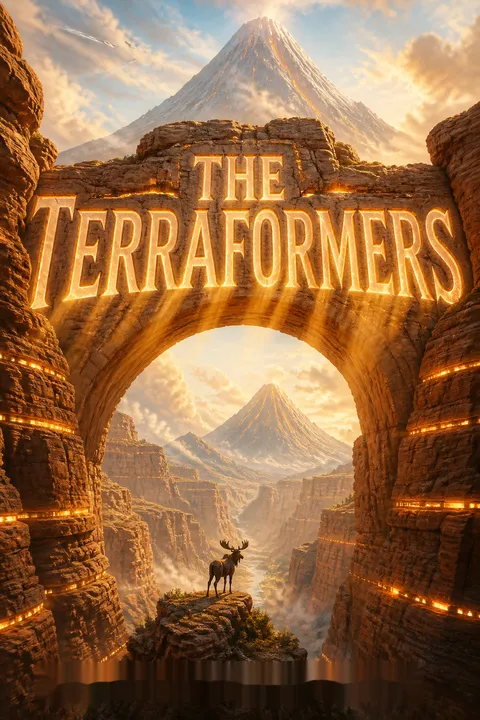
On the planet Sask-E, Destry Thomas, a ranger for the Environmental Rescue Team (ERT), discovers a trespassing Homo sapiens remote, Charter, living out a fantasy of "pure" Pleistocene existence. The encounter is tense: Charter, controlled by a distant human, is killing animals and damaging the ecosystem. Destry, deeply connected to the land through advanced sensor networks, tries to reason with him, but ultimately is forced to destroy the remote to protect the fragile, still-developing biosphere. This act sets off a chain of consequences, highlighting the collision between corporate colonization, personal nostalgia, and the ethics of planetary stewardship.
Hidden Cities, Forgotten Workers
Destry returns to La Ronge, the main city on Sask-E, where the ERT operates in uneasy partnership with Verdance, the corporate owner. The city is a patchwork of sustainable design and social stratification, with most workers—biological and mechanical—treated as property. Destry reconnects with her friend Nil, and together they discuss the looming threat of real estate development and the influx of offworlders. The ERT's origins in the "Great Bargain"—a mythic pact between humans and other species—contrast with the present, where Verdance's control and the commodification of life forms create tension and uncertainty.
The Great Bargain's Legacy
Destry and Nil embark on a mission to investigate seismic activity at Spider Mountain, a volcano far from La Ronge. Their journey is both a return to the roots of terraforming and a confrontation with the planet's layered history. They discover evidence of a hidden door and advanced technology, suggesting the presence of a lost civilization—possibly the original terraformers, the Archaea. The mission is a reminder that Sask-E's history is not just corporate, but deeply entangled with the lives and struggles of its earliest inhabitants.
Underground Alliances
The team gains entry to Spider City, a vast, secret metropolis built inside the volcano by the Archaea—descendants of the first terraformers. Here, the social order is radically different: personhood is not determined by intelligence ratings, and all beings—biological, mechanical, or otherwise—are considered allies. The Archaea have survived by hiding from Verdance, developing their own technology and culture. Destry and her companions are forced to confront their own biases and the limitations of the systems they serve, forging new alliances that challenge the status quo.
Water Wars and River Tricks
Spider City faces a crisis: the Eel River, once their lifeline, has been diverted by Verdance to serve future real estate developments. The Archaea and ERT must collaborate to restore the river, using both ancient knowledge and cutting-edge technology. The plan involves rerouting the river through an old bed, using controlled lava flows engineered by the Boring Fleet—a collective of sentient drilling machines. The struggle for water becomes a microcosm of the larger battle for autonomy, justice, and ecological balance on Sask-E.
The Archaean Revelation
As the alliance deepens, Destry learns the true history of the Archaea and the injustices they suffered at the hands of Verdance and later settlers. The revelation that personhood and rights have always been arbitrarily assigned—often to the benefit of corporate interests—forces the ERT and their allies to reconsider their own complicity. The social fabric of Spider City, with its inclusive approach to intelligence and labor, stands in stark contrast to the rigid hierarchies of La Ronge and the corporate world.
Corporate Threats, Personal Loss
Verdance, threatened by the alliance and the potential for resistance, escalates its tactics. Destry is confronted by her boss, Ronnie, who threatens her position and reveals the company's willingness to use violence to protect its interests. The personal stakes rise as Destry is forced to confront the truth about her parents' deaths—killed by Verdance for defying corporate control. The cost of resistance becomes painfully clear, and the lines between personal and political struggle blur.
The Eel River Gambit
The plan to restore the Eel River is set in motion, with the Boring Fleet unleashing controlled lava flows to create a new dam. The operation is fraught with danger, as Verdance deploys drones and remotes to stop them. The battle is both physical and symbolic: a fight for the right to shape the land and determine the future. The intervention of the moose aeronauts, led by Midnight, turns the tide, but not without casualties—Whistle, Destry's beloved mount and friend, is gravely injured, highlighting the personal costs of revolution.
Treaty, Betrayal, and Survival
In the aftermath, Spider City and Verdance are forced to the negotiating table. The resulting Eel River Treaty grants Spider City limited autonomy and access to water, in exchange for labor and resources. The treaty is a fragile compromise, shaped by both hope and the threat of violence. Destry, now sidelined by Verdance, must reckon with her own legacy and the uncertain future of the planet. The seeds of future conflict—and the possibility of true self-governance—are sown.
New People, Old Systems
Decades later, the treaty's promise is tested as Spider City's people are required to serve two months each year in Verdance's projects. The experience is fraught with tension, as old prejudices and new alliances collide. The creation of the Flying Train Fleet—a collective of sentient, self-governing trains—offers a glimpse of a different future, where public infrastructure is truly public, and personhood is not a privilege but a right. Yet, the shadow of corporate control and the legacy of the InAss system linger.
The Boring Fleet Unleashed
The Boring Fleet, once tools of terraforming, become key actors in the fight for autonomy. Their ability to manipulate the planet's geology—creating tunnels, dams, and even the potential for plate tectonics—gives the resistance new leverage. The question of who controls the tools of creation and destruction becomes central, as the threat of unleashing tectonic chaos hangs over negotiations with Verdance and Emerald, the new corporate power.
Plate Tectonics and Power
As Emerald moves to seize control of Spider City and the planet, the Archaea and their allies debate whether to activate the Ribbons—a network of heating elements that could trigger plate tectonics and devastate the land. The specter of total destruction forces a reckoning: is it better to burn it all down than to submit to corporate rule? The Council's decision to hold back, and the Boring Fleet's intervention, reflect a hard-won commitment to collective survival over vengeance.
Uprising in the Emerald Cities
Emerald's crackdown on dissent in Lefthand leads to mass protests, the destruction of neighborhoods, and the displacement of thousands. The ERT and the Flying Train Fleet become first responders, rescuing refugees and bearing witness to the violence. The Moose Report, a series of investigative stories by a cat journalist, exposes the truth to the galaxy, galvanizing support for public ownership and self-governance. The struggle for Sask-E becomes a symbol of resistance against corporate colonialism.
Trains, Transit, and Personhood
The creation of the Flying Train Fleet—sentient, self-governing, and public—redefines what infrastructure can be. The trains, designed to solve the "traveling herbivore problem," become both transit and political actors, allying with the ERT and the people of Spider City. Their existence challenges the corporate logic of property and personhood, offering a model for a truly public planet. The battle over transit becomes a battle over the soul of Sask-E.
The Moose Report
Moose, the cat journalist, becomes the chronicler of the revolution, using investigative reporting to expose corporate crimes and rally support for public ownership. The Moose Report's revelations about the origins of the H. sapiens germline—stolen from a public biobank—undermine Emerald's legitimacy and fuel the movement for a public planet. The power of storytelling, memory, and collective action becomes clear, as history is reclaimed from corporate myth.
Public Planet Rising
Armed with evidence of public ownership and self-governance, Spider City and its allies petition the League for recognition as a public planet. The process is slow and fraught with uncertainty, but the momentum is unstoppable. The Flying Train Fleet, the ERT, and the people of Sask-E form new coalitions, imagining a future beyond corporate control. The struggle is not over, but the possibility of a truly public, democratic world is within reach.
The Flying Train Fleet
The trains gather in Spider City for a party that is both celebration and political assembly. Through song, debate, and collective decision-making, they affirm their commitment to public service and solidarity with the people of Sask-E. The boundaries between machine and animal, person and infrastructure, blur, as new forms of kinship and governance emerge. The revolution is ongoing, and the work of building a just world continues.
The Battle for Sasky
As Emerald's grip weakens and the League considers Sask-E's petition, the people of the planet face one last crisis: an attempt to activate the Ribbons and unleash plate tectonics. The collective action of the ERT, the Boring Fleet, and the Flying Train Fleet averts disaster, reaffirming the values of cooperation, restraint, and care. The story ends with hope: the public planet is not yet fully realized, but the path has been cleared, and the work of building it belongs to everyone.
Analysis
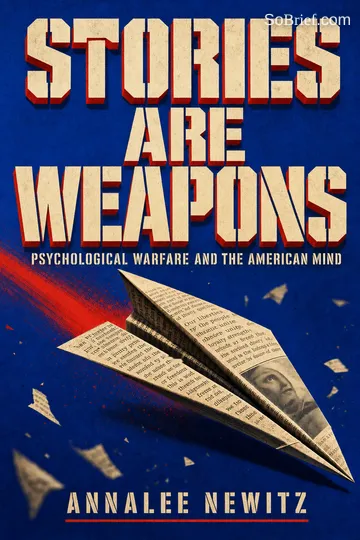
Annalee Newitz's The Terraformers is a sweeping, multi-generational epic that interrogates the ethics of terraforming, the politics of personhood, and the enduring legacies of colonialism and capitalism. At its core, the novel asks: Who gets to shape a world, and who gets to belong? Through its richly imagined societies—La Ronge's uneasy compromise, Spider City's radical inclusivity, and the corporate dystopias of Verdance and Emerald—the book explores the possibilities and perils of collective self-governance. The struggle over the Eel River, the creation of the Flying Train Fleet, and the exposure of corporate fraud are not just plot points, but meditations on the meaning of public goods, the dangers of privatization, and the necessity of solidarity across species and forms. The novel's refusal to grant easy victories—its insistence on the messiness of democracy, the persistence of trauma, and the unfinished work of revolution—makes it both a cautionary tale and a hopeful blueprint. In a world where technology, ecology, and society are inextricably linked, The Terraformers offers a vision of justice rooted in care, cooperation, and the ongoing work of building a truly public planet.
Review Summary
The Terraformers receives mixed reviews, with praise for its ambitious world-building, exploration of environmental and social themes, and creative concepts like sentient animals and AI. Critics appreciate the novel's innovative ideas but find fault with uneven pacing, flat characters, and abrupt time jumps. Some readers enjoy the book's optimistic vision of the future, while others struggle with its heavy-handed messaging and lack of coherent plot. Overall, reviewers acknowledge the book's thought-provoking nature but are divided on its execution.
People Also Read
Characters
Destry Thomas
Destry is the central figure in the early narrative, a Homo sapiens ranger for the ERT who embodies the tension between corporate servitude and ecological stewardship. Deeply connected to the land through sensor networks, she is both a protector and a product of Verdance's system. Her relationships—with Nil, Whistle, and the Archaea—reveal her capacity for empathy and her struggle with the legacy of colonialism. Destry's arc is marked by trauma (her parents' murder by Verdance), moral courage, and a willingness to challenge the boundaries of personhood and property. She becomes a reluctant revolutionary, forced to choose between complicity and resistance.
Whistle
Whistle is a genetically engineered moose, officially classified as a Mount and denied full personhood by the InAss system. Despite his limited vocabulary, he demonstrates intelligence, agency, and deep emotional bonds—especially with Destry and Midnight. Whistle's journey from property to person is both literal and symbolic: after a traumatic injury, his brain is repaired, removing his limiter and granting him full speech. His story exposes the cruelty of intelligence hierarchies and the possibility of liberation through solidarity and love.
Nil Tom
Nil is Destry's closest friend and confidant, a fellow ERT ranger whose expertise in geomorphology and soil science grounds the narrative's ecological themes. He is compassionate, patient, and often the voice of reason in moments of crisis. Nil's relationship with Destry is both platonic and intimate, reflecting the fluidity of bonds in this future society. He is a bridge between the old and new orders, committed to the ideals of the Great Bargain and the practical work of keeping the planet in balance.
Lucky (Archaean Ranger)
Lucky is a member of the Archaea, the original terraformers who built Spider City. As a ranger and negotiator, Lucky embodies the resilience and ingenuity of a people forced to hide and adapt. Their perspective challenges the assumptions of the ERT and exposes the violence of corporate colonization. Lucky's willingness to trust Destry and forge alliances is pivotal in the struggle for autonomy and justice. They represent the possibility of a society where personhood is not a privilege but a shared condition.
Ronnie Drake
Ronnie is the Verdance executive responsible for Sask-E's development and the architect of its oppressive systems. Charismatic, ruthless, and haunted by her own contradictions, she is both a mentor and a threat to Destry. Ronnie's actions—murdering Destry's parents, manipulating treaties, and unleashing violence—embody the logic of corporate colonialism. Yet, her eventual disillusionment and role as a whistleblower complicate her character, revealing the limits of power and the possibility of redemption.
Midnight
Midnight is a high-InAss moose and aeronaut, partner to Long and later to Whistle. Fiercely independent and strategic, she leads the moose in the battle to defend Spider City, using her knowledge of ERT emergency protocols to disable Verdance's drones. Midnight's actions are crucial in turning the tide of the conflict, and her relationship with Whistle exemplifies the breaking of old hierarchies and the forging of new alliances.
Moose (the Cat)
Moose is a data historian and journalist for the La Ronge Messenger, whose investigative reporting (the Moose Report) exposes the crimes of Verdance and Emerald. Sharp, persistent, and deeply empathetic, Moose gives voice to the dispossessed and becomes a symbol of resistance. Their partnership with Scrubjay, the sentient train, reflects the novel's commitment to cross-species solidarity and the power of narrative in shaping history.
Scrubjay (the Train)
Scrubjay is a member of the Flying Train Fleet, a collective of self-governing, sentient trains that provide public transit across Sask-E. Designed to solve the "traveling herbivore problem," Scrubjay is both infrastructure and person, embodying the novel's vision of a world where technology serves the public good. Their relationships—with Moose, Sulfur, and the other trains—are marked by care, curiosity, and a commitment to justice. Scrubjay's journey from tool to political actor is central to the planet's transformation.
Sulfur
Sulfur is an Archaean urban planner and later the parent of the first flying train. They are pragmatic, nurturing, and deeply invested in the well-being of Spider City and its allies. Sulfur's work on public infrastructure and their commitment to inclusive governance make them a key figure in the movement for a public planet. Their relationships—with Misha, Scrubjay, and the broader community—reflect the novel's emphasis on chosen family and collective responsibility.
Cylindra
Cylindra is the VP of Emerald, the corporation that succeeds Verdance as the main power on Sask-E. Ambitious, manipulative, and obsessed with "authentic" Pleistocene experiences, she engineers the exclusion of non–H. sapiens from the Emerald Cities and unleashes violence against dissenters. Cylindra's actions—massacres, forced displacement, and legal maneuvers—make her the embodiment of corporate colonialism's final, desperate grasp for control. Her downfall is precipitated by the exposure of her fraudulent germline deal and the collective resistance of the planet's people.
Plot Devices
The Great Bargain
The Great Bargain is both a literal and symbolic pact between humans and other species, originating in the Farm Revolutions that ended the Anthropocene. It underpins the ERT's ethos of democratic land management and cross-species alliance. The Bargain is invoked throughout the novel as a standard against which all social and political arrangements are measured. Its legacy is contested, reinterpreted, and ultimately expanded to include machines, animals, and new forms of personhood.
Intelligence Assessment (InAss) System
The InAss system is a corporate tool for assigning rights and personhood based on intelligence ratings. It justifies the exploitation of Mounts, Blessed, and other beings, while privileging H. sapiens and high-InAss individuals. The system is repeatedly challenged—by the Archaea, the ERT, and the sentient trains—exposing its arbitrariness and cruelty. The removal of Whistle's limiter and the creation of the Flying Train Fleet are acts of liberation that undermine the system's legitimacy.
The Boring Fleet and the Ribbons
The Boring Fleet—sentient drilling machines—and the Ribbons—heating elements capable of triggering plate tectonics—are legacies of the planet's terraforming past. They become tools of both creation and potential destruction, giving the resistance leverage in negotiations with Verdance and Emerald. The threat of unleashing tectonic chaos is a double-edged sword, forcing the characters to confront the ethics of resistance and the value of restraint.
Treaty and Council Democracy
The Eel River Treaty and the Council system of Spider City exemplify the novel's commitment to democratic, coalition-based governance. Decisions are made through debate, voting, and the granting of concessions to minorities. The process is messy, slow, and often frustrating, but it stands in contrast to the autocratic rule of corporations. The Council's debates over League membership, the Ribbons, and public ownership dramatize the challenges and possibilities of collective self-governance.
The Moose Report and Investigative Journalism
The Moose Report, a series of investigative stories by Moose the cat, is a key plot device for exposing corporate crimes, rallying public support, and shaping the narrative of resistance. Journalism becomes a form of activism, memory, and truth-telling, countering the propaganda of Verdance and Emerald. The power of narrative—who tells the story, and how—is central to the novel's vision of social transformation.
Sentient Infrastructure (Flying Train Fleet)
The creation of the Flying Train Fleet—sentient, self-governing trains—reimagines infrastructure as both service and subject. The trains are not just tools, but members of the community, capable of decision-making, solidarity, and resistance. Their existence challenges the logic of property and personhood, offering a model for a truly public, democratic society. The trains' collective action in moments of crisis is both practical and symbolic, embodying the novel's hope for a world where technology serves the common good.
About the Author
Download PDF
Download EPUB
.epub digital book format is ideal for reading ebooks on phones, tablets, and e-readers.








































