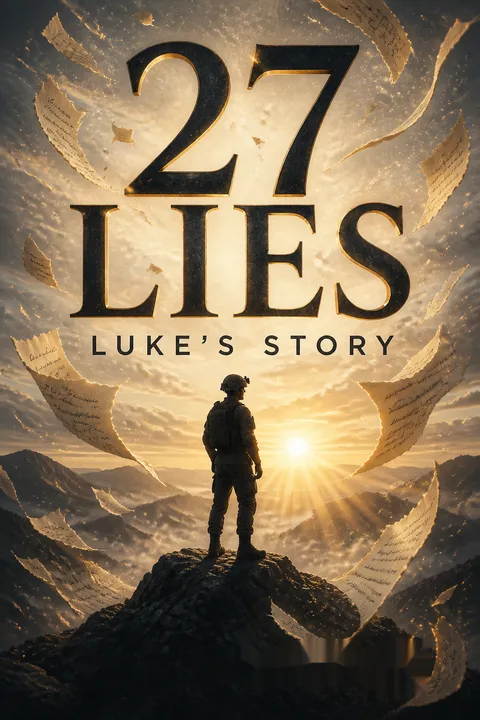

Plot Summary
Shadows of the Past
Luke Lane grows up in the shadow of a father he never met, idolized by family and community. His life is shaped by the weight of legacy, the pressure to be someone else's hero, and the ache of never quite belonging. He seeks purpose in the military, hoping to step out of the ghostly footprints left behind. Meanwhile, Ava Links, the daughter of his father's best friend, is a constant presence—first as a child he can't say no to, then as a woman he can't resist. Their connection is complicated by family ties, unspoken rules, and the pain of loving what you shouldn't. Both are haunted by the past, and their choices are colored by the lies they tell themselves and each other.
Forbidden Attachments
Luke and Ava's relationship is defined by secrecy and physical intensity. They are drawn together by desire and the thrill of breaking rules, but both insist it's just sex—no strings, no future. Luke, hardened by his military life, refuses to admit to deeper feelings, even as Ava's love for him grows. Their encounters are passionate but fraught with guilt and denial. When Ava confesses her love, Luke recoils, shattering her with harsh words. The fallout is immediate: Ava seeks comfort elsewhere, and Luke is left to wrestle with regret and the realization that he may have lost the only person who truly saw him.
Love and Lies Collide
The lies Luke and Ava tell—to themselves, to each other, to their families—begin to unravel. Luke's military career is both a refuge and a prison, giving him purpose but keeping him emotionally distant. Ava, meanwhile, tries to move on, accepting a proposal from another man, Thomas Hardy, whose love is genuine but complicated by the shadow of Luke. The web of secrets grows: paternity, fidelity, and the true nature of love are all questioned. The characters are forced to confront the consequences of their choices, and the pain of honesty becomes unavoidable.
War Within and Without
Luke's life as a Delta Force operative is marked by danger, camaraderie, and trauma. Missions blur the line between right and wrong, and the violence he witnesses and enacts leaves scars. At home, he is a stranger—unable to relax, unable to connect. Injury sidelines him, forcing him to confront the emptiness he feels away from the battlefield. Meanwhile, Ava faces her own battles: the loss of Thomas, the challenges of motherhood, and the suffocating expectations of family and community. Both are fighting wars they can't win alone.
Shattered Promises
Tragedy strikes when Thomas is killed in a senseless accident, leaving Ava alone with two infants and a mountain of grief. The revelation that her twins have different fathers—one Luke's, one Thomas's—adds another layer of complexity and pain. Ava is consumed by guilt, fear, and the desperate need to protect her children from a world that feels hostile and judgmental. Luke, recovering from his own physical and emotional wounds, is forced to reckon with the consequences of his actions and the reality of fatherhood.
The Cost of Secrets
The secret of Chance's paternity cannot stay hidden forever. Luke's discovery is explosive, leading to confrontation, anger, and heartbreak. Ava's attempts to shield her children and herself from further pain only deepen the rift between her and Luke. The families are drawn into the drama, each member struggling with their own loyalties and regrets. The cost of secrecy is high: relationships are strained, and the possibility of healing seems remote.
Grief's Relentless Grip
Ava's grief is all-consuming, coloring every aspect of her life. She clings to memories of Thomas, unable to let go, even as she tries to care for her children. Luke, too, is haunted—by the loss of his friend in combat, by the life he can no longer return to, and by the love he denied himself. Both are paralyzed by pain, unable to reach for the comfort they could find in each other. The world feels gray and hopeless, and the future is uncertain.
Broken and Becoming
Slowly, both Ava and Luke begin to change. Ava learns to accept help, to let others in, and to find strength in her role as a mother. Luke, forced to confront his vulnerabilities, starts to open up about his feelings and his past. Their interactions are fraught with tension, but also with the possibility of something new. The process is messy and nonlinear—setbacks abound, and old wounds are reopened—but growth is happening, even if it's hard to see.
The Weight of Guilt
Guilt is a constant companion for both protagonists. Ava feels responsible for Thomas's death, for her children's complicated parentage, and for the pain she has caused those she loves. Luke is burdened by the lives he couldn't save, the love he pushed away, and the family he feels he has failed. Both seek redemption in different ways—Ava through self-sacrifice, Luke through acts of protection and service. Forgiveness, especially of themselves, is the hardest to achieve.
Unraveling Truths
The truth about Chance's paternity is finally revealed to all, forcing a reckoning. Ava and Luke must face each other honestly, acknowledging the love, pain, and mistakes that have defined their relationship. The confrontation is raw and emotional, but it also opens the door to healing. The families, too, must adjust to the new reality, finding ways to support each other despite lingering hurt and confusion. The process is painful, but necessary for any hope of moving forward.
Second Chances, New Fears
With the truth out, Ava and Luke tentatively begin to rebuild their relationship—not as lovers, but as co-parents and, possibly, friends. The path is fraught with setbacks: jealousy, insecurity, and the fear of repeating old patterns. Both must learn to trust—not just each other, but themselves. The children become a source of hope and motivation, reminding them of what is at stake. The possibility of a second chance is real, but only if they are willing to let go of the past.
The Battle for Hope
Ava and Luke are tested by external pressures—family expectations, societal judgment, and the ever-present threat of losing what they love most. They must fight for their right to happiness, to define their own family, and to protect their children from the fallout of adult mistakes. The battle is as much internal as external, requiring courage, vulnerability, and the willingness to forgive. Through it all, hope emerges—not as a guarantee, but as a choice.
Facing the Fallout
The aftermath of truth-telling is messy. Relationships are strained, and the process of reconciliation is slow and uneven. Ava and Luke must navigate the complexities of blended families, co-parenting, and the lingering effects of trauma. They are forced to confront their own limitations and to accept help from others. The journey is not linear—progress is made, then lost, then regained. But through persistence and love, healing begins to take root.
Healing in Pieces
Healing comes in fits and starts: a shared laugh, a moment of connection, a new tradition. Ava and Luke learn to find joy in the everyday, to celebrate small victories, and to accept that perfection is neither possible nor necessary. The children thrive, and the adults begin to rediscover themselves—not as the people they once were, but as the people they are becoming. The scars remain, but they are no longer the whole story.
Choosing to Stay
The decision to stay—to fight for love, for family, for a future together—is not made lightly. Ava and Luke must confront their deepest fears and insecurities, risking further pain for the possibility of happiness. The choice to stay is an act of courage, a declaration that love is worth the risk. Together, they begin to build a new life, one founded on honesty, acceptance, and mutual respect.
The Promise of Tomorrow
With the past acknowledged and the present embraced, Ava and Luke look to the future. They marry in a simple ceremony, surrounded by family and the children who are their greatest legacy. The journey has been hard, and the wounds are still healing, but there is hope. The promise of tomorrow is not that life will be easy, but that it will be lived together, with love and honesty at the center.
Love, Loss, and Legacy
In the end, the story is about more than romance—it is about the ways we are shaped by those who came before us, the lies we tell to protect ourselves and others, and the courage it takes to face the truth. Ava and Luke's journey is one of loss and redemption, of brokenness and healing, of love that endures despite—and because of—its imperfections. Their legacy is not just in their children, but in the hard-won wisdom that love, in all its messy, complicated glory, is always worth fighting for.
Analysis
A modern meditation on love, loss, and the lies we tell to survive27 Lies: Luke's Story is a raw, unflinching exploration of the ways in which trauma, secrecy, and the weight of legacy shape our lives. Through the intertwined journeys of Luke and Ava, the novel examines the costs and consequences of the stories we tell ourselves—about who we are, what we deserve, and what it means to love and be loved. The narrative refuses easy answers, instead embracing the messiness and complexity of real relationships. At its heart, the book is a testament to the resilience of the human spirit: the capacity to endure heartbreak, to forgive, and to choose hope even in the face of overwhelming pain. The lessons are hard-won: that healing is possible, but never simple; that love is both a risk and a reward; and that the truth, however painful, is always the first step toward freedom. In a world where so many are struggling to reconcile the past with the present, 27 Lies offers a powerful reminder that we are not defined by our wounds, but by our willingness to keep moving forward—together.
Review Summary
27 Lies is the second book in a duet following 27 Truths, told primarily from Luke's perspective. Reviews are deeply divided. Many readers found Luke redeemed himself after being a "jerk" in book one, appreciating his growth and the emotional depth of his love for Ava. Others remained frustrated with both characters—criticizing Luke's past behavior and Ava's dramatic responses. Common praise includes the raw emotion, family dynamics, and intense angst. Critics felt Thomas was unfairly "demonized" and Ava moved on too quickly from her grief. Overall, readers agree this duet delivers powerful emotional impact.
People Also Read

Characters
Luke Lane
Luke is a man defined by loss and expectation. Raised in the shadow of a father he never knew, he is driven by a need to prove himself—to his family, his community, and most of all, to himself. His military career is both a refuge and a crucible, shaping him into a protector but also leaving him emotionally scarred. Luke's relationship with Ava is complicated by guilt, fear, and the belief that he is unworthy of love. He is fiercely loyal, stubborn, and often emotionally closed off, but beneath the armor is a man desperate for connection and redemption. His journey is one of self-discovery, as he learns to accept his flaws, embrace vulnerability, and fight for the family he never thought he deserved.
Ava Links
Ava is a woman marked by both strength and fragility. She grows from a girl who believes in fairy tales to a mother who must navigate the harsh realities of loss, betrayal, and single parenthood. Her love for Luke is deep and enduring, but it is also a source of pain and confusion. Ava is fiercely protective of her children, willing to sacrifice her own happiness for their well-being. She struggles with guilt, self-doubt, and the fear of being judged, but ultimately finds the courage to claim her own story. Her journey is one of healing, as she learns to forgive herself, accept help, and open her heart to the possibility of new love.
Thomas Hardy
Thomas is the man who offers Ava stability, kindness, and unconditional love. His relationship with Ava is genuine, but complicated by the lingering presence of Luke. Thomas's death is a turning point in the story, plunging Ava into grief and forcing her to confront the realities of motherhood and loss. Even in death, Thomas's influence lingers—through his love, his lies, and the children he leaves behind. He represents both what Ava has lost and what she must learn to let go of in order to move forward.
Chance Thomas
Chance is the child at the center of the story's most painful secrets. His paternity is a source of conflict, but he is also a symbol of hope and new beginnings. Through Chance, both Ava and Luke are forced to confront their pasts, their fears, and their capacity for love. He is a reminder that life, even when born of pain and confusion, is precious and worth fighting for.
Hope Hardy
Hope, Thomas's biological child, embodies the innocence and resilience of children. She is a source of comfort and joy for Ava, and a living connection to Thomas. Her presence challenges Luke to expand his definition of family and to embrace love that is not bound by blood. Hope's relationship with her brother and her parents is a testament to the power of chosen family and the healing that comes from acceptance.
Jade Lane
Jade is Luke's mother, a woman who has endured her own share of loss and heartbreak. She is a source of strength and stability for her family, offering unconditional love and support even when she doesn't understand her son's choices. Jade's relationship with Ava is complex—marked by both empathy and frustration—but ultimately grounded in a shared commitment to family. She represents the enduring power of maternal love and the importance of forgiveness.
Ryan Lane
Ryan is the man who steps in to raise Luke as his own, offering a model of kindness, patience, and integrity. He is a steady presence in the lives of his children, providing support and guidance without judgment. Ryan's relationship with Luke is a testament to the power of chosen family and the ways in which love can transcend blood ties. His quiet strength is a source of comfort for both Luke and Ava as they navigate the challenges of parenthood and loss.
Logan Links
Logan is Ava's brother, a grounding force in her life. He is fiercely loyal, quick to defend his sister, and unafraid to challenge those who would hurt her. Logan's relationship with Luke is complicated by their shared history and the pain of divided loyalties, but he ultimately supports both Ava and Luke in their journey toward healing. He represents the importance of sibling bonds and the role of family in the process of recovery.
Piper Hines
Piper, a child in the extended family, serves as a symbol of innocence and the possibility of healing. Her dreams and insights offer comfort to Ava and Luke, reminding them of the magic and mystery that still exist in the world. Piper's presence is a reminder that even in the midst of pain, there is room for wonder, laughter, and the belief in something greater than ourselves.
Casey
Casey is the nanny who helps care for Ava's children. Her own troubled past and involvement in the events surrounding Thomas's death add layers of complexity to the story. Casey's actions force Ava and Luke to confront uncomfortable truths and to reevaluate their assumptions about trust, forgiveness, and redemption. She represents the ways in which people can both hurt and help us, and the importance of compassion in the face of imperfection.
Plot Devices
Dual Narration and Shifting Perspectives
The novel employs a dual narrative structure, alternating between Luke and Ava's perspectives. This allows readers to experience the story from both sides, deepening empathy and understanding. The shifting viewpoints highlight the ways in which misunderstandings, assumptions, and unspoken feelings can shape relationships. The use of first-person narration brings an immediacy and intimacy to the story, immersing readers in the characters' emotional landscapes.
The Motif of Lies and Truths
The recurring motif of lies—both the ones we tell others and the ones we tell ourselves—serves as a central plot device. Each chapter is titled after a common lie, underscoring the ways in which deception can be both protective and destructive. The gradual unraveling of these lies drives the narrative forward, forcing characters to confront uncomfortable truths and to reckon with the consequences of their actions.
Trauma and Healing
The novel draws parallels between physical injury (Luke's combat wounds, Ava's postpartum struggles) and emotional trauma (grief, guilt, betrayal). The process of healing—painful, nonlinear, and often incomplete—is depicted with honesty and nuance. The characters' journeys toward recovery are marked by setbacks and small victories, emphasizing the resilience of the human spirit.
Family as Both Burden and Blessing
The story explores the ways in which family can be both a source of pain and a wellspring of support. The expectations, judgments, and histories of the extended families create obstacles for Ava and Luke, but also provide the foundation for eventual reconciliation and growth. The theme of chosen family—those we love not because we must, but because we choose to—runs throughout the narrative.
Symbolism of Names and Legacy
The significance of names—Chance, Hope, Faith—serves as a symbolic thread, representing the themes of possibility, resilience, and belief in a better future. The legacy of the past, both its burdens and its blessings, is a constant presence, shaping the choices and identities of the characters. The struggle to honor the past while forging a new path is central to the story's emotional arc.
Foreshadowing and Circular Structure
The novel employs foreshadowing and a circular narrative structure, with events and motifs repeating in new contexts. The opening and closing scenes mirror each other, emphasizing the cyclical nature of healing and the possibility of renewal. The use of letters, journals, and other artifacts from the past serves to connect characters across time and to underscore the enduring power of love and memory.
Download PDF
Download EPUB
.epub digital book format is ideal for reading ebooks on phones, tablets, and e-readers.








































