
Key Takeaways
1. Nazism was a cultural disease, not a sudden madness
"It is evident that the Nazis alone did not reverse the stream of German culture; the cult of barbarism had live roots there still in 1923."
Cultural roots of evil. The rise of the Third Reich was not an overnight aberration or a sudden collective insanity. Instead, it was the deliberate cultivation of aggressive, nationalistic, and anti-Semitic ideologies that had been quietly growing in German soil for over half a century.
Pre-existing ideological foundations. Hitler did not invent the myth of the German super-race or the glorification of state-sponsored violence; he merely simplified and weaponized concepts already popularized by German intellectuals, military leaders, and politicians.
- General Count von Haesler advocated building civilization on "mountains of corpses" as early as 1893.
- Kaiser Wilhelm II declared Germans "the salt of the earth" destined to civilize the world in 1905.
- The Weimar Republic secretly laid the groundwork for rearmament long before Hitler took power.
- Academic figures openly championed the enslavement of "alien European stock" like Poles and Czechs.
The emotional trap. By appealing to these deeply ingrained cultural matrices, the Nazi regime successfully bypassed the intellectual brains of the populace. How can a nation think critically when its leaders systematically train them to think only with their emotional, primitive brain centers?
2. The top Nazis were ordinary, flawed men, not unique monsters
"Insanity is no explanation for the Nazis."
Banalities of evil. When the black uniforms, polished boots, and golden braids were stripped away, the men in the Nuremberg cells did not turn out to be drooling lunatics or exotic monsters. They were ordinary, highly functional human beings who were simply products of their environment and masters of their own opportunism.
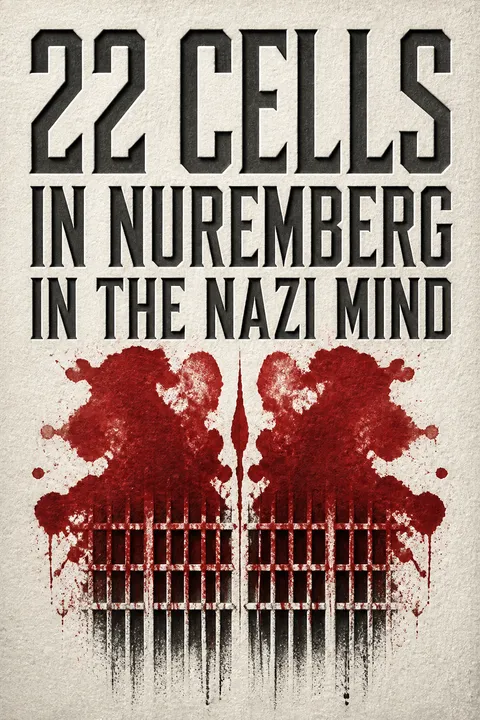
Psychological testing results. Dr. Kelley's rigorous psychiatric evaluations and Rorschach inkblot tests revealed that these war criminals possessed familiar, everyday personality flaws rather than unique psychiatric diagnoses.
- Their intelligence levels ranged from low-average to superior, with some bordering on genius.
- They exhibited common defense mechanisms like projection, rationalization, and denial.
- Most suffered from varying degrees of reactive depression due to their sudden defeat and imprisonment.
- Their primary shared traits were overweening ambition, low ethical standards, and fierce nationalism.
A chilling mirror. If these men were not clinically insane, then the potential for such monstrous behavior exists within the normal human spectrum. What happens to a society when ordinary people with familiar flaws are handed absolute, unchecked power?
3. Hermann Goering was a brilliant, ruthless sociopath who manipulated his legacy
"But he was in my way...."
The charming monster. Hermann Goering was the most dominant figure at the Nuremberg trials, combining high intelligence, charming manners, and an absolute disregard for human life. He was no fat, buffoonish sidekick; he was a cold-blooded, pragmatic executive who systematically built his own industrial and military empire.
Calculated political opportunism. Goering admitted that he joined the Nazi Party not out of ideological fanaticism, but because it offered the quickest path to personal power and glory.
- He organized the brutal SA Storm Troops and led the failed 1923 Munich Putsch.
- He easily overcame a mild paracodeine drug addiction when challenged to prove his strength.
- He ordered the execution of his close friend Ernst Roehm simply because he was an obstacle.
- He viewed international treaties as "toilet paper" and human lives as expendable chess pieces.
Cheating the hangman. Goering's final act of suicide by cyanide was not a cowardly escape, but a brilliant, theatrical maneuver to assert his dominance over his captors. By choosing his own death, he successfully cemented his legacy as a tragic, defiant hero in the eyes of future German nationalists.
4. Rudolf Hess was a fragile, hysterical personality driven by delusion
"My memory is again in order. The reason why I simulated loss of memory was tactical"
The submissive follower. Rudolf Hess was an emotionally juvenile, highly introverted individual who desperately sought father figures to dominate him. He found his ultimate master in Adolf Hitler, serving as his loyal secretary, taking down Mein Kampf, and absorbing the geopolitical theories of Karl Haushofer.
The flight of delusion. Driven by stomach pains, astrological charts, and a desperate desire to reclaim his status as Hitler's favorite, Hess flew to Scotland in 1941 on a bizarre, self-appointed peace mission.
- He believed the British would easily accept his one-sided, arrogant peace terms.
- He suffered from severe hysterical bodily symptoms and paranoid delusions of being poisoned.
- He developed a genuine, self-induced amnesia under the pressure of British interrogation.
- He dramatically faked and then admitted his memory loss during the trials to capture the spotlight.
Living on the curb. Hess spent his life teetering on the narrow curb between sanity and madness, using his hysterical symptoms to manipulate his environment. In the end, his lifelong imprisonment was a fittingly quiet conclusion for a man who could never face the harsh light of reality.
5. Alfred Rosenberg's "philosophy" was a pseudo-intellectual cover for mass murder
"What has motivated me in twenty-five years of battle was the idea of wanting to serve not only the German people, but the whole of Europe, in fact the whole white race."
The muddled philosopher. Alfred Rosenberg was a dull, confused man of low-average intelligence who somehow became the official philosopher of the Nazi Party. His writings, particularly The Myth of the Twentieth Century, were so incredibly dense and incoherent that almost no one in the Party actually read them.
The triune hatred. Born in Russia, Rosenberg developed a fanatical, lifelong hatred of Bolshevism, Jews, and Russians, which he synthesized into a bizarre pseudo-scientific racial theory.
- He popularized the forged Protocols of the Elders of Zion to justify anti-Semitism.
- He preached that Nordic blood would automatically "purify" itself if intermarriage was banned.
- He proposed absurd resettlement schemes, such as deporting American Jews and Negroes to Madagascar.
- As Minister for the Eastern Territories, his administrative incompetence resulted in the slaughter of millions.
The danger of words. Rosenberg possessed a childlike, magical belief in the power of his own words, completely blind to the real-world horror they unleashed. Is there anything more dangerous than a weak-minded fanatic who mistakes his own muddled prejudices for universal truth?
6. The military and diplomatic leaders hid behind blind obedience and opportunism
"We can only receive orders and obey."
The shield of duty. The German generals and diplomats tried at Nuremberg, including Keitel, Jodl, and von Papen, attempted to absolve themselves of moral guilt by hiding behind the traditional codes of military discipline and diplomatic service. They argued that a soldier's or diplomat's only duty is to execute the orders of the state, regardless of their ethical implications.
The cost of compliance. This absolute surrender of personal conscience allowed Hitler to plan and execute aggressive wars of conquest with the full support of highly trained professionals.
- Field Marshal Keitel acted as a weak "yes-man," refusing to set any moral limits on his obedience.
- Colonel General Jodl maintained a cold, Prussian iciness, prioritizing his personal ambition over human decency.
- Grand Admiral Doenitz, though highly intelligent, blindly worshiped Hitler and ignored the regime's atrocities.
- Franz von Papen used his diplomatic cunning to facilitate the annexation of Austria while pretending to act as a moderate.
The death of integrity. By treating moral principles as secondary to professional duty, these men became the highly efficient gears in a machine of mass destruction. What is a gentleman's honor worth when it is used to polish the boots of a tyrant?
7. Robert Ley's fanatical behavior was fueled by organic brain damage
"An inner voice drove me forward like hunted game."
The damaged demagogue. Dr. Robert Ley, the loud, waddling leader of the German Labor Front, was a tragic and dangerous example of how physical brain pathology can shape political history. Unlike his colleagues, Ley suffered from actual, organic brain degeneration that severely impaired his judgment and unleashed his wildest emotional impulses.
The uninhibited rabble rouser. A severe head injury sustained in a World War I plane crash left Ley with a permanent stammer and a deeply unstable personality.
- He was a notorious alcoholic who lived in a fantasy world completely removed from reality.
- He made impossible, grandiose promises to German workers, such as fleets of pleasure ships and free cars.
- He proposed "solving" the Jewish problem by systematically denying them all jobs and housing.
- His post-mortem brain examination confirmed physical degeneration of his frontal lobes.
The tragedy of followers. Ley's complete lack of inhibitory control made him the perfect, unguided missile for Hitler's labor propaganda. How terrifying is it that millions of workers blindly followed the erratic, alcohol-soaked dictates of a man with a physically decaying brain?
8. Hans Frank used religious martyrdom to salvage his ego after slaughtering millions
"The scornful laughter of God is more terrible than any vengeful laws of man."
The penitent executioner. Hans Frank, the brilliant legal mind of the Nazi Party who became the brutal Governor General of occupied Poland, was a highly emotional, unstable individual. After presiding over the systematic slaughter of millions of Jews and Poles, Frank experienced a dramatic religious conversion in his Nuremberg cell.
The theater of atonement. Frank used his return to the Catholic Church not as a quiet, humble repentance, but as a grand, theatrical performance to rebuild his shattered ego.
- He was a highly read, artistic intellectual who loved Beethoven and played chess to manipulate his staff.
- He attempted suicide upon capture, leaving him with a partially paralyzed left hand.
- He declared Hitler to be the "spirit of evil" and willingly accepted his own death sentence as a martyr.
- He quickly threatened to leave the Church again when the Vatican introduced evidence that displeased him.
The ultimate delusion. By framing his execution as a tragic, cosmic sacrifice, Frank successfully shielded himself from the raw, agonizing reality of his monstrous crimes. Can a man truly wash the blood of a million children from his hands with a few tears and a dramatic confession?
9. Adolf Hitler was a common psychoneurotic who weaponized his pathology
"He was the greatest destructive phenomenon of all times; the active incarnation of the death of Europe, who in the mammoth shape of a Caesar made and enforced his own laws."
The weaponized neurotic. Adolf Hitler was not a unique, supernatural demon, but a deeply sick psychoneurotic whose familiar mental deviations were allowed to run rampant. He suffered from a classic combination of hysterical physical symptoms, obsessive-compulsive behaviors, and severe paranoid delusions of persecution.
The anatomy of a dictator. Hitler's absolute refusal to accept criticism, his phenomenal memory, and his hypnotic eyes allowed him to dominate both his brilliant subordinates and the German masses.
- He suffered from a severe hysterical tremor in his left hand, which stopped whenever he was asked about it.
- He was a hypochondriac who took constant, hourly injections of stimulants and glucose.
- He exhibited obsessive-compulsive cleanliness, washing his hands repeatedly and following rigid daily routines.
- His paranoid fear of cancer drove him to launch the disastrous, premature invasion of Russia.
The mirror of the masses. Hitler's genius lay in his ability to present a different face to every person, allowing his followers to project their own desires onto him. He was a mirror of his nation's frustrations; when a sick man leads a sick culture, the result is the near-destruction of civilization.
10. The threat of totalitarianism is universal and actively menaces America
"There is no real difference between the individual German and the individual American except for the German's more ardent belief in his ideologies."
The universal danger. The most vital lesson of the Nuremberg trials is that Nazism was not a uniquely German disease, but a universal human vulnerability. The personality types that ruled the Third Reich—the ruthless opportunists, the weak "yes-men," the fanatical demagogues—are active and present in American society today.
The seeds of fascism. We must recognize that the same emotional appeals, racial prejudices, and political manipulations used by Hitler are actively being deployed by modern American politicians.
- Demagogues still use the myth of "racial supremacy" to secure personal wealth and power.
- Apathetic, non-voting majorities allow highly organized, extremist minorities to seize control of local elections.
- Our educational systems often fail to teach critical thinking, leaving citizens vulnerable to emotional propaganda.
- A high percentage of our population remains emotionally immature, easily swayed by empty, nationalistic slogans.
The price of freedom. To safeguard our democracy, we must actively combat racial prejudices, eliminate voting restrictions, and demand intellectual maturity from our leaders and ourselves. Will we learn from the ashes of Europe, or will we allow our own apathy to pave the way for an American tyrant?
Download PDF
Download EPUB
.epub digital book format is ideal for reading ebooks on phones, tablets, and e-readers.








































