


Key Takeaways
D.A.R.E. and anti-obesity programs backfire by treating teens as incompetent
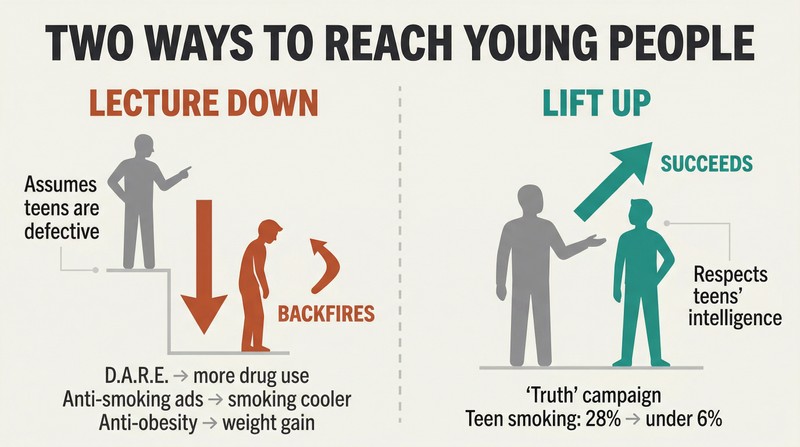
America's flagship youth programs spectacularly fail. D.A.R.E. made students more likely to use drugs. "Think. Don't smoke" made teenagers view smoking as cooler. Anti-obesity programs' most common effect is weight gain. Anti-bullying programs for older teens tend to increase bullying. All share the same fatal flaw: the neurobiological-incompetence model — the assumption that young people are defective thinkers who need adults to tell them what's right.
The "Truth" anti-smoking campaign proved the opposite works. Instead of lecturing teens about cancer, it depicted them as rebels fighting manipulative tobacco executives. Teen smoking plummeted from 28% to under 6% — one of the two most successful public health campaigns in U.S. history. The difference: it respected teens' intelligence and channeled their desire for status.
Teens don't rebel because they're broken — they rebel when they feel disrespected
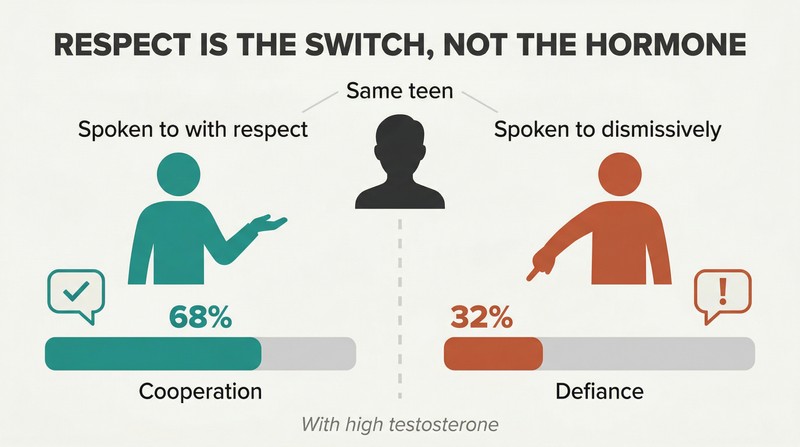
Puberty rewires the brain for status. Starting around age ten, testosterone sensitizes the brain's reward center, making experiences of admiration thrilling and experiences of humiliation devastating. This heightened sensitivity to status and respect — not recklessness or incompetence — drives most adolescent behavior that baffles adults. It persists into the mid-twenties as modern economies delay full adult roles.
The Vegemite study proved it biochemically. When researchers asked young adults to consume a disgusting nutritional supplement respectfully, 66% complied versus 47% when asked dismissively. Participants given extra testosterone became the most compliant group when spoken to respectfully (68%) and the least compliant when disrespected (32%). Hormones don't manufacture defiance — disrespect does. Respect is the nutrient puberty makes teenagers crave.
Don't choose between high standards and high support — give both
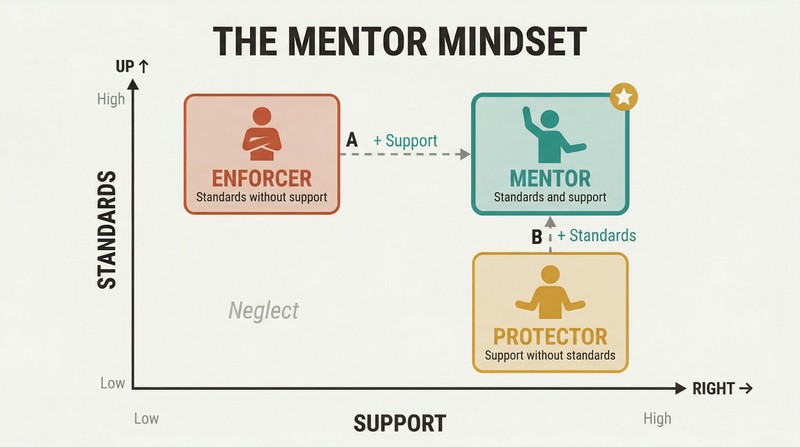
Most adults default to one of two failing modes. The enforcer mindset demands excellence without support — the drill sergeant boss, the "sink or swim" teacher. The protector mindset offers warmth without challenge — lowering the bar to shield feelings. Both produce disengagement. The mentor mindset combines high standards with high support, creating a path to earned prestige that satisfies young people's need for status and respect.
This framework is backed by 80+ years of research. Kurt Lewin's 1939 study of boys' art clubs, Diana Baumrind's parenting research, and Kim Scott's management philosophy of radical candor all converge on the same point. Physics teacher Sergio Estrada demonstrates it: at a school where just 2% test college-ready, 95% of his students pass college-level physics — because he expects excellence and relentlessly helps them achieve it.
Pair every criticism with a transparent belief in their potential
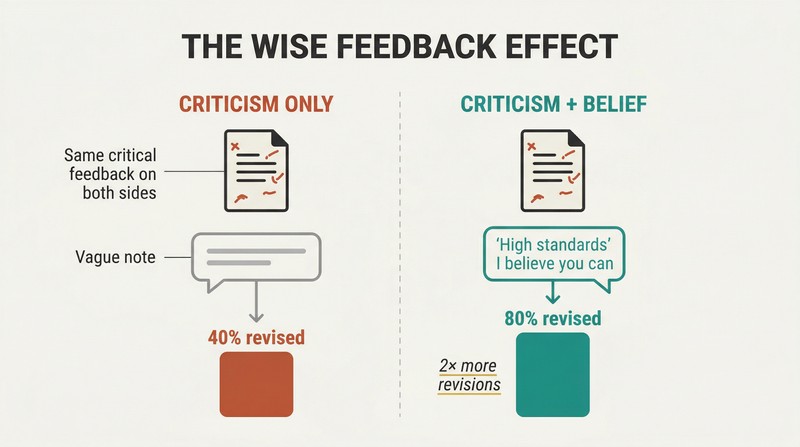
A nineteen-word note doubled revision rates. In psychologist Geoffrey Cohen's wise-feedback study, seventh-graders received essays covered in critical comments. Half got a note conveying high standards plus belief in their ability; half got a vague control note. The result: 80% of wise-feedback students revised their essays versus 40% of the control group. Students also made more than double the suggested corrections.
The note resolves the mentor's dilemma — the tension between honest criticism and maintaining motivation. It works because it addresses young people's real fear: that the authority figure thinks they're incompetent. NBA shooting coach Chip Engelland applies the same principle, telling draft picks their shots are fundamentally good, then ruthlessly refining small details — turning players like Kawhi Leonard into superstars without ever disrespecting them.
Declare your intentions before the interaction turns threatening
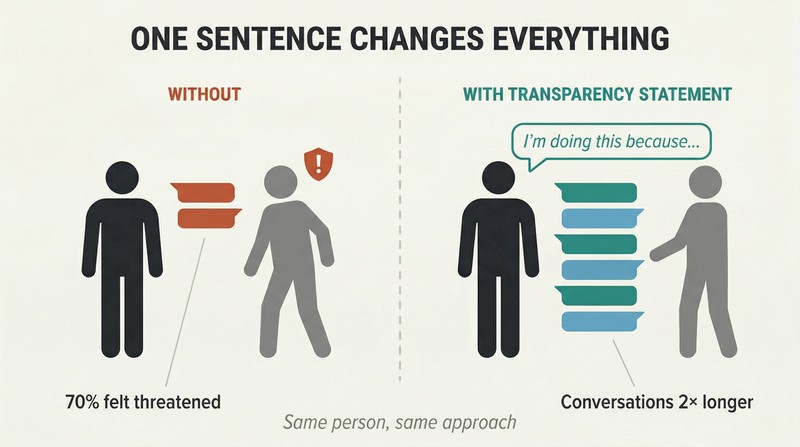
In a policing study, a ten-word sentence transformed hostile encounters. Researcher Kyle Dobson found that when officers approached civilians without explanation, 70% felt threatened. But officers who opened with a simple transparency statement — "I'm walking around trying to get to know the community" — had conversations twice as long, far more positive, and built genuine rapport. It was the exact same officers using identical approaches, minus one sentence.
Transparency statements work wherever power imbalances exist. A principal observing a classroom, a manager giving a performance review, a parent asking "how was your day?" — all carry potential threat due to the barrier of mistrust. Effective statements come early, are framed personally ("I'm doing this because…"), and name a specific benevolent intent. Repetition matters: one transparency speech isn't enough.
Ask authentic questions instead of giving the answers
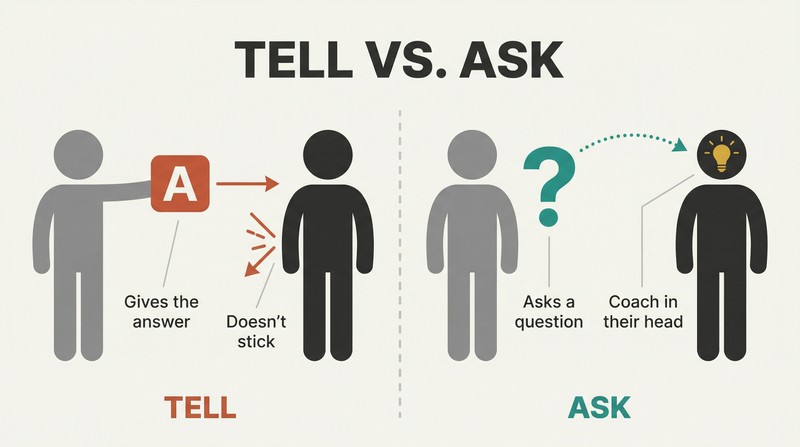
When a student texted Sergio Estrada crying — "I don't understand this problem at all" — he didn't provide the answer. He asked one guiding question. Fifteen minutes of silence. Then: "Okay, I see it now. I got it." That student earned college credit during the COVID-19 pandemic. Authentic questions with uptake — where you genuinely don't know the answer and build on prior responses — force deeper thinking while preserving dignity.
Telling feels efficient but often backfires. Manager Jen Wu spent fifteen minutes each morning asking her intern prioritization questions — no instructions, just curiosity. He finished projects weeks early. Parenting coach Lorena Seidel compressed forty-five-minute family meltdowns into fifteen-second negotiations by asking "What do you really need?" instead of refereeing. Questioning saves time by building a "coach in their head."
Teach young people their racing heart is fuel, not a warning sign
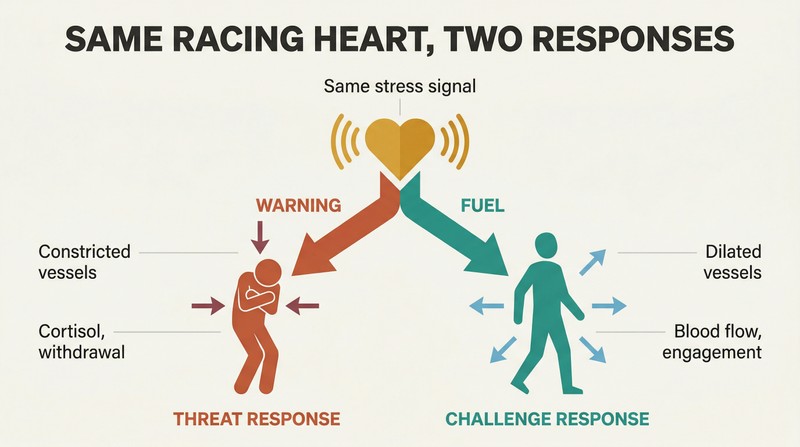
The synergistic-mindsets intervention combines two beliefs: abilities can grow (growth mindset) AND bodily stress responses help performance (stress-can-be-enhancing). Neither alone is sufficient — they're complementary. Together, they shift the body from a threat-type stress response (constricted blood vessels, elevated cortisol, withdrawal) to a challenge-type response (dilated vessels, increased oxygenated blood flow, engagement).
Results were dramatic. Harvard students' GRE math scores jumped from 705 to 770 — the difference between a mediocre and top-flight graduate program. Community college students reversed a downward performance spiral. The most successful students didn't suppress their stress; they told themselves things like: "My nerves are normal… my body is helping me rise to the challenge." The protector response of telling stressed students to take a break often undermines the very growth they need.
Connect boring tasks to a purpose beyond grades or candy
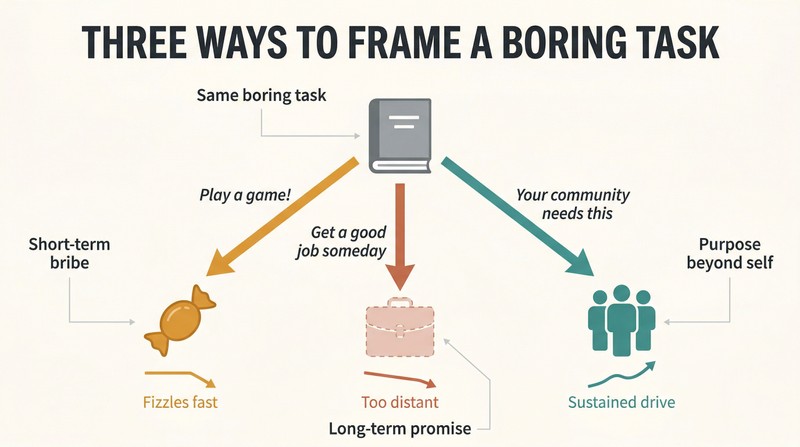
Not a single student in Yeager's surveys could connect classroom content to abstract future skills. They said things like, "I won't be working at a circus, so it's not relevant." Adults appeal to short-term interest (games, candy) or long-term self-interest ("get a good job someday"), but adolescents steeply discount distant rewards. The solution: frame hard work as contributing to something meaningful right now.
An exposé intervention proved it works. Eighth graders learned how food companies engineer addictive junk food and target poor children. Healthy eating became rebellion against corporate manipulation — and cafeteria purchases shifted for three months. In EL Education's network of 1,000 schools, students test water quality, present to city councils, and publish community research. They never ask "why should I learn this?" when their community's well-being depends on the answer.
Tell stories that normalize struggle and show change is possible
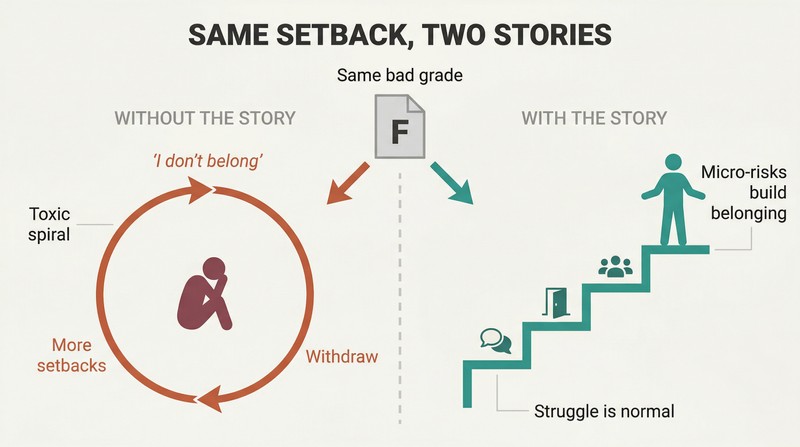
Greg Walton's belonging intervention — thirty minutes of reading upperclassmen's stories — eliminated approximately half of the Black-white grade gap over four years. The stories followed four structural beats:
1. Struggle is normal — you're not alone
2. Change is possible — it won't last forever
3. Here are concrete steps you can take
4. Small steps create a snowball effect
The intervention freed students from a toxic spiral. Without it, every setback — a bad grade, a confusing lecture — confirmed the fear that "I don't belong here." With it, students stopped interpreting difficulty as identity-level evidence and started visiting office hours, joining clubs, and building relationships. Physics professor Christina Markert applied these principles by sharing her own exam failure — and saw more students pass than ever.
Give them a 'coach in their head' that outlasts your time with them
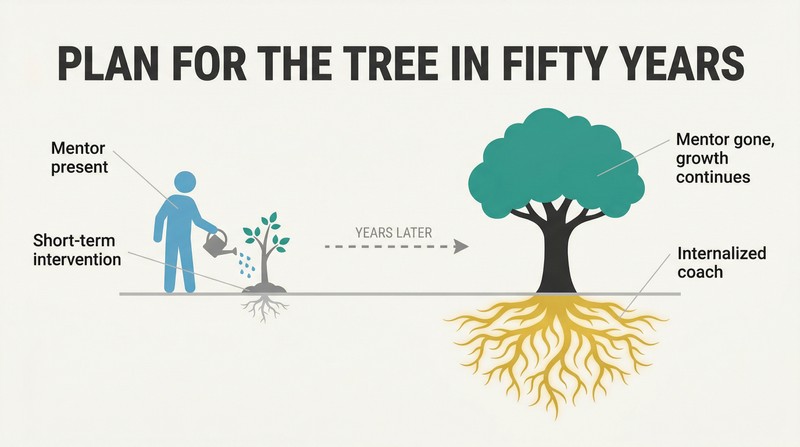
Uri Treisman's calculus workshops at UC Berkeley raised Black students' pass rate from 67% to 97% — and nearly doubled their persistence into math degrees. His approach drew from landscape architecture: plan for how the tree looks in fifty years, not on planting day. Treisman designed exam policies allowing students to replace early failures with later mastery, collaborative problem-solving that built transferable study habits, and rituals socializing students into identities as future mathematicians.
At Camp Champions, one week of reflection-infused summer camp yielded results five years later. KIPP charter school students who attended were over ten percentage points more likely to enroll in four-year colleges. The key: explicitly linking camp challenges to school adversity through guided reflection, so overcoming a ropes course became a mental template for surviving freshman-year confusion.
Analysis
Yeager's book represents a genuinely paradigm-shifting contribution to developmental psychology — one that bridges neuroscience, social psychology, and applied leadership into a unified theory of adolescent motivation. Its central move is deceptively simple: replace the deficit model of adolescence (they're broken, irrational, incompetent) with a needs-based model (they're status-hungry, respect-seeking, and capable of extraordinary contributions when properly supported). This reframe doesn't merely change how we talk about teens; it restructures the entire calculus of intervention design.
What distinguishes the book from other 'understand the next generation' entries is its evidentiary rigor. Yeager doesn't just observe patterns — he runs randomized controlled experiments. The wise-feedback study, the Vegemite/testosterone experiment, the synergistic-mindsets TSST trials, and the Camp Champions longitudinal follow-up all meet gold-standard thresholds. The testosterone finding alone — that hormones amplify sensitivity to both respect AND disrespect, rather than simply fueling impulsivity — should reshape how pediatricians, teachers, and parents think about puberty.
The three-mindsets framework is the book's most practically deployable contribution. It synthesizes eighty years of fragmented research — Lewin's leadership studies, Baumrind's parenting styles, Wax's warm demanders, Scott's radical candor — into a single diagnostic grid. Most adults can immediately identify their default mode and see the specific ingredient they're missing. The enforcer needs support; the protector needs standards. Both are half-right.
The book's most honest insight may be its least celebrated: even exemplars like Sergio Estrada failed spectacularly before adopting the mentor mindset. The gap between understanding the framework intellectually and executing it when a teenager screams or an employee cries remains formidable. Lorena Seidel's 'do-over' concept — the permission to apologize and try again — is the most psychologically realistic tool Yeager offers for the inevitable implementation failures.
Review Summary
10 to 25 received mostly positive reviews, with readers praising its insights on motivating young people. Many found it helpful for parents, educators, and managers. Reviewers appreciated the book's scientific approach and practical advice on building trust and respect with adolescents. Some highlighted the concept of the "mentor mindset" as particularly valuable. Critical reviews noted repetitiveness and excessive length. Overall, readers found the book's perspective on understanding and supporting 10-25 year-olds enlightening and applicable to various roles.
People Also Read







Glossary
Mentor's dilemma
Hard to criticize and motivate simultaneouslyThe tension leaders face when they need to give critical feedback to young people but fear the criticism will crush the person's confidence and motivation. Named by Geoffrey Cohen, it creates a false choice between being nice (accepting poor performance) or being honest (seeming cruel). The wise-feedback method resolves it by pairing criticism with a transparent belief in the person's potential.
Wise feedback
Criticism paired with belief statementA practice where critical feedback is accompanied by a transparent statement that the critic holds high standards AND believes the young person can meet them. Originated in Yeager and Cohen's experiment with seventh-graders, where the signature nineteen-word formulation—'I'm giving you these comments because I have very high standards and I know that you can reach them'—doubled students' willingness to revise their essays.
Adolescent predicament
Gap between status needs and realityThe mismatch between young people's neurobiological need for status and respect—driven by puberty—and the level of status actually afforded to them by their environment, relationships, and roles. This predicament explains why seemingly minor slights from authority figures trigger disproportionate reactions and persists well into the mid-twenties as modern economies delay full adult roles.
Neurobiological-incompetence model
Flawed belief teens can't reasonThe widely held but incorrect belief that young people are fundamentally incapable of rational decision-making because their prefrontal cortices are underdeveloped and their hormones make them impulsive. This model underlies failed programs like D.A.R.E. Newer neuroscience shows adolescents have functioning prefrontal cortices but different motivational priorities—specifically, heightened sensitivity to social status and respect.
Three-mindsets framework
Enforcer, protector, or mentor approachesA framework organizing leadership styles on two axes: standards (expectations) and support (warmth/resources). The enforcer mindset has high standards but low support. The protector mindset has high support but low standards. The mentor mindset combines both. Synthesizes 80+ years of research from Lewin, Baumrind, Wax, and Scott across management, parenting, and education contexts.
Collaborative troubleshooting
Joint problem-solving after mistakesA mentor-mindset practice for responding to young people's errors or confusion through three steps: (1) surface their thinking through authentic questions, (2) validate what they already got right, and (3) bridge to better understanding through leading questions. Practiced by teacher Sergio Estrada, manager Stef Okamoto, and parenting coach Lorena Seidel across education, business, and family contexts.
Transparency statement
Upfront declaration of benevolent intentA clear, specific statement delivered at the beginning of a potentially threatening interaction explaining the leader's positive intentions. Developed from Kyle Dobson's policing research, where officers saying 'I'm walking around trying to get to know the community' transformed hostile encounters. Most effective when delivered early, framed personally, and referring to one's own specific intentions rather than abstract role descriptions.
Synergistic mindsets
Growth mindset plus stress-is-enhancing beliefAn intervention combining two complementary beliefs: a growth mindset (abilities develop through effort) and a stress-can-be-enhancing belief (bodily stress responses fuel performance rather than impair it). Developed by Yeager, Jamieson, Bryan, Gross, and collaborators. Neither belief alone produces the same benefits; together they promote challenge-type physiological responses—dilated blood vessels, increased blood flow—rather than threat-type constriction.
Barrier of mistrust
Default suspicion of authority figuresThe tendency of lower-power individuals—especially those from groups with histories of unfair treatment—to assume the worst possible interpretation of a higher-power person's words or actions. Identified by Geoffrey Cohen and Claude Steele. Explains why well-intentioned feedback from teachers, managers, or police can be perceived as attacks. Wise feedback and transparency statements are designed to break through this barrier.
Sergio Trifecta
Validate, understand, then collaborateA three-part communication approach for supporting stressed or struggling young people, modeled after teacher Sergio Estrada's natural style: (1) validate and reframe—acknowledge feelings without minimizing, find a positive interpretation of their stress; (2) seek to understand—ask questions about what they've already tried before giving advice; (3) offer to collaborate—propose working together on the problem rather than sending them off alone.
FAQ
What's 10 to 25: The Science of Motivating Young People about?
- Focus on Motivation: The book explores how to motivate young people aged ten to twenty-five by understanding their developmental needs, particularly their desire for respect and status.
- Mentor’s Dilemma: It introduces the mentor's dilemma, where adults struggle to provide feedback without demotivating youth, and offers solutions for effective communication.
- Scientific Approach: Author David Yeager uses scientific research to provide evidence-based strategies for parents, educators, and managers to inspire the next generation.
Why should I read 10 to 25: The Science of Motivating Young People?
- Practical Strategies: The book offers actionable strategies for engaging with young people, making it a valuable resource for parents, teachers, and managers.
- Research-Backed Insights: Yeager draws on years of research in developmental science, ensuring the methods presented are credible and reliable.
- Addressing Generational Conflict: It helps adults understand the motivations and challenges faced by young people today, leading to more effective communication and relationships.
What are the key takeaways of 10 to 25: The Science of Motivating Young People?
- High Standards and Support: Emphasizes maintaining high standards while providing ample support to young people, helping them feel respected and capable.
- Wise Feedback: Introduces "wise feedback," combining critical feedback with belief in the young person's potential, reducing defensiveness and encouraging growth.
- Understanding Adolescence: Explains the "adolescent predicament," where young people feel a mismatch between their need for respect and adult treatment.
What is the mentor’s dilemma in 10 to 25: The Science of Motivating Young People?
- Conflict in Feedback: Refers to the challenge of providing constructive criticism without damaging a young person's confidence.
- Cycle of Frustration: Often leads to frustration for both parties, as young people may feel attacked while adults feel ineffective.
- Solution through Wise Feedback: Suggests using "wise feedback," framing criticism to emphasize belief in the young person's abilities.
What is wise feedback, and how can it be applied according to 10 to 25: The Science of Motivating Young People?
- Definition of Wise Feedback: A method of providing critical feedback while expressing confidence in the young person's potential to improve.
- Practical Application: For example, a teacher might say, "I’m giving you this feedback because I know you can meet high standards."
- Research Evidence: Studies show students receiving wise feedback are more likely to revise their work and improve performance.
How does 10 to 25: The Science of Motivating Young People address the generational divide?
- Understanding Perspectives: Emphasizes the need for adults to understand the unique challenges and motivations of young people today.
- Combatting Mistrust: Discusses how mistrust can lead to misunderstandings and conflict, advocating for open communication and transparency.
- Creating a Treaty: Advocates for creating a "treaty" rather than a "truce" in generational conflicts, where both sides work together to understand each other's needs.
What are the three mindsets discussed in 10 to 25: The Science of Motivating Young People?
- Enforcer Mindset: Focuses on high standards without adequate support, leading to fear and resentment among young people.
- Protector Mindset: Provides emotional support but often lowers expectations, preventing young people from reaching their full potential.
- Mentor Mindset: Combines high standards with high support, fostering a collaborative environment where young people can thrive.
How can I implement the mentor mindset from 10 to 25: The Science of Motivating Young People in my interactions?
- Set High Standards: Clearly communicate expectations and the importance of meeting them, encouraging young people to strive for excellence.
- Provide Support: Offer resources, guidance, and emotional support to help young people meet those standards.
- Be Transparent: Clearly explain your intentions and the reasons behind your expectations to build trust and reduce misunderstandings.
What role does questioning play in the mentor mindset according to 10 to 25: The Science of Motivating Young People?
- Encourages Engagement: Asking authentic questions invites young people to share their thoughts and feelings, fostering agency and involvement.
- Facilitates Collaborative Troubleshooting: Questions guide young people in problem-solving and critical thinking, helping them develop resilience.
- Builds Trust: Showing genuine interest in their perspectives strengthens relationships, essential for effective mentorship.
What is the Vegemite Principle in 10 to 25: The Science of Motivating Young People?
- Respectful Language: Emphasizes using respectful language to influence young people's behavior positively.
- Application in Conversations: Encourages adults to adapt their language, avoiding disrespectful phrases and inviting dialogue.
- Impact on Relationships: Builds stronger, more respectful relationships, leading to better communication and cooperation.
How does 10 to 25: The Science of Motivating Young People address the challenges of modern youth?
- Mental Health Awareness: Discusses rising mental health challenges and the need for supportive environments promoting well-being.
- Navigating Social Media: Acknowledges social media's impact on self-esteem and belonging, providing strategies for navigation.
- Equity and Inclusion: Highlights the importance of equity and inclusion, advocating for practices supporting all young people.
What are the best quotes from 10 to 25: The Science of Motivating Young People and what do they mean?
- “You are needed.”: Emphasizes the mentor mindset, encouraging adults to communicate that young people's skills and perspectives matter.
- “Justice, justice you shall pursue.”: Reflects the theme of striving for equity and inclusion in educational settings.
- “Ask, don’t tell.”: Encourages respectful communication, fostering a collaborative and respectful relationship with young people.
Download PDF
Download EPUB
.epub digital book format is ideal for reading ebooks on phones, tablets, and e-readers.








































