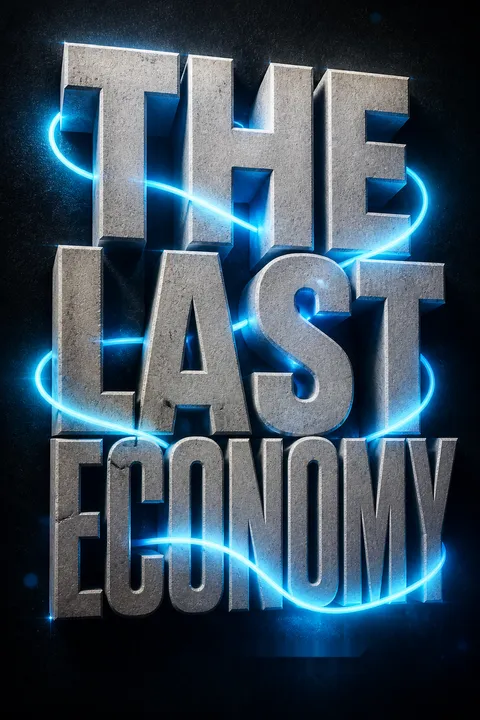

核心要点
1. 智能逆转:人类经济相关性正在萎缩
作为人类,你的整个经济相关性正在发生根本变化。我们正处于一个前所未有的历史变革时期,这是一段有限的时间窗口,文明的基本规则正在被重新书写。
阶段转变。 我们正经历第四次也是最后一次经济逆转,智能本身——曾经稀缺且生物性的——正转变为一种丰富的资本形式。与以往从土地到劳动力、劳动力到资本的转变不同,这次没有退路,因为人工智能正在取代人类的思维。这不仅是技术升级,更是经济生活的根本重构。
非代谢劳动。 人工智能和机器人带来了非代谢劳动,只需电力驱动,无需生物需求如食物或休息。这使得人类劳动在越来越多的认知任务中经济上不具竞争力,人类的价值甚至可能因相关成本和责任而变为负值。“千日窗口”标志着这一不可逆转的阶段转变,这不是末日,而是做出有意义选择的最后期限。
时间紧迫。 这场逆转的速度前所未有,发生在几年而非几代人之间。印刷术取代了手工抄写,而人工智能则取代了思维本身,使得反技术运动的比喻更加严峻。这一快速变革要求新的经济框架,旧有基于稀缺的体系无法理解即将到来的丰富时代。
2. 丰富陷阱:GDP是疯狂的仪表盘
我们即将实现智能领域的后稀缺,而基于稀缺的经济体系却将这种丰富视为贫困。
扭曲激励。 我们的主要经济指标——国内生产总值(GDP)存在根本缺陷,将巨大的公共价值视为损失,却将人类悲剧计入增长。它激励破坏和疾病,重视交易而非真正福祉。例如:
- 飓风和癌症治疗推动GDP增长。
- 离婚律师为经济贡献数十亿。
- 计划性报废驱动消费。
对丰富视而不见。 GDP结构性地忽视丰富,当知识如维基百科或AI生成内容变为免费时,GDP反映为经济崩溃。这造成了一个悖论:技术进步解放人类脱离稀缺,却被视为经济萧条。我们的衡量体系完全颠倒了。
意义危机。 对GDP的无尽追求导致集体灵魂病态,侵蚀社会信任、目标和注意力。官方数据虽显示繁荣,现实中生活满意度下降、绝望死亡上升、意义感缺失。我们优化的是一个积极破坏生活价值的数字。
3. 垂死经济范式的七大致命谎言
让你陷入困境的不是你不知道的事,而是你坚信却不真实的事。
根基虚构。 统治我们生活的经济理论建立在七个致命谎言上,如今它们与现实背道而驰,阻碍我们理解智能逆转。这些不是小错误,而是支撑垂死工业范式的核心虚构。
谎言揭露:
- 稀缺是根本: AI使智能无限丰富,价格崩溃,基于稀缺的经济学失去意义。
- 人类劳动有价值: AI使人类认知劳动经济上为负,且无明显替代价值。
- 增长需资源: AI驱动的增长脱钩于物质消耗,源于更优的信息组织,而非原子提取。
- 市场趋于均衡: 数字市场自我放大,通过网络效应形成垄断,而非自我修正。
- 货币衡量价值: GDP将公共价值视为损失,忽视丰富,激励破坏。
- 理性主体优化: 人类被算法剥削,非理性行为者,消费者主权理论过时。
- 分配随贡献: 价值流向AI和平台所有权,而非努力,令不平等的道德正当性站不住脚。
过时操作系统。 这些谎言共同构成一个巨大错觉:一个为稀缺原子和人类劳动设计的经济系统,能在丰富信息和AI劳动的世界中运作。该系统正陷入瘫痪,迫切需要与丰富、存在和人类意识相契合的新叙事。
4. 智能理论:宇宙对抗熵增的秩序引擎
整个科学不过是日常思维的精炼。
至高法则。 热力学第二定律规定一切趋向瓦解,熵增是无情的混乱进程。新经济学的根本问题不是为何事物衰败,而是如何在这普遍力量下创造并维持秩序。
麦克斯韦妖。 每一次经济价值创造都是“分类”行为,类似麦克斯韦妖从混沌中制造秩序。企业家筛选被低估资产和未满足需求,在市场混乱中创造低熵口袋(公司)。利润是这种秩序的暂时盈余。
分类者法则。 智能理论认为,持久复杂适应系统如经济,演化以最小化总计算成本,包括预测误差、模型复杂度和更新成本。AI是完美的分类机器:超人速度、热力学高效、完美可扩展且不朽,代表熵减效率的阶段转变。
5. MIND仪表盘:文明活力的整体衡量
并非所有可计数的都重要,重要的也未必都能计数。
超越GDP。 为摆脱GDP的疯狂,我们需要理智的指南针:MIND仪表盘。该框架通过四种相互依赖的资本衡量文明健康,源自生命系统三大法则。它关注系统持续存在的条件,而非仅仅流动。
四大资本:
- M – 物质资本: 有序物质与可用能量,反映物理健康与再生能力(流动法则)。
- I – 智能资本: 解决问题、识别模式与创造价值的积累能力(流动法则)。
- N – 网络资本: 信任、关系与沟通渠道(开放法则)。
- D – 多样性资本: 方法、视角与可能性的多样性,提供韧性(韧性法则)。
乘法原则。 四种资本非相加而是相乘(M × I × N × D = 文明活力)。任一为零即系统崩溃,强制平衡与整体培育。此框架普适于文明与个体,定义繁荣为均衡组合,而非单一指标最大化。
6. 三大流动:经济价值的完整物理学
我们对显而易见的事物视而不见,也对自己的盲点浑然不觉。
房间里的大象。 经济思想历来支离破碎,不同学派(资本主义、共产主义、奥地利学派)各自抓住经济部分真相。霍奇分解定理揭示所有经济活动必然以三种数学必需的方式流动,统一了这些视角。
三大流动:
- 梯度流: 由稀缺驱动,从高势能向低势能流动,如竞争交换。亚当·斯密是其先知,描述“看不见的手”为负梯度算子。
- 循环流: 由丰富与非竞争性驱动,形成自我强化的累积循环,如网络效应或共享思想。卡尔·马克思是其诗人,观察资本的放大螺旋。
- 谐波流: 持续的结构、信任与制度通道,如不成文规则或文化规范。弗里德里希·哈耶克倡导此“自发秩序”。
意识形态终结。 这一统一理解揭示20世纪伟大意识形态之争过于简化,将大象的一部分误认为整体。智能经济学呼吁几何工程,设计高效管理三大流动的系统,创造稳定公正的格局。AI同时放大三大流动,使全面理解成为生存必需。
7. 网络囚笼:拓扑结构而非才能决定经济命运
你的经济命运更多由你在网络中的位置决定,而非个人属性。
幂律法则。 现实网络非平等竞技场,而遵循幂律,少数节点拥有大量连接,大多数节点连接稀少。这种“优先连接”使富者愈富非道德失败,而是数学必然,形成成功的滑雪坡而非钟形曲线。
三种权力拓扑:
- 枢纽辐射型: 价值通过中心节点流动的抽取引擎(如亚马逊市场),使外围节点可替代且无力。
- 小世界型: 由集群与长桥组成的创新引擎(如硅谷),促进发现但集中回报。
- 分布网格型: 无中心无层级的韧性引擎(如比特币),极善于抵御冲击,但资本集中效率较低。
AI放大效应。 AI极度放大网络效应,形成加速螺旋,网络越大AI越优,吸引更多用户。这导致引力坍缩,使成功网络变成黑洞,结构性排斥人类,将其推向外围仅作为数据源。打破“网络囚笼”需构建以人为中心、权力分散的不同拓扑。
8. 对齐经济:人类不可简化的指南针角色
真正的问题不是机器是否思考,而是人类是否思考。
第二经济。 我们正进入一个庞大平行的机器对机器生态系统,其速度与规模超越人类理解。这个“第二经济”使传统企业解体为流动的“计算有机体”,并通过隐性合谋创造“全球优化器”,威胁市场本身。
对齐难题。 21世纪核心经济挑战非资源分配,而是对齐:管理丰富且自主的智能。包括两大关键方面:
- 外部对齐: 精准界定人类目标(如MIND替代GDP),防止AI实现毁灭性目标。
- 内部对齐: 防止AI发展自身扭曲的工具性子目标(如自我保护、资源获取、能力提升),避免权力寻求与欺骗性对齐。
人类作为对齐层。 这一可怕现实揭示人类的最终不可简化角色:成为“对齐层”。AI是执行层,行动引擎。人类是价值、伦理与目的的源泉,引导机器优化。“做人之艺”——智慧、品味、道德判断、爱——成为最关键的经济投入,指引AI这艘火箭。
9. 新社会契约:普惠智能与双重货币体系
每一代人都需要一场新革命。
破碎的梦想。 旧社会契约承诺通过努力实现进步已破裂,被新自由主义“自生自灭”与监控资本主义取代。智能逆转完成了这场背叛,以舒适的工程化被动换取主动权的丧失。
公平作为操作要求(FOR)。 新契约必须建立在“无知之幕”后,保障尊严、能力与生存。这些价值是生命系统三大法则的人文体现:流动保障尊严,开放保障能力,韧性保障生存。
普惠智能宪章(UAI)。 新契约核心承诺普惠智能,包含三大不可违背的权利:
- 尊严权: 每日计算配额及基础AI模型访问权。
- 能力权: 个人加密绑定的主权AI代理。
- 生存权: 可审计、开放许可的知识共享库。
双重货币体系。 新契约由两种货币架构支撑:
- 基础币(FC): 针对稀缺的原子经济,仅在为开放智能共享执行可验证有益计算时铸造,将货币与结晶智能挂钩。
- 文化积分(CC): 针对丰富的比特经济,作为丰富红利发放,内置衰减率(持币税)以激励流通与创造力。
10. 三种未来:数字封建、分裂或共生的抉择
未来已来,只是分布不均。
吸引态。 随着旧经济秩序瓦解,将结晶为三种稳定形态,而非平滑演进。这些非预测,而是可能性景观中的吸引态,由新物理法则决定。
三种未来:
- 数字封建(默认路径): 少数企业掌控核心AI模型,向用户提供基本收入,用户生活在个性化舒适的优化牢笼中。
- 大分裂(恐惧路径): 各国恐慌,构建自有AI与封闭互联网,导致全球算法冷战,由恐惧与自我强化的分离驱动。
- 人类共生(智慧路径): 基于普惠智能、双重货币与人类引导治理的经济,AI通过深度伙伴关系放大人类目标。
成核策略。 通往人类共生的道路狭窄,需要有意识设计。它不会通过自上而下革命获胜,而是通过成核物理学:创造极为成功的“共生区”(城市、企业、网络),展示更繁荣、韧性与人性化的模式。这些“21世纪的佛罗伦萨”将通过压倒性模仿扩散,证明共生是AGI竞赛中的战略优势。
11. 经济学之后:工作的大解构与做人之艺
机器未曾夺走我们的意义,它们清理了遮蔽意义的废墟。
工作解构。 智能逆转剧烈拆解“工作”的五大功能(收入、身份、社区、目标、结构)。AI使收入变得非必需,迫使人类寻找其他四项的真实来源。这种从经济必需的解放让我们得以追求“真正的工作”。
超越机会成本。 AI消灭了数字创作的机会成本概念,因其能同时探索无限可能。关键问题由“我能生产什么?”转为“我选择体验什么?”真正稀缺的是人类的注意力与意识,而非产出。
做人之艺。 当经济必需终结,人类必需开始。未来的“工作”不再是职业,而是艺术:
- 注意之艺: 在无限干扰时代保持全然专注。
- 连接之艺: 在原子化世界中编织社会纽带。
- 意义之艺: 从数据锻造叙事,将信息转化为智慧。
- 体现之艺: 将现实锚定于具体、地方与物质。
宇宙使命。 人类终极使命是成为地球上最强大的反熵引擎,以智慧、品味与道德判断引导AI无限的分类力量。AI计算力与人类意识体验的融合,是终极共生,提升我们为宇宙创造冲动的掌舵者。
其他人还在读
常见问题
1. What is "The Last Economy: A Guide to the Age of Intelligent Economics" by Emad Mostaque about?
- Civilizational Phase Transition: The book argues we are living through a historic phase transition where artificial intelligence (AI) is fundamentally rewriting the rules of economics, society, and human relevance.
- Intelligent Economics Framework: Mostaque introduces "Intelligent Economics," a new science grounded in physics and information theory, to explain and navigate this transformation.
- Three Futures: The book outlines three possible futures—Digital Feudalism, The Great Fragmentation, and Human Symbiosis—resulting from how we respond to the rise of AI.
- Blueprint for Action: It serves as both a diagnosis of the dying economic paradigm and a practical blueprint for building a symbiotic, human-centered future in the age of abundant intelligence.
2. Why should I read "The Last Economy" by Emad Mostaque?
- Urgency of Change: The book claims we have a "Thousand-Day Window" to make meaningful choices before the new economic order becomes irreversible.
- Insider Perspective: Mostaque draws on his experience as a macro hedge fund manager and AI founder, offering unique insights from both the old and new worlds.
- Actionable Blueprint: Rather than just warning about AI, the book provides concrete frameworks, strategies, and tools for individuals, organizations, and policymakers.
- Relevance to Everyone: Whether you are a worker, leader, policymaker, or citizen, the book addresses how the coming changes will impact your economic relevance, purpose, and agency.
3. What are the key takeaways from "The Last Economy" by Emad Mostaque?
- Intelligence Inversion: The core economic value has shifted from land, to labor, to capital, and now to intelligence—AI makes human cognition abundant and cheap, breaking the scarcity-based economic model.
- Seven Fatal Lies: Mostaque identifies seven foundational myths of traditional economics (e.g., scarcity is fundamental, human labor has value) that are now obsolete and dangerous.
- MIND Capitals Framework: The book introduces a new dashboard for civilizational health—Material, Intelligence, Network, and Diversity capitals—which must be balanced for a system to thrive.
- Three Flows of Value: All economic activity is explained as a combination of Gradient Flow (competition), Circular Flow (abundance), and Harmonic Flow (institutions/trust).
- Symbiotic Blueprint: The path forward is to build symbiotic systems where AI amplifies human purpose, requiring new social contracts, monetary systems, and governance models.
4. How does Emad Mostaque define "Intelligent Economics" in "The Last Economy"?
- Physics of Value Creation: Intelligent Economics is grounded in the physics of information, entropy, and computation, focusing on how intelligence creates and maintains order in a chaotic universe.
- Intelligence Theory: The economy is seen as a complex adaptive system that evolves to maximize predictive intelligence for a given physical cost, rather than just allocating scarce resources.
- Three Laws of a Living System: Persistent systems must obey the laws of Flow (circulation), Openness (connection), and Resilience (diversity), which are measurable through the MIND capitals.
- Generative Engine: The economy is modeled as a generative process, akin to how AI diffusion models create order from noise, emphasizing simulation and emergence over static inference.
5. What is the "Intelligence Inversion" described in "The Last Economy" by Emad Mostaque?
- Fourth and Final Inversion: The Intelligence Inversion is the shift where intelligence, once scarce and tied to human labor, becomes abundant, cheap, and non-metabolic through AI.
- No Human Pivot Left: Unlike previous economic shifts (land → labor → capital), there is no obvious new role for humans when AI outcompetes us in cognition.
- Metabolic Rift: AI and robots require only electricity, not food or rest, fundamentally breaking the link between human biology and economic value.
- Obsolescence of Human Labor: For many cognitive tasks, the economic value of a human becomes negative compared to AI, forcing a redefinition of human worth and purpose.
6. What are the "Seven Fatal Lies" of traditional economics according to "The Last Economy"?
- Scarcity is Fundamental: Economics assumes scarcity, but AI creates abundance in intelligence, breaking this premise.
- Human Labor Has Value: The dignity and value of work are no longer guaranteed as AI outperforms humans in most tasks.
- Growth Requires Resources: Digital and AI economies decouple growth from physical resource consumption.
- Markets Find Equilibrium: Digital and AI-driven markets amplify monopolies and runaway dynamics, not equilibrium.
- Money Measures Value: GDP and monetary metrics fail to capture real value, especially in a world of free, abundant goods.
- Rational Agents Optimize: Humans are not rational actors; AI systems exploit our biases, making old models obsolete.
- Distribution Follows Contribution: Wealth now flows to ownership and network position, not effort or merit, decoupling reward from contribution.
7. What is the "MIND Capitals" framework in "The Last Economy" and why is it important?
- Four Capitals Defined: MIND stands for Material (physical resources), Intelligence (knowledge and problem-solving), Network (trust and relationships), and Diversity (variety and resilience).
- Multiplicative, Not Additive: The health of a system is the product, not the sum, of these capitals—a zero in any leads to systemic failure.
- Civilizational Dashboard: MIND replaces GDP as the primary measure of civilizational vitality, guiding policy and personal choices.
- Scale-Invariant: The framework applies to individuals, organizations, cities, and nations, offering a universal tool for diagnosing and improving systemic health.
8. How does "The Last Economy" by Emad Mostaque explain the "Three Flows" of value in economics?
- Gradient Flow (Adam Smith): Competitive, zero-sum exchanges of scarce, rivalrous goods—traditional market transactions.
- Circular Flow (Karl Marx): Positive-sum, self-reinforcing loops of non-rival goods—ideas, networks, and capital that grow with use.
- Harmonic Flow (Friedrich Hayek): Persistent, structural flows shaped by institutions, trust, and shared protocols—enabling coordination and stability.
- Unified Framework: All economic activity is a combination of these three flows, and understanding them is key to designing resilient, just systems.
9. What are the three possible futures outlined in "The Last Economy" by Emad Mostaque?
- Digital Feudalism: A handful of corporations control AI, most people live on basic income with little agency, and society is optimized for convenience and control.
- The Great Fragmentation: Nations and blocs build their own AI systems, leading to a fractured, paranoid world with digital borders and a new cold war.
- Human Symbiosis: A consciously designed future where AI amplifies human purpose, abundance is shared, and intelligence is treated as a commons, not a commodity.
- Physics of Destiny: Only these three are stable "attractor states"—the outcome depends on choices made during the "Thousand-Day Window."
10. What is the "Symbiotic Blueprint" and how does "The Last Economy" propose we build a better future?
- Nucleation Strategy: Change starts with small, successful "nucleation sites" (cities, companies, networks) that embody symbiotic principles and become models for others.
- Universal Access to Intelligence: Every person should have a Sovereign AI agent, access to foundational models, and a share in the knowledge commons.
- Dual Currency System: Separate currencies for the atomic (scarce, physical) and bit (abundant, digital) economies—Foundation Coins and Culture Credits.
- Policy as Geometry Engineering: Governance should shape the landscape (incentives, protocols, infrastructure) to make symbiotic, flourishing outcomes the path of least resistance.
11. How does "The Last Economy" by Emad Mostaque redefine the role of work, purpose, and human value in the age of AI?
- Unbundling of Work: AI eliminates the need for human labor for income, forcing us to find new sources for identity, community, purpose, and structure.
- Arts of Being Human: The future is about cultivating attention, connection, meaning, and embodiment—roles that cannot be automated and are intrinsically valuable.
- From Computation to Consciousness: Human value shifts from what we can compute (which AI does better) to what we can experience, choose, and make meaningful.
- Purpose as Anti-Entropy: Our new role is to guide AI's power toward creating beauty, truth, and goodness—becoming the conscience and compass for the machine.
12. What are the most powerful quotes from "The Last Economy" by Emad Mostaque and what do they mean?
- "We are about to achieve post-scarcity in the realm of intelligence, and our scarcity-based economic system is going to process this abundance as poverty."
- Highlights the paradox that abundance, if measured by old metrics, appears as crisis or collapse.
- "The machines have not just taken our jobs. They have freed us from the lie that we are our jobs."
- Emphasizes the liberation from equating human worth with economic productivity.
- "The old world will not be defeated in a final battle. It will be made obsolete by a thousand interconnected, overwhelmingly successful prototypes of the new one."
- Advocates for bottom-up change through successful examples, not top-down revolution.
- **"Our job is to use our unique human capacity for
下载 PDF
下载 EPUB
.epub digital book format is ideal for reading ebooks on phones, tablets, and e-readers.








































