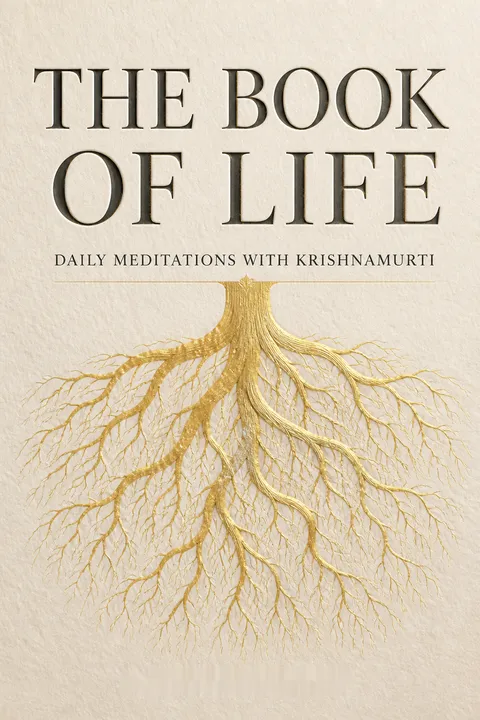

核心要点
1. 培养内在觉知以改变社会
想要改变世界,必须先从自身开始;而从自身开始,关键在于意图。
自我觉知至关重要。 克里希那穆提强调,社会变革始于个体的转变。这种转变需要对自我有深刻的理解,包括思想、情感及习惯性反应。
内在改变的影响。 通过培养自我觉知,个体能够:
- 识别并摆脱社会的制约
- 培养对他人的同情与共情
- 以清晰和目标感行动,摆脱内心冲突
- 为构建更加和谐公正的社会贡献力量
自我理解是一个持续的过程,需要不断警觉。它包括无评判地观察自己的思想和行为,质疑根深蒂固的信念,并保持开放接受改变。
2. 摆脱制约与权威的束缚
摆脱已知,就是昨日的终结。
质疑权威。 克里希那穆提敦促我们质疑一切权威,包括宗教、政治和社会规范。真正的理解源于直接体验,而非盲目跟从他人。
认识制约。 我们的心灵受以下因素塑造:
- 文化与社会影响
- 教育体系
- 宗教信仰
- 家庭传统
- 个人经历
要摆脱制约:
- 无评判地观察自己的思想和反应
- 质疑信念和价值的来源
- 接纳新的视角和理念
- 培养探究和怀疑的精神
摆脱习惯性反应后,我们能以新鲜和创造性的态度面对生活,获得真正的理解与成长。
3. 理解恐惧以超越恐惧
恐惧不在事实中,而在于基于过去对未来的想象。
直面恐惧。 克里希那穆提教导,恐惧源于我们对未来或过去的思考,而非当下的现实。理解恐惧的本质,方能超越它。
恐惧的根源:
- 对未来的不确定
- 对已知的依恋
- 对安全与舒适的渴望
- 比较与竞争
克服恐惧的方法:
- 观察恐惧而不逃避或压抑
- 认识恐惧是思想的产物,而非现实
- 全然活在当下
- 通过自我理解培养内在安全感
直面恐惧,洞察其根源,我们便能摆脱恐惧的束缚,活得更勇敢真实。
4. 体验超越思维与情感的爱
爱无需培养。爱不可分为神圣与肉体;它只是爱——无论你爱的是众多还是唯一。
真正的爱超越一切。 克里希那穆提将爱描述为超越思维、情感和个人欲望的存在状态。它非可培养之物,也非可分类。
真爱特质:
- 无依附与占有
- 不基于快乐或个人利益
- 无条件且包容万象
- 当心灵宁静无争时自然流露
体验真爱的方法:
- 放下对爱的成见与期待
- 培养内在的宁静与自我理解
- 敞开心扉,坦然无求
- 无评判无依恋地观察人际关系
如此理解爱,我们能与他人及生命建立更深刻、真实的连接。
5. 拥抱死亡以真正活着
每日的死亡中蕴含更新、重生与新鲜感。
死亡即更新。 克里希那穆提认为,日常生活中拥抱死亡的观念,能带来更有活力和真实的存在。这并非指肉体之死,而是旧观念、习惯和执着的消亡。
“每日死亡”的益处:
- 重新感知与珍惜生命
- 摆脱过去的负担
- 以新鲜感面对每一刻
- 增强适应力与韧性
实践“每日死亡”:
- 放下成见与期待
- 释放对过去与未来的执着
- 以初次与末次的心态迎接每一天
- 培养持续学习与发现的状态
拥抱此死亡观,我们能更充分活在当下,体验生命的强烈与喜悦。
6. 在独处中发现真正自由
独处是心灵无投射、无逃避的状态。
拥抱孤独。 克里希那穆提区分孤独与独处:孤独是缺失感,独处则是完整与内在自由。真正的独处带来深刻的自我理解与创造力。
独处的特征:
- 摆脱社会影响与制约
- 无心理依赖他人
- 内心宁静清明
- 对新知与洞见保持开放
培养独处:
- 在无干扰中独处
- 无评判地观察思想与情感
- 放下对外界认可与陪伴的需求
- 建立内在的完整与自足感
拥抱真正的独处,我们能发现更深的自由与真实。
7. 练习无选择的觉知以实现即时感知
当你觉察一棵树时,没有选择,没有喜欢或不喜欢,只有树的事实。
直接感知。 克里希那穆提倡导无选择的觉知状态,即无评判、无解释、无过去经验过滤地观察现实。这带来更直接、真实的生命感知。
无选择觉知的益处:
- 更清晰地理解现实
- 摆脱习惯性反应
- 增强敏感度与共情力
- 能自发且恰当地行动
培养无选择觉知:
- 观察环境而不命名或分类
- 注意思想与情感而不试图改变
- 日常交往中暂停评判与解释
- 培养对一切体验的开放与好奇
通过无选择觉知,我们能与生命建立更即时、真实的关系,摆脱习惯心灵的扭曲。
8. 认识知识与思维的局限
知识非智慧。知识总属时间范畴,而智慧超越时间。
超越知识。 克里希那穆提强调,积累的知识与思维在理解生命深层真理上有限。知识有其价值,但真正的智慧源于直接感知与洞察。
知识的局限:
- 基于过去经验与制约
- 在观察者与被观察者间筑起屏障
- 导致固化观念与抗拒改变
- 阻碍新知与洞见的产生
超越知识的方法:
- 识别事实知识与心理知识的差异
- 培养“不知”的开放心态
- 质疑假设与信念
- 发展无过去知识过滤的直接感知能力
理解知识与思维的局限,我们能开启更深的洞察与真实的生命理解。
9. 活在无时间的当下
时间是人的心理敌人。我们的行动基于知识与时间,因此人永远是过去的奴隶。
无时间的生活。 克里希那穆提强调活在当下的重要性,摆脱过去与未来的心理负担。真正的转变与理解只能发生在“现在”。
心理时间的影响:
- 产生对未来的焦虑与对过去的悔恨
- 阻碍对现实的直接感知
- 维持自我分离的幻觉
- 延续冲突与痛苦
活在当下的方法:
- 观察心灵如何制造心理时间
- 练习全然投入日常活动
- 放下对过去的遗憾与对未来的忧虑
- 培养对生命感知的无时间感
摆脱心理时间,我们能更直接、真实地体验生命,获得更清晰与内心的宁静。
10. 通过自我理解培养慈悲
慈悲只有在思想根本终结时才会诞生。
真正的慈悲。 克里希那穆提描述慈悲为深刻自我理解及与世界关系的自然流露。它非靠努力或道德命令培养而成。
真正慈悲的特征:
- 自发产生,无动机无努力
- 不受个人或文化界限限制
- 包含理解与行动
- 摆脱矫情与情绪反应
培养慈悲的方法:
- 通过观察与探究深化自我理解
- 认识万物相互关联
- 放下对他人的评判与偏见
- 从理解而非道德义务出发行动
通过自我理解发展真正的慈悲,我们能为构建无分裂与冲突的和谐公正世界贡献力量。
读者评价
《生命之书》由克里希那穆提著作,因其对生命、灵性与自我觉察的深刻洞见而备受读者推崇。书中每日的冥想内容挑战传统思维,激发内省,因而广受赞誉。尽管其智慧历久弥新,但部分读者偶尔感到理解有难度。批评者认为其缺乏科学依据,支持者则视其为引导生活转变的重要指南。许多读者建议花时间细细品味与反思其教诲,认为它是个人成长过程中宝贵的伴侣。
其他人还在读



常见问题
What's The Book of Life about?
- Daily Meditations: The Book of Life by J. Krishnamurti is a collection of daily meditations that explore various themes related to human existence and consciousness throughout the year.
- Exploration of Truth: The book emphasizes understanding oneself and the nature of reality, encouraging readers to seek truth beyond societal norms and conditioning.
- Interconnected Themes: Each month focuses on different themes such as desire, fear, love, and self-knowledge, providing insights into the complexities of human emotions and relationships.
Why should I read The Book of Life?
- Transformative Insights: Reading this book can lead to profound personal transformation by challenging conventional beliefs and encouraging self-inquiry.
- Timeless Wisdom: Krishnamurti's teachings are timeless and relevant, addressing fundamental issues of human existence that resonate across cultures and generations.
- Encourages Self-Discovery: The book invites readers to explore their own thoughts and feelings, fostering a deeper understanding of themselves and their place in the world.
What are the key takeaways of The Book of Life?
- Self-Knowledge is Essential: Understanding oneself is crucial for personal growth and transformation. Krishnamurti emphasizes the importance of self-awareness in achieving a meditative state.
- Freedom from Conditioning: The book stresses the need to break free from societal conditioning to experience true freedom and creativity.
- Importance of Awareness: Awareness is highlighted as a powerful tool for understanding and transcending personal and societal conflicts.
What are the best quotes from The Book of Life and what do they mean?
- Understanding Problems: “There is only the problem; there is no answer; for in the understanding of the problem lies its dissolution.” This suggests that true insight leads to resolution.
- Dynamic Truth: “Truth can never wither because it can only be found from moment to moment.” This highlights that truth is a dynamic experience, not a static concept.
- Self-Awareness: “To understand the innumerable problems that each one of us has, is it not essential that there be self-knowledge?” This underscores the necessity of self-awareness in addressing personal issues.
How does Krishnamurti define desire in The Book of Life?
- Desire as Complex: Krishnamurti explores desire as a fundamental aspect of human experience that can lead to both fulfillment and suffering.
- Understanding Desire: He emphasizes the need to understand desire rather than suppress it, suggesting that true comprehension can lead to freedom from its negative aspects.
- Desire and Conflict: The book discusses how unfulfilled desires can create inner conflict and turmoil, leading to a cycle of craving and dissatisfaction.
How does The Book of Life address the concept of fear?
- Fear as a Barrier: Fear is presented as a significant barrier to understanding oneself and achieving true freedom.
- Confronting Fear: The book encourages readers to confront their fears directly rather than avoiding them, suggesting that this confrontation can lead to liberation.
- Fear and Conditioning: Krishnamurti links fear to societal conditioning, indicating that many fears are learned rather than innate.
What does Krishnamurti mean by "self-knowledge" in The Book of Life?
- Foundation of Understanding: Self-knowledge is portrayed as the foundation for understanding one’s thoughts, feelings, and actions.
- Dynamic Process: He describes self-knowledge as a dynamic and ongoing process requiring continuous observation and reflection.
- Integration with Life: The book suggests that self-knowledge must be integrated into daily life and relationships to be meaningful.
How does The Book of Life define love?
- Love Beyond Emotion: Krishnamurti distinguishes love from mere emotion or sentiment, suggesting that true love transcends personal desires and attachments.
- Love and Freedom: He asserts that love cannot exist where there is possessiveness or fear, emphasizing that true love is liberating.
- Love as a State of Being: The book presents love as a state of being that is not contingent on external factors or conditions.
What is the significance of awareness in The Book of Life?
- Awareness as a Tool: Awareness is portrayed as a crucial tool for understanding oneself and the world, allowing for deeper insights and clarity.
- Awareness and Freedom: The book suggests that true awareness leads to freedom from conditioning and societal constraints, enabling individuals to live authentically.
- Active Observation: Krishnamurti emphasizes the importance of active observation without judgment, which fosters genuine understanding and connection to reality.
How does Krishnamurti suggest we approach fear in The Book of Life?
- Understanding Fear: Krishnamurti encourages readers to understand the whole process of fear, emphasizing that awareness of fear is essential for overcoming it.
- Fear as Thought: He explains that fear is rooted in thought, highlighting the need to examine the origins of our fears to address them effectively.
- Living with Fear: Krishnamurti suggests learning to live with fear, fostering resilience and acceptance in the face of fear.
What does Krishnamurti mean by "the observer and the observed"?
- Duality of Experience: Krishnamurti discusses the concept to illustrate the duality inherent in human experience, which creates conflict.
- Unity of Perception: He argues that when the observer and the observed are seen as one, there is a possibility for true understanding and insight.
- Ending the Division: The book emphasizes recognizing that "the observer is the observed," leading to a state of awareness free from judgment and division.
How can one practice meditation according to The Book of Life?
- Awareness of Thought: Krishnamurti suggests meditation begins with being aware of the thinker, observing thoughts without judgment.
- Stillness of Mind: He emphasizes the importance of a still mind, allowing for deeper insights and a connection to the present moment.
- Meditation as Daily Practice: Krishnamurti encourages integrating meditation into daily life, promoting continuous self-awareness and understanding.
关于作者
其他作品,作者: J·克里希那穆提







下载 PDF
下载 EPUB
.epub digital book format is ideal for reading ebooks on phones, tablets, and e-readers.








































