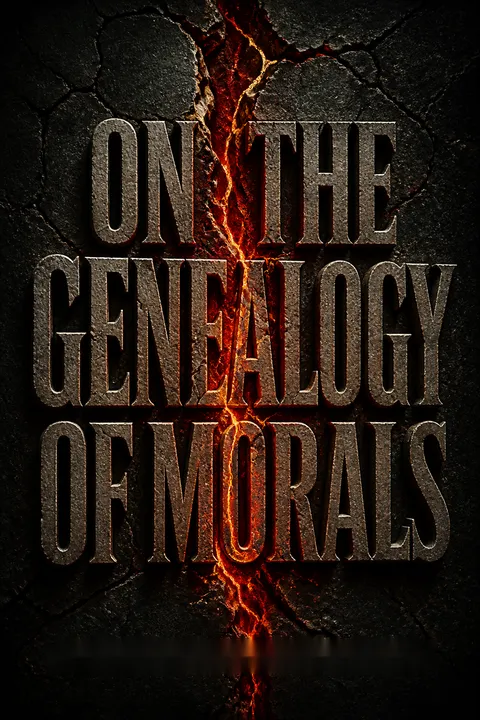

Belangrijkste inzichten
1. De Oorsprong van Morele Waarden: Goed versus Kwaad
"De edele mens leeft voor zichzelf en met vertrouwen en openheid (‘van edele afkomst’ benadrukt de nuance van ‘eerlijk’ en ook ‘naïef’), de mens van ressentiment is noch rechtvaardig noch naïef in zijn omgang met anderen."
Uitleg van Morele Grondslagen. Nietzsche stelt dat morele waarden niet voortkomen uit universele waarheden, maar vanuit het perspectief van sociale klassen en machtsverhoudingen. De oorspronkelijke scheiding tussen ‘goed’ en ‘slecht’ ging in de kern over sociale status en macht, niet over ethische overwegingen.
Historisch Perspectief op Waarden:
- Vroege morele onderscheidingen werden gemaakt door machtige sociale groepen
- ‘Goed’ betekende oorspronkelijk edel, machtig en bevoorrecht
- ‘Slecht’ stond aanvankelijk voor gewoon, zwak of alledaags
Culturele Interpretatie. De betekenis van morele termen ontwikkelde zich via sociale interacties, waarbij de machtigen de eerste waardensystemen bepaalden. Dit perspectief daagt het idee van objectieve morele waarheid uit en suggereert dat moraliteit een product is van sociale machtsstructuren.
2. Slavernijmoraal versus Heersersmoraal
"De slavenopstand in de moraal begint wanneer ressentiment zelf creatief wordt en waarden voorschrijft."
Psychologische Dynamiek van Moraliteit. Nietzsche introduceert een revolutionair concept van twee fundamentele morele kaders: heersersmoraal (gekenmerkt door kracht en zelfbevestiging) en slavernijmoraal (gekenmerkt door wrok en reactieve macht).
Belangrijkste Kenmerken:
- Heersersmoraal: bevestigt het leven, waardeert kracht, schept waarden
- Slavernijmoraal: reactief, definieert zichzelf in tegenstelling tot de machtigen
- Ressentiment drijft de waardenschepping van slavernijmoraal aan
Psychologisch Mechanisme. De machtelozen, die hun agressie niet direct kunnen uiten, creëren een moreel systeem dat zwakte herinterpreteert als deugd en kracht als ondeugd. Zo compenseren ze psychologisch hun gebrek aan daadwerkelijke macht.
3. De Psychologie van Schuld en Straf
"Het centrale morele begrip ‘schuld’ is ontstaan uit het materiële begrip ‘schuld’ (als in ‘schuld aan geld’)."
Oorsprong van Morele Straf. Nietzsche traceert het begrip schuld niet terug tot morele tekortkomingen, maar tot economische relaties tussen schuldeiser en schuldenaar. Straf was aanvankelijk een transactioneel proces van compensatie, geen moreel oordeel.
Historische Ontwikkeling:
- Vroege rechtssystemen zagen straf als financiële compensatie
- Schuldeisers konden schuldenaren fysiek straffen
- Morele concepten van schuld ontstonden uit deze economische interacties
Psychologische Transformatie. In de loop der tijd veranderde de concrete economische relatie in abstracte morele en psychologische concepten van schuld, waardoor een complex systeem van morele beoordeling ontstond dat zijn pragmatische oorsprong verhult.
4. De Geboorte van het Slechte Geweten
"Slecht geweten is een ziekte, daar bestaat geen twijfel over, maar een ziekte zoals zwangerschap een ziekte is."
Psychologische Internalizatie. Nietzsche beschrijft het slechte geweten als een gevolg van menselijke beschaving, waarbij natuurlijke impulsen naar binnen worden gedwongen wanneer externe uiting onmogelijk wordt. Deze internalisatie schept een complex innerlijk psychologisch landschap.
Mechanisme van het Slechte Geweten:
- Onderdrukking van natuurlijke instincten
- Het naar binnen richten van agressieve impulsen
- Het creëren van een intern moreel beoordelingssysteem
Culturele Gevolgen. De ontwikkeling van het slechte geweten vertegenwoordigt een diepgaande transformatie van de menselijke psychologie, waarbij innerlijk conflict de primaire manier wordt om moraliteit en zelfbegrip te ervaren.
5. Het Ascetische Ideaal en Lijden
"Het ascetische ideaal drukt een wil tot macht uit die zich tegen het leven zelf heeft gekeerd."
Psychologische Interpretatie van Ascese. Nietzsche ziet het ascetische ideaal niet als een afwijzing van het leven, maar als een complex overlevingsmechanisme om om te gaan met menselijk lijden en psychologische uitdagingen.
Functies van Ascetische Praktijken:
- Het geven van betekenis aan lijden
- Het creëren van psychologische mechanismen om pijn te verdragen
- Het transformeren van negatieve ervaringen in positieve kaders
Diepere Psychologische Inzicht. Het ascetische ideaal vertegenwoordigt een verfijnde psychologische strategie om menselijke kwetsbaarheid te beheersen, en toont hoe ogenschijnlijk zelfdestructieve praktijken adaptieve overlevingsmechanismen kunnen zijn.
6. Ressentiment: De Wraak van de Machtelozen
"De slavenopstand in de moraal begint wanneer ressentiment zelf creatief wordt en waarden voorschrijft."
Psychologisch Mechanisme van Wrok. Ressentiment is een complex psychologisch proces waarbij de machtelozen morele systemen creëren die hun zwakte herinterpreteren als deugd, en zo hun onvermogen tot handelen omzetten in een moreel kader.
Kenmerken van Ressentiment:
- Reactieve psychologische strategie
- Schept morele waarden als compensatie voor machteloosheid
- Verandert zwakte in een vorm van kracht
Culturele Gevolgen. Ressentiment verklaart hoe gemarginaliseerde groepen krachtige morele verhalen kunnen creëren die bestaande machtsstructuren uitdagen door psychologische herinterpretatie.
7. Religie als Mechanisme van Psychologische Controle
"God offert zichzelf op voor de schuld van de mens, God lost zichzelf in, God als de enige figuur die namens de mens kan verlossen."
Religieuze Psychologie. Nietzsche interpreteert religieuze systemen als verfijnde psychologische mechanismen om menselijk lijden, schuld en existentiële angst te beheersen.
Religieuze Functies:
- Het geven van betekenis aan lijden
- Het creëren van psychologische compensatiemechanismen
- Het transformeren van individuele ervaringen in collectieve verhalen
Psychologisch Inzicht. Religieuze systemen worden niet gezien als metafysische waarheden, maar als complexe psychologische technologieën om menselijke kwetsbaarheid en onzekerheid te beheersen.
8. De Wil tot Macht en Menselijke Motivatie
"Wat mij niet doodt, maakt mij sterker."
Fundamentele Menselijke Drijfveer. Nietzsche stelt de wil tot macht voor als de primaire motivatiekracht in de menselijke ervaring, die traditionele psychologische interpretaties overstijgt.
Kenmerken van de Wil tot Macht:
- Stuurt persoonlijke en culturele ontwikkeling aan
- Komt tot uiting via creativiteit en transformatie
- Bestaat buiten traditionele morele kaders
Psychologisch Perspectief. De wil tot macht vertegenwoordigt een dynamischer begrip van menselijke motivatie, met nadruk op groei, uitdaging en voortdurende zelfoverwinning.
9. Kritiek op de Christelijke Moraliteit
"Het grootste gevaar is niet het kwaad, maar medelijden en afkeer van de mensheid."
Morele Kritiek. Nietzsche levert een radicale kritiek op de christelijke moraliteit, die hij ziet als een systeem dat menselijk potentieel verzwakt door lijden en middelmatigheid te verheerlijken.
Belangrijkste Kritieken:
- Bevordert zwakte boven kracht
- Verandert natuurlijke menselijke impulsen in bronnen van schuld
- Creëert een cultuur van zelfontkenning
Filosofische Uitdaging. De kritiek vormt een fundamentele herwaardering van morele systemen en daagt lezers uit om hun basisveronderstellingen over deugd en menselijk potentieel te heroverwegen.
10. De Toekomst van Menselijke Waarden
"We zijn moe van de mens… Wat is nihilisme vandaag, als dit niet?"
Filosofische Vooruitblik. Nietzsche voorziet een diepgaande transformatie van menselijke waarden en suggereert de noodzaak van een radicale herbezinning op morele en culturele kaders.
Toekomstige Mogelijkheden:
- Het overwinnen van nihilisme door affirmatie
- Het scheppen van waarden voorbij traditionele morele systemen
- Het omarmen van menselijk potentieel voor groei en transformatie
Filosofische Visie. De uiteindelijke boodschap vormt een uitdaging en uitnodiging om het menselijk potentieel opnieuw te bedenken, voorbij de huidige morele en culturele beperkingen.
Samenvatting van recensies
Over de genealogie van de moraal is een prikkelende kritiek op traditionele opvattingen over moraliteit en waarden. Nietzsche daagt de gangbare ideeën over goed en kwaad uit door hun historische oorsprong en ontwikkeling te onderzoeken. Lezers waarderen zijn meeslepende schrijfstijl en uitdagende denkbeelden, al vinden sommigen zijn standpunten controversieel of moeilijk te doorgronden. Het boek behandelt begrippen als schuld, straf en ascese en biedt diepgaande inzichten in de menselijke natuur en de samenleving. Hoewel het geprezen wordt om zijn filosofische diepgang, merken sommige recensenten op dat meerdere lezingen nodig zijn om Nietzsche’s argumenten volledig te begrijpen. Al met al wordt het beschouwd als een belangrijk werk binnen Nietzsche’s filosofie.
Anderen lazen ook




Veelgestelde vragen
What's "On the Genealogy of Morals" about?
- Exploration of Morality: "On the Genealogy of Morals" by Friedrich Nietzsche is a philosophical work that examines the origins and meanings of our moral concepts.
- Critique of Traditional Morality: Nietzsche critiques traditional moral values, particularly those rooted in Christianity, and explores how they have evolved over time.
- Genealogical Method: The book employs a genealogical method to trace the historical development of moral concepts, questioning their validity and purpose.
- Focus on Power Dynamics: Nietzsche investigates the power dynamics involved in the creation and perpetuation of moral values, emphasizing the role of the "will to power."
Why should I read "On the Genealogy of Morals"?
- Challenging Perspectives: The book offers a provocative critique of conventional morality, encouraging readers to question deeply held beliefs.
- Philosophical Insight: It provides insight into Nietzsche's broader philosophical ideas, including his concepts of the "will to power" and "master-slave morality."
- Historical Context: Understanding Nietzsche's work can offer a deeper appreciation of the historical and cultural context of Western moral thought.
- Influence on Modern Thought: Nietzsche's ideas have significantly influenced modern philosophy, psychology, and cultural criticism, making this work essential for understanding contemporary intellectual discourse.
What are the key takeaways of "On the Genealogy of Morals"?
- Moral Origins: Nietzsche argues that our moral values have historical origins that are often rooted in power struggles and social dynamics.
- Critique of Christianity: He critiques Christian morality as a form of "slave morality" that arose from ressentiment and a reaction against "master morality."
- Will to Power: The concept of the "will to power" is central, suggesting that the drive for power and dominance underlies human behavior and moral development.
- Questioning Objectivity: Nietzsche challenges the notion of objective morality, suggesting that moral values are subjective and culturally constructed.
What is Nietzsche's genealogical method?
- Historical Analysis: Nietzsche's genealogical method involves tracing the historical development and transformation of moral concepts.
- Critique of Origins: It seeks to uncover the origins of moral values, questioning their legitimacy and the power structures that sustain them.
- Focus on Power: The method emphasizes the role of power dynamics in shaping moral beliefs and practices.
- Deconstruction of Morality: By deconstructing moral concepts, Nietzsche aims to reveal their contingent and constructed nature.
How does Nietzsche differentiate between "master morality" and "slave morality"?
- Master Morality: Nietzsche describes "master morality" as the morality of the strong, characterized by values such as pride, strength, and nobility.
- Slave Morality: "Slave morality," in contrast, is the morality of the weak, emphasizing values like humility, compassion, and meekness.
- Ressentiment: Slave morality arises from ressentiment, a deep-seated resentment and reaction against the values of the masters.
- Value Inversion: Nietzsche argues that slave morality inverts the values of master morality, portraying the traits of the strong as evil and those of the weak as good.
What role does the concept of "will to power" play in the book?
- Fundamental Drive: The "will to power" is a fundamental drive that Nietzsche believes underlies all human actions and moral developments.
- Beyond Survival: Unlike the will to survive, the will to power encompasses a broader desire for growth, dominance, and self-overcoming.
- Moral Implications: Nietzsche suggests that moral values are expressions of the will to power, shaped by those who wield power to maintain control.
- Critique of Objectivity: The concept challenges the idea of objective morality, proposing that moral values are subjective and power-driven.
How does Nietzsche view the ascetic ideal?
- Ascetic Ideal Defined: The ascetic ideal involves self-denial and the rejection of worldly pleasures, often associated with religious and moral practices.
- Critique of Asceticism: Nietzsche criticizes the ascetic ideal as life-denying, arguing that it stems from a will to power that seeks to dominate life by negating it.
- Psychological Function: He suggests that the ascetic ideal serves as a psychological mechanism for coping with suffering and meaninglessness.
- Cultural Influence: The ascetic ideal has historically influenced Western culture, shaping moral values and societal norms.
What is Nietzsche's critique of Christianity in "On the Genealogy of Morals"?
- Slave Morality: Nietzsche views Christianity as a manifestation of slave morality, which arose from the ressentiment of the weak against the strong.
- Life-Denying Values: He criticizes Christian values such as humility and self-sacrifice as life-denying and contrary to the natural instincts of strength and power.
- Moral Inversion: Christianity, according to Nietzsche, inverts natural values, portraying weakness as virtue and strength as vice.
- Cultural Impact: He argues that Christianity has had a profound impact on Western culture, perpetuating a morality that suppresses human potential and vitality.
How does Nietzsche address the concept of guilt in the book?
- Guilt's Origin: Nietzsche traces the concept of guilt back to the debtor-creditor relationship, where punishment served as a form of repayment.
- Psychological Burden: He argues that guilt has become a psychological burden, internalized through religious and moral teachings.
- Bad Conscience: The development of a "bad conscience" is linked to the internalization of guilt, leading to self-punishment and self-denial.
- Critique of Morality: Nietzsche critiques the moralization of guilt, suggesting it serves as a tool for control and suppression of natural instincts.
What are the best quotes from "On the Genealogy of Morals" and what do they mean?
- "We remain unknown to ourselves": This quote highlights Nietzsche's theme of self-exploration and the difficulty of understanding one's true nature.
- "Where your treasure is, there will your heart be also": Nietzsche uses this biblical reference to emphasize the pursuit of knowledge as a central human drive.
- "The ascetic ideal has meant so many things to man": This quote reflects the multifaceted nature of the ascetic ideal and its influence on various aspects of human life.
- "Man would rather will nothingness than not will at all": Nietzsche suggests that the human will is so strong that it prefers to will nothingness rather than lack purpose or direction.
How does Nietzsche's work influence modern philosophy and thought?
- Critique of Morality: Nietzsche's critique of traditional morality has influenced existentialism, postmodernism, and critical theory, encouraging a reevaluation of moral values.
- Concept of Power: His concept of the "will to power" has impacted political theory, psychology, and cultural studies, emphasizing power dynamics in human relationships.
- Challenge to Objectivity: Nietzsche's challenge to objective truth has shaped contemporary debates on relativism, subjectivity, and the nature of knowledge.
- Cultural Criticism: His work has inspired cultural criticism, questioning the foundations of Western culture and its moral and religious assumptions.
What is the significance of Nietzsche's exploration of the "bad conscience"?
- Internalized Guilt: Nietzsche's exploration of the "bad conscience" reveals how guilt has been internalized through societal and religious norms.
- Psychological Conflict: The "bad conscience" represents a psychological conflict between natural instincts and imposed moral values.
- Tool of Control: Nietzsche suggests that the "bad conscience" serves as a tool for controlling individuals by making them feel guilty for their natural desires.
- Critique of Civilization: His analysis critiques the civilizing process, which he argues has suppressed human instincts and created a sense of self-alienation.
Over de auteur








PDF downloaden
EPUB downloaden
.epub digital book format is ideal for reading ebooks on phones, tablets, and e-readers.








































