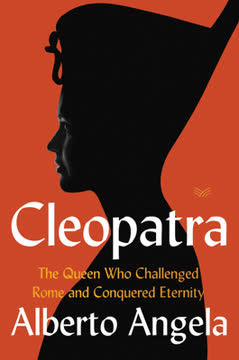
Punti chiave
1. Cleopatra: Una Donna Moderna in un Mondo Antico
«È una donna moderna in un’epoca antica. Emancipata, senza inibizioni, forte, e protagonista in un tempo in cui le altre donne indossano “burqa” culturali e si confondono nella vita quotidiana di una società maschilista.»
Leader Femminile Rivoluzionaria. Cleopatra era molto avanti rispetto al suo tempo, superando i limiti tipici imposti alle donne nel mondo antico. Poliglotta, altamente istruita e politicamente acuta, sapeva muoversi con intelligenza e strategia in contesti diplomatici complessi.
Oltre le Barriere Culturali:
- Parlava fluentemente diverse lingue
- Ricevette un’educazione avanzata in filosofia, retorica e scienze
- Sfida i ruoli di genere tradizionali nel governo
- Gestì un regno potente in tempi turbolenti
Una Sovrana Visionaria. A differenza di molte sue contemporanee, Cleopatra guardava oltre l’immediato scenario politico. Comprendeva l’importanza dello scambio culturale, dello sviluppo intellettuale e delle alleanze strategiche, diventando una leader davvero trasformativa, capace di avere successo in qualsiasi epoca.
2. Il Genio Politico dell’Ultima Regina d’Egitto
«La “modernità” di Cleopatra le permise di emergere con forza nella storia antica.»
Maestria Diplomatica Strategica. Cleopatra non era solo una regina, ma una sofisticata stratega geopolitica che conosceva la complessa danza del potere. Sfruttava intelligenza, fascino e conoscenza culturale per negoziare scenari politici intricati e tutelare gli interessi del suo regno.
Strategie Politiche Chiave:
- Creazione di rapporti strategici con potenti leader romani
- Uso del sapere culturale e intellettuale come strumenti diplomatici
- Difesa della sovranità egiziana attraverso alleanze calcolate
- Mantenimento dell’indipendenza in un mondo dominato da imperi in espansione
Sopravvivenza grazie all’Intelligenza. In un’epoca in cui molti sovrani venivano conquistati o eliminati, Cleopatra riuscì a mantenere l’Egitto rilevante e potente grazie alla sua eccezionale capacità politica, trasformando minacce potenziali in opportunità di crescita ed espansione.
3. Amore, Potere e Seduzione Strategica
«Il suo vero segreto non risiede tanto nella bellezza quanto nei sentimenti che suscita in chi le sta vicino.»
Manipolazione Magistrale delle Relazioni. Cleopatra sapeva che le relazioni personali erano potenti strumenti politici. I suoi legami con Cesare e Antonio non erano semplici passioni, ma mosse strategiche accuratamente orchestrate per assicurare il futuro del suo regno.
Dinamiche Relazionali:
- Uso del fascino personale come strumento diplomatico
- Trasformare l’amore in leva politica
- Creazione di partnership reciprocamente vantaggiose
- Mantenimento del controllo emotivo e intellettuale
Oltre l’Attrazione Fisica. Il potere seduttivo di Cleopatra andava ben oltre la bellezza esteriore. La sua capacità di coinvolgere intellettualmente e connettersi emotivamente con uomini potenti la rendeva un’operatrice politica straordinaria, capace di muoversi in contesti personali e politici complessi.
4. L’Eccezionale Scenario Culturale di Alessandria
«Alessandria è probabilmente la città del Mediterraneo, dell’Europa e forse del mondo intero dove si possono ascoltare il maggior numero di lingue.»
Epicentro Intellettuale del Mondo Antico. Alessandria non era solo una città, ma un centro rivoluzionario di conoscenza, scambio culturale e esplorazione intellettuale. La sua Biblioteca e il Museo rappresentavano l’apice della comprensione umana di quell’epoca.
Importanza Culturale:
- Il più grande deposito di conoscenza al mondo
- Attirava studiosi da più continenti
- Avanzamenti nel pensiero scientifico e filosofico
- Promozione della libertà intellettuale e del dialogo interculturale
Un Faro del Potenziale Umano. La città incarnava il meglio della curiosità umana, rappresentando un raro momento storico in cui la conoscenza veniva valorizzata al di sopra delle divisioni politiche o religiose, creando un ambiente cosmopolita di apprendimento e scambio.
5. Marco Antonio: Un Leader Appassionato Guidato dall’Emozione
«Antonio è un uomo debole con le donne, soggiogato da quelle dominanti, da cui forse si sente protetto.»
Dinamiche Complesse della Personalità. Marco Antonio era un leader sfaccettato, caratterizzato da intensità emotiva, abilità militari e vulnerabilità nelle relazioni personali. La sua vita fu un intreccio complesso di ambizione politica e passione personale.
Profilo Psicologico:
- Carismatico comandante militare
- Suscettibile a donne dal carattere forte
- Guidato più dall’emozione che dal calcolo freddo
- Capace di relazioni profonde e trasformative
Oltre la Mascolinità Stereotipata. Antonio sfidava gli archetipi maschili tradizionali, essendo al contempo un potente comandante e un uomo profondamente influenzato dai legami emotivi, rendendolo una figura storica sfumata e complessa.
6. Il Potere Trasformativo delle Relazioni Personali
«A volte i momenti più significativi della storia non sono plasmati da grandi strategie, ma da intime connessioni umane.»
Le Relazioni come Catalizzatori Storici. I rapporti personali tra figure chiave spesso determinarono il corso di intere civiltà. I legami tra Cleopatra, Antonio e altri leader non erano solo personali, ma avevano profonde implicazioni geopolitiche.
Dinamiche Relazionali:
- Legami personali che influenzano decisioni politiche
- L’amore come forza strategica ed emotiva
- Complesse negoziazioni interpersonali
- Intelligenza emotiva come strumento politico
Storie Umane Dietro gli Eventi Storici. Dietro ogni grande svolta storica si celano storie profondamente umane di amore, ambizione, tradimento e connessione, spesso più complesse e sfumate di quanto le narrazioni storiche tradizionali suggeriscano.
7. La Battaglia per la Supremazia nel Mediterraneo
«Roma non stava solo conquistando territori, ma rimodellando l’intero mondo conosciuto.»
Trasformazione Geopolitica. La lotta per la supremazia nel Mediterraneo non fu solo un conflitto militare; rappresentò una complessa riorganizzazione di potere, cultura e governance che avrebbe definito i secoli successivi della civiltà umana.
Dinamiche Geopolitiche Chiave:
- Mutamenti nelle strutture di potere
- Espansionismo culturale e territoriale
- Complesse negoziazioni diplomatiche
- Strategia militare come forma di comunicazione politica
Oltre la Conquista Militare. Le battaglie descritte non riguardavano solo il territorio, ma la ridefinizione fondamentale dei confini sociali, politici e culturali, con implicazioni profonde per lo sviluppo globale futuro.
8. Identità Culturale e Prowess Intellettuale
«Cleopatra parla greco con chi ama, come Cesare.»
Identità Multilingue. L’identità culturale nel mondo antico era molto più fluida e complessa di quanto si pensi oggi. Lingua, educazione e capacità intellettuali erano marcatori cruciali di status e potere.
Complessità Culturale:
- Il multilinguismo come vantaggio strategico
- L’educazione come capitale culturale
- Superamento di identità etniche o nazionali ristrette
- Adattabilità intellettuale come abilità di sopravvivenza
Oltre i Confini Culturali. Figure come Cleopatra dimostrarono che l’identità culturale non è fissa ma dinamica, e la capacità di navigare e integrare più quadri culturali rappresentava una fonte significativa di potere.
9. Le Dinamiche Complesse dei Matrimoni Antichi
«I matrimoni non erano basati sull’amore, ma su alleanze politiche, ricchezza e posizionamento strategico.»
I Matrimoni come Strumenti Politici. Nel mondo antico, le relazioni personali, in particolare i matrimoni, erano soprattutto accordi strategici volti a consolidare potere, ricchezza e influenza politica.
Dinamiche Matrimoniali:
- Matrimoni come strumenti diplomatici
- Calcoli politici che prevalgono sui sentimenti personali
- Complesse negoziazioni di potere e status
- Pianificazione familiare strategica
Oltre le Narrazioni Romantiche. Il libro rivela come le relazioni personali nell’antichità fossero molto più calcolate e complesse di quanto suggeriscano le narrazioni romantiche, con ogni unione che aveva profonde implicazioni politiche.
10. La Tragica Intersezione tra Amore e Politica
«La storia è spesso scritta da chi sopravvive, non necessariamente da chi ha ragione.»
Sacrifici Personali nelle Lotta Politiche. Le vicende di Cleopatra e Antonio mostrano come le esperienze umane individuali vengano spesso schiacciate dal peso di macchinazioni politiche più grandi.
Elementi Tragici:
- Passione personale contro necessità politica
- Individui intrappolati in correnti storiche più ampie
- Conseguenze devastanti dell’ambizione politica
- L’amore come forza potente e distruttiva
Dramma Umano nel Contesto Storico. Il libro illumina come le storie personali di amore, tradimento e ambizione siano intrinsecamente legate a narrazioni storiche più ampie, dimostrando che la storia è fondamentalmente una storia umana.
Sintesi delle recensioni
Cleopatra riceve giudizi contrastanti. Se da un lato alcuni apprezzano lo stile coinvolgente di Angela e la ricchezza di dettagli storici, dall’altro non mancano critiche per l’eccessiva attenzione riservata alle figure maschili a discapito della protagonista stessa. Diversi recensori sottolineano la tendenza dell’autrice a romanticizzare e sessualizzare Cleopatra. C’è chi trova il libro informativo e immersivo, mentre altri lo ritengono superficiale e troppo basato su congetture. Anche la struttura e il ritmo della narrazione suscitano opinioni discordanti. In definitiva, le valutazioni spaziano ampiamente, oscillando da una a cinque stelle.
FAQ
1. What is Cleopatra: The Queen Who Challenged Rome and Conquered Eternity by Alberto Angela about?
- Comprehensive historical narrative: The book provides a detailed account of Cleopatra VII’s life, focusing on her political and personal alliances, her education, and her pivotal role in the final years of the Roman Republic.
- Focus on Cleopatra’s influence: Angela highlights Cleopatra as a highly educated, politically astute queen who shaped Mediterranean history, challenging the traditional image of her as merely a seductress.
- Transition of eras: The narrative covers the twilight of the Egyptian kingdom, the rise of the Roman Empire, and the destruction of Hellenistic culture, culminating in the Battle of Actium and the deaths of Antony and Cleopatra.
- Immersive storytelling: Through vivid reconstructions of ancient Alexandria and Rome, the book brings to life the people, places, and events that defined Cleopatra’s era.
2. Why should I read Cleopatra: The Queen Who Challenged Rome and Conquered Eternity by Alberto Angela?
- Nuanced portrayal of Cleopatra: The book challenges stereotypes, presenting Cleopatra as a modern, independent, and strategic leader rather than just a romantic figure.
- Rich historical and cultural context: Readers gain insight into the political, social, and intellectual environments of both Ptolemaic Egypt and late Republican Rome.
- Engaging and accessible narrative: Angela combines academic rigor with novelistic storytelling, making complex history both accessible and compelling.
- Fresh perspective on familiar history: The book offers new interpretations of Cleopatra’s relationships with Caesar and Antony, and her impact on the transformation of the ancient world.
3. What are the key takeaways from Cleopatra: The Queen Who Challenged Rome and Conquered Eternity by Alberto Angela?
- Cleopatra’s modernity and agency: She was a pioneering woman whose intelligence, education, and political skill allowed her to shape history in a male-dominated world.
- Catalyst for historical change: Cleopatra was central to the transition from Hellenistic kingdoms to the Roman Empire, influencing major figures and events.
- Interplay of power and passion: The book demonstrates how personal relationships and political ambitions were deeply intertwined in shaping the fate of Egypt and Rome.
- Reconstruction of lost worlds: Angela’s meticulous research and vivid storytelling make ancient history tangible and relevant for modern readers.
4. How does Alberto Angela portray Cleopatra’s education and upbringing in Cleopatra: The Queen Who Challenged Rome and Conquered Eternity?
- Hellenistic education: Cleopatra received a first-class education in Alexandria, mastering Greek language, literature, rhetoric, and sciences, and was able to recite Homer’s epics.
- Multilingual and culturally open: She learned Egyptian (unlike her Ptolemaic predecessors) and embraced local customs, which helped her gain support from the native population and priests.
- Preparation for power: From childhood, Cleopatra was groomed for leadership, involved in state affairs, and trained in public speaking, debate, and strategic thinking.
- Expertise in sciences: Ancient and later sources credit her with knowledge in philosophy, medicine, mathematics, and even toxicology, reflecting her intellectual breadth.
5. What was Alexandria like during Cleopatra’s reign, according to Alberto Angela?
- Cosmopolitan metropolis: Alexandria was the Mediterranean’s second-largest city, a vibrant port with a diverse population of Greeks, Egyptians, Jews, and traders from across the ancient world.
- Urban planning and architecture: The city featured a grid layout, wide avenues like the Canopic Way, grand temples, palaces, and the iconic Lighthouse of Alexandria.
- Center of knowledge: Alexandria housed the Musaeum and the Library, attracting scholars and fostering scientific and cultural advancements.
- Cultural melting pot: The city’s multiculturalism and intellectual vibrancy were central to Cleopatra’s identity and reign.
6. How does Cleopatra: The Queen Who Challenged Rome and Conquered Eternity describe Cleopatra’s relationships with Julius Caesar and Mark Antony?
- Political and personal alliances: Cleopatra’s relationships with Caesar and Antony were both romantic and strategic, helping her secure Egypt’s sovereignty and expand her influence.
- With Julius Caesar: Their alliance began with her daring entrance to his presence, leading to her restoration as queen and the birth of Caesarion, whom she claimed as Caesar’s son.
- With Mark Antony: Their relationship blended passion and politics, symbolized by their children and their presentation as divine figures (Aphrodite and Dionysus) to legitimize their rule.
- Impact on history: These alliances shaped the fate of Egypt and Rome, contributing to the end of the Republic and the rise of the Empire.
7. What were the key events leading to Julius Caesar’s assassination, as presented by Alberto Angela?
- Accumulation of power: Caesar’s unprecedented honors and dominance alarmed many senators, who feared the end of the Republic and the rise of monarchy.
- Formation of conspiracy: A group of senators, including Brutus and Cassius, plotted to kill Caesar during a Senate meeting on the Ides of March, 44 BC.
- Ignored warnings: Despite omens and direct warnings, Caesar underestimated the danger and was ultimately murdered by over 23 stab wounds.
- Aftermath: His assassination plunged Rome into chaos, setting the stage for the ensuing civil wars and Cleopatra’s shifting alliances.
8. How did Cleopatra use religion and symbolism to strengthen her rule, according to Alberto Angela?
- Identification with Isis: Cleopatra portrayed herself as the living embodiment of the goddess Isis, connecting with Egyptian religious traditions and the native population.
- Divine lineage for Caesarion: She presented her son as the child of Julius Caesar and associated him with Horus, reinforcing their dynasty’s divine right to rule.
- Political propaganda: Through temples, coins, and public imagery, Cleopatra blended Egyptian and Hellenistic symbols to legitimize her power and appeal to diverse audiences.
- Religious diplomacy: Her religious policies helped secure the loyalty of both Egyptian priests and Greek elites.
9. What role did the Library and Musaeum of Alexandria play in Cleopatra’s life and reign, as described by Alberto Angela?
- Center of learning: The Library and Musaeum were hubs of scholarship, attracting intellectuals from across the ancient world and fostering advancements in science, literature, and philosophy.
- Personal education: Cleopatra was deeply influenced by this intellectual environment, which shaped her worldview and leadership style.
- Patronage of knowledge: She and Antony visited and supported these institutions, reinforcing their status as cultural patrons.
- Tragic loss: The eventual destruction of the Library symbolized the end of Hellenistic culture and the dawn of Roman dominance.
10. How does Alberto Angela describe Cleopatra’s beauty, personality, and charm in Cleopatra: The Queen Who Challenged Rome and Conquered Eternity?
- Not just physical beauty: Ancient sources and Angela emphasize that Cleopatra’s allure was rooted in her intelligence, voice, and captivating conversation rather than conventional beauty.
- Historical ambiguity: Contemporary depictions vary, with coins showing strong, regal features, possibly to emphasize authority rather than attractiveness.
- Power of personality: Plutarch and others note that her presence and wit had an irresistible effect on those around her, making her a formidable leader.
- Use of cosmetics: Cleopatra’s use of makeup, such as kohl, was both a beauty tool and a symbol of her power and cultural identity.
11. What does Cleopatra: The Queen Who Challenged Rome and Conquered Eternity reveal about the Battle of Actium and its significance?
- Decisive naval battle: The Battle of Actium in 31 BC pitted Antony and Cleopatra’s forces against Octavian’s fleet, with Octavian’s admiral Agrippa playing a key role.
- Tactical errors and betrayal: Antony’s choice to fight at sea, the desertion of allies, and Cleopatra’s planned escape contributed to their defeat.
- End of an era: The loss marked the fall of Antony and Cleopatra, the end of Hellenistic rule, and the rise of Octavian as Augustus, the first Roman Emperor.
- Transformation of the Mediterranean: Actium signaled the shift from a world of competing kingdoms to Roman imperial dominance.
12. How does Alberto Angela address the myths and propaganda surrounding Cleopatra in Cleopatra: The Queen Who Challenged Rome and Conquered Eternity?
- Roman propaganda: Angela explains how Roman sources depicted Cleopatra as a dangerous seductress to discredit her and Antony, shaping her image for centuries.
- Challenging stereotypes: The book reevaluates Cleopatra’s legacy, emphasizing her education, intelligence, and political skills over her supposed “sex appeal.”
- Enduring myths: Angela traces how Cleopatra’s story has been romanticized and distorted, but argues that her real impact on history is far more profound.
- Legacy and influence: The book highlights how Cleopatra’s true legacy lies in her role as a catalyst for historical change and as a symbol of female power and agency.








































