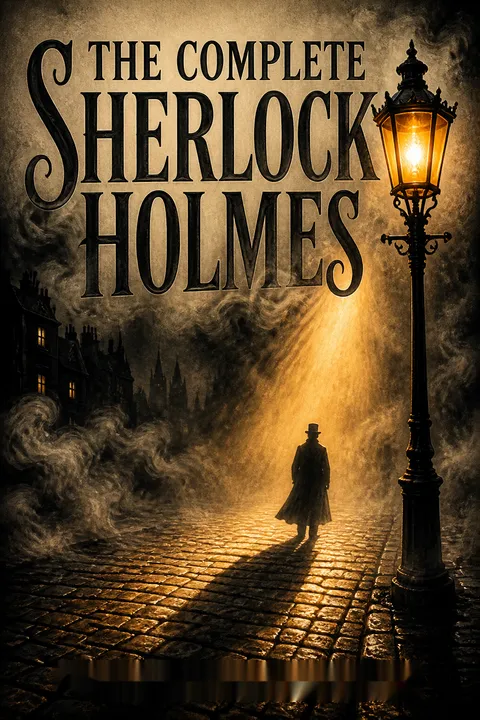

Summary Unavailable
This book is not suitable for a summary (it may be a textbook, workbook, cookbook, reference book, or collection). However, you can still explore the FAQs, about author, and other metadata below!
Ringkasan Alur
Watson's War Wounds and Woes
Dr. John Watson, seorang dokter tentara yang lelah akibat perang, kembali ke London dari Afghanistan dengan kondisi kesehatan yang memprihatinkan serta ketidakstabilan finansial. Hidupnya seolah kehilangan arah hingga sebuah pertemuan tak sengaja dengan Stamford, seorang kenalan lama, memberikan secercah harapan. Stamford menyarankan seorang calon teman sekamar, Sherlock Holmes, yang sekiranya dapat menawarkan tempat tinggal yang terjangkau sekaligus teman bagi Watson, membuka jalan bagi sebuah kemitraan yang kelak mengubah hidup mereka.
Meeting the Enigmatic Sherlock Holmes
Watson bertemu dengan Sherlock Holmes, seorang detektif konsultan dengan kemampuan deduksi yang luar biasa, di sebuah laboratorium. Holmes seketika membuat Watson takjub dengan menyimpulkan masa lalunya hanya lewat pengamatan sekilas. Kendati telah diperingatkan mengenai keeksentrikan Holmes, Watson justru tertarik pada karakternya yang unik dan sepakat untuk berbagi tempat tinggal di 221B Baker Street, menandai awal dari kemitraan legendaris mereka.
The Lauriston Garden Mystery
Holmes dan Watson menyelidiki sebuah pembunuhan aneh di Lauriston Gardens, tempat seorang pria ditemukan tewas dengan tulisan "RACHE" yang tercoreng darah di dinding. Pengamatan tajam Holmes berhasil mengungkap berbagai petunjuk yang luput dari perhatian detektif resmi, Gregson dan Lestrade. Kasus ini memamerkan kehebatan deduksi Holmes sekaligus membuka jalan bagi penyelidikan mendebarkan atas plot rumit yang melibatkan balas dendam dan masa lalu yang tersembunyi.
The Agra Treasure's Empty Promise
Setelah berhasil menangkap Jonathan Small, Holmes dan Watson membuka peti harta karun Agra yang sangat diincar, namun ternyata isinya kosong melongpong. Harta karun yang sempat memicu kekacauan dan tragedi tersebut telah lenyap, sekaligus menyingkirkan penghalang antara Watson dan Miss Morstan. Penyingkapan ini memberi jalan bagi keduanya untuk mengungkapkan perasaan yang sesungguhnya, menegaskan sebuah pesan moral bahwa kebahagiaan sejati terletak pada cinta, bukan pada kekayaan materi.
Jonathan Small's Confession
Di dalam tahanan, Jonathan Small menceritakan kembali kisahnya tentang pengkhianatan dan obsesi terhadap harta karun Agra. Ia mengungkap adanya kesepakatan dengan tiga orang Sikh untuk membagi harta tersebut, sebelum akhirnya dikhianati oleh Mayor Sholto. Narasi Small dipenuhi dengan kepahitan dan rasa ketidakadilan, saat ia menjelaskan pengejaran tanpa hentinya terhadap Sholto dan harta karun tersebut, yang pada akhirnya justru membawa kehancuran bagi dirinya sendiri.
The Secret of the Gloria Scott
Holmes menceritakan kembali kasus pertamanya yang melibatkan teman kuliahnya, Victor Trevor. Ayah Trevor, yang dulunya merupakan seorang narapidana bernama James Armitage, terus dihantui oleh masa lalunya di atas kapal Gloria Scott, sebuah kapal pengangkut tahanan. Pemberontakan yang dipimpin oleh Prendergast menyingkap sebuah rencana untuk merebut kapal, membentuk masa depan ayah Trevor serta rahasia yang dipendamnya. Kasus ini menandai langkah awal Holmes dalam dunia detektif.
The Hound's Haunting Howl
Di Baskerville Hall, Watson merasakan atmosfer sunyi yang mencekam di tanah tegalan serta legenda tentang anjing iblis. Penduduk setempat mengaku sempat melihat penampakan tersebut, dan Watson sendiri mendengar lolongan yang merindingkan bulu kuduk di malam hari. Ketegangan kian memuncak seiring kaburnya batas antara mitos dan kenyataan, dengan kehadiran sang anjing yang kian terasa nyata, mendorong Holmes dan Watson untuk mengungkap kebenaran di balik legenda tersebut.
The Moor's Dark Secrets
Laporan-laporan Watson kepada Holmes merinci berbagai peristiwa aneh serta orang-orang yang terhubung dengan Baskerville Hall. Penyelidikan Holmes berhasil menyingkap motif-motif tersembunyi dan rahasia di antara para penghuni tegalan tersebut. Misteri kian mendalam saat Holmes dan Watson berupaya melindungi Sir Henry dan memecahkan teka-teki sang anjing, yang berujung pada konfrontasi dramatis di tanah tegalan.
Holmes's Ingenious Deduction
Penyelidikan Holmes berhasil mengungkap kebenaran di balik sebuah pembunuhan serta motivasi dari orang-orang yang terlibat di dalamnya. Kemampuannya untuk mendeduksi identitas sang pembunuh dari petunjuk-petunjuk terkecil sekalipun menegaskan keahliannya yang tiada tanding. Kasus ini berakhir dengan tegaknya keadilan, seiring upaya Holmes memastikan bahwa kerja keras untuk membebaskan orang yang tidak bersalah tidak berakhir sia-sia, menunjukkan rasa empati serta pemahamannya yang mendalam terhadap sifat manusia.
The Enigmatic Wisteria Lodge
Kesaksian John Scott Eccles mengenai malam yang aneh di Wisteria Lodge menjadi kunci penting saat Holmes dan Watson mendalami misteri tersebut. Pondok itu, yang ternyata menjadi pusat aktivitas rahasia, menyingkap jaringan tipu muslihat yang rumit. Pengamatan tajam Holmes menunjukkan bahwa pembunuhan Garcia, seorang pria Spanyol yang menawan, berkaitan erat dengan rencana yang lebih besar, melibatkan intrik internasional dan sosok kuat yang mengendalikan situasi dari balik layar.
The Sinister Sylvius Scheme
Count Negretto Sylvius, seorang penjahat kelas kakap, terlibat dalam rencana pencurian Batu Mazarin, sebuah permata mahkota yang tak ternilai harganya. Holmes, yang menyadari kelicikan Sylvius, menggunakan keahliannya dalam menyamar untuk mengumpulkan informasi. Kasus pencurian tersebut menggemparkan seantero London, dan Holmes berpacu dengan waktu untuk menemukan kembali permata itu, hingga akhirnya berhasil mengakali para penjahat dan memastikan keadilan ditegakkan.
The Mysterious Veiled Lodger
Penyewa kamar Mrs. Merrilow yang menutup diri, Mrs. Ronder, ingin memercayakan sebuah rahasia kepada Holmes. Kisah tragisnya tentang cinta, pengkhianatan, dan bertahan hidup pun terungkap, menyingkap rencana pembunuhan yang gagal terhadap suaminya yang kasar. Empati serta kebijaksanaan Holmes memberikan rasa damai bagi Mrs. Ronder, memungkinkannya menghadapi sisa hidupnya dengan martabat, sekaligus menegaskan betapa pentingnya rasa kemanusiaan dalam menegakkan keadilan.
Analysis
"The Complete Sherlock Holmes" karya Arthur Conan Doyle merupakan kumpulan kisah detektif luar biasa yang mengeksplorasi kerumitan sifat manusia dan perjuangan menegakkan keadilan. Melalui karakter Sherlock Holmes, Doyle mendalami tema logika versus emosi, dualitas motif manusia, serta batas tipis antara kebajikan dan kejahatan. Kemampuan deduksi Holmes yang tiada tanding serta pengamatannya yang tajam menjadi bukti nyata dari kekuatan pikiran manusia, sementara empati dan pemahamannya terhadap emosi manusia memberikan kedalaman tersendiri pada karakternya. Kisah-kisah ini menggarisbawahi pentingnya persahabatan dan kesetiaan, yang dicontohkan oleh kemitraan abadi antara Holmes dan Watson. Karya Doyle tetap relevan hingga hari ini, menawarkan pelajaran abadi tentang pentingnya berpikir kritis, bahaya dari ambisi yang tak terkendali, serta pencarian tanpa akhir akan kebenaran dan keadilan.
Terakhir diperbarui:
Report IssueRingkasan Ulasan
The Complete Sherlock Holmes secara luas dipuji sebagai mahakarya fiksi detektif. Para pembaca mengapresiasi misteri yang rumit, deduksi logis, serta karakter Holmes dan Watson yang tak lekang oleh waktu. Banyak yang menilai kisah-kisahnya sangat atmosferik dan mendalam, meskipun beberapa pihak mencatat adanya elemen yang berulang. Novel-novelnya umumnya lebih disukai daripada cerita pendeknya. Para penggemar gemar membaca ulang koleksi ini berkali-kali, menemukan detail baru dalam setiap kunjungan kembali. Walau beberapa mengkritik aspek-aspek yang terasa usang, sebagian besar menganggapnya sebagai karya klasik abadi yang telah memengaruhi genre misteri dan budaya populer secara signifikan.
Orang Juga Membaca


Characters
Sherlock Holmes
Holmes merupakan tokoh sentral dalam setiap kisah, menggunakan kemampuan pengamatan yang tajam serta penalaran deduktif untuk memecahkan misteri yang rumit. Kemampuannya untuk beradaptasi dan menyamar sangat krusial dalam mengumpulkan informasi dan mengakali para penjahat. Empati serta pemahaman Holmes terhadap motif manusia memberikan kedalaman pada karakternya saat ia mengurai kerumitan setiap kasus.
Dr. John Watson
Watson memberikan dukungan yang tak tergoyahkan kepada Holmes, menawarkan stabilitas dan rasa kebersamaan. Perannya sebagai pengamat sekaligus pencatat kisah memungkinkan pembaca untuk mengapresiasi kecemerlangan Holmes. Empati dan kompas moral Watson melengkapi pikiran analitis Holmes, menciptakan kemitraan seimbang yang menjadi kunci kesuksesan mereka.
Sir Henry Baskerville
Sir Henry bertekad untuk mengklaim warisannya meskipun ada peringatan buruk dan kejadian-kejadian aneh yang membayangi. Keberanian serta keteguhan hatinya diuji saat ia harus berhadapan dengan legenda anjing iblis dan rahasia tanah tegalan. Karakter Sir Henry menonjolkan tema keberanian serta perjuangan melawan rasa takut dan takhayul.
Jonathan Small
Hidup Small habis terkuras oleh pencariannya akan harta karun Agra, membawanya ke jalan kejahatan dan pengkhianatan. Pengakuannya mengungkap sosok pria yang didorong oleh rasa ketidakadilan dan hasrat mendalam untuk membalas dendam terhadap mereka yang telah menzaliminya. Karakter Small menggarisbawahi kekuatan merusak dari keserakahan dan obsesi.
Count Negretto Sylvius
Sylvius adalah otak di balik pencurian Batu Mazarin. Pesona dan kecerdasannya membuat ia menjadi lawan yang tangguh, namun keangkuhannya sendiri yang akhirnya membawa kehancuran bagi dirinya. Interaksinya dengan Holmes mengungkap rasa putus asa serta ketakutannya akan tertangkap, menyoroti betapa rumitnya jaringan kriminal yang ada.
Mrs. Ronder
Dulunya seorang pemain sirkus, hidup Mrs. Ronder hancur seketika akibat serangan singa yang membuat wajahnya cacat. Kisahnya adalah tentang cinta, pengkhianatan, dan bertahan hidup, saat ia bergulat dengan konsekuensi dari rencana pembunuhan yang gagal serta hilangnya kecantikan dan identitas dirinya. Karakter ini memberikan kedalaman emosional pada narasi.
Professor Coram
Coram adalah mantan revolusioner Rusia yang menyembunyikan sejarah pengkhianatan. Keterlibatannya dalam kasus pembunuhan menjadi inti dari misteri ini, di mana tindakan masa lalunya menjadi pemicu terjadinya kejahatan tersebut. Karakter Coram menambah intrik dan kerumitan dalam cerita seiring rahasianya yang perlahan terungkap.
John Scott Eccles
Eccles adalah seorang pria Inggris konvensional yang keterlibatan tak terduganya dalam misteri ini bermula dari kepolosannya saat menerima undangan Garcia. Kesaksiannya memberikan sudut pandang penting mengenai peristiwa di Wisteria Lodge, meskipun ia sendiri sebagian besar tidak menyadari konspirasi lebih dalam yang sedang terjadi.
Inspector Baynes
Baynes, seorang inspektur lokal, bekerja sama dengan Holmes, membawa pendekatan yang sistematis dalam menangani kasus. Penemuannya akan bukti-bukti kunci melengkapi deduksi Holmes, menonjolkan kompetensi serta dedikasinya dalam memecahkan misteri.
Miss Mary Morstan
Kehadiran Miss Morstan dalam cerita merepresentasikan kemungkinan adanya kebahagiaan di luar kekayaan materi. Hubungannya dengan Watson berkembang indah setelah harta karun tidak lagi menjadi penghalang, menekankan bahwa nilai cinta jauh melampaui harta berlimpah.
Plot Devices
Deductive Reasoning
Penggunaan penalaran deduktif oleh Holmes merupakan inti dari proses penyelidikannya. Dengan mengamati detail-detail terkecil dan menarik kesimpulan yang logis, Holmes mampu mengurai kasus-kasus rumit yang membingungkan orang lain, memamerkan kehebatan intelektualnya.
The Baskerville Curse
Kutukan keluarga Baskerville, yang melibatkan seekor anjing supranatural, menciptakan atmosfer ketakutan dan misteri. Hal ini mengaburkan batas antara mitos dan kenyataan, menggerakkan penyelidikan serta tindakan para karakter, hingga akhirnya mengungkap sosok manusia biasa sebagai dalang di balik rencana jahat tersebut.
Disguise and Deception
Kemampuan Holmes untuk menjelma menjadi berbagai karakter berbeda memungkinkannya mengumpulkan informasi tanpa menimbulkan kecurigaan. Elemen plot ini menonjolkan kecerdikan serta dedikasi Holmes dalam memecahkan kasus, di mana ia rela mengorbankan kenyamanan dan keselamatannya demi mencapai tujuan.
Cryptic Messages
Pesan dan catatan samar berfungsi sebagai petunjuk krusial dalam beberapa kasus, mengisyaratkan adanya pertemuan rahasia dan rencana yang lebih besar. Makna tersembunyi di dalamnya menantang Holmes untuk memecahkan signifikansinya, yang pada akhirnya mengarah pada pembongkaran jaringan kriminal dan penyelesaian misteri.
Confession
Pengakuan dari karakter-karakter kunci berfungsi sebagai momen penting dalam narasi, mengungkap kebenaran di balik kejahatan serta motivasi dari mereka yang terlibat. Pengakuan-pengakuan ini memberikan kedalaman emosional pada cerita, menonjolkan tema cinta, pengkhianatan, dan keadilan.
FAQ
Synopsis & Basic Details
What is The Complete Sherlock Holmes about?
- Master of Deduction: The collection chronicles the extraordinary cases of Sherlock Holmes, a brilliant, eccentric consulting detective, and his loyal companion, Dr. John Watson. It delves into a wide array of crimes, from murders and thefts to blackmail and international espionage, all solved through Holmes's unparalleled powers of observation and logical deduction.
- Victorian London's Underbelly: Set primarily in late 19th and early 20th century London, the stories offer a vivid portrayal of the city's diverse social strata, from the highest echelons of aristocracy to the grimy depths of its criminal underworld. Each case exposes a different facet of human nature, often driven by greed, revenge, love, or desperation.
- The Human Element: Beyond the intricate plots, the collection explores the evolving friendship between Holmes and Watson, contrasting Holmes's cold, analytical mind with Watson's warmth and moral compass. It also touches upon the personal lives and motivations of victims and perpetrators, revealing the emotional complexities beneath the surface of each mystery.
Why should I read The Complete Sherlock Holmes?
- Intellectual Thrill: Readers should delve into The Complete Sherlock Holmes for the sheer intellectual pleasure of watching a master mind at work. Each story is a puzzle, inviting the reader to engage with Holmes's deductive process, making it an active and rewarding reading experience.
- Rich Character Development: Beyond the plots, the collection offers deep character studies, particularly of Holmes and Watson. Their evolving relationship, Holmes's eccentricities, and Watson's steadfast loyalty provide a compelling human core to the often-dark narratives, making them relatable and enduring.
- Historical & Cultural Immersion: The stories are a window into Victorian and Edwardian England, offering rich details of daily life, social norms, and technological advancements of the era. Arthur Conan Doyle's vivid descriptions and intricate world-building create an immersive experience that transports readers to a bygone age.
What is the background of The Complete Sherlock Holmes?
- Victorian Era Context: Arthur Conan Doyle's The Complete Sherlock Holmes is deeply embedded in the social, cultural, and technological landscape of late 19th and early 20th century Britain. The stories reflect the anxieties and advancements of the era, from the rise of industrialization and urban crime to the burgeoning fields of forensic science and psychology.
- Forensic Science Pioneer: Doyle, a trained physician, infused his narratives with a scientific rigor that was groundbreaking for its time. Holmes's methods, such as fingerprint analysis, toxicology, and trace evidence examination, were often cutting-edge or even ahead of contemporary police practices, influencing the development of real-world forensic techniques.
- Literary Influences: Doyle drew inspiration from various sources, including Edgar Allan Poe's C. Auguste Dupin for Holmes's deductive prowess, and his own medical professor, Joseph Bell, for Holmes's observational skills. The collection also subtly critiques societal issues like class disparities, colonial legacies (e.g., the Agra treasure in The Sign of Four), and the limitations of official institutions like Scotland Yard.
What are the most memorable quotes in The Complete Sherlock Holmes?
- "Elementary, my dear Watson.": Though not appearing in this exact form in the original texts, this iconic phrase encapsulates Holmes's effortless brilliance and his frequent gentle chiding of Watson's slower deductions. It defines his character as a master of logic, making complex problems seem simple once explained.
- "When you have eliminated the impossible, whatever remains, however improbable, must be the truth.": This is Holmes's fundamental principle of deductive reasoning, articulated in The Sign of Four and The Adventure of the Beryl Coronet. It highlights his systematic approach to problem-solving, emphasizing the power of logical elimination in uncovering hidden truths.
- "Data! Data! Data! I can't make bricks without clay.": From The Adventure of the Copper Beeches, this quote underscores Holmes's reliance on concrete facts and evidence. It reveals his scientific methodology, emphasizing that even his extraordinary intellect requires raw information to construct a solution, a key aspect of his investigative process.
What writing style, narrative choices, and literary techniques does Arthur Conan Doyle use?
- First-Person Narrative (Watson's Perspective): Doyle primarily employs Dr. Watson as the narrator, offering a limited but intimate perspective. This choice allows readers to experience Holmes's brilliance through the eyes of an admiring, yet often baffled, observer, enhancing the sense of wonder and making Holmes's deductions more impactful when revealed.
- Emphasis on Deduction and Observation: Doyle's writing style is characterized by its meticulous attention to detail and logical progression. He uses vivid descriptions of clues and crime scenes, then systematically unpacks Holmes's thought process, often withholding the full explanation until the climax to build suspense and showcase Holmes's intellectual superiority.
- Gothic and Victorian Atmosphere: Doyle masterfully uses descriptive language to create a distinct atmosphere, blending elements of Victorian realism with touches of Gothic mystery. Descriptions of foggy London streets, isolated country estates, and sinister characters contribute to the pervasive sense of intrigue and danger, drawing readers into the world of Sherlock Holmes.
Hidden Details & Subtle Connections
What are some minor details that add significant meaning?
- Watson's War Wound as a Barometer: In The Sign of Four, Watson's old Jezail bullet wound from Afghanistan aches with changes in weather. This seemingly minor detail not only grounds Watson in a tangible past but also subtly foreshadows the recurring theme of past traumas influencing present events, particularly in cases like Jonathan Small's.
- Holmes's Violin as an Emotional Outlet: Beyond being a hobby, Holmes's violin playing, especially his "sonorous and melancholy" improvisations in A Study in Scarlet, serves as a subtle indicator of his internal state. It's a non-verbal expression of his deep thought or emotional turmoil, a rare glimpse into the inner life of an otherwise emotionally detached character.
- The "K.K.K." Initials in The Five Orange Pips: The recurring initials, initially dismissed as a prank, are a crucial historical detail. They directly link the seemingly disparate deaths to the Ku Klux Klan, a real-world American terrorist organization, highlighting the far-reaching consequences of past injustices and the global scope of Holmes's cases.
What are some subtle foreshadowing and callbacks?
- The "Brain-Attic" Metaphor: In A Study in Scarlet, Holmes describes his mind as a "little empty attic" to be stocked only with useful knowledge. This metaphor subtly foreshadows his later struggles with idleness and drug use (The Sign of Four), implying that without constant intellectual stimulation, his "attic" becomes cluttered or falls into disuse, leading to negative consequences.
- The Recurring "Rache" Motif: The word "RACHE" scrawled in blood in A Study in Scarlet is initially misinterpreted by Lestrade as an unfinished name. Holmes's immediate correction to "revenge" (German for 'Rache') not only showcases his linguistic knowledge but also foreshadows the central theme of vengeance that drives Jonathan Small's entire narrative, linking the two parts of the novel.
- The Unseen Hand of Moriarty: Even before his formal introduction in The Final Problem, Professor Moriarty is subtly foreshadowed as a pervasive, organizing force behind various crimes. Holmes's casual remarks about a "great malignant brain" or a "deep organising power" hint at a formidable, unseen adversary, building anticipation for his eventual reveal as Holmes's intellectual equal.
What are some unexpected character connections?
- Dr. Watson's Unacknowledged Deductive Skills: While often portrayed as Holmes's foil, Watson occasionally demonstrates surprising flashes of deductive insight, which Holmes sometimes acknowledges, albeit with a touch of amusement. For instance, in The Hound of the Baskervilles, Watson's observation about the dog's teeth marks on the stick, though initially dismissed, later proves crucial to Holmes's understanding of the hound's nature.
- The Sympathetic Criminals: Characters like Jonathan Small (The Sign of Four) and Captain Crocker (The Abbey Grange) are presented not as purely evil, but as men driven by profound injustices or desperate circumstances. Their detailed confessions reveal a complex moral landscape, challenging the reader's initial judgment and blurring the lines between villain and victim.
- Holmes's Hidden Emotional Depth: Despite his self-proclaimed "cold, precise, and admirably balanced mind," Holmes occasionally reveals unexpected emotional responses. His genuine concern for Miss Mary Morstan's welfare in The Sign of Four, or his rare fits of laughter and frustration, offer glimpses of the human beneath the calculating machine, suggesting a deeper, often suppressed, emotional life.
Who are the most significant supporting characters?
- Mycroft Holmes, the Government's Brain: Sherlock's elder brother, Mycroft, is introduced as possessing even greater deductive powers but lacking the drive for practical application. His role in The Greek Interpreter and The Bruce-Partington Plans highlights a fascinating contrast to Sherlock, serving as a "human book of reference" and a subtle reminder that intellect alone is not enough without action.
- Inspector Lestrade, the Tenacious Bulldog: Though often outwitted by Holmes, Lestrade's persistence and dedication to duty are consistently portrayed. His recurring presence across multiple stories, from A Study in Scarlet to The Six Napoleons, establishes him as a reliable, if unimaginative, force of law, providing a grounded counterpoint to Holmes's flamboyant genius.
- Mrs. Hudson, the Long-Suffering Landlady: More than just a background figure, Mrs. Hudson's quiet presence and occasional exasperation offer a domestic anchor to Holmes's chaotic life. Her observations, though often dismissed by Holmes, sometimes provide subtle insights into his character and habits, humanizing the otherwise detached detective.
Psychological, Emotional, & Relational Analysis
What are some unspoken motivations of the characters?
- Holmes's Addiction to Intellectual Stimulation: Beyond solving crimes for justice, Holmes is driven by an almost pathological need for mental challenge. His cocaine use in The Sign of Four is a stark manifestation of his "rebellion at stagnation," revealing a deep-seated fear of boredom and a constant craving for problems to prevent his mind from "rusting." This unspoken motivation underlies much of his engagement with even the most trivial cases.
- Watson's Quest for Purpose and Identity: Watson's initial "comfortless, meaningless existence" after his war service in A Study in Scarlet reveals a profound need for purpose. His decision to chronicle Holmes's cases is not just about friendship but a subconscious attempt to find meaning and a new identity through association with greatness, filling the void left by his military career.
- Jonathan Small's Twisted Sense of Justice: While Small explicitly states his desire for revenge in The Sign of Four, his relentless pursuit over decades, even after the original wrongdoers are dead, suggests a deeper, almost obsessive need to rectify a perceived cosmic injustice. His actions are fueled not just by personal loss but by a rigid, self-righteous interpretation of "fairness" that justifies extreme violence.
What psychological complexities do the characters exhibit?
- The Duality of Holmes's Nature: Holmes frequently oscillates between intense intellectual activity and profound lethargy, a psychological complexity that Watson often observes. This "dual nature" (as described in The Red-Headed League) suggests a mind that, when not fully engaged, turns inward, sometimes leading to self-medication. It highlights the immense mental energy Holmes expends and the psychological cost of his genius.
- The Burden of Secrecy and Guilt: Many characters, like John Ferrier in A Study in Scarlet or the various figures in The Hound of the Baskervilles, carry deep secrets that manifest as psychological strain. Ferrier's constant fear and eventual breakdown under the pressure of the Danite Band illustrate how hidden pasts can corrode the present, leading to paranoia and tragic ends.
- The Allure and Danger of Obsession: Several characters demonstrate the destructive power of obsession. Jonathan Small's lifelong pursuit of the Agra treasure, or Dr. Grimesby Roylott's maniacal control over his stepdaughters in The Speckled Band, showcase how single-minded desires can warp morality and lead to extreme cruelty, revealing the dark side of human fixation.
What are the major emotional turning points?
- Watson's Acceptance of Holmes's Eccentricity: In A Study in Scarlet, Watson's initial skepticism and mild annoyance at Holmes's peculiarities gradually transform into admiration and deep loyalty. The moment Holmes deduces Watson's Afghan past, and later when he explains his "brain-attic" theory, marks a turning point where Watson fully embraces his role as chronicler and companion, solidifying their unique bond.
- Mary Morstan's Disappointment and Relief: The opening of the empty Agra treasure chest in The Sign of Four is a pivotal emotional moment for Miss Morstan. Her initial disappointment at the loss of wealth quickly gives way to profound relief, as it removes the "golden barrier" between her and Watson, allowing their love to blossom. This highlights the theme that true happiness is not found in material possessions.
- Sir Henry Baskerville's Confrontation with the Hound: The climax of The Hound of the Baskervilles, where Sir Henry faces the phosphorescent hound on the moor, is a major emotional turning point. It forces him to confront the terrifying legend head-on, transforming his initial skepticism into raw terror, and ultimately solidifying his resolve to break the family curse.
How do relationship dynamics evolve?
- Holmes and Watson: From Acquaintances to Indispensable Partners: Their relationship evolves from a pragmatic lodging arrangement in A Study in Scarlet to a deep, almost familial bond. Watson's role shifts from mere observer to active participant and confidant, with Holmes increasingly relying on his presence for both practical assistance and emotional grounding, as seen in Holmes's rare expressions of gratitude and concern.
- The Complexities of Familial Bonds: The stories frequently explore strained or corrupted family relationships. In The Hound of the Baskervilles, the Stapleton siblings' true relationship (husband and wife) and their manipulation of Sir Henry reveal a twisted familial dynamic driven by greed. Similarly, the Roylott family in The Speckled Band showcases extreme paternal tyranny and its deadly consequences.
- Love as a Catalyst for Action and Deception: Love, in its various forms, often drives the plot and character actions. Mary Morstan and Watson's burgeoning romance is contrasted with the destructive, obsessive love of Jonathan Small for Lucy Ferrier. In The Copper Beeches, Violet Hunter's loyalty to her fiancé influences her decisions, while in A Scandal in Bohemia, Irene Adler's love for Godfrey Norton ultimately thwarts the King's plans, demonstrating love's power to both inspire and complicate.
Interpretation & Debate
Which parts of the story remain ambiguous or open-ended?
- The True Nature of Holmes's Drug Use: While Watson explicitly details Holmes's cocaine use in The Sign of Four, the long-term effects and the full extent of his addiction are left somewhat ambiguous. Readers are left to ponder whether it's a controlled habit for intellectual stimulation or a deeper struggle, adding a layer of complexity to his character.
- The Fate of Professor Moriarty's Network: In The Final Problem, Holmes believes he has dismantled Moriarty's entire criminal organization. However, the epilogue of The Valley of Fear suggests that elements of the network, and Moriarty's influence, might persist, leaving open the question of whether Holmes truly eradicated the "Napoleon of crime" or merely disrupted a hydra-headed entity.
- The Unseen Watcher on the Moor in The Hound of the Baskervilles: Watson repeatedly observes a mysterious figure on the moor, which Holmes later reveals to be himself. However, the initial ambiguity and Watson's fear-driven interpretations leave a lingering question about the nature of observation and the subjective experience of terror, even after the truth is revealed.
What are some debatable, controversial scenes or moments in The Complete Sherlock Holmes?
- Holmes's Feigned Death at Reichenbach Falls: In The Final Problem, Holmes fakes his death to escape Moriarty, a decision that deeply traumatizes Watson and the reading public. This act is controversial for its emotional manipulation of Watson and the ethical implications of deceiving a close friend, raising questions about Holmes's priorities and the sacrifices he demands for his work.
- The Resolution of The Blue Carbuncle: Holmes allows the thief, James Ryder, to escape justice, arguing that sending him to prison would make him a "gaol-bird for life" and that it is "the season of forgiveness." This decision sparks debate about Holmes's role as a private detective versus a law enforcer, and whether his personal moral compass should override legal consequences.
- The Treatment of Women by Holmes: Holmes's often dismissive or objectifying remarks about women (e.g., "Women are never to be entirely trusted,--not the best of them" in The Sign of Four) can be seen as controversial. While he shows respect for Irene Adler, his general attitude reflects Victorian societal biases, prompting discussions about the character's flaws and the era's limitations.
The Complete Sherlock Holmes Ending Explained: How It Ends & What It Means
- The "Final Problem" and Holmes's Return: The original "ending" in The Final Problem sees Holmes and Moriarty plunge to their deaths at Reichenbach Falls. This was intended by Doyle to conclude Holmes's career. However, immense public outcry led to Holmes's miraculous return in The Adventure of the Empty House, where he explains he faked his death to dismantle Moriarty's remaining network and escape other enemies. This narrative choice highlights the character's enduring popularity and the author's responsiveness to his audience.
- Holmes's Retirement to Bee-Farming: The collection ultimately concludes with Holmes's retirement to a small farm on the Sussex Downs, where he dedicates himself to bee-farming and philosophical contemplation, as detailed in His Last Bow. This ending signifies a shift from active crime-solving to a more reflective, academic life, suggesting that even the most brilliant minds eventually seek peace and a different kind of intellectual pursuit. It represents a culmination of his career, having achieved his ultimate goal of ridding society of its greatest criminal threats.
- Watson's Enduring Legacy: Watson's role as Holmes's chronicler is central to the collection's enduring legacy. His final words in His Last Bow and other stories emphasize his commitment to preserving Holmes's adventures for posterity, ensuring that the detective's methods and triumphs are not forgotten. This highlights the importance of storytelling and the lasting impact of their partnership, even after Holmes's active career concludes.
Sherlock Holmes Seri
Tentang Penulis
Sir Arthur Ignatius Conan Doyle adalah seorang penulis dan dokter berkebangsaan Inggris yang menciptakan tokoh detektif ikonik Sherlock Holmes. Ia menulis empat novel dan lima puluh enam cerita pendek yang menampilkan Holmes dan Dr. Watson, karya-karya yang menjadi tonggak sejarah dalam fiksi kriminal. Doyle merupakan penulis yang sangat produktif, menghasilkan karya dalam berbagai genre termasuk fantasi, fiksi ilmiah, novel sejarah, dan nonfiksi. Ia juga menciptakan karakter-karakter terkenal lain seperti Profesor Challenger dan Brigadir Gerard. Tulisan Doyle turut membantu memopulerkan misteri dunia nyata seperti kisah kapal Mary Celeste. Terlepas dari beragam karya sastra yang dihasilkannya, ia paling dikenal berkat cerita-cerita Sherlock Holmes, yang memberikan dampak abadi pada fiksi detektif dan budaya populer.
Buku lain dari Arthur Conan Doyle




Unduh PDF
Unduh EPUB
.epub digital book format is ideal for reading ebooks on phones, tablets, and e-readers.








































