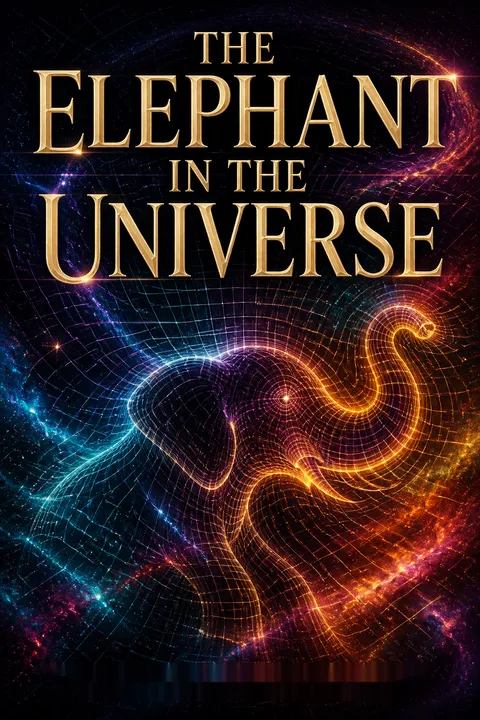

نکات کلیدی
1. ماده تاریک، معمایی نامرئی در کیهان
"ما بال زدن گوش و تیزی دندان را احساس میکنیم. صدای پا و خرخر خرطوم را میشنویم. بهویژه، حجم عظیم آن را تجربه میکنیم. اما هیچ تصوری از خود فیل نداریم."
جزء مرموز کیهانی. ماده تاریک نمایانگر یک ماده مرموز است که تقریباً 84 درصد از ماده جاذب در جهان را تشکیل میدهد. برخلاف ماده معمولی، این ماده با تابش الکترومغناطیسی تعامل ندارد و به همین دلیل بهطور مؤثری برای روشهای مشاهده سنتی نامرئی است.
ویژگیهای بنیادی:
- قابل مشاهده بهطور مستقیم نیست
- تنها از طریق اثرات جاذبه شناسایی میشود
- برای ساختار کهکشانها و تکامل کیهانی ضروری است
- از میان ماده معمولی بدون تعامل عبور میکند
اهمیت علمی. معمای ماده تاریک یکی از عمیقترین چالشها در علم مدرن را نمایان میسازد و نشان میدهد که چقدر هنوز باید درباره ماهیت بنیادی جهان بیاموزیم. وجود آن درک ما از فیزیک را به چالش میکشد و مرزهای تحقیق علمی را گسترش میدهد.
2. شواهد نجومی به ماده نامرئی عظیم اشاره میکند
"بدون آن، احتمالاً ما اینجا نبودیم که درباره ماهیت کیهان تعجب کنیم."
کشفیات مشاهداتی. اخترشناسان برای اولین بار وجود ماده تاریک را از طریق ناهنجاریها در چرخش کهکشانها و دینامیک خوشهها مشکوک شدند. پژوهشگران پیشگام مانند فریتز زویکی و ورا روبین متوجه شدند که کهکشانها بهگونهای رفتار میکنند که گویی جرم بیشتری نسبت به ماده قابل مشاهده دارند.
شاخصهای کلیدی نجومی:
- منحنیهای چرخش کهکشان بهطور غیرمنتظرهای صاف باقی میمانند
- لنزینگ جاذبهای جرم پنهان را نمایان میکند
- خوشههای کهکشانی جاذبه بیشتری نسبت به ماده قابل مشاهده نشان میدهند
- پسزمینه میکروویو کیهانی وجود ماده تاریک را تأیید میکند
پیشرفت تاریخی. مفهوم ماده تاریک از یک ایده حدسی به یک پدیده علمی پذیرفتهشده تکامل یافته است که بهواسطه تکنیکهای مشاهداتی و مدلهای نظری بهطور فزایندهای پیچیده شده است.
3. شبیهسازیهای کامپیوتری نقش ساختاری ماده تاریک را فاش میکنند
"ماده تاریک بر جهان ما حاکم است. بدون آن، احتمالاً ما اینجا نبودیم که درباره ماهیت کیهان تعجب کنیم."
بینشهای محاسباتی. شبیهسازیهای پیشرفته کامپیوتری مانند IllustrisTNG نشان دادهاند که چگونه ماده تاریک بهعنوان یک چارچوب بنیادی برای ساختار کیهانی عمل میکند و شکلگیری کهکشانها و شبکههای کیهانی بزرگمقیاس را هدایت میکند.
افشاگریهای شبیهسازی:
- ماده تاریک امکان شکلگیری ساختار سلسلهمراتبی را فراهم میکند
- چارچوبی برای تکامل کهکشانها ارائه میدهد
- توزیع وبمانند ماده را توضیح میدهد
- توسعه ساختار از پایین به بالا را نشان میدهد
پیشرفتهای فناوری. این شبیهسازیها ابزاری قدرتمند برای درک تکامل کیهانی به شمار میروند و به دانشمندان اجازه میدهند تا توسعه جهان را با جزئیات و پیچیدگی بیسابقهای مدلسازی کنند.
4. فیزیک ذرات بهدنبال نامزدهای ماده تاریک است
"طبیعت همیشه مهربان نیست—یا برای مغز کوچک 1300 گرمی ما قابل درک نیست."
اکتشاف ذرات نظری. فیزیکدانان ذرات فرضی مختلفی را بهعنوان نامزدهای بالقوه ماده تاریک پیشنهاد کردهاند، از جمله WIMPها (ذرات بزرگ و بهندرت تعاملکننده)، آکسیونها و نوترینوهای استریل.
ذرات بالقوه ماده تاریک:
- WIMPها: ذرات بزرگ و بهندرت تعاملکننده
- آکسیونها: ذرات بسیار سبک
- نوترینوهای استریل: انواع فرضی نوترینو
- سیاهچالههای اولیه: بقایای میکروسکوپی باستانی
رویکردهای تجربی. پژوهشگران از استراتژیهای متعددی برای شناسایی این ذرات فراری استفاده میکنند، از جمله آزمایشهای زیرزمینی، برخورددهندههای ذرات و مشاهدات فضایی.
5. آزمایشهای زیرزمینی بهدنبال شناسایی مستقیم ماده تاریک هستند
"اگر تا آن زمان هنوز دست خالی باشیم، ممکن است نیاز داشته باشیم که به فکر چیزی جدید باشیم."
استراتژیهای جستجوی زیرزمینی. آزمایشگاههای زیرزمینی مانند گرن ساسو در ایتالیا محیطهای بسیار محافظتشدهای را برای شناسایی تعاملات بالقوه ماده تاریک با استفاده از ابزارهای فوقحساس فراهم میکنند.
تکنیکهای شناسایی:
- آشکارسازهای زنون مایع
- آزمایشهای کریستالی سرد
- رصدخانههای نوترینو
- روشهای شناسایی جهتدار
چالشهای تجربی. نادر بودن تعاملات بالقوه شناسایی مستقیم را بهطرز فوقالعادهای دشوار میسازد و نیاز به فناوریهای پیچیدهتر و حساستر دارد.
6. مشاهدات کیهانی به توزیع ماده تاریک اشاره میکنند
"نقشهبرداری از جهان نامرئی. گویی میخواهم به قلهی فارو بروم تا اقیانوس آرام را مطالعه کنم و از این الگوهای قابل شناسایی برای یادگیری درباره جریانهای هوای نامرئی استفاده کنم."
نقشهبرداری جاذبهای. تکنیکهایی مانند لنزینگ جاذبهای و برش کیهانی به دانشمندان اجازه میدهد تا بهطور غیرمستقیم توزیع ماده تاریک را در سراسر جهان نقشهبرداری کنند.
روشهای مشاهداتی:
- لنزینگ جاذبهای ضعیف
- تحلیل خوشهبندی کهکشان
- مطالعات پسزمینه میکروویو کیهانی
- اندازهگیری نوسانات صوتی باریونی
درک فضایی. این تکنیکها بینشهایی درباره ساختار سهبعدی و تکامل ماده تاریک در طول تاریخ کیهانی ارائه میدهند.
7. جهان تحت سلطه مواد ناشناخته است
"ما در جهانی زندگی میکنیم که 95 درصد آن یک علامت سوال بزرگ است."
ترکیب کیهانی. مدلهای کنونی نشان میدهند که جهان از:
- 68.5% انرژی تاریک
- 26.6% ماده تاریک
- 4.9% ماده باریونی معمولی تشکیل شده است
پیامدهای عمیق. این ترکیب بهطور بنیادی درک ما از واقعیت فیزیکی را به چالش میکشد و نشان میدهد که فیزیک شناختهشده تنها بخش کوچکی از پدیدههای کیهانی را توضیح میدهد.
اهمیت فلسفی. فراوانی مواد ناشناخته تأکید بر محدودیت درک بشر از ماهیت بنیادی جهان را نشان میدهد.
8. نظریههای جایگزین به فرضیات ماده تاریک چالش میزنند
"علم اساساً یک فعالیت اجتماعی است و اگر یک جامعه کامل دچار اشتباه شود، تغییر حکمت متعارف میتواند بسیار دشوار باشد."
جایگزینهای نظری. برخی از دانشمندان نظریههای گرانش اصلاحشده یا توضیحات جایگزین را پیشنهاد میکنند که به پارادایم استاندارد ماده تاریک چالش میزنند.
فرضیات رقیب:
- دینامیک نیوتنی اصلاحشده (MOND)
- نظریههای گرانش نوظهور
- مدلهای ماده تاریک خودتعامل
- مفاهیم ماده تاریک فوقسیال
بحث علمی. این نظریههای جایگزین عدم قطعیت و طبیعت پویا درک علمی را برجسته میکنند.
9. فناوری و تخیل تحقیقات ماده تاریک را پیش میبرند
"آینده یک هدیه نیست؛ یک دستاورد است."
مرزهای فناوری. فناوریهای پیشرفتهای مانند تلسکوپهای فضایی، آشکارسازهای زیرزمینی و برخورددهندههای ذرات بزرگ بهطور مداوم مرزهای تحقیقات ماده تاریک را گسترش میدهند.
رویکردهای نوآورانه:
- مشاهدات فضایی
- مدلسازی محاسباتی پیشرفته
- استراتژیهای تحقیق بینرشتهای
- فناوریهای شناسایی نوین
حرکت تحقیقاتی. پیشرفتهای مداوم فناوری امیدی برای حل معمای ماده تاریک در آینده فراهم میکند.
10. جستجو ادامه دارد با وجود دههها عدم قطعیت
"ما نمیتوانیم به طبیعت بگوییم چگونه رفتار کند، اما باید امید خود را حفظ کنیم."
جستجوی علمی پایدار. با وجود دههها تحقیق، معمای ماده تاریک هنوز حلنشده باقی مانده است و تعهد علم به درک اصول بنیادی کیهانی را نشان میدهد.
ویژگیهای تحقیق:
- تلاشهای بینالمللی مشترک
- کنجکاوی علمی پایدار
- تمایل به چالش کشیدن پارادایمهای موجود
- نوآوری مداوم فناوری
نگاه فلسفی. جستجوی مداوم نمایانگر انگیزه بنیادی بشر برای درک ساختار و ماهیت زیرین جهان است.
خلاصه نقدها
کتاب فیل در جهان بهخاطر بررسی جامع خود از مادهی تاریک، عمدتاً نظرات مثبتی دریافت کرده است. خوانندگان از نوشتار شفاف شیلینگ، داستانگویی جذاب و توانایی او در توضیح مفاهیم پیچیده قدردانی میکنند. دیدگاه تاریخی کتاب و پوشش تحقیقات جاری نیز مورد تحسین قرار گرفته است. برخی آن را گاهی خشک یا فنی مییابند، اما بهطور کلی، این کتاب بهعنوان یک مرور عالی از موضوع شناخته میشود. منتقدان به کمبود پاسخهای قطعی دربارهی مادهی تاریک اشاره میکنند که نشاندهندهی ماهیت مستمر تحقیق علمی در این حوزه است.
سؤالات متداول
What is The Elephant in the Universe: Our Hundred-Year Search for Dark Matter by Govert Schilling about?
- Comprehensive history of dark matter: The book traces the century-long scientific quest to understand dark matter, from early astronomical anomalies to cutting-edge experiments.
- Interdisciplinary exploration: Schilling weaves together astrophysics, cosmology, and particle physics, showing how different fields contribute to the dark matter mystery.
- Personal and scientific narratives: The story is enriched with profiles of key scientists and their discoveries, making the cosmic search relatable and engaging.
- Ongoing mystery: Despite decades of research, the book emphasizes that most of the universe’s mass-energy remains unexplained, highlighting both progress and unanswered questions.
Why should I read The Elephant in the Universe by Govert Schilling?
- Insight into cosmic mysteries: The book offers a clear, accessible look at dark matter and dark energy, two of the biggest puzzles in modern science.
- Balanced scientific debate: Schilling presents mainstream theories and alternative ideas, helping readers understand the ongoing debates and uncertainties.
- Engaging storytelling: Through vivid descriptions and personal stories, complex astrophysical concepts become compelling and understandable.
- Profiles of scientists and experiments: Readers gain a behind-the-scenes look at the people and experiments driving the search for dark matter.
What are the key takeaways from The Elephant in the Universe by Govert Schilling?
- Dark matter’s central role: Dark matter makes up about 85% of the universe’s gravitating mass, shaping galaxies and cosmic structure.
- Scientific perseverance: The search for dark matter is marked by both breakthroughs and setbacks, requiring innovation and resilience.
- Unsolved mysteries remain: Despite extensive efforts, the true nature of dark matter and dark energy is still unknown, keeping the field vibrant and open-ended.
- Future hope and curiosity: The book encourages continued exploration, quoting scientists’ optimism that surprising discoveries still await.
Who are the key scientists featured in The Elephant in the Universe by Govert Schilling, and what are their contributions?
- Jim Peebles: Developed the cold dark matter model and laid theoretical foundations for modern cosmology, earning a Nobel Prize.
- Vera Rubin and Kent Ford: Provided pivotal observational evidence for dark matter through galaxy rotation curves.
- Fritz Zwicky, Jacobus Kapteyn, Jan Oort: Early pioneers who first noticed mass discrepancies in galaxies and clusters, hinting at unseen matter.
- Saul Perlmutter, Elena Aprile, Brian Schmidt: Led major experiments and discoveries related to cosmic acceleration and dark matter detection.
What are the main scientific concepts explained in The Elephant in the Universe by Govert Schilling?
- Dark matter evidence: The book details how galaxy rotation curves, cluster dynamics, and cosmic microwave background measurements point to unseen mass.
- Cold dark matter theory: Explains how slow-moving, nonbaryonic particles form the cosmic web and enable galaxy formation.
- Gravitational lensing: Describes how the bending of light by mass reveals dark matter’s presence and distribution.
- Dark energy and cosmic expansion: Covers the discovery of the universe’s accelerating expansion and the role of the cosmological constant.
What is the cold dark matter (CDM) model as described in The Elephant in the Universe by Govert Schilling?
- Slow-moving, massive particles: CDM posits that dark matter consists of heavy, slow particles that interact only via gravity.
- Structure formation: These particles created a cosmic scaffolding, pulling in normal matter to form galaxies and clusters.
- Simulation support: Computer models like the Millennium Simulation reproduce the universe’s large-scale structure using CDM.
- Central to ΛCDM model: CDM is a key component of the standard cosmological model, explaining many observed phenomena.
What are the main types of dark matter candidates discussed in The Elephant in the Universe by Govert Schilling?
- WIMPs (Weakly Interacting Massive Particles): Hypothetical particles that interact via the weak force and gravity, targeted by experiments like XENON and LUX-ZEPLIN.
- Sterile neutrinos: Proposed heavier neutrinos that don’t interact via the weak force, potentially explaining warm dark matter.
- Axions: Extremely light particles predicted by quantum theory, searched for in experiments like ADMX and CAST.
- MACHOs (Massive Compact Halo Objects): Astrophysical objects like brown dwarfs and black holes, largely ruled out as the main dark matter component.
How does The Elephant in the Universe by Govert Schilling explain the evidence for dark matter?
- Galaxy rotation curves: Observations by Vera Rubin and others showed stars orbiting faster than visible mass allows, implying massive dark halos.
- Galaxy cluster dynamics: Early work by Zwicky and others found clusters had much more mass than visible, suggesting unseen matter.
- Gravitational lensing: The bending of light by mass, especially in systems like the Bullet Cluster, provides direct evidence for dark matter.
- Cosmic microwave background: Fluctuations in the CMB measured by satellites like Planck support the existence and properties of dark matter.
What experimental methods and observatories are highlighted in The Elephant in the Universe by Govert Schilling?
- Underground detectors: Facilities like Gran Sasso’s XENONnT use liquid xenon to search for rare dark matter interactions shielded from cosmic rays.
- Large telescopes and surveys: The Vera C. Rubin Observatory and space missions like Euclid map billions of galaxies to study dark matter distribution.
- Particle colliders: CERN’s Large Hadron Collider attempts to create dark matter particles in high-energy collisions.
- Novel detection methods: Experiments like DRIFT, DNA-based detectors, and paleodetectors explore innovative ways to find dark matter.
How does The Elephant in the Universe by Govert Schilling describe alternative theories to dark matter, such as MOND and emergent gravity?
- MOND (Modified Newtonian Dynamics): Proposes changes to Newton’s laws at low accelerations to explain galaxy rotation curves without dark matter.
- Successes and limitations: MOND fits galaxy data well but struggles with clusters and cosmological observations.
- Emergent gravity: Erik Verlinde’s theory suggests gravity arises from spacetime’s thermodynamic properties, potentially eliminating the need for dark matter.
- Scientific debate: The book presents these alternatives as serious, though controversial, and highlights the openness of some scientists to new ideas.
What is the ΛCDM model, and how is it supported in The Elephant in the Universe by Govert Schilling?
- Definition: ΛCDM combines dark energy (Λ) and cold dark matter (CDM) as the standard model for the universe’s composition and evolution.
- Observational support: Measurements from the cosmic microwave background, galaxy surveys, and supernovae all support ΛCDM’s predictions.
- Universe’s composition: The model suggests the universe is about 68.5% dark energy, 26.6% dark matter, and 4.9% normal matter.
- Current challenges: The book discusses tensions like the Hubble constant discrepancy and issues with small-scale galaxy distributions.
What are the main challenges and future prospects in the search for dark matter according to The Elephant in the Universe by Govert Schilling?
- Lack of direct detection: Despite decades of effort, no definitive dark matter particle has been found, prompting new ideas and technologies.
- Technological advances: Next-generation detectors, space telescopes, and innovative methods promise greater sensitivity and new data.
- Open questions: Issues like the Hubble tension and dwarf galaxy anomalies suggest new physics may be needed.
- Ongoing quest: The book emphasizes scientific perseverance and the hope that future discoveries will finally reveal dark matter’s true nature.
دانلود PDF
دانلود EPUB
.epub digital book format is ideal for reading ebooks on phones, tablets, and e-readers.








































