Resumen de la trama
The Timeless Beginning
The tale opens with Bruno Bedoya Agüero, a being who exists outside of time, reflecting on the paradox of writing a diary where time does not exist. He chooses July 7, 2011, as the starting point, recounting his extraordinary birth—conceived in 2031 but born in 2011, a living contradiction. Bruno's family is a vibrant, chaotic, loving group of musicians and dreamers, and his very existence is a product of the mysterious energies of a magical clock-portal. This timelessness sets the stage for a story where beginnings and endings blur, and where the meaning of existence is found not in chronology, but in connection, memory, and the courage to face the unknown.
Cielo's Vanishing Light
Cielo, the heart of the found family, vanishes in a burst of supernatural light during what should have been a joyful wedding. Her disappearance leaves a void, plunging everyone into grief and confusion. The magical clock in the attic, revealed as a portal to another world called Eudamón, becomes the focal point of hope and mystery. The family, especially Nico, Cielo's partner, is left with only faith that she is safe somewhere beyond their reach. The absence of Cielo becomes a catalyst for transformation, forcing each character to confront loss, longing, and the challenge of moving forward without their guiding star.
Hope in the Darkness
As months pass, Nico's desperate search for missing loved ones leads him deep into the jungle, accompanied by loyal friends. The family fragments, with the older children sent to a summer camp, each struggling with heartbreak, jealousy, and the pain of growing up. Music, once a source of joy, becomes a painful reminder of loss—until the group rediscovers its healing power. A vision of Cielo, radiant and unreachable, rekindles hope in Nico and the others. The magical clock emits a new energy, signaling that the boundaries between worlds are thin, and that faith, love, and song can bridge even the deepest divides.
Summer Bonds and Betrayals
At the summer camp, the teens face the challenges of integrating with privileged peers, navigating old wounds and new attractions. Mar and Thiago's relationship is shattered by betrayal, while others, like Rama, seek solace in fleeting pleasures. The group's unity is threatened by jealousy, misunderstandings, and the pressure to conform. Yet, through music and shared struggle, they reaffirm their bonds. The summer becomes a crucible, forging deeper connections and revealing the resilience of chosen family. The return of lost loved ones and the birth of a new child, Esperanza, mark a turning point, infusing the group with renewed purpose.
The Portal's Secret
The magical clock is more than a relic—it is a portal between worlds, a bridge to Eudamón. Scientists and shadowy organizations become obsessed with its power, seeking to exploit its mysteries. Cielo, trapped in a liminal space called the Antesala, is guided by the enigmatic Tic Tac, who teaches her the laws of forgetting and remembering. Her journey becomes a metaphor for letting go of the past to embrace a greater destiny. Meanwhile, the family's efforts to understand the portal draw them into a web of intrigue, danger, and self-discovery, as they realize that the key to Eudamón lies not in science, but in the courage to love and forgive.
The Power of Song
Music, once a source of pain, becomes the family's greatest weapon against despair. Through song, they reconnect with Cielo's spirit, find hope in the darkest moments, and resist the manipulations of their enemies. The formation of rival bands, competitions, and performances serve as both battleground and sanctuary. The act of singing together becomes an act of defiance, a way to reclaim joy and unity in the face of loss and threat. The power of song is revealed as a force that transcends time, heals wounds, and opens portals—not just between worlds, but between hearts.
The Man of a Thousand Faces
The enigmatic Juan Cruz, known as the Man of a Thousand Faces, is revealed as the true antagonist. Once a chosen one like Cielo, he became a fallen angel, corrupted by ambition and resentment. His spirit, parasitic and immortal, possesses host after host, sowing discord, fear, and violence. He manipulates the family's enemies, infiltrates their ranks, and targets the most vulnerable—especially Thiago, his own son. The battle against Juan Cruz becomes a struggle not just for survival, but for the soul of the family, as they confront the darkness within and around them.
Lost and Found Families
Each character's journey is marked by the quest to find or reclaim family—whether by blood or by choice. Lleca discovers his true name and parents; Mar uncovers the truth about her father; Tefi faces her biological mother; and others grapple with the legacies of abandonment, betrayal, and reconciliation. The process of finding family is fraught with pain, but also with healing and transformation. The family's strength lies in its diversity, its willingness to forgive, and its commitment to creating a home where everyone belongs, regardless of origin.
The Weight of the Past
The past, with its traumas and unresolved conflicts, exerts a powerful influence on the present. Characters are haunted by memories, visions, and the consequences of choices made by themselves and others. The revelation of hidden crimes, lost siblings, and ancestral curses forces each to confront their own darkness. The struggle to break free from the weight of the past becomes a central theme, as the family learns that true freedom comes not from forgetting, but from integrating and transcending their histories.
The Guardians Awaken
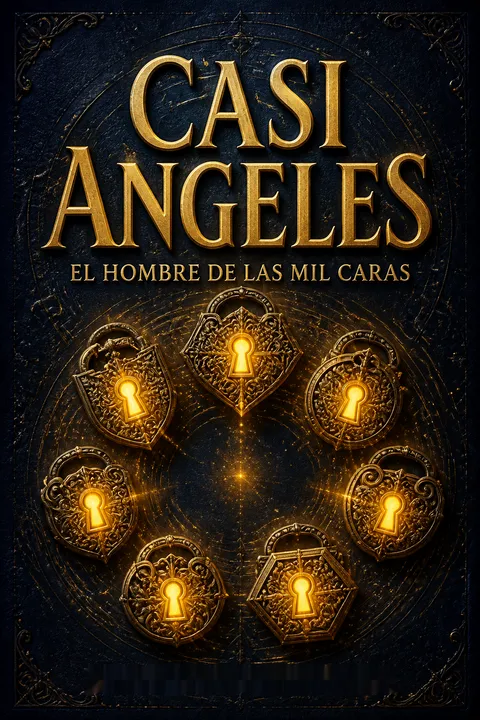
Guided by Tic Tac and the wisdom of Eudamón, the seven guardians—each representing a core virtue—are called to open the Book of Seven Locks. Their keys, earned through personal growth and redemption, symbolize the qualities needed to protect the portal and the world. The process of unlocking the book is a collective act, requiring unity, trust, and love. As they prepare for the final confrontation, the guardians realize that their greatest strength lies in their togetherness, and that their mission is not just to defend Eudamón, but to bring its light into the world.
The Parasitic Enemy
Juan Cruz's true nature is revealed: a parasitic spirit that feeds on fear, hatred, and isolation. His power lies in his ability to possess, manipulate, and corrupt, turning friends into enemies and love into violence. The battle against him is fought not with weapons, but with the virtues of Eudamón—knowledge, courage, sensitivity, perseverance, faith, redemption, and love. The family's unity is tested to its limits, as they face betrayal, loss, and the temptation to despair. The ultimate victory comes not from defeating Juan Cruz, but from refusing to become like him.
The Book of Seven Locks
The Book of Seven Locks, a mysterious artifact, becomes the focal point of the guardians' quest. Each lock can only be opened through the combined effort and connection of the group, symbolizing the necessity of collaboration and mutual support. The process of unlocking the book is both a literal and metaphorical journey, requiring each to confront their fears, forgive their enemies, and embrace their true selves. The book's secrets reveal the meaning of their suffering, the purpose of their trials, and the path to a new beginning.
The Final Sacrifice
The climax of the story is marked by acts of ultimate sacrifice—Salvador's self-destruction to destroy Juan Cruz, Bartolomé's final act of love for his son, and the willingness of each character to risk everything for the sake of others. These sacrifices are not just moments of loss, but of profound transformation, breaking the cycle of violence and opening the way to healing. The family learns that true strength lies in vulnerability, and that the greatest victories are those won through compassion, forgiveness, and the courage to let go.
The Meaning of Eudamón
The story's resolution is not the end, but a new beginning. The guardians, now almost angels, understand that their mission is not to escape the world, but to transform it. Eudamón is revealed not as a distant paradise, but as a state of being—a world made better through love, unity, and the willingness to face darkness with light. The meaning of their journey is found in the connections they forge, the wounds they heal, and the hope they inspire. The final message is one of acceptance, readiness, and the promise that every ending is also a beginning.
Almost Angels, Always Family
In the aftermath, the family gathers to celebrate love, life, and the bonds that have sustained them. Weddings, reconciliations, and new beginnings mark the transition from suffering to joy. The opening of the Book of Seven Locks is both a culmination and an invitation—to embrace the unknown, to trust in each other, and to step into the future as guardians of hope. The story ends not with closure, but with the assurance that as long as they remain united, they are ready for whatever comes next. They are almost angels—imperfect, striving, and forever family.
Analysis
A modern myth of healing, unity, and transformation"Casi Ángeles: El Hombre de las Mil Caras" is a sweeping, emotionally charged narrative that reimagines the coming-of-age story as a collective, intergenerational quest for meaning, belonging, and redemption. At its core, the book is a meditation on the power of chosen family, the necessity of confronting and integrating the past, and the possibility of transcending trauma through love, forgiveness, and shared purpose. The magical realism of portals, possessions, and prophecies serves not as an escape from reality, but as a lens through which to explore the deepest psychological truths of human experience. The story's nonlinear structure, its emphasis on music, ritual, and collective action, and its refusal to offer easy answers make it both timeless and urgently relevant. In a world fractured by fear, isolation, and the legacy of violence, "Casi Ángeles" offers a vision of hope: that by facing our shadows, embracing our differences, and choosing to love—again and again—we can create a new Eudamón, not in some distant paradise, but here, together, in the world we share.
También leyeron







Characters
Cielo (Ángeles Inchausti)
Cielo is the emotional and spiritual center of the story, embodying compassion, resilience, and the transformative power of love. Her journey from amnesiac orphan to angelic guide mirrors the arc of healing and self-discovery that defines the family. Cielo's ability to forgive, to see the best in others, and to inspire unity makes her both a leader and a healer. Her relationship with Nico is a testament to enduring love, while her guidance of the guardians reflects her acceptance of a higher calling. Cielo's struggles with memory, identity, and destiny are deeply human, making her both relatable and aspirational—a symbol of hope in a fractured world.
Nicolás "Nico" Bauer
Nico is the anchor of the family, balancing vulnerability with strength. His journey is one of learning to lead with both head and heart, to accept help, and to trust in the power of community. As a father figure, he is both nurturing and flawed, struggling with guilt, loss, and the weight of responsibility. Nico's scientific curiosity drives the quest to understand the portal, but it is his capacity for love and forgiveness that ultimately saves the family. His partnership with Cielo is a model of mutual support, and his willingness to sacrifice for others cements his role as a true guardian.
Thiago Bedoya Agüero
Thiago's arc is defined by his struggle with legacy, identity, and the darkness inherited from his fathers—both Bartolomé and Juan Cruz. Sensitive, loyal, and courageous, he is repeatedly targeted by evil forces seeking to corrupt or possess him. His journey is one of resisting manipulation, accepting vulnerability, and choosing love over hatred. Thiago's relationships—with Mar, his friends, and his family—are marked by deep loyalty and the pain of betrayal. His ultimate act of self-sacrifice and refusal to become an agent of violence marks his transformation from victim to hero.
Mar Rinaldi
Mar's story is one of overcoming abandonment, forging identity, and learning to trust in love. Her sharp wit, stubbornness, and emotional honesty make her both endearing and formidable. Mar's relationships—with Thiago, Simón, and her found family—are fraught with jealousy, insecurity, and the longing for acceptance. Her journey to discover her true parentage and to reconcile with her past is emblematic of the broader theme of healing through connection. Mar's growth from wounded child to empowered guardian is a testament to the strength found in vulnerability.
Rama (Ramiro Ordóñez)
Rama's arc is shaped by the pain of abandonment, the burden of responsibility, and the quest for redemption. His artistic soul, gentle nature, and unwavering loyalty make him a pillar of the group. Rama's struggles with guilt, self-worth, and the need to repair past wrongs are deeply psychological, reflecting the universal desire for forgiveness and acceptance. His relationship with Valeria and his role as a guardian highlight the importance of perseverance, empathy, and the courage to face one's own darkness.
Tacho (Juan Morales)
Tacho's humor, impulsiveness, and bravado mask a deep sensitivity and longing for connection. His journey from streetwise survivor to selfless protector is marked by moments of both folly and heroism. Tacho's alter ego, the Ángel Rojo, symbolizes the duality of strength and vulnerability, and his relationship with Jazmín is a study in the challenges of trust, jealousy, and the search for authenticity. Tacho's growth is defined by his willingness to confront his fears, to forgive, and to embrace the responsibilities of love and friendship.
Jazmín Romero
Jazmín's psychic abilities, artistic temperament, and fierce loyalty make her both a guide and a mirror for the group. Haunted by trauma and gifted with visions, she embodies the struggle to find meaning in suffering. Jazmín's relationships—with Tacho, her friends, and her lost family—are marked by longing, fear, and the hope of redemption. Her journey is one of learning to trust her intuition, to accept love, and to use her gifts for the greater good. Jazmín's arc is a testament to the power of vulnerability and the necessity of facing one's own shadows.
Juan Cruz (The Man of a Thousand Faces)
Juan Cruz is the embodiment of corrupted potential, a once-chosen one who becomes the story's greatest threat. His ability to possess, manipulate, and sow discord makes him a formidable enemy, but his true power lies in his understanding of human weakness. Juan Cruz's psychological complexity—his resentment, ambition, and longing for connection—make him both terrifying and tragic. His battle with the guardians is not just a fight for control, but a struggle for the soul of the family, forcing each character to confront the darkness within themselves.
Salvador Quiroga Harms
Salvador's journey is one of friendship, sacrifice, and the struggle against possession. Once a source of strength and support, he becomes the unwilling host for Juan Cruz, forced to battle for control of his own body and soul. Salvador's ultimate act of self-sacrifice—choosing death to destroy the parasite within—marks him as a true hero, whose love and courage inspire those he leaves behind. His story is a meditation on the limits of endurance, the cost of loyalty, and the redemptive power of selfless love.
Justina García / Felicitas
Justina's arc is one of the most profound, moving from cruelty and manipulation to genuine remorse and redemption. Her journey is marked by the struggle to overcome her own nature, to accept forgiveness, and to find a place in the family she once tormented. The duality of Justina and Felicitas—two sides of the same coin—reflects the story's central theme of the possibility of change. Justina's redemption is hard-won, and her willingness to sacrifice for others becomes a model for the entire group.
Plot Devices
Nonlinear Narrative and Temporal Paradoxes
The narrative structure is deliberately nonlinear, with frequent jumps in time, flashbacks, and glimpses of the future. Bruno's timeless perspective allows the story to explore the consequences of actions across generations, to reveal the interconnectedness of events, and to challenge the notion of linear causality. The use of diaries, visions, and parallel realities creates a sense of mystery and inevitability, while also emphasizing the power of choice and the possibility of change.
The Portal and the Book of Seven Locks
The magical clock-portal and the Book of Seven Locks serve as both literal and symbolic gateways to self-discovery, redemption, and collective action. The process of unlocking the book mirrors the characters' journeys toward unity, forgiveness, and acceptance. The portal's rules—forgetting, remembering, and the necessity of letting go—reflect the psychological challenges of growth and healing. These devices also serve as metaphors for the permeability of boundaries between worlds, selves, and destinies.
The Parasitic Antagonist and Possession
Juan Cruz's ability to possess and corrupt others is a powerful metaphor for the ways in which trauma, resentment, and fear can infect individuals and communities. The battle against him is fought not with violence, but with the virtues of Eudamón—knowledge, courage, sensitivity, perseverance, faith, redemption, and love. The story uses possession as a plot device to explore the fragility of identity, the dangers of isolation, and the necessity of collective resistance.
Music, Ritual, and Collective Action
Music is woven throughout the narrative as a means of expressing emotion, forging connection, and resisting despair. Rituals—weddings, farewells, the unlocking of the book—serve to unite the family, to mark transitions, and to reaffirm shared values. The act of singing together becomes both a literal and symbolic defense against evil, a way to reclaim agency, and a source of hope in the face of overwhelming odds.
Foreshadowing and Visions
The use of visions, dreams, and psychic abilities creates a sense of foreboding and inevitability, while also offering the possibility of intervention and change. The story repeatedly emphasizes that the future is not fixed, that destiny can be rewritten through courage, love, and collective action. Foreshadowing is used to build tension, to deepen character development, and to invite readers to reflect on the meaning of choice and consequence.
Descargar PDF
Descargar EPUB
.epub digital book format is ideal for reading ebooks on phones, tablets, and e-readers.








































