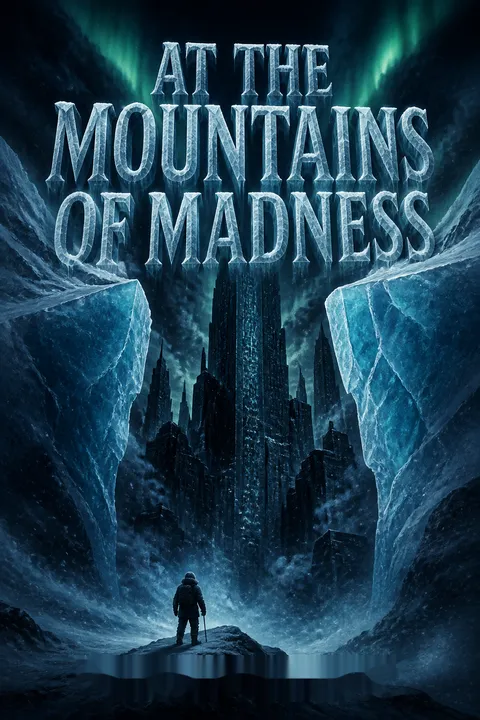

Resumen de la trama
Comienza la expedición a la Antártida
La expedición de la Universidad de Miskatonic, liderada por el geólogo William Dyer, se embarca en una misión para explorar las regiones inexploradas de la Antártida. Equipado con tecnología de perforación avanzada, el equipo busca desenterrar especímenes geológicos del pasado remoto del continente. A medida que se adentran en el desierto helado, se topan con paisajes imponentes y extraños fenómenos atmosféricos que preparan el escenario para los escalofriantes descubrimientos que les aguardan.
El hallazgo de misterios ancestrales
La expedición avanza a paso firme y desentierra fósiles y peculiares marcas triangulares en formaciones rocosas milenarias. El biólogo Lake se obsesiona con estos hallazgos, convencido de que podrían revolucionar nuestra comprensión de la historia de la Tierra. Su entusiasmo lo lleva a emprender una expedición secundaria hacia el interior de las montañas, donde espera descubrir más sobre estos enigmáticos artefactos.
El impactante descubrimiento de Lake
El equipo de Lake descubre una serie de antiguas criaturas con forma de barril preservadas en el hielo. Estos seres, que recuerdan a los míticos «Antiguos», desafían cualquier clasificación al poseer características tanto animales como vegetales. A medida que Lake se adentra en el misterio, se pierde la comunicación con su equipo, lo que sume al resto de la expedición en un estado de creciente inquietud y temor.
En las montañas de la locura
Dyer y su equipo parten en busca del campamento de Lake, solo para descubrir los restos de una enorme y antigua civilización alienígena sepultada bajo el hielo. La arquitectura resulta tan asombrosa como aterradora, y sugiere la existencia de una civilización mucho más antigua que la humanidad. Mientras exploran la ciudad, descubren murales que representan la historia de los Antiguos y cómo crearon la vida en la Tierra, incluyendo a los monstruosos Shoggoths.
El horror al descubierto
El equipo se topa con los Shoggoths, criaturas amorfas capaces de imitar cualquier forma. Estos seres, que alguna vez fueron sirvientes de los Antiguos, se han convertido en una amenaza espantosa. Los exploradores comprenden el verdadero peligro de su situación al reconstruir el destino del equipo de Lake, que cayó víctima de estos horrores ancestrales.
Escape del abismo
Dyer y su compañero Danforth emprenden una huida angustiosa de la ciudad, perseguidos de cerca por los implacables Shoggoths. Mientras escapan, son testigos de toda la majestuosidad de la ciudad alienígena y del terrible poder de las criaturas que la habitan. El viaje de regreso a la superficie está lleno de peligros, mientras luchan por mantener la cordura frente a horrores inimaginables.
El conocimiento prohibido
Ya a salvo, Dyer reflexiona sobre los hallazgos de la expedición y sus implicaciones para la humanidad. Insta a la comunidad científica a abandonar cualquier exploración posterior de la Antártida, por temor a despertar fuerzas ancestrales que podrían amenazar al mundo entero. El conocimiento obtenido en la expedición es tanto una maravilla científica como una advertencia urgente sobre los peligros que yacen bajo el hielo.
Analysis
Una advertencia sobre los límites de la exploraciónEn las montañas de la locura funciona como una advertencia contra los peligros de la curiosidad científica desmedida y la búsqueda del conocimiento prohibido. El relato de Lovecraft explora temas como el horror cósmico, el auge y la caída de las civilizaciones, y las posibles consecuencias de la soberbia humana. La mezcla de ciencia ficción y terror que caracteriza a la obra genera una atmósfera escalofriante que desafía al lector a reflexionar sobre los límites del entendimiento humano y los peligros potenciales de explorar lo desconocido. A través del desgarrador relato de Dyer, Lovecraft nos advierte que no debemos despertar a las fuerzas ancestrales que podrían amenazar al mundo, instándonos a respetar los misterios que escapan a nuestra comprensión.
Resumen de reseñas
En las montañas de la locura recibe opiniones encontradas. Algunos elogian la vívida construcción de mundos de Lovecraft, su terror cósmico y su enfoque científico, considerándola una obra maestra del género. Otros encuentran su estilo de escritura tedioso, excesivamente descriptivo y falto de acción. La atmósfera de desarrollo lento y la detallada civilización alienígena de la historia son valoradas por sus seguidores, pero criticadas por quienes buscan más emoción. Muchos lectores destacan la influencia del libro en obras posteriores y su lugar dentro del mito de Lovecraft, aunque algunos sugieren que tal vez no sea la mejor introducción a su obra.
También leyeron
Characters
William Dyer
Dyer es geólogo y el líder de la expedición de la Universidad de Miskatonic. Su entusiasmo inicial por la misión científica se transforma en horror al descubrir los antiguos secretos de la Antártida. El personaje de Dyer evoluciona de ser un científico racional a un hombre atormentado por el conocimiento de lo que yace bajo el hielo, convirtiéndose finalmente en una voz de prudencia que se opone a futuras exploraciones.
Lake
Lake es un biólogo cuya fascinación por los fósiles y artefactos antiguos lo lleva a liderar una expedición secundaria hacia las montañas. Sus descubrimientos sobre los Antiguos y su historia lo arrastran a la locura, y su destino sirve como una sombría advertencia sobre los peligros de la curiosidad científica desmedida.
Danforth
Danforth es un estudiante de posgrado y el compañero de Dyer durante la exploración de la ciudad antigua. Comparte los horrores que encuentran y queda profundamente afectado por la experiencia. El frágil estado mental de Danforth y su negativa a hablar de ciertas visiones evidencian el costo psicológico de su viaje.
The Elder Things
Los Antiguos son una raza primordial que habitó la Tierra en el pasado, creando vida y construyendo vastas ciudades. Su civilización cayó ante los Shoggoths, sus propias creaciones, que se rebelaron contra ellos. Los Antiguos representan la soberbia de jugar a ser Dios y la inevitable caída que esto conlleva.
The Shoggoths
Los Shoggoths son entidades capaces de cambiar de forma, creadas por los Antiguos para servir como mano de obra. Con el tiempo, desarrollaron inteligencia y se rebelaron contra sus creadores. Su presencia en la historia encarna el tema de la creación incontrolable y las consecuencias monstruosas del exceso científico.
Plot Devices
Ancient Alien Civilization
El descubrimiento de la ciudad de los Antiguos funciona como el recurso narrativo central, sirviendo de telón de fondo para explorar temas como el auge y la caída de las civilizaciones, los peligros de la soberbia científica y la insignificancia de la humanidad frente a las fuerzas cósmicas.
Unreliable Narration
La narración de Dyer está teñida por su propio miedo y trauma, lo que genera una narración poco confiable que hace que los lectores duden de la verdadera naturaleza de los acontecimientos. Este recurso intensifica la tensión y la ambigüedad de la historia, sumergiendo al lector en el horror psicológico que experimentan los personajes.
Cosmic Horror
La historia recurre al horror cósmico para transmitir la idea de que la humanidad es una parte pequeña e insignificante de un universo vasto e indiferente. Los seres ancestrales y sus creaciones nos recuerdan las fuerzas desconocidas que existen más allá de la comprensión humana, infundiendo un profundo sentimiento de pavor y asombro.
Preguntas frecuentes
Synopsis & Basic Details
What is At the Mountains of Madness about?
- Antarctic expedition uncovers secrets: A Miskatonic University expedition to Antarctica, led by geologist William Dyer, seeks geological specimens but stumbles upon evidence of a pre-human civilization.
- Ancient city and its history: The expedition discovers a vast, cyclopean city built by the Elder Things, revealing their history, their creation of life on Earth, and their conflict with the Shoggoths.
- Horror and warning: The story details the expedition's terrifying encounters with the Shoggoths and the knowledge they gain, leading to a desperate escape and a warning against further exploration.
Why should I read At the Mountains of Madness?
- Cosmic horror masterpiece: It's a quintessential example of Lovecraftian cosmic horror, exploring themes of humanity's insignificance in the face of ancient, unknowable forces.
- Intricate world-building: The story features detailed world-building, creating a sense of a vast, ancient history and a terrifying, alien civilization.
- Psychological impact: The narrative delves into the psychological toll of encountering the unknown, leaving a lasting sense of dread and unease.
What is the background of At the Mountains of Madness?
- Scientific exploration era: The story is set during a period of intense scientific exploration, reflecting the era's fascination with discovery and the unknown.
- Antarctic exploration history: Lovecraft draws inspiration from real-life Antarctic expeditions, incorporating details of the landscape and the challenges of polar exploration.
- Lovecraft's mythos: It's a key part of Lovecraft's Cthulhu Mythos, introducing the Elder Things and Shoggoths, and expanding on the themes of ancient, cosmic entities.
What are the most memorable quotes in At the Mountains of Madness?
- "Tekeli-li! Tekeli-li!": This chilling, repeated cry, associated with the Shoggoths, encapsulates the story's horror and the imitation of the Old Ones' voices.
- "Mountains of Madness": The phrase itself, used to describe the towering, alien peaks, evokes a sense of dread and the story's central theme of cosmic horror.
- "That is not dead which can eternal lie, And with strange aeons even death may die.": This quote, though not directly from the story, is often associated with Lovecraft and reflects the theme of ancient, slumbering horrors.
What writing style, narrative choices, and literary techniques does H.P. Lovecraft use?
- First-person, retrospective narration: The story is told from William Dyer's perspective, creating a sense of immediacy and personal horror, while also allowing for unreliable narration.
- Descriptive and evocative language: Lovecraft uses detailed, often archaic language to create a sense of atmosphere and to convey the alien nature of the setting and creatures.
- Foreshadowing and suspense: The narrative employs subtle foreshadowing and a slow build-up of suspense, gradually revealing the true horror of the situation.
Hidden Details & Subtle Connections
What are some minor details that add significant meaning?
- The greenish soapstones: These seemingly random objects, with their five-pointed shapes and dot patterns, foreshadow the Elder Things' biology and the later discovery of their burial mounds.
- The wind's musical piping: The wind's strange sounds, initially dismissed as atmospheric effects, later connect to the Shoggoths' vocalizations, hinting at the presence of something unnatural.
- The missing dog: The disappearance of one dog from the camp foreshadows the later discovery of the dissected remains, suggesting a more sinister force at play than just the wind.
What are some subtle foreshadowing and callbacks?
- Roerich's paintings: The repeated references to Nicholas Roerich's art foreshadow the alien, dreamlike quality of the antarctic landscape and the city of the Elder Things.
- Poe's "Arthur Gordon Pym": The mention of Poe's story foreshadows the themes of exploration, the unknown, and the psychological impact of the antarctic.
- The Necronomicon: The references to the Necronomicon and its forbidden knowledge foreshadow the horrifying truths the expedition uncovers about the Elder Things and their creations.
What are some unexpected character connections?
- Lake and the Elder Things: Lake's obsession with the triangular markings leads him to discover the Elder Things, highlighting the dangers of unchecked scientific curiosity.
- Dyer and Danforth's shared trauma: Their shared experience of the horrors in the city creates a bond, but also leaves them both deeply scarred, with Danforth's breakdown being particularly significant.
- The Old Ones and the Shoggoths: The Old Ones' creation of the Shoggoths and their subsequent rebellion highlights the theme of the dangers of playing god and the consequences of unchecked power.
Who are the most significant supporting characters?
- Lake: His obsession and discoveries drive the plot forward, and his fate serves as a warning about the dangers of scientific hubris.
- Danforth: As Dyer's companion, he provides a crucial second perspective and his psychological breakdown underscores the story's themes of horror and madness.
- Pabodie: Though not present for the main events, his drilling technology is essential to the expedition's discoveries, highlighting the role of technology in uncovering the unknown.
Psychological, Emotional, & Relational Analysis
What are some unspoken motivations of the characters?
- Dyer's need to warn: Dyer's primary motivation is to prevent others from repeating his mistakes, driven by the trauma he experienced and the knowledge he gained.
- Lake's ambition: Lake's obsession with the fossils is fueled by a desire for scientific recognition, which ultimately leads to his downfall.
- Danforth's curiosity and fear: Danforth is driven by a mix of scientific curiosity and a growing sense of dread, which ultimately leads to his psychological collapse.
What psychological complexities do the characters exhibit?
- Dyer's unreliable narration: Dyer's trauma and fear color his perception of events, making him an unreliable narrator and highlighting the psychological impact of the horrors he witnessed.
- Lake's obsession: Lake's single-minded pursuit of knowledge blinds him to the dangers he faces, showcasing the destructive nature of unchecked ambition.
- Danforth's fragile mental state: Danforth's breakdown and his refusal to speak of his final vision highlight the psychological toll of encountering the unknown and the limits of human sanity.
What are the major emotional turning points?
- Discovery of the Elder Things: The discovery of the preserved Elder Things marks a shift from scientific curiosity to horror and dread.
- Loss of communication with Lake: The loss of contact with Lake's team creates a sense of unease and foreshadows the dangers ahead.
- Encounter with the Shoggoths: The encounter with the Shoggoths and the discovery of the headless bodies mark a turning point, solidifying the expedition's understanding of the true horror they face.
How do relationship dynamics evolve?
- Initial camaraderie to shared trauma: The expedition starts with a sense of camaraderie, but the shared horrors they encounter create a bond based on trauma and fear.
- Dyer and Danforth's bond: Dyer and Danforth's relationship evolves from colleagues to fellow survivors, united by their shared experience of the unimaginable.
- Lake's isolation: Lake's obsession isolates him from the rest of the group, leading to his tragic fate and highlighting the dangers of unchecked ambition.
Interpretation & Debate
Which parts of the story remain ambiguous or open-ended?
- The nature of the Shoggoths: The Shoggoths' true nature and origins remain ambiguous, leaving readers to speculate about their place in the cosmic order.
- Danforth's final vision: Danforth's refusal to describe his final vision leaves the reader to imagine the full extent of the horror he witnessed, adding to the story's mystery.
- The fate of the Old Ones: The fate of the Old Ones and their civilization remains open-ended, leaving readers to wonder if they still exist in some form.
What are some debatable, controversial scenes or moments in At the Mountains of Madness?
- The dissection scene: The graphic description of the dissected Elder Thing is disturbing and raises questions about the ethics of scientific exploration.
- The Shoggoth encounter: The encounter with the Shoggoths is a moment of intense horror, and some readers may find the descriptions of their form and actions disturbing.
- The ending: The ending, with Dyer's warning and Danforth's breakdown, is open to interpretation, leaving readers to debate the true nature of the horrors they encountered.
At the Mountains of Madness Ending Explained: How It Ends & What It Means
- Escape and warning: Dyer and Danforth escape the city and return to the world, but they are deeply traumatized by their experience. Dyer's warning against further exploration is a key element of the ending.
- Psychological toll: The ending emphasizes the psychological toll of encountering the unknown, with Danforth's breakdown highlighting the limits of human sanity.
- Cosmic insignificance: The ending reinforces the theme of humanity's insignificance in the face of cosmic forces, leaving readers with a sense of dread and the realization that some mysteries are best left undisturbed.
Sobre el autor
Descargar PDF
Descargar EPUB
.epub digital book format is ideal for reading ebooks on phones, tablets, and e-readers.








































