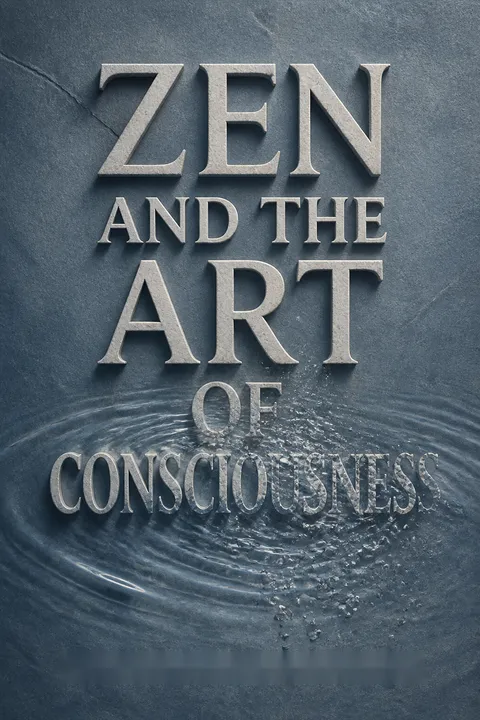

Key Takeaways
1. Consciousness is an illusion created by our brains
Consciousness is an illusion; an enticing and convincing illusion that lures us into believing that our minds are separate from our bodies.
The illusion of consciousness stems from our brain's ability to create a seamless narrative of our experiences. This illusion is so powerful that it has led many scientists and philosophers astray in their quest to understand the nature of mind and experience. The brain constructs a unified sense of self and continuous stream of awareness, despite the fact that our experiences are actually fragmented and discontinuous.
Challenging this illusion requires careful introspection and a willingness to question deeply held assumptions about the nature of our minds. Through meditation and mindfulness practices, we can begin to see through the illusion and recognize the true nature of our experiences:
- Experiences arise and pass away moment by moment
- There is no central "experiencer" separate from the experiences themselves
- Our sense of a continuous self is constructed after the fact
By recognizing consciousness as an illusion, we open the door to a more accurate understanding of how our minds actually work and the relationship between brain and experience.
2. The self is not a continuous entity but a series of fleeting experiences
Experiences and their experiencers will arise wherever and whenever there is a body capable of sensing things, and a brain capable of analysing them, and they will last some time and disappear again.
The self is impermanent. Rather than being a fixed, enduring entity, our sense of self arises anew in each moment, along with our experiences. This fleeting nature of self becomes apparent through careful introspection and meditation practice. As we pay close attention to our moment-to-moment experience, we notice that:
- The "self" that experiences one sensation is not the same as the "self" that experiences the next
- There is no continuous thread of awareness linking these separate moments
- Our sense of a persisting self is constructed after the fact, through memory and narrative
Implications of impermanence: Recognizing the fleeting nature of self can be liberating. It frees us from the burden of maintaining a fixed identity and allows us to be more fully present in each moment. This understanding also aligns with scientific observations about the brain, which show that neural activity is constantly changing and reorganizing, rather than maintaining a fixed "self" structure.
3. Free will is a misconception; our actions arise from complex causes
There cannot be free will. It doesn't make sense.
The illusion of free will is deeply ingrained in our experience and cultural narratives. However, careful examination reveals that our actions and decisions arise from a complex web of causes and conditions, rather than from an independent "will" separate from these influences. Consider:
- Every decision we make is shaped by our past experiences, genetic predispositions, and current circumstances
- We cannot choose our thoughts or desires; they simply arise in consciousness
- The sense of being a "decider" comes after the brain has already initiated action
Implications for responsibility: Recognizing the absence of free will doesn't mean abandoning responsibility. Instead, it shifts our understanding of responsibility from blame and punishment to a focus on creating the conditions for positive actions and outcomes. We can:
- Accept the consequences of our actions without self-judgment
- Work to shape our habits and environments to promote beneficial behaviors
- Approach others with greater compassion, recognizing that their actions too arise from complex causes
4. Mindfulness reveals the discontinuity of conscious experience
When abiding in tranquillity what is the nature of such abiding?
Mindfulness practice allows us to observe the true nature of our moment-to-moment experience. As we cultivate sustained attention, we begin to notice the gaps and discontinuities in our conscious awareness. This reveals:
- Our attention naturally fluctuates, with moments of clarity interspersed with periods of distraction or "mindlessness"
- Experiences arise and pass away rapidly, often before we're fully aware of them
- There is no stable, continuous "stream" of consciousness, but rather a series of discrete moments
Insights from practice: Through consistent mindfulness practice, we can develop a more accurate understanding of the nature of consciousness:
- We see that the sense of a continuous self is constructed after the fact
- We notice how quickly our attention shifts between different objects of awareness
- We become more attuned to the subtle changes in our experience from moment to moment
This firsthand observation of the discontinuity of consciousness challenges our usual assumptions about the nature of mind and self.
5. The "hard problem" of consciousness may be based on faulty assumptions
The very thing that the science of consciousness is trying to explain, disintegrated on closer inspection.
Questioning assumptions about consciousness is crucial for making progress in understanding the mind. The "hard problem" of consciousness—how subjective experience arises from objective brain processes—may be based on faulty premises. By carefully examining our own experience, we can challenge these assumptions:
- There may not be a unified "stream" of consciousness to explain
- The sense of a separate "experiencer" distinct from experiences may be illusory
- The apparent gap between subjective and objective may be a product of our conceptual framework, not reality
Implications for science: Recognizing these potential flaws in our assumptions about consciousness can lead to new approaches in cognitive science and neuroscience:
- Focus on understanding how the brain constructs the illusion of unified consciousness
- Investigate the neural correlates of specific experiences rather than searching for a general "seat" of consciousness
- Develop new experimental paradigms that don't rely on subjective report alone
By questioning our fundamental assumptions, we open up new avenues for scientific investigation of the mind.
6. Meditation can transform our understanding of consciousness and self
I looked very hard into what it's like to be me and I found no answer.
Meditation as a tool for investigating consciousness allows us to directly observe the nature of our experience, free from theoretical assumptions. Through sustained practice, we can:
- Develop the ability to observe our thoughts and sensations without identifying with them
- Notice the rapid arising and passing away of mental phenomena
- Recognize the constructed nature of our sense of self
Insights from practice:
- The seeming continuity of consciousness breaks down into discrete moments
- There is no fixed "self" separate from our experiences
- Our usual sense of agency and control over our thoughts is largely illusory
These firsthand observations can profoundly shift our understanding of mind and self, complementing and sometimes challenging scientific theories of consciousness.
7. Responsibility without free will: accepting consequences of our actions
You take responsibility.
Reconciling responsibility with the absence of free will requires a shift in perspective. Rather than basing responsibility on the idea of a freely choosing self, we can focus on accepting the consequences of our actions and working to shape positive outcomes. This approach involves:
- Recognizing that our actions arise from complex causes, not free choice
- Accepting responsibility for the results of our actions, without self-blame
- Focusing on creating conditions for beneficial behaviors in the future
Practical implications:
- Emphasize education and rehabilitation over punishment in justice systems
- Foster self-compassion while still holding ourselves accountable
- Approach others' actions with greater understanding and empathy
By embracing responsibility without free will, we can create more effective and compassionate approaches to personal and social ethics.
8. Time and memory are constructs, not objective realities
There is no time. What is memory?
Time and memory are deeply intertwined in our experience, but close examination reveals that neither is as solid or objective as we typically assume. Through meditation and introspection, we can observe:
- The "present moment" is impossible to pin down; it's always slipping into the past
- Our sense of time passing is constructed from memories and anticipations
- Memories are not fixed records, but are reconstructed anew each time we recall them
Implications for understanding experience:
- Our usual sense of a linear flow of time is a mental construct
- The apparent continuity of consciousness is created by memory
- Our sense of self is intimately tied to our ability to construct narratives from memories
Recognizing the constructed nature of time and memory can lead to a more fluid and present-centered experience of life.
9. Embracing impermanence leads to a richer experience of life
Being born and dying again is how all life is. Birth and death are not a problem; the cycle of illusion is broken; they are just how it is.
Accepting impermanence can be liberating rather than frightening. By recognizing that everything, including our sense of self, is constantly changing, we can:
- Let go of the need to maintain a fixed identity
- Be more fully present in each moment, knowing it will never come again
- Approach death with less fear, seeing it as part of the natural cycle of experience
Practical approaches:
- Cultivate mindfulness to stay present with changing experiences
- Practice non-attachment to thoughts, emotions, and sensations
- Reflect regularly on the impermanent nature of all phenomena
Embracing impermanence doesn't mean nihilism or detachment from life. Instead, it can lead to a deeper appreciation for the preciousness of each moment and a more authentic way of being in the world.
Review Summary
Zen and the Art of Consciousness receives mixed reviews. Some readers find it thought-provoking and insightful, praising Blackmore's exploration of consciousness through Zen practices. Others criticize it as confusing or self-indulgent. The book's unique approach combines personal experiences, scientific inquiry, and Zen philosophy. While some appreciate the author's honesty and introspection, others feel she over-intellectualizes Zen concepts. The book sparks discussions on consciousness, free will, and the nature of self, but its effectiveness in conveying these ideas varies among readers.
People Also Read



FAQ
What is "Zen and the Art of Consciousness" by Susan Blackmore about?
- First-person exploration of consciousness: The book is a personal account of Susan Blackmore’s journey to understand the nature of conscious experience, blending scientific inquiry with Zen Buddhist meditation.
- Ten Zen questions: Blackmore structures the book around ten profound questions that probe the nature of consciousness, self, time, memory, and perception.
- Integration of science and Zen: The author combines her background in psychology and neuroscience with Zen practices, aiming to bridge the gap between scientific and experiential approaches to consciousness.
- Challenge to assumptions: The book questions common beliefs about the self, free will, and the continuity of consciousness, encouraging readers to directly investigate their own experience.
Why should I read "Zen and the Art of Consciousness" by Susan Blackmore?
- Unique blend of perspectives: The book offers a rare combination of scientific rigor, philosophical inquiry, and practical Zen meditation, making it valuable for readers interested in any of these fields.
- Practical self-inquiry: Blackmore provides concrete methods and questions that readers can use to explore their own consciousness, not just theoretical discussions.
- Challenges conventional wisdom: The book invites readers to question deeply held assumptions about the mind, self, and reality, potentially leading to transformative insights.
- Engaging and accessible: Written with clarity, humor, and humility, the book is accessible to both newcomers and those familiar with consciousness studies or meditation.
What are the key takeaways from "Zen and the Art of Consciousness" by Susan Blackmore?
- The self is an illusion: Blackmore’s investigations suggest that the sense of a continuous, unified self is a mental construction, not a persistent entity.
- Consciousness is not what it seems: Our intuitions about consciousness—such as the idea of a stream of experiences or a central observer—do not hold up under close examination.
- Direct experience is essential: Both science and Zen benefit from direct, first-person inquiry into experience, rather than relying solely on external observation or dogma.
- Letting go and mindfulness: The practices of letting go, paying attention, and questioning are central to both Zen and the exploration of consciousness.
How does Susan Blackmore use Zen meditation and questioning in her method for exploring consciousness?
- Ten Zen questions: Blackmore uses a set of ten probing questions (e.g., "Am I conscious now?", "Who is asking the question?") as tools for self-inquiry during meditation.
- Calming the mind: She emphasizes the importance of meditation to calm the mind, making it possible to observe thoughts, sensations, and the sense of self more clearly.
- Systematic self-experimentation: Blackmore documents her own experiences, struggles, and insights as she repeatedly asks these questions in various contexts, both on retreat and in daily life.
- Integration with science: Her approach is to use personal, subjective experience as a legitimate source of data for understanding consciousness, complementing scientific methods.
What are the "Ten Zen Questions" in "Zen and the Art of Consciousness" and why are they important?
- Fundamental questions: The ten questions include "Am I conscious now?", "What was I conscious of a moment ago?", "Who is asking the question?", "Where is this?", "How does thought arise?", "There is no time. What is memory?", "When are you?", "Are you here now?", "What am I doing?", and "What happens next?".
- Designed to provoke insight: These questions are intended to disrupt habitual thinking and provoke direct insight into the nature of mind and experience.
- Blend of Zen and science: Some questions are classic Zen koans, while others arise from Blackmore’s scientific background, reflecting the book’s integrative approach.
- Ongoing practice: Blackmore shows that repeatedly asking these questions can lead to profound shifts in perception and understanding, rather than providing simple answers.
How does "Zen and the Art of Consciousness" by Susan Blackmore challenge the concept of the self?
- No persisting self: Blackmore’s inquiry reveals that the sense of a continuous, unified self is an illusion created by the mind.
- Temporary observers: She finds that what appears to be a self is actually a series of fleeting observers, each arising with particular experiences and dissolving as they pass.
- Headless way and nonduality: Drawing on Zen and the "headless way," she describes experiences where the boundary between self and world disappears, leaving only the experience itself.
- Implications for responsibility and free will: The dissolution of the self challenges traditional notions of personal responsibility and agency, leading to new ways of understanding action and choice.
What does Susan Blackmore mean by the "illusion of consciousness" in "Zen and the Art of Consciousness"?
- Consciousness as a constructed illusion: Blackmore argues that what we take to be a stream of conscious experience is a convincing illusion, not a literal reality.
- No central observer: There is no "theatre of consciousness" or inner observer where experiences are presented; instead, experiences arise and fall away without a central self.
- Scientific and Zen perspectives: Both neuroscience and Zen point to the absence of a fixed self or continuous consciousness, despite our strong intuitions to the contrary.
- Implications for science: She suggests that much of consciousness research is misguided if it tries to explain the illusion rather than how the illusion is constructed.
How does "Zen and the Art of Consciousness" address the problem of free will and personal responsibility?
- Free will as an illusion: Blackmore concludes that the feeling of freely willing actions is a mental construction, not a reflection of how actions actually arise.
- Actions without a doer: She describes how, through meditation and inquiry, actions seem to happen on their own, without a central self making decisions.
- Responsibility redefined: Despite the absence of a self, Blackmore discusses how responsibility can still be taken or accepted as part of the flow of events, echoing Zen teachings.
- Philosophical and practical implications: The book explores the tension between intellectual understanding of no-self and the lived experience of making choices and taking responsibility.
What is the relationship between science and Zen in Susan Blackmore’s approach in "Zen and the Art of Consciousness"?
- Complementary methods: Blackmore sees science and Zen as complementary, with science providing objective investigation and Zen offering first-person, experiential inquiry.
- Shared skepticism: Both traditions encourage questioning assumptions, testing beliefs, and being open to new discoveries.
- Different aims: While science seeks understanding, prediction, and control, Zen aims for direct realization of nonduality and liberation from delusion.
- Integration in practice: Blackmore’s method is to use both scientific thinking and Zen meditation to explore consciousness, suggesting that each can inform and enrich the other.
What are some of the most important concepts and metaphors discussed in "Zen and the Art of Consciousness" by Susan Blackmore?
- Cartesian theatre: The metaphor of a mental theatre with a central observer is critiqued as misleading and unsupported by neuroscience.
- Multiple drafts: Daniel Dennett’s "multiple drafts" model is discussed as an alternative, where parallel processes occur without a central experiencer.
- String of beads: The metaphor of life as a string of beads is examined and ultimately rejected in favor of a more fragmented, parallel view of experience.
- Letting go and mindfulness: The practices of letting go, paying attention, and being present are central to both Zen and Blackmore’s inquiry.
What practical advice or methods does Susan Blackmore offer in "Zen and the Art of Consciousness" for readers who want to explore consciousness themselves?
- Ask the Zen questions: Readers are encouraged to repeatedly ask themselves the ten Zen questions in daily life and meditation to provoke insight.
- Establish a meditation practice: Blackmore recommends regular meditation, even for short periods, to calm the mind and make self-inquiry possible.
- Let it come, let it be, let it go: She shares the Zen advice to allow thoughts and feelings to arise, remain, and pass without clinging or resistance.
- Be patient and persistent: The process of inquiry is gradual and often challenging, requiring ongoing practice and openness to not-knowing.
What are the best quotes from "Zen and the Art of Consciousness" by Susan Blackmore and what do they mean?
- "There is nothing it is like to be me." — This challenges the core assumption of consciousness studies, suggesting that the sense of a private, subjective self is an illusion.
- "Let it come. Let it be. Let it go." — A central Zen teaching for dealing with thoughts and emotions in meditation, emphasizing non-attachment and acceptance.
- "I am, it seems, the world I see." — Reflects the nondual insight that the boundary between self and world is illusory; the observer and the observed are not separate.
- "Consciousness is an illusion; an enticing and convincing illusion that lures us into believing that our minds are separate from our bodies." — Summarizes Blackmore’s main thesis that the apparent separation of mind and body is a mental construction, not a reality.
About the Author

Download PDF
Download EPUB
.epub digital book format is ideal for reading ebooks on phones, tablets, and e-readers.








































