
Plot Summary
Chlorine and Broken Summers
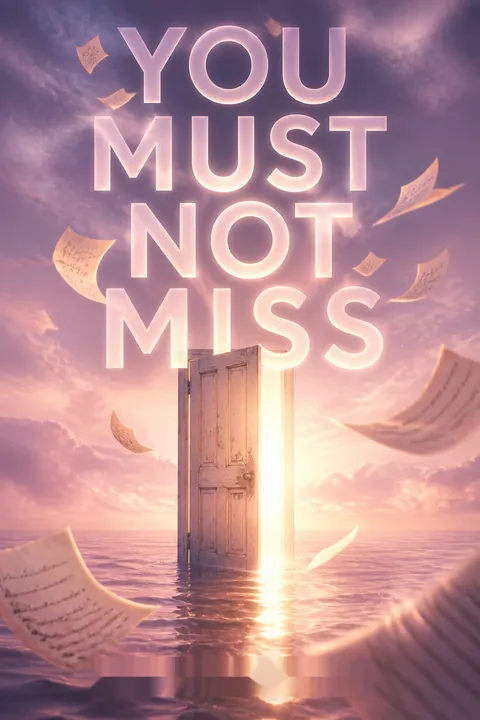
Magpie Lewis, sixteen, floats in her family's neglected pool, longing for the happier summers before her world collapsed. Her family is shattered: her father's affair with her aunt, her mother's descent into alcoholism, and her sister Eryn's abandonment have left Magpie isolated. Her best friend Allison has turned on her, spreading rumors that have made Magpie a pariah at school. The pool, once a symbol of joy, now feels like a time capsule of regret. Magpie's days are marked by routine, numbness, and a desperate wish to escape her reality. The house is dark, her mother drunk and unreachable, and Magpie survives on boxed macaroni and cheese, haunted by memories and the sense that she is invisible to everyone who once mattered.
The Yellow Notebook's Wish
Magpie's solace is a yellow notebook labeled "Near," where she writes about an imagined, perfect place: always warm, always safe, and free from the people who have hurt her. The act of writing becomes a lifeline, a way to process trauma and assert control. At school, she's an outcast, but finds a new lunch table with other misfits—Ben, Clare, Brianna, and Luke—each carrying their own scars. Magpie's writing in the notebook is more than escapism; it's a wish for transformation, a desperate hope that words can make a new world real. The notebook's pages fill with details of Near, a place that promises everything her life lacks: peace, safety, and the power to protect herself.
Outcasts and New Alliances
At her new lunch table, Magpie is surrounded by others who have been ostracized for their differences. Ben, who is trans; Clare, whose father died by suicide; Brianna, shamed for a period accident; and Luke, outed as bisexual. Their acceptance is conditional, based on shared pain and mutual understanding. Magpie's friendship with Ben deepens, offering her a rare sense of trust. Yet, the wounds from Allison's betrayal and the school's cruelty remain raw. The group's banter is a shield against the world, but Magpie's sense of self is still fractured. She is haunted by the rumors, the loss of her old life, and the knowledge that even among outcasts, she is uniquely alone.
Family Fractures Deepen
Magpie's mother, Ann Marie, is lost to alcoholism, leaving Magpie to manage the household and finances. Her father calls daily, but Magpie refuses contact, unable to forgive his betrayal. Eryn, her older sister, has cut all ties, prioritizing her own mental health over Magpie's need for family. The house is a mausoleum of broken routines and unspoken pain. When Ann Marie overdoses and is hospitalized, Magpie is left to navigate the crisis alone, lying to authorities to avoid being sent to her father. The sense of abandonment is total—Magpie is a child forced into the role of caretaker, her own needs invisible and unmet.
The Shed's Impossible Light
One night, Magpie notices the light in her father's old garden shed flickering on and off, though it should be impossible. The shed, filled with relics of her father's life, becomes a locus of unease and curiosity. The light's inexplicable behavior unsettles her, hinting at something supernatural or psychological. When she finally enters, the shed transforms, revealing a portal to the world she's written about in her notebook: Near. The boundaries between imagination and reality blur, and Magpie steps into a place that feels both entirely new and intimately familiar—a world shaped by her longing and pain.
Near: A World Unwritten
Near is everything Magpie dreamed: a sunlit, peaceful town, a mirror of her own but without its scars. She brings Clare with her, but the experience is overwhelming—Clare panics and forgets the journey upon returning. In Near, Magpie discovers she can shape reality with her will, her wishes manifesting instantly. The world is empty except for what she desires, and she is both its creator and its only true inhabitant. The power is intoxicating, but also isolating. Near is a refuge, but it is also a reflection of Magpie's loneliness and the depth of her need for control and safety.
Panic, Friendship, and Escape
Clare's panic attack in Near exposes the psychological cost of Magpie's power. The world is beautiful but uncanny, a place where memories and reality collide. When Clare's younger brother appears, conjured by Magpie's subconscious, the boundaries between wish and consequence become clear. Clare's terror and subsequent amnesia upon returning to the real world highlight the dangers of tampering with reality. Magpie realizes that Near is for her alone; others cannot bear its weight or its strangeness. The episode deepens Magpie's isolation, even as it confirms her unique power.
The Power of Creation
With Hither—a shape-shifting, sentient manifestation of her subconscious—as her guide, Magpie learns she can create anything in Near: objects, people, even entire scenarios. The act of creation is draining, each wish taking something from her. She conjures a magical pen, a tool that allows her to open doors to Near from anywhere. The temptation to use this power in the real world grows. Magpie's sense of agency swells, but so does her detachment from reality. The more she creates, the more she risks losing herself, her empathy, and her connection to others.
Monsters, Revenge, and Ruin
Magpie's pain and rage manifest as monsters in Near—versions of her sister, her friends, and herself, capable of enacting her darkest wishes. She lures those who have hurt her—her English teacher, Brandon Phipp, and eventually Allison—into Near, where they are devoured by her creations. The acts of revenge are cathartic but also horrifying, revealing the corrosive effect of unchecked power and unresolved trauma. Each act leaves Magpie emptier, her humanity eroding as she becomes more like the monsters she commands. The world of Near, once a sanctuary, becomes a stage for vengeance and destruction.
Doors to Nowhere
Magpie's ability to open doors to Near from anywhere gives her a sense of omnipotence, but the cost is mounting. The more she uses her power, the weaker she becomes—physically and emotionally. The boundaries between Near and the real world blur, and cracks begin to appear. People disappear, memories are altered, and Magpie's grip on reality slips. The ocean surrounding Near rises, threatening to consume the world she created. Magpie is forced to confront the consequences of her actions, the limits of her power, and the emptiness that remains when revenge is all that's left.
The Cost of Magic
Every act of creation in Near exacts a toll. Magpie's health deteriorates, her relationships fray, and her sense of self fragments. Hither warns her that she is not limitless, that each wish drains her further. The monsters she unleashes are extensions of her own pain, and their violence rebounds on her. The more she tries to fix her life through magic, the more broken she becomes. The world of Near, once a haven, is now a prison—a place where Magpie is both god and captive, unable to escape the consequences of her own desires.
The Party and the Past
At Brandon Phipp's party, Magpie is forced to relive the night that destroyed her friendship with Allison and cemented her reputation as a pariah. She confronts Brandon in Near, enacting her revenge, and finally faces Allison, who reveals her own bitterness and complicity. The confrontation is raw and devastating, exposing the ways in which trauma, betrayal, and misogyny have shaped all their lives. Magpie's actions are both a reckoning and a release, but they do not bring the closure she hoped for. The past cannot be undone, and the wounds remain.
Unmaking the Real
Unable to find peace, Magpie turns her power on her own family, destroying her sister's dorm room and luring her father into Near to be consumed by her monsters. She contemplates doing the same to her mother but finds she no longer has the anger to sustain it. The acts of destruction are both an assertion of agency and a surrender to despair. Magpie's world—both Near and the real one—becomes emptier with each act, until only she and Hither remain. The cost of her magic is total: isolation, exhaustion, and the loss of everything she once loved.
The Final Reckoning
As Magpie's strength wanes, the ocean in Near rises, swallowing the town and leaving only the hill where she began. She creates a sailboat and sets out to sea with Hither, her only companion. The world she made is gone, consumed by the forces she unleashed. Magpie is adrift, both literally and metaphorically, her journey a symbol of the search for meaning after destruction. The final act is not one of triumph, but of surrender—a recognition that some wounds cannot be healed, some losses cannot be undone, and some escapes lead only to new forms of exile.
Floating Toward Oblivion
Magpie's final choice is to leave everything behind—her family, her friends, her enemies, and even the world she created. She floats on the endless sea of Near, accompanied only by Hither, the embodiment of her own pain and longing. The act is both a retreat and a liberation, an acceptance that she cannot fix what is broken, nor find belonging in any world, real or imagined. The story ends not with resolution, but with the image of Magpie drifting into the unknown, her fate uncertain, her story unfinished.
Aftermath and Unanswered Doors
In the aftermath, those left behind struggle to make sense of the disappearances and the trauma that lingers. Some, like Mr. James and Magpie's father, return with no memory of what happened. Others, like Allison, are haunted by glimpses of Near and the knowledge that some doors, once opened, can never be fully closed. The world continues, but the cracks remain—evidence of the damage done by secrets, by pain, and by the desperate wish to escape. Magpie's story is both a warning and a lament: the cost of magic is never what we expect, and the wounds we carry shape the worlds we make.
Analysis
"You Must Not Miss" is a haunting exploration of trauma, agency, and the seductive dangers of escapism. Katrina Leno crafts a narrative where the boundaries between reality and fantasy dissolve, mirroring the psychological fragmentation of a girl undone by betrayal and loss. Magpie's creation of Near is both an act of survival and a warning: the worlds we build to protect ourselves can become prisons, and the monsters we unleash in our pain can consume us. The novel interrogates the failures of family, friendship, and institutional support, exposing the ways in which girls are blamed for their own suffering and left to navigate the wreckage alone. Through Magpie's journey, Leno asks what it means to seek justice in a world that refuses to acknowledge harm, and whether true healing is possible without connection and forgiveness. The story's refusal to offer easy redemption or closure is its greatest strength, forcing readers to confront the messy, unresolved nature of trauma and the high cost of wishing for a world without pain.
Review Summary
You Must Not Miss by Katrina Leno receives mixed reviews, averaging 3.4 stars. Readers praise the book's powerful exploration of rape culture, trauma, and revenge, with many highlighting its dark, atmospheric magical realism and unique premise. Protagonist Magpie escapes her fractured reality—marked by her father's infidelity, mother's alcoholism, and sexual assault—into a world called Near where she can exact revenge. While many celebrate Leno's masterful writing and the book's anger against victim-blaming, others criticize the protagonist's treatment of caring friends, confusing magical elements, and divisive ending.
People Also Read
Characters
Magpie Lewis
Magpie is a sixteen-year-old girl shattered by betrayal, abandonment, and trauma. Her father's affair, her mother's alcoholism, her sister's desertion, and her best friend's betrayal have left her isolated and numb. Magpie's psychological landscape is one of longing and rage, which she channels into the creation of Near—a magical world born from her writing and pain. As the architect of Near, Magpie wields godlike power, but her creations are fueled by her wounds. Her journey is one of seeking agency in a world that has stripped her of control, but her revenge ultimately leads to greater isolation. Magpie's development is a descent into the consequences of unchecked power and unresolved trauma, culminating in her self-imposed exile.
Hither
Hither is the shape-shifting, sentient embodiment of Magpie's subconscious, born from her wishes and pain. It serves as both guide and critic, alternately encouraging and warning Magpie as she explores her power in Near. Hither's form changes—sometimes animal, sometimes monstrous, sometimes human—reflecting Magpie's shifting emotions and desires. It is both a companion and a mirror, voicing the doubts and truths Magpie cannot face. Hither's presence underscores the psychological cost of Magpie's magic, reminding her (and the reader) that creation and destruction are inseparable, and that the monsters we unleash are often our own.
Clare Brown
Clare is one of Magpie's new friends, marked by her father's suicide and her role as caretaker for her younger brother. She is open, kind, and eager to connect, but carries deep wounds. Clare's panic attack in Near reveals her vulnerability and the limits of Magpie's power to help others. Her relationship with Magpie is one of tentative trust, but is tested by the dangers of Near and the secrets Magpie keeps. Clare represents the possibility of healing through connection, but also the fragility of friendship in the face of overwhelming pain.
Ben
Ben is a trans boy who has faced rejection and prejudice, but remains open-hearted and loyal. He becomes Magpie's closest confidant, offering her support and understanding. Ben's own struggles with identity and belonging mirror Magpie's, and his willingness to forgive and help her highlights the potential for empathy and resilience. However, Ben is ultimately unable to save Magpie from herself; his kindness is both a lifeline and a reminder of what Magpie risks losing. His presence grounds the story in the reality of chosen family and the importance of being seen.
Allison Lefferts
Allison is Magpie's former best friend, now her chief tormentor. Beautiful, popular, and manipulative, Allison wields social power with precision, turning the school against Magpie after a traumatic incident at a party. Her betrayal is both personal and systemic, reflecting the ways in which girls are pitted against each other and taught to internalize misogyny. In Near, Allison is both victim and monster, her cruelty and pain laid bare. Her final confrontation with Magpie exposes the emptiness at the heart of her power and the tragedy of their lost friendship.
Ann Marie Lewis
Ann Marie is Magpie's mother, undone by her husband's betrayal and her own addiction. She is alternately absent, needy, and abusive, forcing Magpie into the role of caretaker. Ann Marie's inability to recover or provide stability is a central wound for Magpie, fueling her desire to escape and her sense of abandonment. Their relationship is a cycle of hope and disappointment, love and resentment. Ann Marie's brief attempts at sobriety are undermined by her own pain, and her failure to protect Magpie is both a cause and a consequence of the family's collapse.
Gabriel Lewis
Gabriel is Magpie's father, whose affair with Ann Marie's sister shatters the family. His attempts at reconciliation are half-hearted and self-serving, leaving Magpie feeling betrayed and unprotected. Gabriel's absence is both literal and emotional; he is a ghost in Magpie's life, present only as a reminder of what has been lost. His eventual fate in Near is a reflection of Magpie's unresolved anger and the impossibility of forgiveness. Gabriel's character embodies the failures of adult responsibility and the lasting impact of parental betrayal.
Eryn Lewis
Eryn is Magpie's older sister, who leaves home to escape the family's dysfunction. Her decision to cut ties is both an act of self-preservation and a source of deep pain for Magpie, who longs for her sister's protection and love. In Near, Eryn becomes a monstrous figure, enacting Magpie's revenge on those who have hurt her. Eryn's absence is a constant ache, a reminder that survival sometimes means leaving others behind. Her character explores the limits of familial obligation and the cost of choosing oneself over others.
Brandon Phipp
Brandon is the boy at the center of the party incident that destroys Magpie's reputation and friendship with Allison. Entitled, manipulative, and abusive, he embodies the dangers of toxic masculinity and the failures of those who enable it. In Near, Brandon becomes a victim of Magpie's revenge, his fate a cathartic but troubling assertion of agency. His character is a catalyst for the story's exploration of consent, blame, and the ways in which girls are punished for the violence done to them.
Mrs. Henderson & Mr. James
Mrs. Henderson, the guidance counselor, and Mr. James, the English teacher, represent the adult world's inability to address or understand the depth of Magpie's pain. Their interventions are well-meaning but ineffective, constrained by bureaucracy and their own limitations. Mr. James's fate in Near is a dark inversion of the teacher-student relationship, highlighting the dangers of neglect and the consequences of failing to see the suffering of those in their care.
Plot Devices
Magical Realism as Trauma Response
The central plot device is the magical world of Near, created through Magpie's writing and will. This world is both a literal escape and a metaphor for dissociation, a psychological response to trauma. The boundaries between reality and fantasy are porous, reflecting Magpie's fractured sense of self. The magic is not whimsical but dangerous, its power tied directly to Magpie's emotional state. The more she uses it to fix her life, the more she loses touch with reality and with herself. The narrative structure alternates between the mundane and the surreal, using foreshadowing (the shed's light, the notebook's wishes) to build tension and hint at the consequences of unchecked power. The story's climax is a reckoning with the cost of creation, the limits of revenge, and the impossibility of erasing pain through magic.
Download PDF
Download EPUB
.epub digital book format is ideal for reading ebooks on phones, tablets, and e-readers.








































