
Plot Summary
Ghosts in the Bookshop
The novel opens at a book launch for Dr. Nate Reid's memoir about his late wife, Eva, who suffered from congenital insensitivity to pain. Anna, a journalist and ghostwriter, lurks in the background, observing the spectacle and the carefully curated narrative Nate presents to the world. The event is disrupted by Eva's sister, Kath, who accuses Nate of murder, hinting at unresolved trauma and suspicion. Anna's internal monologue reveals her own complicated involvement: she's not just a passive observer but someone deeply entangled in the story's web of grief, ambition, and hidden truths. The atmosphere is thick with performance, loss, and the sense that the real story is buried beneath layers of public persona and private pain.
The King of Pain
A year earlier, Nate is a celebrated neuroscientist, famed for his research on pain and his marriage to Eva, whose rare condition made her both muse and subject. The media is fascinated by their "golden couple" status, but after Eva's drug-induced death, suspicion and scandal swirl. Anna, drawn by both professional curiosity and a personal connection—she once interviewed Eva—sees an opportunity to ghostwrite Nate's memoir. She's determined to give Eva a voice, not just let her be a footnote in Nate's narrative. The chapter sets up the central conflict: who gets to tell the story, and whose pain matters most?
Interview Games
Anna secures an interview with Nate under the pretense of a magazine profile, hoping to position herself as his ghostwriter. Their first meeting is a psychological chess match: Anna is skilled at drawing out confessions, but Nate is equally adept at deflecting and controlling the narrative. The interview is derailed when Nate insists Anna participate in his pain experiments, flipping the power dynamic. Anna is both fascinated and unsettled by Nate's clinical detachment and charisma. The encounter leaves her bruised—physically and emotionally—and more determined to uncover the truth behind Eva's death.
Pain Laboratory Initiation
Anna undergoes a series of pain threshold tests in Nate's lab, experiencing firsthand the clinical, almost sadistic, environment where suffering is quantified. Nate's fascination with pain is both scientific and personal, rooted in his relationship with Eva. Anna's reactions to the tests expose her own psychological scars and hint at deeper family trauma. The session blurs the line between professional and personal, as Anna realizes how much Nate's work and life are intertwined. The chapter explores the limits of empathy, the inadequacy of language to describe pain, and the ways people use science, art, and narrative to make sense of suffering.
The Art of Suffering
Interspersed throughout the narrative are excerpts from Eva's self-reflection journal, revealing her struggle to understand emotional pain she cannot physically feel. Training as a therapist, Eva is both fascinated and alienated by others' suffering, questioning whether true art or empathy is possible without pain. Her marriage to Nate is depicted as a complex dance of mutual exploitation and longing: he studies her for his research, she seeks meaning in her condition. The journal entries provide a counterpoint to the main narrative, offering insight into Eva's psyche and foreshadowing the tragic events to come.
Algos House Intrigue
Anna is invited to Algos House, the scene of Eva's death, for a follow-up interview. She meets Jade, Nate's niece and Kath's daughter, who is wary and protective. The house is a character in itself—beautiful, meticulously curated, yet haunted by absence and secrets. Anna's tour of the home, including Eva's studio, deepens her obsession with the case. She senses the unresolved tensions between Nate, Jade, and Kath, and begins to suspect that the official story of Eva's death is incomplete. The chapter heightens the sense of claustrophobia and the blurring of professional boundaries.
The Interview Unravels
During a tense interview at Algos House, Anna pushes Nate about the rumors surrounding Eva's death and the upcoming second inquest. Nate loses his temper, revealing his volatility and the depth of his unresolved grief and guilt. The confrontation exposes the fragility of their collaboration and the dangers of probing too deeply into the past. Anna is left shaken but also more convinced that the truth is being carefully managed, not revealed. The chapter marks a turning point in their relationship, as mutual suspicion and attraction begin to intertwine.
Family Ties and Secrets
Anna's relationship with her half-brother Tony is explored, revealing a shared history of trauma, loss, and codependency. Tony is charming but unreliable, a perpetual drifter who both protects and manipulates Anna. Their bond is rooted in childhood experiences of parental death and abuse, secrets that continue to shape Anna's choices and vulnerabilities. The chapter also introduces Amira, Anna's best friend and Tony's on-again, off-again lover, adding another layer of emotional complexity and divided loyalties. Family history becomes a lens through which Anna views the unfolding drama at Algos House.
The Ghostwriter's Dilemma
Anna is offered the ghostwriting job, but the process is fraught with power struggles—between her and Nate, between Nate and his publisher Priya, and between Anna's desire for truth and the demands of the market. Priya is a formidable presence, pushing for a more sensational, emotionally raw memoir, while Nate resists exposing his vulnerabilities. Anna finds herself caught between competing agendas, forced to compromise her ideals and question her own motives. The chapter explores the ethics of storytelling, the commodification of pain, and the ways in which narrative can both heal and harm.
Therapy, Transference, and Betrayal
As Anna delves deeper into Eva's life, she discovers that Eva's work as a therapist brought her into contact with "Patient X"—a client whose sessions become increasingly intense and boundary-crossing. Through Eva's journal, Anna realizes that Patient X is her own brother, Tony, and that their relationship with Eva went far beyond therapy. The revelation is devastating, implicating Anna in the very story she is trying to tell. The chapter examines the dangers of transference and countertransference, the porousness of professional boundaries, and the destructive power of secrets.
The Memoir's True Cost
The process of writing the memoir becomes a crucible for Anna and Nate, forcing them to confront uncomfortable truths about themselves and each other. Anna uncovers evidence that Nate lied about his whereabouts on the day of Eva's death and that Eva was pregnant—possibly by Tony. The lines between victim and perpetrator, truth and fiction, blur as Anna realizes she has been manipulated and used. The memoir, intended as a tribute to Eva, becomes a battleground for competing versions of reality, each with its own agenda and casualties.
The Truth About Eva
Anna discovers a receipt for a pregnancy test purchased on the day Eva died, paid for with Tony's credit card. This evidence suggests that Eva's affair with Tony was more serious than anyone realized and that Nate's account of events is deeply compromised. The revelation forces Anna to reevaluate everything she thought she knew about Eva, Nate, and her own role in the story. The chapter is a crescendo of suspicion, guilt, and the dawning realization that the truth may never be fully knowable—or bearable.
The Pregnancy Test
Armed with the receipt and Eva's journal, Anna confronts both Nate and Tony. Each man accuses the other of being responsible for Eva's death, and both try to manipulate Anna into taking their side. The confrontation is explosive, dredging up old wounds and exposing the toxic dynamics at the heart of the story. Anna is forced to reckon with her own complicity, her desire for love and validation, and the ways in which she has been both victim and enabler. The chapter is a reckoning with the limits of empathy and the dangers of unchecked ambition.
The Second Inquest
As the second inquest into Eva's death looms, the stakes escalate. Kath pushes for justice, convinced that Nate is guilty, while Priya and Nate maneuver to protect their reputations and the success of the memoir. Anna is caught in the crossfire, her own secrets threatening to surface. The legal proceedings become a theater of pain, with each character performing their version of the truth for an audience hungry for scandal. The chapter explores the intersection of law, media, and personal trauma, and the impossibility of closure when the wounds are still raw.
The Final Manuscript
Anna completes the memoir, but the process leaves her hollow and alienated. Nate and Priya wrest editorial control from her, erasing her voice and rewriting the narrative to suit their needs. Anna is excluded from the book launch, her labor and insight rendered invisible. The experience is both a professional and personal betrayal, forcing Anna to confront the cost of ghostwriting—of giving voice to others while silencing herself. The chapter is a meditation on authorship, agency, and the price of survival.
The Night of Reckoning
On the night of the book launch, Anna is lured back to Algos House, where a final confrontation unfolds between her, Nate, and Tony. The truth about Eva's death is revealed in a violent struggle: Tony, unhinged by grief and guilt, attacks Anna and Nate, confessing to his role in Eva's demise. Anna, pushed to the brink, kills Tony in self-defense, shattering the cycle of abuse and secrecy that has haunted her family. The chapter is a cathartic release of years of pain, rage, and suppressed agency.
The Last Confession
In the aftermath of Tony's death, Anna and Nate collude to shape the narrative for the police and the public, using Eva's journal to exonerate themselves and implicate Tony. The memoir becomes a tool for self-preservation and reinvention, blurring the line between truth and fiction. Anna reflects on the moral ambiguity of her actions, the impossibility of pure innocence, and the necessity of narrative control for survival. The chapter is both an ending and a beginning, as Anna claims her own story at last.
Epilogue: All About You
A year later, Anna has published her own book, "All About You," reclaiming her voice and telling Eva's story on her own terms. At her own book launch, she reflects on the journey from ghostwriter to author, from victim to survivor. The ghosts of the past linger, but Anna has found a measure of peace and agency. The novel ends with a quiet, ambiguous reunion with Nate, suggesting that the cycle of pain, love, and storytelling continues, but on Anna's terms.
Analysis
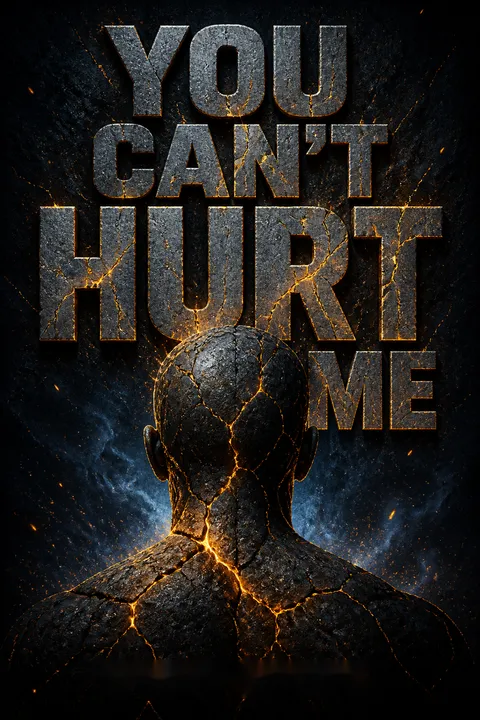
"You Can't Hurt Me" is a literary thriller that interrogates the nature of pain—physical, emotional, and narrative—and the ways in which we construct and consume stories to make sense of suffering. Emma Cook deftly explores the intersections of science, art, and therapy, using the rare condition of congenital insensitivity to pain as both metaphor and plot engine. The novel is a meditation on the ethics of storytelling: who gets to speak, who is silenced, and how truth is always mediated by power, memory, and desire. Through its layered structure and complex characters, the book exposes the dangers of unchecked ambition, the corrosive effects of secrets, and the impossibility of pure innocence. Ultimately, it is a story about survival—about the necessity of narrative control for healing, the costs of erasure, and the redemptive (if ambiguous) power of reclaiming one's own voice. In a world obsessed with confessional memoir and public performance, "You Can't Hurt Me" asks: whose pain matters, and at what price do we tell our stories?
Characters
Anna Tate
Anna is the novel's protagonist, a journalist and aspiring author whose life is shaped by trauma, ambition, and a deep yearning for connection. Her relationship with her half-brother Tony is fraught with codependency and shared secrets, particularly surrounding the death of their father. Anna's professional drive is matched by her personal vulnerability; she is both manipulator and manipulated, drawn to powerful, damaged men like Nate. Her journey is one of self-discovery, as she moves from observer to participant, from ghostwriter to author, ultimately claiming her own narrative after years of erasure and pain.
Dr. Nate Reid
Nate is a celebrated pain researcher whose public persona masks deep insecurity, guilt, and a need for control. His marriage to Eva is both a love story and a professional experiment, blurring the lines between subject and object. Nate's grief is genuine but also performative, and his relationships—with Anna, Priya, and Eva—are marked by manipulation and self-preservation. He is both victim and perpetrator, capable of tenderness and violence, honesty and deceit. Nate's arc is one of gradual unmasking, as his secrets are exposed and his power wanes.
Eva Reid
Eva, though dead at the novel's start, is the story's emotional core. Her rare condition—congenital insensitivity to pain—makes her both invincible and vulnerable, a muse for Nate and an object of public fascination. Through her journal, we see her struggle to understand emotion, empathy, and the limits of art and therapy. Eva's relationships—with Nate, Tony, and her sister Kath—are complex, marked by longing, betrayal, and a desperate search for meaning. Her death is the novel's central mystery, and her legacy is contested by all who claim to love her.
Tony Thorpe
Tony is Anna's half-brother, a charming but unstable drifter whose life is defined by loss, resentment, and a need for control. His relationship with Anna is both protective and possessive, rooted in shared trauma and guilt over their father's death. Tony's affair with Eva is both a transgressive love story and a fatal mistake, leading to his own unraveling and eventual death. He is both victim and villain, a mirror for Anna's own fears and desires.
Priya James
Priya is Nate's editor and confidante, a sharp, driven woman who understands the power of narrative and the demands of the market. Her relationship with Nate is ambiguous—part professional, part personal—and she is both ally and adversary to Anna. Priya's agenda is clear: she wants a bestselling memoir, no matter the cost to truth or ethics. She is a master of spin, shaping the story to suit her needs and discarding Anna when she becomes inconvenient.
Kath
Kath is Eva's older sister, a bookstore owner who refuses to accept the official story of Eva's death. She is fiercely protective of Eva's memory and deeply suspicious of Nate, pushing for a second inquest and seeking the truth at any cost. Kath's relationship with Anna is initially adversarial but becomes a source of solidarity, as both women struggle to reclaim Eva's story from the men who would control it.
Jade
Jade is Kath's daughter and Nate's niece, a young woman caught between loyalty to her family and fascination with Nate. She serves as a silent observer, passing information between Kath and Anna, and is a reminder of the next generation's stake in the story. Jade's presence in Algos House is both comforting and unsettling, a living link to Eva and a potential witness to the truth.
Amira
Amira is Anna's closest friend and Tony's former lover, a journalist whose own ambitions and vulnerabilities mirror Anna's. Her relationship with Tony is passionate but destructive, and she becomes a victim of his violence. Amira's loyalty to Anna is tested by the unfolding drama, and her suffering is a reminder of the collateral damage wrought by secrets and lies.
Patient X
Patient X is initially an anonymous figure in Eva's journal, a client whose sessions with Eva become increasingly intense and boundary-crossing. The revelation that Patient X is Tony is a devastating twist, implicating Anna in the story's central tragedy. Patient X embodies the dangers of transference, the porousness of professional boundaries, and the destructive power of unacknowledged pain.
The House (Algos House)
Algos House is more than a backdrop; it is a character in its own right, a repository of secrets, trauma, and contested narratives. Its rooms are meticulously curated yet haunted by absence, its studio the scene of Eva's death and the novel's climactic confrontation. The house embodies the novel's themes of performance, surveillance, and the impossibility of closure.
Plot Devices
Unreliable Narration and Shifting Perspectives
The novel employs multiple narrative voices—Anna's first-person account, Eva's journal entries, and the perspectives of other characters—to create a kaleidoscopic view of events. Each narrator is unreliable, shaped by trauma, ambition, and self-interest. The shifting perspectives force the reader to question what is real, what is performance, and whose version of the truth can be trusted. This device mirrors the novel's themes of pain, memory, and the construction of narrative.
Embedded Documents and Meta-Narrative
Key plot revelations come through embedded documents: Eva's self-reflection journal, the pregnancy test receipt, therapy notes, and drafts of the memoir. These artifacts serve as both evidence and red herrings, advancing the plot while highlighting the limitations of documentation and the ease with which stories can be manipulated. The meta-narrative of ghostwriting—who gets to tell the story, and at what cost—runs throughout, blurring the line between fiction and reality.
Foreshadowing and Circular Structure
The novel's structure is circular, beginning and ending at a book launch, with echoes and motifs recurring throughout: the scent of books, the rituals of writing, the symbolism of pain and its absence. Foreshadowing is used to build suspense and deepen the sense of inevitability, as characters repeat the mistakes of the past and struggle to break free from inherited trauma.
Therapy and Transference
The therapeutic relationship between Eva and Patient X (Tony) is a central plot device, illustrating the dangers of blurred boundaries and the power of transference and countertransference. Therapy becomes a stage for confession, manipulation, and betrayal, mirroring the dynamics between Anna and Nate, Anna and Tony, and Anna and herself. The consulting room is both a site of healing and a crucible for destruction.
The House as Symbol
Algos House is a physical manifestation of the novel's themes: its beauty and order mask chaos and pain, its rooms are both sanctuary and prison. The house witnesses the key events of the story—Eva's death, Anna's investigation, the final confrontation—and serves as a repository for secrets that refuse to stay buried. Its eventual sale and abandonment symbolize the impossibility of closure and the persistence of the past.
Download PDF
Download EPUB
.epub digital book format is ideal for reading ebooks on phones, tablets, and e-readers.








































