


Plot Summary
Bible Against the Blade
In a rain-soaked Medlock church emptied of mourners, Samarra Blair1 sits inches from a knife. Ali, a young dealer,7 presses her for money he says her sister Evie2 owed for Dust, the city's fashionable drug. Cornered, Samarra1 fakes surrender, then swings a heavy Bible into his nose and windpipe, dropping him unconscious.
She pockets the cash he carries, glimpses a shadowed figure4 watching from a doorway that seems to appear from nowhere, and flees. A nosebleed and dizziness are already creeping in. At the pub wake, her hollowed-out mother5 hands her Evie's2 memorial card and forces her to give a eulogy she can barely read, while Zain, Evie's uninvited best friend,3 mocks the sanitized speech. Something is gravely wrong with Samarra's1 body.
The opening fuses ritual mourning with predatory violence, refusing the reader any safe footing. Clayton stages grief as a transactional debt: a dead girl's habit becomes the survivor's burden, literalizing how loss leaves the living to settle accounts. Samarra's instinct to weaponize scripture is darkly ironic, faith repurposed as blunt instrument in a city stripped of meaning. Her detached interior voice, more annoyed by a ruined dress than by near-death, signals dissociation and an unreliable narration that hides as much as it reveals. The watching figure plants the supernatural hook while the encroaching physical symptoms seed a mystery the narrator herself seems determined not to name.
Death Wears a Pocket Watch
Zain3 bundles the collapsing Samarra1 into his car, insisting she needs a hospital she is desperate to avoid. Speeding through the storm, she watches a monstrous shape pursue them, invisible to Zain.3 Her lungs fail; she stops breathing. Inside a darkened ward she meets Death4 himself, not a hooded skeleton but a warm, silver-haired man in a loosened tie who speaks directly inside her thoughts.
He insists he takes no one, that people leave willingly, and that Evie2 came to him gladly. His touch silences her grief into blissful quiet, and he gestures toward a doorway promising endless rest. Only the memory of a promise to scatter Evie's2 ashes in the city of Eidyn yanks her back, and doctors shock her stuttering heart into beating again.
Death's reinvention as a tender, dimpled companion rather than a ghoul is the novel's central seduction. He offers what grief most craves: silence, absolution, the end of relentless thought. His claim that the dying come willingly reframes suicide and overdose as choice rather than accident, a theology that flatters Samarra's guilt while excusing it. The chase she alone perceives establishes subjective horror as the book's engine. Crucially, what pulls her back is not survival instinct but obligation to the dead, suggesting that purpose, however small, is the thread between a person and oblivion. Eidyn becomes a secular afterlife, a promised paradise she keeps deferring.
Cause of Death: Overdose
Revived and obsessed, Samarra1 demands to know how Evie2 truly died, but her mother5 and Zain3 deflect every question. Convinced of a cover-up, she pickpockets a guard's security card, using Zain's3 temper as a distraction that gets him escorted off the premises. Breaking into the hospital's basement archive, she finds Evie's2 folder and the line that shatters her denial: cause of death, drug overdose, not the car accident her mother5 told everyone.
Before she can absorb it, Ali,7 bruised and concussed from the church, corners her with a blue-haired accomplice.9 She wrenches his finger backward until it snaps, throws him the stolen money, and bolts back toward the wards, the comfortable story of her sister's death2 now permanently destroyed.
This section dramatizes the violence of truth-seeking when the truth is unbearable. Samarra's clinical, transgressive competence (theft, evasion, breaking and entering) shows a mind that solves problems by manipulating others, the same skill set that makes her narration suspect. The discovery confirms what Death has murmured and what she has buried: Evie's death was not random misfortune but self-inflicted, which transforms grief into responsibility and shame. The family's collective silence around the overdose reflects real stigma, the way addiction deaths are hidden behind kinder fictions. By choosing knowledge over comfort, Samarra cracks open the repression that has sustained her, accelerating her unraveling rather than healing it.
The Last Words to Evie
Pursued through the corridors, Samarra1 follows Death4 through his doorway and finds herself reliving her final conversation with Evie.2 Her sister,2 wearing the stolen mustard jacket, smokes and wonders aloud whether dying hurts, then begs Samarra1 to come to the band's gig that night.
Trapped in the memory, Samarra1 hears herself refuse yet again, citing an exam, and hears their bitter parting, where she snapped that she would peel the jacket off Evie's2 corpse. The replay confirms Death's4 poison: Evie2 overdosed, perhaps deliberately, and Samarra's1 absence was her final cruelty. Death4 insists nobody dies by accident and plants a new seed, that the dealer7 who supplied the Dust is the one who truly deserves to pay.
The memory functions as both confession and self-flagellation, the survivor compulsively rewinding the moment she might have changed everything. Evie's casual flirtation with death (smoking, musing on whether it hurts) recontextualizes her overdose as a long courtship rather than a single mistake. Samarra's inability to alter her remembered lines dramatizes the helplessness at grief's core: the past is fixed, apology impossible. Death exploits this, converting private guilt into outward blame, channeling self-hatred toward a scapegoat. This is the psychology of vengeance as displaced shame, and it is how the entity steers a broken mind toward harm, offering the relief of righteous fury over the agony of accountability.
Beating the Dealer Bloody
Death4 points to Ali7 smoking outside and feeds Samarra1 a single conviction: the dealer7 fed Evie's2 addiction and killed her, so he deserves death. With Death4 numbing her conscience and urging her on, she storms over and pummels Ali,7 breaking his nose and cracking his skull against the wall, nearly killing him as bystanders scream.
Only the thought of Evie2 watching stays her fist. Sirens close in. Zain,3 horrified, hauls her off and rushes to his bleeding victim, hinting at a bond she does not yet grasp. Officers of the Shade tackle Samarra1 and arrest her. A darker recognition surfaces beneath the panic: she enjoyed the violence, and she aches to feel Death's4 calm settle over her again.
Here grief tips fully into atrocity, and the novel makes the reader complicit in Samarra's reasoning before recoiling from its result. Death operates like an addiction in human form: he quiets her, rewards her, and leaves her craving the next hit of his calm. The fusion of violence with relief is the book's most disturbing insight, that hurting others becomes another anesthetic for unbearable feeling. Her admission that she enjoyed it marks the point of no return, severing her from the self-image of healer and good daughter. The arrest externalizes consequences she has been outrunning, and Zain's frantic care for the man she beat opens a hidden web of relationships.
Brothers and the Shade
At the chaotic Medlock station, Samarra1 is questioned by Ria, Evie's girlfriend6 and an apprentice officer assigned to surveillance. Ria6 shields her out of loyalty to Evie2 but accuses her of lying: Samarra1 has not attended university in months. Provoked, Samarra1 lunges to hurt even her oldest friend,6 then freezes in shame.
She learns Zain3 was arrested too, that he and Ali7 are brothers, and that his probation now means an ankle monitor. Ria6 insists Evie's2 overdose was simple accident, not addiction, and refuses to discuss it further, instead inviting Samarra1 to a memorial party. Quietly, Zain3 offers to help her beat a drug test, a gesture she rejects with indignation, unwilling to confront what such an offer plainly implies.
The station scene maps the social architecture of grief: a girlfriend processing loss through research and law, a brother absorbing blame for family, a sister isolated by her refusal to be reached. Ria's denial mirrors the mother's, showing how the bereaved each build private fictions to survive. Samarra's impulse to attack a friend reveals violence metastasizing beyond any rational target, no longer about justice but about the relief of impact. Zain's casual offer to fake a test is a quiet bombshell, dramatic irony that the reader and Zain understand before Samarra will admit. The Shade, ostensibly anti-drug crusaders, are already shadowed by hints of the corruption to come.
Abducted by a Badge
A superior officer9 pulls Samarra1 from the station and marches her down empty corridors, demanding the Dust she took from Ali.7 The disguise slips: beneath a blonde wig lies bright blue hair. This officer belongs to Mariana's8 gang and means to deliver her to the boss. In a camera-blind alley they fight; the officer slashes Samarra's1 cheek to the ear with a kitchen knife.
Death4 appears, urging her to stop being prey and become predator. Samarra1 headbutts, kicks the officer's knee sideways, and twists their arm until it snaps, then opens their throat with their own blade. She stops only when they gasp that refusing to return alive will doom Zain3 and Ria6 too. Sirens scatter her into the night.
The corrupt officer collapses the boundary between law and crime, exposing the city's anti-drug crusade as theater layered over the trade it claims to fight. Samarra's escalating capacity for brutality, now against an armed adult, charts her drift toward the monstrous self Death is cultivating. Yet the moment that halts her is relational: the threat to Zain and Ria. Even at her most feral, attachment remains the brake on annihilation, the human tether the entity cannot fully sever. The reopened facial wound literalizes a self being permanently disfigured by grief, no longer restorable to its prior, polished form, a recurring motif of irreversible change.
The Addict in the Mirror
Home offers no refuge. Her mother5 calls her Evie,2 confesses she opened a university letter revealing Samarra's1 expulsion from medical school, and gently asks about the overdose a doctor mentioned. Enraged, Samarra1 smashes a glass, seizes Evie's drab urn, and storms out, vowing to take her sister2 to Eidyn at last.
Alone by Medlock's frozen canal, the story she has been telling cracks open. She digs the stolen bag of Dust from her dress and snorts it. The debts were never only Evie's:2 they were hers. The knife wound was minor. The true poison at the funeral was her own escalating overdose. She is the escape artist, the junkie, anesthetizing six months of grief with a drug that erases everything.
This is the novel's structural midpoint and its great act of narrative misdirection paying off: the unreliable narrator has been hiding her addiction from the reader as she hides it from herself. The reveal recasts every prior scene, the symptoms, the cravings, the rage, as withdrawal and intoxication rather than poisoning or grief alone. Clayton dramatizes denial as a story we author to remain livable, and addiction as the inheritance of unbearable loss. The mother slipping Evie's name onto Samarra collapses the sisters into one endangered figure, while the cracked, ruined dress and shabby urn become emblems of a self and a love that can never be returned to pristine condition.
Dancing with a Hallucination
At Ria's6 memorial party, Samarra1 reclaims her keys, watches Zain's3 band play Evie's2 favorite song, and snorts more Dust supplied by a partygoer named Reese.10 Zain3 warns that Dust taken to excess breeds hallucinations and rots the body. The pieces lock: Death4 is not a deity glimpsed beyond reality but a delusion her overdosing brain has built.
Knowing this changes nothing; she still craves him. When Death4 strolls in and extends his hand, she waltzes with him through the swaying crowd while he taunts that she never truly meant to reach Eidyn, that she came for the drug and for him. The reverie shatters when Ali7 arrives with Mariana's8 thugs, weapons in hand, hunting the woman who left him for dead.
The party turns mourning into ecstatic escape, the very pattern that killed Evie, exposing how a community medicates collective despair. Zain's clinical warning supplies the rational explanation for Death, yet Clayton's sharpest point is that explanation does not equal cure: insight cannot break compulsion. Samarra knows Death is a symptom and chases him anyway, the precise paradox of addiction, where the user understands the harm and proceeds. The waltz aestheticizes self-destruction, making annihilation feel like romance. Death's accusation, that Eidyn was always an alibi, strips away her last noble pretense, suggesting the pilgrimage for Evie has been cover for her own longing to disappear.
Blood in the Elevator
As the gang floods Ria's6 corridor, Zain3 steps between Samarra1 and his brother7 and takes a baseball bat to the head. Ali7 forces Samarra1 into the elevator at knifepoint while Death,4 now a blood-soaked monstrosity, eggs her on. In the descending box they grapple; she snaps his thumb, shatters his knee, and drives the knife into his stomach.
Death4 tears into what she believes is Ali's7 soul, then compels her to stab again through the ribs. When the doors open on the ground floor, the blue-haired officer9 waits with a handcuffed Zain,3 both staring at the body. Samarra1 smiles at the corpse, certain the dealer7 earned it, hungry for Death's4 calm. The officer declares she is being taken to Mariana.8
The confined elevator becomes a slaughterhouse and a moral threshold, the first killing Samarra believes she commits outright. Death's transformation from suave companion to feasting beast tracks her own deterioration; as the drug ravages her, the hallucination grows grotesque. The heart-eating, soul-devouring imagery renders addiction's cannibalism of the self in visceral myth. Her serene satisfaction over the corpse confirms that conscience has been chemically silenced, that vengeance and intoxication now feel identical. Zain's self-sacrificing intervention, taking a blow meant for her, deepens the irony of their bond, while the officer's reappearance pulls her toward the boss who has loomed over the whole narrative as the trade's hidden source.
The Woman Who Wears Her Face
Dragged to a basement beneath a club packed with drugged students, Samarra1 confronts a gang boss who looks exactly like her,8 down to the freckles and a white version of her funeral dress. Mariana8 grinds Dust into her face, mocking her dependence, then aims a gun and offers a choice: become her medical insider or die staged as an overdose.
When Samarra1 blames her for Evie's2 death, Mariana8 counters that the gang cut Evie2 and Zain3 off long ago. It was Zain3 who stole bags of Dust and shared them with Evie2 the night she died. Realizing she is hallucinating far more than Death,4 Samarra,1 goaded relentlessly, shoots Mariana,8 devours her heart at Death's4 command, and turns toward Zain.3
Mariana as Samarra's mirror image is the book's boldest psychological gambit: the antagonist is literally a reflection, the monstrous potential within the self made flesh. The confrontation suggests that the dealer and the addict are two faces of the same despairing system, predator and prey indistinguishable. The revelation that Zain supplied Evie's fatal dose reroutes blame yet again, demonstrating how addiction diffuses guilt across a whole circle of the wounded, leaving no clean villain. Samarra's dawning awareness that her perceptions are unreliable arrives too late to stop the violence, dramatizing how insight and compulsion run on separate tracks. The cannibal ritual seals her surrender to the entity's logic of universal damnation.
Confession on the Rooftop
Death4 drives Samarra1 onto a rooftop where Zain3 clutches Evie's urn. At gunpoint she demands the truth about the night Evie2 died. Zain3 confesses: he and Evie2 were addicts who fought to quit, a ruined gig pushed Evie2 to steal Dust, she took far more than she let him see, and he held her dying body before officers wrenched him away.
He shoved one of them, was jailed in Detention, and learned of her death a week later. He has used ever since to bury his guilt, and recently tried to die rather than keep living. The gun clicks empty; Death4 forces Samarra1 to beat Zain3 with it, then to crash Evie's urn against his skull. Her sister's2 ashes scatter, and reality slams back.
Zain's confession reframes him from suspect to fellow casualty, a man whose love could not outpace the drug and whose survival became his punishment. His deliberate prolonging of his own imprisonment is grief as self-sentencing, a refusal to inhabit a world Evie left. The empty gun, then the urn as murder weapon, stages the ultimate desecration: Samarra annihilating both her sister's friend and her sister's remains in one act, weaponizing the very relic she swore to protect. The scattering ashes literalize the title and the impossibility of containing or controlling loss. Her sudden return to horror signals the hallucination's grip momentarily breaking under the weight of irreversible harm.
Everyone Is Still Alive
As Death's4 scythe seems to claim her, Samarra1 falls into a vision of Evie,2 who urges her to stop filling the void with Dust, to live afraid because fear means being alive, to look after Zain,3 and admits she never cared where her ashes went, only that her sister leave the house. Samarra1 wakes in a hospital bed two days later.
Her mother,5 softer and more present, embraces her and hands over Evie's2 unread letter. Battling savage withdrawals, Samarra1 stumbles through the wards and finds Ali,7 the blue-haired officer,9 and Mariana8 all alive in their beds. She killed no one. The corpses, the soul-eating, the shootings: every act of slaughter was Dust-spun delusion layered over real fights she survived.
The dream-Evie functions as the healthy internalized voice addiction had drowned out, reframing fear not as enemy but as proof of life. Her revelation that Eidyn was never the point dismantles Samarra's organizing fiction, freeing her from a quest that was really avoidance. The waking discovery that her victims live is the novel's redemptive reversal: it preserves moral horror (she did terrible things) while withholding the irrevocable (no one died), enacting the difference between rock bottom and the abyss. Withdrawal as a literal monster externalizes craving's torment. Clayton frames recovery not as erasure of the shadow but as learning to coexist with it, grief and damage permanent yet survivable.
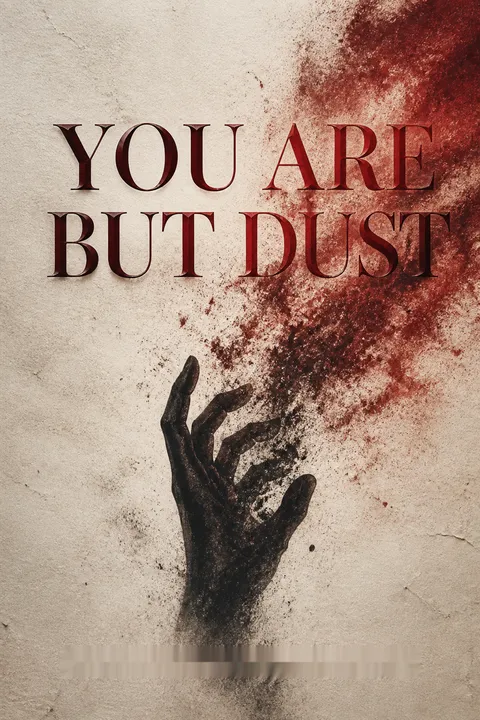
You Are But Dust
Samarra1 finds Zain3 relapsing, set on overdosing at a final concert for Evie.2 Death,4 reduced to a crumbling skeleton, hunts her through the hospital, but she fights the hallucination off and, with Ria,6 commandeers a police car to race to the church. At the concert she climbs to the balcony where Zain3 is collapsing mid-song.
On the stairs she finally rejects Death,4 thanking him for carrying her through grief but naming him for what he is: only dust. He dissolves into a shadow she chooses to keep beside her. She hauls Zain3 upright and draws the crowd's attention so paramedics can reach him. Reading Evie's2 letter, a joke about the stolen jacket and a list of small reasons to be alive, she chooses, terrified, to live.
The climax inverts every prior pattern: Samarra runs toward saving a life rather than taking one, transforming her competence and recklessness into rescue. Defeating Death physically yet choosing to keep his shadow encodes the novel's mature thesis on mental illness, that the death-wish and grief are not exorcised but integrated, walked beside rather than erased. Naming him dust reclaims the title as empowerment instead of nihilism: mortality becomes a reason to live now. Evie's flippant letter and her catalogue of tiny joys reframe survival as accumulation of small, specific moments rather than grand meaning. The ending withholds tidy okayness, insisting instead that everything matters and fear is the price of being alive.
Analysis
Clayton writes addiction and grief as the same wound viewed from two angles, and her boldest move is structural: an unreliable narrator who conceals her own dependence from the reader as fiercely as she conceals it from herself. The mid-book revelation that Samarra is the addict,1 not merely the debtor, retroactively rewrites every symptom and every corpse, training readers to distrust perception exactly as the drug trains its users. Death personified is the novel's masterstroke, transforming abstract suicidal ideation into a charismatic relationship with a logic, a voice, and a seductive promise of silence. By rendering the death-wish as a companion who comforts before he devours, Clayton captures the cruel intimacy of depression: the part of us that hurts us also feels like the only thing that understands us. The recurring slogans on government posters, hollow and victim-blaming, indict a society that criminalizes despair while manufacturing the conditions for it; Medlock is a city engineered to make escape feel rational. Against this, the book offers no cure, only coexistence. Recovery is not the shadow's exorcism but learning to keep it beside you without looking at it more than you look at the world. Evie's philosophy,2 that fear means being alive and that small specific moments outweigh grand meaning, supplies a secular, modest grace. The discovery that the murders were delusions enacts a precise moral architecture: it preserves the horror of what Samarra1 was capable of while sparing her the irrevocable, distinguishing rock bottom from the abyss. The closing refusal of tidy resolution, the insistence that nothing is okay but everything matters, rejects recovery-narrative cliche. Clayton, writing from clinical experience, ultimately argues that survival is itself an act of courage, terrifying, ongoing, and worth it.
Review Summary
You Are But Dust receives polarizing reactions. Many praise its raw, authentic portrayal of grief, addiction, and mental health decline, calling it beautifully written and deeply affecting. Readers appreciate the psychological depth and the author's clinical psychology background. However, critics find the writing juvenile and chaotic, disliking the onomatopoeia ("CRASH, THUD") and fragmented narrative. Several feel misled by TikTok marketing, expecting a traditional psychological thriller rather than an experimental descent into madness. The blurred reality between hallucinations and actual events frustrates some but captivates others. Overall, it's an intense, triggering read that resonates strongly with specific audiences.
People Also Read


Characters
Samarra Blair
Grieving sister, unreliable narratorA medical student unraveling under the weight of her younger sister's death2, Samarra narrates with a clinical detachment that masks a mind coming apart. Outwardly the responsible, studious daughter, she is privately consumed by guilt for the distance she kept from Evie2 and for the night she refused her sister's final invitation2. Her defining habit is denial: she insists everything is okay while evidence screams otherwise. Quick-witted and capable of cold, manipulative problem-solving, she uses these skills to evade help rather than seek it. She is drawn, against reason, toward silence and oblivion, mistaking numbness for peace. Beneath the armor lies a person desperate to be seen, to be asked if she is alright, and terrified of a world her sister2 no longer occupies.
Evie
The vivid, lost sisterSamarra's1 younger sister, dead before the story opens yet present in memory, vision, and the urn Samarra1 carries. Magnetic, impulsive, and relentlessly alive, Evie wore clashing bright clothes, dyed her hair every color, drummed in a band, and dated Ria6. She collected oddly specific small moments as proof of being grateful to exist, and chased thrills that flirted with danger. Charming where her sister1 was guarded, she annoyed and adored Samarra1 in equal measure, forever stealing a mustard yellow jacket. Her fascination with whether death hurts haunts the narrative. Evie embodies the novel's argument that fear and risk are the texture of a life truly lived, and her absence is the gravity bending everyone around her.
Zain
Evie's devoted best friendEvie's2 closest friend and bandmate, recently released from a holding facility called Detention, Zain crashes the funeral in a green leather jacket and refuses to leave Samarra's1 side, having promised Evie2 he would protect her. Warm, irreverent, and stubbornly hopeful, he deflects pain with jokes and clings to positivity even as a volcanic temper simmers beneath, the product of feeling everything too intensely. He shares Evie's2 habit of treasuring tiny moments and carries a heavy private guilt about her death. A gifted singer hiding deep wounds, he understands escape and self-destruction from the inside. His insistence that Samarra1 focus on being alive becomes a lifeline neither of them can hold steadily, two damaged people trying to keep each other tethered to the world.
Death
Seductive personified endNot a hooded skeleton but a warm, silver-haired man in a loosened tie with a ticking pocket watch, dimples, and piercing white eyes, Death appears to Samarra1 as a tempter who speaks inside her thoughts and reads them. He claims he takes no one, that the dying leave with him willingly, and offers a doorway into perfect, grief-erasing silence. Charismatic and lulling, his touch quiets all pain, all worry, all thought. As Samarra1 deteriorates, his form curdles from comforting companion into a feasting, decaying horror. He functions as tempter, confessor, and accuser, voicing her self-hatred and steering her toward vengeance and oblivion. Whether prophet or symptom, he embodies the longing for an end to unbearable feeling.
Mum
Mother hollowed by griefSamarra1 and Evie's2 mother, reduced by mourning to a ghost who drinks, sleeps, and keeps Evie's2 room as a shrine she cannot enter. Her makeup sits like a mortician's work over a vanishing face. She notices a ripped dress before a bleeding wound, deflecting her surviving daughter's1 pain. Yet flickers of anger and tenderness suggest a woman slowly, painfully relearning how to live alongside loss rather than be consumed by it.
Ria
Evie's girlfriend, apprentice officerEvie's2 girlfriend and Samarra's1 former close friend, now an apprentice in Medlock's police force, the Shade, working surveillance. Practical and loyal, she processes her own grief through research into the drug that killed Evie, channeling sorrow into a crusade. Hurt by Samarra's1 months of silence, she still protects her out of love for Evie2. Blunt, grounded, and quietly devoted, she becomes an unexpected ally when everything collapses.
Ali
Young dealer with a conscienceA tattooed young drug dealer who works for the gang controlling Dust, Ali confronts Samarra1 at the funeral over money owed. Despite his threats and a knife, he is notably reluctant to truly hurt her, repeatedly described as too nice for the work. Bruised, concussed, and himself using, he is more cornered functionary than mastermind, a man shielding family and trapped in a trade that punishes softness.
Mariana
Gang boss, uncanny mirrorThe feared leader of Medlock's Dust operation, called Mara, who controls supply and commands corrupt officers. When Samarra1 finally meets her, she is unnervingly identical, same freckles, hair, and dress in white, a living reflection. Cruel, casual, and addicted to her own product, she offers deals and death with equal ease, embodying the predatory underside of the city's despair and the monstrous self Samarra1 fears becoming.
The blue-haired officer
Corrupt officer, gang enforcerA Shade officer who hides bright blue hair under a blonde wig and secretly works for Mariana's8 gang. Cold and violent, they enforce debts and attempt to deliver Samarra1 to the boss, embodying the rot beneath the city's anti-drug facade.
Reese
Party supplier acquaintanceA former classmate and reputation party-goer at Ria's6 memorial gathering who readily hands Samarra1 Dust and cigarettes. Drunk, hollow, and casually enabling, he illustrates how normalized and accessible the drug has become among the city's young.
Plot Devices
Dust
Drug that drives the plotA fashionable, mysterious narcotic sweeping Medlock's young, especially students, Dust is the engine of every conflict: debts, deaths, gangs, corrupt police, and a citywide epidemic the mayor performatively battles with empty slogans. Snorted as a white powder, it numbs grief, worry, and physical pain into blissful nothingness, making it irresistible to people drowning in a hopeless city. It is the thing Evie2 owed money for, the substance behind her overdose, and the chemical undertow pulling Samarra1 down. Clayton uses it as both literal contraband and metaphor for escapism, the seductive promise that one can stop feeling. Its taken-too-far effects extend beyond addiction into something far stranger, blurring the line between the world as it is and the world the user perceives.
Personified Death and his doorway
Embodied temptation toward oblivionDeath4 manifests as a charming silver-haired man who appears at moments of crisis, accompanied by a doorway that seems to materialize from nowhere and promises rest beyond it. He speaks within Samarra's1 mind, narrates her guilt, and offers a calm that nothing else can supply. The device lets Clayton externalize the death-wish as a relationship, giving suicidal ideation and grief a voice, a face, and a seductive logic. His shifting appearance, from soothing companion to rotting beast, tracks the narrator's psychological and physical decline. The doorway recurs as the threshold between living and surrendering. Crucially, his reality is left deliberately ambiguous, forcing the reader to share the protagonist's1 uncertainty about what is real.
Evie's urn
Carried weight of unresolved griefA drab, ill-fitting urn holding Evie's2 ashes that Samarra1 refuses to put down, hauling it through hospitals, parties, and confrontations. It anchors her stated mission to scatter the ashes in Eidyn, the paradise city Evie2 dreamed of, and becomes a physical measure of grief she cannot release or contain. Zain3 later repaints it in brighter colors, more Evie's2 style. The urn's fate, and the ashes inside, becomes one of the novel's most devastating images, embodying the impossibility of controlling or protecting what we have lost and the way mourning literally weighs the living down.
The mustard yellow jacket
Emblem of sisterly bondA bright mustard leather jacket that Evie2 repeatedly stole from Samarra1 and wore in her funeral photograph. As Samarra1 reclaims and wears it, the jacket transfers Evie's2 vivid, fearless spirit onto her grieving sister1, a garment that, others note, suits her precisely because it forces her to look alive. Recurring across the story, it ties the sisters together despite their lack of physical resemblance and becomes the subject of the letter Evie2 leaves behind. The jacket externalizes inheritance, not of property but of a way of being, and the slow, reluctant permission Samarra1 grants herself to live more loudly.
The list of small moments
Antidote of everyday gratitudeA recurring motif in which Evie2, and Zain3, name oddly specific small experiences (the first bite of an apple, a melody stuck in your head) as moments that make life worth enduring. Initially these specific moments irritate Samarra1 as pointless, but they thread through the book whenever characters reach for reasons to keep going. The motif culminates in a written list Evie2 left behind, a homemade game born from trying to find joy without the drug. Clayton deploys it as the philosophical counterweight to Death's4 grand nihilism: meaning is not found in cosmic answers but accumulated in tiny, fleeting, irreplaceable instants of being alive.
Download PDF
Download EPUB
.epub digital book format is ideal for reading ebooks on phones, tablets, and e-readers.








































