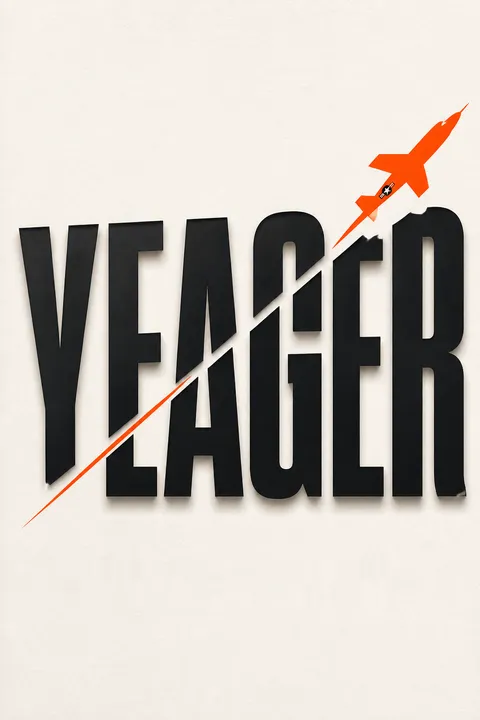

Summary Unavailable
This book is not suitable for a summary (it may be a textbook, workbook, cookbook, reference book, or collection). However, you can still explore the FAQs, about author, and other metadata below!
Key Takeaways
1. A West Virginia Upbringing Forged a Resilient Spirit
My beginnings back in West Virginia tell who I am to this day.
Rooted in self-sufficiency. Chuck Yeager's early life in rural West Virginia instilled a deep sense of self-reliance and practical knowledge. Growing up in the Appalachians, he learned to hunt, fish, and live off the land, skills that would later prove invaluable in unexpected ways. This environment fostered a direct, no-nonsense approach to life and problems.
Mechanical aptitude developed early. From helping his father with gas drilling equipment and truck engines, Yeager developed an innate understanding of mechanics. This hands-on experience, combined with exceptional 20/10 vision and coordination, laid the groundwork for his future as an unparalleled pilot. He understood how machines worked, down to the smallest bolt.
Stubborn pride and competitive nature. His family, particularly his father, instilled in him a stubbornness and pride in finishing what he started, and keeping his word. This competitive spirit, honed through childhood games and hunting, translated directly into his flying, where he always strove to be the best and never backed down from a challenge.
2. Combat Experience Shaped a Master Pilot
For me, combat remains the ultimate flying experience.
Intensive training forged skill. Yeager's journey to becoming a fighter pilot began with rigorous training in Nevada, where he quickly distinguished himself despite lacking a college education. He logged hundreds of hours, mastering dogfighting, buzzing, and gunnery, often pushing the limits and taking calculated risks that weeded out less capable pilots.
Survival instincts in dogfights. His combat tours in World War II, flying P-51 Mustangs, were characterized by ferocious dogfights against German aces. Yeager's exceptional eyesight allowed him to spot enemies from great distances, giving him a crucial advantage in setting up surprise attacks and achieving a remarkable kill ratio. He viewed dogfighting as a "clean contest of skill, stamina, and courage."
Camaraderie and resilience. The intense pressures of combat fostered deep bonds among the pilots, who relied on each other for survival and emotional support. Yeager's ability to maintain composure under fire and his unwavering determination to finish his missions, even after being shot down, earned him the respect and trust of his squadron mates.
3. Defying Odds: Evading and Returning to the Fight
I know how to trap and hunt and live off Mother Nature. Back home, if we had a job to do, we did it. And my job now is to evade capture and escape.
Shot down behind enemy lines. On his eighth combat mission, Yeager was shot down over southern France. Wounded and alone, he relied on his West Virginia survival skills—trapping, hunting, and navigating—to evade German patrols and seek help from the French underground.
A perilous journey to freedom. His escape involved hiding in haylofts, traveling by bicycle with forged papers, and trekking through the snow-covered Pyrenees mountains. This arduous journey, including dragging a severely wounded comrade, showcased his extraordinary resilience and determination to survive and return to Allied territory.
Fighting to return to combat. Despite regulations that mandated evadees be sent home to prevent compromise of resistance networks, Yeager stubbornly fought to rejoin his squadron. His argument, bolstered by the Maquis' open engagement in Normandy, convinced General Eisenhower to allow him back into combat, a decision that would lead to his becoming an ace.
4. Breaking the Sound Barrier: A Triumph of Skill and Teamwork
Nobody will know for sure what happens at Mach 1 until somebody gets there.
The elusive sound barrier. In the post-WWII era, the "sound barrier" was a formidable, almost mythical, challenge in aviation, with many engineers fearing catastrophic disintegration at Mach 1. The X-1 rocket plane, shaped like a bullet, was designed to test these limits, but its civilian test pilot demanded a prohibitive bonus to push beyond .8 Mach.
Selection of an unconventional pilot. Colonel Albert G. Boyd, head of flight test, chose Yeager—a non-college-educated, junior officer—for his unparalleled piloting skill, mechanical intuition, and rock-solid stability under pressure. This unorthodox choice, supported by engineer Jack Ridley, was a testament to Boyd's belief in practical ability over academic credentials.
Overcoming technical and physical challenges. Yeager's historic flight on October 14, 1947, was fraught with challenges, including broken ribs (requiring a broomstick to seal the cockpit door) and a critical loss of elevator control at .94 Mach. Ridley's ingenious solution of using the horizontal stabilizer as an auxiliary elevator, combined with Yeager's precise flying, allowed him to safely punch through the "invisible wall" at Mach 1.07.
5. Edwards Air Force Base: The Golden Age of Test Flying
Man, we were at the center of the world, the only place on earth to be if you loved to fly.
A hub of aviation innovation. Edwards Air Force Base in the 1950s was the epicenter of aerospace research, where a new generation of supersonic jets and rocket-propelled aircraft were tested. This era saw the rapid transition from propeller planes to advanced fighters and bombers, pushing the boundaries of speed, altitude, and control.
Relentless pursuit of knowledge. Yeager, along with other elite test pilots like Bob Hoover and Jack Ridley, flew constantly, often logging more hours than entire air forces. Their work involved meticulously testing prototypes, identifying flaws, and pushing aircraft beyond their design limits, contributing invaluable data to the development of modern aviation.
Camaraderie and high-stakes living. Life at Edwards was a blend of intense, dangerous work and boisterous camaraderie, often centered around Pancho Barnes's "Happy Bottom Riding Club." Test pilots lived hard, celebrated victories, and mourned losses, forming a tight-knit community bound by shared risks and an unparalleled love for flying.
6. Unconventional Leadership and Unwavering Integrity
The pilot with the most experience is gonna whip your ass, Colonel, no matter what you're flying-it's that simple.
Leading by example and skill. As a squadron commander in Germany, Yeager earned the respect of his pilots not through rank, but through his exceptional flying skills and willingness to push boundaries. He taught unconventional tactics, like blow-starting Sabres and nailing gun mounts, to enhance performance and safety, fostering a sense of pride and excellence in his "Red Diamonds" squadron.
Protecting his men. Yeager fiercely defended his airmen, even when it meant challenging superiors. He covered for a pilot who crashed after unauthorized rolls, framing it as a "clearing roll" safety precaution. This loyalty and his ability to navigate bureaucratic hurdles earned him deep trust and admiration from his subordinates.
Integrity in the face of pressure. His commitment to truth was evident during the court-martial of Colonel Jack Broughton in Vietnam. Despite pressure from high command to make an example, Yeager insisted on a fair trial, ensuring that evidence of self-defense was considered, even if it meant challenging the prosecution and risking his own career.
7. Push the Limits: The Perils of High-Speed, High-Altitude Flight
I survived on sheer instinct and pure luck.
The X-1A: A more extreme challenge. The X-1A, a more powerful version of the X-1, was designed to reach Mach 2+ and higher altitudes. Yeager's flights in this aircraft were even more dangerous, with no ejection seat and a bolted canopy, making escape in an emergency virtually impossible.
A near-fatal incident. On December 12, 1953, during a record-setting flight, the X-1A went divergent on all three axes at 80,000 feet and Mach 2.4, tumbling violently out of control. Yeager endured extreme G-forces, a cracked helmet, and a fogged visor, plummeting 51,000 feet in 51 seconds.
Instinct and luck for survival. Through sheer instinct, he remembered a stabilizer setting that allowed him to regain control at 30,000 feet, narrowly avoiding a crash. His subsequent ejection from a spinning F-104, where he was struck by a glowing hot rocket tube and suffered severe burns, further underscored the extreme risks and his incredible ability to survive.
8. Beyond the Barrier: A Legacy in Space and Combat
Our school's legacy was the great pilots we turned over to NASA, many of whom are still making their mark.
Pioneering military space training. As commandant of the Aerospace Research Pilots School at Edwards, Yeager trained the first generation of military astronauts. This program, though ultimately overshadowed by NASA's civilian efforts, laid the groundwork for future space missions and provided many of NASA's early astronauts.
Vietnam: A different kind of command. In Vietnam, as a wing commander, Yeager oversaw five combat squadrons, flying 127 missions himself. He pushed his pilots to engage targets effectively, emphasizing that their training as "professional killers" meant executing missions despite intense ground fire and restrictive rules of engagement.
Adapting to new warfare. He witnessed the transition to modern air warfare, with "smart bombs" and sophisticated electronics. His experience in Vietnam, including advising the Pakistani air force during the India-Pakistan war, demonstrated his adaptability and continued relevance in evolving combat scenarios.
9. The Enduring Value of Practical Knowledge and Instinct
Knowing machinery like I did, and having a knowledgeable feel for it, I knew how to cope with practically any problem.
Intuitive mechanical understanding. Yeager's lifelong fascination with how things worked, from gas well regulators to jet engines, gave him an unparalleled "feel" for aircraft. This deep practical knowledge allowed him to diagnose and often fix complex mechanical issues mid-flight, a critical advantage in experimental aviation.
Instinctive flying ability. His natural talent for flying was often described as being "one with the machine," allowing him to push aircraft to their absolute limits. This instinctive ability, combined with his sharp vision and quick reflexes, enabled him to perform maneuvers and recover from situations that would have doomed other pilots.
Experience as the ultimate teacher. While he lacked formal engineering education, Yeager's vast and varied flying experience, including hundreds of hours in dozens of different aircraft, provided him with a practical education that surpassed many academically trained engineers. He constantly learned from every flight, applying that knowledge to new challenges.
10. Fame's Double-Edged Sword: Recognition and Resentment
The Air Force insisted on putting me up on a pedestal, and there was no lack of volunteers trying to knock me down.
Unwanted public spotlight. After breaking the sound barrier, Yeager was thrust into an unexpected public spotlight, receiving numerous awards and being tasked with extensive public speaking engagements. He found this role uncomfortable, preferring the cockpit to the podium, and often downplayed his achievements, attributing them to luck.
Internal jealousy and bureaucratic friction. His fame, combined with his unconventional background and direct style, generated significant jealousy among some senior test pilots and within the Air Force bureaucracy. He faced attempts to derail his career, including being forced back to test pilot school for a course he had already mastered through experience.
Loyalty to the Air Force and personal values. Despite the frustrations, Yeager remained fiercely loyal to the Air Force, which he felt had given an "undereducated country boy" every opportunity. He consistently prioritized his love of flying and his integrity over personal gain or career advancement, embodying a unique blend of humility and self-assurance.
Last updated:
Report IssueReview Summary
Yeager receives overwhelmingly positive reviews (4.24/5), with readers praising this autobiography of the legendary test pilot. Reviewers highlight Yeager's humble West Virginia origins, remarkable WWII service including becoming a double ace, and his historic breaking of the sound barrier. Many appreciate the book's structure incorporating perspectives from his wife Glennis, colleagues, and friends. Readers admire Yeager's engineering mind, exceptional eyesight, courage, and "right stuff" mentality. The autobiography is praised as exciting, well-written, and inspiring, offering valuable life lessons about perseverance and living fully. Some note his candid discussion of military life's personal costs.
People Also Read


About the Author
Brigadier General Charles Elwood "Chuck" Yeager (1923-2020) was born in West Virginia and enlisted in the Army Air Forces in 1941 as a mechanic before entering pilot training. He became a decorated WWII fighter ace flying P-51 Mustangs over Europe, was shot down, escaped occupied France, and returned to combat. Post-war, Yeager became a test pilot at Edwards Air Force Base, where he made history as the first pilot to break the sound barrier. He also served in Vietnam, eventually rising to brigadier general. His numerous decorations include the Presidential Medal of Freedom, Distinguished Service Medal, and Silver Star.
Download PDF
Download EPUB
.epub digital book format is ideal for reading ebooks on phones, tablets, and e-readers.








































