
Plot Summary
Shattered Seconds, Shattered Lives
Eight-year-old Hadley Banks' world is obliterated in a single, horrifying moment. A mundane family photo in a New Jersey mall food court becomes a nightmare as a mass shooting erupts. In seconds, Hadley's parents are gunned down before her eyes, and chaos reigns. Paralyzed by fear, she clings to her mother's lifeless hand, desperate for safety, until a teenage boy—Caven—appears, risking his own life to save her. Their fates intertwine in trauma, as they crawl through blood and terror, seeking escape. The violence leaves Hadley orphaned, her innocence shattered, and her life forever marked by loss and survivor's guilt. This moment, frozen in time, becomes the origin of all her future choices, and the echo of that day will haunt both Hadley and Caven for years to come.
The Boy Who Saved
Caven, a fifteen-year-old boy, becomes Hadley's unlikely savior. Amid the carnage, he recognizes her fear and, despite his own, guides her through the deadly maze. Their escape is harrowing—Caven's own father is the shooter, and the trauma is doubled by betrayal and guilt. As they run, Caven is wounded, but his determination to protect Hadley never falters. The two are separated by paramedics, but the brief, intense connection leaves a permanent imprint on both. For Hadley, Caven is the embodiment of hope and heroism; for Caven, Hadley is a living reminder of the horror his family unleashed. Their lives diverge, but the memory of that day binds them, shaping their futures in ways neither can yet comprehend.
Fourteen Years Forward
Years later, Caven has transformed his pain into ambition, co-founding a tech company, Kaleidoscope, that revolutionizes facial recognition. Wealth and notoriety follow, but happiness eludes him. Haunted by his father's legacy and the trauma of the shooting, Caven keeps people at arm's length, especially women. His life is meticulously controlled, until the night of his company's sale—a night meant for celebration—when a baby is left on his doorstep. The note, signed "Written with regret, Hadley," shatters his fragile stability. Suddenly, Caven is thrust into fatherhood, forced to confront the ghosts of his past and the possibility that the child is his.
A Baby on the Doorstep
Caven's world is upended by the arrival of a newborn girl, Keira, abandoned with a cryptic note. The shock is compounded by memories of Hadley, a woman he knew only for one night—a night that ended in betrayal and theft. As police and friends gather, Caven is overwhelmed by panic, denial, and a desperate hope that the child isn't his. The DNA test looms, and with it, the possibility of repeating his father's mistakes. The baby's cries echo his own childhood pain, and Caven is forced to reckon with the legacy of violence, abandonment, and the fear of becoming the very man he despises.
Written with Regret
The DNA test confirms Caven's worst fear: the baby is his. With no sign of Hadley, he is granted sole custody. The responsibility is crushing, but so is the unexpected tenderness he feels for his daughter. Naming her Rosalee, after his mother, Caven vows to break the cycle of pain. The early days are a blur of exhaustion, anxiety, and self-doubt, but with the help of his best friend Ian and a nurturing nanny, Alejandra, Caven slowly learns to be a father. The specter of Hadley lingers, her absence both a relief and a wound, as Caven builds a new life around the fragile hope that he can be better than the man who raised him.
DNA, Doubt, and Dread
Caven's struggle with fatherhood is mirrored by his internal battle with guilt and fear. He obsesses over the possibility of passing on his father's darkness, convinced that he is unworthy of love or trust. The legal and emotional negotiation and emotional complexities of Rosalee's abandonment haunt him, as does the unresolved mystery of Hadley's disappearance. When the police investigation reveals that Hadley paid a stranger to deliver the baby, Caven's anger and suspicion deepen. Yet, as he cares for Rosalee, moments of joy and connection begin to pierce his defenses, hinting at the possibility of redemption.
Becoming Rosalee's Father
Four years pass, and Caven grows into his role as Rosalee's father. Their bond is deep and playful, filled with rituals, laughter, and the small victories of everyday life. Caven's world revolves around his daughter, and he is fiercely protective of her happiness. The pain of his own childhood is never far away, but Rosalee's innocence and resilience offer him a second chance. The specter of Hadley fades, replaced by the daily challenges and joys of parenting. Yet, beneath the surface, Caven remains vigilant, always bracing for the next blow from the past.
The Art of Survival
Hadley, living under the weight of trauma and regret, has spent years in therapy, struggling to find meaning after the shooting and her own choices. Her passion for photography becomes both a refuge and a lifeline, capturing moments of beauty amid pain. The birth and abandonment of her daughter haunt her, but Hadley is determined to heal. When she finally returns to New Jersey, it is with the hope of making amends and reclaiming a place in her child's life. Her journey is one of self-forgiveness, resilience, and the search for connection in a world that has repeatedly betrayed her.
Hadley's Return
Hadley's reappearance at Rosalee's fourth birthday party is a catalyst for chaos. Her presence ignites Caven's fury and fear, as he scrambles to protect his daughter from the woman he sees as a threat. The confrontation is explosive, dredging up old wounds and unresolved questions. Hadley's motives are unclear—does she want custody, forgiveness, or simply a chance to know her child? The legal battle looms, and both Caven and Hadley are forced to confront the truth of their shared past, the pain they've caused, and the possibility of a future that includes both of them in Rosalee's life.
Ghosts in the Backyard
The aftermath of Hadley's return is fraught with tension. Caven's anger is matched by Hadley's determination, and the threat of a public custody battle hangs over them. Both are haunted by the events of the mall shooting, their roles as victim and survivor, perpetrator's son and orphan, inextricably linked. Through a series of raw, honest conversations, they begin to see each other not as enemies, but as fellow survivors. The possibility of forgiveness emerges, but only if they can navigate the minefield of guilt, fear, and the need to protect Rosalee above all else.
Bargaining for Motherhood
Desperate to avoid a legal war, Caven and Hadley strike a fragile bargain: six months of supervised visitation, with Hadley as Rosalee's art teacher. The arrangement is fraught with awkwardness and suspicion, but also moments of unexpected connection. As Hadley integrates into Rosalee's life, she and Caven are forced to confront their own vulnerabilities and desires. The boundaries between them blur, and the possibility of something more than co-parenting begins to take shape. Yet, the past is never far away, and both are acutely aware of how easily everything could unravel.
Six Months of Supervision
The months that follow are a delicate dance of healing and hope. Hadley's presence brings joy and creativity into Rosalee's world, and Caven is surprised by how much he comes to rely on her. Their shared history, once a source of pain, becomes a foundation for understanding. Through art, laughter, and the rituals of daily life, they begin to rewrite their story—not as adversaries, but as partners in parenting and, perhaps, something more. The specter of the past lingers, but the future begins to feel possible.
Art Lessons and Awkwardness
Hadley's art lessons become a bridge between her and Rosalee, and, unexpectedly, between her and Caven. The awkwardness of their arrangement gives way to moments of genuine affection and attraction. Their banter is laced with humor and longing, and the boundaries they set begin to erode. Both are terrified of repeating old mistakes, but the pull between them is undeniable. As they navigate the complexities of blended family life, they discover that healing is possible—not by erasing the past, but by embracing the messy, beautiful present.
Healing in the Seconds
Hadley's philosophy of "living in the seconds" becomes a guiding principle for both her and Caven. They learn to find joy in small moments—art projects, bedtime stories, shared laughter. The pain of the past is never fully gone, but it is no longer the only story they tell themselves. Through vulnerability and honesty, they begin to trust each other, and themselves, again. The possibility of love emerges, fragile but real, as they choose to build a future not defined by regret, but by hope.
Accidental Confessions
A late-night text, sent to the wrong recipient, becomes the catalyst for a long-overdue reckoning. Hadley's accidental confession of her feelings for Caven forces them both to confront the depth of their connection. The walls between them crumble, and they finally give in to the passion and longing that has simmered beneath the surface. Their union is both a release and a renewal, a chance to reclaim the happiness that was stolen from them years before. Yet, even in this moment of joy, the shadows of the past linger, threatening to undo all they have built.
Living in the Now
With their feelings out in the open, Hadley and Caven must navigate the challenges of blending their lives. The road is not easy—old wounds reopen, and the fear of loss is ever-present. But together, they choose to live in the now, savoring each second and building a new story for themselves and Rosalee. Their love is hard-won, forged in pain but sustained by hope, forgiveness, and the determination to break the cycle of regret. As they face the future, they do so not as victims, but as survivors—partners, parents, and, finally, a family.
Family, Forgiveness, and Truth
The arrival of Caven's brother Trent brings new challenges and old suspicions. Secrets are unearthed, and the truth about Hadley's identity and her twin sister's death threatens to upend everything. Yet, through confrontation and confession, the final barriers fall. Caven and Hadley, united by love and a shared commitment to Rosalee, choose forgiveness over fear. The family they create is imperfect, but it is theirs—built not on the absence of pain, but on the courage to face it together.
The Name Willow
In a final, poignant twist, the truth of Hadley's identity is revealed: she is Willow, the girl Caven saved all those years ago. Their lives, once shattered by violence, are now bound by love, resilience, and the promise of a better future. The story ends not with the erasure of the past, but with its transformation—a testament to the power of forgiveness, the healing found in connection, and the beauty of living, fully and bravely, in the seconds.
Analysis
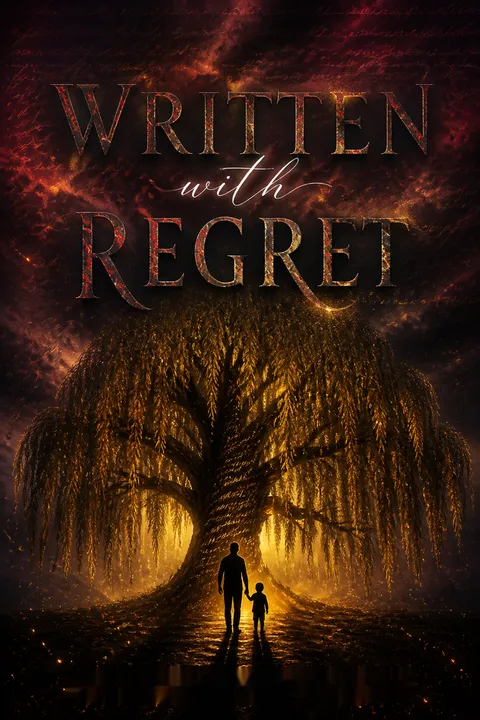
Aly Martinez's Written with Regret is a powerful meditation on trauma, forgiveness, and the possibility of redemption. At its core, the novel asks whether we are doomed to repeat the sins of our past or whether we can choose to break the cycle and build something new. Through the intertwined journeys of Caven and Hadley—both survivors, both haunted—the story explores the ways in which pain can isolate or connect, destroy or heal. The motif of "living in the seconds" is a radical call to presence, urging readers to find joy not in the absence of suffering, but in the courage to embrace each moment as it comes. The novel's structure, with its nonlinear revelations and mirrored experiences, invites empathy and understanding, challenging us to see beyond judgment and fear. Ultimately, Written with Regret is a testament to the resilience of the human spirit, the transformative power of love, and the belief that even the most shattered lives can be made whole—one second, one choice, one act of forgiveness at a time.
Review Summary
Characters
Caven Hunt
Caven is a man forged in trauma, the son of a mass shooter and a survivor of unimaginable loss. His life is a study in contrasts: outwardly successful, inwardly tormented. The guilt of his father's actions and the fear of inheriting that darkness drive him to isolate himself emotionally, even as he excels professionally. Fatherhood is thrust upon him, and though he resists at first, Rosalee becomes his anchor and redemption. Caven's journey is one of learning to trust, to forgive, and to love—not just others, but himself. His relationship with Hadley is fraught with pain and longing, but ultimately, it is through her that he finds the courage to break the cycle of regret and build a new legacy.
Hadley Banks (Willow)
Hadley is defined by loss: the murder of her parents, the trauma of the shooting, the abandonment of her own child. Her life is a quest for meaning and healing, channeled through her art and her relentless pursuit of forgiveness. Hadley's return to Caven's life is both an act of courage and desperation—a bid to reclaim her daughter and herself. Her psychological complexity is rooted in survivor's guilt, depression, and the struggle to believe she is worthy of love. Through her relationship with Caven and Rosalee, Hadley learns to live in the present, to embrace joy, and to accept that healing is a process, not a destination.
Rosalee Hunt
Rosalee is the heart of the story—a child born of pain, but raised in love. Her presence forces both Caven and Hadley to confront their pasts and strive for a better future. Rosalee's innocence, creativity, and resilience are a balm to the wounds of those around her. She is both a symbol of hope and a living reminder of the power of second chances. Through her, the adults in her life learn to forgive, to trust, and to believe in the possibility of happiness.
Ian Villa
Ian is Caven's best friend and business partner, the steady hand in a world of chaos. His pragmatism and loyalty are unwavering, even as he struggles to understand the depth of Caven's pain. Ian's skepticism of Hadley is rooted in his fierce protectiveness of Rosalee and Caven, but beneath his stoic exterior lies genuine care. He serves as both a foil and a support, challenging Caven to confront his fears while providing the stability needed to move forward.
Alejandra
Alejandra is the nanny who becomes a second mother to Rosalee and a source of comfort for Caven. Her warmth, competence, and gentle authority provide a sense of home and safety. Alejandra's presence allows Caven to trust, to rest, and to focus on healing. She is a stabilizing force, embodying the power of chosen family and the importance of community in overcoming trauma.
Trent Hunt
Trent is Caven's older brother, shaped by the same trauma but hardened by responsibility. As a police chief, he is vigilant and suspicious, especially of Hadley. His protectiveness sometimes borders on aggression, but it is rooted in love and fear for his brother's well-being. Trent's journey is one of learning to let go, to trust Caven's judgment, and to accept that healing requires risk.
Beth Watts
Beth is Hadley's best friend and attorney, a force of nature who balances compassion with pragmatism. Her skepticism of Caven is matched by her unwavering support for Hadley. Beth's humor and bluntness provide levity, while her legal acumen ensures that Hadley is never alone in her fight. She represents the importance of friendship and the role of allies in the journey toward healing.
Veronica
Veronica is a brief romantic interest for Caven, representing the life he once led—detached, transactional, and emotionally safe. Her presence highlights Caven's transformation, as he moves from superficial connections to the deep, vulnerable love he finds with Hadley and Rosalee.
Jennifer Hunt
Jennifer, Trent's wife, is warm, open, and eager to embrace Hadley into the family. Her kindness contrasts with Trent's suspicion, offering a model of forgiveness and inclusion. Jennifer's acceptance is a crucial step in Hadley's integration into Caven's world.
Marilyn
Marilyn is the president of the preschool parent association, a source of tension and conflict. Her nosiness and insensitivity threaten to expose Hadley's secret and disrupt Rosalee's life. Marilyn represents the external pressures and societal judgments that Caven and Hadley must overcome to protect their family.
Plot Devices
Trauma as Destiny and Obstacle
The narrative is structured around the long shadow cast by a single act of violence. Both Caven and Hadley are defined by the mall shooting—he as the son of the perpetrator, she as a survivor. This shared trauma is both a barrier and a bridge, creating a deep, unspoken understanding that allows for healing but also fuels fear and mistrust. The story uses flashbacks, parallel timelines, and mirrored experiences to explore how trauma can both destroy and redeem.
Nonlinear Revelation and Foreshadowing
The novel employs nonlinear storytelling, gradually revealing the truth of Hadley's identity, her connection to Caven, and the full extent of their shared past. Foreshadowing is used to heighten tension—hints of Hadley's true name, the significance of the scars, and the unresolved guilt that binds them. The slow unveiling of these secrets allows for a deepening of character and a more profound emotional payoff.
The Power of Naming and Renaming
The act of naming—Rosalee after Caven's mother, Keira after Hadley's—serves as a motif for the struggle to claim and redefine identity. The final revelation that Hadley is Willow, the girl Caven saved, brings the story full circle, transforming pain into connection and loss into belonging.
Art and Photography as Healing
Art is both a literal and metaphorical device, representing the characters' attempts to make sense of chaos and find beauty amid pain. Hadley's photography and art lessons become a means of connection, healing, and self-expression. The motif of "living in the seconds" is embodied in the act of capturing moments, choosing happiness one instant at a time.
Legal and Emotional Negotiation
The threat of a public custody battle serves as a plot engine, forcing Caven and Hadley to confront their fears and negotiate trust. The legal maneuvering is mirrored by the emotional bargaining required to build a family out of broken pieces. The six-month supervised visitation agreement becomes a crucible for growth, vulnerability, and, ultimately, love.
Download PDF
Download EPUB
.epub digital book format is ideal for reading ebooks on phones, tablets, and e-readers.








































