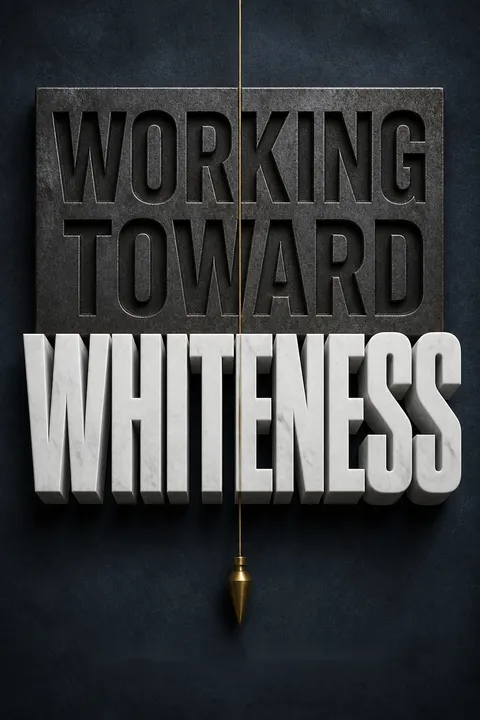

Key Takeaways
1. "Race" was the primary lens for categorizing new immigrants, not "ethnicity."
To understand their history, we need to learn some of their language.
Historical context. A century ago, European immigrants from Southern and Eastern Europe were not considered unequivocally "white." Intellectuals like Henry James and H.G. Wells expressed anxiety about their "dark white" characteristics, fearing they threatened the nation's racial foundations and could lead to "race suicide." The term "new immigrant" itself was racially charged, denoting both recent arrival and inherent racial difference.
Government categorization. The U.S. government, through bodies like the Immigration Commission and the Census, actively categorized Europeans by "race." This included classifications such as "Hebrew race," "Slavonic," and "Latin," often for restrictionist purposes. The concept of "ethnicity" was largely absent from popular and academic discourse, with "race" serving as the dominant, albeit bifurcated, term encompassing both "color-races" and "nation-races."
Challenging anachronism. Modern scholarship often anachronistically applies "ethnicity" to this period, obscuring the historical reality of how "race" shaped immigrant experiences. This book argues that assimilation for these groups was a process of "whitening" as much as "Americanizing," involving complex negotiations of identity, often seen through the lens of racial hierarchies.
2. Popular language and slurs racialized new immigrants, linking them to non-white groups.
My Guinea was up, but I was afraid to show it.
Messy racial landscape. The racial landscape encountered by new immigrants was profoundly "messy," with experts debating the number of human races from a handful to dozens. This ambiguity allowed for the application of derogatory slurs that simultaneously denigrated new immigrants and linked them to existing non-white racial categories.
Promiscuous slurs. Terms like "guinea," "greaser," and "hunky" were widely used.
- "Guinea," originally for African Americans, extended to Italians, associating them with blackness.
- "Greaser," first for Mexicans, then applied to Italians, Greeks, and Filipinos, linked them to "dirty" manual labor and non-white status.
- "Hunky," for Eastern Europeans, implied physical strength but also dullness and a subhuman quality, often connecting them to "Asiatics."
Inbetween and in-among. These slurs and social practices positioned new immigrants as "inbetween" hard racism and full white inclusion, but also "in-among" various non-white groups. Race was understood as a fluid concept, simultaneously biological and cultural, inherited and acquired, yet also capable of being molded or mitigated by factors like language acquisition, leading to concepts like "English-speaking races."
3. Naturalization laws provided a crucial legal pathway to "whiteness" for Europeans.
The law required that an immigrant seeking citizenship be a "free white person."
Legal foundation. From the first Congress in 1790, U.S. naturalization law mandated that immigrants seeking citizenship be "free white persons." This legal framework, though initially aimed at excluding enslaved Africans, became a powerful tool for European immigrants to claim official white status, even when their "whiteness" was culturally and socially contested.
Judicial consistency. Despite widespread societal doubts about the racial fitness of Southern and Eastern Europeans, courts almost always granted them naturalization as white citizens. Judges often avoided delving into complex ethnological arguments that might question the whiteness of Europeans, fearing it would undermine established precedents and the citizenship of earlier immigrant groups.
Political leverage. The ability to naturalize as white citizens gave new immigrants significant political power through their votes. This electoral influence led politicians to court immigrant communities, sometimes even leading to provisions in state laws that protected their voting rights in ways comparable to, or even superior to, those granted to native-born white voters.
4. The state's role was contradictory: granting legal whiteness while questioning racial fitness.
If he proves himself a man, and . . . acquires wealth and cleans himself up—very well, we might receive him in a generation or two. But at present he is far beneath us, and the burden of proof rests with him.
Conditional acceptance. The state's approach to new immigrants was deeply contradictory. While naturalization laws offered a path to legal whiteness, prominent figures like Francis Amasa Walker and Theodore Roosevelt simultaneously questioned their racial fitness for full American citizenship. This created a conditional acceptance, where immigrants were "on trial" to prove their worth.
Biosocial definitions. This scrutiny often linked biological traits with cultural, historical, and class characteristics. Immigrants were depicted as "beaten men of beaten races," suffering from alleged deficiencies in intelligence, hygiene, and moral character. This entanglement of biology and culture meant that their "racial progress" was not guaranteed but subject to ongoing evaluation and reform efforts.
Americanization debates. Progressive reformers, while sometimes optimistic about the "melting pot" and the possibility of immigrants being absorbed into an "American race," also contributed to the discourse of racial peril. Debates over "race suicide" and the need for "100 percent Americanism" highlighted anxieties about the impact of new immigrants on the nation's "stock," ensuring their racial status remained a subject of intense public and political debate.
5. Workplaces and unions reinforced racial hierarchies, placing new immigrants "inbetween" native-born whites and people of color.
When they had a list of names for promotions . . . they tended to scratch out the ‘Hunky’ ones.
Racialized labor markets. Employers actively used racial and national divisions to control labor, creating segmented workforces where certain jobs were designated for specific groups. This practice, often termed "hunky jobs" or "Mexican jobs," placed new immigrants in positions between native-born whites and people of color, reinforcing a racial hierarchy within the workplace.
Union ambivalence. Organized labor, particularly the American Federation of Labor (AFL), often exhibited "semiracial" nativism. While many unions opposed new immigrants with racialized rhetoric, they also sometimes organized them, albeit reluctantly. This created a complex dynamic where new immigrants faced discrimination from unions but also found provisional opportunities for membership, distinguishing their experience from the more rigid exclusion faced by African Americans and Asians.
Economic incentives. Wage discrimination was common, with new immigrants often earning less than native-born whites for similar work. As new immigrants gained language and job skills, their economic standing improved relative to African Americans, who remained concentrated in the lowest-paying and most undesirable jobs. This created an economic incentive for new immigrants to align with white workers, even if it meant accepting existing racial divisions.
6. New immigrant racial consciousness was complex, oscillating between solidarity and distancing from people of color.
Is it not right they should hate the whites?
Ambivalent solidarity. New immigrants' racial consciousness was far from monolithic. Some, like the Polish-language Dziennik Zwiazkowy, expressed profound sympathy for African Americans, even questioning the justice of white society. Cultural expressions, particularly music, sometimes forged connections, with figures like William Attaway and Mezz Mezzrow hearing shared "wails" of oppression between black and new immigrant communities.
Rapid adoption of racism. However, this potential for solidarity was often fragile. Many immigrants quickly learned and adopted U.S. anti-black racism, as encapsulated in the "first word" joke about immigrants learning "nigger." This rapid assimilation into white supremacist norms was driven by the clear advantages of being white in the U.S. and the desire to distance themselves from the most oppressed groups.
European influences. While U.S. racism was distinct, new immigrants were not entirely innocent of race thinking before arrival. European experiences, such as Italian racism against Southern Italians or Jewish experiences of anti-Semitism, meant they carried existing prejudices. Yet, the brutality of U.S. white-on-black racism often shocked them, leading to a complex interplay of inherited biases and newly acquired ones.
7. The 1924 Immigration Act, though racially restrictive, ironically facilitated the "whitening" of existing European immigrant communities.
The Immigration Act of 1924 contributed to the racialization of immigrant groups around notions of whiteness, permanent foreignness and illegality—categories of difference that have outlived the racial categories created by eugenics and post-World War I nativism.
Triumph of restrictionism. The 1924 Johnson-Reed Act, fueled by eugenic racism and "Nordic" supremacy, drastically curtailed immigration from Southern and Eastern Europe. This legislation, a low point for the racialization of these groups, paradoxically paved the way for their eventual acceptance as white by "solving" the perceived "immigrant problem" for nativists.
Shifting demographics. By drastically reducing the influx of new European immigrants, the act allowed existing communities to "stabilize," naturalize, and shed some of their "foreign" attributes. This demographic shift meant that the "threat" of an immigrant invasion subsided, making it easier for the concept of "Caucasian" unity to encompass all Europeans.
New racial targets. The restriction of European immigration redirected labor recruitment towards non-white groups, particularly African Americans and Mexicans. These groups became the new "racial problem" for nativists and employers, further solidifying the "whiteness" of Europeans by providing a new "other" against which to define themselves.
8. Homeownership became a central symbol of belonging and "whiteness" for new immigrants.
Owning a home . . . was not a middle class phenomenon, nor was it a sign of any movement into the middle class.
Deep aspiration. New immigrants harbored a profound commitment to homeownership, often making immense sacrifices to achieve it. This ambition was not merely a sign of upward mobility but a core aspect of their working-class culture, reflecting a "transfiguration of ancient peasant land hunger" and a desire to escape the historical vulnerabilities of tenancy.
Practical utility. The immigrant home served multiple practical functions beyond shelter. It acted as a financial asset, a source of income through boarders, and a site for "sweat equity" through self-maintenance and improvements. This dual value—as both a commodity and a sanctuary—made homeownership a powerful investment in security and community.
Imagined communities. While urban immigrant neighborhoods were often ethnically mixed, residents frequently imagined them as distinct national or religious enclaves, often centered around their churches. The home, therefore, became a tangible anchor for these imagined communities, providing a sense of belonging and stability amidst the fluidity of urban life.
9. Restrictive covenants actively incorporated new immigrants into white-only housing.
The colored people certainly have a right to life, liberty and pursuit of happiness, but they must recognize the economic disturbance which their presence in a white neighborhood causes and forego their desire to split off from the established district where the rest of the race lives.
Segregation's embrace. In the 1920s, as restrictive covenants became a widespread, legally sanctioned tool for housing segregation, new immigrants were actively welcomed as "white" participants in these campaigns. This offered them a powerful opportunity to solidify their place within the nation's "white house" by becoming agents of exclusion against people of color.
Economic and social appeal. Covenants were marketed as "insurance" against declining property values, appealing directly to immigrants' investments in their homes. This strategy linked white racial status with property value, presenting the embrace of whiteness as an economic opportunity rather than merely a cultural coercion.
Broad alliances. The campaigns for covenants fostered broad, cross-class alliances among diverse white groups, including new immigrants, realtors, developers, and even churches. These "neighborhood improvement associations" often defined "improvement" as maintaining racial homogeneity, effectively making the defense of the "white neighborhood" synonymous with community well-being.
10. Generational shifts in popular culture reinforced white American identity.
The New York Ghetto, throbbing to that rhythm of music which is older than civilization.
Cultural assimilation. Popular culture, particularly movies and music, played a significant role in shaping the racial identity of the second generation. Films like The Jazz Singer depicted the tension between immigrant traditions and the allure of American, often racially inflected, modernity. Blackface performances, for instance, offered a path for immigrant entertainers to achieve commercial success and white acceptance.
Racialized entertainment. Movie houses, while initially catering to specific immigrant audiences, also implicitly taught racial hierarchies through segregated seating and content. Blackface minstrelsy and films depicting triumphs over people of color (e.g., in the American West) provided accessible lessons in U.S. racism, even for those with limited English proficiency.
Ambivalent embrace of black culture. While some second-generation youth embraced African American music and dance styles as a form of rebellion against parental traditions, this often occurred in segregated venues or involved a selective appropriation that ultimately reinforced their white identity. The "interzones" of urban nightlife, while offering interracial contact, were often fraught with racial tensions and stereotypes.
11. The New Deal created a "white security state," expanding benefits for whites while reinforcing segregation for people of color.
The answers to these questions are not all the same.
Dual social citizenship. The New Deal, while providing broad relief and work programs, established a "white security state" that largely excluded people of color from its most beneficial programs. Social Security, for instance, disproportionately covered white, stably employed workers, while excluding agricultural and domestic laborers, who were predominantly black and Mexican American.
Reinforcing disparities. This created a two-tiered system: "entitlements" for white citizens and "welfare" for non-white groups. The overrepresentation of African Americans in direct relief programs, coupled with their exclusion from higher-paying work relief, fueled the perception that "the dole" was a black issue, further entrenching racial stereotypes and grievances among white communities.
Housing apartheid. New Deal housing policies, particularly the Home Owners Loan Corporation (HOLC) and the Federal Housing Administration (FHA), actively promoted racial segregation. They institutionalized "redlining," systematically denying loans to non-white and mixed-immigrant neighborhoods, while subsidizing white homeownership in racially homogeneous areas. This coerced new immigrants to invest in "whiteness as property" and view people of color as "antineighbors."
12. CIO unionism, despite progressive rhetoric, often institutionalized existing racial divisions.
To give white workers a monopoly on all promotions... is . . . to give them an interest in job segregation.
Limited racial justice. While the Congress of Industrial Organizations (CIO) offered a more inclusive alternative to the American Federation of Labor (AFL), its commitment to racial justice was often constrained. CIO leaders, like Sidney Hillman, engaged in interracial coalitions but often prioritized class unity over a direct challenge to racial discrimination, particularly in hiring and promotions.
Nonracial syndicalism's limits. The CIO's "nonracial syndicalism" — the belief that workers would unite across racial lines due to shared class interests — often failed to dismantle existing workplace segregation. White workers, including new immigrants, had a material interest in maintaining "white jobs" or "hunky work" that offered better pay and conditions, leading unions to implicitly or explicitly defend these racialized occupational structures.
Reinforcing white privilege. Seniority systems, a key achievement of CIO unions, protected and extended the gains of new immigrants in skilled positions, but often institutionalized discrimination against African American workers who were concentrated in lower-tier jobs. This meant that even as new immigrants gained power within unions, the CIO's policies inadvertently reinforced the broader racial hierarchy in the labor market and contributed to the "whitening" of its European members.
Review Summary
Working Toward Whiteness examines how European immigrants—Irish, Italian, Jewish, Polish, and others—transitioned from "in-between" racial status to being considered white in early-to-mid 20th century America. Roediger argues whiteness is a social construct shaped by labor, housing, and immigration policies. Reviews praise the book's important insights into racial identity formation and how immigrants gained white status by adopting racism against African Americans and other minorities. However, many criticize the dense, academic writing style as repetitive, poorly organized, and difficult to read despite valuable content.
People Also Read






About the Author
Other books by David R. Roediger
Download PDF
Download EPUB
.epub digital book format is ideal for reading ebooks on phones, tablets, and e-readers.








































