
Key Takeaways
1. Writing is a Methodical Process, Not Magic
Great writing happens not through some dark art, but when method meets craft.
Demystify writing. Novices often perceive writing as a mystical talent, but it's a craft built on a methodical, step-by-step process. This approach breaks down the daunting task into manageable pieces, reducing anxiety and making consistent progress possible. Just as a building is constructed one piece at a time, great writing is assembled line by line.
Follow the process. Successful writers adhere to a clear sequence of stages, understanding that problems at one stage often stem from issues in the preceding one. This systematic approach ensures efficiency and productivity, preventing psychological meltdown and missed deadlines.
- Idea generation
- Information gathering
- Organization
- Drafting
- Polishing
Process over results. Focusing on the how of writing, rather than just the what, is the surest path to improvement. By mastering a productive and efficient process, writers can consistently produce high-quality work without unnecessary struggle, transforming writing from agony to an energizing challenge.
2. Ideas Must Evolve into Testable Hypotheses
No wind favors him who has no destined port.
Beyond mere topics. Many writers mistakenly begin with a vague topic, leading to aimless research and unfocused prose. A true idea, in contrast, is a specific assertion or hypothesis that can be tested and explored, providing a clear destination for your writing journey. This clarity is the foundation for all subsequent steps.
Generate ideas systematically. Experienced writers actively mine the world for ideas, reading widely and engaging with diverse experiences. Techniques like freewriting or Bill Blundell's "Blundell chains" help transform initial observations into concrete, testable hypotheses.
- Blundell Chains: Extrapolation, Synthesis, Localization, Projection.
- Start with a causal statement (e.g., "Interest rates fall").
- Draw arrows to logical implications (e.g., "CDs pay less").
- Extend chains to uncover interesting, testable questions.
Focus your efforts. A well-shaped idea acts as a filter, guiding information gathering and organization by separating the relevant from the irrelevant. This prevents "notebook dump" and ensures that every piece of research contributes meaningfully to your central point, leading to richer, more insightful writing.
3. A Clear Focus (Nut Graf) Guides All Writing
The most important thing in a work of art is that it should have a kind of focus. . . . There should be some place where all the rays meet or from which they issue.
The writing's axis. Focus is the central axis around which all elements of a piece of writing revolve, emerging as a fully developed theme or "nut graf." It's the core idea that ties disparate elements together, ensuring coherence and purpose. Without it, writing can become a confusing, aimless morass.
Refine your hypothesis. A constantly questioning attitude is essential to refine your initial hypothesis as new information comes in. This internal Q&A process prevents bias and leads to original insights, guiding your search for what truly matters. The goal is to go beyond the obvious and find patterns that make sense out of chaos.
Just-in-time writing. A clear focus enables "just-in-time" writing, where you gather and organize only the information you need, when you need it. This efficiency simplifies the organizational process, avoids unnecessary research, and streamlines drafting.
- Nut graf functions: Answers "So what?", explains significance, provides context, establishes priorities, tightens writing, offers reading rationale.
- Often a short, explanatory paragraph near the beginning.
- Boils material down to essentials, even if it seems "obvious."
4. Structure Dictates Impact: Master Beginnings, Middles, and Ends
Great is the art of beginning, but greater is the art of ending.
Forms of writing. Every piece of writing is fundamentally either a report (conveying information, organized by topic) or a story (reproducing experience, organized by scene). Understanding these basic forms, and their hybrids, is crucial for choosing the right structure to achieve your communication goals. Form should always follow function.
Craft compelling leads. Leads are critical for hooking readers, promising a reward for continuing, and setting the stage for what follows. They must be substantive, clear, and directly connected to the central theme.
- Report Leads: Summary, Blind, Wraps, Shirttail.
- Story Leads: Anecdotal, Narrative, Scene-Setter, Scene-Wraps, Significant-Detail, Single-Instance, Wordplay.
- Avoid dangerous leads: Question, Quote (unless compelling), Topic, Teaser (unless news value is low and entertainment high).
Build strong middles and endings. Paragraphs are the building blocks, showing relationships between ideas and adding emphasis. A "nut graf" clarifies the story's purpose early on. Endings provide a sense of completion and leave a lasting impression, often by circling back to the beginning or delivering a final punch. Avoid abrupt stops or redundant summaries.
5. Forceful Writing Demands Active Verbs and Concise Language
How forcible are right words!
Radiate energy. Forceful writing commands attention and enhances credibility, regardless of content. It mirrors the characteristics of a strong, vibrant personality: active, confident, hardworking, and lean. The secret lies in delivery, not just volume.
Potent syntax. Strong sentences often begin with a clear subject-verb combination, branching to the right to add meaning. This "right-branching sentence" structure makes meaning known early, promoting clarity and directness. Avoid convoluted sentences that bury the main thought in long introductory phrases.
Exploit action words. Verbs carry the action in writing, so seeking out the most potent and specific verbs is crucial.
- Transitive verbs: Create ruckus, carry action from source to receiver (e.g., "The explosion ripped... gouged... slammed... unleashed").
- Intransitive verbs: Action ends with the verb, can still be vivid (e.g., "squirrels erupt").
- Linking verbs: Mere definitions, convey no action (e.g., "is," "was"). Avoid them to introduce force.
- Verbicide: Avoid turning lively verbs into ponderous nouns (e.g., "usage" instead of "use").
Master active voice. Active voice makes writing more direct and powerful by clearly showing who performed what action (e.g., "Lightning struck the airliner" vs. "The airliner was struck by lightning"). Passive voice often hides the actor and can create confusion or evade responsibility. Eliminate expletives like "there is" or "it is" to strengthen sentences and reveal the true subject.
6. Brevity Enhances Impact: Eliminate Every Unnecessary Word
If you would be pungent, be brief; for it is with words as with sunbeams—the more they are condensed, the deeper they burn.
Stick to the point. Brevity is the handmaiden of force, sharpening focus and maximizing impact by stripping away excess verbiage. Every word should advance your story or central thesis; anything that doesn't contribute, detracts. This requires steely discipline and intense mental work to identify and cut the irrelevant.
Cut the flab. Redundancy clogs prose and bores readers. Be vigilant for common offenders like "reason why," "final destination," or "broad array." Also, eliminate automatic adverbs such as "up," "out," or "formerly" that add no new meaning to verbs.
- Common redundancies: "random lottery," "mutually agreed upon," "end result."
- Automatic adverbs: "freeing up," "swallowed up," "ebbs out."
- Boring beginnings: "He began to run" instead of "He ran."
Trim modifiers and creeping nouns. Overuse of adjectives and adverbs, especially abstract ones like "very," can dilute meaning and weaken impact. Prefer strong nouns and verbs. Watch out for "creeping nouns" that attach themselves unnecessarily to perfectly good nouns (e.g., "crisis situation" instead of "crisis," "sales event" instead of "sale"). Streamline sentences by using direct verb tenses and avoiding auxiliary verbs where possible.
7. Clarity Requires Empathy and Context for the Reader
Good prose is like a window pane.
See through the reader's eyes. Clear writing demands empathy, the ability to anticipate how readers will interpret your symbols and understand your message. Meaning resides in people, not just words, so writers must choose symbols that resonate with their audience's shared experiences. Avoid jargon or obscure references that alienate readers.
Provide essential context. Unconnected facts can overwhelm and confuse. Good writing draws connections, placing information in meaningful contexts to help readers understand its significance.
- Context in time: Looking backward to add meaning (e.g., historical background).
- Context in space: Comparing the subject to similar things elsewhere (e.g., national vs. local trends).
- Context by category: Drawing examples from the same class (e.g., comparing movies within a genre).
Ensure readability. Readability tests (like Flesch-Kincaid) measure factors like word and sentence length, indicating how easily text can be understood. Aim for a comfortable reading level (often a few grades below your audience's highest education) without "dumbing down" complex subjects. Vary sentence length and use periods to break up dense prose.
Define terms and avoid ambiguity. When using unfamiliar terms, define them clearly by referencing a larger class, explaining differences, and providing illustrations. Anticipate reader questions and resolve "loose ends." Avoid misplaced modifiers and ambiguous pronouns that can lead to confusion or unintended humor.
8. Rhythm and Cadence Seduce the Reader's Ear
Writers are in the music business.
The music in words. Beyond content, language possesses an inherent musicality that can attract and hold attention. Rhythmic writing, like a pleasing melody, resonates deeply with readers, making prose memorable and enjoyable. This involves balancing the beats and sounds of words, phrases, and sentences.
Elements of rhythm. Achieve rhythmic prose through deliberate choices in balance, sound, and structure.
- Balance: Matching elements in length and emphasis (e.g., "Sirhan Sirhan... wants to go home").
- Cycles of sound: Alliteration (repeating initial sounds) and internal rhyme create pleasing patterns (e.g., "white wall," "shattered summit").
- Punctuation as cadence: Each punctuation mark suggests a different pause or beat, contributing to the overall rhythm.
- Sentence variety: Alternating simple, compound, and complex sentences prevents monotony and adds interest.
- Rule of three: Series of three elements often sound more satisfying than two or four.
Reading aloud is key. To truly hear the music in your words, read your drafts aloud. This practice helps identify awkward phrasing, repetitive rhythms, and unintended stumbles that silent reading might miss. Listen for the flow, the pauses, and the overall cadence to refine your prose.
9. Humanity Connects: Show, Don't Just Tell, Through Anecdotes and Dialogue
It is very difficult to make people out of words.
Get people into stories. To truly engage readers, bring human beings to life on the page. This means showing characters in action, revealing their personalities and motivations through specific behaviors rather than abstract descriptions or generic quotes. Readers respond emotionally to specific people and their experiences.
Use anecdotes effectively. Anecdotes are short, self-contained narratives that illustrate a story's central theme or reveal character. They typically have a beginning, middle, and end, often told in the past tense, and conclude with a punchy kicker.
- Anecdote characteristics: Short (1-4 paragraphs), thematic, past tense, strong kicker.
- Getting anecdotes: Engage in conversational interviews, tell stories to get stories, interview friends/colleagues of subjects.
Employ vivid vignettes. Vignettes are brief, vivid descriptions of action or images that grab attention and convey a sense of place or mood. They can be thematic or simply add color, immersing readers in the sensory details of a scene. They are larger than an image, smaller than a scene, and lack the full story arc of an anecdote.
Quote selectively and ethically. Direct quotations should be used sparingly, only when they offer wit, authority, or unique character revelation that cannot be paraphrased. Avoid "information quotes" or "pro forma quotes" that add little value. Be scrupulous about accuracy and context, ensuring quotes don't misrepresent or demean the speaker. Dialogue, where characters interact, is even more powerful, creating an illusion of real-time experience.
10. Color Engages Emotion: Use Concrete Detail and Metaphor
My task, which I am trying to achieve, is, by the power of the written word to make you hear, to make you feel—it is before all, to make you see. That—and no more, and it is everything.
Seduce with pleasure. Color in writing refers to elements that provide pleasure beyond mere information, like surprising comparisons, unexpected modifiers, or revealing details. These "goodies" keep readers engaged, even through challenging material, by offering intangible rewards.
Descend the ladder of abstraction. Words exist on a continuum from concrete to abstract. To evoke emotion and create mental pictures, writers must descend to the "bottom rung" of the ladder, using specific details that readers can see, hear, smell, or taste. Abstract writing informs, but concrete detail stirs the heart.
- Ladder of Abstraction: From specific (Fred the truck driver) to general (American truck drivers) to abstract (living things).
- Engage emotions: Specific details activate mirror neurons, allowing readers to experience emotions directly.
Employ telling details. Select details that serve a larger purpose, suggesting something significant beyond their literal meaning. These details can develop:
- Atmosphere: Create mood (e.g., "dark, damp streets").
- Scene: Build vivid settings (e.g., "peeling high-rises with rusty air conditioners").
- Character: Reveal personality traits (e.g., "missing a couple of teeth and wearing a red beret").
- Theme: Symbolize larger truths (e.g., school desk height symbolizing bureaucracy).
Master the magic of metaphor. Metaphors, similes, allusions, and personifications combine previously isolated categories, creating new connections and enriching meaning. They surprise, delight, and offer fresh perspectives. Use them artfully and in moderation, ensuring they fit the image and make sense.
11. Cultivate a Distinctive Voice by Being Yourself
To achieve style, begin by affecting none.
Your unique signature. A writer's voice is the sum of their personal style, encompassing vocabulary, sentence forms, pace, and degree of formality. It's the individual personality that emerges in the writing, making it distinct and recognizable. Avoid imitating others or resorting to ostentation.
Avoid overinflated language. Insecurity often manifests as stilted, overly formal language, jargon, buzzwords, or clichés. These hide the writer's true personality and alienate readers.
- Pomposity epidemic: "Sustained an injury" instead of "got hurt," "facility" instead of "building."
- Trendspeak: Pretentious abstractions, fad words, overdone alliteration (e.g., "mega-event," "feisty fungal afflictions").
- Journalese: Language unique to journalism, often bland and institutional (e.g., "embattled mayor," "eleventh hour").
Embrace plain English. Relax and write in a voice that reflects your authentic self, using words and sentence structures common in everyday conversation. This fosters a personal connection with readers. While tone can vary with subject and goal, your underlying voice should remain consistent and confident.
Conquer repetition and clichés. Repetitive words or phrases bore readers and signal carelessness. Seek fresh alternatives, but avoid "elegant variation" – straining for synonyms that sound unnatural or pretentious. Clichés are "hackneyed" expressions that deaden prose; seize them as opportunities to create something original and surprising.
12. Master Mechanics for Credibility, But Don't Let Rules Stifle Creativity
It is not wise to violate the rules until you know how to observe them.
Sweat the small stuff. Professional writers maintain their credibility by mastering language mechanics: grammar, punctuation, and spelling. Errors, even small ones, erode public confidence and shout "amateur!" A solid understanding of these rules is also essential for making deliberate stylistic choices.
Grammar essentials. Understand the basic components of a sentence (subject, predicate, object, phrase, clause) to ensure agreement and proper construction.
- Agreement: Subjects and predicates must agree in number (e.g., "A group of volunteers is identifying," not "are").
- Pronoun case: Use nominative (he, she) for subjects, objective (him, her) for objects or after prepositions.
- Modifiers: Adjectives modify nouns; adverbs modify verbs, adjectives, or other adverbs (e.g., "highly skilled," not "high skilled").
- "That" vs. "Which": "That" for restrictive (essential) clauses, "which" for nonrestrictive (nonessential) clauses (set off by commas).
Punctuation as road signs. Punctuation clarifies meaning and creates rhythmic pauses.
- Commas: Separate items in a series, set off introductory clauses and participial phrases.
- Semicolons: Join closely related independent clauses or separate items in a complex series.
- Hyphens: Join compound modifiers acting as a single unit (e.g., "hard-driving fullback").
Question "snake rules." Many arbitrary "rules" (e.g., "don't start a sentence with 'and' or 'but'," "don't split infinitives," "quotes must be separate paragraphs") are myths that stifle creativity. Learn the actual rules, then know when to bend or break them for clarity, rhythm, or impact. Consistency is key, but sense should always trump rigid adherence to outdated or unsubstantiated dictates.
Review Summary
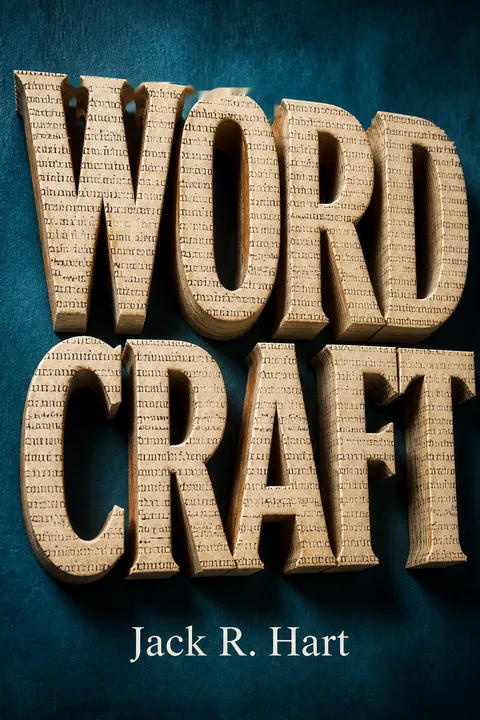
Wordcraft by Jack R. Hart receives mostly positive reviews (4.13/5), praised for its practical guidance on clear writing, particularly its focus on structure, organization, and the writing process. Readers appreciate the abundant examples and accessible explanations. However, several reviewers note the book's heavy journalism focus limits its applicability to other genres. Some criticize prescriptive grammar rules and textbook-like reading. The companion book "Storycraft" is frequently mentioned, with debate over reading order. Most recommend it for nonfiction writers, especially beginners and intermediates seeking concrete writing techniques.
People Also Read


About the Author
Other books by Jack R. Hart
Download PDF
Download EPUB
.epub digital book format is ideal for reading ebooks on phones, tablets, and e-readers.








































