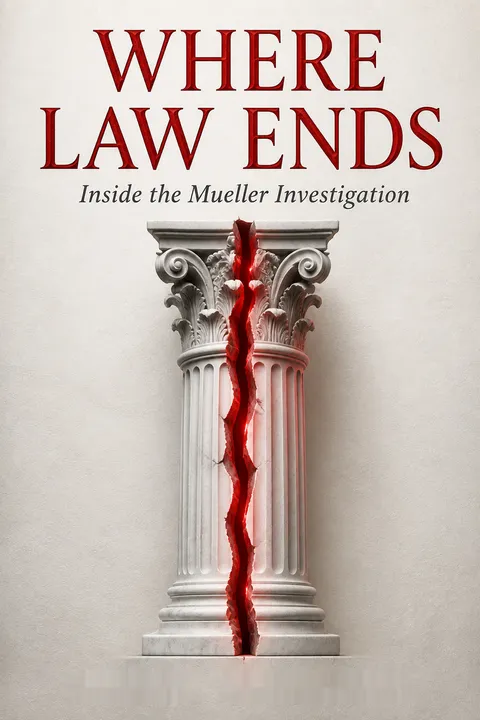

Key Takeaways
1. The Special Counsel's Mandate Faced Relentless Political Interference
The principal challenge to our investigation was not the public glare, or the Fox News diatribes, or the president’s ad hominem attacks. It was the threat posed by the unique powers of the president that were continually wielded against us: the power to fire us and to pardon wrongdoers who might otherwise cooperate with our investigation.
Constant threat. From its inception in May 2017, the Special Counsel's Office (SCO) operated under the constant specter of termination by President Trump. This pervasive anxiety, fueled by historical precedents like the "Saturday Night Massacre" and Trump's firing of FBI Director James Comey, significantly influenced investigative decisions. The author recounts multiple instances where SCO leadership received warnings of imminent firing, creating an environment of perpetual uncertainty.
Defensive measures. To counter these threats, the SCO implemented defensive strategies to safeguard its work and ensure its findings would endure. These included:
- Creating a centralized, meticulously organized system for all documents, evidence, and interview summaries.
- Using courts as an "external hard drive" by packing search warrant applications with extensive, up-to-date details of the investigation, securing records within the judicial system.
- Disseminating pertinent findings to other U.S. Attorney's Offices, making it harder for the Department of Justice or White House to suppress or destroy records if the SCO was shut down.
Impact on scope. The looming threat of termination also led the SCO to make strategic concessions, such as delaying or forgoing certain lines of inquiry, particularly regarding the President's financial ties to Russia. Decisions were often weighed not just on their investigative merit, but on how they might "needlessly rankle the president" and risk the entire investigation, especially the crucial work on Russian election interference. This meant pulling punches to avoid provoking a presidential "hissy fit."
2. Manafort's Extensive Criminality Was a Gateway to Campaign Ties
It was a testament to Mueller’s instincts as an investigator that he homed in immediately on Manafort.
Early focus. Robert Mueller quickly identified Paul Manafort, Trump's campaign chairman, as a key figure due to his well-documented ties to pro-Russian Ukrainian politicians. Manafort's existing legal scrutiny for financial dealings and lobbying provided an immediate "toehold" for the SCO to begin its work, even if these initial investigations were not directly about Russian election interference. The strategy was to leverage these existing cases to pressure Manafort into cooperation.
Pattern of fraud. Manafort's background revealed a consistent pattern of greed and deception. He cultivated a lavish lifestyle funded by millions earned from corrupt foreign governments, including:
- Working for leaders in the Philippines, Angola, Ukraine, and Russia.
- Spending extravagantly on luxury cars, antiques, silk rugs, and clothes.
- His own daughter describing his money as "blood money" and him having "no moral or legal compass."
Manafort's desire for wealth provided a clear motive for financial crimes.
Indictment and leverage. The SCO's Team M, led by Andrew Weissmann, rapidly built a formidable case against Manafort and his deputy, Rick Gates. They uncovered:
- Concealment of nearly $75 million in income through 32 offshore entities in tax havens like Cyprus and the Seychelles.
- Lying to his tax preparers by claiming "None" for foreign accounts.
- Illegal lobbying for Ukraine without registering under the Foreign Agents Registration Act (FARA).
- Multiple instances of bank fraud, inflating income and hiding debt to secure millions in loans.
These charges were designed to create overwhelming pressure for Manafort or Gates to "flip" and provide information on campaign coordination.
3. Russia Orchestrated a Sophisticated, Multi-pronged Attack on the Election
Proving incontrovertibly that we had been attacked by Russia was imperative.
Information warfare. Team R, led by Jeannie Rhee, meticulously uncovered a massive "active measures" campaign by Russia's Internet Research Agency (IRA), based in St. Petersburg. This operation employed hundreds of online "foot soldiers" and spent over a million dollars a month to interfere in the election, described internally as "information warfare against the United States of America."
IRA tactics: The IRA's methods were sophisticated and aimed at influencing voter perception and suppressing turnout:
- Creating fictitious American online personas (e.g., "Alex Anderson," "Lakisha Richardson") and fake political organizations (e.g., @TEN_GOP).
- Targeting specific demographic groups, particularly African Americans and Muslims, with messages designed to discourage voting or split the Democratic vote.
- Purchasing over 3,500 Facebook ads, costing hundreds of thousands of dollars, with slogans like "Hillary for Prison" and "Trump is our only hope."
- Organizing real-world pro-Trump or anti-Clinton rallies in the U.S., enlisting unwitting Americans and even requesting Trump campaign paraphernalia.
Hack and dump. A separate unit of the Russian military, the GRU, executed a "hack and dump" operation, stealing documents and strategically disseminating them. This involved:
- "Spear phishing" emails sent to DNC, DCCC, and Clinton campaign staff, leading to malware installation.
- Exfiltrating vast quantities of emails, financial records, and strategy plans.
- Using fake online entities (DCLeaks, Guccifer 2.0) and WikiLeaks to publish stolen documents, timed to maximize political damage (e.g., Podesta emails released hours after the Access Hollywood tape).
- Targeting federal and state election officials and voter databases to compromise election administration.
4. Trump Campaign Officials Eagerly Welcomed Russian Assistance
There it was: The Russians made an offer. The campaign accepted.
Trump Tower meeting. The New York Times' revelation of the June 2016 Trump Tower meeting was a bombshell, showing that Donald Trump Jr., Jared Kushner, and Paul Manafort met with a Russian lawyer linked to the Kremlin. The email setting up the meeting explicitly stated the Russian government was offering "official documents and information that would incriminate Hillary" as "part of Russia and its government’s support for Mr. Trump." Don Jr.'s reply, "If it’s what you say, I love it especially later in the summer," clearly indicated the campaign's eagerness.
Papadopoulos's early contacts. This was not an isolated incident. George Papadopoulos, a Trump campaign foreign policy adviser, had been approached months earlier by a Maltese academic with ties to Russian operatives, who claimed Russia possessed "thousands of emails that would damage the Clinton campaign." Papadopoulos lied to the FBI about these contacts, but documents revealed his efforts to set up a meeting between Trump and Putin, and his eagerness to prove his usefulness to the campaign.
Manafort's polling data. Rick Gates revealed that Manafort, while campaign chairman, repeatedly shared internal campaign polling data with Konstantin Kilimnik, a Russian operative assessed by the FBI to be associated with Russian intelligence. This data included specific battleground states like Michigan, Wisconsin, Pennsylvania, and Minnesota, which could have been used to refine Russia's online disinformation efforts. Manafort's motive appeared to be a combination of personal financial gain and aiding the campaign.
Open for business. The collective evidence demonstrated that the Trump campaign was "open for business" and receptive to Russian assistance, even if it meant violating U.S. campaign finance law. While the Trump Tower meeting itself yielded no actionable "dirt," and Papadopoulos's efforts fizzled, these interactions showed a clear willingness to conspire and coordinate, lacking only the "deliverables" to seal a deal.
5. The President Engaged in Pervasive Obstruction of Justice
The president was abusing his power, obstructing our investigation, and corroding the rule of law.
Comey's firing. The President's firing of FBI Director James Comey was not an isolated act but an "opening gambit" in a broader effort to undermine the rule of law. Trump's initial draft statement for Comey's termination, described as "excruciatingly juvenile, disorganized, and brimming with spite," revealed his true motivation: to stifle the FBI's Russia investigation and because Comey refused to drop the investigation into Michael Flynn. The White House's attempt to use Rod Rosenstein's memo as justification was a fabrication.
Attempts to fire Mueller. Trump made concrete efforts to fire Mueller, starting as early as June 2017. White House Counsel Don McGahn recounted how Trump repeatedly ordered him to:
- Call Rosenstein and explain Mueller's purported conflicts of interest (which were debunked by DOJ ethics).
- Tell Rosenstein that Mueller "had to go."
McGahn refused, recognizing these actions would trigger a "Saturday Night Massacre" and constitute obstruction. He even prepared to resign rather than comply, highlighting the President's "wildly out of bounds" orders.
Witness interference. The President actively sought to influence witnesses and deter cooperation. This included:
- Directing Michael Cohen to lie to Congress about the Trump Tower Moscow project, a "script" designed to create distance between Trump and Russia.
- Publicly praising Paul Manafort for "refusing to 'break' [and] make up stories" while denigrating Michael Cohen as a "rat" for cooperating.
- Tweeting about Manafort during jury deliberations in his Virginia trial, an attempt to influence the jury's decision.
These actions demonstrated a clear intent to impede the investigation and protect himself.
6. Pardon Power Corrupted the Pursuit of Truth and Cooperation
The president possessed a singular power that could thwart the fundamental precepts of a criminal investigation by inducing people not to cooperate with law enforcement, no matter how guilty or how strong a case we amassed.
Undermining cooperation. The President's constitutional power to pardon became a unique weapon to obstruct the investigation, creating an "alternate gravity" that pulled witnesses away from cooperation. This was evident in the cases of:
- Rick Gates: Despite overwhelming evidence and facing two trials, Gates initially wavered on cooperation, influenced by "people loyal to the White House whispering in his ear" and the prospect of a pardon. It took the intervention of a respected Republican strategist, Charlie Black, to convince Gates to prioritize his family and deal with his crimes.
- Paul Manafort: Manafort consistently refused to cooperate, even after his conviction in Virginia and facing a second trial in Washington. His strategy was to "play, strictly, to a jury of one," hoping for a presidential pardon. He even lied to the SCO during his proffer sessions, particularly about a scheme to steal from a pro-Trump PAC, fearing it would reveal him as having "made the president a mark in one of his scams."
Mob-like tactics. The President's public statements and actions mirrored the behavior of mob bosses, prioritizing personal loyalty over the law. His tweets, praising those who "hung tough" and calling cooperators "rats," were clear signals to witnesses that loyalty to him would be rewarded with a pardon, while cooperation with the SCO would be punished. This created a perverse incentive structure, where lying to investigators became a viable strategy for defendants.
Systemic impact. The constant "dangling of pardons" forced the SCO to make "impossible decisions" and "unforced concessions," diverting energy and limiting investigative avenues. It meant that even when strong cases were built, the ultimate truth might remain "sealed in his head," as Manafort's lies prevented the SCO from fully understanding the extent of coordination between Russia and the campaign, or the motives behind the proposed Ukraine plan.
7. Mueller's Report Deliberately Avoided a Conclusion on Obstruction
Accordingly, while this report does not conclude that the President committed a crime, it also does not exonerate him.
DOJ policy constraint. Mueller's decision not to make a definitive legal finding on whether the President obstructed justice was rooted in two formal opinions from the Office of Legal Counsel (OLC), which state that a sitting president cannot be indicted for a crime. As a subordinate within the Department of Justice, the SCO was bound by these OLC decisions, even if their legal persuasiveness was debatable.
Fairness rationale. Mueller reasoned that it would be unfair to publicly accuse the President of a crime if he could not be promptly indicted and have his "day in court" to challenge the accusation. This approach aimed to respect a defendant's rights and avoid maligning an individual who lacked the immediate legal recourse of a typical defendant. The report explicitly stated that if there was confidence the President "clearly did not commit obstruction of justice, we would so state," but they were "unable to reach that judgment."
Internal disagreement. This nuanced decision caused significant internal debate and frustration within the SCO. Many, including the author, argued that the special counsel regulations required a recommendation on charges and that the "fairness" argument was undermined by the fact that the report was initially private to the Attorney General. The author also felt it was a "transparent shell game" to state "insufficient proof" for conspiracy (Volume 1) but withhold a conclusion for obstruction (Volume 2) when the evidence was strong.
Unintended consequences. Mueller's decision, while well-intentioned and driven by deference to democratic institutions, inadvertently created a vacuum that Attorney General Barr exploited. By leaving the obstruction question unanswered, Barr was able to step in and declare the President exonerated, shaping the public narrative before the full report was released. This highlighted a critical flaw in the special counsel rules regarding public reporting and accountability.
8. Attorney General Barr Systematically Misrepresented the Report's Findings
Barr’s letter was a gut punch. Its many omissions and misleading statements make it paradigmatic of the brazen misconduct of a gaggle of presidential defenders and conspirators.
Preemptive strike. Attorney General William Barr issued a four-page letter summarizing the SCO's 448-page report just two days after receiving it, before the public or Congress had seen the full document. This "shot across the bow" deliberately misrepresented the report's conclusions, particularly on obstruction and coordination, to protect the President and shape public perception.
Key misrepresentations: Barr's summary and subsequent public statements contained numerous misleading claims:
- "No collusion": Barr claimed the SCO "did not find that the Trump campaign or anyone associated with it conspired or coordinated with Russia." This omitted the crucial distinction that the SCO found insufficient evidence to criminally charge a conspiracy, not an absence of evidence of coordination or receptiveness.
- "Full cooperation": Barr falsely asserted that the White House had "fully cooperated" with the investigation, despite the President's refusal to be interviewed, his son's similar refusal, and a persistent campaign to deter other witnesses from cooperating.
- Obstruction intent: Barr claimed the President's actions were driven by a "sincere belief" that the investigation was undermining his presidency, not an intent to obstruct. This was a speculative claim, unsupported by any presidential testimony, and ignored the report's detailed evidence of obstructive conduct.
- Russian interference motive: Barr wrongly stated that Russia's active measures were "designed to sow social discord," obscuring the report's clear finding that the campaign aimed to support Trump and undermine Clinton.
Strategic obfuscation. Barr's narrow wording and selective omissions were intentional, designed to create a public narrative of exoneration. He focused on whether the campaign participated in the hacking itself to deflect from evidence of the campaign's efforts to encourage, obtain, and disseminate illegally hacked emails, which could constitute campaign finance violations. This "shameless sleight of hand" aimed to confuse the public and undermine the report's damning findings.
9. The Investigation Exposed a Profound Erosion of the Rule of Law
Wherever law ends, tyranny begins.
Undermining institutions. The Trump presidency, as observed by the author, revealed how fragile democratic institutions and norms can be. The President's actions consistently challenged the separation of powers and the independence of the justice system, treating it as a tool for personal and political gain rather than an impartial arbiter of law. This included:
- Attacking the press as the "enemy of the people."
- Publicly denigrating judges and federal officials.
- Demanding loyalty from law enforcement and intelligence agencies.
Lawlessness normalized. The administration's response to the SCO's findings, particularly Barr's actions, signaled a dangerous normalization of lawlessness. The President's ability to avoid accountability for actions detailed in the report, such as attempts to fire Mueller or influence witnesses, reinforced the belief that "following the rules is optional and that breaking them comes at minimal, if not zero, cost." This created a "reality-free zone" where personal whims superseded objective truths.
Consequences of inaction. The failure of other institutions, particularly Congress, to effectively check presidential power further exacerbated this erosion. The author notes the shift from early bipartisan support for Attorney General Sessions' recusal to a later reluctance by many in Congress to challenge the President's actions, even in the face of clear evidence of misconduct. This left the country vulnerable to continued abuses of power and foreign interference.
10. Urgent Reforms Are Needed to Safeguard American Democracy
The lessons from the special counsel’s investigation behoove us to adopt rules and structures that increase the odds for an independent investigation and successful fact finding.
Flaws in the special counsel system. The SCO's experience exposed critical deficiencies in the current special counsel rules, which were designed to prevent the excesses of the independent counsel system but left the special counsel vulnerable to political manipulation. The disconnect between the rules' contemplation of a private internal report and the public's expectation of a comprehensive, independent assessment created a dilemma that Mueller navigated imperfectly.
Proposed reforms: To strengthen the rule of law and protect future investigations, the author proposes several key reforms:
- Public findings: New regulations should require the special counsel to make a public finding on whether the president committed a crime, even if indictment is delayed.
- Expanded appointment power: The power to appoint a special counsel should extend beyond the Attorney General to include the Director of National Intelligence (for national security matters) and Congress (for non-indictment investigations).
- Pardon power limitations: Pardons used to protect the president or his conspirators should be deemed invalid, or at least considered evidence of obstruction.
- Simultaneous disclosure: The full, unredacted report and underlying evidence should be provided simultaneously to the Attorney General and relevant congressional oversight committees to prevent pre-release manipulation.
Dedicated election defense. Beyond structural reforms, there is an urgent need for a permanent, dedicated group of investigators within the Department of Justice, composed of Intelligence Community representatives, whose sole mission is to investigate and prevent foreign attacks on U.S. elections. This would deter foreign actors and domestic politicians who might otherwise ignore or welcome such interference. The author emphasizes that the threat of election meddling is escalating, and the nation's current defenses are inadequate.
Review Summary
Where Law Ends receives strong praise (4.38/5) for its insider account of the Mueller investigation. Readers appreciate Andrew Weissmann's clear, honest writing about the Special Counsel's work investigating Russian interference and Trump's potential obstruction. Many commend his candid critique of the investigation's limitations, including Mueller's cautious approach and decisions not to subpoena Trump or pursue financial records. Reviewers value the detailed examination of Paul Manafort's case and evidence of Trump's interference. Most found it informative and essential reading for understanding democracy's vulnerabilities, though some felt it was too detailed or frustrating given the investigation's ultimate shortcomings.
People Also Read

Download PDF
Download EPUB
.epub digital book format is ideal for reading ebooks on phones, tablets, and e-readers.








































