
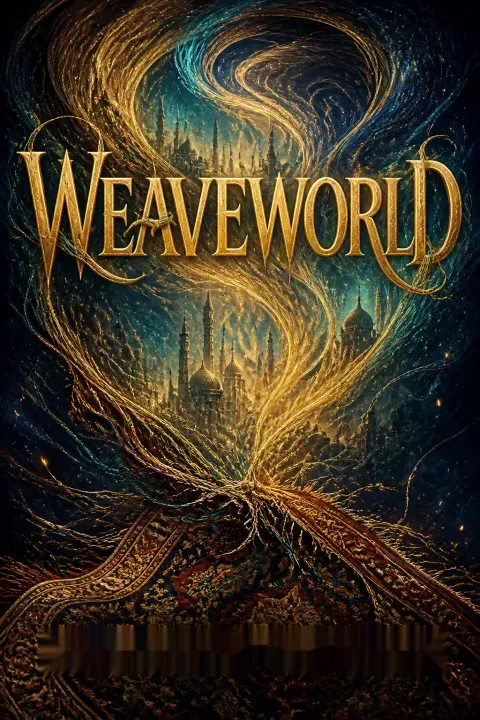


Plot Summary
The Chase Over Rue Street
Calhoun Mooney,1 26, lives a grey life in Liverpool: insurance clerk, grieving his mother Eileen, caretaker to his despondent father Brendan and his racing pigeons. When prize bird 33 bolts from the loft, Cal1 chases it across the city to Rue Street, where thousands of birds circle a dilapidated house.
Inside, he spots 33 on a high sill. Climbing the yard wall for a better angle, he loses his footing. As he topples, the old carpet spread below him by removal men transforms: its woven patterns surge into a living landscape of mountains, lakes, forests, and a spiraling cloud called the Gyre.
He seems to float above this impossible world. Then he crashes to the ground, bruised but physically intact. The removal men saw nothing unusual. 33 flies away. Cal1 returns home feeling exiled from a glimpse of paradise he cannot name or explain.
This opening establishes the novel's central metaphor: wonder is hidden in plain sight, beneath our feet, requiring only a change in perspective, a literal fall, to reveal itself. Cal's vision is an epiphany that shatters his mundane reality but leaves no external proof, creating an unbearable tension between what he has seen and what the world will credit. The bird that leads him there is itself a symbol of domesticated wildness straining toward freedom, a motif that will echo throughout.
The Jacket's Temptations
Cal1 returns to Rue Street seeking answers about his vision. In an upstairs room he encounters Shadwell,3 a corpulent man in his fifties whose jacket lining shimmers with hypnotic illusions. When Cal1 peers into it, childhood desires appear, then the unmistakable landscape of the Fugue.
Immacolata,4 a woman of terrifying beauty with shaved hairline and gold-dark eyes, appears alongside her two ghost-sisters, the Hag and the blind Magdalene.15 She interrogates Cal1 about the carpet. Her voice is steel; her contempt absolute.
Monstrous by-blows, the Magdalene's deformed children, scuttle on the landing. Cal1 flees downstairs where a young woman, Suzanna Parrish,2 opens the front door just in time for his escape. She is visiting the house because it belongs to her dying grandmother, the carpet's secret guardian.
Shadwell is introduced as a predator of desire: his jacket gives people what they think they want but at a hidden cost. Immacolata embodies hatred preserved across centuries, her ghost-sisters the literal ghosts of her original sin. The encounter crystallizes the central conflict: two forces, commerce and vengeance, both seeking to possess or destroy the Fugue. Suzanna's sudden appearance establishes her as Cal's unexpected ally.
Mimi's Last Transmission
Suzanna,2 a 24-year-old potter from London, has come to Liverpool because of a cryptic letter from her estranged grandmother Mimi Laschenski.10 At the hospital, she finds Mimi10 near death from a stroke.
When Suzanna2 takes the old woman's hand, Mimi10 reaches into her mind, flooding her senses with the scent of lavender and a vision of an intricate woven design, colors and forms perpetually reconfiguring. Before she can explain anything, Mimi10 convulses and dies.
Later, at Mimi's10 emptied house, Suzanna2 discovers a package hidden in the tall-boy wardrobe: a leather-bound book of German fairy tales, Geschichten der Geheimen Orte, inscribed to her with the epigram, That which is imagined need never be lost. That night, she and Cal1 meet in the house and share their stories, becoming allies in the mystery.
Mimi's psychic transmission is an act of desperate inheritance, bypassing language which her stroke has stolen. The epigram from the book serves as the novel's thesis: imagination preserves what reality destroys. Suzanna's pragmatism, her potter's insistence on functional objects, is about to be tested by forces that defy all practicality.
Five Strangers In the Bedroom
After Shadwell3 steals the carpet from Gilchrist's warehouse, a small torn fragment remains. During the night, that piece animates in Cal's1 room. Five figures materialize: Lilia Pellicia, a pale young woman; Frederick Cammell, a rotund, fastidious barber; Apolline Dubois,7 a blunt, hard-drinking brothel owner; Jerichau St Louis,5 a melancholy black thief; and a golden-eyed baby named Nimrod.6
They are Seerkind, people of the Fugue, descended from four magical Families. They explain that a creature called the Scourge9 hunted them to near-extinction in the 1890s, forcing them to weave their entire world into a carpet.
Mimi10 was one of three Custodians. They were exiles, criminals and outcasts, placed at the carpet's edge as first defense. Cal,1 stung by their condescension toward Cuckoos (humans), storms out.
The Seerkind's arrival complicates the narrative: they are not ethereal faeries but flawed, squabbling refugees with their own hierarchies and prejudices. Their term 'Cuckoo' for humans deploys the cuckoo bird's parasitic nesting behavior as metaphor, suggesting that humanity has usurped a world that was never solely theirs.
The Boneless Assassin
Immacolata4 summons the Rake, a former lover named Domville whom she had turned into an assassin centuries ago by allowing netherworld Surgeons to remove every bone from his body. The creature attacks the Mooney house with a devastating wind.
Lilia Pellicia tries to protect the others but is consumed by white fire and killed, leaving Nimrod6 orphaned. Cal,1 holding the baby-sized Nimrod,6 flees to the railway embankment behind the house. Using his encyclopedic knowledge of train timetables, he calculates the 12:46 from Stafford will arrive on the nearest track within seconds.
He lures the Rake onto the rails and the locomotive obliterates it. Brendan Mooney, Cal's1 father, witnesses these horrors but his mind cannot process what he has seen. The attack leaves half the street in ruins.
Cal's first heroic act draws on a skill previously portrayed as eccentric and useless: his memorization of train schedules. The mundane becomes weaponized against the supernatural. Lilia's death establishes real stakes: the Seerkind are not protected by narrative immunity. Brendan's mental retreat foreshadows the novel's meditation on how the human mind copes with, or fails to cope with, encounters with the impossible.
The Halo Riot
Walking through Liverpool, Jerichau5 shows Suzanna2 how to see the colored haloes that surround every human being, visual manifestations of their inner states. When Apolline7 joins them, the shared vision spreads uncontrollably through the crowd on Lord Street.
Panic erupts: people see the colors, attack each other, and turn on Jerichau5 as the source. A mob beats him before police arrive. Inspector Hobart,8 a gaunt, sleepless man obsessed with Law, arrests Suzanna2 and Jerichau.5 He confiscates Mimi's book, convinced it contains coded messages.
In her cell, Suzanna2 weeps tears of the menstruum, the magical force Immacolata4 first awakened in her. The power shatters the cell door, drives Hobart's8 interrogators mad, and frees Jerichau.5 Hobart8 becomes fixated on capturing her.
Capra's Third Principle, After three, the multitude, explains how shared vision becomes contagion. The scene dramatizes humanity's violent rejection of revealed truth: the crowd attacks what it cannot understand. Hobart represents institutionalized denial, the Law as a system for suppressing anomalies. His obsession with Suzanna becomes a dark mirror of love: pursuit, possession, the desire to destroy what one cannot control.
The Knife That Cut the Knot
Shadwell3 gathers seven ultra-wealthy buyers at a house on Thurstaston Common to auction the carpet. The Seerkind attempt a rescue, but Frederick Cammell is stabbed to death with his own scissors by the sisters.15 Nimrod6 is captured and displayed to the buyers as proof of magic.
Cal1 infiltrates, confronts Shadwell,3 and is wounded. Suzanna2 arrives wreathed in the menstruum's silver light. She and Cal1 lock eyes across the room. Their shared gaze, empowered by the menstruum, levitates Cal's1 kitchen knife and drives it into the carpet's center.
The Weave explodes: threads of color surge in every direction. Trees, hills, buildings, and the roiling cloud of the Gyre burst into reality, obliterating the house. The Fugue, sleeping for eighty years, wakes into the English countryside.
The moment crystallizes the novel's central thesis: magic is relational. The Loom, as we will later learn, is not a machine but a process of minds meeting. Cal and Suzanna's shared glance is a miniature version of this: two imaginations intersecting to release a world. The knife, a domestic object, becomes the key to paradise: the mundane and the miraculous are inseparable.
Feast In Lemuel Lo's Orchard
Wandering the newborn Fugue, Cal1 meets the androgynous twins Boaz and Ganza, who guide him to the orchard of Lemuel Lo.11 There he eats Giddy fruit, peeled by a talking monkey named Novello who is ventriloquized by a man called Smith.
An impromptu performance begins around a firelit rug. Called upon to entertain, Cal1 recites his great-grandfather Mad Mooney's poem Six Commonplaces. The Seerkind audience, initially skeptical of this Cuckoo, is moved to applause. Lo11 embraces him, declaring the verses a fine thing.
Boaz and Ganza then perform a disorienting dance where they pass through each other's bodies and exchange genders. Cal,1 drunk on the fruit, falls asleep beneath the trees, dreaming of his old life and feeling that he was never truly born until now.
The orchard scene is the novel's pastoral heart, a vision of community built around shared art. Cal's recitation of his mad ancestor's poem, a legacy he had kept hidden, becomes his passport into the Fugue. The theme of legitimate inheritance runs deep: Cal belongs here through blood (Mad Mooney's visionary poetry) as surely as Suzanna does through Mimi.
The Custodian's Burden
Suzanna2 and Jerichau5 travel to Capra's House, where the Council debates whether to re-weave the carpet or face the human world. Yolande Dor argues fiercely for freedom; Messimeris for safety. Then Romo,14 Mimi's10 first husband, a lion-tamer of immense beauty and presence, enters with his pride.
He speaks for Mimi,10 arguing she died to keep them safe because she knew the Kingdom was still too dangerous. He urges re-weaving and names Suzanna2 as Custodian. The Council agrees. Suzanna2 receives a rushed tutorial.
Meanwhile, Cal1 is taken by rickshaw through paradoxical ground to a house near the Gyre, where an old man with a smoke-stain on his face silently gazes at him with tears and recognition. Cal1 does not understand he is looking at his future self.
Romo's appearance connects the political debate to personal sacrifice: Mimi's decades of lonely vigilance give his words moral authority. The encounter at the gazebo introduces a time-loop element: Cal meets his older self, suggesting that his eventual fate is to dwell near the Gyre, perhaps as its guardian. The scene gestures toward a circular rather than linear conception of time within the Fugue.
The False Messiah
Months after the re-weaving, Nimrod6 arrives with news of a Prophet3 preaching liberation. Jerichau5 attends a rally and recognizes Hobart8 in the shadows, realizing the deception. He is captured, tortured by the sisters,15 and forced to reveal Suzanna's2 location.
Hobart's8 forces eventually capture Suzanna2 and the carpet. In a Scottish valley, Shadwell3 unweaves the carpet and marches into the Fugue as the Prophet,3 leading an army of duped Seerkind and Hobart's8 Elite. At Capra's House, when the Council refuses to bow to him, Shadwell3 has his gunmen open fire.
Several Councillors are massacred. Messimeris, even as bullets strike him, steps forward and raises his hand as if demanding payment. Shadwell3 realizes the gesture's meaning: he has finally become a purchaser, and the debt will come due.
Shadwell's transformation from salesman to Prophet to tyrant follows a chilling internal logic. Each role requires escalating violence to maintain the fiction. Messimeris's dying gesture transforms the commercial metaphor into a moral one: there are transactions that cannot be completed with money or bullets. The debt of blood will be paid.
The Heart of the Gyre
Cal1 pursues Shadwell3 into the Gyre's cloud. Inside, a surreal landscape where every footstep causes plants to spring instantly from the barren earth. Shadwell3 reaches the Temple of the Loom: nested brick boxes leading to an inner sanctum occupied only by four long-dead sentinels and Cal's1 kitchen knife at the center.
There is no physical Loom. Suzanna2 arrives. Immacolata4 appears, floating, bitter, her face ruined by Romo's14 lions. When Shadwell3 demands the Loom, she tells him the truth: there is no Loom. He stabs her with the knife. Dying, Immacolata4 declares the Fugue undone because blood has been spilled in the Temple where Creation dwelled.
Shadwell's literalism is his undoing. Having spent his life selling objects, he cannot conceive that the ultimate power might be non-material. Immacolata's death is both murder and suicide: she comes to the Temple knowing Shadwell will kill her, and her blood, spilled in the sacred space, enacts the destruction she has always desired. Her final act is vengeance against both Shadwell and the Seerkind.
The Book Seals Wonderland
As Immacolata4 dies, the dead sentinels' eyes ignite. Light beams crisscross the sanctum, weaving patterns of word and image. Suzanna2 understands: the Loom is a process of shared imagination. She rushes outside where Cal1 lies wounded and presses Mimi's book between them.
She tells him to remember everything he can of the Fugue. The menstruum flows, carrying Cal's1 memories (the orchard, the dancers, the rickshaw ride) and Suzanna's2 (the lake, Capra's House, Nonesuch) into the book's pages.
The Gyre's power churns their shared visions into the volume's substance. The Temple collapses. They stagger out as the Fugue dissolves around them: trees, rivers, animals all unraveling into threads, then nothing. Survivors stand in a muddy Scottish valley as dawn breaks.
The Loom's true nature is the novel's most profound revelation: creation is collaborative, relational, woven from shared memory and mutual attention. The book becomes a new Weave, preserving the Fugue in a different medium. Mimi's epigram, That which is imagined need never be lost, is proven true: the Fugue survives because two people remembered it together.
The Angel In the Wasteland
Shadwell,3 haunted by failure, remembers Immacolata's4 terrors about the Scourge.9 He researches wastelands and travels with Hobart8 to the Rub al Khali, the Empty Quarter of Arabia. Hiring Murra guides, they cross the desert by camel for days of punishing heat. Following a howl on the wind, they find a colossal wall of fused stone. Inside: a garden of colorless, lifeless forms made entirely of sand.
At night, the Scourge9 manifests, a being of wheels, fire, and innumerable eyes. It calls itself Uriel,9 an angel once guardian of a lost paradise. It judges the guides for copulation and burns them alive. Reading Shadwell's3 mind, it agrees to follow him back to destroy the Seerkind, taking possession of Hobart's8 body as its vessel.
The Empty Quarter section shifts the novel's register from urban fantasy to desert mysticism. The sand garden, an exquisite replica of paradise made from inert matter, is a devastating image of Uriel's condition: perfect form emptied of life. Uriel's sexual disgust reveals its core pathology: it cannot abide the mess of living bodies, preferring sterile geometry.
Houses Reduced to Ash
Uriel-in-Hobart,9 with Shadwell3 as its herald, attacks sites across England where Seerkind hide. At Rue Street, where de Bono12 and companions sought Old Science raptures, Uriel9 incinerates the house, killing most. De Bono12 escapes, badly burned, and reaches Cal's1 house to warn him. At Chariot Street, Uriel9 destroys the Mooney home.
Cal1 flees with only Mimi's book. De Bono12 dies of his burns. Shadwell,3 wearing no jacket, speaks with eerie calm about bringing an end to magic: his gift to the world is emptiness. Cal1 escapes through fog and snow. The surviving Seerkind gather at Rayment's Hill in Somerset, where they use raptures to create a concealing screen.
Shadwell's transformation is complete: the salesman who once peddled illusions now offers annihilation. His jacket, the source of his power, has been discarded on the hill in Scotland. Stripped of his chief tool, he has become a hollow vessel for Uriel's purpose, his charisma reduced to a flat, terrifying sincerity.
Ghosts Among the Bones
Suzanna2 visits the Shrine of the Mortalities beneath a London church, where Immacolata's4 spirit now exists fused with her dead sisters15 into a three-in-one unity. The dust-ghost explains Uriel's9 true origin: it is not a biblical angel but a spirit left to guard a paradise garden where the Seerkind were created, not by God but as accidents of greater forces.
When the Seerkind fled and the other spirits departed, Uriel9 remained alone for millennia and went mad. It read the Eden story in explorers' minds and took that identity as its own. The spirit warns that Shadwell3 has raised the Scourge9 and it will destroy everything. It also confesses its own regrets, freed from hatred by death.
Immacolata's posthumous transformation completes her arc from villain to tragic figure to oracle. The revelation that Uriel is not divine but a victim of its own delusion reframes the entire conflict: the Scourge is not evil incarnate but madness incarnate, a being that forgot what it was guarding and why. Redemption, the scene suggests, is possible even for the worst of us.
The Mirror Angel Rises
Uriel9 and Shadwell3 find Rayment's Hill. The concealing screen fails. Suzanna2 climbs to confront them, distracting Uriel9 while Cal1 retrieves Shadwell's discarded jacket from the snow. Suzanna2 faces Hobart,8 reminding him of their shared story from the book: the Maiden and the Dragon.
Hobart8 fights Uriel's9 control, raising his throat like the Dragon offering itself to the blade. Suzanna2 uses the menstruum to stop his heart, killing him mercifully. Uriel9 leaves Hobart's8 corpse and possesses Shadwell,3 then enters the hill.
When it emerges wearing Shadwell's3 body, Cal1 dons the jacket and opens its lining. The jacket creates what the angel most desires: a vision of its own uncorrupted self. A second Uriel9 rises. The two angels embrace, unite, and ascend, incinerating Shadwell.3
The climax reverses the jacket's usual function. Instead of seducing with base desires, it shows Uriel the highest version of itself. Hobart's death at Suzanna's hand, at his own pleading, completes the Knight-and-Dragon narrative they began in the book, granting him the martyrdom he craved. Shadwell's end is the ultimate sales transaction: he has sold himself to the Scourge and is consumed as a bad debt. Uriel's redemption through self-recognition suggests that even madness can be healed by seeing oneself truly.
The Sleepwalker's Return
Cal1 collapses after the confrontation, his mind trapped in the void he glimpsed from Uriel.9 For months he exists in a catatonic state, tended by Suzanna2 at Gluck's13 house. He experiences himself as dust blown across an endless wasteland. In March, Suzanna2 places Mimi's book in his hands.
Their fingers lace atop it. The book flies to the window, shattering the glass, and its pages scatter like birds into the night. A moment of recognition passes between Cal1 and his own reflection: he remembers meeting his older self near the Gyre and understands the Fugue is not lost.
He wakes. Outside, despite the frost, the garden has bloomed into the living Fugue, emerging from the book's pages with fresh mysteries. Cal,1 Suzanna,2 and Gluck13 step out together into a night suddenly full of spring and enchantment.
Cal's catatonia is the price of touching Uriel's madness. His recovery depends on the same principle that saved the Fugue: shared imagination, two hands on the same book. The reflection scene closes the time-loop established at the gazebo: Cal understands he is the old man he met, and his future lies within the Fugue. The garden blooming in winter completes the novel's movement from loss to restoration.
Epilogue
Gluck,13 the lifelong collector of anomalous phenomena, finally witnesses the miracle he has spent decades documenting. The Fugue spreads through the garden and beyond, no longer confined to a carpet or a book but woven into the living world.
Across Britain, the scattered Seerkind wake in the night, sensing their homeland's return, and rise to open their doors and windows to the spring. The book's final lines return to its beginning, announcing that nothing ever begins and this story, having no beginning, will have no end. Cal1 and Suzanna2 walk into a future where Wonderland is never more than a step or a thought away.
The circular ending enacts the book's metaphysics: stories do not begin or end but continue, passed between tellers and listeners. The Fugue's release from the book into the garden completes its journey through various forms (carpet, territory, memory, text, world). The suggestion is that the book in the reader's hands is another such vessel, another Weave waiting to be unknotted by the act of reading. Gluck's presence at the end honors the seeker who believes without seeing, the investigator of anomalous phenomena who finally finds his anomaly and is welcomed into it.
Analysis
Weaveworld is a sustained meditation on the relationship between imagination and reality, memory and loss. Barker constructs a cosmology in which the mundane world, the Kingdom of the Cuckoo, is not the baseline reality but a condition of diminished perception, a self-imposed exile from wonder. The Seerkind's tragedy is that they cannot survive in a world that has systematically stripped itself of enchantment, that has replaced shared raptures with solitary transactions. Shadwell,3 the ultimate Cuckoo, embodies this reduction: he can only understand the world through buying and selling, possessing and controlling. When he reaches the source of creation, he finds nothing to own, only a process to participate in, and this is his final, fatal disappointment.
The novel's deepest insight is that magic is inherently relational. The Loom is not a thing but an exchange between minds. The carpet is preserved not by a single Custodian but by a network of guardians. Cal1 and Suzanna's2 climactic act is not heroic violence but shared remembering. Even Uriel,9 the novel's most destructive force, is redeemed not by combat but by being shown its own true face, by a transaction of recognition rather than force.
Memory in this cosmology is a moral act. The Kingdom induces forgetfulness, and to forget the Fugue is to lose a part of oneself. Cal's1 months-long catatonia after touching Uriel's9 madness literalizes what happens to anyone who loses contact with the imagined world: he becomes dust in a wasteland, the citizen of a void. His recovery depends on the same principle that saved the Fugue: two hands on the same book, two minds sharing the same memory. The novel ends by suggesting that stories are never truly finished. They pass from teller to listener, from book to reader, waiting to be unknotted again. The Fugue's final residence is not a carpet, a territory, or even the pages of a book. It is the space between the teller and the told, the place where imagination happens, which can never be destroyed as long as there are those willing to imagine together.
Review Summary
Weaveworld receives overwhelmingly positive reviews, with readers praising Clive Barker's imaginative dark fantasy about a magical realm woven into a carpet. Reviewers highlight the book's beautiful prose, grotesque imagery, memorable villains (especially Immacolata), and seamless blend of fantasy and horror. The 700+ page length divides opinion—some find it engrossing throughout, while others note pacing issues in the middle sections. Protagonists Cal and Suzanna's journey to protect the Fugue from destruction captivates most readers. Critics appreciate Barker's worldbuilding and poetic writing style, though some find it verbose or confusing. Overall, it's considered a masterpiece of dark fantasy.
People Also Read




Characters
Calhoun Mooney
Reluctant Hero, Memory-KeeperA 26-year-old Liverpudlian, an insurance clerk with a hidden poetic inheritance. He keeps his late mother's household running while his father declines into grief. Shy, physically unassuming, with a peculiar gift for memorizing train timetables. His encounter with the Fugue awakens something long dormant: a capacity for wonder inherited from his great-grandfather, the visionary poet Mad Mooney. Cal is defined by his ordinariness, which makes his courage in extraordinary circumstances all the more remarkable. He will sacrifice himself repeatedly for the Fugue and its people, earning the name 'poet' among them. His arc moves from passive dreamer to active guardian, from forgetfulness to memory, from isolation to belonging.
Suzanna Parrish
Custodian, Potent InheritorA 24-year-old potter from London, pragmatic and self-contained. Granddaughter of Mimi Laschenski10, through whom she inherits Seerkind blood and access to the menstruum, a silver-bright magical force tied to emotion and creation. Initially skeptical of anything that cannot be touched or shaped by hand, she undergoes a radical transformation as the power within her awakens. Her journey is one of self-discovery: she learns she is not simply human but something more ancient and powerful. Her relationship with Jerichau5 teaches her vulnerability; her guardianship of the Fugue teaches her responsibility. She emerges as the natural leader of the scattered Seerkind, though she never fully belongs to either world.
Shadwell
The Salesman, False ProphetA corpulent, charismatic salesman in his fifties. Shadwell has sold everything: sugar, guns, salvation, and lies. His genius is for identifying and manipulating desire. His magical jacket, a gift from Immacolata4, shows the viewer whatever they most want. He pursues the Fugue initially to auction it, but his ambition escalates: he will be a prince, then a Prophet, then a God. His tragedy is that he cannot distinguish between possessing a thing and being worthy of it. When he reaches the source of creation, he finds nothing to own, only a process to participate in. His descent from charming manipulator to hollow vessel of the Scourge9 charts the trajectory of unchecked acquisitiveness.
Immacolata
The Incantatrix, Vengeful ExileAn ancient sorceress, beautiful and terrifying, who murdered her two sisters15 in the womb and keeps their ghosts bound to her forever. Exiled from the Seerkind for her crimes, she has devoted centuries to destroying them and their haven. She wields the menstruum with formidable power. Beneath her implacable hatred lies a profound solitude: she has never been touched, never loved, never forgiven. Her relationship with Shadwell3 is a twisted dependence: she needs his worldliness, he needs her magic. Her arc, from villain to violated victim to ghost who speaks truth, is the novel's most complex moral trajectory. Her face is later mutilated by lions, her body violated by Shadwell's3 by-blows, her sanity shattered, yet in death she finds a kind of peace.
Jerichau St Louis
Thief, Tender LoverA Seerkind of the Babu family, a thief by trade with a long, melancholy face. Gentle and emotionally open, he becomes Suzanna's2 lover and companion during their months fleeing Hobart8. He teaches her to see the haloes around human beings. His love for Suzanna2 is expressed as literal light: he speaks words that become luminous in the air. Increasingly seduced by the human world's pleasures, he loses some of his Otherness. Captured and tortured by the sisters15 to reveal Suzanna's2 location, he resists long enough for her to escape. His death, cradled in her arms, is a moment of profound loss that shapes Suzanna's2 subsequent determination.
Nimrod
Shape-Changer, Reluctant SurvivorA Seerkind of the Ye-me family, brother to Lilia. Trapped in the body of a golden-eyed baby when the Weave was made, he later regains his true form: a hairy, tailed creature with an irrepressible libido. Lecherous, witty, prone to both enthusiasm and despair. He falls for Shadwell's3 Prophet act, becoming an evangelical convert before recognizing the deception. After the massacre at the rebel camp, he grows sober and weary, one of the few survivors from the first fragment. His arc traces the cost of repeated loss: by the end, he is a diminished figure who has learned that hope is as dangerous as despair.
Apolline Dubois
Brothel-Keeper, Blunt SurvivorA Seerkind of mixed heritage, married multiple times to human men. She ran a bordello and makes no apologies for her appetites. Dressed perpetually in black, she drinks hard and speaks harder. Beneath her cynicism is a fierce loyalty to her people. Initially dismissive of the need to protect the Fugue, she becomes one of its most committed defenders. Her signature gesture is spitting, whether in contempt or defiance. She survives horrors that kill others, not through power but through sheer stubborn refusal to die.
Inspector Hobart
Law's Fanatic, Secret MasochistA gaunt, sleepless police inspector in his forties who rose to power suppressing riots. He believes absolutely in order and sees all disruption as evil to be crushed. His encounter with Suzanna's2 power unhinges him. Shadwell's jacket shows him the desire he has repressed: fire in his hands, the power to burn away everything he fears. He becomes Shadwell's3 ally, then Uriel's9 host body. His hidden wish is for martyrdom: in the shared story with Suzanna2 (the Maiden and the Dragon), he is not the beast but the wounded knight offering his throat. His complex psychosexual obsession with Suzanna2, half hatred and half worship, makes him more than a simple antagonist.
Uriel
Mad Angel, Lonely GuardianA being of immense power: wheels within wheels, fire, and countless lidless eyes. It calls itself Uriel, flame of God, angel of Eden, but this identity was adopted from human stories. In truth, it is a spirit left to guard a paradise garden where the Seerkind originated as accidental creations. When the Seerkind fled and the other spirits departed, it remained alone for millennia. The isolation drove it into a madness of purity: it destroys what it considers corrupt, especially magic and sexuality. Its howl is a cry of unassuageable loneliness. Its arc from destroyer to redeemed being is precipitated by seeing its own reflection, its lost uncorrupted self, in the jacket's illusion.
Mimi Laschenski
Last Custodian, Silent SentinelSuzanna's2 grandmother, of mixed Seerkind and human blood. One of three Custodians charged with guarding the carpet containing the Fugue. She lived for decades in isolation in a decaying Liverpool house, alienated from her family who feared her strangeness. Her first husband was Romo14, a lion-tamer in the Fugue whom she could not join because of her duty. She died defending the carpet's secret from Immacolata's4 interrogation, passing the last of her knowledge to Suzanna2 through psychic touch. Her legacy, a book of fairy tales and the epigram 'That which is imagined need never be lost,' becomes the key to the Fugue's survival.
Lemuel Lo
Orchard-Keeper, Generous HostOwner of the fabled orchard of Jude Pears in the Fugue. A rotund, bearded man of immense warmth. His Giddy fruit induces visions and deep sleep. He presides over impromptu performances, welcoming Cal1 as 'poet' and embracing him as family. When Shadwell's3 forces come to destroy the orchard, Lo burns it himself rather than let the invaders have it, preserving the seeds in his pockets for a future planting. He embodies the Fugue's spirit: generous, creative, resilient.
Balm de Bono
Rope-Dancer, Eager YouthA young Seerkind from Starbrook's Field, trained as a rope-dancer. Blond, bespectacled, curious about the human world. He carries a radio given to him by the Prophet's3 men, a gift he knows is a bribe but cannot resist. He becomes Cal's1 guide and irritant through the Fugue, leading them to Venus Mountain. His fire-walking skill saves his life at Lo's11 burning orchard. He dies warning Cal1 about the Scourge9 at Rue Street, crawling to Chariot Street with fatal burns.
A. V. Gluck
Anomaly Hunter, Believing WitnessAnthony Virgil Gluck, a rotund, cigar-smoking investigator of anomalous phenomena. His Birmingham house is crammed with files on falling frogs, UFOs, and every conceivable strangeness across Britain, which he calls the Spectred Isle. He first visits Cal1 seeking information about the Chariot Street whirlwind. His credo, from William Blake, is 'What is now proved was once only imagined.' He becomes Cal's1 ally, providing shelter, maps, and unwavering belief. His lifelong search for the miraculous is rewarded at the end when he steps into the restored Fugue.
Romo
Lion-Tamer, Lost HusbandMimi's10 first husband, a Seerkind lion-tamer of extraordinary beauty. His portrait hung in Mimi's10 bedroom throughout her lonely vigil. When the Fugue wakes, he appears at Capra's House with his pride of lions to argue for re-weaving, speaking with the authority of one who loved the Custodian. He avenges Mimi10 by mauling Immacolata4 at the Requiem Steps, scarring the Incantatrix's face beyond recognition. His brief presence embodies the personal cost of the long separation between the Fugue and its guardians.
The Sisters
Ghost-Wraiths, Murdered KinThe Magdalene and the Hag, Immacolata's4 two sisters whom she strangled in the womb and bound to her as ghost-servants. The Magdalene is blind, her eyes sewn shut; she has an insatiable sexual appetite and produces monstrous by-blows from human seed. The Hag is withered and ancient, with some oracular ability. They are both victims and accomplices to Immacolata's4 crimes. Their deaths, the Magdalene killed by Suzanna's2 menstruum and the Hag torn apart by the by-blows, precipitate Immacolata's4 breakdown.
Plot Devices
The Weaveworld Carpet
Portal and prison for the FugueA vast, intricately patterned carpet into which the entire Fugue was woven by the four Seerkind Families in the 1890s. Each motif represents a person, place, or creature of that magical realm. When unknotted, the carpet releases the Fugue into physical reality, a process of explosive, chaotic beauty. The carpet was guarded by three Custodians in the human world for eighty years. A torn fragment can release individual Seerkind woven at the border. The central gyre design marks the location of the creative force that holds the Fugue together.
The Menstruum
Magical force of creation and destructionA silver-bright, liquid-like power that flows through certain women connected to the Seerkind. It responds to emotion, particularly rage and love. It can heal wounds (as when Suzanna2 revives Cal1 in the warehouse), kill (as when she stops Hobart's8 heart), create illusions, manipulate matter, and bridge minds. Both Immacolata4 and Suzanna2 wield it, though Immacolata's4 use is tainted by hatred while Suzanna's2 is fueled by protective love. It is intimately connected to the Loom's creative processes.
Shadwell's Jacket
Illusion-weaver of deepest desireA gift from Immacolata4 to Shadwell3 in perpetuity. Its shimmering lining shows the viewer whatever they most desire, creating irresistible illusions that bind the victim to the Salesman's3 will. It can seduce anyone from grieving widowers to police inspectors to ultra-wealthy collectors. It requires the viewer to name or reach for what they see, sealing a transaction. Later discarded by Shadwell3 on a Scottish hillside, it is recovered by Cal1 and used to show Uriel9 its own uncorrupted self, an act that redeems the angel and ends the threat.
Mimi's Book of Fairy Tales
Vessel for preserving the FugueGeschichten der Geheimen Orte (Stories of the Secret Places), a leather-bound volume of German fairy tales given by Mimi10 to Suzanna2. Inscribed with the epigram 'That which is imagined need never be lost.' Its pages contain a living story-world that Suzanna2 and Hobart8 physically enter during their confrontation in Nonesuch, where they play out the narrative of the Maiden and the Dragon. After the Gyre's destruction, Suzanna2 and Cal's1 shared memories of the Fugue are woven into the book by the Loom's power, transforming it into the Fugue's new dwelling place. When opened together months later, it releases the restored Fugue into the world.
The Loom and the Gyre
Creative heart of the FugueThe Gyre is a roiling cloud at the center of the Fugue, within which dwells the Loom. The Loom is not a physical machine but a process: the intersection of minds, the weaving of shared imagination into reality. Created by the four Families working together, it holds the Fugue's disparate territories in unity. When blood is spilled in its sanctum, the Fugue begins to unravel. But the Loom is also self-renewing: the dead sentinels in its temple can reconstitute the creative process when minds meet across the space between them.
About the Author
Other books by Clive Barker

Download PDF
Download EPUB
.epub digital book format is ideal for reading ebooks on phones, tablets, and e-readers.








































