
Plot Summary
Molecules and Missing Pieces
Stewart, a brilliant but socially awkward thirteen-year-old, is still reeling from his mother's death. He and his father, Leonard, are about to move in with Leonard's new partner, Caroline, and her daughter, Ashley. Stewart's world is defined by loss, hope, and the scientific certainty that everything—including people—is made of molecules, always shifting and recombining. He clings to memories of his mother, finding comfort in her belongings and the belief that her molecules linger around him. The move is both a step forward and a painful reminder of what's missing.
FUBAR Families Collide
Ashley, fourteen, is furious about her parents' divorce and her father Phil's coming out as gay. She resents Stewart and Leonard moving in, feeling her once-perfect life is now "FUBAR" (beyond all recognition). Ashley's anger is compounded by her mother's new relationship and the proximity of her father, who now lives in the backyard laneway house. Both Stewart and Ashley are forced into a new family structure neither wanted, each struggling with their own grief, shame, and resistance to change.
The Unwanted Quadrangle
Stewart is excited at the prospect of having a sister, but Ashley wants nothing to do with him. Their first interactions are awkward and hostile, with Stewart's earnestness clashing with Ashley's sarcasm and social defensiveness. The new household is a battleground of habits, memories, and territory, as each tries to assert their place and identity. The adults attempt to smooth things over, but the kids' resentment simmers beneath the surface.
New House, Old Grudges
Stewart and his father bring only a few precious items from their old home, trying to blend their past with Caroline and Ashley's minimalist, modern house. Stewart's mother's presence lingers in the form of cherished objects, but Ashley sees them as intrusions. Both kids feel displaced—Stewart by the loss of his mother and home, Ashley by the invasion of her space and the loss of her family's "perfection." Their mutual discomfort is palpable, and small acts of sabotage and misunderstanding abound.
School of Social Survival
Stewart transfers to Ashley's high school, determined to work on his "ungifted" social skills. He faces the daunting world of teenage cliques, bullies, and the mysterious rules of popularity. Ashley, meanwhile, is at the top of the social ladder but feels threatened by Stewart's presence and the potential exposure of her family's secrets. Both are outsiders in their own ways, struggling to fit in and avoid humiliation.
The Social Ladder Wobbles
Ashley's best friend Lauren is both ally and rival, and their relationship is fraught with competition and subtle cruelty. Stewart tries to make friends, joining Mathletes and attempting to connect with classmates like Phoebe and Violet. Ashley's social standing is threatened by rumors, her father's sexuality, and Stewart's awkwardness. The fragile alliances and betrayals of high school life play out, with both siblings feeling increasingly isolated.
The Jared Conundrum
Jared, the school's charismatic but dangerous new student, becomes a central figure in both Stewart and Ashley's lives. He bullies Stewart in gym class and manipulates Ashley with charm and attention. Stewart is forced to navigate Jared's threats and humiliation, while Ashley is drawn to Jared's status and apparent interest in her, blind to his darker side. The tension escalates as Jared's true nature is revealed through his actions and words.
Figurines and Fault Lines
Stewart's mother's figurines become a symbol of the ongoing battle for space and respect in the new household. When some go missing, Stewart suspects Ashley, but the truth is more complicated. The figurines represent the fragile connections to the past and the ways in which grief and resentment can manifest in petty acts. The fault lines in the family widen, with trust eroding and old wounds reopening.
Mascot Mayhem
Stewart becomes the school mascot, a role that brings him unexpected visibility and a sense of belonging. His earnestness and humor win over some classmates, but also make him a target. A halftime performance becomes a moment of triumph and vulnerability, as Stewart channels his mother's advice to stand up for himself and others. The experience is bittersweet, highlighting both his progress and the persistent challenges he faces.
Betrayals and Revelations
Ashley's relationship with Jared takes a dark turn, exposing her to manipulation and near-assault. Stewart overhears Jared's cruel words and is forced to decide whether to intervene. The truth about Jared's past violence and homophobia comes to light, shattering Ashley's illusions and forcing her to confront her own complicity in maintaining appearances over integrity. The siblings' relationship shifts as they begin to see each other's vulnerabilities.
Party Out of Control
A New Year's Eve party at the house spirals out of control when Ashley, seeking validation and escape, allows Jared and his friends to take over. The party becomes a scene of underage drinking, property damage, and near-disaster as Jared attempts to exploit Ashley while she is unconscious. Stewart, witnessing the danger, takes decisive action to protect his stepsister, calling the police and destroying evidence that could have ruined her reputation.
Aftermath and Accountability
The fallout from the party is severe: the house is trashed, valuable items are stolen, and Stewart's beloved cat, Schrödinger, goes missing. The adults argue over blame, and both Stewart and Ashley are forced to confront the consequences of their actions. The police become involved, and the family is further shaken when Phil's laneway house is vandalized with a homophobic slur. The siblings' pain and guilt are compounded by the realization that their actions have hurt not just themselves, but those around them.
Searching for Schrödinger
Stewart is devastated by the disappearance of Schrödinger, his last tangible connection to his mother. The search for the cat becomes a metaphor for the search for belonging and healing in the fractured family. Ashley, feeling remorseful and changed by recent events, joins the search, and together with Phil, they eventually find Schrödinger alive. The reunion is a moment of grace and forgiveness, signaling the possibility of new beginnings.
Facing the Fallout
Returning to school, Stewart faces suspension for retaliating against Jared, while Ashley is ostracized by her former friends. Both are forced to reckon with the consequences of their choices and the reality of their social standing. Ashley, inspired by Stewart's courage and the support of new friends, begins to see the value in standing up for what's right, even at personal cost.
Protection Squads Unite
Ashley, with help from Stewart and their friends, organizes "protection squads" at school—groups of students who support and defend those targeted by bullies like Jared. The initiative grows, bringing together students from different backgrounds and social circles. The squads become a symbol of collective action and the power of small acts to create meaningful change. Stewart and Ashley, once adversaries, now work together for the good of others.
Redefining Family
The family begins to heal, finding new ways to honor the past while embracing the present. Stewart's mother's memory is integrated into the household, and the adults learn to compromise and support each other. Ashley and Stewart develop a genuine, if imperfect, sibling bond, rooted in mutual respect and shared experience. The family's structure is no longer defined by loss or resentment, but by the connections they choose to nurture.
Small Acts, Big Changes
Stewart and Ashley both find new confidence and purpose, using their experiences to help others. Stewart's relationship with Phoebe blossoms, and Ashley discovers the satisfaction of using her talents for good. The school community is transformed by the protection squads, and even former adversaries begin to change. The siblings learn that small acts of kindness and courage can ripple outward, creating a better world for everyone.
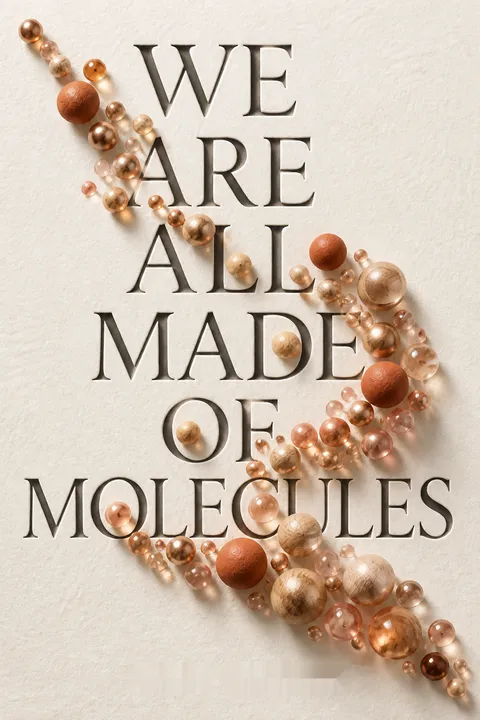
We Are All Molecules
The story ends with the recognition that, like molecules, people are constantly changing, combining, and influencing each other. Stewart and Ashley, once isolated by grief and anger, now see themselves as part of a larger whole—family, friends, and community. The title's message resonates: everyone is made of molecules, and everyone matters. Through pain and struggle, the characters find hope, connection, and the courage to move forward together.
Analysis
A modern, compassionate exploration of blended families, grief, and the courage to stand up for what's right
Susin Nielsen's We Are All Made of Molecules is a sharp, funny, and deeply empathetic novel that uses the lens of two very different teenagers to examine the messy realities of loss, identity, and belonging. By alternating between Stewart's scientific, hopeful worldview and Ashley's defensive, image-conscious perspective, the book reveals the pain and possibility inherent in change. The story tackles big issues—homophobia, bullying, sexual assault, and the complexities of modern family life—without ever losing sight of the small, everyday acts of kindness and bravery that make healing possible. Ultimately, the novel's message is one of interconnectedness: like molecules, people are always in flux, always influencing each other, and always capable of transformation. The book encourages readers to look beyond appearances, to forgive, and to find strength in community—a timely lesson for readers of all ages.
Review Summary
We Are All Made of Molecules receives mixed reviews, with an average rating of 3.82/5. Many readers praise the book's humor, character development, and handling of serious themes like blended families, grief, and acceptance. Stewart is frequently described as lovable, while Ashley's character is more divisive. Some criticize the book's writing style and target audience as unclear. Despite this, many readers find it a heartwarming, quick read that effectively tackles important issues for young adults, recommending it for its messages about family, friendship, and personal growth.
Characters
Stewart Inkster
Stewart is a thirteen-year-old prodigy with a gift for science and a deficit in social skills. After his mother's death, he clings to routines, objects, and the belief that her molecules remain with him. Stewart's journey is one of adaptation: he must navigate a new family, a new school, and the treacherous waters of adolescence. His relationship with Ashley evolves from hopeful curiosity to genuine sibling solidarity, forged through shared adversity. Stewart's psychological resilience is rooted in his ability to find meaning in loss and to act with integrity, even when it costs him socially.
Ashley Anderson
Ashley, fourteen, is the archetypal "mean girl" on the surface—popular, fashion-obsessed, and quick to judge. Beneath her bravado lies deep insecurity, shame about her father's sexuality, and unresolved grief over her family's dissolution. Ashley's arc is one of painful self-discovery: she is forced to confront her own prejudices, the consequences of her choices, and the emptiness of social status. Her eventual alliance with Stewart and her leadership in the protection squads mark her growth from self-absorption to empathy and courage.
Leonard Inkster
Stewart's father, Leonard, is a journalist who tries to balance his own grief with the demands of a new relationship and blended family. He is pragmatic and loving, but sometimes struggles to assert his needs. Leonard's willingness to compromise and his devotion to Stewart are central to the family's eventual healing. His relationship with Caroline is built on mutual respect and the shared experience of loss.
Caroline Anderson
Caroline, Ashley's mother and Leonard's partner, is a news anchor who brings a calm, diplomatic presence to the household. She is determined to create a new family, but often finds herself mediating between competing loyalties and personalities. Caroline's empathy and flexibility are key to the family's ability to adapt and grow.
Phil Anderson
Ashley's father, Phil, is a creative director who comes out as gay, shattering the family's illusion of perfection. He remains close to Ashley and Caroline, living in the backyard laneway house. Phil's journey is one of self-acceptance and the hope for reconciliation with his daughter. His relationship with Michael and his willingness to be vulnerable set an example for the family.
Michael
Phil's boyfriend, Michael, is a costume designer who becomes an unexpected source of support for Ashley. His warmth, generosity, and resilience in the face of prejudice help bridge the gap between Ashley and her father. Michael's presence challenges Ashley's assumptions and helps her see the value of authenticity.
Jared Mitchell
Jared is the school's new "bad boy," whose charm masks a capacity for cruelty and violence. He bullies Stewart, exploits Ashley, and is ultimately revealed as a homophobe and predator. Jared embodies the dangers of unchecked privilege and the harm caused by toxic masculinity. His downfall is precipitated by the courage of those he targets.
Lauren
Ashley's best friend, Lauren, is both a confidante and a rival. Their friendship is marked by competition, jealousy, and shifting alliances. Lauren's eventual betrayal of Ashley underscores the fragility of relationships built on status rather than trust.
Phoebe
Stewart's friend and eventual romantic interest, Phoebe is a fellow Mathlete who values kindness and integrity. She supports Stewart through his challenges and helps catalyze the protection squads. Phoebe's presence offers Stewart a glimpse of acceptance and belonging.
Schrödinger
Stewart's cat, Schrödinger, is more than a pet—he is a living link to Stewart's mother and a source of comfort in times of crisis. His disappearance and eventual return mirror the family's journey from loss to reunion.
Plot Devices
Dual Narrative Structure
The novel alternates between Stewart's and Ashley's first-person voices, allowing readers to see events from both sides. This structure highlights the misunderstandings, biases, and growth of each character, fostering empathy and complexity. The dual narrative also underscores the theme of interconnectedness, as each character's actions ripple through the lives of others.
Symbolism of Molecules and Objects
Stewart's fixation on molecules, his mother's figurines, and Schrödinger the cat serve as tangible symbols of memory, loss, and connection. The recurring motif of molecules—constantly moving, combining, and separating—mirrors the characters' emotional journeys and the ever-changing nature of family and identity.
Social Hierarchies and the Ladder
The metaphor of the social ladder is used to explore the pressures and pitfalls of adolescence. Ashley's obsession with status and Stewart's outsider perspective provide a lens for examining the costs of conformity and the courage required to challenge toxic norms.
Foreshadowing and Irony
Early references to the dangers of bullying, the fragility of reputation, and the unpredictability of change foreshadow the crises to come. The irony of Ashley's initial contempt for Stewart, and her eventual reliance on him, adds depth and poignancy to their relationship.
The Protection Squads
The creation of the protection squads is both a plot resolution and a thematic statement. It demonstrates the power of solidarity, the importance of standing up for others, and the possibility of change even in the face of entrenched cruelty.
FAQ
Synopsis & Basic Details
What is We Are All Made of Molecules about?
- A Blended Family's Tumultuous Start: The novel follows the challenging integration of two families: Stewart, a brilliant but socially awkward thirteen-year-old, and his grieving father, Leonard, move in with Ashley, a popular but insecure fourteen-year-old, and her news anchor mother, Caroline. This new living arrangement is fraught with tension, as both teenagers grapple with personal loss, identity, and the complexities of their parents' new relationship.
- Navigating Grief and Social Hierarchies: Stewart is still deeply mourning his mother's death and struggles with social cues, while Ashley is furious about her parents' divorce and her father Phil's recent coming out as gay, fearing its impact on her carefully constructed social image. Their alternating perspectives reveal their internal struggles as they navigate a new school, confront bullying, and try to find their place in a world that feels increasingly "FUBAR" (Ashley's term for "Effed Up Beyond All Recognition").
- Finding Connection Amidst Chaos: As the story unfolds, both Stewart and Ashley face significant challenges, including a manipulative bully, a disastrous New Year's Eve party, and the disappearance of Stewart's beloved cat. Through these trials, they slowly begin to understand and support each other, ultimately forming an unexpected bond and leading a collective effort to foster kindness and acceptance within their school community.
Why should I read We Are All Made of Molecules?
- Authentic Teenage Voices: Susin Nielsen masterfully captures the distinct and compelling voices of Stewart and Ashley, offering a raw, humorous, and deeply empathetic look into the minds of modern teenagers. Their alternating chapters provide a rich, multi-faceted perspective on universal themes of grief, identity, and belonging, making the characters feel incredibly real and relatable.
- Exploration of Complex Social Issues: The novel bravely tackles sensitive topics such as homophobia, bullying, sexual assault, and the challenges of blended families with nuance and compassion. It encourages readers to confront their own biases and consider the impact of their actions, fostering important discussions about empathy, courage, and standing up for what is right in a diverse world.
- Heartwarming Journey of Growth and Connection: Despite the heavy themes, the story is ultimately uplifting, showcasing the transformative power of human connection and the resilience of the human spirit. Readers will be drawn into Stewart and Ashley's journey from adversaries to allies, witnessing their personal growth and the unexpected ways they find family and community, leaving a lasting impression of hope and interconnectedness.
What is the background of We Are All Made of Molecules?
- Contemporary Vancouver Setting: The story is set in modern-day Vancouver, Canada, with specific geographical references like North Vancouver, Main Street, Granville Street, and Whistler, grounding the narrative in a recognizable urban environment. This setting provides a backdrop for the characters' daily lives, from school hallways to bustling city streets, reflecting a diverse and evolving cultural landscape.
- Exploration of Modern Family Structures: The novel delves into the complexities of blended families, divorce, and LGBTQ+ parenting, reflecting contemporary societal shifts in family dynamics. Phil's coming out as gay and his continued presence in the laneway house, along with Leonard and Caroline's new relationship, highlight the challenges and possibilities of redefining family in the 21st century.
- Themes of Social Hierarchies and Bullying: The narrative is deeply rooted in the social dynamics of a high school environment, addressing prevalent issues of bullying, social hierarchies, and the pressure to conform. It reflects a growing awareness of the need for safe spaces and collective action against prejudice, as exemplified by the formation of the "We Are All Made of Molecules" protection squads.
What are the most memorable quotes in We Are All Made of Molecules?
- "We are all made of molecules.": This recurring phrase, which also serves as the book's title, encapsulates Stewart's scientific worldview and the novel's central theme of interconnectedness. It signifies that despite differences, everyone is fundamentally linked, and that even after death, a part of us lives on, influencing others and the world around us, offering a unique perspective on grief and belonging.
- "Time heals all wounds… And time wounds all heels.": This shared joke between Stewart and his dad, repeated multiple times, highlights their unique bond and their coping mechanism for dealing with loss and change. It's a poignant blend of wisdom and humor, acknowledging both the healing power of time and the enduring pain or consequences that can linger, especially for those who cause harm.
- "The world is a dangerous place to live, not because of the people who are evil, but because of the people who don't do anything about it.": Attributed to Albert Einstein and quoted by Stewart, this powerful statement serves as a call to action and a core thematic message. It underscores the importance of speaking up against injustice and apathy, inspiring Ashley's transformation and the creation of the protection squads, emphasizing collective responsibility in fostering a safer community.
What writing style, narrative choices, and literary techniques does Susin Nielsen use?
- Dual Narrative Structure: Nielsen employs a dual narrative structure, switching between Stewart's and Ashley's distinct first-person voices in alternating chapters. This choice allows for deep character insight, revealing their inner thoughts, biases, and emotional growth, while also creating dramatic irony as readers gain a more complete understanding of events than either character initially possesses.
- Humor and Heartfelt Emotion: The author skillfully balances laugh-out-loud humor, often stemming from Stewart's literal interpretations and Ashley's dramatic pronouncements, with moments of profound sadness and vulnerability. This blend prevents the narrative from becoming overly heavy, making the characters' struggles and triumphs more accessible and resonant for a young adult audience.
- Symbolism of Molecules and Objects: Nielsen weaves in rich symbolism, particularly through Stewart's scientific lens, using concepts like "molecules" and "quadrangles" to explore themes of family, loss, and interconnectedness. Objects like Stewart's mother's figurines and the "social ladder" serve as powerful metaphors for memory, status, and the characters' internal states, adding layers of meaning to their experiences.
Hidden Details & Subtle Connections
What are some minor details that add significant meaning?
- Stewart's "Poo-art" Nickname Origin: The seemingly throwaway detail of Stewart's childhood "immature bladder" and the resulting "Poo-art" nickname (document index 1, Chapter 5) subtly explains his deep-seated social anxiety and aversion to public bathrooms. This early trauma underscores his vulnerability and the long-term impact of childhood teasing, making his later courage in facing Jared even more significant, as he overcomes a deeply ingrained fear of public humiliation.
- Caroline's "Demon Seed" Past: Caroline's casual remark about her own "demon seed" phase between ages twelve and seventeen (document index 1, Chapter 4) provides a crucial, subtle parallel to Ashley's current difficult behavior. This detail suggests that Ashley's "drama queen" tendencies might be a phase, offering a glimmer of hope for her future growth and hinting at a deeper, inherited emotional complexity that connects mother and daughter beyond surface-level conflict.
- The "Time Wounds All Heels" Joke: The recurring "Time heals all wounds... And time wounds all heels" joke shared between Stewart and his dad (document index 1, Chapter 4) is more than just a familiar comfort. It's a subtle coping mechanism, a shared language of resilience and dark humor that allows them to acknowledge pain while also finding levity. This private ritual highlights their unique bond and their shared understanding of life's harsh realities, a connection Ashley initially lacks.
What are some subtle foreshadowing and callbacks?
- Jared's "Psycho Eyes" and Past Violence: Phoebe's early, intuitive assessment of Jared having "psycho eyes" and being "dead inside" (document index 1, Chapter 10) subtly foreshadows his manipulative and violent nature, which is later confirmed by the story of his expulsion from St. Pat's for beating a gay student. This detail establishes Phoebe's keen observational skills and warns the reader of Jared's true character long before Ashley fully realizes it, building tension and highlighting the dangers of superficial charm.
- The Disappearing Figurines as a Test: The initial disappearance of Stewart's Dopey figurine (document index 1, Chapter 10), followed by Bunnykins, is a subtle callback to Jared's manipulative personality and his "joke" of taking them to see if Stewart would notice. This seemingly petty act of theft foreshadows Jared's deeper disrespect for others' emotional attachments and his willingness to cause distress for his own amusement, revealing his lack of empathy and setting the stage for his more significant betrayals.
- Stewart's Mom's "Speak Up" Lesson: Stewart's vivid flashback to his mother throwing stones at a bully (document index 1, Chapter 12) is a powerful callback to her core lesson: "it is never okay to pick on someone who is smaller, or weaker, or more vulnerable than you. If it happens to you, or to someone else, you must always speak up." This memory directly fuels Stewart's courage to confront Jared and protect Ashley, demonstrating how his mother's values continue to guide him and ultimately drive the plot's resolution.
What are some unexpected character connections?
- Stewart and Phil's Shared Vulnerability: The unexpected connection between Stewart and Phil, Ashley's gay father, forms when Stewart is locked out of the house (document index 1, Chapter 6). Their conversation about Phil's sexuality and loneliness, and Stewart's empathetic comparison to Alan Turing, reveals a shared vulnerability and a mutual respect that transcends their initial family roles. This bond becomes crucial as Stewart later defends Phil against homophobia and helps Ashley reconcile with her father.
- Michael's Role as Ashley's Unlikely Mentor: Michael, Phil's boyfriend, initially represents everything Ashley resents about her father's new life, yet he becomes an unexpected mentor in her passion for fashion (document index 1, Chapter 14). His gift of a Desigual skirt and offer of a private sale at his costume design warehouse subtly bridges the gap between Ashley's superficial interests and deeper connections, showing her that authenticity and kindness can coexist with style, and ultimately helping her channel her talents for good.
- Leonard's Protective Instinct for Ashley: Despite Ashley's initial disdain for Leonard, his quiet but firm protective instincts towards her are subtly revealed, particularly when he insists on driving her to Jared's house (document index 1, Chapter 15) and later confronts Jared's father. This shows a deeper, unspoken commitment to his "stepdaughter" beyond just being Caroline's partner, highlighting his role as a stable, caring adult in Ashley's life, even when she resists it.
Who are the most significant supporting characters?
- Phoebe, Stewart's Compassionate Confidante: Phoebe emerges as a crucial supporting character, offering Stewart genuine friendship, intellectual camaraderie in Mathletes, and a budding romantic interest. Her "trust your instincts" advice and her research into Jared's past (document index 1, Chapter 10) are pivotal in Stewart's understanding of the bully, and her compassionate nature helps ground Stewart's often-literal worldview, providing him with vital emotional support and a sense of belonging outside his family.
- Phil Anderson, The Catalyst for Change: Ashley's father, Phil, is more than just a plot device for Ashley's anger; his journey of self-acceptance and his vulnerability in coming out as gay serve as a powerful catalyst for both Ashley's and Stewart's growth. His presence in the laneway house and his quiet resilience in the face of prejudice (document index 1, Chapter 13) force Ashley to confront her own biases and ultimately inspire Stewart to defend him, driving significant thematic development around acceptance and family.
- Consuela, The Unexpected Savior: Jared's housekeeper, Consuela, plays a small but incredibly significant role in preventing a potential sexual assault on Ashley (document index 1, Chapter 15). Her timely interruption and stern demeanor, despite being a minor character, highlight the importance of unexpected interventions and the quiet strength of those often overlooked. Her actions are a direct turning point for Ashley, forcing her to confront Jared's true nature and her own vulnerability.
Psychological, Emotional, & Relational Analysis
What are some unspoken motivations of the characters?
- Ashley's Fear of Social Downgrade: Ashley's intense anger and "gayist" reactions towards her father's sexuality are not solely rooted in homophobia, but deeply in her unspoken fear of losing her top position on the "Social Ladder" (document index 1, Chapter 8). Her "perfect" life was a carefully constructed facade, and her father's truth threatens to expose her family's perceived flaws, which she believes will lead to social ostracization and a loss of status, driving her initial cruelty and defensiveness.
- Stewart's Need for His Mother's Approval: Beyond simply missing his mother, Stewart's drive to "work on his ungifted parts" and succeed socially at Borden Secondary (document index 1, Chapter 5) is deeply motivated by an unspoken desire to make his deceased mother "proud." He explicitly states, "I feel a deep need to do this for her," indicating that his social endeavors are a way to honor her memory and fulfill her hopes for his ability to "function in the real world," even if she's not physically there to witness it.
- Leonard's Quiet Guilt and Overcompensation: Leonard's eagerness to please Caroline and his sometimes-overbearing support of Stewart (e.g., taking a half-day off for his first day back after suspension) stem from an unspoken guilt over his wife's death and the subsequent upheaval in Stewart's life. He strives to be a "quality" father and partner, often overcompensating to ensure Stewart's happiness and to prove his worth in the new blended family, reflecting his deep love and concern.
What psychological complexities do the characters exhibit?
- Ashley's Internalized Homophobia and Self-Betrayal: Ashley exhibits complex internalized homophobia, not just towards her father, but also towards herself, as she struggles to reconcile her "perfect" image with the reality of her family. Her attraction to Jared, despite his overt homophobia, reveals a self-betrayal driven by a desperate need for external validation and social acceptance, even at the cost of her own integrity and safety. This internal conflict is a significant psychological hurdle she must overcome.
- Stewart's Grief-Induced Anthropomorphism: Stewart's deep grief for his mother manifests in a complex psychological coping mechanism: his belief in "molecules" and his intense attachment to Schrödinger the cat. He anthropomorphizes Schrödinger, seeing him as a confidante and a living link to his mother, stating, "He needs me, and I need him" (document index 1, Chapter 1). This isn't just a quirky trait; it's a profound psychological need to fill the void left by his mother, making Schrödinger's disappearance a re-traumatizing event.
- Phil's Delayed Self-Acceptance and Its Ripple Effect: Phil's decision to come out as gay later in life, after years of a "very real" marriage to Caroline (document index 1, Chapter 6), reveals a complex journey of delayed self-acceptance. His internal struggle and eventual honesty, while liberating for him, create a ripple effect of pain and confusion for Ashley, highlighting the psychological burden of living a lie and the profound impact personal truths can have on family dynamics.
What are the major emotional turning points?
- Ashley's Realization of Jared's Betrayal: The most significant emotional turning point for Ashley occurs during the New Year's Eve party when she overhears Jared's cruel comments about her and witnesses his attempt to exploit her while she's unconscious (document index 1, Chapter 12). This shatters her illusions about him, forcing her to confront his true, predatory nature and the emptiness of her pursuit of social status, leading to profound shame and a re-evaluation of her values.
- Stewart's Confrontation with Jared: Stewart's decision to confront Jared about his homophobic remarks and his treatment of Ashley (document index 1, Chapter 14) is a major emotional turning point. Despite his fear and physical vulnerability, Stewart's act of courage, fueled by his mother's lesson to "always speak up," marks his transition from a socially awkward observer to a fierce protector. This moment solidifies his moral compass and sets the stage for his later, more public act of defiance.
- The Discovery of the "FAGGOT" Graffiti: The spray-painting of Phil's laneway house with a homophobic slur (document index 1, Chapter 13) serves as a powerful emotional turning point for the entire family, especially Ashley. This act of hate makes Phil's sexuality a public and painful reality, forcing Ashley to confront the real-world consequences of prejudice and her own complicity in keeping her father's identity a "secret." It galvanizes the family, including Ashley, to unite against bigotry.
How do relationship dynamics evolve?
- Ashley and Stewart: From Adversaries to Allies: The relationship between Ashley and Stewart undergoes a profound transformation, evolving from initial hostility and mutual disdain to a genuine, if still sometimes prickly, sibling bond. Their shared trauma from Jared's actions and the New Year's Eve party, culminating in Stewart's defense of Ashley and her subsequent remorse, forges a foundation of mutual respect and understanding, leading them to collaborate on the "We Are All Made of Molecules" protection squads.
- Ashley and Phil: Rebuilding Trust and Acceptance: Ashley's relationship with her father, Phil, moves from deep resentment and a sense of betrayal to a tentative, then growing, acceptance. The "FAGGOT" graffiti incident and Michael's kindness help Ashley see her father's vulnerability and the injustice he faces. Her decision to hold his hand during the poster search (document index 1, Chapter 16) and her later plan to involve Michael in her fashion pursuits signify a crucial step towards rebuilding trust and embracing his identity.
- Caroline and Leonard: Navigating Blended Family Stress: Caroline and Leonard's relationship, initially portrayed as a harmonious new beginning, evolves to reveal the stresses of blending families and managing different personalities. Their arguments over household chores and the handling of the New Year's Eve party (document index 1, Chapter 15) demonstrate the realistic challenges of their new life. However, their ability to communicate, compromise, and ultimately support each other through crises strengthens their bond, showing a mature and resilient partnership.
Interpretation & Debate
Which parts of the story remain ambiguous or open-ended?
- Jared Mitchell's Ultimate Fate: While Jared is confronted by the police and faces social repercussions, the story leaves his ultimate fate somewhat ambiguous. The Mitchells' lawyer sends a "cease and desist" letter (document index 1, Chapter 13), and Jared is later seen with Lauren, suggesting he largely escapes formal punishment and continues his manipulative behavior. This open-endedness prompts readers to consider the limitations of justice and the ongoing struggle against systemic bullying and privilege.
- The Long-Term Impact of Ashley's Social Ladder Fall: Ashley's fall from the "Social Ladder" is a major turning point, but the full extent of its long-term impact on her self-perception and social standing remains somewhat open. While she finds new, genuine friends and purpose with the protection squads, the narrative doesn't fully explore whether she completely sheds her past obsession with popularity or if those insecurities will resurface in different forms as she matures.
- The Future of Leonard and Caroline's Marriage: While the novel ends with Leonard and Caroline "back on an even keel" (document index 1, Chapter 18) and discussing a romantic getaway, the question of their eventual marriage is left unaddressed. Stewart's earlier thought, "Two things my mom could still lay claim to were (1) being Leonard Inkster's one and only wife, and (2) being Stewart Inkster's one and only mom. The second would never change, but the first one definitely could" (document index 1, Chapter 14), highlights this unspoken tension, leaving readers to ponder the future stability and formalization of their blended family.
What are some debatable, controversial scenes or moments in We Are All Made of Molecules?
- Stewart's Act of Public Humiliation Against Jared: Stewart's decision to publicly pull down Jared's shorts and underwear during a basketball game (document index 1, Chapter 17) is a highly debatable moment. While it's presented as a justified act of "giving him a small taste of his own medicine" and defending Ashley's honor, it also involves stooping to Jared's level of public humiliation and physical aggression. This scene sparks debate about whether retaliation, even against a bully, is ever truly justified or if it perpetuates a cycle of violence.
- Ashley's Initial "Gayist" Reactions to Her Father: Ashley's strong negative reactions to her father's coming out, including her internal "gayist" thoughts and her refusal to acknowledge his sexuality to her friends (document index 1, Chapter 2), are controversial

Download PDF
Download EPUB
.epub digital book format is ideal for reading ebooks on phones, tablets, and e-readers.








































