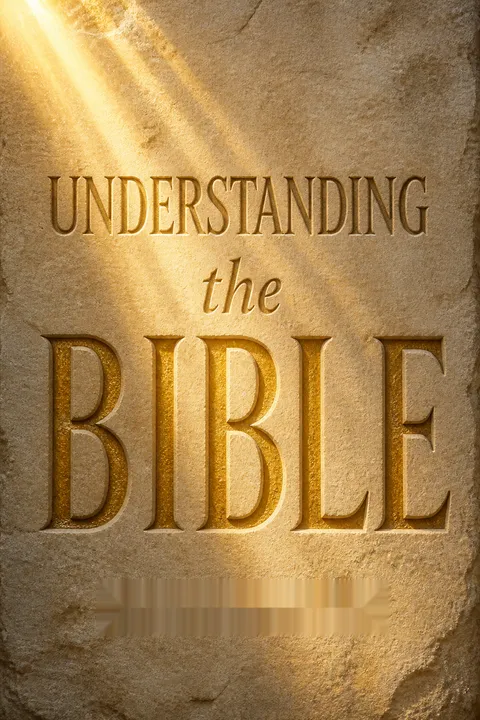

Key Takeaways
1. The Bible's Core Purpose: Salvation Through Christ
From infancy you have known the holy Scriptures, which are able to make you wise for salvation through faith in Christ Jesus.
The Bible, "God-breathed" and practical, aims to make us wise for salvation through Christ. This comprehensive salvation is God's grand plan to redeem and restore all creation, with Christ as its central theme, revealed through Old Testament prophecies and New Testament fulfillment.
2. God's Revelation: Rooted in Land and History
God’s dealings with the nation of Israel and with individuals are recorded, we are told, “to teach us” (Rom. 15:4; 1 Cor. 10:11).
God's revelation is personal and propositional, embedded in specific historical and geographical contexts like Palestine. Understanding this setting, including its agriculture and festivals, is crucial to grasping God's ways and message.
3. The Old Testament: Promises and Preparations for Christ
The fundamental relation between the Old Testament and the New Testament, according to Christ, is that between promise and fulfillment.
The Old Testament, as "Heilsgeschichte" (salvation history), details God's covenant with Abraham and Israel. Events like the Exodus, the Law, and the monarchy, along with prophets' messages, all prefigure and prepare for Christ's coming.
4. The New Testament: Christ's Life, Work, and Church's Mission
John sees the ultimate purpose of Scripture (“what is written”) just as Paul sees it. John calls it “life,” Paul “salvation,” but the words are virtually synonymous.
The Gospels testify to Christ's life, death, and resurrection, fulfilling Old Testament prophecies and inaugurating God's kingdom. Pentecost launched the church's mission, with apostles spreading the gospel and extending God's covenant to all nations.
5. God's Consistent Character: Living, Sovereign, and Gracious
The God of the Bible is “the God of all grace” (1 Pet. 5:10).
God is living, sovereign over nature and nations, and consistently acts in love and wrath. His "covenant grace" is central, promising "I will be your God and you shall be my people." This grace unfolds in redemption, adoption, and ultimate glorification.
6. The Bible's Authority: God-Breathed and Christ-Endorsed
Since he endorsed the authority of Scripture, we are bound to conclude that his authority and Scripture’s authority either stand or fall together.
The Bible's authority comes from its divine inspiration ("God-breathed") through human authors, making it God's true and reliable Word. Jesus Christ Himself reverently submitted to the Old Testament and authorized His apostles to speak for Him, extending this authority to the New Testament.
7. Interpreting Scripture: Spirit, Study, and Sound Principles
Let us know, then, that the true meaning of Scripture is the natural and obvious meaning; and let us embrace and abide by it resolutely.
Understanding Scripture requires the Holy Spirit's illumination, our disciplined study, and the church's collective wisdom. Key principles include seeking the natural sense (literal or figurative), the original historical and cultural context, and the general harmonious sense of the entire Bible.
8. Responding to God's Word: Hear, Understand, and Obey
Today, if you hear his voice, do not harden your hearts.
The Bible is a living "lamp" and "light" for our lives, offering wisdom and guidance. Our benefit depends on our receptive response—trembling at, prizing, and thirsting for God's Word—and actively putting its teachings into practice, building our lives on a solid foundation.
Review Summary
Understanding the Bible receives an overall positive reception, with readers appreciating its theological overview, historical context, and accessible framework for approaching Scripture. Many recommend it for beginners and young Christians, praising Stott's clear explanations of biblical themes, authority, and interpretation. Some critics find the writing style occasionally difficult or outdated, and a few express disappointment with his stance on Genesis and theistic evolution. The final chapters on hermeneutics and the New Testament receive particular praise, with several readers noting they would revisit the book.
People Also Read







About the Author
Other books by John R.W. Stott


Download PDF
Download EPUB
.epub digital book format is ideal for reading ebooks on phones, tablets, and e-readers.








































