
Plot Summary
Dome Descends, Chaos Begins
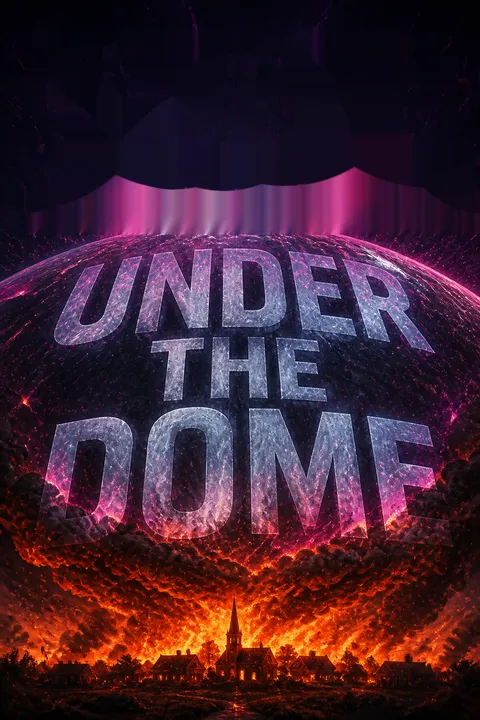
On a clear October morning, Chester's Mill is abruptly and inexplicably sealed off from the world by an invisible, impenetrable Dome. The event is sudden and violent: a plane crashes, a woodchuck is sliced in half, and the town is instantly isolated. Panic and confusion erupt as people realize the barrier is real and deadly. The initial shock is compounded by a series of tragic accidents and deaths, setting the tone for the chaos to come. The Dome's arrival is both a physical and psychological rupture, transforming a sleepy Maine town into a pressure cooker where every flaw and secret is about to be exposed.
Trapped in Chester's Mill
As the reality of the Dome sets in, the townspeople scramble to understand their predicament. Communication with the outside world is cut off, and resources become a concern. The town's infrastructure—power, water, food—begins to fail. The psychological impact is immediate: fear, suspicion, and desperation take root. Some hope for rescue, while others begin to see opportunity in the crisis. The Dome is not just a barrier but a magnifying glass, intensifying every emotion and conflict. The sense of being watched, of being part of an experiment, begins to haunt the town.
Power Struggles Emerge
With the town's leadership in disarray, Big Jim Rennie, a manipulative used-car salesman and Second Selectman, seizes the moment. He consolidates power, manipulating the weak and ambitious, and installs his own loyalists as police. Meanwhile, Dale "Barbie" Barbara, an ex-Army officer and short-order cook, is reluctantly thrust into a leadership role by outside authorities. Tensions rise between those who want order and those who want control. Old grudges and new alliances form as the town's social fabric begins to unravel under the Dome's pressure.
The Mob and the Law
As resources dwindle and tempers flare, the town's fragile order collapses. A food riot at the supermarket turns deadly, orchestrated in part by Big Jim to justify his tightening grip. The new, inexperienced police force—many of them thugs and bullies—brutalize citizens and silence dissent. Innocents are framed, and the rule of law becomes a tool for personal vendettas. The Dome amplifies every conflict, and the town's descent into mob rule is swift and brutal. Fear and violence become the new currency.
Secrets, Scapegoats, and Schemes
Big Jim's criminal enterprises—drug manufacturing, embezzlement, and murder—are threatened by the Dome's scrutiny. He frames Barbie for a series of murders, including those of women and the town's pastor, to eliminate a rival and distract from his own crimes. Evidence is planted, witnesses are silenced, and the town's institutions are corrupted. Meanwhile, a small group of resisters, including the local newspaper editor Julia Shumway, begin to piece together the truth. The Dome becomes a crucible, burning away pretense and exposing the town's darkest secrets.
The Town Turns Violent
As hope for rescue fades, the town's violence escalates. Murders, rapes, and suicides multiply. Big Jim's regime becomes increasingly tyrannical, executing or imprisoning anyone who opposes him. The children of the town begin to experience strange seizures and visions, hinting at a deeper connection to the Dome. The outside world watches helplessly as Chester's Mill spirals into chaos, unable to intervene. The Dome is both a prison and a stage, and the town's suffering is on display for unseen observers.
The Children's Visions
A wave of seizures among the town's children brings cryptic warnings: "The pink stars are falling." These visions, shared and eerily similar, suggest the Dome is not a natural phenomenon but the work of an alien intelligence—perhaps even children, playing a cruel game. The adults struggle to interpret these messages, but the sense of being watched and manipulated grows. The Dome is revealed as a cosmic ant farm, and the town's agony is entertainment for its creators.
The False Hope of Rescue
The military and government attempt to breach the Dome with missiles, acid, and even a nuclear device, but all efforts fail. The townspeople are given false hope by the promise of a "Visitors Day," when they can see loved ones through the barrier. The event becomes a spectacle, with the suffering of Chester's Mill broadcast to the world. The outside world's inability to help only deepens the town's despair. The Dome remains unbroken, and the sense of doom intensifies.
The Firestorm
A catastrophic explosion at the town's secret meth lab, triggered by a desperate standoff, ignites a firestorm. The Dome traps the heat and smoke, turning Chester's Mill into a furnace. Most of the town's population perishes in the inferno or from asphyxiation. Only a handful survive by fleeing to the Dome's edge, where the military manages to force some fresh air through with giant fans. The fire is both a literal and symbolic cleansing, erasing the town's sins but leaving only ruin behind.
Collapse of Order
In the aftermath of the fire, Big Jim and his last loyalists retreat to a fallout shelter, but their air and supplies run out. Paranoia and betrayal consume them, and Big Jim dies alone, haunted by the ghosts of his victims. The survivors outside, weakened and traumatized, realize that the Dome is not just a physical barrier but a test of their humanity. The social order has collapsed, and only a few remain to face the end.
The Last Survivors
The survivors—Barbie, Julia, Rusty, Linda, and a few others—gather at the Dome's edge, struggling to breathe the last scraps of clean air. Children and the elderly die first. The group is united by loss and desperation, but also by a growing understanding of the Dome's true nature. They realize that their only hope is to appeal directly to the intelligence behind the Dome, to beg for mercy from their tormentors.
The Box and the Leatherheads
A small group, led by Barbie and Julia, makes a desperate journey to the source of the Dome's power—a mysterious black box hidden in an orchard. Using improvised "scuba gear" made from car tires, they reach the box and make contact with the alien minds behind the Dome. Julia experiences a vision: the Dome is the plaything of alien children, who are indifferent to the suffering they cause. The town's agony is nothing more than a game to them.
Begging for Mercy
Julia, drawing on her own childhood trauma, begs the alien child for pity. She shows it the pain and shame of being powerless and abused, and for a moment, the alien feels empathy. The Dome is lifted—not out of love, but out of a fleeting sense of pity. The survivors are freed, but the cost is incalculable. The lesson is clear: cruelty is easy, compassion is rare, and the fate of the powerless depends on the whims of the powerful.
The Dome Lifts, Aftermath
As the Dome rises, the survivors stagger into the fresh air, forever changed. The world outside is shocked by the devastation, but cannot comprehend the true horror of what happened inside. The survivors are haunted by loss, guilt, and the knowledge that their suffering was meaningless to their tormentors. The story ends not with triumph, but with a fragile hope that compassion—however brief—can make a difference, even in a universe ruled by indifference.
Analysis
Stephen King's Under the Dome is a sprawling, relentless examination of human nature under extreme pressure. The Dome itself is both a science-fiction conceit and a metaphor for the invisible barriers—social, psychological, and moral—that shape our lives. By isolating Chester's Mill, King creates a closed system where every resource, secret, and conflict is intensified. The novel explores the dangers of unchecked power, the ease with which fear can be manipulated, and the fragility of justice and community. The characters are archetypes—tyrants, scapegoats, rebels, innocents—each tested and transformed by the crisis. The use of children's visions and the revelation that the Dome is a cosmic ant farm for alien amusement adds a layer of existential horror, suggesting that suffering is often meaningless to those in power. The final act of begging for mercy is both a critique of cruelty and a fragile affirmation of compassion. King's message is clear: in a world where power is indifferent and cruelty is easy, the only hope lies in empathy, resistance, and the refusal to surrender one's humanity—even when the odds are hopeless. The novel is a warning and a challenge, asking what we would do if the walls came down and we were left to face ourselves.
Review Summary
Under the Dome receives mixed but generally positive reviews, averaging 3.93/5. Readers praise King's masterful character development, suspenseful pacing, and chilling political allegory — particularly the villain Big Jim Rennie, widely seen as a Dick Cheney parallel. Many admire the novel's exploration of human nature under extreme isolation. Common criticisms include excessive length, one-dimensional characters, and a disappointing explanation for the dome's origins. Despite divided opinions on the ending, most agree the true horror lies not in the dome itself, but in humanity's response to crisis.
People Also Read

Characters
Dale "Barbie" Barbara
Barbie is a former Army officer haunted by his past in Iraq, where he witnessed and participated in acts of cruelty. In Chester's Mill, he is an outsider, working as a short-order cook and planning to leave town when the Dome descends. Thrust into a leadership role by circumstance and outside authority, Barbie becomes the focal point of both hope and fear. He is framed for murder by Big Jim Rennie, tortured, and nearly executed, but his resilience and moral core drive him to resist. Barbie's journey is one of reluctant heroism, forced to confront both external tyranny and his own guilt. His relationship with Julia Shumway becomes a source of strength, and his ultimate act—begging the alien intelligence for mercy—reflects his growth from passive survivor to active redeemer.
Julia Shumway
Julia is the editor of the local newspaper, fiercely independent and committed to uncovering the truth. Her skepticism and courage make her a natural leader among the resisters. Julia's past trauma—being bullied and humiliated as a child—gives her a deep empathy for the powerless. She is instrumental in exposing Big Jim's crimes and in the final plea to the alien "leatherheads." Julia's psychological journey is one of reclaiming agency and using her pain as a bridge to compassion. Her relationship with Barbie is both romantic and symbolic, uniting two wounded souls in the fight for survival and dignity.
Big Jim Rennie
Big Jim is the Second Selectman and de facto ruler of Chester's Mill. Outwardly pious and civic-minded, he is in reality a sociopath driven by greed, control, and self-righteousness. He exploits the Dome crisis to seize absolute power, orchestrating violence, framing rivals, and eliminating threats. Big Jim's psychological makeup is a toxic blend of narcissism, paranoia, and religious delusion. He is both a product and a driver of the town's descent into madness. His eventual isolation and death in the fallout shelter are the logical end of his pathological need for dominance. Big Jim's legacy is a town destroyed by his ambition and cruelty.
Junior Rennie
Junior is Big Jim's son, a young man suffering from an undiagnosed brain tumor that warps his perception and unleashes violent impulses. He murders several women, including his ex-girlfriend, and becomes a tool of his father's regime. Junior's psychological torment is both physical and existential; he is aware of his own unraveling but powerless to stop it. His actions are a grotesque reflection of his father's values, and his death is both a mercy and a judgment. Junior embodies the theme of inherited and amplified evil under pressure.
Rusty Everett
Rusty is a physician's assistant who becomes the town's de facto doctor after the Dome falls. He is practical, resourceful, and deeply ethical, often risking his own safety to help others. Rusty's skepticism about the Dome's origin and his scientific approach make him a voice of reason amid hysteria. His love for his family and his commitment to truth put him at odds with Big Jim's regime. Rusty's psychological resilience is tested by loss and betrayal, but he remains a symbol of hope and decency.
Linda Everett
Linda is Rusty's wife and a part-time police officer. Initially loyal to the system, she becomes disillusioned as Big Jim's tyranny grows. Her maternal instincts and moral clarity drive her to join the resistance and protect her children at all costs. Linda's journey is one of awakening and courage, as she moves from compliance to active defiance. Her psychological strength is rooted in love and a fierce sense of justice.
Piper Libby
Piper is the minister of the town's Congregational church, struggling with her own crisis of faith. The Dome's arrival and the town's descent into violence force her to confront the limits of religion and the necessity of human compassion. Piper becomes a key member of the resistance, offering comfort and wisdom even as her own beliefs are shaken. Her psychological arc is one of moving from dogma to genuine empathy, culminating in her support for Julia's plea to the alien intelligence.
Sam "Sloppy Sam" Verdreaux
Sam is a chronic alcoholic and social outcast, but his knowledge of survival and his stockpile of oxygen tanks become crucial after the firestorm. He helps Barbie and Julia reach the Dome's source, sacrificing himself in the process. Sam's journey is one of unexpected heroism and atonement; his final acts redeem a lifetime of failure. Psychologically, he represents the possibility of grace and usefulness even for the most marginalized.
Joe McClatchey
Joe is a brilliant, awkward teenager whose technical skills and curiosity help uncover the Dome's secrets. He organizes the town's first protest and helps locate the black box generating the Dome. Joe's visions and insights connect the human and alien perspectives. His psychological arc is one of coming-of-age under impossible circumstances, forced to confront mortality, loss, and the limits of reason.
Carter Thibodeau
Carter is a young man who thrives under Big Jim's regime, rising from mechanic to enforcer. He is violent, cunning, and ultimately self-serving, willing to betray anyone to survive. Carter's psychological makeup is shaped by resentment and a hunger for power. He is both a victim and a perpetrator of the Dome's moral collapse, and his end is a fitting punishment for his complicity.
Plot Devices
The Dome
The Dome is the central plot device, both a literal and metaphorical barrier. It isolates Chester's Mill, creating a closed system where every resource, secret, and conflict is intensified. The Dome's origin is gradually revealed through foreshadowing and the children's visions: it is the creation of alien children, a cosmic ant farm for their amusement. The Dome's presence drives the narrative structure, forcing characters into confrontation, alliance, and transformation. It is a device for exploring human nature under pressure, exposing both the best and worst in the town's inhabitants.
Framing and Scapegoating
Big Jim's framing of Barbie for murder is a classic plot device, used to distract, control, and eliminate opposition. The scapegoat motif recurs throughout the novel, as blame is shifted and the innocent are punished. This device is used to explore themes of propaganda, mob mentality, and the fragility of justice. The narrative structure mirrors the town's descent into paranoia and violence, with each new atrocity justified by the need for order and survival.
Children's Visions and Prophecy
The seizures and visions experienced by the town's children serve as both a plot device and a thematic bridge. They foreshadow the Dome's true nature and provide cryptic warnings ("The pink stars are falling"). These episodes connect the human and alien perspectives, hinting at the Dome's origin and purpose. The use of prophecy and shared dreams creates a sense of inevitability and cosmic irony, as the town's fate is both foretold and ignored.
The Black Box
The discovery of the black box in the orchard is the novel's central quest. It is the source of the Dome's power and the only hope for escape. The journey to the box, using improvised "scuba gear," is a classic hero's journey, fraught with danger and sacrifice. The box is also the point of contact with the alien intelligence, allowing for the final plea and resolution. Its presence structures the narrative's climax and provides a tangible focus for the town's suffering and hope.
Social Collapse and Mob Violence
The breakdown of order in Chester's Mill is both a plot device and a thematic exploration. Riots, lynchings, and executions are used to escalate tension and test the characters' morality. The town becomes a microcosm of society under stress, with every flaw and virtue magnified. The narrative structure uses these events to build momentum, culminating in the firestorm and the near-extinction of the town.
Begging for Mercy
The final act of begging the alien child for mercy is both a plot device and a thematic statement. It reverses the power dynamic, forcing the tormentor to confront the suffering of the tormented. The act of begging—drawing on personal trauma and shared pain—breaks the cycle of cruelty, if only briefly. This device provides the novel's resolution, lifting the Dome and allowing for survival, but it is a victory tinged with ambiguity and loss.
About the Author
Other books by Stephen King




Download PDF
Download EPUB
.epub digital book format is ideal for reading ebooks on phones, tablets, and e-readers.








































